AKESO(09926)

Search documents
6月12日南向资金净买入55.85亿港元





Zheng Quan Shi Bao Wang· 2025-06-12 12:48
Market Overview - On June 12, the Hang Seng Index fell by 1.36%, closing at 24,035.38 points, while southbound funds through the Stock Connect recorded a net purchase of HKD 5.585 billion [1] - The total trading volume for the Stock Connect on June 12 was HKD 129.736 billion, with a net purchase of HKD 5.585 billion [1] Stock Performance - In the Shanghai Stock Connect, the total trading volume was HKD 82.940 billion, with a net purchase of HKD 3.851 billion; in the Shenzhen Stock Connect, the trading volume was HKD 46.796 billion, with a net purchase of HKD 1.733 billion [1] - The most actively traded stock in the Shanghai Stock Connect was Alibaba-W, with a trading volume of HKD 4.189 billion, followed by Pop Mart and Xiaomi Group-W, with trading volumes of HKD 4.061 billion and HKD 3.929 billion, respectively [1] - In terms of net buying, Xpeng Motors-W led with a net purchase of HKD 594 million, despite its closing price dropping by 6.66% [1] - Alibaba-W had the highest net selling amount at HKD 1.180 billion, with a closing price decrease of 3.21% [1] Shenzhen Stock Connect Highlights - In the Shenzhen Stock Connect, Pop Mart had the highest trading volume at HKD 226.324 million, followed by Xiaomi Group-W and Alibaba-W with trading volumes of HKD 192.103 million and HKD 178.887 million, respectively [2] - The stock with the highest net purchase was Innovent Biologics, with a net purchase of HKD 437 million, and it closed up by 1.00% [2] - Kuaishou-W had the highest net selling amount at HKD 750 million, with a closing price drop of 5.87% [2]
智通港股通活跃成交|6月12日
智通财经网· 2025-06-12 11:01
| 公司名称 | 成交金额 | 净买入额 | | --- | --- | --- | | 阿里巴巴-W(09988) | 41.89 亿元 | -11.80 亿元 | | 泡泡玛特(09992) | 40.61 亿元 | -5804.06 万元 | | 小米集团-W(01810) | 39.29 亿元 | +1.53 亿元 | | 建设银行(00939) | 20.81 亿元 | +3.98 亿元 | | 美团-W(03690) | 20.70 亿元 | -2.96 亿元 | | 快手-W(01024) | 16.87 亿元 | -6675.04 万元 | | 腾讯控股(00700) | 16.32 亿元 | -1.39 亿元 | | 小鹏汽车-W(09868) | 16.00 亿元 | +5.94 亿元 | | 中国银行(03988) | 15.35 亿元 | +1.39 亿元 | | 中国海洋石油(00883) | 15.25 亿元 | -3.91 亿元 | 深港通(南向)十大活跃成交公司 | 公司名称 | 成交金额 | 净买入额 | | --- | --- | --- | | 泡泡玛特(09992) | ...
生物科技的“华为时刻”,美国怕了中国?
阿尔法工场研究院· 2025-06-12 10:12
以下文章来源于动脉网 ,作者Melody 动脉网 . 动脉网(www.vbdata.cn)聚焦于技术驱动下生命健康领域产业创新和变革的报道与研究。 报告措辞强硬,明确指出:"中国在过去20年将生物技术作为国家战略重点,大规模投入资源,使其在多个生物技术核心领域实现显著赶超,并由此 构成对美国主导地位的直接挑战。" 作者 | Melody 来源 | 动脉网 导语: 在美国管控、打压、警告的三重围堵下,中国生物医药却反手主导交易议价,坐上了全球创新药的"卖方席"。 今年4月,美国国家新兴生物技术安全委员会(NSCEB)发布了一份极具分量的报告。 这份题为《Charting the Future of Biotechnology》的报 告,首次从国家安全高度全面审视美国生物技术面临的全球竞争格局,将中国生物医药产业视作最具战略挑战性的对手。 NSCEB援引多项行业数据指出,中国已经通过20年的政策倾斜、产业集群发展与资本驱动,从研发到制造构建起完整的生物科技体系。 一些数据包括: ● 中国生物科技公司市值增长:2016-2021年,中国生物科技企业的市值增长了100倍,达到约3000亿美元,成为全球仅次于美国的生物 ...


康方生物“双面承压”:抗癌药陷合规风波,临床数据再引争议
Xin Lang Zheng Quan· 2025-06-11 01:14
Core Viewpoint - The recent controversies surrounding Kangfang Biopharma highlight significant compliance and clinical data challenges, raising concerns about the company's internal controls and the clinical value of its drug, Cadonilimab [2][3][4]. Group 1: Compliance Issues - A patient purchased 70 doses of Cadonilimab for 79,320 yuan, with most labeled for "clinical research use only," indicating a serious compliance breach [2]. - Kangfang Biopharma acknowledged that the issue stemmed from a sales representative forging research documents to obtain the drug, emphasizing that no fees were charged to patients [2]. - The incident reveals a critical lack of internal controls within the company's distribution process [2][4]. Group 2: Clinical Data Controversy - The Phase III HARMONi study showed a significant progression-free survival (PFS) benefit (risk ratio of 0.52) for EGFR-mutant lung cancer patients, but the overall survival (OS) benefit (risk ratio of 0.79) did not reach statistical significance [3]. - Summit Therapeutics and Kangfang attempted to downplay the OS results, highlighting that no EGFR second-line treatment has shown significant OS benefit in registration studies [3]. - The FDA considers "significant OS benefit" a necessary condition for drug approval, adding uncertainty to future submissions [4]. Group 3: Strategic Challenges - Kangfang Biopharma faces dual pressures from compliance issues and clinical data scrutiny, necessitating a strengthening of its sales compliance system [4]. - The company reported a 12.51% increase in sales and marketing expenses to 1.002 billion yuan, while R&D spending decreased by 5.29% to 1.188 billion yuan, raising questions about maintaining innovation [4]. - The founder expressed intentions to continue clinical research for products like Ivosidenib and accelerate global development, but the company must navigate compliance and data challenges to transform pressure into opportunity [5].
港股通(深)净买入27.96亿港元
Zheng Quan Shi Bao Wang· 2025-06-10 12:59
Group 1 - The Hang Seng Index fell by 0.08% to close at 24,162.87 points on June 10, with a total net inflow of HKD 7.59 billion through the southbound trading channel [1] - The total trading volume for the southbound trading was HKD 124.87 billion, with a net buying amount of HKD 7.59 billion [1] - In the Shanghai-Hong Kong Stock Connect, the trading volume was HKD 79.04 billion with a net buying of HKD 4.80 billion, while in the Shenzhen-Hong Kong Stock Connect, the trading volume was HKD 45.83 billion with a net buying of HKD 2.80 billion [1] Group 2 - In the top ten active stocks for the Shanghai-Hong Kong Stock Connect, Meituan-W had the highest trading amount of HKD 3.32 billion, followed by Xiaomi Group-W and Tencent Holdings with trading amounts of HKD 2.97 billion and HKD 2.34 billion respectively [2] - In terms of net buying, the highest was for CSPC Pharmaceutical Group with a net buying amount of HKD 368 million, while Tencent Holdings had the highest net selling amount of HKD 1.04 billion [2] - In the Shenzhen-Hong Kong Stock Connect, Xiaomi Group-W led with a trading amount of HKD 1.72 billion, followed by Tencent Holdings and Meituan-W with trading amounts of HKD 1.64 billion and HKD 1.53 billion respectively [2]


资金动向 | 北水继续狂抛腾讯近19亿港元,加仓美团、石药集团
Ge Long Hui· 2025-06-10 11:37
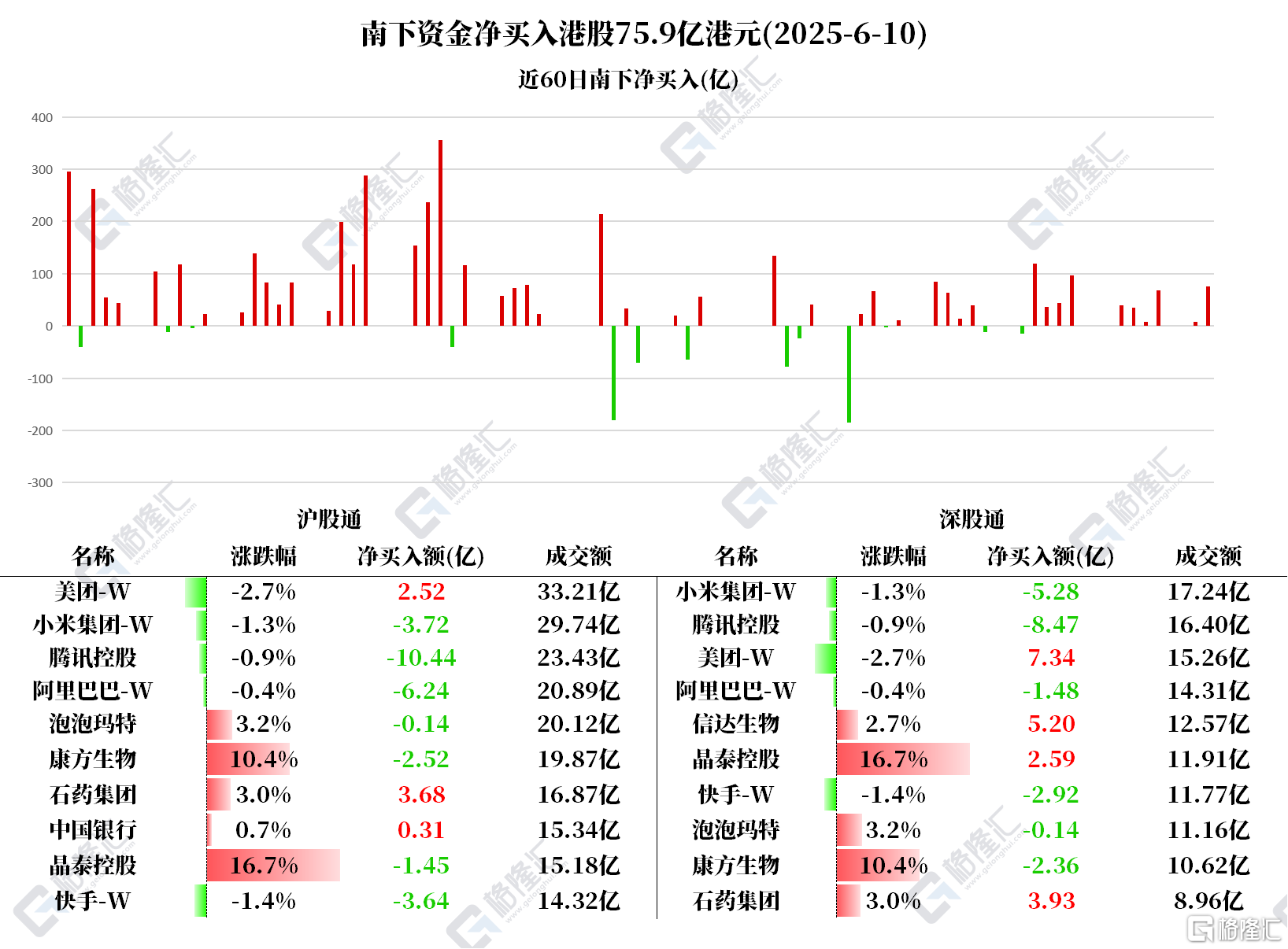
Group 1 - Southbound funds net bought Hong Kong stocks worth 75.9 billion HKD on June 10, with notable net purchases in Meituan-W (9.85 billion HKD), CSPC Pharmaceutical Group (7.61 billion HKD), and Innovent Biologics (5.19 billion HKD) [1] - Tencent Holdings saw a significant net sell-off of 18.92 billion HKD, alongside other companies like Xiaomi Group-W (8.99 billion HKD) and Alibaba-W (7.71 billion HKD) [1] - Meituan has experienced 17 consecutive days of net buying, totaling 185.1264 billion HKD, while Tencent has faced 8 consecutive days of net selling, amounting to 99.4492 billion HKD [1] Group 2 - Tencent Holdings experienced a slight decline of 0.87% and repurchased 973,000 shares at a price range of 509-520 HKD per share, costing 500 million HKD [6] - Meituan's stock dropped by 2.7%, while JD.com's daily order volume for food delivery surpassed 25 million, capturing over 31% of the national market share [6] - Meituan launched its first AI Coding Agent product, NoCode, aimed at various applications including data analysis and product prototype design [7] Group 3 - Xiaomi Group's stock fell by 1.29%, and the company addressed rumors regarding a fatal accident during high-level driving training, stating that it would pursue legal action against those spreading false information [7]

中国消费的“斯普特尼克时刻” |东哥笔记
Sou Hu Cai Jing· 2025-06-10 10:12
Core Insights - The article discusses the concept of "Sputnik Moment" in various sectors, particularly focusing on the need for a similar moment in Chinese consumer confidence, which has been lacking despite advancements in other industries [1][14]. Group 1: Biotechnology and Pharmaceuticals - CanSino Biologics' PD-1/VEGF dual antibody "Yivolumab" achieved a significant milestone by outperforming the global leader "K drug" in clinical trials, marking a leading position for China in the dual antibody sector [5]. - The proportion of large pharmaceutical companies engaging in significant transactions with Chinese biotech firms has surged from less than 5% before 2019 to 31% in 2024, indicating a growing recognition of China's biotech capabilities [6]. Group 2: Aerospace and Defense - China successfully conducted test flights of two sixth-generation fighter jets on December 26, 2024, marking a significant breakthrough in global aviation technology and establishing China as the first country to achieve this feat [7][8]. - The successful test flights signify a new phase in the competition for air combat dominance, with advanced features such as all-aspect stealth and AI integration [7][8]. Group 3: Artificial Intelligence - DeepSeek's R1 model achieved performance comparable to OpenAI's GPT-3 at a fraction of the training cost, leading to a significant drop in Nvidia's stock price and highlighting a pivotal moment in the AI sector [9]. - The advancements in AI technology from Chinese companies are prompting a reevaluation of strategies in the U.S. tech landscape, as noted by prominent venture capitalists [9]. Group 4: Automotive Industry - In 2024, China exported nearly 6 million vehicles, significantly outpacing Japan's 4 million, with BYD emerging as the largest brand for pure electric vehicles globally [10][11]. - The automotive sector is undergoing rapid changes, with Chinese brands like BYD and Geely ranking among the top ten global automotive brands, reflecting a shift in market dynamics [11]. Group 5: Consumer Confidence and Economic Challenges - Consumer confidence in China has been declining, with significant increases in household savings and deflationary pressures observed [3][14]. - The decline in consumer confidence can be traced back to several factors, including geopolitical tensions, the real estate crisis, and the impact of COVID-19 lockdowns [15][18][20]. - The article emphasizes the need for measures to stabilize the real estate market and enhance consumer confidence to stimulate domestic consumption [24][25].




未知机构:创新药大牛市分支思路—PD-(L)1 Plus成为海外药企必争之地 -202506-20250610
未知机构· 2025-06-10 01:55
Summary of Conference Call Notes Industry Overview - The conference focuses on the innovative pharmaceutical sector, particularly the PD-(L)1 Plus treatment landscape, which is becoming a competitive area for overseas pharmaceutical companies [1][2]. Key Insights and Arguments - **Market Performance**: The pharmaceutical sector has shown strong performance recently, with significant volatility in innovative drugs. The core stocks have remained relatively stable during adjustments, driven by short-term trading dynamics [3]. - **Investment Outlook**: There is a strong bullish sentiment towards the innovative drug market, supported by solid underlying logic and clear industry trends. Key innovative drug targets, especially those with BD expectations or PD-1 Plus logic, are expected to perform well even during market corrections [3]. - **Investment Strategy**: Four main investment lines are recommended: Chinese supermarkets, generic drug opportunities, re-evaluation of small-cap pipelines, and large overseas pharmaceuticals. The strategy includes a combination of buying and random rotation for explosive growth [3]. - **Focus Areas**: Attention is drawn to the PD-1 Plus logic, particularly the potential upgrade from PD-1/VEGF to PD-1/IL-2. Upcoming opportunities related to the ADA conference in late June and advancements in medical technology (brain-computer interfaces, rehabilitation robots, AI in healthcare) are highlighted [3]. - **2025 Outlook**: Optimism prevails for the pharmaceutical sector, with expectations of a structural bull market. Focus areas include innovative drugs, new technologies, and industry restructuring [3]. Clinical Data Insights - **Sinda's PD-1/IL-2 (IBI363) Data**: - In non-small cell lung cancer (wild-type), the 1-1.5 mg/kg group showed an ORR of 25.9% and a median OS of 15.3 months, while the 3 mg/kg group had an ORR of 36.7% and a median PFS of 9.3 months, suggesting a potential median OS of 20-25+ months [3]. - In lung adenocarcinoma (wild-type), the low-dose group (0.6/1.5 mg/kg) had an ORR of 13.08% and a median PFS of 2.7 months, while the high-dose group (3 mg/kg) showed an ORR of 24% and a median PFS of 5.6 months, with a potential median OS of 25-30 months [3]. - The data indicates a high OS/PFS ratio, particularly in lung adenocarcinoma, which is rare and suggests a potential to limit metastatic tumors [3][4]. Competitive Landscape - **PD-1 Plus Market**: The PD-(L)1 market is substantial, estimated at around $40 billion, and is undergoing innovation. Major multinational corporations are actively investing in PD-1 Plus, contributing to rising upfront payments in business development [6]. - **Key Companies to Watch**: Notable companies in the PD-1 Plus space include Sinda, Hengrui, BeiGene, Kangfang Biotech, Rongchang Biotech, Aosaikang, and Zhimeng Junshi [6]. Sector-Specific Updates - **Innovative Drugs**: The index for innovative drugs rose by 0.34% last week, with a positive long-term outlook driven by clinical data and business development catalysts [6]. - **Generic Drugs**: The index increased by 1.69%, outperforming the pharmaceutical index. Key events include the approval of a compound release tablet by Shenda and the acceptance of a conditional listing application for a hemophilia drug [6]. - **Traditional Chinese Medicine & Pharmacies**: The Chinese medicine index rose by 0.39%, while pharmacies increased by 1.67%, with a focus on policy impacts and operational strategies [6]. - **Medical Devices**: The medical device index rose by 1.11%, with attention on equipment updates and market recovery [6]. - **Life Sciences**: The life sciences sector saw an average increase of 1.47%, with a focus on operational recovery and investment trends [6]. Additional Considerations - **Stock Selection**: Emphasis on companies with clean shareholding structures, low stock prices, and positive future operational trends. Monitoring monthly operational data and overall consumption data is crucial [7].

创新药持续火爆,“吃药”行情后市怎么看?
Di Yi Cai Jing· 2025-06-09 13:09
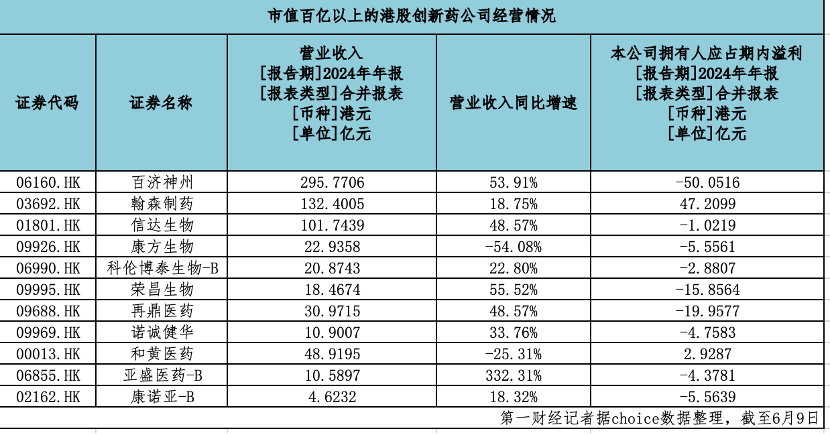
Core Viewpoint - The current "medication" market rally is distinct from previous ones, with leading gains concentrated in innovative pharmaceutical companies, particularly strong performance in the Hong Kong stock market [1][2] Group 1: Market Performance - On June 9, both Hong Kong and A-share innovative pharmaceutical sectors saw significant gains, with the Hang Seng Innovative Drug ETF rising by 4.08% and the Hong Kong Stock Connect Medical ETF increasing by 4.25% [3] - Notable individual stock performances included 3SBio (01530.HK) reaching a peak of 22.5 HKD, just shy of its historical high, and a 260% increase in its stock price since February [3] - The A-share innovative drug index rose by 31.5% and the Hong Kong innovative drug index surged by 61.54% since April 9, with several stocks doubling in value [4] Group 2: Catalysts for Growth - The surge in innovative drug stocks is attributed to multiple factors, including recent approvals for 11 innovative drugs from eight companies and promising clinical data for major diseases [5] - The upcoming 2025 ASCO annual meeting will feature 73 research studies from China, a 30% increase from the previous year [5] Group 3: Long-term Positive Factors - Many leading companies are approaching breakeven points, with significant revenue growth reported, particularly for Ascentage Pharma (332.31% growth) [7][8] - The overseas licensing deals have seen substantial increases, with a record-breaking deal of 6.05 billion USD for 3SBio's drug rights to Pfizer [9] - The overall licensing-out transactions in the innovative drug sector have surged, with 41 transactions in Q1 2024 alone, totaling 36.93 billion USD [9] Group 4: Policy Support - Recent policy changes are favorable for innovative drug companies, including optimized centralized procurement policies and increased support for innovative drugs in government reports [10] - The 2024 government work report includes 38 new innovative drugs in the medical insurance catalog, the highest ever, with plans for further optimization in 2025 [10] Group 5: Market Outlook - The valuation of the pharmaceutical sector remains relatively safe compared to other growth industries, with a current TTM P/E ratio of 27.1 times [11] - Some analysts suggest that the innovative drug sector is transitioning from following to leading in the global market, indicating a new era for domestic innovation [11] - However, there are concerns about potential short-term volatility due to rapid price increases and profit-taking by investors [11]


A股:值得长期持有的“创新药”公司名单,谁是下一个“创新药茅台”?
Sou Hu Cai Jing· 2025-06-09 11:02
Core Viewpoint - The Chinese pharmaceutical industry is transitioning from "generic drugs" to "innovative drugs," creating a golden development period for companies with core R&D capabilities, driven by policy support, capital influx, and market demand [1] Group 1: Reasons for Optimism in the "Innovative Drug" Sector - Policy Benefits: National strategic support for the shift from "generic" to "innovative" drugs [1] - Market Demand: Aging population and consumption upgrades ensure strong long-term growth [1] - Technological Breakthroughs: Chinese innovative drugs are gradually moving towards global markets, with companies like BeiGene achieving overseas licensing [1] Group 2: Notable A-Share Innovative Drug Companies - Hengrui Medicine (600276): Leading innovative drug company with the highest R&D investment in China, exceeding 6 billion in 2023, covering oncology, autoimmune diseases, and metabolic diseases [3] - BeiGene (688235): A benchmark for Chinese innovative drugs going global [5] - Innovent Biologics (01801.HK): One of the "PD-1 Four Little Dragons" with a rich pipeline [5] - Rongchang Biologics (688331): Leader in the ADC sector [7] - Kelun Pharmaceutical (002422): Transitioning from an infusion leader to innovative drugs [7] - East China Pharmaceutical (000963): Driven by both medical aesthetics and innovative drugs [7] - Kangfang Biologics (09926.HK): Leader in the dual antibody sector [7] Group 3: Market Trends and Dynamics - Accelerated inclusion of innovative drugs in medical insurance, leading to explosive sales growth [4] - New listing regulations for the Sci-Tech Innovation Board/B-shares allow unprofitable biotech companies to go public, improving the financing environment [4] - The aging population in China exceeds 280 million, with increasing treatment demands for diseases like cancer, diabetes, and cardiovascular issues [4] - Rising per capita medical expenditure and enhanced patient payment capabilities for high-end innovative drugs [4] Group 4: Investment Recommendations - Long-term holding of core leaders like Hengrui and BeiGene is advised [9] - Attention to emerging players in niche sectors such as ADC, dual antibodies, and GLP-1 drugs [9] - Monitoring of R&D risks, including clinical failures and price reductions in medical insurance [9]