BABA(09988)

Search documents
美股盘前要点 | 特朗普拟推迟访华行程,英伟达算力芯片营收剑指1万亿美元
Ge Long Hui A P P· 2026-03-17 12:36
Market Overview - US stock index futures showed slight increases, with Nasdaq futures up 0.14%, S&P 500 futures up 0.21%, and Dow futures up 0.26% [1][12] - Major European indices collectively rose, with Germany's DAX up 0.52%, UK's FTSE 100 up 0.8%, France's CAC up 0.73%, and the Euro Stoxx 50 up 0.62% [1][12] Economic Insights - Moody's indicated that if oil prices remain high in the coming weeks, the probability of a US economic recession could exceed 50% [4][14] - Morgan Stanley's chief strategist stated that the US stock market correction is nearing its end, maintaining a positive outlook for the next 6 to 12 months [5][15] Company Developments - NVIDIA's CEO Jensen Huang raised the revenue forecast for computing chips to $1 trillion and introduced the NemoClaw smart shrimp farming platform [6][15] - Meta's potential 20% workforce reduction could save $6 billion, which is still considered insufficient against its large expenditure budget [7][15] - xAI, led by Elon Musk, is significantly hiring financial professionals to enhance Grok into a "top-tier investment banking analyst" [8][15] - Micron's HBM4 production line has commenced mass production and shipping in Q1, with initial products designed for the Vera Rubin platform [9][15] - SK Group's chairman projected that the global memory chip shortage may persist until 2030 [10][15] - Roche plans to incorporate 2,176 NVIDIA chips to expand its global AI infrastructure [11][15] - NEBIUS intends to issue $3.75 billion in convertible senior bonds to fund data center construction [12][15] - Alibaba launched the world's first enterprise-level AI-native work platform "Wukong," aimed at creating a 24-hour operational "lobster army" [13][15] - Delta Air Lines raised its revenue guidance for Q1, with the CEO noting "very strong" travel demand [14][15] - Beyond Meat's preliminary Q4 revenue was approximately $61 million, falling short of expectations, leading to a delay in its annual report [15][15] - Tencent Music reported a 15.9% year-over-year increase in Q4 total revenue to 8.64 billion yuan, with adjusted net profit rising 7.6% to 2.58 billion yuan [16][16]


AI日报丨英伟达押注下一个万亿级机遇;阿里发布全球首个企业级Agent平台“悟空”;马斯克聘请信贷专家和银行家来提升Grok的金融策略能力
美股研究社· 2026-03-17 11:22
Core Insights - The article discusses the rapid development of artificial intelligence (AI) technology and its potential investment opportunities, particularly focusing on AI-related companies and market trends [3]. Group 1: Nvidia Developments - Nvidia's CEO Jensen Huang announced at the annual developer conference that the company's next-generation AI acceleration chips are expected to generate at least $1 trillion in revenue by the end of 2027 [5]. - Huang emphasized that the AI inference market has reached a turning point, with demand for inference computing power expected to grow exponentially [5]. - Nvidia plans to collaborate with the startup "Grok," which specializes in inference technology, to launch AI server systems aimed at the low-cost, low-latency inference computing sector [5]. Group 2: Huawei Innovations - Huawei introduced a new AI data infrastructure aimed at enhancing AI inference scenarios, which includes an AI data platform for central training and inference, as well as the FusionCube A1000 hyper-converged system for edge inference [6]. - The new infrastructure is designed to improve AI inference experiences, accelerate inference efficiency, and lower deployment barriers for AI applications [6]. Group 3: Baidu and Alibaba Initiatives - Baidu launched "Home Xiaolongxia," a product that integrates OpenClaw's complex task capabilities into home environments during its AI Day event [7]. - Alibaba unveiled the world's first enterprise-level AI-native work platform called "Wukong," which aims to provide teams and companies with a 24/7 operational support system [8]. Group 4: Meta's AI Investments - Meta Platforms Inc. plans to invest up to $27 billion over the next five years to utilize AI infrastructure from Nebius Group NV, aiming to compete in advanced AI model development [10]. - Starting in early 2027, Nebius will provide Meta with $12 billion worth of dedicated computing power, with an additional commitment of up to $15 billion for extra computing resources [10]. Group 5: xAI's Strategic Moves - Elon Musk's AI startup xAI is hiring financial experts to enhance the financial strategy capabilities of its Grok chatbot, positioning itself competitively in the investment software market [11]. Group 6: Nvidia's New AI Frontiers - Nvidia announced the launch of the Vera Rubin platform, which is set to advance "Agentic AI" with seven new chips entering mass production, optimizing every stage from pre-training to inference [12].



云计算50ETF新华联接:聚焦AI技术周期下半场的核心环节
Changjiang Securities· 2026-03-17 11:12
Investment Rating - The report does not explicitly state an investment rating for the cloud computing industry or the specific ETFs mentioned. Core Insights - The AI technology innovation cycle is divided into two halves: the first half focuses on model and method innovation, while the second half emphasizes problem definition and the integration of AI into real-world applications, with a focus on application value [4][7]. - The CSI Cloud Computing 50 Index comprehensively covers the entire cloud computing industry chain, balancing hardware and software, and aims to capture both AI computing infrastructure benefits and software growth opportunities [4][9]. - The report highlights that the cloud is a core component in the second half of the AI technology cycle, where the focus shifts from training to inference, making cloud computing essential for AI applications [7][79]. Summary by Sections Cloud Computing Overview - Cloud computing is defined as the centralized management and dynamic allocation of resources via the internet, likened to utilities like water and electricity [18]. - The global cloud computing market reached a size of 586.4 billion yuan in 2023, with a growth rate of 19.4%, and is expected to exceed one trillion dollars by 2027 [20]. AI's Impact on Cloud Computing - AI is creating new demands in the IaaS and MaaS layers, particularly for large model calls and custom model needs, leading to a shift in cloud service architectures [8][82]. - The business model for cloud computing is anticipated to transition from resource pricing to value pricing, which could enhance gross margins for cloud resources in the long term [8][85]. CSI Cloud Computing 50 Index - The index includes companies providing IaaS, PaaS, and SaaS, selected based on liquidity, growth potential, and market capitalization, ensuring a balanced representation of the cloud computing sector [9][10]. - The index has shown strong performance compared to mainstream indices, indicating its long-term investment value [9]. New Investment Opportunities - The report emphasizes the growth potential in the AI large model solutions market and the MaaS market, both expected to experience rapid growth in the coming years [87][88]. - The integration of GPU, cloud, and AI is seen as a significant growth driver, allowing cloud providers to differentiate their services and enhance their competitive edge [8][94].


Alibaba Stock Has Lost Its AI Mojo. It Just Did This Ahead of Earnings.
Barrons· 2026-03-17 10:49
Core Viewpoint - Alibaba Group Holding has experienced a decline in excitement regarding its position as China's leading artificial intelligence champion, primarily due to the loss of key AI developers in recent months [2]. Summary by Categories Company Developments - Alibaba is establishing a new business unit to oversee all its AI-related businesses, aiming to restore optimism among investors and stakeholders [2]. Market Sentiment - The overall enthusiasm for Alibaba's AI capabilities has diminished, reflecting broader concerns about the company's competitive edge in the rapidly evolving AI landscape [2].
Alibaba launches agentic AI tool for businesses with Slack, Teams integration plans
CNBC· 2026-03-17 10:24AI Processing
A general view of the Alibaba headquarters is at West Bund in Shanghai, China, on February 28, 2026. (Photo by Ying Tang/NurPhoto via Getty Images)Chinese technology giant Alibaba on Tuesday released a new agentic artificial intelligence tool, Wukong, for enterprise customers, as the company restructures and faces rising competition.The company told CNBC in a statement that Wukong allows businesses to manage multiple agents through a single interface, while offering "enterprise-grade security infrastructure ...
Audi Expects Profitability to Improve This Year as Work Continues to Cut Costs
WSJ· 2026-03-17 10:18
Core Insights - The automaker projects an operating margin of 6% to 8% for the current year, an increase from 5.1% in 2025 [1] Financial Performance - The expected operating margin reflects a positive trend in profitability for the automaker, indicating improved operational efficiency and cost management [1]

阿里大动作!“悟空”出世,打响企业级AI Agent攻坚战!
券商中国· 2026-03-17 07:44
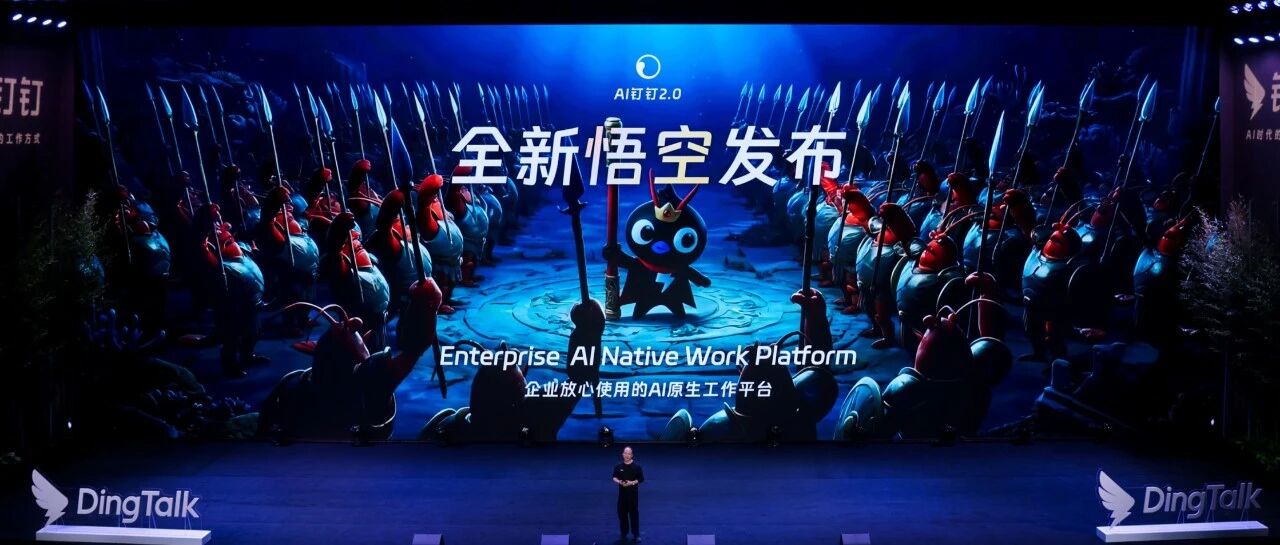
Core Viewpoint - Alibaba is launching a new enterprise-level AI-native work platform called "Wukong," which will be integrated into the DingTalk ecosystem, covering over 20 million organizations. This move signifies a strategic upgrade in Alibaba's enterprise service capabilities and AI integration [1][5]. Group 1: Product Launch and Features - The "Wukong" platform was officially unveiled on March 17, following the establishment of the Alibaba Token Hub (ATH) business group [2]. - DingTalk has undergone a significant transformation, with a complete rewrite of its underlying code to support a command-line interface (CLI), allowing AI to operate directly rather than simulating human actions [6]. - Wukong will also support global market expansion and integration with major instant messaging platforms like WeChat and Slack, enabling remote access for users [7]. Group 2: Strategic Integration and Market Positioning - Wukong aims to create the largest ToB Skill ecosystem globally, collaborating with developers to provide a comprehensive system for skill development, review, and distribution [8]. - The establishment of the ATH business group, led by CEO Wu Yongming, focuses on creating, delivering, and applying tokens, which are essential for the operation of AI agents [9]. - Wukong's integration with Alibaba's various B-end capabilities, including Taobao and Alipay, will enhance its functionality and market reach [9]. Group 3: Industry Solutions and Use Cases - Wukong introduced the OPT (One Person Team) solution, which provides industry-specific AI skills and workflows, allowing users to manage a team of AI agents tailored to their needs [10]. - For example, the "One Person Cross-Border E-commerce" solution streamlines operations from a week to an afternoon, showcasing the efficiency of AI in reducing manual tasks [11]. - The rapid transition from organizational restructuring to product launch highlights Alibaba's commitment to AI in the B2B sector [11].
阿里重兵投入B端:CEO直管Token事业群,首发企业级龙虾“悟空”
格隆汇APP· 2026-03-17 07:38
Core Viewpoint - Alibaba has launched the world's first enterprise-level Agent platform, "Wukong," aiming to bridge the gap between AI capabilities and enterprise needs, focusing on security, control, and cost measurement [2][10][19]. Group 1: Recent Developments - Within 48 hours, Alibaba announced the establishment of the Alibaba Token Hub (ATH) and the launch of the "Wukong" platform, marking a significant move in the B2B AI landscape [2][3]. - The AI competition is shifting from model capabilities to reasoning and execution, with a focus on transforming data centers into "Token factories" [3][11]. Group 2: Market Context - The AI sector is experiencing intense competition, with significant growth in user engagement, as evidenced by the DAU of "Qianwen" reaching 73.52 million during the Spring Festival [6][11]. - Despite the hype around AI Agents, many remain in the "geek toy" phase, lacking the necessary integration into real business processes [7][11]. Group 3: Wukong's Unique Positioning - Wukong is embedded within DingTalk, which has over 20 million enterprise organizations, providing a solid foundation for its deployment [8][9]. - The platform features a command-line interface (CLI) for direct operations, enhancing execution efficiency significantly compared to traditional AI tools [9][10]. Group 4: Core Capabilities - Wukong incorporates three essential capabilities: permission inheritance, sandbox operation, and measurable Token costs, addressing key enterprise concerns regarding security and accountability [10][12]. - The establishment of the ATH aims to create a seamless Token supply chain, ensuring the integration of AI capabilities into enterprise workflows [12][13]. Group 5: Value Proposition - Wukong introduces the "One Person Team" (OPT) concept, allowing individuals to leverage AI for complex tasks, significantly reducing operational time from a week to an afternoon [20][22]. - The platform also aims to create an AI capability market, integrating various B2B skills from Alibaba's ecosystem, thus enhancing its competitive edge [24][25]. Group 6: Strategic Implications - Alibaba's dual approach, with "Qianwen" focusing on consumer engagement and "Wukong" on enterprise integration, positions the company to capitalize on both ends of the AI market [28][29]. - The rapid evolution of Wukong is expected to redefine productivity in enterprises, marking a significant shift in how businesses operate with AI [30][31].
阿里推出企业级“龙虾”应用悟空
第一财经· 2026-03-17 06:49
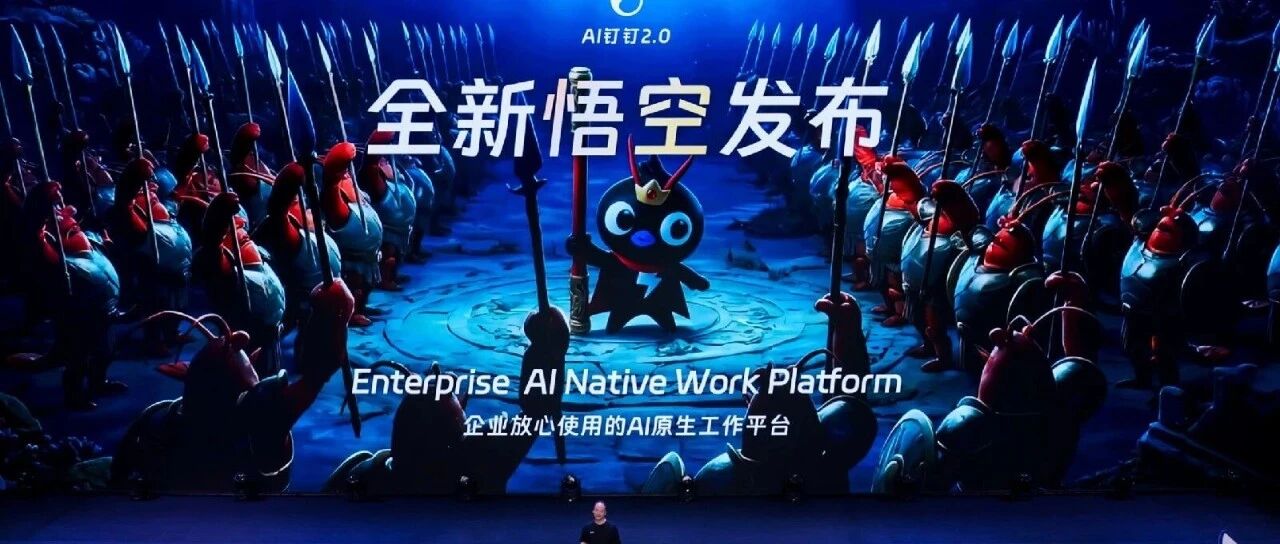
Core Viewpoint - The article discusses the launch of DingTalk's enterprise-level AI-native work platform "Wukong," which marks a significant evolution from a collaboration tool to an AI-native platform, emphasizing the importance of security in enterprise applications amidst the rapid adoption of AI technologies [3][5]. Group 1: Product Launch and Features - DingTalk has introduced "Wukong," an AI-native work platform that will be integrated into over 20 million enterprise organizations [3]. - The platform will support user connections to DingTalk accounts, security access permissions, and application systems, with Alibaba's ToB capabilities embedded as skills [5]. - Wukong aims to provide industry-specific solutions, launching the first batch of ten solutions covering e-commerce, cross-border e-commerce, and knowledge-based bloggers, allowing users to have a specialized "Agent team" for their tasks [5]. Group 2: Security Concerns and Competitive Advantage - The rapid rise of AI tools has raised security concerns, with incidents of data leaks and unauthorized access reported, highlighting the need for robust security measures in enterprise environments [5][6]. - Wukong's competitive advantage lies in its integration with existing enterprise data, organizational structures, and permissions, allowing AI agents to inherit corporate rules automatically [6]. - The platform enhances local security execution and full-chain audit capabilities to ensure AI actions are traceable and manageable, enabling IT departments to control AI agent operations and security policies [6]. Group 3: Future Business Model and Global Expansion - Alibaba has established the Alibaba Token Hub (ATH) business group, with Wukong positioned to integrate AI capabilities deeply into enterprise workflows [6]. - The future business model for Wukong may shift towards API-based usage, allowing for on-demand and performance-based payment structures [6]. - Wukong plans to expand into global markets, with support for major IM platforms like WeChat and Slack [7].
阿里重磅发布!蚂蚁大手笔收购!
新华网财经· 2026-03-17 05:13
Group 1 - Alibaba launched the world's first enterprise-level AI-native work platform called "Wukong" on March 17, which will be integrated into over 20 million enterprise organizations using DingTalk [2] - The establishment of Alibaba Token Hub (ATH) business group was announced on March 16, with the Wukong division aimed at deeply integrating AI model capabilities into enterprise workflows [2] - DingTalk, with 800 million users, has undergone a complete CLI (Command Line Interface) transformation, allowing Wukong Agent to operate thousands of capabilities natively rather than simulating human clicks [2] Group 2 - Wukong will enter the global market and support connections with major IM platforms like WeChat and Slack, enabling users to invoke Wukong remotely on both computers and mobile devices [3] - Wukong introduced the OPT (One Person Team) solution, which is the first to translate AI skills from a technical concept into industry-level, ready-to-use products, covering ten initial scenarios including e-commerce and legal services [3] - Ant Group's tender offer for Yao Cai Securities has received regulatory approval and is expected to complete by March 30, with trading resuming on March 17 [3]