POP MART(09992)

Search documents
“一键买入”泡泡玛特、老铺黄金 韩国巨头出手
Zhong Guo Ji Jin Bao· 2025-11-25 16:24
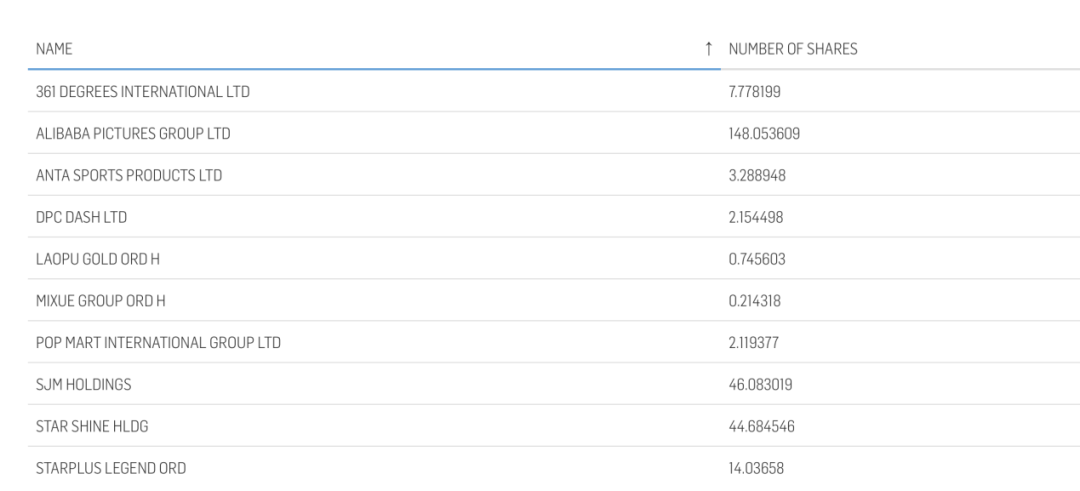
Group 1: Core Insights - South Korean asset management firm Shinhan Asset Management has launched the SOL China Consumption Trend ETF, which tracks the Solactive-KEDI China Consumption Index to capture growth in the consumer markets of mainland China and Hong Kong [1][5] - The ETF is set to be listed on the Korean Exchange on November 25, 2025, highlighting the importance of domestic consumption in China and the structural shift from export-driven growth to consumption-driven economy [5] Group 2: Index Composition and Methodology - The Solactive-KEDI China Consumption Index selects and tracks the top ten consumer discretionary or staples companies listed in Hong Kong based on liquidity and growth, including sectors like retail, dining, and entertainment [2][3] - Eligible constituents must have a rolling twelve-month sales growth rate of at least 10%, with the scoring based 30% on market capitalization and 70% on sales growth rate [2][3] Group 3: Current Index Constituents - As of now, the index includes companies such as 361 Degrees International Ltd, Alibaba Pictures Group Ltd, Anta Sports Products Ltd, and others, reflecting a diverse range of consumer sectors [4] Group 4: Investment Trends - In the past month, South Korean investors have shown significant interest in Chinese stocks, particularly in sectors like semiconductors and electric vehicles, with net purchases amounting to approximately $46.32 million in the Global X China Semiconductor ETF [6][8] - Cumulatively, since the beginning of 2025, South Korean investors have engaged in transactions totaling $10.32 billion in Hong Kong and A-shares, making China the second most favored overseas market after the United States [8]


智通港股沽空统计|11月25日
智通财经网· 2025-11-25 00:26
Core Insights - The article highlights the top short-selling stocks in the market, indicating significant investor skepticism towards these companies [1][2]. Short-Selling Ratios - Lenovo Group-R (80992) has the highest short-selling ratio at 87.71%, followed by Ping An Insurance-R (82318) at 69.65% and Shougang Resources (00639) at 62.81% [1][2]. - The short-selling amounts for Alibaba-SW (09988), Tencent Holdings (00700), and Xiaomi Group-W (01810) are the highest, amounting to 5.06 billion, 1.62 billion, and 1.17 billion respectively [1][2]. Deviation Values - Shougang Resources (00639) leads in deviation value at 48.27%, followed closely by Ping An Insurance-R (82318) at 46.76% and FIH Mobile Limited (02038) at 46.20% [1][2]. - The deviation value indicates the difference between the current short-selling ratio and the average short-selling ratio over the past 30 days, suggesting heightened market volatility for these stocks [3].


智通港股通资金流向统计(T+2)|11月25日
智通财经网· 2025-11-24 23:32
Core Insights - The article highlights the net inflow and outflow of funds in the Hong Kong stock market, with specific focus on the top performers and laggards in terms of capital movement [1][2][3] Fund Inflows - The top three stocks with the highest net inflow are: - 盈富基金 (02800) with a net inflow of 74.33 billion, representing a 24.09% increase in capital [2] - 恒生中国企业 (02828) with a net inflow of 19.17 billion, showing a 29.84% increase [2] - 南方恒生科技 (03033) with a net inflow of 14.88 billion, reflecting a 14.32% increase [2] Fund Outflows - The top three stocks with the highest net outflow are: - 小米集团-W (01810) with a net outflow of -6.11 billion, indicating a -4.66% decrease [2] - 泡泡玛特 (09992) with a net outflow of -2.74 billion, showing an -8.07% decrease [2] - 兖矿能源 (01171) with a net outflow of -1.84 billion, reflecting a -43.34% decrease [2] Net Inflow Ratios - The stocks with the highest net inflow ratios are: - 南方港美科技 (03442) at 75.22% with a net inflow of 711.95 million [2] - 工银南方中国 (03167) at 75.00% with a net inflow of 10.4 million [2] - 保诚 (02378) at 64.37% with a net inflow of 539.33 million [2] Net Outflow Ratios - The stocks with the highest net outflow ratios are: - 中国春来 (01969) at -67.51% with a net outflow of -146.76 million [3] - 丘钛科技 (01478) at -58.59% with a net outflow of -969.83 million [3] - 中国东方教育 (00667) at -56.10% with a net outflow of -1830.56 million [3]

泡泡玛特入选2025福布斯出海全球化30&30 国际化战略收获高度认可
Sou Hu Wang· 2025-11-24 09:19
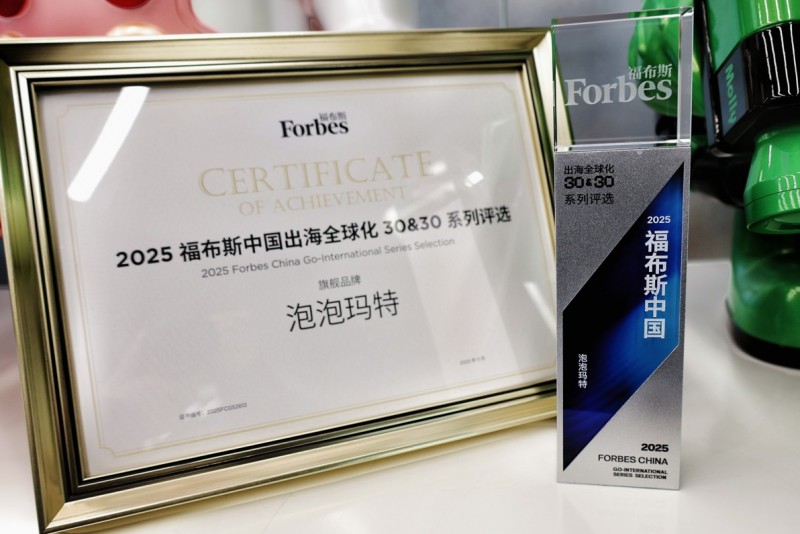
作为全球领先的潮流文化娱乐集团,泡泡玛特今年迎来了集团成立十五周年。2025上半年,泡泡玛特旗 下五大IP营收破十亿,13大IP营收破亿,IP影响力全球破圈,其中多款IP已经成为连接全球的情感纽 带,受到不同文化背景消费者的广泛认可与喜爱。随着国际化战略的深入推进,泡泡玛特的全球影响力 持续攀升:2025上半年,泡泡玛特四大区域业绩均实现超三位数增长,美洲增速超十倍,国际化战略迎 来首轮爆发。 今年以来,泡泡玛特持续进驻全球知名地标,在英国剑桥、印尼巴厘岛等地标性位置开设了首家门店。 截止目前,泡泡玛特全球门店数量已突破570家。近期,泡泡玛特中东地区首家门店登陆卡塔尔多哈哈 马德国际机场,成为首个入驻多哈机场的中国品牌。未来,泡泡玛特将继续坚守品牌初心,不断向上生 长,为全球消费者带来更多快乐和美好。 近日,《福布斯中国》正式发布"2025福布斯中国·出海全球化30&30"榜单。其中,泡泡玛特荣登"2025 福布斯中国出海全球化旗舰品牌30"榜单,一同入选该榜单的还有海尔集团、美的集团、商汤科技、携 程集团等多家企业。此外,泡泡玛特国际集团联席COO文德一也当选了"2025福布斯中国出海领军人 物"。 当下 ...
2025年中国潮玩经济行业研究报告
Sou Hu Cai Jing· 2025-11-24 05:46
Core Insights - The Chinese潮玩 (trendy toy) market is rapidly growing, projected to reach 100 billion yuan by 2024, with a year-on-year growth of 26% to 727 billion yuan in 2024, driven by the emotional consumption needs of Generation Z [1][3][15] -潮玩 differs significantly from traditional toys in terms of target audience, functionality, and value, focusing on artistic design and collectibility, primarily appealing to consumers aged 14 and above [1][19][24] Market Overview - The潮玩 market is characterized by a strong presence of brands like泡泡玛特, which leads the industry with its original IPs such as Labubu and Molly, leveraging social media for viral marketing and community engagement [2][3] - The潮玩 industry is integrating new technologies like XR, AI, and NFC to create interactive products, expanding the functionality and user engagement of潮玩 [2] Industry Structure - The潮玩 industry has established a complete value chain from IP rights holders to manufacturers and retailers, with IP being a core driver of consumer demand [2][3] - Notable IPs such as Disney and Pokémon continue to empower潮玩 products through licensing agreements, while domestic IPs like米哈游 are also emerging [2] Segment Analysis - Various潮玩 segments, including blind boxes, cards, and figurines, are experiencing rapid growth, with the "谷子经济" (secondary market) reaching a market size of 168.9 billion yuan in 2024, primarily targeting the post-2000 generation [2][3] International Expansion - Chinese潮玩 brands are expanding into Southeast Asia and North America, with泡泡玛特's overseas revenue growing by 375.2% year-on-year in 2024, indicating increasing global competitiveness [3] Future Outlook - The潮玩 economy reflects a shift in the Chinese toy industry from manufacturing to creativity, with expectations for higher quality growth as technology integration and IP content continue to evolve [3]
泡泡玛特_花旗 2025 中国峰会新动态_优先关注 IP 运营可持续性;首选标的
花旗· 2025-11-24 01:46
Investment Rating - The report rates Pop Mart shares as a Buy, indicating a strong investment opportunity in the pop toy sector [12][4]. Core Insights - Pop Mart is recognized as a leading player in the pop toy industry in China, with a strong capability in IP incubation and operation, which positions it well for growth in the consumer market [12][11]. - The company is expected to see improved investor confidence with upcoming product launches and the popularity of its non-LABUBU IPs in international markets [1]. - The report highlights the company's proactive approach to managing growth sustainability and addressing single IP risks through a diversified IP ecosystem [3]. Financial Performance - For the fiscal year ending December 31, 2025, the projected net profit is RMB 13,551 million, with a diluted EPS of RMB 10.160, reflecting a significant growth of 333% compared to the previous year [3][7]. - The expected total return on shares is 93.9%, with a target price set at HK$415.00, representing a potential share price return of 91.8% from the current price of HK$216.40 [4][7]. Growth Strategy - The company plans to enhance the LABUBU IP with new product launches and designs, aiming for a strong market presence in 2026 [2]. - Pop Mart is expanding its international footprint, with plans to operate over 60 stores in the US by the end of 2025 and additional stores in Canada, Mexico, and the Middle East [8]. - The company is focusing on localized operations in overseas markets, including collaborations with local artists and IP designs [8]. Supply Chain Management - Pop Mart is optimizing its production strategy by initially producing 70% of projected sales volume and adjusting stock based on market demand, which is expected to improve sales projection accuracy [9]. - The company has expanded its overseas supply chain, with a portion of production now in Vietnam, and plans to establish more local warehouses for international markets [9].
泡泡玛特_Labubu 进军好莱坞
2025-11-24 01:46
November 16, 2025 11:13 PM GMT Pop Mart | Asia Pacific M Update Fun Bites: Labubu Goes Hollywood Key Takeaways Timely news to ease negative narrative on Labubu: We think market has underestimated Pop Mart's proactive measures in driving IP popularity. Beyond new product launches, its engagement in entertainment - such as theme parks, movies, and celebrity collaboration - are effective measures to sustain its IP lifecycle, in our view. If this movie deal comes to fruition, potential upside for consumer reach ...
潮玩行业系列深度报告:穿越经济周期,拥抱潮流成长-万联证券
Sou Hu Cai Jing· 2025-11-23 17:49
Group 1 - The core viewpoint of the report is that the潮玩 (trendy toy) industry is experiencing rapid growth in China, driven by factors such as rising disposable income, emotional consumption, and the emergence of quality domestic IPs. The market size is projected to grow from 229 billion to 763 billion yuan from 2020 to 2024, with a CAGR of 35.11% [3][40]. -潮玩 is characterized by its integration of trendy culture, art, design, and various elements, appealing primarily to individuals aged 15 and above, and it serves as a collectible with social and emotional connections [2][19]. - The潮玩 industry value chain is centered around IP, with upstream IP suppliers having strong bargaining power based on the scarcity and popularity of their IPs, while midstream manufacturers face intense competition and lower bargaining power [6][22]. Group 2 - The Chinese潮玩 market is currently fragmented, with the top five companies holding only 26.4% of the market share, indicating significant room for growth compared to Japan's 45% [3][8]. - The report draws parallels with the Japanese toy industry, which saw growth despite economic downturns due to a shift in consumer focus towards anime and gaming, suggesting that similar trends may occur in China as emotional consumption rises [7][26]. - The rise of quality domestic IPs, such as《原神》 and《黑神话:悟空》, is expected to enhance the潮玩 market, although there remains a significant gap in IP value and revenue compared to the US and Japan [3][10]. Group 3 - Multiple factors are driving the expansion of the潮玩 market in China, including increased disposable income, a shift towards emotional consumption, and the growth of the泛二次元 (broad two-dimensional) user base, which is projected to reach 503 million by 2024 [40][48]. - The emotional consumption trend is particularly strong among younger demographics, with 78% of emotional consumers being born in the 1990s and 2000s, highlighting a shift in consumer behavior towards seeking emotional fulfillment through purchases [44][47]. - The rapid increase in offline潮玩 retail stores, such as泡泡玛特 and TOPTOY, enhances consumer experience and supports market growth, with泡泡玛特's store count rising from 329 to 401 between 2022 and 2024 [52][54].

2025潮玩、谷子、AI玩具,拥抱年轻人爱玩之心-中国银河
Sou Hu Cai Jing· 2025-11-23 10:15
Group 1: Trend of Trendy Toys - The younger generation's "love for play" is reshaping market dynamics, with trendy toys, "Guzi," and AI toys becoming popular among Generation Z due to their emotional value and interactive experiences [1][2] - The trendy toy market has shown strong growth, with a compound annual growth rate (CAGR) of 34% from 2015 to 2022, and is expected to exceed 76 billion yuan in 2024 [1][10] - Generation Z, with a disposable income exceeding 3,500 yuan per month, is a significant consumer group, seeking artistic and unique products while enhancing their sense of belonging through second-hand community trading [1][17] Group 2: Guzi Market Growth - "Guzi," referring to merchandise derived from anime and games, is gaining popularity among young consumers, with the market expected to grow by 41% year-on-year to reach 168.9 billion yuan in 2024 [2][23] - The low price range of Guzi products (10 to 30 yuan) makes them accessible, turning them into "social currency" among teenagers [2][23] - The rapid increase in offline Guzi stores has significantly boosted foot traffic in shopping malls, exemplified by a tenfold increase in a Wuhan mall after introducing Guzi stores [2][31] Group 3: AI Toys Integration - The integration of AI technology into toys is becoming more prevalent, with AI-driven toys expected to account for over 15% of the global toy market by 2025 [6][35] - AI toys, such as Sony's AIBO and Robosen's transforming robots, are gaining popularity, with some products experiencing resale prices exceeding their original prices [6][41] - Chinese companies are actively entering the AI toy market, with products featuring built-in large models for interactive experiences, expanding market boundaries [2][6] Group 4: Cultural Export and Global Appeal - The new wave of toys not only meets the emotional needs of domestic youth but also serves as a significant vehicle for Chinese culture to go global, with brands like Pop Mart achieving explosive growth in overseas markets [3][6] - In 2024, revenue from Pop Mart's Hong Kong, Macau, and overseas businesses is expected to grow by 375% year-on-year, highlighting the global appeal of Chinese trendy toy culture [3][6] Group 5: Investment Opportunities - The trendy toy, Guzi, and AI toy sectors are benefiting from multiple driving forces, maintaining high growth rates and promising future development prospects [6][8] - Recommended companies for investment include Pop Mart, Blok, and Guangbo Co., with a focus on AI toy companies like Shifeng Culture and TCL Electronics [6][8]


千亿玩具潮玩市场,在淘宝天猫寻找下一个“爆款密码”?
Sou Hu Cai Jing· 2025-11-21 16:04
Core Insights - The younger generation is increasingly engaged in purchasing collectibles and trendy toys, indicating a shift in consumer behavior towards emotional value rather than practicality [2][20] - The toy and trendy toy market in China is projected to reach approximately 153.6 billion yuan by 2025, with a year-on-year growth of 26%, highlighting it as a significant new consumption trend [2][11] - Tmall has established itself as the leading online platform for trendy toys, capturing 75.8% of the market share during the first phase of the Double 11 sales event in 2025 [5][11] Market Dynamics - The Tmall platform has seen a consistent double-digit growth in the trendy toy sector during the Double 11 period, with over 300,000 new products launched and more than 10,000 merchants experiencing doubled growth [2][10] - The trend of limited edition releases and the cultural significance of collectibles have created a unique consumer experience, where purchasing items at original prices is perceived as a victory [9][10] - The collaboration between Tmall and major IP companies like miHoYo and Bubble Mart has led to significant sales achievements, with some products reaching sales figures exceeding 500 million yuan [13][19] Consumer Behavior - The consumer base for trendy toys is expanding across various age groups, from elementary school students to older generations, indicating a broad appeal [8][28] - The emotional connection and community aspect of collecting trendy toys are driving consumers to engage in late-night purchases and participate in exclusive sales events [9][30] - The rise of "star trendy toys" associated with popular figures has further accelerated sales, showcasing the intersection of fandom and consumerism [28][30] Strategic Positioning - Tmall's long-term strategic investments in the trendy toy sector have established a robust infrastructure that supports brands in logistics, marketing, and consumer engagement [14][18] - The platform's ability to provide comprehensive support for brands, including data insights and marketing strategies, has positioned it as a critical player in the growth of the trendy toy market [23][24] - Tmall's focus on emotional value and community engagement is reshaping the landscape of consumer goods, making it a fertile ground for emerging brands and trends [30][22]