
POP MART(09992)

Search documents
智通港股沽空统计|11月12日
智通财经网· 2025-11-12 00:23
Core Insights - The highest short-selling ratios were observed for Lenovo Group-R, Li Ning-R, and JD Health-R, all at 100.00% [1] - The top three companies by short-selling amount were Alibaba-SW, Tencent Holdings, and Xpeng Motors, with amounts of 2.028 billion, 1.373 billion, and 1.113 billion respectively [1] - The highest deviation values were recorded for SenseTime-WR, Lenovo Group-R, and Kuaishou-WR, with values of 39.79%, 32.17%, and 30.02% respectively [1] Short-Selling Ratio Rankings - Lenovo Group-R had a short-selling amount of 1.6136 million with a ratio of 100.00% and a deviation of 32.17% [2] - Li Ning-R reported a short-selling amount of 23.8 thousand with a ratio of 100.00% and a deviation of 21.97% [2] - JD Health-R had a short-selling amount of 16.8 thousand with a ratio of 100.00% and a deviation of 26.39% [2] - The short-selling ratio for SenseTime-WR was 93.15% with a short-selling amount of 851.7 thousand and a deviation of 39.79% [2] Short-Selling Amount Rankings - Alibaba-SW led with a short-selling amount of 2.028 billion, a ratio of 17.38%, and a deviation of 2.52% [2] - Tencent Holdings followed with a short-selling amount of 1.373 billion, a ratio of 16.18%, and a deviation of -0.71% [2] - Xpeng Motors had a short-selling amount of 1.113 billion, a ratio of 12.34%, and a deviation of -3.96% [2] Short-Selling Deviation Rankings - SenseTime-WR had the highest deviation value of 39.79% with a short-selling amount of 851.7 thousand and a ratio of 93.15% [2] - Lenovo Group-R followed with a deviation of 32.17%, a short-selling amount of 1.6136 million, and a ratio of 100.00% [2] - Kuaishou-WR recorded a deviation of 30.02% with a short-selling amount of 107.84 thousand and a ratio of 79.04% [2]




智通ADR统计 | 11月12日
智通财经网· 2025-11-11 22:19
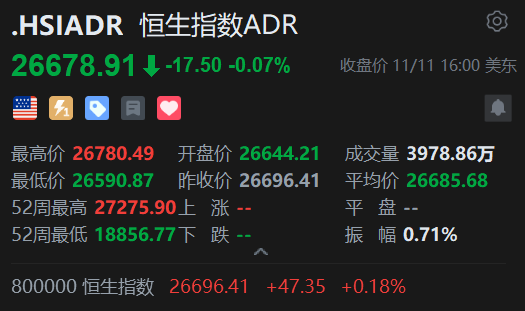
Core Viewpoint - The Hang Seng Index (HSI) experienced a slight decline, closing at 26,678.91, down 0.07% from the previous day, indicating a mixed performance in the Hong Kong stock market with some large-cap stocks showing gains while others faced losses [1][2]. Group 1: Market Performance - The Hang Seng Index closed at 26,678.91, down 17.50 points or 0.07% [1]. - The index reached a high of 26,780.49 and a low of 26,590.87 during the trading session, with a trading volume of 39.788 million shares [1]. - The average price for the day was 26,685.68, with a 52-week high of 27,275.90 and a low of 18,856.77 [1]. Group 2: Major Stock Movements - HSBC Holdings closed at 112.744 HKD, up 0.31% from the previous close [2]. - Tencent Holdings closed at 651.079 HKD, reflecting a 0.17% increase [2]. - Alibaba Group saw a decline, closing at 160.400 HKD, down 1.84% [3]. - Other notable movements included AIA Group up 1.29% and Meituan down 1.26% [3].





汉堡王中国易主:CPE源峰斥资3.5亿美元拿下83%股权
Guan Cha Zhe Wang· 2025-11-11 12:09
Core Insights - The recent establishment of a joint venture "Burger King China" between CPE Yuanfeng and RBI Group marks a significant shift in the ownership structure of Burger King's operations in China, with CPE Yuanfeng acquiring approximately 83% control [1][2] - CPE Yuanfeng will inject $350 million (approximately 2.5 billion RMB) into the joint venture to support expansion, marketing, menu innovation, and operational improvements [1] - The joint venture aims to increase the number of Burger King outlets in China from around 1,250 to over 4,000 by 2035, representing more than a twofold increase [3] Company Background - Burger King entered the Chinese market in 2005 and has undergone several ownership changes, with RBI acquiring full control in 2025 before this latest transaction [2] - CPE Yuanfeng has extensive investment experience in the consumer services sector, with a total investment of approximately 10 billion RMB in various well-known brands [2] Market Context - The expansion plan for Burger King China comes amid challenges, as the brand currently lags behind competitors like KFC and McDonald's, which have over 12,000 and nearly 8,000 outlets in China, respectively [3][4] - The trend of foreign restaurant brands in China shifting to local capital partnerships is evident, as seen with Starbucks recently selling 60% of its Chinese operations to a local investor [3]




11月11日南向资金净买入44.67亿港元
Zheng Quan Shi Bao Wang· 2025-11-11 11:52
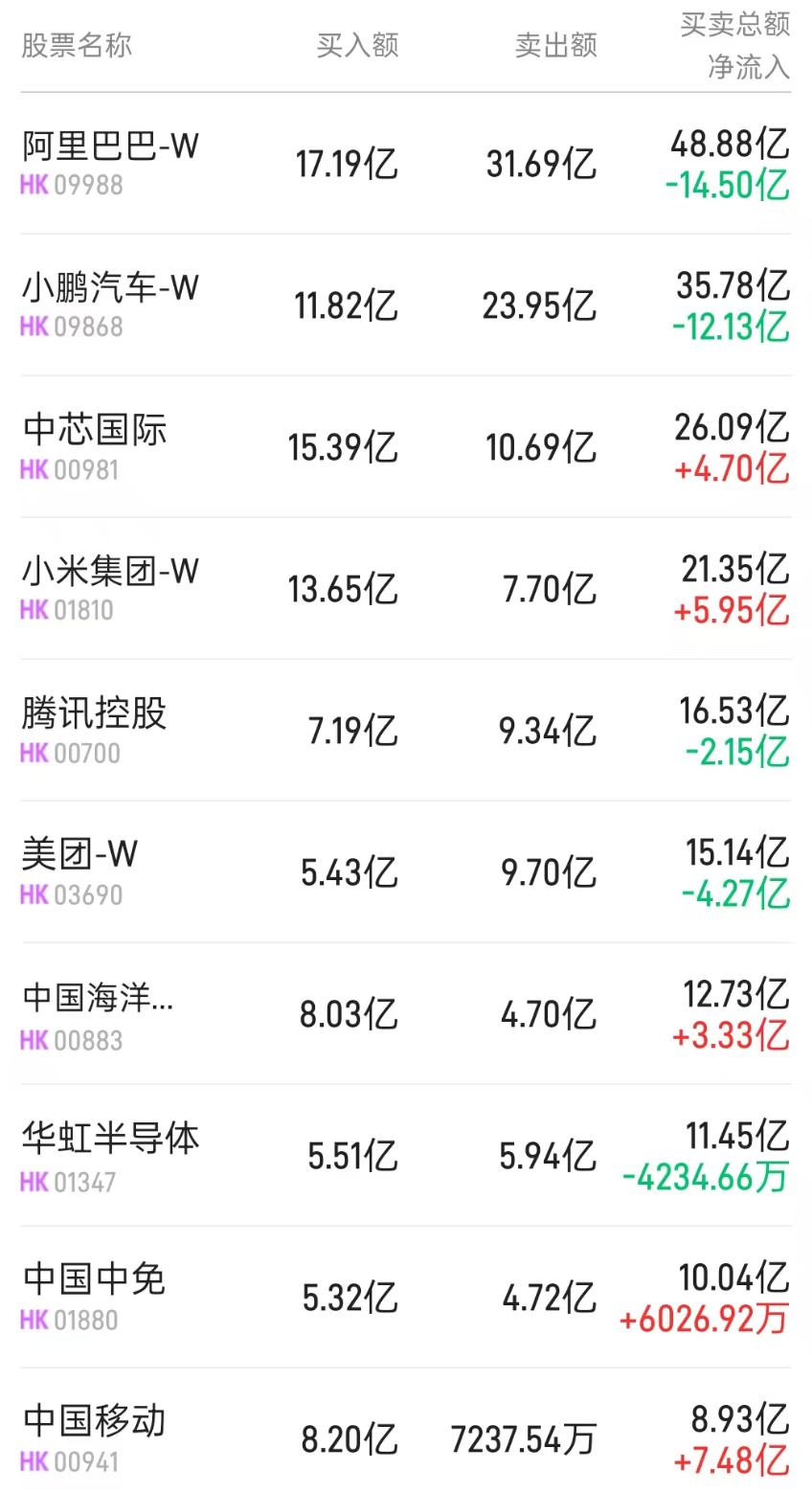
Market Overview - On November 11, the Hang Seng Index rose by 0.18%, closing at 26,696.41 points, with a total net inflow of southbound funds through the Stock Connect amounting to HKD 4.467 billion [1][3] - The total trading volume for the Stock Connect on the same day was HKD 89.849 billion, with a net buying amount of HKD 4.467 billion [1][3] Trading Activity - In the Shanghai Stock Connect, the trading volume was HKD 54.437 billion, with a net inflow of HKD 2.681 billion; in the Shenzhen Stock Connect, the trading volume was HKD 35.412 billion, with a net inflow of HKD 1.786 billion [1][3] - The most actively traded stock in the Shanghai Stock Connect was Alibaba-W, with a trading volume of HKD 48.88 billion, followed by Xpeng Motors and SMIC, with trading volumes of HKD 35.78 billion and HKD 26.09 billion, respectively [1][3] Stock Performance - In terms of net buying, China Mobile led with a net inflow of HKD 748 million, closing up by 0.80%. Conversely, Alibaba-W had the highest net selling amount of HKD 1.45 billion, closing down by 1.84% [1][3] - In the Shenzhen Stock Connect, Alibaba-W also topped the trading volume with HKD 26.29 billion, followed by SMIC and Xpeng Motors, with trading volumes of HKD 22.41 billion and HKD 21.80 billion, respectively [2][3] - The stock with the highest net buying in the Shenzhen Stock Connect was the Tracker Fund of Hong Kong, with a net inflow of HKD 651 million, closing up by 0.15%. Xpeng Motors had the highest net selling amount of HKD 1.053 billion, closing up by 17.93% [2][3]



北水动向|北水成交净买入44.67亿 小鹏(09868)股价创三年新高 北水逢高抛售超22亿港元
智通财经网· 2025-11-11 09:58
Core Insights - The Hong Kong stock market saw a net inflow of 44.67 billion HKD from Northbound trading on November 11, with the Shanghai Stock Connect contributing 26.81 billion HKD and the Shenzhen Stock Connect contributing 17.86 billion HKD [1] Group 1: Stock Performance - The most bought stocks included Xiaomi Group-W (01810), with a net inflow of 11.76 billion HKD, and the Yingfu Fund (02800), which saw a net inflow of 6.5 billion HKD [1][5] - The most sold stocks were XPeng Inc-W (09868), with a net outflow of 22.65 billion HKD, Alibaba-W (09988) with a net outflow of 20.24 billion HKD, and Tencent (00700) with a net outflow of 4.64 billion HKD [1][6][7] Group 2: Company-Specific Developments - Xiaomi Group-W reported strong sales in the electric vehicle sector, with 48,654 units sold in October, and is expected to announce third-quarter earnings on November 18, with projected revenue of 29 billion CNY from innovative businesses [4][5] - The Yingfu Fund is supported by low valuations in the Hong Kong stock market and multiple favorable factors, indicating a potential continuation of the market's upward trend into next year [5] - XPeng Inc-W's stock surged by 18%, attributed to the launch of new products, including the second-generation VLA model and Robotaxi, which may enhance market sentiment and valuation [7] Group 3: Market Sentiment and Predictions - Analysts predict that the Hong Kong stock market may experience continued upward momentum due to low valuations and supportive factors, despite short-term volatility [5] - Concerns regarding AI market bubbles and high valuations in overseas tech stocks may lead to increased short-term volatility for Tencent and Alibaba as they prepare to announce their earnings [6]
告别“地板价”:中国新消费的海外溢价战争
3 6 Ke· 2025-11-11 09:47
Core Insights - The article highlights the transformation of Chinese brands in the global market, moving from low-cost manufacturing to a focus on value and brand identity, reshaping the perception of "Made in China" [2][3][5] Group 1: Market Performance - Pop Mart's revenue in the Americas for Q3 increased by 1265%-1270% year-on-year, showcasing the popularity of its products [2] - Bawang Chaji's overseas GMV reached RMB 235.2 million in Q2, a year-on-year increase of 77.4% [2] - Anker Innovations reported a revenue of RMB 3.427 billion in Europe for the first half of the year, marking a 66.96% year-on-year growth [2] Group 2: Brand Strategy - The shift in Chinese brands' strategy emphasizes "value export" rather than competing solely on price, indicating a deeper engagement in global markets [3][20] - Brands are focusing on emotional connections and cultural narratives, moving from a "function economy" to an "emotional economy" [15][17] - The success of these brands is attributed to their ability to resonate with global consumers' emotional and cultural needs [10][15] Group 3: Consumer Trends - The rise of Generation Z, which constitutes about 25% of the global population, is reshaping consumption patterns, emphasizing individuality and brand values [11][15] - Z generation consumers are willing to pay a premium for brands that align with their values and provide quality experiences [11][15] Group 4: Localization and Cultural Integration - Anker Innovations has tailored its products to local markets, enhancing brand affinity through localized designs and marketing strategies [19] - Bawang Chaji's store designs and product names reflect Chinese cultural elements, appealing to consumers' aesthetic and cultural curiosity [17][18] Group 5: Future Outlook - The article suggests that the future of Chinese brands lies in defining new lifestyles and cultural identities, moving beyond mere product sales to lifestyle and cultural representation [21][25] - The concept of "value export" is seen as a critical phase for Chinese companies to enhance their global competitiveness and influence [20][25]
79元的“含金量”:泡泡玛特全球已截获超1000万件假货 拟与国际刑警组织合作打假|进博会
Zhong Guo Jing Ying Bao· 2025-11-11 07:29
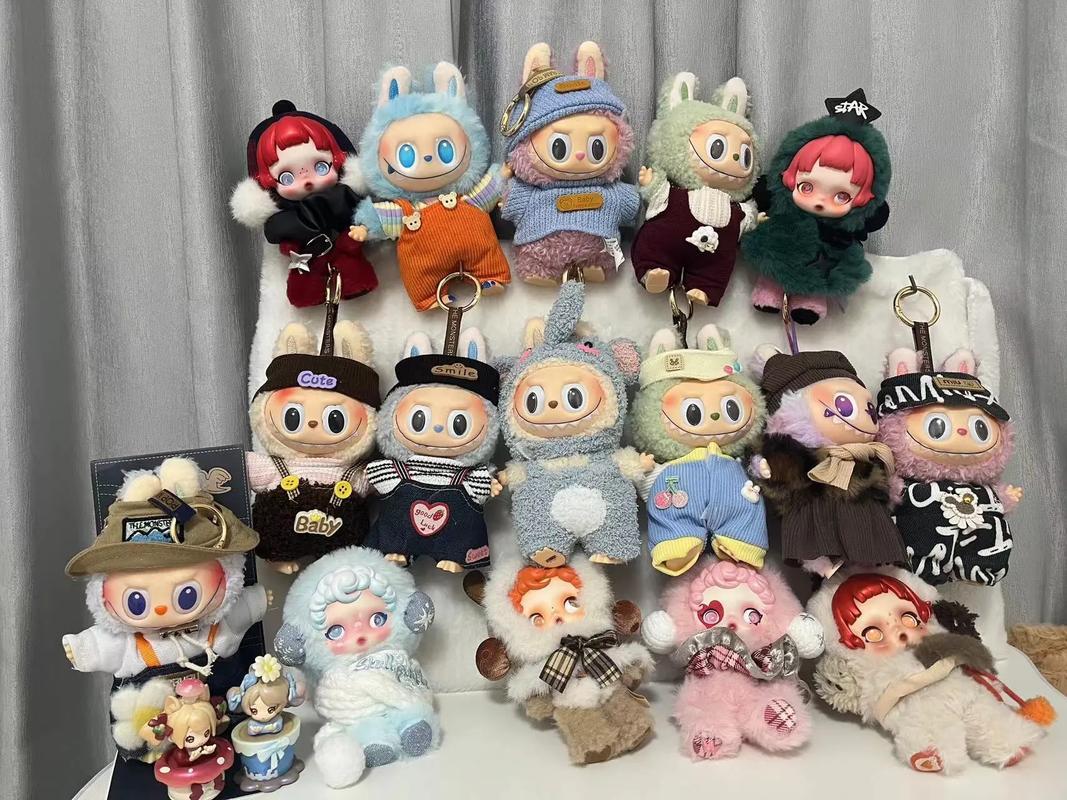
Core Insights - The article discusses the challenges faced by Pop Mart regarding brand trust due to a leaked employee conversation questioning the pricing of a product, while the company is actively working on international anti-counterfeiting efforts to maintain its brand value [1] - Pop Mart's Vice President, Chen Xiaoyun, announced plans to collaborate with Interpol and law enforcement agencies from various countries to enhance anti-counterfeiting actions [1][2] Group 1: Anti-Counterfeiting Efforts - Pop Mart has intercepted over 10 million counterfeit items globally since 2025, covering 61 countries and regions, with a focus on the Labubu and cat series products [2] - The company is establishing a comprehensive system that includes customs interception, judicial litigation, and joint law enforcement to combat counterfeiting [2][3] - Pop Mart has registered with customs in over 30 countries and has formed cooperation mechanisms with the UK, the US, and several European and Southeast Asian nations to intercept counterfeit goods at the source [2] Group 2: Collaboration with Authorities - The Chinese Customs has played a significant role in supporting Pop Mart's anti-counterfeiting initiatives and has led efforts to create a global customs cooperation mechanism [2][3] - The Ministry of Public Security and the State Administration for Market Regulation in China are collaborating to reduce consumer exposure to counterfeit products through coordinated enforcement actions [3] - Pop Mart is also working with law enforcement and judicial authorities to handle cases of counterfeiting, which not only protects the company's rights but also contributes to the global intellectual property protection ecosystem [3]
汉堡王中国卖了!买方还投资过蜜雪冰城、老铺黄金、泡泡玛特
Sou Hu Cai Jing· 2025-11-11 02:17
Core Viewpoint - CPE Yuanfeng and Restaurant Brands International (RBI) are forming a strategic partnership to establish a joint venture named "Burger King China," with an initial investment of $350 million to support expansion and operations in the Chinese market [1][2]. Group 1: Investment and Partnership Details - CPE Yuanfeng will inject $350 million into Burger King China for restaurant expansion, marketing, menu innovation, and operational improvements [1]. - The joint venture will be governed by a 20-year master development agreement, granting exclusive rights to develop the Burger King brand in China [1]. - Post-transaction, CPE Yuanfeng will hold approximately 83% of Burger King China, while RBI will retain about 17% [1]. Group 2: Market Expansion Plans - The partnership aims to increase the number of Burger King outlets in China from approximately 1,250 to over 4,000 by 2035, with a focus on sustainable same-store growth [2]. - The transaction is expected to be completed in the first quarter of 2026, subject to regulatory approval [2]. Group 3: Industry Context - The collaboration reflects a growing trend where global brands partner with asset management companies to expand in the Chinese market, as seen with Starbucks' recent joint venture with Boyu Capital [2]. - Starbucks currently operates 8,000 stores in China and aims to reach 20,000 stores through its new joint venture [2].
港股新消费概念走强,老铺黄金涨超3%
Mei Ri Jing Ji Xin Wen· 2025-11-11 02:09
Group 1 - The Hong Kong stock market saw a rise in new consumption concepts on November 11, with notable increases in stocks such as Lao Pu Gold (06181.HK) and Blucora (00325.HK), both rising over 3% [1] - Other companies that experienced gains include Leap Motor (09863.HK), Xiaomi Group (01810.HK), Pop Mart (09992.HK), and Gu Ming (01364.HK) [1]

汉堡王中国金主投资了泡泡玛特
Bei Jing Ri Bao Ke Hu Duan· 2025-11-11 01:02
Core Viewpoint - Burger King's China operations have been acquired by local investors, marking a trend of foreign brands seeking local partnerships to enhance their market presence in China [1] Group 1: Strategic Partnership - CPE Yuanfeng has reached a strategic cooperation agreement with Burger King, establishing a joint venture named Burger King China [1] - CPE Yuanfeng will inject an initial capital of $350 million into the joint venture, holding approximately 83% of the equity, while RBI retains about 17% [1] - The transaction is expected to be completed in the first quarter of 2026, with funds allocated for restaurant expansion, marketing, menu innovation, and operational improvements [1] Group 2: Market Expansion Plans - A 20-year master development agreement will be signed, granting exclusive rights to develop the Burger King brand in China [1] - Currently, Burger King operates around 1,250 stores in China, with plans to expand to over 4,000 stores by 2035 [1] Group 3: Industry Context - The acquisition reflects a common strategy among foreign consumer brands to sell partial equity and introduce local capital in response to a competitive market environment [1] - Recently, Starbucks also announced a joint venture with Boyu Capital to operate its retail business in China, indicating a broader trend of foreign brands deepening their localization efforts [1] - CPE Yuanfeng has significant experience in the chain consumer services sector, with cumulative investments of approximately 10 billion RMB in various companies [1]