
POP MART(09992)

Search documents
A股和港股“新旧消费”联袂大涨!基金经理发声
Zheng Quan Shi Bao Wang· 2025-11-11 00:57
Core Viewpoint - The consumer sector in A-shares and Hong Kong stocks experienced a significant rise on November 10, driven by multiple positive news releases, with traditional and new consumption sectors showing strong performance, particularly China Duty Free Group reaching a two-year high [1][2][3] Group 1: Market Performance - A-shares saw strong performances in sectors such as liquor, aviation, and duty-free, with notable stocks like China Duty Free Group hitting the daily limit and a total buy order of 5.03 billion yuan [2] - In Hong Kong, stocks like Hou Shang A Yi and Mi Xue Group rose by over 13% and 9% respectively, while Pop Mart increased by over 8% [2] - The consumer sector has been under pressure for several quarters, with the liquor index down approximately 5.45% year-to-date, while the retail index only increased by 0.75% [3] Group 2: Policy and Economic Indicators - The Ministry of Finance announced continued implementation of policies to boost consumption, while the National Bureau of Statistics reported a 0.2% year-on-year increase in the Consumer Price Index (CPI) [3] - The core CPI, excluding food and energy, has seen an expanding growth rate for six consecutive months, indicating a potential recovery in consumer spending [3] Group 3: Fund Management Trends - Public funds have shown a divergence in their operations, with some reducing holdings in traditional consumer stocks like Kweichow Moutai, while others maintain or increase their positions, reflecting differing outlooks on the consumer market [4][5] - The number of funds holding Pop Mart decreased from 286 to 180, with a significant reduction in the number of shares held, indicating a cautious approach towards new consumption stocks [4][5] Group 4: Investment Strategies - Fund managers are focusing on the dual aspects of domestic demand and overseas expansion as key investment themes, believing that the current low valuation levels provide a safety margin for investments [5][6] - There is a growing emphasis on the potential for Chinese brands to expand internationally, particularly in Southeast Asia, Africa, and the Middle East, as companies leverage their domestic market strengths to gain competitive advantages abroad [6]




汉堡王中国,也被卖了!投过蜜雪冰城、泡泡玛特的“金主”将持股超80%
Hua Xia Shi Bao· 2025-11-11 00:49
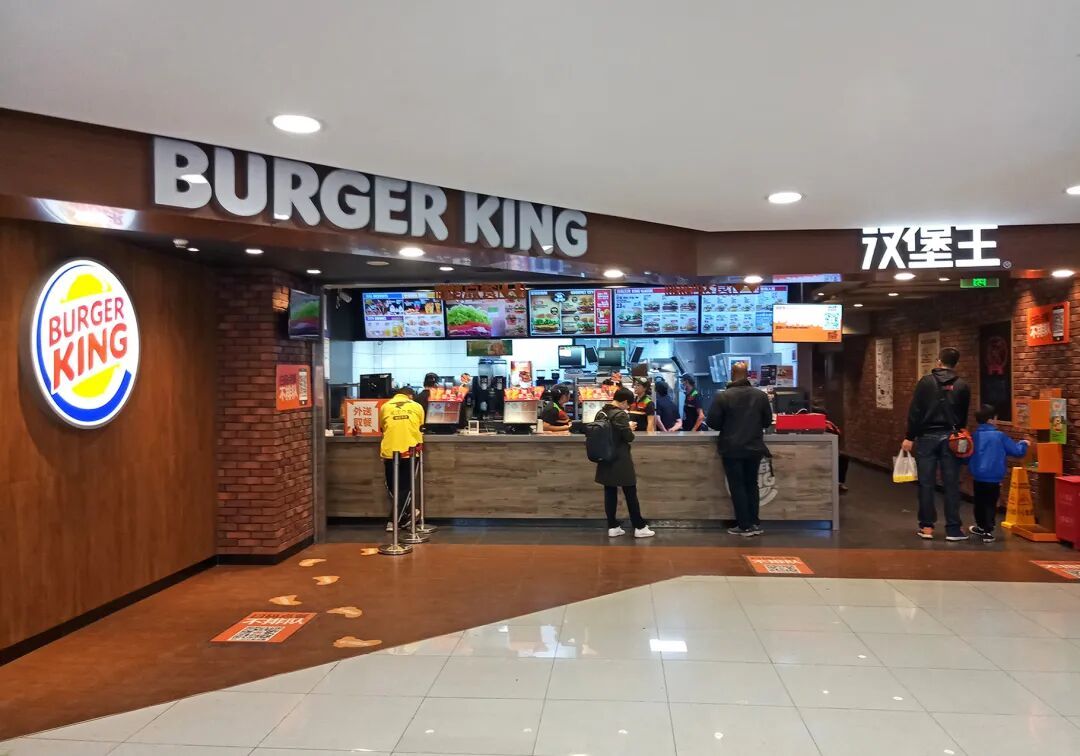
Core Insights - CPE Yuanfeng announced a strategic partnership with Burger King to establish a joint venture named "Burger King China" with an initial investment of $350 million to support expansion and operations [1][4] - CPE Yuanfeng will hold approximately 83% of the joint venture, while Restaurant Brands International (RBI) will retain about 17% [3] - The plan aims to increase the number of Burger King outlets in China from around 1,250 to over 4,000 by 2035, with a focus on sustainable same-store growth [4] Company Overview - The transaction is expected to be completed in Q1 2026, pending regulatory approvals [5] - RBI is one of the largest fast-food service groups globally, with over $45 billion in annual system sales and more than 32,000 restaurants in over 120 countries [5] - Burger King, founded in 1954, has over 19,000 locations worldwide and entered the Chinese market in 2005 [5] Financial Performance - RBI reported Q3 2025 revenue of $2.449 billion, a 6.9% year-over-year increase, and a net profit of $315 million, up 25% [5] - Burger King's sales for the same period reached $2.96 billion, reflecting a 2.3% year-over-year growth [5] Market Context - Since RBI took full control of Burger King China in February 2025, it has invested over $100 million to accelerate localization efforts, including appointing experienced executives from the Chinese food and beverage industry [5][6] - As of now, Burger King China operates approximately 1,300 stores, serving nearly 150 million customers annually, although it has closed over 170 locations since the end of 2024 [6] Competitive Landscape - CPE Yuanfeng, established in 2008, manages over 100 billion yuan in assets and has invested in various well-known companies in the consumer services sector [6] - The recent sale of a majority stake in Starbucks' China operations to Boyu Capital highlights ongoing shifts in the competitive landscape of the restaurant industry in China [7]



智通港股沽空统计|11月11日
智通财经网· 2025-11-11 00:23
Core Insights - The article highlights the top short-selling ratios and amounts for various companies, indicating significant market sentiment against these stocks [1][2]. Short-Selling Ratios - Lenovo Group-R (80992) has the highest short-selling ratio at 89.80% with a short-selling amount of 194.85 thousand [2]. - JD Group-SWR (89618) follows with a short-selling ratio of 82.03% and an amount of 18.12 thousand [2]. - Xiaomi Group-WR (81810) ranks third with a short-selling ratio of 69.31% and a short-selling amount of 150.53 thousand [2]. Short-Selling Amounts - Tencent Holdings (00700) leads in short-selling amount with 1.774 billion, representing a short-selling ratio of 18.90% [2]. - Alibaba-SW (09988) is second with a short-selling amount of 1.675 billion and a ratio of 17.89% [2]. - Pop Mart (09992) ranks third with a short-selling amount of 869 million and a ratio of 15.69% [2]. Deviation Values - Xiaomi Group-WR (81810) has the highest deviation value at 37.71%, indicating a significant difference from its past average short-selling ratio [2]. - Wynn Macau (01128) follows with a deviation value of 30.40% [2]. - Midea Group (N23078) ranks third with a deviation value of 23.49% [2].





智通港股通资金流向统计(T+2)|11月11日
智通财经网· 2025-11-10 23:34
Key Points - The top three stocks with net inflows from southbound funds are Xiaopeng Motors (12.25 billion), Huahong Semiconductor (9.60 billion), and Xiaomi Group (6.63 billion) [1][2] - The top three stocks with net outflows are the Tracker Fund of Hong Kong (-9.43 billion), Hang Seng China Enterprises (-5.33 billion), and Pop Mart (-4.20 billion) [1][2] - In terms of net inflow ratio, Qingdao Bank (58.10%), Modern Dairy (51.22%), and Shougang Resources (46.73%) lead the market [1][3] - The stocks with the highest net outflow ratios are Yancoal Australia (-63.89%), Cha Baidao (-55.23%), and Luk Fook Holdings (-55.03%) [1][3] Net Inflow Rankings - Xiaopeng Motors had a net inflow of 12.25 billion, representing a 29.35% increase in its closing price to 89.400 [2] - Huahong Semiconductor saw a net inflow of 9.60 billion, with a closing price increase of 9.05% to 80.100 [2] - Xiaomi Group experienced a net inflow of 6.63 billion, with a slight closing price increase of 0.28% to 43.440 [2] Net Outflow Rankings - The Tracker Fund of Hong Kong had the largest net outflow of -9.43 billion, with a closing price increase of 2.15% to 26.600 [2] - Hang Seng China Enterprises faced a net outflow of -5.33 billion, with a closing price increase of 2.09% to 95.540 [2] - Pop Mart recorded a net outflow of -4.20 billion, with a minimal closing price increase of 0.09% to 217.600 [2] Net Inflow Ratio Rankings - Qingdao Bank led with a net inflow ratio of 58.10%, with a net inflow of 49.11 million and a closing price of 4.090 [3] - Modern Dairy followed with a net inflow ratio of 51.22%, net inflow of 6.91 million, and a closing price of 1.230 [3] - Shougang Resources had a net inflow ratio of 46.73%, with a net inflow of 15.71 million and a closing price of 3.250 [3] Net Outflow Ratio Rankings - Yancoal Australia had the highest net outflow ratio of -63.89%, with a net outflow of -26.17 million and a closing price of 28.540 [3] - Cha Baidao recorded a net outflow ratio of -55.23%, with a net outflow of -6.01 million and a closing price of 7.160 [3] - Luk Fook Holdings had a net outflow ratio of -55.03%, with a net outflow of -27.30 million and a closing price of 23.680 [3]


汉堡王中国也被卖了!买家曾投资蜜雪冰城、老铺黄金、泡泡玛特
Mei Ri Jing Ji Xin Wen· 2025-11-10 22:22
Core Viewpoint - CPE Yuanfeng has announced a strategic partnership with Burger King to establish a joint venture named "Burger King China," with an initial investment of $350 million aimed at expanding restaurant locations and enhancing operational capabilities in China [1][3]. Group 1: Joint Venture Details - CPE Yuanfeng will hold approximately 83% of the equity in Burger King China, while Restaurant Brands International (RBI) will retain about 17% [1]. - The joint venture will operate under a 20-year master development agreement granting exclusive rights to develop the Burger King brand in China [1]. Group 2: Expansion Plans - The plan aims to increase the number of Burger King outlets in China from around 1,250 to over 4,000 by 2035, alongside achieving sustainable same-store sales growth [1]. Group 3: Financial Performance - RBI reported a third-quarter revenue of $2.449 billion for 2025, a year-on-year increase of 6.9%, with a net profit of $315 million, up 25% [3]. - Burger King's sales reached $2.96 billion, reflecting a 2.3% year-on-year growth [3]. Group 4: Management and Investment Background - Since acquiring Burger King China in February, RBI has invested over $100 million and appointed experienced executives to enhance local operations [3][4]. - CPE Yuanfeng, established in 2008, manages over 100 billion yuan in assets and has previously invested in notable companies in the consumer services sector [4].
智通ADR统计 | 11月11日




智通财经网· 2025-11-10 22:21
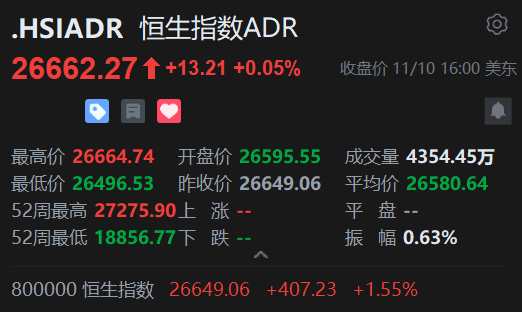
Market Overview - The Hang Seng Index (HSI) closed at 26,662.27, up by 13.21 points or 0.05% from the previous close [1] - The index reached a high of 26,664.74 and a low of 26,496.53 during the trading session, with a trading volume of 43.5445 million [1] Major Blue-Chip Stocks Performance - HSBC Holdings closed at HKD 112.005, an increase of 1.36% compared to the Hong Kong market close [2] - Tencent Holdings closed at HKD 649.659, up by 0.02% from the Hong Kong market close [2] ADR Performance - Tencent Holdings (ADR) was priced at 649.659, reflecting a slight increase of 0.02% compared to its Hong Kong counterpart [3] - Alibaba Group (ADR) was priced at 161.200, down by 1.35% compared to its Hong Kong price of HKD 163.400 [3] - HSBC (ADR) was priced at 112.005, showing an increase of 1.36% compared to its Hong Kong price [3]
汉堡王中国,也被卖了!买家曾投资蜜雪冰城、老铺黄金、泡泡玛特
Mei Ri Jing Ji Xin Wen· 2025-11-10 16:19
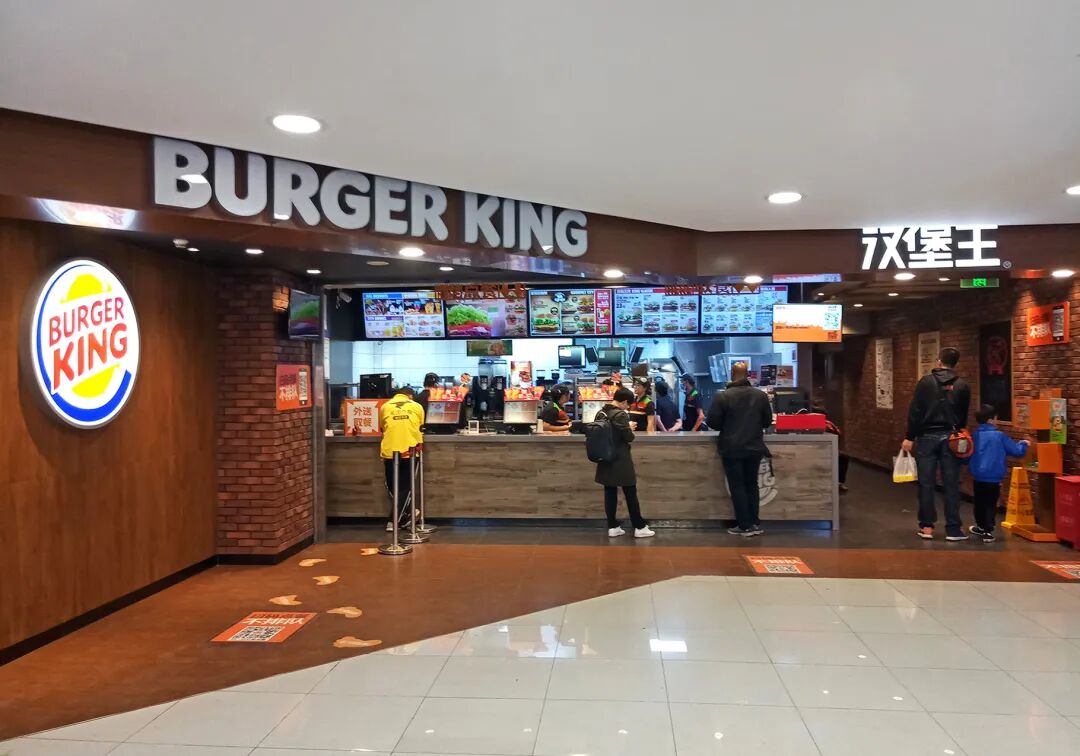
Core Insights - CPE Yuanfeng announced a strategic partnership with Burger King to establish a joint venture named "Burger King China" with an initial investment of $350 million to support expansion and operations [1] - The goal is to increase the number of Burger King outlets in China from approximately 1,250 to over 4,000 by 2035, aiming for sustainable same-store growth [2] - The transaction is expected to be completed in Q1 2026, subject to regulatory approval [4] Company Overview - CPE Yuanfeng, founded in 2008, is an asset management firm managing over 100 billion yuan, focusing on the consumer services sector with investments in various well-known companies [6] - Restaurant Brands International (RBI), which owns Burger King, is one of the largest fast-food service groups globally, with over $45 billion in system sales and more than 32,000 restaurants in over 120 countries [4] - RBI has invested over $100 million in Burger King China since acquiring full control in February 2025, accelerating localization efforts with experienced executives joining the management team [4][6] Market Context - As of now, Burger King China operates around 1,300 stores, serving nearly 150 million customers annually, but has closed over 170 restaurants since the end of 2024 [6] - The partnership comes at a time when other major players in the food and beverage industry, such as Starbucks, are also restructuring their operations in China, indicating a trend of strategic partnerships and investments in the market [6]
汉堡王中国业务易主,接手方还投资过蜜雪冰城、老铺黄金、泡泡玛特
Sou Hu Cai Jing· 2025-11-10 15:58
Core Insights - CPE Yuanfeng will establish a joint venture "Burger King China" with Restaurant Brands International (RBI), which fully owns the Burger King brand [1][3] - CPE Yuanfeng will inject an initial capital of $350 million into Burger King China to support restaurant expansion, marketing, menu innovation, and operational improvements [1][3] - The joint venture will have a 20-year master development agreement granting exclusive rights to develop the Burger King brand in China [1][3] Investment and Growth Plans - The plan aims to expand the number of Burger King outlets in China from approximately 1,250 to over 4,000 by 2035, with a focus on sustainable same-store growth [3] - The transaction is expected to be completed in the first quarter of 2026, subject to regulatory approval [3] Market Confidence - CPE Yuanfeng's Managing Director expressed confidence in Burger King's long-term growth potential in China, highlighting the brand's popularity among Chinese consumers [4] - RBI's CEO noted that China remains one of the most attractive long-term growth markets for Burger King globally, reinforcing confidence in the market through this investment and joint venture [4] Industry Trends - Collaborations between asset management firms and global brands are becoming a new strategy for expanding store presence in China, as evidenced by Starbucks' recent partnership with Boyu Capital [4]
港股通成交活跃股追踪 中国中免近一个月首次上榜
Zheng Quan Shi Bao Wang· 2025-11-10 13:59
Core Insights - China Duty Free Group (中国中免) made its first appearance on the Hong Kong Stock Connect active trading list in nearly a month, with a trading volume of 1.698 billion HKD and a net sell of 29 million HKD on November 10 [1] - The total trading volume of active stocks on the Hong Kong Stock Connect reached 30.933 billion HKD, accounting for 29.76% of the day's total trading amount, with a net buying amount of 688 million HKD [1] - Alibaba (阿里巴巴-W) led the trading volume with 5.302 billion HKD, followed by SMIC (中芯国际) and Tencent (腾讯控股) with 4.304 billion HKD and 4.019 billion HKD respectively [1] Trading Activity Summary - The active stocks on November 10 included: - Tencent Holdings (00700): 4.019 billion HKD, net sell of 128 million HKD, 20 appearances in the last month, closing price 649.5 HKD, daily increase of 2.44% [1] - SMIC (00981): 4.304 billion HKD, net sell of 217 million HKD, 20 appearances in the last month, closing price 74.7 HKD, daily decrease of 0.99% [1] - Huahong Semiconductor (01347): 1.306 billion HKD, net sell of 198 million HKD, 20 appearances in the last month, closing price 78.1 HKD, daily decrease of 1.70% [1] - Xiaomi Group (01810): 3.256 billion HKD, net buy of 173 million HKD, 20 appearances in the last month, closing price 42.36 HKD, daily increase of 0.28% [1] - Alibaba (09988): 5.302 billion HKD, net sell of 653 million HKD, 20 appearances in the last month, closing price 163.4 HKD, daily increase of 2.06% [1] - Pop Mart (09992): 3.164 billion HKD, net buy of 519 million HKD, 17 appearances in the last month, closing price 221.4 HKD, daily increase of 8.11% [1] - Meituan (03690): 570 million HKD, net sell of 31 million HKD, 13 appearances in the last month, closing price 103.3 HKD, daily increase of 1.27% [1] - CNOOC (00883): 3.742 billion HKD, net buy of 1.313 billion HKD, 13 appearances in the last month, closing price 22.44 HKD, daily increase of 5.95% [1] - China Mobile (00941): 758 million HKD, net sell of 79 million HKD, 7 appearances in the last month, closing price 87.8 HKD, daily increase of 0.75% [1] - Ganfeng Lithium (01772): 1.142 billion HKD, net sell of 74 million HKD, 4 appearances in the last month, closing price 54.0 HKD, daily increase of 2.47% [1] - Sangfor Technologies (01530): 605 million HKD, net sell of 12 million HKD, 3 appearances in the last month, closing price 29.0 HKD, daily increase of 0.62% [1] - Xpeng Motors (09868): 1.067 billion HKD, net buy of 103 million HKD, 3 appearances in the last month, closing price 92.0 HKD, daily increase of 1.21% [1] - China Duty Free Group (01880): 1.698 billion HKD, net sell of 29 million HKD, 1 appearance in the last month, closing price 81.6 HKD, daily increase of 15.34% [1]
港股通11月10日成交活跃股名单
Zheng Quan Shi Bao Wang· 2025-11-10 13:57
Group 1 - The Hang Seng Index rose by 1.55% on November 10, with total southbound trading amounting to HKD 103.94 billion, including buy transactions of HKD 55.30 billion and sell transactions of HKD 48.64 billion, resulting in a net buy of HKD 6.65 billion [1] - The southbound trading through Stock Connect (Shenzhen) totaled HKD 40.91 billion, with buy transactions of HKD 23.20 billion and sell transactions of HKD 17.70 billion, leading to a net buy of HKD 5.50 billion [1] - The southbound trading through Stock Connect (Shanghai) reached HKD 63.04 billion, with buy transactions of HKD 32.09 billion and sell transactions of HKD 30.94 billion, resulting in a net buy of HKD 1.15 billion [1] Group 2 - Among the actively traded stocks, Alibaba-W had the highest transaction amount at HKD 53.02 billion, followed by SMIC and Tencent Holdings with transaction amounts of HKD 43.04 billion and HKD 40.19 billion, respectively [1] - The stock with the highest net buy was China National Offshore Oil Corporation, with a net buy of HKD 13.13 billion, closing with a price increase of 5.95% [1] - Other notable net buys included Pop Mart with HKD 5.19 billion and Xiaomi Group-W with HKD 1.73 billion [1] Group 3 - Continuous net buying was observed for Xiaomi Group-W and XPeng Motors, with net buying days of 9 and 3 days, respectively, and total net buying amounts of HKD 53.68 billion and HKD 16.80 billion [2] - The stocks with the highest net sell amounts included Alibaba-W and Meituan-W, with net sell amounts of HKD 13.23 billion and HKD 2.45 billion, respectively [2] - The trading data for November 10 shows that China National Offshore Oil Corporation, Pop Mart, and Xiaomi Group-W were among the top stocks in terms of net buy and price increase [2]
