Cambricon(688256)

Search documents
深沪北百元股数量达203只,科创板股票占43.84%
Zheng Quan Shi Bao Wang· 2026-01-07 09:49
Market Overview - The average stock price in A-shares is 14.44 yuan, with 203 stocks priced over 100 yuan as of January 7 [1] - The Shanghai Composite Index closed at 4085.77 points, up 0.05%, while stocks over 100 yuan had an average increase of 1.88%, outperforming the index by 1.83 percentage points [1] High-Value Stocks - The highest closing price among stocks over 100 yuan is Kweichow Moutai at 1423.36 yuan, down 0.33%, followed by Cambrian and Yuanjie Technology at 1394.88 yuan and 700.70 yuan respectively [1] - In the past month, stocks priced over 100 yuan have seen an average increase of 19.43%, compared to a 4.69% increase in the Shanghai Composite Index [1] Sector Distribution - Among the high-priced stocks, the electronics sector is the most represented with 76 stocks, accounting for 37.44% of the total [2] - The mechanical equipment and computer sectors each have 21 stocks, making up 10.34% of the high-priced stocks [2] Stock Performance - Kema Technology's stock price has recently crossed the 100 yuan mark, closing at 109.34 yuan with a 9.55% increase and a turnover rate of 21.61% [2] - The total trading volume for Kema Technology reached 3.452 billion yuan, with a net inflow of 255 million yuan from main funds [2] Notable High-Value Stocks - A list of notable high-value stocks includes: - Kweichow Moutai: 1423.36 yuan, -0.33% - Cambrian: 1394.88 yuan, +0.85% - Yuanjie Technology: 700.70 yuan, +8.47% [2][3] - Other significant stocks include: - Zhongji Xuchuang: 619.60 yuan, +2.37% - Moer Thread: 617.54 yuan, +0.58% [2][3] Recent Trends - The recent trend shows that stocks like Andar Intelligent, Feiwo Technology, and Chaojie Co. have experienced significant increases of 131.72%, 131.36%, and 130.17% respectively over the past month [1]


科创板平均股价45.74元,89股股价超百元
Zheng Quan Shi Bao Wang· 2026-01-07 09:49
Group 1 - The average stock price of the Sci-Tech Innovation Board is 45.74 yuan, with 89 stocks priced over 100 yuan and the highest being Cambricon Technologies at 1394.88 yuan, which increased by 0.85% [1] - Among the stocks priced over 100 yuan, 371 stocks rose while 221 stocks fell, with an average increase of 2.67% for the hundred-yuan stocks today [1] - The average premium of the hundred-yuan stocks relative to their issue price is 503.71%, with the highest premiums from companies like Shunwei Materials, Anji Technology, and Cambricon Technologies at 5135.96%, 2105.01%, and 2066.30% respectively [1] Group 2 - The net inflow of main funds for hundred-yuan stocks today was 384 million yuan, with the highest inflows from companies like Dekoli, Huahong Company, and Changguang Huaxin at 461.27 million yuan, 261.75 million yuan, and 216.65 million yuan respectively [2] - The total margin financing balance for hundred-yuan stocks is 1138.94 billion yuan, with the highest balances from Cambricon Technologies, SMIC, and Haiguang Information at 151.74 billion yuan, 133.88 billion yuan, and 72.36 billion yuan respectively [2]
寒武纪1月7日现1笔大宗交易 总成交金额348.72万元 溢价率为0.00%
Xin Lang Zheng Quan· 2026-01-07 09:48
Group 1 - The stock of Cambrian Holdings closed at 1,394.88 yuan on January 7, with an increase of 0.85% [1] - A block trade occurred with a total volume of 2,500 shares and a transaction amount of 3.4872 million yuan, with a transaction price of 1,394.88 yuan and a premium rate of 0.00% [1] - Over the past three months, Cambrian Holdings has recorded 13 block trades with a total transaction amount of 139 million yuan [1] Group 2 - In the last five trading days, the stock has increased by 2.68%, with a net inflow of 456 million yuan from main funds [1]
寒武纪西安集成电路公司注册资本增至1.8亿元
Zheng Quan Ri Bao Wang· 2026-01-07 08:46
Group 1 - The core point of the article is that Hanwujing (Xi'an) Integrated Circuit Co., Ltd. has increased its registered capital from 100 million yuan to 180 million yuan [1] Group 2 - The business change was officially recorded in the industrial and commercial information system [1] - The increase in registered capital indicates potential growth and investment in the company's operations [1]
科创板收盘播报:科创50指数涨0.99% 元器件股表现强势
Xin Hua Cai Jing· 2026-01-07 07:45
Group 1 - The Sci-Tech Innovation 50 Index opened high on January 7, fluctuated within a narrow range, turned negative in the afternoon, and then rose significantly, closing at 1443.39 points with an increase of 0.99% and a total trading volume of approximately 871.3 billion yuan [1] - The Sci-Tech Innovation Composite Index rose by 1.53% on January 7, closing at 1746.72 points with a total trading volume of about 3094 billion yuan. The average increase for the 600 stocks in the Sci-Tech Innovation Board was 1.73% with an average turnover rate of 4.27% [2] - High-priced stocks generally rose while low-priced stocks showed mixed performance. Notably, component stocks and electrical equipment stocks performed strongly, while healthcare and communication equipment stocks had the largest declines [2] Group 2 - The stock with the highest trading volume was Cambrian with 94.2 billion yuan, while ST Pava had the lowest trading volume at 482.2 million yuan [3] - The stock with the highest turnover rate was Hengkang New Materials at 41.79%, while Longteng Optoelectronics had the lowest turnover rate at 0.26% [4]


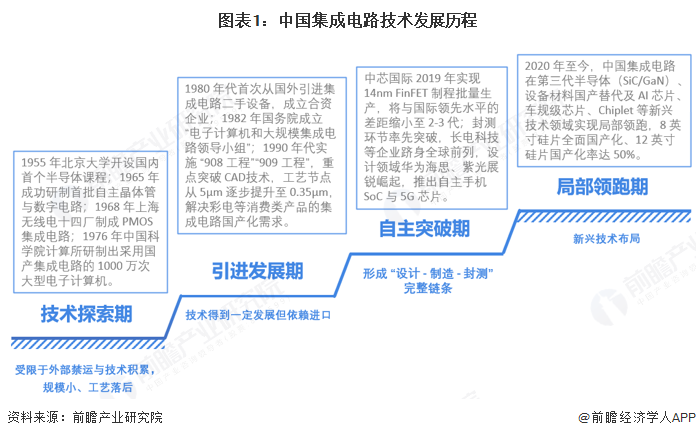
2025年中国集成电路行业技术发展分析 高端国产化率仍然较低【组图】
Qian Zhan Wang· 2026-01-07 06:11
Core Insights - The Chinese integrated circuit industry has evolved from a technology exploration phase to a stage of partial leadership in emerging fields such as third-generation semiconductors and AI chips [1] Group 1: Industry Overview - Major listed companies in the Chinese integrated circuit industry include companies like Chipone (688521.SH), Cambricon (688256.SH), and SMIC (688981.SH/00981.HK) [1] - The development of integrated circuit technology in China has gone through three main phases: foundational exploration (1950s-1978), technology introduction (1978-2000), and independent breakthroughs (2000-2020) [1] Group 2: Core Production Technologies - The integrated circuit technology system focuses on three core areas: design, manufacturing, and packaging/testing [4] - Key design aspects include EDA tools, chip architecture (RISC-V/ARM), and semiconductor IP [4] - Manufacturing focuses on wafer processes (including EUV lithography) and advanced process nodes (such as 7nm and 5nm) [4] - Packaging/testing emphasizes advanced techniques like Chiplet and 3D stacking [4] Group 3: Current Production Status - Chinese companies lead in production volume but lack sufficient autonomy in technology [7] - The design sector has achieved some autonomy in mature process tools and IP, but high-end EDA and core IP still rely on imports [7] - Manufacturing has sufficient capacity for mature processes but faces limitations in advanced processes due to equipment restrictions [7] - The packaging/testing sector is a strength, with leading companies holding significant global market shares [7] Group 4: Market Segmentation - The low-end market (45nm and above) has a self-sufficiency rate exceeding 75%, with companies like Hua Hong Semiconductor leading [10] - The mid-range market (14-28nm) has a domestic production rate of about 35%, with breakthroughs in memory chips [10] - The high-end market (7nm and below) has a self-sufficiency rate of less than 20%, heavily relying on overseas foundries [10] Group 5: Challenges and Future Outlook - The Chinese integrated circuit industry faces challenges such as low domestic production of high-end technologies, risks to industrial security, and the need for improved product quality [13] - Future strategies include focusing on technological breakthroughs, collaborative ecosystem development, and enhancing talent cultivation to support high-quality industry growth [13]




国产替代加速推进,人工智能AIETF(515070)持仓股光迅科技大涨超3%
Mei Ri Jing Ji Xin Wen· 2026-01-07 04:18
Group 1 - The A-share market is experiencing fluctuations, with a notable rise in semiconductor equipment and materials, as well as strong performance in AI infrastructure sectors such as computing power, storage, and PCB [1] - The largest AI ETF in the Shanghai market, AI ETF (515070), saw its holdings, including Guangxun Technology, rise over 3%, while other stocks like Zhongji Xuchuang, Lankai Technology, and Xiechuang Data also increased [1] - Huolong Securities believes that the market is in a "slow bull" phase, with potential for upward breakthroughs due to ongoing supportive fiscal and monetary policies, as well as improving economic fundamentals [1] Group 2 - The AI ETF (515070) tracks the CS Artificial Intelligence Theme Index (930713), focusing on companies that provide technology, basic resources, and applications in the AI sector, representing the midstream and upstream of the AI industry chain [1] - The top ten weighted stocks in the AI ETF include leading domestic technology firms such as Zhongji Xuchuang, Xinyi Sheng, and Hanwha Technology, among others [1] - Related products include the AI ETF (515070), Huaxia CSI Artificial Intelligence Theme ETF Link A (008585), and Huaxia CSI Artificial Intelligence Theme ETF Link C (008586) [1]



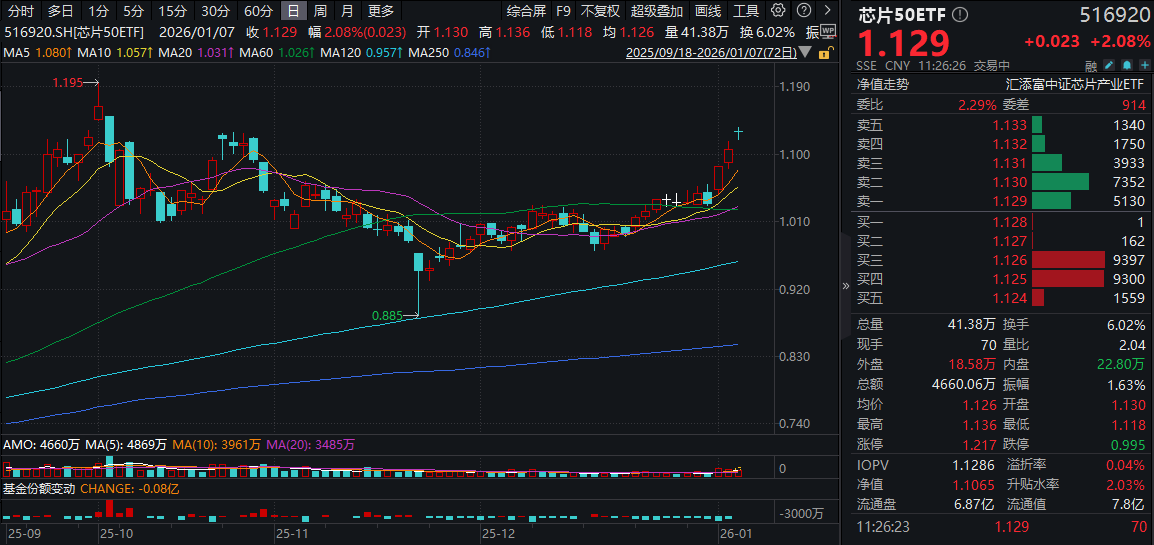
全球共振!美股、A股存储芯片股强势大涨,兆易创新涨近5%!芯片50ETF(516920)涨超2%,国产存储产业链或迎黄金替代机遇!
Xin Lang Cai Jing· 2026-01-07 04:03
Group 1 - The core viewpoint of the news is that the storage chip sector is experiencing a significant surge driven by global demand, particularly due to AI computing needs, with A-shares following the upward trend seen in U.S. markets [3][5] - As of January 6, 2023, major U.S. storage companies saw substantial stock price increases, with Micron Technology rising over 10% and Western Digital increasing by over 16%, marking the largest single-day gain in over five years [3] - The CES exhibition highlighted advancements in the chip and storage industry, with NVIDIA introducing a new AI platform and SK Hynix showcasing innovative memory products, indicating a strong demand for high-bandwidth and large-capacity storage solutions [5][6] Group 2 - The Chip 50 ETF (516920) has seen a rise of over 2%, with a trading volume exceeding 46 million yuan, reflecting strong market interest in the sector [1][3] - The top ten component stocks of the Chip 50 ETF account for 57.21% of the total index, indicating a concentrated investment in leading companies within the semiconductor industry [6] - Predictions from TrendForce suggest that NAND flash memory contract prices will increase by 33%-38% in the upcoming quarter, while traditional DRAM prices are expected to rise by 55%-60%, signaling robust growth potential in the memory chip market [5][6]



AI浪潮推动算力需求爆发,数字经济ETF(560800)盘中涨超1%
Sou Hu Cai Jing· 2026-01-07 02:18
Group 1 - The core viewpoint of the news highlights the positive performance of the digital economy theme index and its constituent stocks, with significant increases in stock prices and ETF growth [1][2] - The digital economy ETF has seen a notable increase in trading volume, with an average daily transaction of 20.84 million yuan over the past year and a recent growth of 13.66 million yuan in the last two weeks [1][2] - Major semiconductor companies like ASML and TSMC have reached historical market highs, indicating strong demand in the semiconductor sector, particularly in AI and server DRAM markets [1][2] Group 2 - The AI wave is driving a surge in computing power demand, significantly enhancing the value of hardware sectors such as servers, AI chips, optical chips, and storage [2] - The global DRAM market is expected to grow at a compound annual growth rate of 15.93% from 2024 to 2029, driven by the need for massive data processing [2] - The domestic DRAM industry in China is entering a critical phase, with opportunities arising from advancements in R&D and production capabilities among local manufacturers [2] Group 3 - As of December 31, 2025, the top ten weighted stocks in the digital economy theme index account for 52.63% of the index, indicating a concentrated investment in key players [3] - The digital economy ETF closely tracks the digital economy theme index, selecting companies with high digital infrastructure and application levels [2][3]


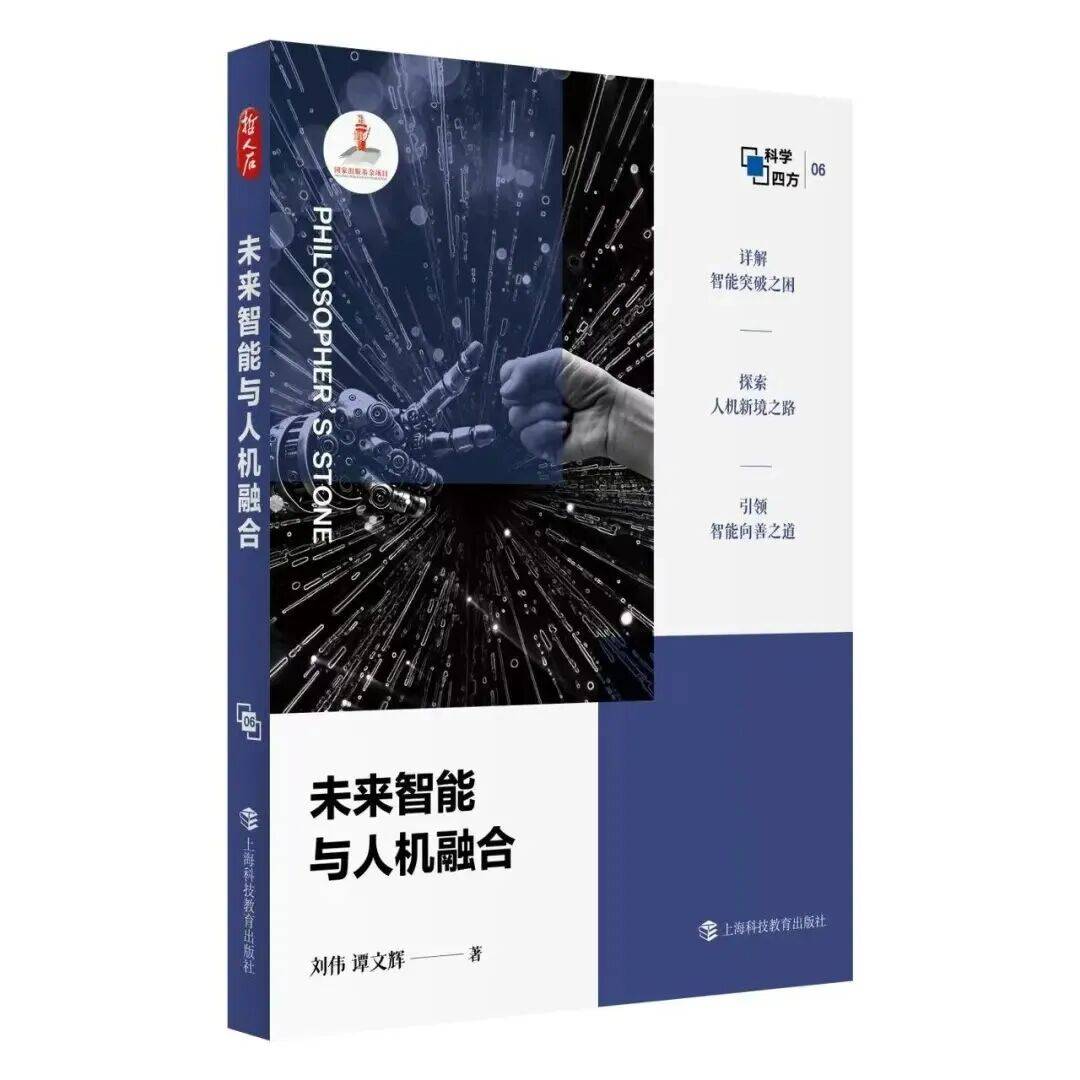
AI CHINA|刘伟:中美AI发展路径差异与“AI+”生态的核心优势
Sou Hu Cai Jing· 2026-01-07 01:17
Core Insights - The article contrasts the AI development strategies of the United States and China, highlighting that while the U.S. focuses on limiting chip access and proving model safety, China is advancing AI as a self-repairing and self-evolving industrial infrastructure through a comprehensive approach involving policy, state-owned enterprises, scenarios, and data [1][2]. Group 1: U.S. AI Development Characteristics - U.S. AI development is characterized by a focus on general foundational technology breakthroughs, leading to a closed-source model and hardware monopoly, which creates a "technical island" effect [1][2]. - The reliance on hardware monopolies, such as NVIDIA GPUs and Google TPUs, has established significant technical barriers, making it difficult for other countries to overcome computational bottlenecks [2]. - The application of U.S. AI is primarily concentrated in consumer internet sectors, lacking depth in complex industrial and social governance scenarios, which limits its ability to address real-world unstructured problems [2]. Group 2: China's AI Development Approach - China has shifted from a "technology defines demand" model to a "demand defines technology" approach, utilizing its diverse economic and social governance scenarios as testing grounds for AI technology [2][3]. - The development of AI in China is not limited to single breakthroughs but encompasses a systematic innovation that integrates chips, frameworks, models, and applications, creating a self-sustaining industrial ecosystem [4]. - China's AI strategy emphasizes open collaboration and ecosystem building through open-source models and industry alliances, which contrasts with the U.S. approach and fosters a complementary relationship between the two nations [5][6]. Group 3: Practical Applications and Innovations - Various practical applications in China demonstrate the effectiveness of AI technology, such as the implementation of 67 digital applications in Shougang's cold-rolling company, where AI applications account for 61% [2][3]. - In agriculture, China National Chemical Corporation launched the iMAP model for intelligent decision-making across the entire farming process, significantly reducing decision-making time by 75% [2]. - The integration of AI in healthcare is exemplified by the AI+ county medical community initiative, which facilitates rapid deployment of outpatient pre-diagnosis and intelligent health management [2][3]. Group 4: Future Trends and Global Cooperation - The article suggests that the future of AI development will involve both the U.S. and China leveraging their respective strengths, with the U.S. focusing on general problems and China addressing complex issues through a systematic innovation approach [6]. - Both countries are expected to continue their parallel advancements in AI technology, with potential for mutual benefits in achieving breakthroughs such as general artificial intelligence (AGI) [6].