SMIC(688981)

Search documents
中芯国际涨0.15%,成交额45.84亿元,人气排名21位!后市是否有机会?附走势预测
Xin Lang Cai Jing· 2025-11-25 09:50
Core Viewpoint - SMIC's stock performance shows slight increase with a trading volume of 4.584 billion yuan and a market capitalization of 893.45 billion yuan, indicating its popularity in the A-share market [1] Group 1: Company Overview - SMIC is the largest integrated circuit manufacturing enterprise group in mainland China, recognized for its advanced technology and comprehensive support [2] - The company specializes in integrated circuit wafer foundry services, design services, IP support, and photomask manufacturing, with wafer foundry services accounting for 93.83% of its revenue [6] - As of September 30, 2025, SMIC reported a revenue of 49.51 billion yuan, representing a year-on-year growth of 18.22%, and a net profit of 3.818 billion yuan, up 41.09% year-on-year [6] Group 2: Investment and Shareholding - The National Integrated Circuit Industry Investment Fund holds a 1.61% stake in SMIC, reflecting government support for the company [2] - As of September 30, 2025, the number of shareholders in SMIC increased to 336,200, with an average of 6,134 shares held per shareholder [6] - Major shareholders have reduced their holdings, with significant decreases noted in several ETFs, indicating a shift in institutional investment [7] Group 3: Market Position and Trends - SMIC ranks second globally among pure wafer foundry companies and first among mainland Chinese enterprises based on the latest sales figures for 2024 [2] - The company is part of the China AI 50 index, which focuses on AI-related capabilities and performance metrics [2] - The average trading cost of SMIC shares is 123.25 yuan, with current price fluctuations between resistance at 119.22 yuan and support at 99.98 yuan, suggesting potential trading strategies [5]

资讯日报:中美元首进行上月会晤以来的首次通话-20251125
Guoxin Securities Hongkong· 2025-11-25 09:13
Market Overview - The Hong Kong stock market showed a significant recovery on November 24, with all three major indices ending a streak of declines[9] - Large tech stocks performed strongly, with Kuaishou rising over 7%, and NetEase and Bilibili increasing over 5%[9] - The Hang Seng Tech Index closed at 5,546, up 2.78% for the day and 24.11% year-to-date[3] Sector Performance - Innovative pharmaceuticals and outsourcing concepts saw notable gains, with companies like Innovent Biologics rising over 6%[9] - Military stocks also performed well, with China Shipbuilding Defense up over 13%[9] - Oil stocks were weak, with China National Offshore Oil Corporation and China Oilfield Services both declining over 1%[9] U.S. Market Insights - On the same day, U.S. markets saw all three major indices close higher, driven by increased bets on a Federal Reserve rate cut[9] - The "Magnificent Seven" tech stocks, including Google and Nvidia, all rose, with Google gaining over 6%[9] - The S&P 500 index is projected to achieve double-digit annual growth according to HSBC strategists[14] Economic Indicators - The Federal Reserve is expected to cut rates in December, with market predictions showing a 70% probability[14] - The U.S. economy's third-quarter GDP report has been delayed due to a government shutdown, affecting economic analysis[14] Investment Trends - The Nasdaq Golden Dragon China Index rose by 2.82%, indicating a positive trend for Chinese concept stocks[13] - Significant inflows into semiconductor stocks were noted, with companies like Broadcom surging 11%[13]



谷歌VS英伟达!AI芯片战白热化,港股芯片强势跑赢
Xin Lang Ji Jin· 2025-11-25 03:50
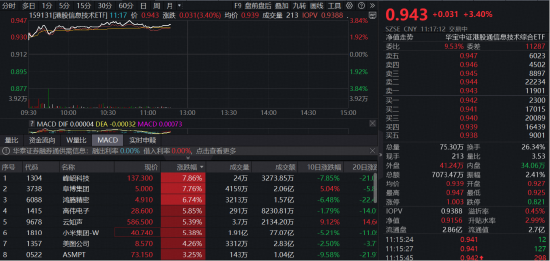
Group 1: AI Chip Market Dynamics - The explosive growth in AI computing demand and Nvidia's dominance in the supply chain mark a more competitive phase in the AI chip war, with Google promoting its TPU as a customized chip offering cost, performance, and energy efficiency advantages [1] - Google's seventh-generation TPU, "Ironwood," has been tested with select customers since April and is set for commercial launch in the coming weeks [1] Group 2: Market Performance and Investment Opportunities - On November 25, the AI market surged, with the Hang Seng Technology Index rising nearly 2%, and A-share chip representatives like the Sci-Tech Innovation Board chip index increasing by 1.57% [1] - The first ETF focused on the Hong Kong chip industry, tracking a 70% hardware and 30% software index, saw its price rise nearly 4%, with a trading volume exceeding 700 million CNY [3] - Goldman Sachs indicates that the AI-driven rise in Chinese stocks is not a bubble, as tech companies have room to enhance valuations and profitability through AI applications, attracting global investors [3] Group 3: Emerging AI Applications - Ant Group's newly launched multimodal AI assistant "Lingguang" achieved over 2 million downloads within six days, reflecting the strong market demand for high-quality AI products and the accelerating pace of AI application development in China [2]




AI产业迎催化,港股科技股反弹!港股通科技ETF招商(159125)涨超2%
2 1 Shi Ji Jing Ji Bao Dao· 2025-11-25 03:18
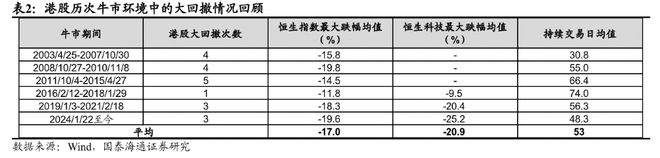
Group 1 - The core viewpoint of the news highlights a significant rise in Hong Kong's stock market, particularly in technology stocks, following the announcement of the "Genesis Plan" by the U.S. government to leverage artificial intelligence for scientific research [1] - The Hang Seng Index and Hang Seng Tech Index opened strongly, with notable gains in companies like Bilibili, Xiaomi, and ZTE, indicating a positive market sentiment towards tech stocks [1] - The Nasdaq Golden Dragon Index, which tracks Chinese tech stocks, rose by 2.82%, with major players like Baidu and Alibaba experiencing substantial increases in their stock prices [1] Group 2 - There is a strong expectation for interest rate cuts by the Federal Reserve, with a probability of 82.9% for a 25 basis point cut in December, which could influence market dynamics positively [2] - Historical data shows that the Hang Seng Index and Hang Seng Tech Index have experienced significant declines recently, with average maximum drawdowns of approximately 17% and 21% respectively during past market corrections [2][3] - The current valuation of the Hong Kong Stock Connect Technology ETF is at a price-to-earnings ratio of 23.55, which is at a historically low level, suggesting potential for recovery [3] Group 3 - The Hong Kong Stock Connect Technology Index has shown greater elasticity compared to similar indices, with a remarkable increase of 170% from February to September 2024, outperforming other indices [4]

美联储降息再升温!AI暴力反弹,全球存储短缺加剧,芯原股份涨超7%,科创芯片50ETF(588750)、科创人工智能ETF均涨超2%!AI"创世纪计划"启动
Sou Hu Cai Jing· 2025-11-25 02:54
Core Viewpoint - The A-share market, particularly in the AI and chip sectors, experienced a strong rebound due to the dual catalysts of the Federal Reserve's interest rate cut expectations and the launch of the "Genesis Plan" aimed at transforming scientific research through AI [1][7]. Market Performance - As of 10:13 AM, the AI-focused ETF (589560) surged over 2.5%, while the chip-focused ETF (588750) rose more than 2% [1]. - Notable stocks included: - Chip Yuan Co. increased by over 7% - SourceJet Technology rose by over 6% - Hengxuan Technology gained over 4% [4]. Key Stocks in ETFs - For the Chip ETF (588750), the top ten stocks included: - Haiguang Information: 0.15% increase, 11.11% weight - Zhongben International: 1.34% increase, 9.05% weight - Cambrian-U: -0.09% decrease, 8.78% weight - SourceJet Technology: 6.64% increase, 2.42% weight [5]. - For the AI ETF (589560), the top ten stocks included: - Cambrian-U: 0.16% increase, 13.90% weight - Kingsoft Office: -0.60% decrease, 10.67% weight - SourceJet Technology: 3.38% increase, 10.66% weight [6]. Economic Indicators - The market's optimism was fueled by comments from the San Francisco Fed President, who supported a potential rate cut in December, raising expectations from 40% to 80% for a 25 basis point cut [7]. - The "Genesis Plan" aims to leverage AI for scientific advancements, further boosting market sentiment [7]. Semiconductor Market Insights - Analysts noted a "fully sold out" market condition for storage chip suppliers, with DDR5 DRAM experiencing the most significant tightness [7]. - The semiconductor cycle is expected to continue its upward trend, driven by AI demand, with the global AI-driven storage market projected to grow from $28.7 billion in 2024 to $255.2 billion by 2034, reflecting a compound annual growth rate of 24% [9]. Investment Strategy - The focus on AI and domestic substitution in the semiconductor sector presents a compelling investment opportunity, particularly through the Sci-Tech Chip ETF (588750), which emphasizes high-quality chip companies [10][13]. - The ETF's index is expected to show a net profit growth rate of 94% for the first three quarters of 2025, with an anticipated 100% growth for the entire year [14].



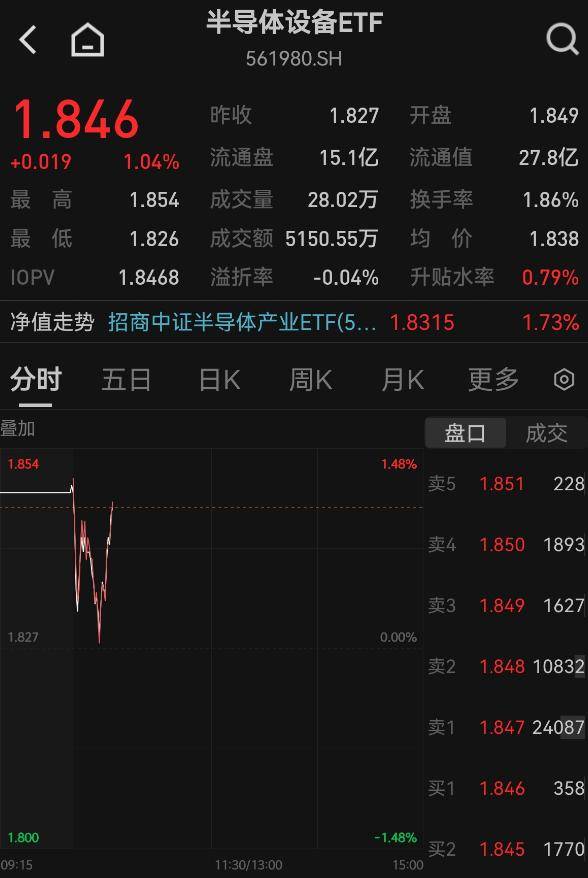
半导体板块再度走强!神工股份大涨6.12%,半导体设备ETF(561980)涨超1%
Sou Hu Cai Jing· 2025-11-25 02:11
Core Viewpoint - The semiconductor industry is experiencing a resurgence driven by both short-term catalysts and long-term fundamental recovery, with significant interest in domestic alternatives and technology advancements. Group 1: Market Performance - On November 25, major indices opened higher, with technology sectors such as aerospace, computing power, and semiconductors showing strength. The semiconductor equipment ETF (561980) rose over 1% during the day, with key stocks like ShenGong Co. increasing by 6.12% and others like ChangChuan Technology and JingYi Equipment rising over 3% [1]. Group 2: Short-term Drivers - The recent IPO of MoEr Thread, the first domestic GPU stock, has garnered significant attention, becoming one of the most expensive new stocks in A-shares this year, indicating high market interest in self-controlled sectors [3]. - ChangXin Storage showcased its latest DDR5 and LPDDR5X products at IC China 2025, achieving top-tier performance in speed and capacity, which boosts market confidence in domestic storage chips [4]. Group 3: Long-term Fundamentals - Major wafer foundries, SMIC and HuaHong Semiconductor, reported high capacity utilization rates in Q3, reflecting strong industry demand. This indicates a recovery in domestic semiconductor demand rather than merely "export grabbing" or channel replenishment [4]. - According to Shihua Securities, the high utilization rates of these domestic foundries signal a gradual recovery in semiconductor demand, with expectations for a resurgence in power semiconductor demand in Q3 [4]. - The semiconductor equipment ETF (561980) tracks the semiconductor industry chain, with over 90% of its holdings in key areas such as semiconductor equipment, materials, and integrated circuit design. The ETF has attracted 334 million yuan in the last ten trading days and has seen its annual share volume double [4].

半导体ETF南方(159325)开盘涨0.73%,重仓股中芯国际涨0.89%,寒武纪涨0.48%
Xin Lang Cai Jing· 2025-11-25 01:42
Core Viewpoint - The semiconductor ETF from Southern (159325) opened with a gain of 0.73%, indicating positive market sentiment towards the semiconductor sector [1] Group 1: ETF Performance - The Southern Semiconductor ETF (159325) opened at 1.371 yuan, reflecting a 0.73% increase [1] - Since its establishment on October 31, 2024, the fund has achieved a return of 36.55%, while its return over the past month has been -13.41% [1] Group 2: Major Holdings Performance - Key holdings in the ETF include: - SMIC (中芯国际) up 0.89% - Cambricon (寒武纪) up 0.48% - Haiguang Information (海光信息) up 0.84% - Northern Huachuang (北方华创) up 1.38% - Lattice Semiconductor (澜起科技) up 2.37% - GigaDevice (兆易创新) up 3.25% - Zhongwei Company (中微公司) up 1.25% - OmniVision (豪威集团) up 0.50% - JCET (长电科技) up 1.11% - Unisoc (紫光国微) up 1.08% [1]


解密主力资金出逃股 连续5日净流出1118股
Zheng Quan Shi Bao Wang· 2025-11-24 13:20
Core Insights - A total of 1,118 stocks in the Shanghai and Shenzhen markets have experienced net outflows of main funds for five consecutive days or more as of November 24 [1] - The stock with the longest continuous net outflow is Daye Intelligent, with 25 days of outflows, followed by Jindun Co., which has seen 24 days of outflows [1] - The largest total net outflow amount is from Shannon Chip, with a cumulative outflow of 5.811 billion yuan over eight days [1] Summary by Category Main Fund Outflow Duration - Daye Intelligent: 25 days of net outflow [1] - Jindun Co.: 24 days of net outflow [1] - Other notable stocks include Zhongke Shuguang (12 days) and SMIC (7 days) [1] Total Net Outflow Amount - Shannon Chip: 5.811 billion yuan over 8 days [1] - Zhaoyi Innovation: 5.267 billion yuan over 7 days [1] - Zhongke Shuguang: 4.322 billion yuan over 12 days [1] - SMIC: 3.861 billion yuan over 7 days [1] Proportion of Net Outflow to Trading Volume - Tiantan Biological: 8.97% of trading volume with a 5% decline over 6 days [1] - Zhaoyi Innovation: 11.21% of trading volume with a 21.24% decline over 7 days [1] - Other stocks with significant outflow proportions include Dongfang Wealth (10.61%) and Jiangbolong (9.70%) [1]




科创板平均股价38.12元,62股股价超百元
Zheng Quan Shi Bao Wang· 2025-11-24 13:14
Core Viewpoint - The average stock price of the Sci-Tech Innovation Board is 38.12 yuan, with 62 stocks priced over 100 yuan, indicating a strong performance in the market [1][2]. Stock Performance - A total of 520 stocks on the Sci-Tech Innovation Board rose today, while 68 fell, with the highest closing price being 1261.98 yuan for Cambrian-U, which increased by 1.04% [1]. - Among the stocks priced over 100 yuan, the average increase was 1.98%, with notable gainers including Tengjing Technology and Pinming Technology [1][2]. - The latest closing prices of stocks relative to their issue prices show an average premium of 511.77%, with the highest premiums for companies like Shuangwei New Materials and Cambrian-U [1]. Industry Distribution - The stocks priced over 100 yuan are concentrated in the electronics, pharmaceutical, and computer industries, with 31, 9, and 8 stocks respectively [1]. Capital Flow - There was a net outflow of 10.89 billion yuan from the main funds in the stocks priced over 100 yuan, with notable inflows into companies like Zhongwei Company and Kingsoft [2]. - The total margin financing balance for stocks priced over 100 yuan is 848.48 billion yuan, with Cambrian-U and Zhongxin International having the highest financing balances [2]. Stock List - A detailed list of stocks priced over 100 yuan includes Cambrian-U at 1261.98 yuan, Yuanjie Technology at 521.00 yuan, and GuoDun Quantum at 437.98 yuan, among others, showcasing their respective price changes and industry classifications [2][3][4].
图解丨南下资金净买入港股85亿港元,大幅加仓阿里和腾讯
Ge Long Hui A P P· 2025-11-24 10:35
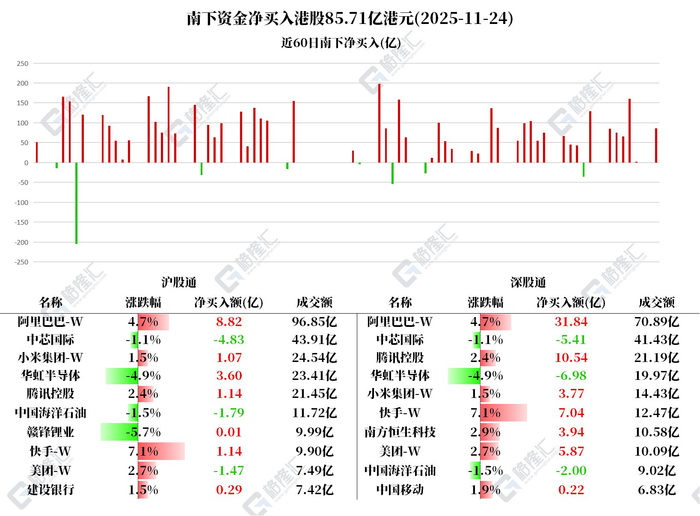
Core Insights - Southbound funds net bought Hong Kong stocks worth 8.571 billion HKD today, with significant purchases in Alibaba, Tencent, and Kuaishou [1] - Continuous buying trends observed for Alibaba and Tencent, while there is a notable selling trend for SMIC and CNOOC [1] Group 1: Investment Trends - Southbound funds net bought Alibaba-W for 4.066 billion HKD, Tencent Holdings for 1.167 billion HKD, Kuaishou-W for 0.818 billion HKD, Xiaomi Group-W for 0.484 billion HKD, Meituan-W for 0.439 billion HKD, and Southern Hang Seng Technology for 0.393 billion HKD [1] - Southbound funds have net bought Alibaba for 8 consecutive days, totaling 17.387 billion HKD, and Tencent for 3 consecutive days, totaling 2.98695 billion HKD [1] Group 2: Selling Trends - Southbound funds net sold SMIC for 1.024 billion HKD, CNOOC for 0.379 billion HKD, and Hua Hong Semiconductor for 0.337 billion HKD [1] - SMIC has seen net selling for 3 consecutive days, totaling 1.2328 billion HKD [1]