
SPD BANK(600000)

Search documents
沪上银行再现高管流动:浦发老将陈雷拟任上海银行副行长
Guan Cha Zhe Wang· 2025-09-03 08:09
Core Viewpoint - Shanghai Bank has appointed Chen Lei, former General Manager of Retail Banking at Pudong Development Bank, as Vice President, pending regulatory approval, marking a significant leadership change during a critical strategic transformation period for the bank [1][3]. Group 1: Leadership Appointment - Chen Lei, a representative of the "post-75" generation in Shanghai's financial system, has a 25-year career at Pudong Development Bank, where he held various key positions [1][2]. - His experience includes leading innovative business models, such as the "AI + Human" dual-track service model for small and micro enterprises, which reduced loan processing time by 60% and increased loan balances by 1.8 times over three years [2]. - Chen's leadership in cross-border finance resulted in a 28% year-on-year increase in supply chain financing, serving over 1,200 cross-border e-commerce enterprises [2]. Group 2: Strategic Context - Shanghai Bank's 2025 semi-annual report indicated a revenue of 27.344 billion yuan, a year-on-year increase of 4.18%, with total assets reaching 3.29 trillion yuan, positioning it among the top three city commercial banks [3]. - The bank faces challenges such as a low proportion of retail business and the need to optimize financial technology investments, necessitating new leadership to drive strategic transformation [3][4]. - The recent appointment of Chen Lei aligns with a broader trend of executive mobility within Shanghai's financial system, reflecting the Shanghai State-owned Assets Supervision and Administration Commission's efforts to optimize financial resource allocation [4]. Group 3: Challenges Ahead - Chen Lei will need to address the bank's net profit growth rate of 2.02% for 2025, which is below the industry average, and find new growth points in a low-interest-rate environment [4]. - He will collaborate with seasoned executives, including the President and other Vice Presidents, to enhance the bank's performance [4]. - Chen's experience in consumer rights protection will be put to the test as the China Banking and Insurance Regulatory Commission strengthens consumer finance regulations in 2025 [4].


信用卡失速消费贷补位,上市银行零售信贷的“跷跷板”能稳吗
Nan Fang Du Shi Bao· 2025-09-03 04:01
Core Viewpoint - The retail credit market is experiencing a significant divergence between traditional credit card business contraction and the expansion of personal loans, driven by consumer demand and policy support [2][11]. Credit Card Business - The total number of credit cards and credit card loans has declined for 11 consecutive quarters, with a reduction of 12 million cards compared to the end of last year [2]. - Among 15 listed banks, 11 reported a decrease in credit card loan balances compared to the end of last year, highlighting a pronounced industry-wide contraction [3]. - The most significant decline in credit card loan balances was observed at Bank of China, with a drop of 13.89%, followed by Postal Savings Bank at 5.67% [4]. - Credit card transaction volumes have also decreased, leading to a decline in non-interest income, with some banks reporting drops exceeding 15% [2][6]. Personal Loans - In contrast to the credit card sector, personal loans, particularly consumer loans, have seen robust growth, with several banks reporting increases exceeding 10% [11]. - Among state-owned banks, personal loans and consumer loans have both shown positive growth, with Agricultural Bank leading at 5.60% [12]. - The consumer loan segment has become a key growth driver for banks, with many institutions launching tailored products to stimulate demand [2][11]. Asset Quality - The asset quality of retail credit is under pressure, with rising non-performing loan (NPL) ratios for personal loans and credit cards across many banks [16]. - State-owned banks generally exhibit higher NPL ratios, with notable increases in personal loan NPLs for several institutions [17]. - Credit card NPL ratios have also risen, particularly at Industrial and Commercial Bank of China, which reported a rate of 3.75% [18][20]. Market Dynamics - The decline in credit card usage reflects a broader shift in consumer spending patterns, with an increase in smaller, more frequent transactions [6][8]. - The overall market for credit cards is facing significant challenges, with many banks reporting double-digit declines in credit card income [9][10].






首次!消费贷“国补”,来了!(附指南)
Sou Hu Cai Jing· 2025-09-02 23:12
Core Viewpoint - The implementation of the personal consumption loan interest subsidy policy aims to reduce borrowing costs for consumers and stimulate consumption in the economy [1][2]. Group 1: Policy Implementation - The personal consumption loan interest subsidy policy officially took effect on September 1, 2025, and will be in place until August 31, 2026 [1]. - The policy covers personal consumption loans issued by banks, excluding credit card transactions, and is applicable to loans used for specific consumption categories [1][4]. - Major banks, including the "Big Four" (Industrial and Commercial Bank of China, Agricultural Bank of China, Bank of China, and China Construction Bank), have committed to implementing the subsidy without charging service fees [1][3]. Group 2: Subsidy Details - The subsidy applies to consumption loans of less than 50,000 yuan and loans of 50,000 yuan or more for key areas such as home appliances, education, and healthcare [1][4]. - For loans above 50,000 yuan, the subsidy is capped at the first 50,000 yuan of consumption [1]. Group 3: Application Process - Banks have simplified the application process for consumers, allowing automatic identification of eligible transactions for the subsidy [3][5]. - Consumers must sign a supplementary agreement and authorize banks to access their loan transaction information to qualify for the subsidy [5][6]. Group 4: Consumer Guidance - Consumers are advised that cash withdrawals for consumption will not qualify for the subsidy, as banks cannot verify the use of funds [4][6]. - If a consumer does not receive the subsidy due to unrecognized transactions, they can submit receipts to the bank for reimbursement [6].


消费贷“国补”无需操作
Shen Zhen Shang Bao· 2025-09-02 23:05
Group 1 - The personal consumption loan interest subsidy policy officially started on September 1, with financial institutions prepared to implement it smoothly for consumers [1][2] - The subsidy allows automatic identification of consumer information during loan applications, eliminating the need for customer intervention [1][2] - Major banks, including Agricultural Bank, Bank of China, and others, have confirmed they will not charge service fees for processing these subsidies [1][2] Group 2 - The subsidy rate is set at an annualized 1%, with a maximum limit of 50% of the loan contract interest rate [2][4] - Consumers can benefit from the subsidy on multiple loans, with a maximum subsidy of 3000 yuan available from the same lending institution [4] - Eligible consumption areas for the subsidy include home appliances, education, healthcare, and more, with specific limits on single transaction amounts [4]


上市银行竞逐移动端 加速迭代提升服务质效
Zheng Quan Ri Bao Zhi Sheng· 2025-09-02 16:39
Core Insights - Mobile banking has evolved from a simple financial tool to a comprehensive service platform, emphasizing banks' overall service capabilities [1][3] - The competition for customer acquisition on mobile platforms is intensifying, with major state-owned banks leading in personal mobile banking user numbers [1][2] Group 1: Personal Mobile Banking Performance - As of June 2023, Industrial and Commercial Bank of China (ICBC) leads with 600 million personal mobile banking users, followed by Agricultural Bank of China (ABC) with 586 million, and China Construction Bank (CCB) with 432 million [1] - Postal Savings Bank of China (PSBC) has 386 million personal mobile banking customers, while Bank of China (BOC) has over 302 million signed customers [1] - Among joint-stock banks, Ping An Bank's mobile app has 17.8 million registered users, a 2% increase from the end of 2022 [1] Group 2: Corporate Mobile Banking Development - Corporate mobile banking is focusing on enhancing payment, cross-border finance, and foreign exchange services, with ICBC reporting 17.87 million corporate mobile banking clients and 7.59 million monthly active users [2] - Agricultural Bank of China's corporate mobile banking registered clients increased by 960,000 to 9.7 million [2] - BOC is promoting a multi-version service system for corporate mobile banking, enhancing features for cross-border finance [2] Group 3: Digital Transformation and Ecosystem Development - The trend in mobile banking development is characterized by "dual-core driving and ecological integration," with personal banking focusing on user scale and experience, while corporate banking emphasizes specialized services [3] - Banks are deepening AI applications and exploring various mobile banking scenarios to enhance online service quality [4] - The adaptation to the HarmonyOS system is becoming standard, with banks like PSBC and CCB launching features that improve user experience and operational efficiency [4][5] Group 4: User Experience and Future Directions - Banks are encouraged to build sustainable user experience management systems and enhance customer experience through AI-driven solutions [6] - The focus is on creating personalized financial solutions and improving service delivery through advanced technology [6]

狂买49亿股!险资二季度重仓买了这些,投资者能“抄作业”吗
Bei Ke Cai Jing· 2025-09-02 14:24
Core Viewpoint - Insurance companies have significantly increased their equity investments, particularly in high-dividend stocks, as they seek to enhance returns amid a declining interest rate environment [3][5][10]. Group 1: Insurance Companies' Stock Holdings - As of the end of Q2, insurance companies held a total of 926.99 billion shares across 731 stocks, an increase of 49.24 billion shares from the previous quarter [2][6]. - The total balance of funds utilized by insurance companies exceeded 36 trillion yuan, marking a year-on-year growth of 17.4%, with stock investments reaching 3.07 trillion yuan, up by 640.6 billion yuan in the first half of the year [5][6]. - The top ten stocks heavily held by insurance companies include Minsheng Bank, Shanghai Pudong Development Bank, and China Unicom, with each holding over 10 billion shares [6]. Group 2: Investment Strategy and Market Outlook - Insurance companies are increasingly focusing on equity assets to match the duration of their liabilities and improve yield, especially as fixed-income returns have become insufficient [3][11][12]. - The majority of insurance institutions maintain an optimistic outlook for the A-share market in the second half of the year, particularly favoring stocks within the CSI 300 index [4][17]. - A survey indicated that stocks are the preferred investment asset for insurance institutions in the latter half of the year, followed by bonds and mutual funds [16]. Group 3: Sector Preferences and Future Investments - Insurance companies are particularly interested in sectors such as pharmaceuticals, electronics, banking, and communications, with a focus on high-dividend and innovative stocks [17]. - The trend of insurance companies increasing their equity investments is expected to continue, driven by the need for better returns and the potential for collaboration with banks through shareholding [12][13][14]. - Companies like China Life and Ping An have expressed confidence in the market, emphasizing the importance of high-dividend stocks in stabilizing overall investment returns [17].


股份行零售排位“争夺赛”:亮眼增速下,座次有何变化?
Nan Fang Du Shi Bao· 2025-09-02 11:26
Core Viewpoint - The retail banking sector is experiencing intensified competition, with significant growth in retail assets under management (AUM) and private banking clients among major banks, despite previous challenges in the market [2][4][7]. Retail AUM - The top three banks in retail AUM are China Merchants Bank (CMB) with 16.03 trillion yuan, Industrial Bank with 5.52 trillion yuan, and CITIC Bank with 4.99 trillion yuan [6][5]. - CMB's AUM growth is 7.39%, while Industrial Bank and CITIC Bank have growth rates of 8.00% and 6.52%, respectively [6]. - Notably, the AUM of several banks has increased significantly, with Zhejiang Commercial Bank and Pudong Development Bank showing growth rates of 12.48% and 10.55% [4][6]. - CMB's AUM surpasses that of its competitors by over 10 trillion yuan, establishing a substantial lead in the retail banking sector [4][5]. Private Banking Clients - The number of private banking clients has also seen substantial growth, with Zhejiang Commercial Bank leading at 15.52% growth, followed by Huaxia Bank, Minsheng Bank, and Pudong Development Bank with growth rates of 13.79%, 12.84%, and 10.15%, respectively [7]. - CMB, CITIC Bank, and Industrial Bank also reported increases in private banking clients, all exceeding 8% growth [7]. Wealth Management Revenue - Wealth management income has shown significant increases, with CMB reporting an 11.89% growth in fees and commissions, marking the first positive growth in three years [8]. - CITIC Bank's wealth management income growth reached a four-year high at 10.3%, while Industrial Bank's retail wealth income grew by 13.45% [8]. Retail Loan Quality - Retail loan non-performing ratios vary significantly among banks, with Bohai Bank having the highest at 4.43%, while CMB and Industrial Bank maintain the lowest at 1.03% and 1.22%, respectively [11][9]. - Despite CMB's strong performance, its non-performing ratio increased by 0.07 percentage points compared to the previous year [11]. Retail Strategy - The introduction of consumer loan interest subsidies is expected to enhance the competitive landscape, shifting focus from price wars to technology, service, and quality differentiation [12][13]. - Banks are emphasizing asset allocation and the application of AI models in their retail strategies, with CMB planning to integrate AI assistants to improve efficiency and workflow [14][15].


浦发银行在海南投资成立租赁公司
Sou Hu Cai Jing· 2025-09-02 07:59
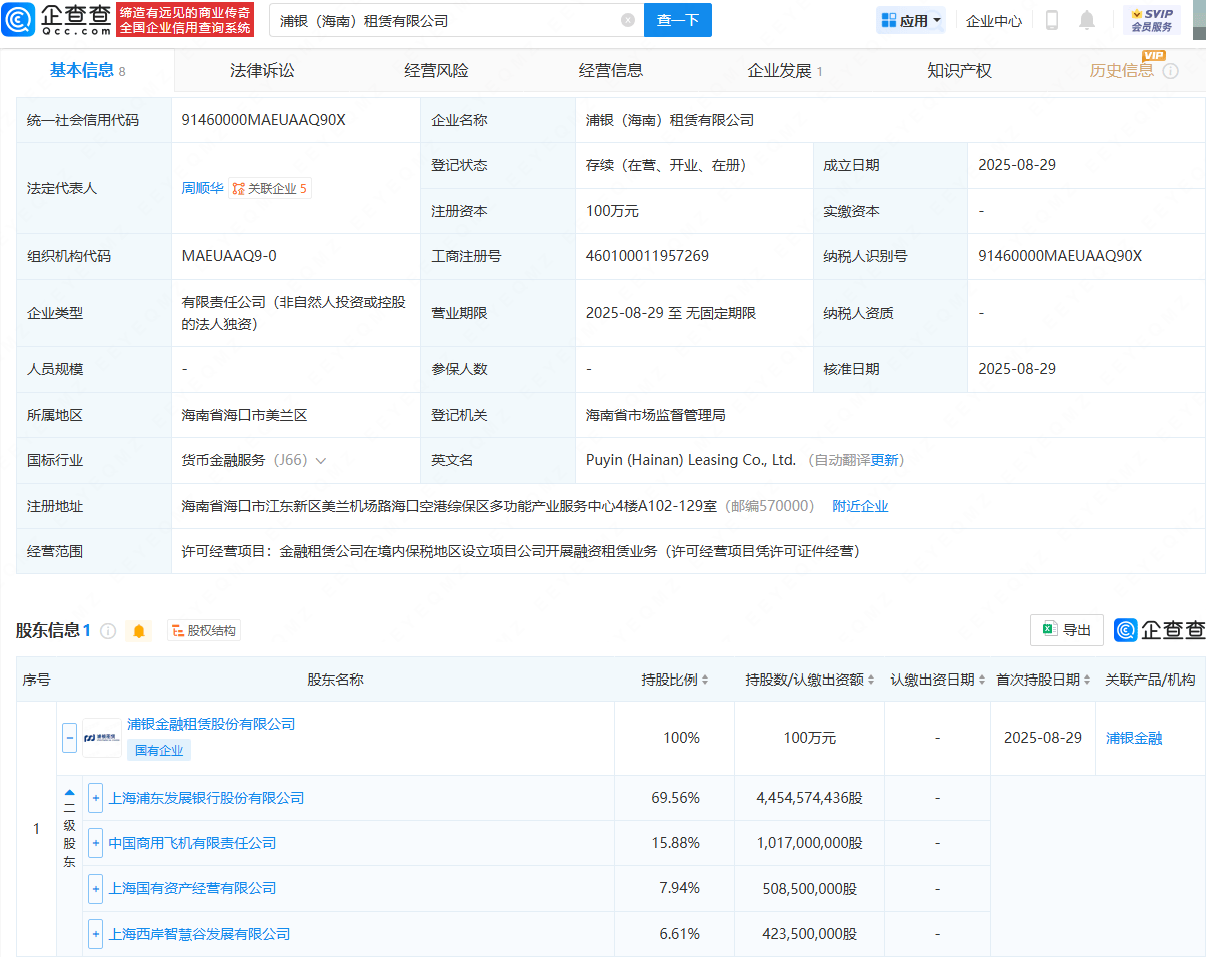
Core Viewpoint - Puyin (Hainan) Leasing Co., Ltd. has been established, focusing on financial leasing services in bonded areas within China, fully owned by Shanghai Pudong Development Bank's leasing subsidiary [1] Group 1: Company Information - The legal representative of Puyin (Hainan) Leasing Co., Ltd. is Zhou Shunhua [1] - The company is registered with a capital of 1 million yuan [2] - The business scope includes establishing project companies for financial leasing in bonded areas [1][2] Group 2: Registration Details - The company was established on August 29, 2025, and has no fixed business duration [2] - It is located in Haikou City, Hainan Province, specifically in the Haikou Airport Comprehensive Bonded Zone [2] - The company is classified under the monetary financial services industry [2]
浦发银行在海南成立租赁公司
Mei Ri Jing Ji Xin Wen· 2025-09-02 06:57
Core Viewpoint - Recently, the establishment of Pu Yin (Hainan) Leasing Co., Ltd. has been registered, which is fully owned by Shanghai Pudong Development Bank's subsidiary, Pu Yin Financial Leasing Co., Ltd. [2][3] Group 1: Company Information - The legal representative of Pu Yin (Hainan) Leasing Co., Ltd. is Zhou Shunhua [3] - The registered capital of the company is 1 million RMB [3] - The company is classified as a limited liability company (wholly owned by a legal entity) [3] Group 2: Business Scope - The business scope includes financial leasing activities, specifically establishing project companies in bonded areas for financing leasing [2][3] - The company is registered under the supervision of Hainan Provincial Market Supervision Administration [3] Group 3: Shareholder Information - Pu Yin (Hainan) Leasing Co., Ltd. is wholly owned by Pu Yin Financial Leasing Co., Ltd., which is a subsidiary of Shanghai Pudong Development Bank [2][3]
浦发银行长春分行积极落实财政贴息政策 激发车贷业务新活力
Zhong Guo Jin Rong Xin Xi Wang· 2025-09-02 05:42
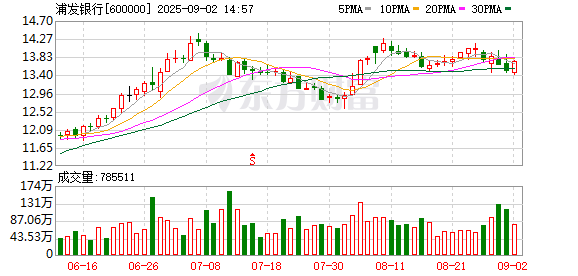
Core Insights - The article discusses the implementation of a financial subsidy policy for personal consumption loans by SPD Bank's Changchun branch to stimulate automotive consumption and support market recovery [1][2] Group 1: Policy Implementation - SPD Bank's Changchun branch quickly responded to the financial regulatory authority's subsidy policy by launching a specialized service for automotive consumption loans [1] - The bank conducted one-on-one policy briefings for car dealerships to clarify key information such as application conditions and repayment methods [1] Group 2: Service Optimization - The bank simplified the loan application process using digital technology, allowing for a fully online application for the automotive consumption loan subsidy [1] - Eligible customers will have the subsidy automatically deducted from their loan amount without needing to apply separately [1] Group 3: Efficiency and Customer Feedback - The first customer to apply for the subsidy received their loan on September 1, the same day the policy took effect, indicating a quick turnaround and high customer satisfaction [1] - SPD Bank aims to continue enhancing consumer finance services to contribute to the prosperity of the automotive market and economic recovery [2]