
CM BANK(600036)

Search documents
资金风向标 | 两融余额较上一日增加192.52亿元 电子行业获融资净买入额居首
Sou Hu Cai Jing· 2026-01-07 01:41
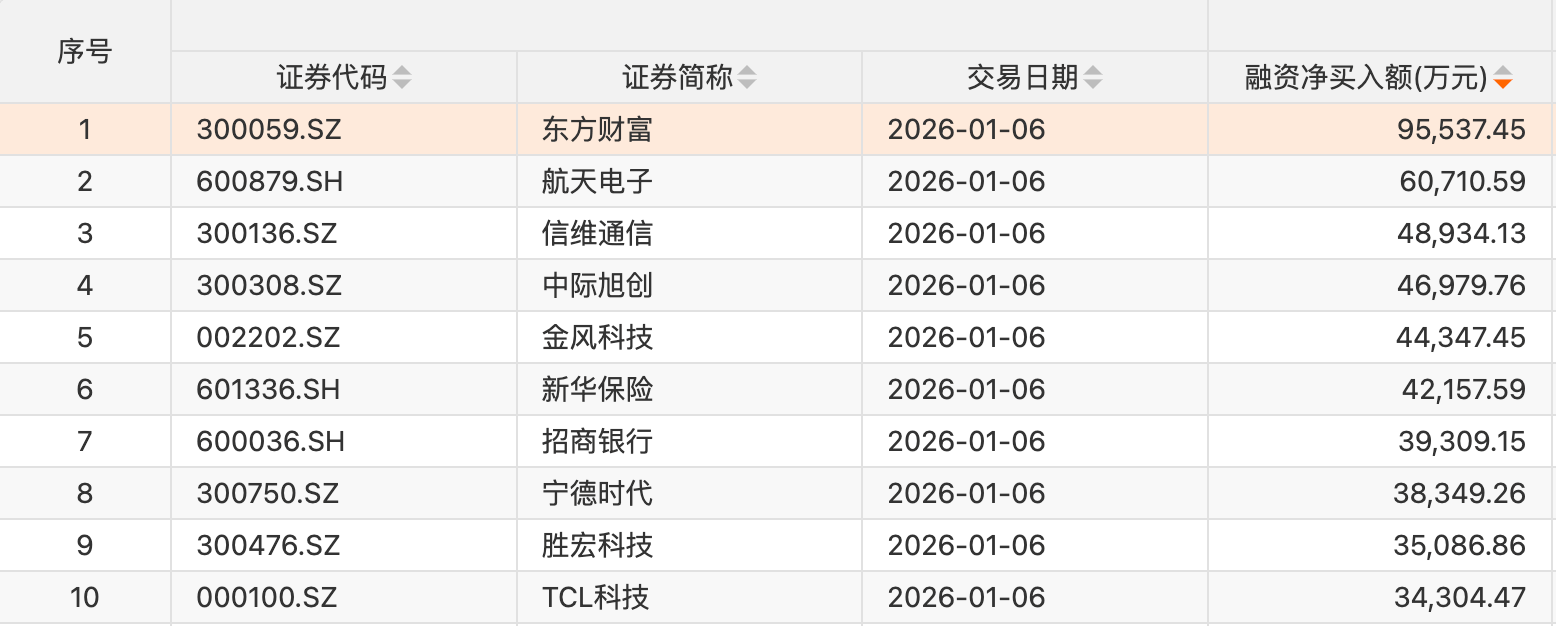
Group 1 - As of January 6, the A-share margin balance reached 25,799 billion yuan, an increase of 192.52 billion yuan from the previous trading day, accounting for 2.53% of the A-share circulating market value [1] - The margin trading volume on the same day was 3,289.06 billion yuan, up by 373.81 billion yuan from the previous trading day, representing 11.6% of the total A-share trading volume [1] - Among the 31 primary industries, 23 experienced net financing inflows, with the electronics sector leading at a net inflow of 4.398 billion yuan [1] Group 2 - A total of 74 stocks had net financing inflows exceeding 1 billion yuan, with Dongfang Caifu leading at a net inflow of 955 million yuan [1] - Other notable stocks with significant net financing inflows include Aerospace Electronics, Xinwei Communication, Zhongji Xuchuang, Goldwind Technology, New China Life Insurance, China Merchants Bank, CATL, Shenghong Technology, and TCL Technology [1][2] - In 2026, the application of AI in terminal devices is expected to accelerate, integrating deeply into various hardware products and industrial scenarios [2] - AI technology is anticipated to enhance traditional consumer electronics such as computers, display devices, and home appliances, while new AI hardware categories like AI glasses and AI headphones are expected to see significant breakthroughs [2]





上汽集团子公司参与设立的股权投资基金完成备案
Xin Lang Cai Jing· 2026-01-06 19:29
Core Viewpoint - Shanghai Automotive Group Co., Ltd. (stock code: 600104) announced the progress of its wholly-owned subsidiary's participation in establishing an equity investment fund, aiming to strengthen its position in the smart electric vehicle industry ecosystem [1] Group 1: Fund Details - The fund, named Ningbo Yongyuan Junsheng Equity Investment Partnership (Limited Partnership), was registered with the Asset Management Association of China on January 5, 2026, and has completed the first phase of capital contribution [1] - The total fundraising scale of the fund is 1.09 billion yuan, with Shanghai Automotive Group Jin控 contributing 270 million yuan, accounting for 24.77% of the total committed capital [1] - The fund is managed by Shanghai Hengxu Chuangling Private Fund Management Co., Ltd., and the custodian is China Merchants Bank Co., Ltd. [1] Group 2: Investment Purpose - The investment aims to enhance the industrial chain layout around the smart electric vehicle industry through professional investment institutions, assisting the company in forming new productive forces [1] - As of now, the total amount committed by the subsidiary of Shanghai Automotive Group to the fund managed by Hengxu Capital has reached 1.67 billion yuan [1]


股份制银行AIC多元投资项目密集落地
Zheng Quan Ri Bao· 2026-01-06 16:39
Group 1 - The core viewpoint of the article highlights the rapid deployment of investment projects by newly established Asset Investment Companies (AICs) under joint-stock banks, focusing on strategic emerging industries and preferring high-quality subsidiaries of listed companies [1][3][4] Group 2 - Since its establishment on November 16, 2025, Xingyin Financial Asset Investment Co., Ltd. has invested over 6 billion yuan in more than 10 projects, targeting sectors such as semiconductors, photovoltaics, lithium mining, and engineering plastics across various regions [2][3] - Xingyin Investment has participated in capital increases for three subsidiaries of listed companies, including a 500 million yuan investment in Sichuan Zhiyuan Lithium Industry, a 300 million yuan investment in Jiangsu Jinfang Technology, and a 700 million yuan investment in Dongyangguang Fluorine [2] Group 3 - The investment strategies of joint-stock bank AICs differ from those of state-owned bank AICs, with the former focusing on emerging industries and technology sectors, while the latter historically concentrated on traditional infrastructure [4][5] - The operational model of joint-stock bank AICs is characterized by a shorter decision-making chain and higher approval efficiency, emphasizing equity investments for high growth returns [4][5] Group 4 - The establishment of AICs has reduced capital consumption for banks, allowing both state-owned and joint-stock banks to complement each other's advantages in serving technology innovation enterprises and projects [6]




金融资产提升活动密集来袭,2026年银行零售AUM战火渐起
Bei Jing Shang Bao· 2026-01-06 13:17
Core Viewpoint - The retail wealth management competition among banks has intensified at the beginning of the new year, with various financial institutions launching promotional activities to enhance asset management scale (AUM) by incentivizing users to optimize their asset allocation [1][3]. Group 1: Retail AUM Competition - Multiple banks, including Agricultural Bank of China and Nanjing Bank, have initiated the "Asset Enhancement Gift" campaign, offering tiered rewards to encourage users to increase their financial assets [3][4]. - Agricultural Bank's campaign allows users to participate in a lottery based on their average financial assets from January 2026 compared to December 2025, with rewards ranging from 5,200 to 2.4 million points based on asset tiers [3][4]. - Nanjing Bank targets premium customers with dual campaigns, rewarding them for asset increases and diversified product holdings, with potential rewards of up to 80,000 points monthly [4]. Group 2: Trends in Wealth Management - The competition in wealth management has shifted from product sales to comprehensive management of customer financial assets, reflecting a transformation in retail banking strategies [5]. - Key trends include a transition from interest margin-driven models to those focused on asset management fees, with AUM becoming a critical measure of retail competitiveness [5]. - The focus has moved from comparing single product yields to evaluating customer-centric asset allocation and lifecycle service capabilities [5]. Group 3: Long-term Service Capability - Retail AUM is a key indicator of a bank's ability to attract and manage individual customer wealth, with several banks reporting growth in retail customer numbers and AUM [7]. - For instance, China Merchants Bank reported a retail customer base of 220 million and an AUM of approximately 16.6 trillion yuan, reflecting an 11.19% increase year-on-year [7]. - Banks are encouraged to shift from product promotion to asset allocation assistance, enhancing their service ecosystems to better meet customer needs [8]. Group 4: Sustainable Growth Mechanisms - To achieve sustainable growth in retail AUM, banks must move beyond short-term promotional strategies and focus on systematic capability development [8]. - Strategies include deepening customer segmentation, enhancing investment research capabilities, and fostering channel collaboration to improve customer engagement [8][9]. - Leveraging data and technology for precise marketing and service delivery is essential for creating a comprehensive operational system that supports long-term customer relationships [8].






买买买!招商银行,被四度举牌!
Zheng Quan Shi Bao· 2026-01-06 11:34
港交所披露易最新信息显示,平安人寿于2025年12月31日增持1401.25万股招商银行H股股份之后,于当 日达到该行H股股本的20%,根据香港市场规则,触发举牌。 在此之前,平安人寿曾在1月10日、3月13日、6月17日分别举牌招行H股,所持该行H股数量占其H股总 数分别突破5%、10%、15%。 以此统计,2025年合计7家上市银行被险资举牌。其中,招行H股、农行H股、郑州银行H股均获四度举 牌;邮储银行H股被三度举牌。 四度举牌招行H股 据披露易信息,早在2025年1月10日,平安人寿就首次举牌招行H股,所持该行H股数量达到该行H股股 本的5%。 2025年3月13日,平安人寿又耗资近3亿港元,在场内增持606.75万股招行H股,持股占比突破该行H股 总数的10%,构成二度举牌。 2025年6月17日,再度增持629.55万股招行H股股份之后,平安人寿所持招行H股总数已达该行H股股本 的15%,构成第三次举牌。 披露易最新消息显示,平安人寿于2025年12月31日继续增持1401.25万股招行H股股份,达到该行H股股 本的20%,完成第四次举牌。 以此计算,2025年1月10日至12月31日,平安人寿合 ...
年内举牌超30次 让险资为之“疯狂”的机构都有哪些特点⋯⋯
Mei Ri Jing Ji Xin Wen· 2026-01-06 10:17
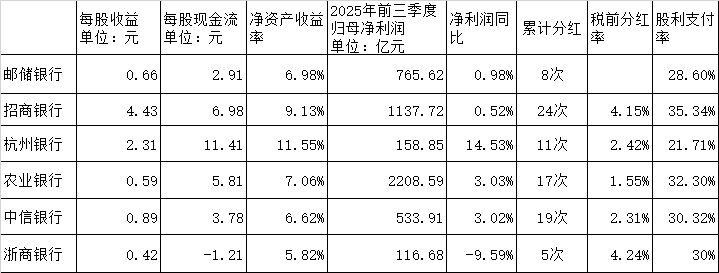
Core Viewpoint - Insurance capital's stake in listed companies has significantly increased, with over 30 instances of stake acquisitions in 2025, marking a new high in recent years [1][10]. Group 1: Stake Acquisition Trends - In 2025, insurance companies made 35 stake acquisitions, up from 20 in 2024, indicating a growing trend in equity market participation [2][11]. - The financial sector is the primary focus for insurance capital, with 15 stake acquisitions involving 6 banks and 2 insurance companies [1][4]. - The H-share market is the main venue for these acquisitions, as it offers better valuation opportunities compared to A-shares [1][4]. Group 2: Active Participants - A total of 14 insurance institutions participated in stake acquisitions in 2025, with Ping An Life leading with 12 acquisitions [2][11]. - Other notable participants include Great Wall Life and China Post Life, each with 4 acquisitions, and several others with fewer [2][11]. - August 2025 was particularly active, with 7 acquisitions, including Ping An Life's significant stake in Postal Savings Bank [2][11]. Group 3: Investment Characteristics - Insurance capital favors low-valuation, high-dividend stocks with stable performance, particularly in the banking sector [4][13]. - The new accounting standards encourage insurance companies to increase stake acquisitions to stabilize profit and loss fluctuations [3][12]. - Financial stocks, especially H-shares, are preferred due to their higher dividend yields compared to long-term bond yields [4][13]. Group 4: Financial Performance of Target Companies - Six banks targeted by insurance capital showed a range of return on equity (ROE) from approximately 6% to 11.55% [5][14]. - The banks reported stable dividend distributions, with China Merchants Bank having the highest number of cumulative dividends at 24 [5][14]. - In the first three quarters of 2025, five banks reported year-on-year profit increases, with Postal Savings Bank achieving a net profit of 765.62 billion yuan, up 0.98% [5][14]. Group 5: Market Reactions and Future Outlook - Stake acquisitions by insurance capital have positively influenced stock prices, often leading to short-term price surges [6][16]. - Insurance stocks have outperformed other sectors, with significant annual increases in stock prices for major insurance companies [8][18]. - The trend of insurance capital acquisitions is expected to continue into 2026, driven by considerations of dividend yield and return on equity [9][19].

939亿增持狂潮!523家A股公司扫货,多家银行股将披露业绩
21世纪经济报道· 2026-01-06 10:10
Core Viewpoint - The banking sector in A-shares is expected to perform well in 2026, driven by stable fundamentals and increased dividend attractiveness, despite a less impressive performance in 2025 compared to previous years [4][9][10]. Group 1: Annual Report Disclosure - Ping An Bank will be the first to disclose its annual report on March 21, followed by CITIC Bank on the same day [1]. - A total of 10 banks will disclose their 2025 annual reports on March 31, marking the highest number of disclosures on a single day [3]. - The total market capitalization of 42 A-share banks exceeded 15 trillion yuan, increasing by approximately 2.1 trillion yuan from the end of 2024 [2][3]. Group 2: Market Performance - The banking sector index rose by 12.05% in 2025, underperforming the CSI 300 index, which increased by 17.66% [3]. - Among the 42 banks, 35 experienced stock price increases, with Agricultural Bank of China leading at a 52.66% rise [3]. - The overall market sentiment towards bank annual reports is positive, with expectations of continued growth in 2026 [4][9]. Group 3: Investment Drivers - The strong performance of the banking sector in 2025 was supported by both funding and fundamental factors, including inflows from passive index funds and insurance [4]. - Significant shareholder buybacks have also contributed to the rise in bank stocks, with 523 companies increasing their holdings, totaling 939.6 billion yuan [6]. - Analysts predict that the demand for high-dividend stocks will remain strong, particularly for state-owned banks known for stable returns [10]. Group 4: Future Outlook - Analysts expect the banking sector to maintain stable performance in 2026, supported by a recovering real economy and high dividend yields [9]. - The issuance of ETFs linked to broad indices and dividend indices is expected to continue, attracting more passive fund inflows into the banking sector [9]. - The differentiation in performance among various banks is anticipated to become a key theme, with larger banks likely to see more consistent revenue growth compared to smaller banks [10]. Group 5: Seasonal Trends - Historical data shows that the banking sector has a high success rate for absolute and excess returns before the Spring Festival, with an average absolute return of 4.4% [11]. - The upcoming Spring Festival in 2026 is expected to see continued strong performance in bank stocks, driven by balanced market styles and robust demand for high-dividend stocks [12]. - Recommendations for stock allocation include a stable base in state-owned banks and a more aggressive approach with quality joint-stock and city commercial banks [12].

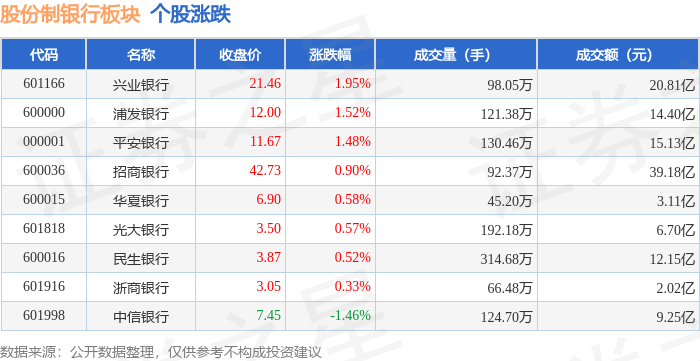
股份制银行板块1月6日涨0.88%,兴业银行领涨,主力资金净流入6.46亿元
Zheng Xing Xing Ye Ri Bao· 2026-01-06 09:00
Group 1 - The banking sector saw an increase of 0.88% on January 6, with Industrial Bank leading the gains [1] - The Shanghai Composite Index closed at 4083.67, up 1.5%, while the Shenzhen Component Index closed at 14022.55, up 1.4% [1] - Key stocks in the banking sector and their performance included Industrial Bank (up 1.95% to 21.46), Pudong Development Bank (up 1.52% to 12.00), and Ping An Bank (up 1.48% to 11.67) [1] Group 2 - The net inflow of main funds in the banking sector was 646 million yuan, while retail investors saw a net outflow of 357 million yuan [1] - The main fund inflow for Industrial Bank was 222 million yuan, accounting for 10.65% of its total, while retail investors had a net outflow of 137 million yuan [2] - Ping An Bank experienced a main fund inflow of 209 million yuan (13.79%) but a retail outflow of 65 million yuan [2]



2026年银行业投资策略:净息差周期拐点与银行业资产配置价值重估
HUAXI Securities· 2026-01-06 07:50
Group 1 - The banking sector is expected to see a stabilization in net interest margins in 2026, driven by a peak in deposit re-pricing and a favorable loan rate environment [6][70][75] - The overall banking index increased by 7% in 2025, with H-shares and state-owned banks leading the gains, although the banking index underperformed the Shanghai Composite Index by 11 percentage points [3][10][12] - Insurance capital has significantly increased its allocation to bank stocks, with a net increase of approximately 570 billion yuan in 2025, indicating strong future demand for bank equities [4][23][26] Group 2 - The growth of interest-earning assets is a key stabilizer for bank performance, contributing to an 8%-11% increase in earnings, while the negative impact of interest margins has been narrowing [5][45] - The profitability of banks is improving, with a notable recovery in fee income and investment returns, which have become significant growth drivers [41][45] - The performance of city commercial banks and state-owned banks has been particularly strong, with city commercial banks showing the highest profit growth due to reduced credit impairment provisions [48][49] Group 3 - The report highlights a favorable outlook for bank stock investments, focusing on high dividend yields and growth potential, with specific banks like Shanghai Pudong Development Bank and China Merchants Bank identified as beneficiaries [7] - Regulatory policies are evolving to enhance risk management and promote digital finance, which is expected to support the banking sector's stability and growth [51][54] - The macroeconomic environment is characterized by a weak recovery, with credit growth expected to slow down, impacting overall banking performance [6][63]
“脱核”融资!招行青岛分行小微企业供应链融资模式悄然转型
Qi Lu Wan Bao· 2026-01-06 06:36
Core Insights - The article discusses the transformation of supply chain financing from a credit-based model reliant on core enterprises to a "de-coupled" model that leverages transaction data and performance metrics of businesses [2][3] - The introduction of the "Dealer Easy Loan" by China Merchants Bank's Qingdao branch allows small distributors to access financing based on their transaction data with Lu Hua Group, addressing previous financial constraints [1][5] Policy and Market Dynamics - The shift to de-coupled financing is driven by policy support and market demand, as highlighted by the People's Bank of China and other regulatory bodies encouraging financial institutions to adopt this model [2] - Traditional financing models placed high demands on core enterprises, which limited the accessibility of financing for small and micro enterprises [2] Technological Advancements - China Merchants Bank has developed an advanced online intelligent risk control model that integrates various data sources to create a comprehensive profile of businesses, facilitating the de-coupled financing approach [3][4] - The bank's financing products, such as "Dealer Easy Loan" and "Supply Chain Loan," utilize this model to provide efficient and accessible financial solutions to small and micro enterprises [3][4] Product Offerings - "Dealer Easy Loan" is designed for downstream distributors, providing credit loans that ensure funds are directed to core enterprise accounts, thus controlling usage [4] - "Supply Chain Loan" offers online credit loans without collateral or on-site due diligence, simplifying the application process for small businesses [4] Operational Efficiency - The bank's "One Bank Serves One" model enhances collaboration across branches, allowing for direct partnerships with core enterprises and streamlined services for their upstream and downstream clients [4][5] - The financing model has significantly improved service efficiency, enabling rapid loan approvals and disbursements [5] Impact on Supply Chain Ecosystem - The de-coupled financing model has positively influenced the supply chain ecosystem by reducing reliance on core enterprise credit, thus promoting stability and health within the supply chain [7] - The financing solutions provided by China Merchants Bank have addressed the funding challenges faced by small distributors, leading to lower interest rates compared to traditional financing options [7] Performance Metrics - By the end of December 2025, the Qingdao branch achieved a loan balance of 2.146 billion yuan in supply chain financing, marking an 82% year-on-year increase, with de-coupled financing growing by 377% [8] - The bank's efforts in supply chain financing have positioned it as a key player in promoting inclusive finance, with significant growth in the adoption of de-coupled products [8]