
JAC(600418)

Search documents
合肥警方:捏造散布涉江淮汽车虚假信息,公安机关已立案调查
Xin Lang Cai Jing· 2025-08-31 00:06
据"合肥警方"官方公众号8月31日通报,2025年8月30日下午,公安机关接到江淮汽车集团股份有限公司报案,称有人在网上捏造散布江淮汽车3000余条虚 假信息,严重损害企业商业信誉和商品声誉。为查清事实,公安机关已立案调查。警方提醒:公安机关将依法严厉打击涉企网络"黑嘴"违法犯罪行为。 ...


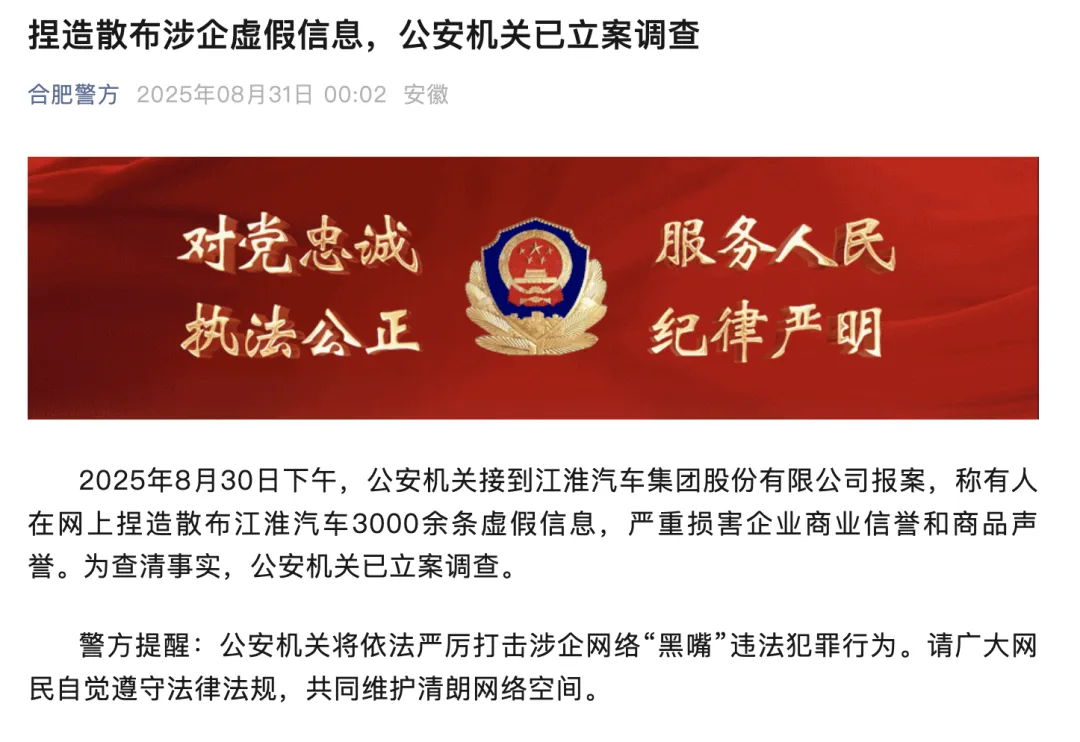
合肥警方:捏造散布涉江淮汽车虚假信息 公安机关已立案调查
Zheng Quan Shi Bao Wang· 2025-08-31 00:06
Group 1 - The police in Hefei received a report from Jianghuai Automobile Group Co., Ltd. regarding the dissemination of over 3,000 false information online, which severely damaged the company's commercial reputation and product image [1] - The police have initiated an investigation to clarify the facts surrounding the case [1] - Authorities have warned that they will take strict legal action against illegal activities related to corporate online defamation [1]
合肥警方:捏造散布涉企虚假信息,公安机关已立案调查
Xin Lang Cai Jing· 2025-08-30 17:00
Group 1 - The police received a report from Jianghuai Automobile Group Co., Ltd. regarding the dissemination of over 3,000 false information online, which severely harmed the company's commercial reputation and product image [1] - The police have initiated an investigation to clarify the facts surrounding the case [1] - Authorities have warned that they will strictly crack down on illegal activities related to corporate defamation in the online space [1]
江淮汽车申请低温工况电子机油泵开度控制方法专利,有效降低燃油消耗
Jin Rong Jie· 2025-08-30 01:46
Group 1 - Anhui Jianghuai Automobile Group Co., Ltd. has applied for a patent titled "Electronic Oil Pump Opening Control Method under Low Temperature Conditions," with publication number CN 120556997 A, and the application date is July 2025 [1] - The patent describes a method that adaptively adjusts oil pressure based on different engine operating conditions to meet lubrication needs, particularly enhancing lubrication performance in low-temperature scenarios [1] - The method involves monitoring oil pressure sensor signals for effective filtering, establishing a reliable basis for subsequent duty cycle control, and ensuring reasonable duty cycles to avoid oil pressure drop issues [1] Group 2 - Anhui Jianghuai Automobile Group Co., Ltd. was established in 1999 and is located in Hefei City, primarily engaged in the automotive manufacturing industry [2] - The company has a registered capital of 218,400.9791 million RMB and has invested in 48 enterprises, participated in 5,000 bidding projects, and holds 946 trademark records and 5,000 patent records [2] - Additionally, the company possesses 666 administrative licenses [2]
失蔚来、靠华为 江淮汽车半年亏损创新高
Guo Ji Jin Rong Bao· 2025-08-30 01:14
Core Viewpoint - Anhui Jianghuai Automobile Group Co., Ltd. (JAC) is facing significant challenges, with a drastic decline in net profit and overall performance amid increasing competition and market pressures [2][3]. Financial Performance - In the first half of 2025, JAC reported operating revenue of 19.36 billion yuan, a year-on-year decrease of 9.10% [4]. - The company's net profit turned into a loss of 773 million yuan, a decline of 356.89% compared to a profit of 301 million yuan in the same period last year [5]. - Cumulative losses over the past nine years have exceeded 15 billion yuan [5]. Sales and Market Position - JAC's total vehicle sales in the first half of 2025 were 190,600 units, down 7.54% year-on-year, with passenger vehicle sales dropping 16.12% to 66,000 units [4]. - The company’s export volume was 107,000 units, a decrease of less than 20,000 units compared to the previous year, indicating that export issues are not the primary cause of the revenue decline [4]. Cost Structure - Management expenses increased significantly, with sales expenses rising by 6.38% to 724 million yuan and management expenses soaring by 43.99% to 1.12 billion yuan [5]. - R&D expenses decreased by 12.87% to 687 million yuan, reflecting a potential reduction in innovation efforts [5]. Leadership and Strategic Issues - The decline in JAC's performance can be traced back to management changes, particularly after the departure of former chairman Zuo Yanan in 2012, leading to a stagnation in sales and profitability [6]. - The company has faced leadership challenges, including the removal of former chairman An Jin for serious disciplinary violations [6]. Dependency on Partnerships - JAC previously relied on contract manufacturing for NIO, generating significant revenue until the partnership ended, which has left a gap in income [8]. - The company is now partnering with Huawei to develop the high-end electric vehicle brand "Zun Jie," with the first model, Zun Jie S800, launched at a price range of 708,000 to 1,018,000 yuan [9]. Market Challenges - The luxury electric vehicle market is highly competitive, dominated by established brands like Mercedes-Benz, BMW, and Audi, along with new entrants like Tesla [10]. - JAC's Zun Jie S800 faces significant market pressure as it attempts to penetrate a segment already occupied by strong competitors [10].
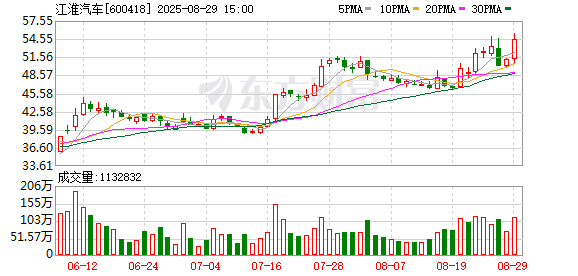
江淮皮卡悍途PHEV/EV全球上市,管理体系持续对标华为
Zhong Guo Jing Ji Wang· 2025-08-30 00:22
Core Insights - Jianghuai Automobile showcased multiple key models and technological achievements at the 2025 Chengdu Auto Show, including the global launch of the new energy pickup trucks, Hantu PHEV and Hantu EV, with starting prices of 159,800 yuan and 199,800 yuan respectively [1] - The company introduced the user brand "ING+" and initiated four major user programs aimed at creating a co-creation and sharing lifestyle platform, reflecting a shift in consumer trends from utility vehicles to lifestyle companions [1] - Jianghuai's collaboration with Huawei was highlighted, particularly with the launch of the ZunJie S800, which has received over 12,000 pre-orders within 87 days of its release, marking a significant breakthrough in the ultra-luxury smart electric vehicle sector [3][5] Product and Technology Development - The ZunJie S800 features advanced technologies such as the HUAWEI ADS 4 intelligent driving system, Tuling Longxing digital chassis, and an 800V high-voltage architecture, supported by the ZunJie Super Factory, recognized as a national-level intelligent manufacturing benchmark [5][9] - The Hantu PHEV, as the world's first thousand-torque electric hybrid pickup, boasts a maximum torque of 1000 N·m, an electric range of 100 kilometers, and a total range exceeding 1000 kilometers, while the Hantu EV Glory Edition is the first non-bearing pure electric four-wheel drive pickup in China with a CLTC range of over 500 kilometers [7][9] Strategic Partnerships and Investments - Jianghuai Automobile is committed to dual-track strategies of independent innovation and open collaboration, with R&D investment reaching 2.216 billion yuan in the first half of 2025, a year-on-year increase of 34.47%, accounting for 11.44% of revenue [9][10] - The company has expanded its strategic partnership with Huawei, signing a cooperation agreement in June to work on smart automotive solutions, digital transformation, and green low-carbon initiatives, aiming to drive the electric, intelligent, and connected development of the automotive industry [9][10]
研发投入激增30% 江淮汽车打响“科技豪华”突围战
Zhong Guo Jing Ying Bao· 2025-08-29 12:03
Core Viewpoint - The automotive industry in China is experiencing rapid growth, with a focus on smart and high-end vehicles, prompting companies like JAC Motors to significantly increase R&D investments despite short-term revenue pressures [2][12]. Group 1: R&D Investment and Financial Performance - JAC Motors reported a 34.47% increase in R&D investment in the first half of 2025, amounting to 2.216 billion yuan, which represents 11.44% of its revenue [2][4]. - The company's revenue showed a slight decline, indicating that the increased R&D spending is part of a strategic transformation rather than a sign of operational weakness [2][12]. - JAC Motors' sales in various segments, including over 36,000 pickups and more than 9,200 new energy light trucks, demonstrate resilience amid market challenges [2]. Group 2: Strategic Partnerships and Technological Advancements - The collaboration with Huawei has been pivotal, leading to the establishment of a comprehensive ecosystem that integrates R&D, manufacturing, supply chain, and organizational transformation [5][7]. - JAC Motors has formed a dedicated team of over 5,000 for the "Zun Jie" project and has set up a research center in Shanghai, partnering with top universities for advanced technology development [5][7]. - The launch of the Zun Jie S800 model has been successful, with over 12,000 orders within 87 days, reflecting market acceptance of the JAC-Huawei technology partnership [2][9]. Group 3: Future Outlook and Strategic Goals - JAC Motors aims to achieve a revenue target of 100 billion yuan by focusing on high-quality development and enhancing user experience in its product offerings [9][10]. - The company is committed to strengthening its core competencies in vehicle integration, user experience, green technologies, and smart manufacturing to build a competitive edge [9][12]. - JAC Motors is leveraging national policies to enhance its market competitiveness and internal capabilities amid ongoing state-owned enterprise reforms [10].
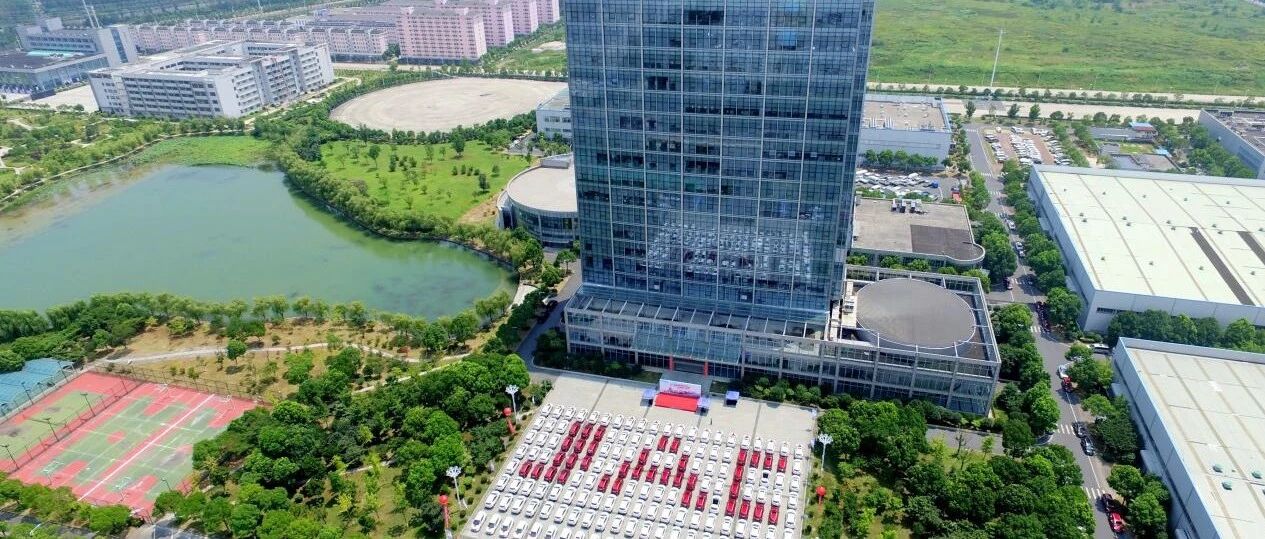
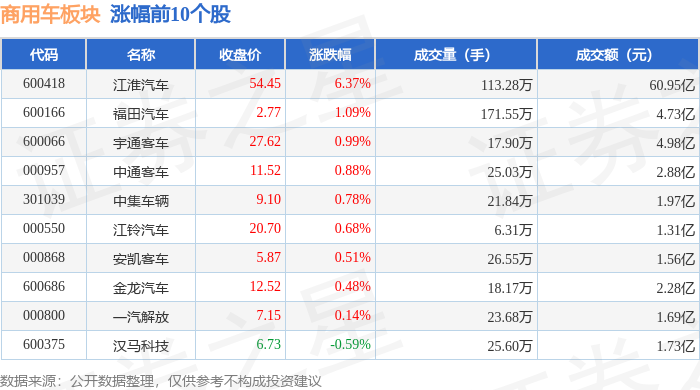
商用车板块8月29日涨2.42%,江淮汽车领涨,主力资金净流入1162.51万元
Zheng Xing Xing Ye Ri Bao· 2025-08-29 08:41
Core Viewpoint - The commercial vehicle sector experienced a notable increase of 2.42% on August 29, with Jianghuai Automobile leading the gains, reflecting positive market sentiment in the industry [1]. Group 1: Market Performance - The Shanghai Composite Index closed at 3857.93, up 0.37%, while the Shenzhen Component Index closed at 12696.15, up 0.99% [1]. - Jianghuai Automobile's stock price rose by 6.37% to 54.45, with a trading volume of 1.1328 million shares and a transaction value of 609.5 million yuan [1]. - Other notable performers included Foton Motor, which increased by 1.09%, and Yutong Bus, which rose by 0.99% [1]. Group 2: Capital Flow - The commercial vehicle sector saw a net inflow of 11.6251 million yuan from institutional investors, while retail investors contributed a net inflow of 10.4 million yuan [2]. - Conversely, speculative funds experienced a net outflow of 116 million yuan [2]. - The overall trading activity in the sector indicates a mixed sentiment among different types of investors [2]. Group 3: Individual Stock Analysis - Jianghuai Automobile had a net inflow of 50.7148 million yuan from institutional investors, while it faced a net outflow of 78.1868 million yuan from speculative funds [3]. - Foton Motor saw a net inflow of 18.7671 million yuan from institutional investors, indicating strong support from this group [3]. - In contrast, Hanma Technology experienced a significant net outflow of 11.111 million yuan from institutional investors, suggesting potential concerns regarding its performance [3].
长安/解放/东风等集体“动刀”!8月商用车高管变动又起风云 | 头条
第一商用车网· 2025-08-29 07:39
Core Viewpoint - The commercial vehicle industry in China is experiencing significant personnel changes among major companies, including China Changan Automobile, FAW Jiefang, Dongfeng Commercial Vehicle, and others, as they prepare for the upcoming sales peak in September and October [1][24]. Group 1: Personnel Changes - In August, several major companies in the commercial vehicle sector, such as FAW Jiefang, Dongfeng Commercial Vehicle, and China Changan Automobile, underwent key executive changes [1]. - China Changan Automobile Group was officially established as a central enterprise, with a new leadership team announced, including Zhu Huarong as the Party Secretary and Chairman [3]. - Changan Kaicheng, the commercial vehicle subsidiary of China Changan, appointed a new president, Dong Chenrui, who has 23 years of experience in the commercial vehicle sector [3]. - FAW Jiefang announced the resignation of board member Liu Yanchang and subsequently elected Qiao Youlin as a non-independent director [4][5]. - Dongfeng Commercial Vehicle made changes in its marketing department, appointing new leaders for various roles [7]. - Anhui Jianghuai Automobile Group announced a delay in the election of its new board of directors, extending the current board's term [9][10]. - Xiamen King Long United Automotive Industry Group appointed a new vice president and financial director, while also adding a new board member [12][13][14][15]. - Hanma Technology reported the resignation of its executive vice president, Fan Ruirui, due to personal reasons [17][18]. - Anhui Ankai Automobile announced the resignation of its securities affairs representative, Zhao Baojun, who will not hold any company shares [20][21]. Group 2: Industry Context - The personnel changes in August reflect a transitional phase in the commercial vehicle industry, linking the previous month's adjustments with the initial setup of the new central enterprise [24]. - These changes are aimed at optimizing management teams in preparation for the traditional sales peak in the upcoming months [24].



江淮汽车成都车展亮剑,悍途PHEV与悍途EV全球上市
Zhong Guo Qi Che Bao Wang· 2025-08-29 07:22
Core Insights - Jianghuai Automobile showcased its strategic transition from traditional manufacturing to a technology-driven enterprise at the 2025 Chengdu International Auto Show, emphasizing high-end and intelligent transformation [1] Group 1: New Product Launches - Jianghuai's new energy pickup trucks, the HanTu PHEV and HanTu EV, were globally launched with starting prices of 159,800 RMB and 199,800 RMB respectively, featuring advanced capabilities such as a combined torque of 1000 N·m and a pure electric range of 100 km [2] - The HanTu EV Glory Edition is noted as the first non-bearing pure electric four-wheel drive pickup in China, equipped with a CATL 88 kWh battery and a CLTC range exceeding 500 km, enhancing Jianghuai's influence in the new energy pickup market [2] Group 2: Brand Development and User Engagement - Jianghuai launched the user brand "ING+" focusing on four core values: exploration, responsibility, fun, and protection, aiming to create a platform for a rugged lifestyle that aligns with consumer trends of pickups evolving from utility vehicles to lifestyle companions [4] Group 3: Technological Advancements - The ZunJie S800, a product of deep collaboration with Huawei, has received significant attention since its launch, with over 12,000 pre-orders in 87 days, marking a breakthrough for Chinese brands in the ultra-luxury intelligent electric vehicle sector [6] - The ZunJie S800 integrates advanced technologies such as the HUAWEI ADS 4 intelligent driving system and an 800V high-voltage architecture, setting new standards for safety, comfort, and performance in smart vehicles [6][11] Group 4: Manufacturing and Innovation - The ZunJie S800 is produced at the ZunJie Super Factory, recognized as a national-level intelligent manufacturing benchmark, showcasing innovations like a fully digital production line and AI quality inspection systems [11] - Jianghuai has formed a "Quality Alliance" with over 220 top global supply chain partners to tackle key and cutting-edge technologies, aiming to explore the "unmanned zone" of ultra-luxury intelligent electric vehicles [11] Group 5: Research and Development - In the first half of 2025, Jianghuai's R&D investment reached 2.216 billion RMB, a year-on-year increase of 34.47%, accounting for 11.44% of its revenue, reinforcing its core competitiveness [13] - The company has expanded its strategic cooperation with Huawei, focusing on intelligent automotive solutions and green transformation, marking a new phase of collaborative development [13][15] Group 6: Future Outlook - Jianghuai aims to play an increasingly important role in the global automotive market, supported by the continuous launch of diversified products and deepening global collaborations, contributing to the upward breakthrough of the Chinese automotive industry [15]
