
BAIC BluePark(600733)

Search documents
L3自动驾驶加速迈入商业化落地阶段
Zhong Guo Jing Ji Wang· 2026-01-13 06:34
Core Insights - The event themed "Leap Forward Together to Create Intelligent Mobility" showcased significant advancements in smart mobility by BAIC New Energy, including the launch of the L3 level Arcfox Alpha S for large-scale road testing and a strategic partnership with Pony.ai for L4 level developments [1][2] Group 1: L3 Level Developments - The Arcfox Alpha S (L3 version) has received approval for nationwide L3 level autonomous driving vehicle access, marking a new phase in the mass application of autonomous driving technology [1] - The initial pilot operation of the Arcfox Alpha S (L3 version) will take place on key transportation routes in Beijing, including the Jing-Tai Expressway and Daxing Airport Expressway, integrating smart mobility experiences into major traffic arteries [2] Group 2: Strategic Partnerships and Future Outlook - BAIC New Energy's collaboration with Pony.ai has entered the 2.0 phase, aiming to create a complete closed-loop from technology development to commercial operation in the autonomous driving sector [2] - The Robotaxi market is projected to reach nearly 500 billion yuan by 2030, representing a significant growth opportunity within the smart mobility landscape [2]

四维图新(002405.SZ):和北汽蓝谷在智能座舱、智能驾驶方面有合作
Ge Long Hui· 2026-01-13 01:31
Group 1 - The core viewpoint of the article is that Siwei Tuxin (002405.SZ) has announced a collaboration with BAIC Blue Valley in the fields of intelligent cockpit and intelligent driving, and both companies have secured orders [1] Group 2 - The collaboration focuses on advancements in intelligent cockpit and intelligent driving technologies [1] - Both companies have successfully obtained orders related to their partnership [1]

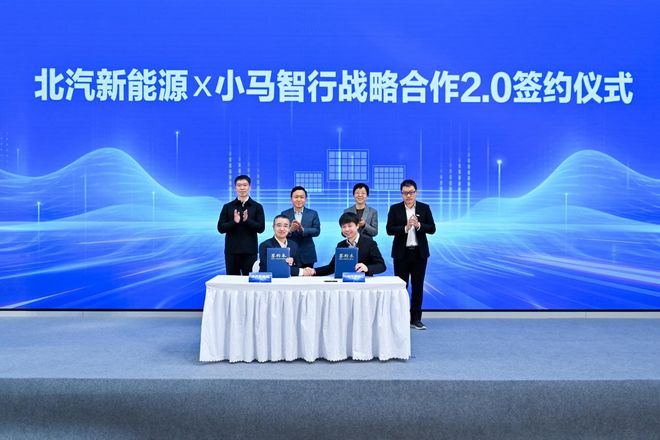
北汽新能源与小马智行达成全面深化战略合作
Guan Cha Zhe Wang· 2026-01-12 14:27
Core Viewpoint - BAIC New Energy and Pony.ai have officially entered a comprehensive strategic cooperation, aiming to create a benchmark for collaborative innovation in China's intelligent driving industry through a "five-in-one" approach [1][4]. Group 1: Strategic Cooperation Details - The cooperation will focus on five key dimensions: product co-creation, market expansion, industry chain integration, ecosystem building, and capital collaboration [4]. - The product co-creation will leverage the successful mass production experience of the Arcfox Alpha T5 Robotaxi to develop a diverse L4 product matrix and extend into high-end intelligent vehicles [4]. - Market expansion efforts will include deepening domestic presence while promoting the "Chinese solution" abroad, particularly in the Middle East and Europe [4]. Group 2: Operational and Financial Aspects - The initiative aims to optimize the entire lifecycle cost of L4 vehicles by integrating supply chains and fostering a local intelligent mobility supply chain cluster [4]. - The ecosystem building will involve integrating resources across the entire value chain, including R&D, production, customer acquisition, operation, maintenance, and finance, to create a sustainable Robotaxi business ecosystem [4]. - The capital collaboration will focus on long-term strategic binding around technology, supply chain, and global market expansion, driven by mutual trust [4][6]. Group 3: Milestones and Achievements - The first mass-produced Arcfox Alpha T5 Robotaxi was officially launched in July 2025, with the first 100 units delivered within a month and 300 units produced within three months [6]. - As of now, over 600 units of the Arcfox Alpha T5 Robotaxi have been produced, capable of operating in various complex driving scenarios, including urban roads and highways [6]. - Commercial operations for the Arcfox Alpha T5 Robotaxi began in November 2025, covering key areas in Beijing and Shenzhen, including airports and business districts during peak hours [9].

【快讯】每日快讯(2026年1月12日)
乘联分会· 2026-01-12 09:28
Domestic News - Hong Kong's Transport Department will promote unmanned testing of autonomous vehicles this year, having issued 6 pilot licenses for 62 autonomous private cars and minibuses, with over 80,000 kilometers driven safely [2] - BAIC Blue Valley's L3 vehicles have officially started road trials, with plans to gradually open to individual users in the second quarter of this year [3] - Tongji University has restructured its Mechanical and Energy Engineering College into a Mechanical Engineering and Robotics College and an Automotive and Energy College, aligning with the national "dual carbon" strategy and the trend of electrification and intelligence in the automotive industry [4] - Shanghai's government has launched a three-year action plan to support advanced manufacturing, focusing on new energy vehicles and innovative products like eVTOLs to overcome industrial bottlenecks [5] - Great Wall Motors will officially launch its new platform, "Guiyuan," on January 16, which supports multiple power forms and aims to simplify vehicle offerings [7] - Lantu Automotive has signed a strategic cooperation agreement with Huawei's subsidiary, focusing on smart driving and software operations to enhance user experience [8] - Xiaomi's new generation SU7 will be equipped with the Xiaomi Super Motor V6s Plus, which will improve production efficiency and shorten delivery times [9] - Firefly has delivered its 40,000th vehicle, offering limited-time purchase benefits to customers [10] International News - India's electric vehicle sales are projected to reach 2.3 million units by 2025, accounting for 8% of new car registrations, driven by policy incentives and increased consumer demand [11] - Stellantis will stop offering plug-in hybrid vehicles in North America starting with the 2026 model year, focusing on more competitive electrification solutions [12] - The UK Treasury is looking to reduce electric vehicle charging costs due to concerns that a new mileage tax policy could harm market demand [13] - Malaysia has implemented a new road tax policy for electric vehicles, requiring all EVs to pay annual road tax based on motor output power [14] Commercial Vehicles - A new strategy called "30111" was launched by a commercial vehicle company, aiming for significant sales growth and transforming commercial vehicles into "super intelligent entities" through AI technology [15] - The Xiangling V5 gas engine product has been launched in Xinjiang, targeting local logistics needs with efficient and environmentally friendly solutions [16] - Great Wall's commercial vehicle has won an innovation award for its dual-motor hybrid architecture, highlighting its technological advancements in the hybrid truck market [17] - The number of operational functional unmanned vehicles in Shenzhen has surpassed 1,000, marking a 22.5% increase and indicating a new phase in the city's unmanned vehicle development [18]



乘用车板块1月12日涨0.34%,北汽蓝谷领涨,主力资金净流出4.12亿元
Zheng Xing Xing Ye Ri Bao· 2026-01-12 09:04
Market Overview - The passenger car sector increased by 0.34% compared to the previous trading day, with Beiqi Blue Valley leading the gains [1] - The Shanghai Composite Index closed at 4165.29, up 1.09%, while the Shenzhen Component Index closed at 14366.91, up 1.75% [1] Individual Stock Performance - Beiqi Blue Valley (600733) closed at 8.86, with a rise of 3.87%, trading volume of 2.4179 million shares, and a transaction value of 2.119 billion [1] - Changan Automobile (000625) closed at 11.95, up 0.84%, with a transaction value of 1.238 billion [1] - BYD (002594) closed at 97.47, up 0.47%, with a transaction value of 4.125 billion [1] - Great Wall Motors (601633) closed at 22.17, up 0.18%, with a transaction value of 428 million [1] - SAIC Motor (600104) closed at 15.42, up 0.13%, with a transaction value of 949 million [1] - GAC Group (601238) remained unchanged at 8.44, with a transaction value of 468 million [1] - Seres (601127) closed at 124.03, down 0.55%, with a transaction value of 2.916 billion [1] Capital Flow Analysis - The passenger car sector experienced a net outflow of 412 million from institutional investors and 218 million from retail investors, while retail investors saw a net inflow of 629 million [1] - Beiqi Blue Valley had a net inflow of 106 million from institutional investors, while retail investors contributed a net inflow of 12.5965 million [2] - Great Wall Motors had a net inflow of 10.2787 million from institutional investors, with retail investors contributing a net inflow of 21.3553 million [2] - BYD experienced a net outflow of 559.3 million from institutional investors, with retail investors contributing a net inflow of 14.6 million [2] - Seres faced a significant net outflow of 344 million from institutional investors, while retail investors had a net inflow of 26.97 million [2]




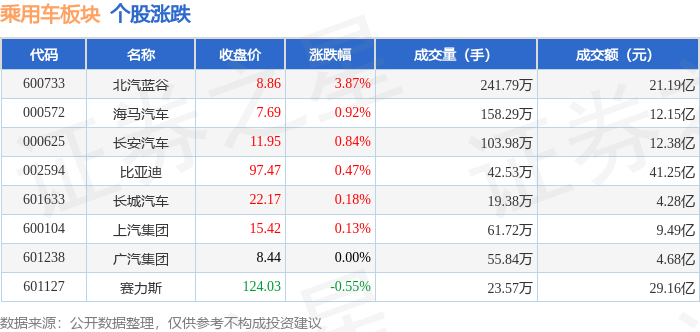
北汽新能源与小马智行战略合作步入2.0阶段,“五位一体”共拓全球智能出行版图
Jing Ji Wang· 2026-01-12 07:37
Core Insights - The strategic partnership between BAIC New Energy and Pony.ai aims to enhance the development of L4-level Robotaxi production and operations, establishing a benchmark for collaborative innovation in China's smart driving industry [1][3] Group 1: Partnership Details - The collaboration is characterized as entering a "2.0 era," focusing on creating a complete closed loop from technology development to commercial operation, rather than merely increasing vehicle production [3] - The partnership will leverage a ten billion investment to stimulate a trillion-level automotive intelligent driving industry collaboration [3] Group 2: Production Milestones - Since signing a technical cooperation agreement in November 2024, the partnership has achieved over 600 units of Robotaxi production, marking a significant milestone in the field [4] - The first mass-produced vehicle was launched in July 2025, with rapid delivery milestones: 100 units delivered within a month and 300 units within three months [4] - The Robotaxi operates in various complex driving scenarios, demonstrating a safety level exceeding human driving by over ten times [4] Group 3: Market Strategy - The Robotaxi sector is recognized for its clear commercialization path and substantial market potential, estimated in the hundreds of billions [6] - The partnership will focus on five dimensions: product co-creation, market expansion, supply chain integration, ecosystem development, and capital collaboration [6] Group 4: Global Competitiveness - The collaboration signifies a critical step for China's smart connected vehicle industry, transitioning from isolated technological breakthroughs to systematic ecological competition [7] - It aims to establish a sustainable smart mobility ecosystem, providing a replicable and sustainable "Chinese solution" for the global smart mobility market [7]
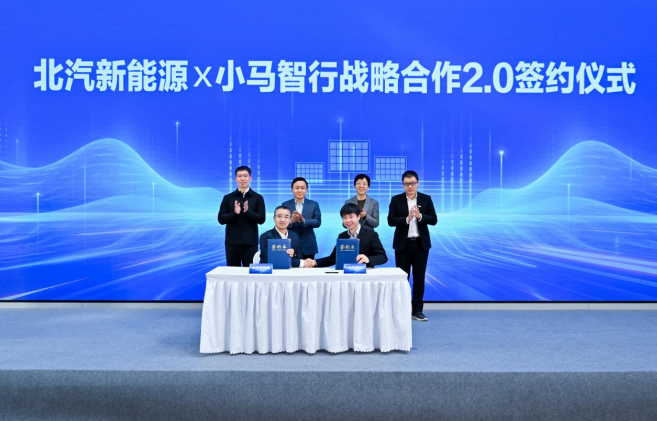
北汽新能源与小马智行战略合作步入2.0阶段
Cai Jing Wang· 2026-01-12 06:30
Core Insights - The strategic partnership between BAIC New Energy and Pony.ai marks a significant advancement in China's smart driving industry, aiming to create a collaborative innovation model for autonomous driving [1][3] - The collaboration will focus on a comprehensive approach that includes product development, market expansion, supply chain integration, ecosystem building, and capital cooperation [2][3] Group 1: Partnership Details - BAIC New Energy and Pony.ai have entered a "five-dimensional" strategic cooperation to enhance their collaboration in L4-level Robotaxi production and operation [1] - The partnership signifies a transition to a 2.0 era, emphasizing a complete closed-loop from technology development to commercial operation rather than merely increasing vehicle production [1][2] Group 2: Production and Operations - The first mass-produced vehicle is set to roll off the production line in July 2025, with plans to achieve 300 units within three months and over 600 units produced to date [2] - The safety performance of the vehicles has surpassed human driving levels by more than ten times, showcasing industry-leading development speed and maturity [2] Group 3: Future Collaboration Focus - Future collaboration will emphasize five key areas: product co-creation, market expansion, supply chain integration, ecosystem development, and capital cooperation [2] - The aim is to create a diverse L4 product matrix and extend the reach of the "Chinese solution" to international markets, particularly in the Middle East and Europe [2] Group 4: Industry Impact - This partnership is a crucial step for China's intelligent connected vehicle industry, moving from isolated technological breakthroughs to a systematic ecological competition [3] - BAIC New Energy plans to collaborate with more global tech companies to explore innovative boundaries in smart vehicles, aiming to reshape the landscape of smart mobility [3]
“五位一体”何以驱动Robotaxi加速商业化落地?北汽新能源与小马智行给出系统答案
Zhong Guo Qi Che Bao Wang· 2026-01-12 04:24
Core Insights - The commercialization of Robotaxi is a key indicator of the maturity of the autonomous driving industry, with a focus on breaking down barriers in technology, production, operations, and ecosystem to create a sustainable business model [1][17] - BAIC New Energy and Pony.ai have established a comprehensive strategic partnership to accelerate the commercialization of Robotaxi, setting a benchmark for collaborative innovation in China's intelligent driving industry [1][3] Group 1: Strategic Partnership - The strategic cooperation between BAIC New Energy and Pony.ai is built on the successful outcomes of their initial collaboration, which laid the groundwork for a comprehensive "five-in-one" collaborative model [4] - The partnership aims to integrate product development, market strategies, industrial support, ecosystem building, and capital investment to enhance the commercialization of Robotaxi [8][11] Group 2: Technological Advancements - The collaboration has achieved significant milestones, including the launch of the L4-level Extreme Fox Alpha T5 Robotaxi, which combines BAIC's hardware with Pony.ai's advanced software systems [4][10] - The Extreme Fox Alpha T5 Robotaxi has demonstrated a safety level exceeding human driving by over ten times, enabling it to operate in various complex driving scenarios [5] Group 3: Market Strategy - The partnership is focused on expanding the Robotaxi market both domestically and internationally, with plans to strengthen operations in key areas like Beijing and Shenzhen while targeting markets in the Middle East and Europe [10] - The strategic framework emphasizes a comprehensive approach to commercialization, addressing product reliability, market demand, and ecosystem integration [8][10] Group 4: Supply Chain and Cost Management - A key aspect of the collaboration is the initiative to optimize the supply chain for L4 autonomous vehicles, aiming to enhance local production capabilities and reduce reliance on external suppliers [13] - The partnership will focus on building a sustainable ecosystem that integrates various aspects of the Robotaxi business, from research and development to customer service [13] Group 5: Capital and Ecosystem Development - The strategic partnership will leverage capital to support technology development, supply chain construction, and global market expansion, ensuring long-term benefits for both companies [14] - The collaboration represents a shift from isolated efforts to a more integrated approach in the intelligent driving industry, fostering a competitive ecosystem [15][16] Group 6: Global Impact - The partnership is positioned to provide a replicable and sustainable "Chinese solution" for the global smart mobility market, showcasing China's advancements in both technology and business models [16][18] - The ongoing collaboration is expected to significantly influence the global landscape of intelligent driving, with Chinese companies emerging as key players in the transformation of mobility [18]
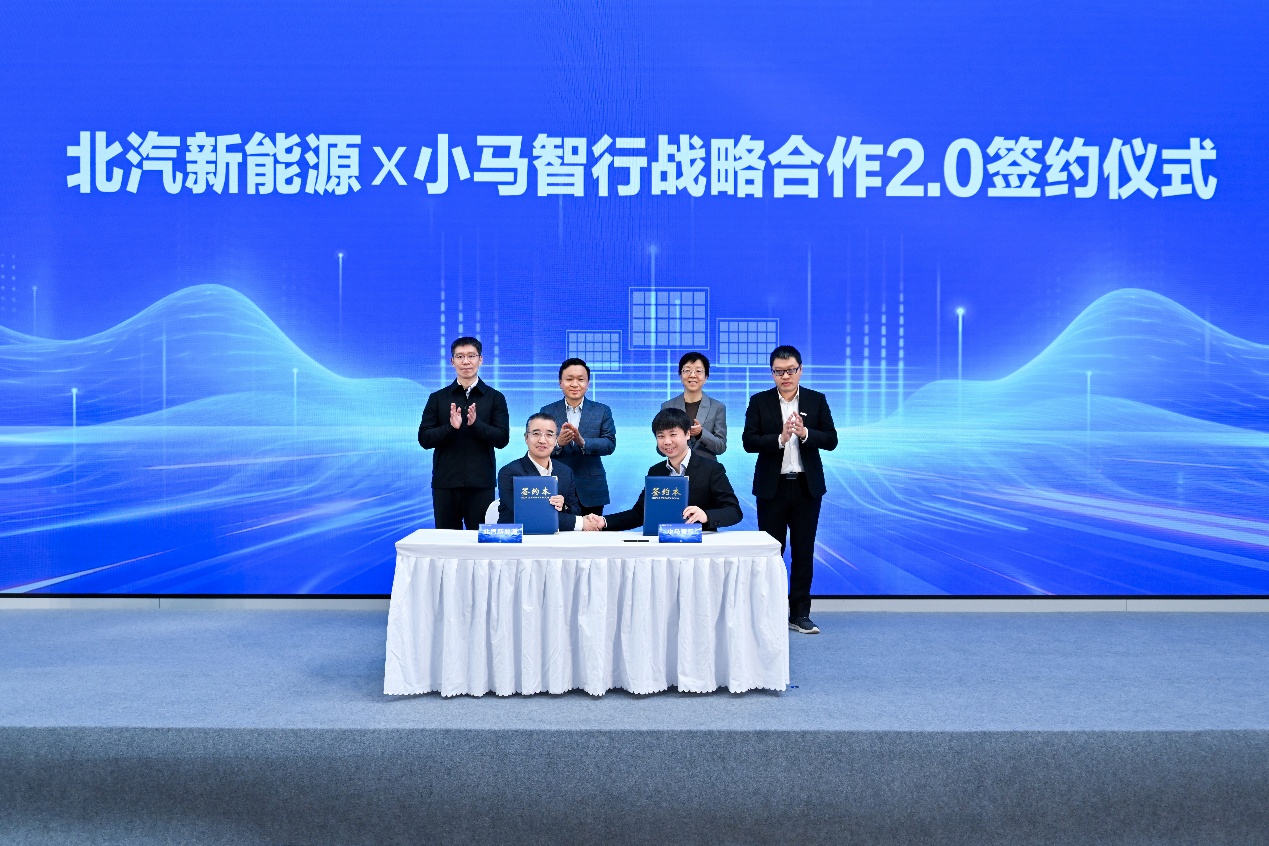
开启2.0阶段,小马智行与北汽新能源达成“五位一体”全面深化战略合作
Ju Chao Zi Xun· 2026-01-12 03:26
Core Viewpoint - Pony.ai and BAIC New Energy have entered a comprehensive strategic cooperation, marking the beginning of Cooperation 2.0, focusing on the commercialization and globalization of autonomous driving [2][3] Group 1: Strategic Cooperation Framework - The cooperation is built on five pillars: product co-creation, market expansion, industry chain collaboration, ecosystem building, and capital integration, aiming to leverage a billion-level investment to drive the trillion-level smart driving industry [2] - The partnership signifies a shift from single project collaboration to a full-system development approach [2] Group 2: Product Development and Market Expansion - The L4-level Robotaxi model, based on the experience of the Arcfox Alpha T5, will be developed to create a diverse product matrix and extend technical solutions to high-level intelligent driving in passenger vehicles [2] - The global expansion of the autonomous driving "China solution" will be promoted, with plans to introduce the Arcfox Alpha T5 Robotaxi and its operational system to markets in the Middle East and Europe [2][3] Group 3: Supply Chain and Ecosystem Integration - The partnership will initiate actions to optimize the supply chain for L4 models, focusing on "supplementing, building, stabilizing, and upgrading" the supply chain to foster a local high-level intelligent driving supply chain cluster [3] - BAIC New Energy will integrate its mobility platform and aftermarket resources with Pony.ai's fleet, enhancing the full value chain to accelerate the large-scale implementation of autonomous driving services [3] Group 4: Capital Collaboration and Future Goals - The collaboration will deepen mutual investment and form a binding structure around technology research and supply chain investment [3] - The production scale of the Arcfox Alpha T5 Robotaxi has exceeded 600 units, supporting Pony.ai in surpassing its target of 1,000 units by 2025 and laying the foundation for achieving a scale of 3,000 units by the end of 2026 [3]
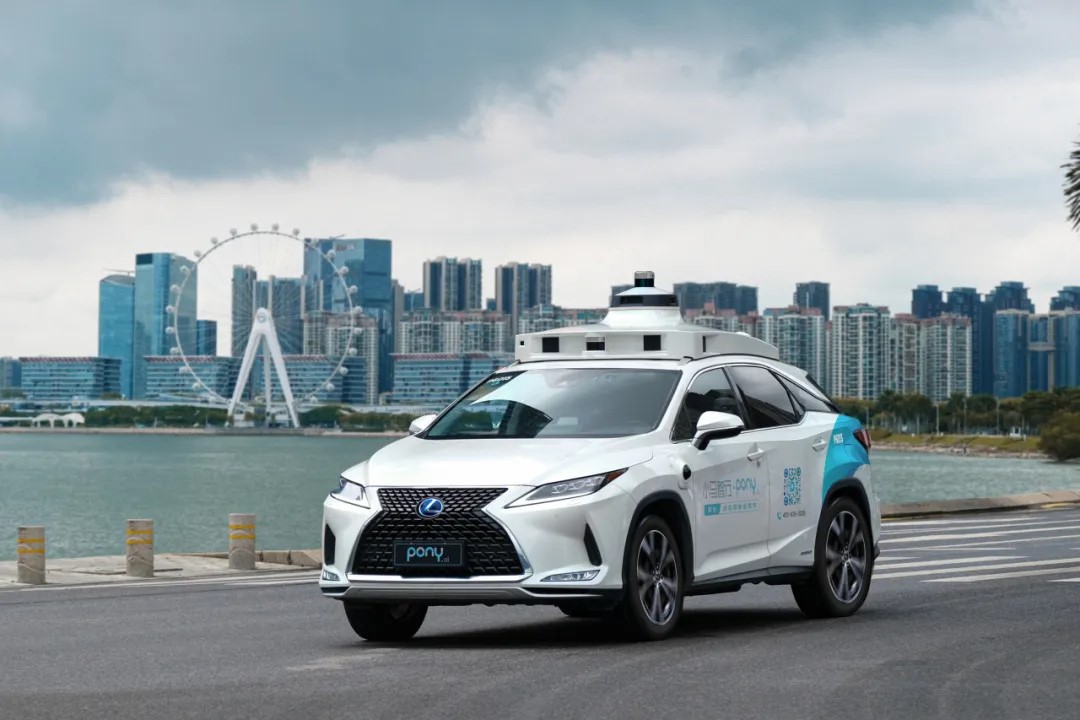
北汽新能源与小马智行宣布战略合作迈入2.0阶段
Ge Long Hui A P P· 2026-01-12 02:14
Core Insights - Beijing Automotive Group's new energy division has launched significant advancements in smart mobility, including the initiation of large-scale trial operations for the Arcfox Alpha S (L3 version) [1] - A strategic partnership with Pony.ai has entered its 2.0 phase, focusing on L4 autonomous driving technology [1] - The event featured nearly 30 companies from the intelligent connected vehicle ecosystem showcasing cutting-edge technologies [1]