SA(601021)

Search documents
春秋航空(601021) - 春秋航空关于以集中竞价交易方式首次回购公司股份的公告
2025-11-20 09:02
证券代码:601021 证券简称:春秋航空 公告编号:2025-065 春秋航空股份有限公司 关于以集中竞价交易方式首次回购公司股份的公告 本公司董事会及全体董事保证本公告内容不存在任何虚假记载、误导性陈述 或者重大遗漏,并对其内容的真实性、准确性和完整性承担法律责任。 重要内容提示: | 回购方案首次披露日 | 2025/8/29 | | | | | | --- | --- | --- | --- | --- | --- | | 回购方案实施期限 | 2025 年 8 月 8 月 | 27 | 日~2026 | 年 | 26 日 | | 预计回购金额 | 30,000万元~50,000万元 | | | | | | 回购用途 | □减少注册资本 √用于员工持股计划或股权激励 | | | | | | | □用于转换公司可转债 □为维护公司价值及股东权益 | | | | | | 累计已回购股数 | 35,800股 | | | | | | 累计已回购股数占总股本比例 | 0.0037% | | | | | | 累计已回购金额 | 1,999,650.00元 | | | | | | 实际回购价格区间 | 55.42元 ...

春秋航空:首次回购0.0037%公司股份,已回购金额199.97万元
Xin Lang Cai Jing· 2025-11-20 08:47
春秋航空公告,2025年11月20日,公司通过上海证券交易所交易系统以集中竞价交易方式首次回购公司 股份35800股,占公司目前总股本的0.0037%,回购最高价格为人民币55.99元/股,回购最低价格为人民 币55.42元/股,使用资金总额为人民币199.97万元(不含交易佣金、过户费等交易费用)。 ...
春秋航空时隔九年发债 科创底色刷新行业民企最低利率
2 1 Shi Ji Jing Ji Bao Dao· 2025-11-19 10:16
Core Viewpoint - Spring Airlines has successfully issued bonds for the first time in nine years, reflecting market recognition and favorable conditions for private enterprises in the current bond market [1][2]. Group 1: Bond Issuance Details - The bond issuance, named "25春秋K1," raised 800 million yuan with a three-year term and received 3.03 times subscription, achieving a coupon rate of 1.98%, the lowest for similar bonds in the transportation sector [1][2]. - The Shanghai Stock Exchange has seen significant growth in the issuance of technology innovation bonds, with over 1 trillion yuan issued since the pilot program began, averaging a growth rate of approximately 75% from 2022 to 2024 [1]. Group 2: Company Performance and Financial Health - Spring Airlines is projected to achieve 20 billion yuan in revenue and 2.273 billion yuan in net profit for 2024, leading among major domestic airlines [2]. - The company has optimized its debt structure through a private placement in 2022, allowing for increased capital expenditure while maintaining a manageable debt level [2]. Group 3: Recognition and Future Plans - Spring Airlines received an AAA credit rating in December, becoming the fifth airline in China to achieve this status and the only private airline to do so [3]. - The total bond issuance approved by the CSRC is 2 billion yuan, with plans for future issuances as market conditions allow [3]. Group 4: Technological Innovation and Market Strategy - The bond issuance is linked to the company's commitment to technological innovation, including the deployment of AI for operational efficiency and carbon emission reduction [4]. - Spring Airlines is focusing on increasing capacity on high-density routes and nurturing low-density routes through market operations and subsidies, while also recovering international routes [6]. Group 5: Industry Outlook - The aviation industry is expected to recover as the macroeconomic environment improves, with airlines having prepared for this recovery by investing in assets during previous downturns [6]. - Spring Airlines has demonstrated resilience and is positioned to benefit from the overall recovery in the aviation sector, with signs of profit improvement emerging [6].
超50万张赴日机票被退订,赴日旅客量连续三天大幅下滑
Di Yi Cai Jing· 2025-11-19 09:04
Core Insights - The recent increase in ticket cancellations for flights to Japan is attributed to a combination of seasonal factors and a new free cancellation policy implemented by multiple domestic airlines [1][2][3] - The number of travelers heading to Japan has seen a significant decline, with a reported drop in ticket orders and passenger volume [3][4][6] Group 1: Ticket Cancellations and Policy Changes - Several domestic airlines have announced free cancellation and rescheduling policies for flights to Japan, leading to a sharp increase in ticket cancellations, particularly for leisure travel routes [1][2] - As of November 18, the total number of ticket orders for flights to Japan has decreased by 543,000, indicating over 500,000 cancellations since November 15 [3] - The cancellation rate for flights to Japan reached 13.4% on November 18, marking the highest rate in the past five days [4] Group 2: Shifts in Travel Demand - With the decline in demand for travel to Japan, many travelers are redirecting their plans to warmer destinations, such as Southeast Asia and domestic locations [6] - Data shows that domestic flight bookings to warmer regions like Hainan and Yunnan have exceeded 4.72 million, reflecting a year-on-year increase of approximately 13% [6] - Countries like South Korea and Thailand are experiencing a rise in passenger traffic, indicating a potential shift in traveler preferences away from Japan [6]

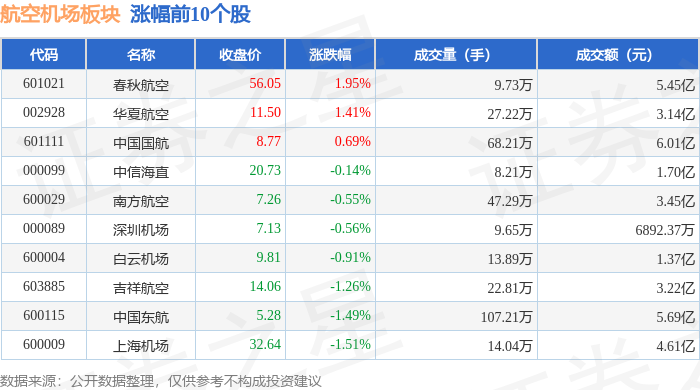
航空机场板块11月19日跌0.62%,厦门空港领跌,主力资金净流出2.74亿元
Zheng Xing Xing Ye Ri Bao· 2025-11-19 08:52
Core Insights - The aviation and airport sector experienced a decline of 0.62% on November 19, with Xiamen Airport leading the drop [1] - The Shanghai Composite Index closed at 3946.74, up 0.18%, while the Shenzhen Component Index closed at 13080.09, unchanged [1] Stock Performance - Spring Airlines (601021) closed at 56.05, up 1.95% with a trading volume of 97,300 shares and a transaction value of 54.5 million [1] - China National Aviation (601111) closed at 8.77, up 0.69% with a trading volume of 682,100 shares and a transaction value of 601 million [1] - Xiamen Airport (600897) closed at 16.66, down 3.25% with a trading volume of 96,500 shares and a transaction value of 162 million [2] Capital Flow - The aviation and airport sector saw a net outflow of 274 million from institutional investors and 175 million from retail investors, while retail investors had a net inflow of 449 million [2] - Major stocks like Spring Airlines and China National Aviation experienced mixed capital flows, with Spring Airlines seeing a net inflow of 42.9 million from institutional investors [3] Individual Stock Analysis - Xiamen Airport had a significant net outflow of 21.74 million from institutional investors, while retail investors contributed a net inflow of 28.31 million [3] - China Eastern Airlines (600115) faced a net outflow of 4.71 million from institutional investors but saw a net inflow of 51.1 million from retail investors [3]





超50万张赴日机票被退订,赴日旅客量连续三天大幅下滑!
Di Yi Cai Jing· 2025-11-19 08:31
Group 1 - The number of ticket cancellations for flights to Japan has significantly increased, with reports indicating several tens of thousands of cancellations due to a free refund and rescheduling policy implemented by multiple domestic airlines [1][2] - The decline in traveler volume to Japan has been noted for three consecutive days, with major airlines offering free cancellation until December 31, 2025, in response to government advisories urging caution for Chinese citizens traveling to Japan [2][3] - Data shows that as of November 18, the total number of flight bookings to Japan has decreased by 543,000 compared to November 15, indicating over 500,000 ticket cancellations, with cancellations primarily affecting leisure travelers heading to second-tier cities in Japan [3][4] Group 2 - Domestic airlines are adjusting their flight schedules by canceling flights to Japan and reallocating capacity to destinations with higher demand, resulting in a weekly flight volume decline to Japan [4][6] - The average passenger load factor for flights to Japan has dropped, with a reported decrease of 12.3 percentage points on November 18 compared to the previous week, alongside a 10.8% decline in traveler volume [3][4] - There is a noticeable shift in traveler preferences towards warmer destinations, with significant increases in flight bookings to domestic locations like Hainan and Yunnan, as well as international destinations such as Bangkok and Singapore, indicating a potential shift in market dynamics [6]
行业供需关系整体向好,客座率继续提升 | 投研报告
Zhong Guo Neng Yuan Wang· 2025-11-19 08:30
Core Viewpoint - The overall passenger load factor of listed airlines in October improved by approximately 1.8 percentage points year-on-year and month-on-month, indicating a positive trend in the industry supply-demand relationship [2][3]. Group 1: Domestic Routes - In October, the capacity deployment for domestic routes by listed companies increased by about 3.6% year-on-year and 5.6% month-on-month, driven by the 8-day National Day holiday [3]. - The overall passenger load factor for listed companies in October rose by approximately 1.8 percentage points compared to the same month last year and also increased by 1.8 percentage points from September [3]. - Airlines such as China Southern, China Eastern, and Hainan Airlines achieved passenger load factors exceeding 89%, while Spring Airlines and Juneyao Airlines surpassed 90% [3]. - The passenger load factors for China Eastern and Air China improved by over 2% year-on-year, with all six listed airlines showing year-on-year increases [3]. - October saw the highest passenger load factors of the year for China Southern, Air China, and Spring Airlines, while China Eastern, Hainan Airlines, and Juneyao Airlines were slightly below the peak levels of August [3]. Group 2: International Routes - The capacity deployment for international routes by listed airlines increased by approximately 14.3% year-on-year and 6.7% month-on-month in October [3]. - The passenger load factor for international routes improved by 4.0 percentage points year-on-year and by about 0.1 percentage points month-on-month [3]. - Except for Air China, all other airlines saw their capacity deployment for international routes grow by over 15% year-on-year, with Hainan Airlines experiencing an increase of over 25% due to a low base last year [4]. - The data indicates a potential oversupply in international routes, as the airline with the most significant capacity increase, China Eastern, saw a decrease in passenger load factor by about 2 percentage points month-on-month [4]. Group 3: Industry Policy Changes - A recent travel advisory issued by the Ministry of Foreign Affairs regarding travel to Japan may impact demand for related routes in the coming months [5]. - Multiple airlines have announced special handling plans for tickets related to Japan routes, allowing free cancellations or changes for eligible tickets before December 31 [5]. Group 4: Investment Recommendations - The publication of the "Self-Regulation Convention for Air Passenger Transport" by the China Air Transport Association in August has laid the foundation for reducing market chaos and improving revenue levels [6]. - The ongoing efforts to combat excessive competition in the industry are expected to accelerate the process of industry rebalancing, significantly benefiting overall profitability [6]. - Large airlines are anticipated to benefit more from these changes, suggesting a focus on these companies for investment opportunities [6].



航空运输月度专题:票价坚挺、客座率高位提升,四季度业绩同比改善可期-20251119
Xinda Securities· 2025-11-19 08:22
Investment Rating - The investment rating for the aviation transportation industry is "Positive" [2]. Core Viewpoints - The industry has maintained a high passenger load factor, and ticket prices have shown a positive trend since October 2025. This is expected to lead to a significant recovery in airline unit revenue. The implementation of measures against "involution" and the "Self-Regulation Convention" is anticipated to reduce malicious low pricing, further supporting ticket price recovery and airline profitability. Additionally, the decline in oil prices is expected to lower costs, enhancing airline earnings potential. Key airlines to focus on include China Southern Airlines, China Eastern Airlines, Air China, Spring Airlines, and Juneyao Airlines [2][13]. Summary by Sections 1. Investment Recommendations - Since the beginning of 2025, the industry has seen sustained high passenger load factors. The supply-demand dynamics indicate a slowdown in capacity growth, with airlines focusing on international routes. The overall passenger turnover has shown steady growth, and ticket prices have been recovering since October, leading to improved airline unit revenue and performance in the fourth quarter [12][13]. 2. Passenger Load Factor and Ticket Prices - The industry has experienced a continued high passenger load factor, with the September 2025 load factor reaching 86.3%, an increase of 2.4 percentage points year-on-year. In October, the combined passenger turnover for six major airlines showed a year-on-year increase of 9.2% [3][21]. - Ticket prices have shown a positive trend since November, with the average domestic ticket price at 850 RMB, down 7.2% year-on-year. However, from October to mid-November, the average ticket price for domestic routes was 738 RMB, reflecting a 0.3% increase year-on-year [4][22]. 3. Oil Prices and Exchange Rates - The average price of aviation fuel remained stable year-on-year, with domestic aviation fuel prices at 5572 RMB/ton in October and 5625 RMB/ton in November, showing minimal change. The exchange rate of the RMB has appreciated since the beginning of 2025, with the USD to RMB exchange rate decreasing by 1.43% from the end of 2024 to mid-November 2025 [4][36]. 4. Airline Capacity and Operations - In October 2025, most airlines reported a year-on-year increase in capacity, with domestic routes showing steady growth. The passenger load factor for domestic routes was notably high, with significant increases in turnover for major airlines. The introduction of new aircraft has also been observed, with Hainan Airlines adding four new aircraft in October, the highest among the six major airlines [5][43].
东兴晨报P1-20251119
Dongxing Securities· 2025-11-19 07:53
Economic News - The People's Bank of China and 12 departments issued a plan to enhance financial support for consumption in Beijing, focusing on the automotive sector, especially new energy vehicles, with measures including reasonable loan ratios, terms, and interest rates [1] - The Ministry of Industry and Information Technology released guidelines for building high-standard digital parks, aiming to establish around 200 parks by 2027 and promote digital transformation for industrial enterprises [1] - The State Post Bureau reported that the postal industry generated a revenue of 156.42 billion yuan in October, a year-on-year increase of 7.9%, with express delivery revenue reaching 131.67 billion yuan, up 4.7% [1][4] Company Insights - Xiaomi Group reported an adjusted net profit of 11.311 billion yuan for the third quarter, representing a year-on-year increase of 80.9% [4] - O-film Technology plans to issue shares to acquire a 28.2461% stake in O-film Microelectronics [4] - Tianyi Ma intends to purchase a 98.56% stake in Xingyun Kaiwu for a transaction amount of 1.189 billion yuan [4] Industry Analysis: Agriculture and Animal Husbandry - In October, pig prices showed a slight rebound but lacked sustained support, with average prices for piglets, live pigs, and pork at 25.80 yuan/kg, 12.57 yuan/kg, and 23.41 yuan/kg respectively, reflecting month-on-month declines of 14.19%, 8.95%, and 4.47% [7] - The supply side saw a decrease in the breeding sow inventory, with a reported 40.35 million heads, down 0.70% from the previous month, indicating potential for accelerated capacity reduction due to low prices and policy adjustments [8] - The industry anticipates a gradual acceleration in capacity reduction, with leading companies like Muyuan Foods reducing their breeding sow inventory significantly [9] Industry Analysis: Transportation - The airline industry experienced an overall improvement in supply-demand dynamics, with an increase in passenger load factors in October, reflecting a year-on-year increase of approximately 1.8 percentage points [12][13] - Domestic airlines increased capacity by about 3.6% year-on-year in October, driven by the National Day holiday, which boosted travel demand [13] - International route capacity saw a significant year-on-year increase of approximately 14.3%, although there are concerns about potential oversupply as passenger load factors remained stable [14] Investment Recommendations - The report suggests focusing on leading companies in the pig farming sector, such as Muyuan Foods, which have strong cost advantages and high performance visibility [9] - In the airline sector, the report highlights the importance of maintaining supply control and improving load factors to enhance profitability, recommending attention to major airlines benefiting from these trends [17]

超50万张赴日机票被退订,赴日旅客量大幅下滑!春秋航空:退票已超几万张
Di Yi Cai Jing· 2025-11-19 07:32
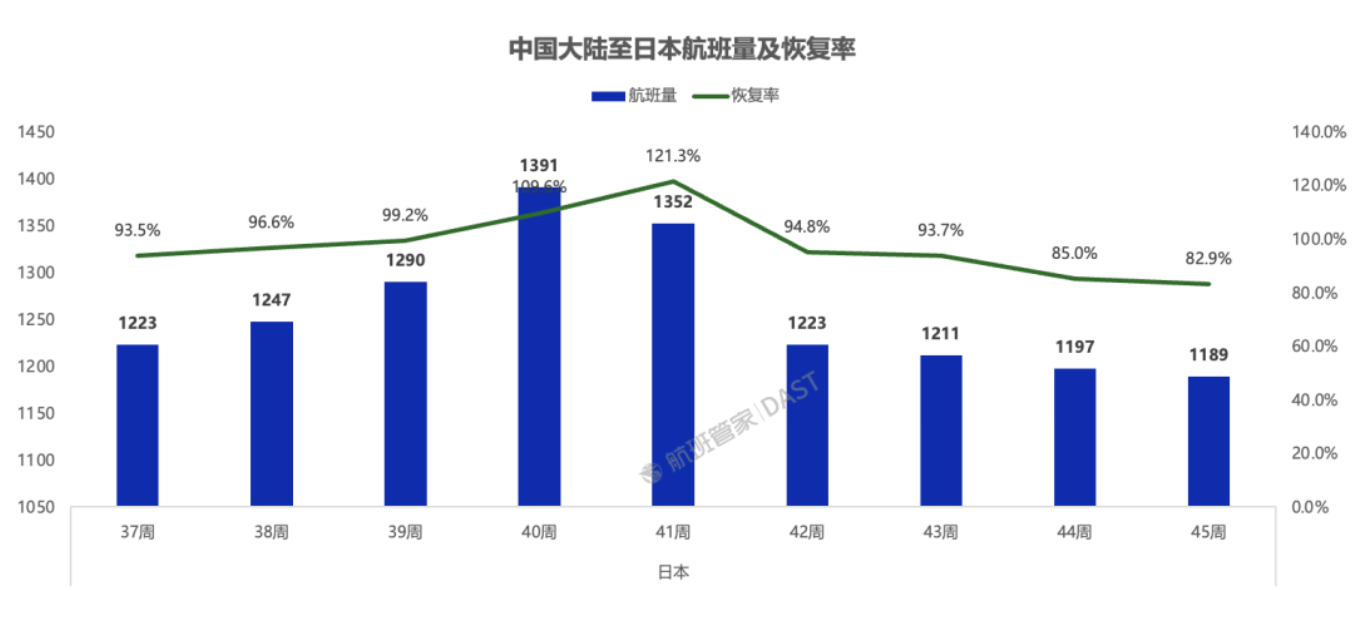
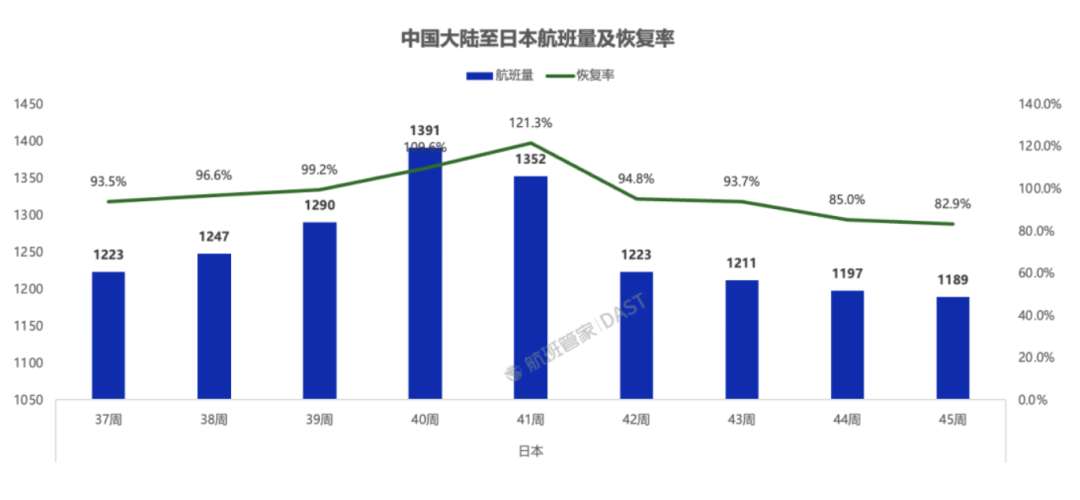
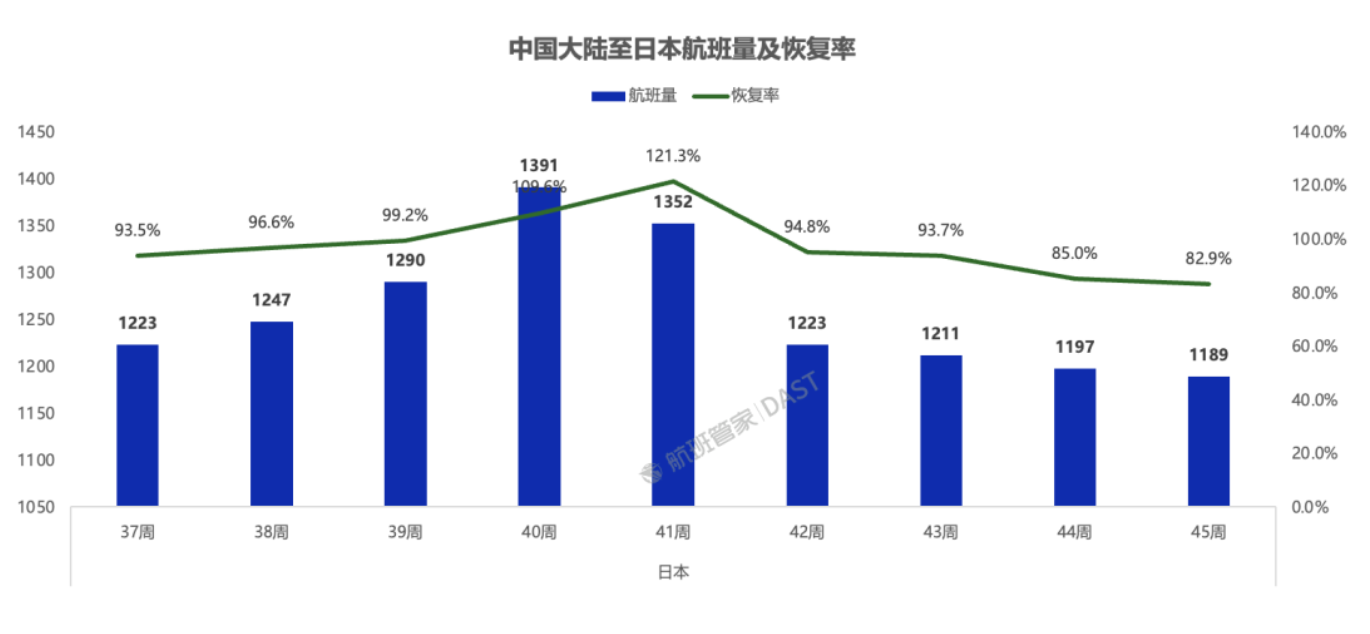
Core Insights - The recent increase in ticket cancellations for flights to Japan is attributed to a combination of seasonal factors and a new free cancellation policy implemented by multiple domestic airlines in response to government advisories [1][2][3] - The overall demand for travel to Japan has significantly decreased, with a reported drop of 54.3 million ticket orders since November 15, indicating over 500,000 cancellations [2] - Airlines are adjusting their flight schedules by canceling flights to Japan and reallocating capacity to destinations with higher demand, such as Southeast Asia and domestic warm-weather locations [3][5] Group 1: Ticket Cancellations and Policies - Several domestic airlines have announced free cancellation and rescheduling policies for flights to Japan, effective until December 31, 2025, following government advisories urging caution for travel to Japan [2] - Spring Airlines Japan has become the first Japanese airline to offer free cancellation for tickets purchased before November 15, 2025, for flights between November 15 and December 31, 2025 [2] Group 2: Market Trends and Adjustments - The average passenger load factor for flights to Japan has decreased, with a reported drop of 12.3 percentage points on November 18 compared to the previous week [2][3] - The number of weekly flights from mainland China to Japan has been declining, with a total of 1,189 flights recorded in the 45th week of the year, representing an 82.9% recovery rate compared to the same week in 2019 [3] - There is a notable shift in traveler preferences, with increased interest in warm-weather destinations such as Hainan, Yunnan, and Southeast Asia, as evidenced by a 13% year-on-year increase in domestic flight bookings to these regions [5]