
Chongqing Rural Commercial Bank(601077)

Search documents
债务周期视角下,目前银行资产质量处于什么阶段?
Orient Securities· 2025-07-24 02:15
Investment Rating - The report maintains a "Positive" investment rating for the banking industry [7] Core Insights - The overall non-performing loan (NPL) ratio of listed banks has shown a steady decline since 2021, with a potential hidden NPL ratio of approximately 5 basis points by the end of 2024 [4][10] - Credit costs have been decreasing, leading to a robust provisioning buffer, with the provisioning coverage ratio and loan-to-provision ratio standing at 238% and 2.93% respectively as of Q1 2025 [4][10] - The report emphasizes that the current asset quality pressure on banks is expected to be better than in previous cycles, primarily due to the diversified nature of household loans and supportive regulatory policies [9][10] Summary by Sections Understanding the Relationship Between Economic Debt Cycles and Banking Risk Cycles - The report discusses how the debt of the real economy corresponds to the assets of banks, with credit expansion flowing from banks to the economy and risk exposure arising from debt risks in the economy [9][16] Historical Overview of Excess Capacity and Non-Performing Loans - From 2008 onwards, the banking sector experienced a cycle of rising non-performing loans, particularly in the corporate sector, driven by excess capacity and deteriorating profitability [21][27] - The macro leverage ratio increased significantly during 2009 and 2012-2014, with corporate sectors being the main contributors to this leverage [21][25] Current Debt Cycle and Asset Quality - The report indicates that while household sector risks are still evolving, the asset quality pressure on banks is expected to be more manageable compared to previous cycles [9][10] - The provisioning levels remain robust, with a significant decline in credit costs, indicating a strong safety net for banks [4][10] Investment Recommendations - The report suggests focusing on high-dividend banks in anticipation of a potential reduction in insurance premium rates, recommending banks such as China Construction Bank and Industrial and Commercial Bank of China [10] - It also highlights the strong performance of small and medium-sized banks, suggesting continued interest in banks like Industrial Bank and CITIC Bank based on various factors including valuation and dividend yield [10]





上证西部大开发龙头企业指数上涨0.2%,前十大权重包含伊利股份等
Jin Rong Jie· 2025-07-23 15:59
Core Viewpoint - The A-share market showed mixed performance with the Shanghai Western Development Leading Enterprises Index rising by 0.2% to 6529.57 points, with a trading volume of 62.957 billion yuan [1] Group 1: Index Performance - The Shanghai Western Development Leading Enterprises Index increased by 4.75% over the past month and 3.46% over the past three months, but has decreased by 2.45% year-to-date [1] - The index is composed of leading companies from various secondary industries in selected regions, providing a reference for investors interested in China's regional economic development [1] Group 2: Index Holdings - The top ten weighted companies in the index are: Shaanxi Coal and Chemical Industry (15.2%), Kweichow Moutai (14.42%), Yili Industrial Group (14.27%), Seres (13.44%), TBEA (6.64%), Chengdu Bank (4.23%), Chongqing Rural Commercial Bank (3.33%), Sichuan Changhong (3.06%), Northern Rare Earth (2.83%), and Sichuan Road and Bridge (2.77%) [1] - The index's holdings are entirely composed of companies listed on the Shanghai Stock Exchange [1] Group 3: Industry Composition - The industry composition of the index includes: Consumer Staples (29.48%), Discretionary Consumer (16.92%), Energy (16.30%), Industrials (14.69%), Materials (12.04%), Financials (7.96%), Utilities (1.53%), Healthcare (0.76%), Information Technology (0.15%), Communication Services (0.14%), and Real Estate (0.02%) [2] - The index samples are adjusted biannually, with adjustments occurring on the next trading day after the second Friday of June and December [2]





25Q2银行板块持仓数据点评:资金增配银行股,主动型基金青睐低估值股份行和高成长性城商行
Orient Securities· 2025-07-23 10:42
Investment Rating - The report maintains a "Positive" outlook on the banking industry [6] Core Insights - Active equity funds have increased their holdings in A-share banks, with a total of 4.90% of their heavy positions in the banking sector as of Q2 2025, up by 1.14 percentage points from Q1 2025 [10][12] - Passive funds have also seen an increase, with their heavy positions in A-share banks rising to 11.15%, an increase of 2.02 percentage points [10][19] - The report highlights a preference for low-valuation joint-stock banks and high-growth city commercial banks among active funds [12] Summary by Sections Active Equity Funds - As of Q2 2025, active equity funds held 4.90% of their heavy positions in banks, with a total of 49.17 billion shares, an increase of 6.64 billion shares from Q1 2025 [10][12] - The market value of these holdings reached 640.78 billion yuan, up by 135.08 billion yuan [10][12] - The top five stocks favored by active funds include China Merchants Bank (1.01%), Jiangsu Bank (0.54%), Ningbo Bank (0.51%), Hangzhou Bank (0.45%), and Chengdu Bank (0.41%) [10][12] Passive Equity Funds - Passive funds increased their holdings to 71.47 billion shares, a rise of 16.23 billion shares from Q1 2025 [10][19] - The market value of these holdings reached 1,332.61 billion yuan, an increase of 288.32 billion yuan [10][19] - Key stocks with significant inflows include China Merchants Bank and Industrial Bank, while Bank of China and Qingdao Bank saw reductions in holdings [10][19] Investment Recommendations - The report suggests focusing on two main investment lines: 1. High-dividend banks in anticipation of a potential reduction in insurance premium rates, recommending stocks like China Construction Bank, Industrial and Commercial Bank of China, and Chongqing Rural Commercial Bank [10][12] 2. Strong-performing small and medium-sized banks, with recommendations for Industrial Bank, CITIC Bank, Nanjing Bank, Jiangsu Bank, and Hangzhou Bank [10][12]


2025年银行股表现:分红浪潮下的市场起伏与结构性机遇
Tai Mei Ti A P P· 2025-07-23 04:39
Core Viewpoint - 2025 is a pivotal year for the Chinese banking industry, marked by unprecedented dividend distributions and a volatile market performance for bank stocks, with a mid-year dividend total exceeding 200 billion yuan [2][3]. Dividend Distribution - The banking sector led the market in dividend payouts, with a total cash dividend of 420.63 billion yuan in the first half of 2025, with Industrial and Commercial Bank of China (ICBC) leading at 109.77 billion yuan [3]. - State-owned banks generally offered dividend yields exceeding 4%, with China Construction Bank achieving a yield of 4.44%, significantly higher than the 10-year government bond yield [3]. Market Performance - The banking sector recorded a 13.1% increase in stock prices in the first half of 2025, ranking second among all industries, with 41 out of 42 bank stocks rising [5]. - The stock prices of major state-owned banks reached historical highs by the end of June, reflecting the long-term attractiveness of high-dividend assets [4]. Investment Dynamics - The surge in bank stock prices was driven by three main factors: the appeal of low valuations and high dividends in a weak global economic recovery, supportive policy expectations, and the ongoing popularity of dividend-paying assets [6]. - Institutional ownership in ICBC increased from 35% to 38% following the announcement of its dividend plan, indicating strong investor interest [4]. Future Outlook - The performance of bank stocks in the second half of 2025 will depend on the balance between policy measures and economic resilience, with expectations of a "shifting upward" trend in stock prices [10]. - Analysts suggest that state-owned banks will continue to be stable investments due to their large customer bases and low non-performing loan ratios, while smaller banks may need to focus on niche business areas to achieve valuation premiums [11]. Stock Recommendations - Specific banks are highlighted for their strong potential: - Shanghai Pudong Development Bank, benefiting from management reforms, with a stock price increase of 34.89% [11]. - Industrial Bank, recognized for its growth in investment banking and green finance [12]. - Agricultural Bank of China, noted for its high dividend yield of 5.2% and low deposit costs [12]. Conclusion - The banking sector in 2025 illustrates that while dividends can enhance valuations, they cannot replace strong fundamentals. Only banks with a combination of high dividend safety, regional economic resilience, and wealth management transformation will thrive amid cyclical fluctuations [13].



民生加银红利回报混合:2025年第二季度利润227.66万元 净值增长率4.33%
Sou Hu Cai Jing· 2025-07-22 03:44
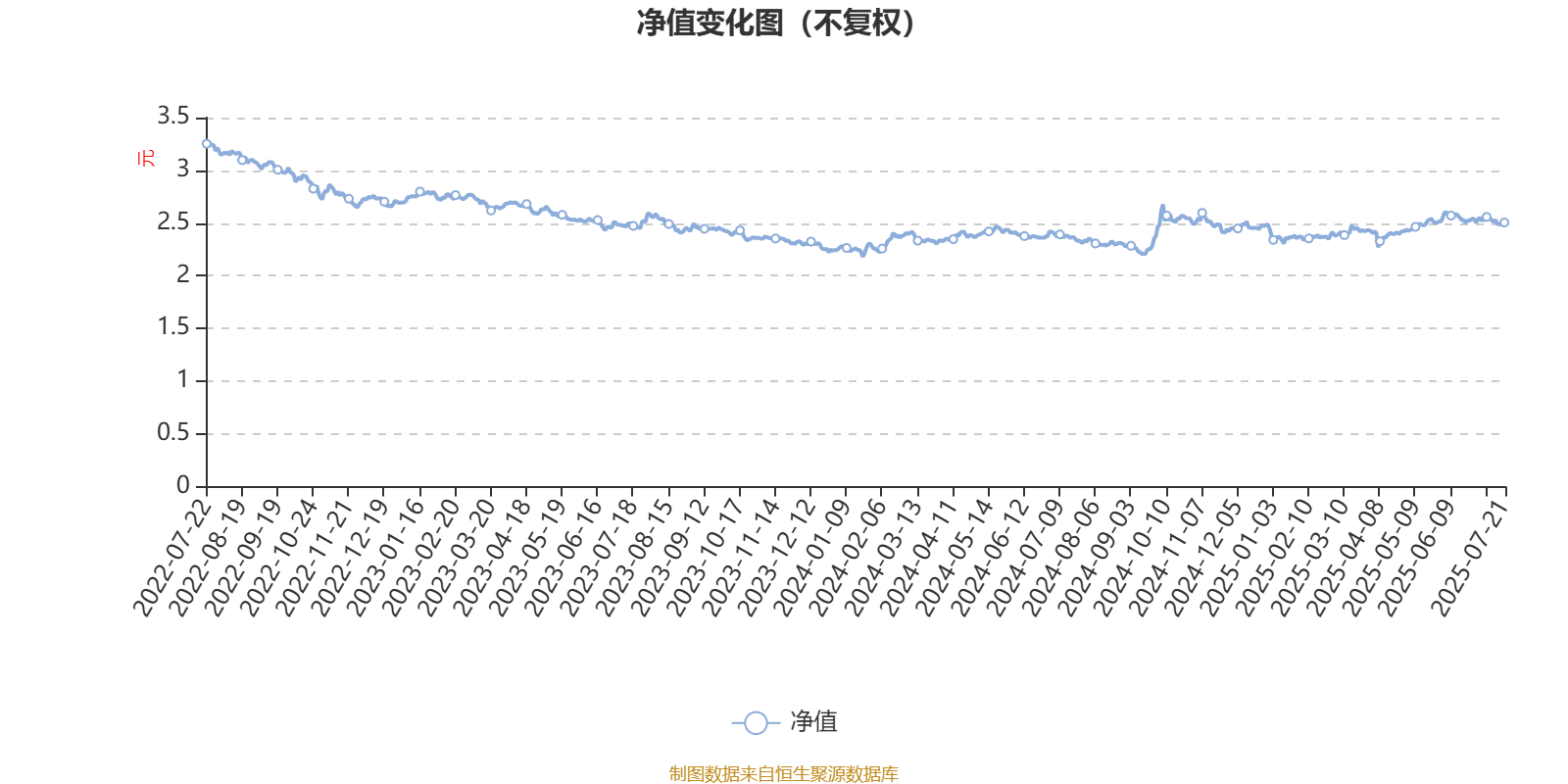
Core Viewpoint - The AI Fund Minsheng Jianyin Dividend Return Mixed Fund (690009) reported a profit of 2.2766 million yuan for Q2 2025, with a net asset value growth rate of 4.33% during the period [3] Fund Performance - As of the end of Q2 2025, the fund's scale was 54.2078 million yuan [15] - The fund's weighted average profit per share for the period was 0.1049 yuan [3] - The fund's unit net value as of July 21 was 2.505 yuan [3] - The fund's one-year cumulative net value growth rate was 6.05%, ranking 732 out of 880 comparable funds [3] - The fund's three-month net value growth rate was 4.02%, ranking 757 out of 880 comparable funds [3] - The fund's six-month net value growth rate was 5.25%, ranking 598 out of 880 comparable funds [3] - The fund's three-year net value growth rate was -23.05%, ranking 672 out of 871 comparable funds [3] Investment Strategy - The fund manager, Deng Kaicheng, maintains a positive outlook on value style and dividends, focusing on stable investments while seeking flexible dividend opportunities [3] - The fund continues to allocate a significant portion to the financial sector and actively seeks companies with improved operations and higher dividend payouts [3] Risk Metrics - The fund's three-year Sharpe ratio was -0.3336, ranking 749 out of 875 comparable funds [8] - The maximum drawdown over the past three years was 33.6%, ranking 513 out of 873 comparable funds [10] - The maximum drawdown in a single quarter occurred in Q1 2021, reaching 18.96% [10] Portfolio Composition - The average stock position over the past three years was 74.32%, compared to the industry average of 80.43% [13] - The fund reached its highest stock position of 77.33% at the end of H1 2024, with a lowest position of 35.27% at the end of Q1 2019 [13] - As of Q2 2025, the fund's top ten holdings included companies such as Chao Hong Ji, Zhong Chong Co., Runben Co., and Meidi Group [17]






汇添富红利智选混合发起式A:2025年第二季度利润67.55万元 净值增长率6.4%
Sou Hu Cai Jing· 2025-07-21 10:09
Core Insights - The AI Fund Huatai-PineBridge Dividend Smart Selection Mixed Fund A (021515) reported a profit of 675,500 yuan for Q2 2025, with a weighted average profit per fund share of 0.0654 yuan [3] - The fund's net asset value (NAV) growth rate for the reporting period was 6.4%, and as of the end of Q2, the fund size was 11.4554 million yuan [3] - The fund manager indicated a high position operation throughout the reporting period, with a focus on high-dividend Hong Kong stocks and low-volatility sectors like banking and transportation [3] Fund Performance - As of July 18, the fund's three-month cumulative NAV growth rate was 10.38%, ranking 325 out of 615 comparable funds [4] - The six-month cumulative NAV growth rate was 12.76%, ranking 235 out of 615 comparable funds [4] - The fund's Sharpe ratio since inception was 0.1788 as of June 27 [8] Risk Metrics - The maximum drawdown since inception was 8.18%, with the largest quarterly drawdown occurring in Q2 2025 at 7.8% [9] - The average stock position since inception was 81.35%, compared to the peer average of 83.26%, with a peak stock position of 93.31% at the end of H1 2025 [12] Portfolio Composition - As of the end of Q2 2025, the fund's top holdings included Agricultural Bank of China, China Merchants Bank, China Construction Bank, Bank of China, Gree Electric Appliances, Industrial and Commercial Bank of China, China Mobile, Anhui Wanan Highway, Chongqing Rural Commercial Bank, and Citic Bank [16]

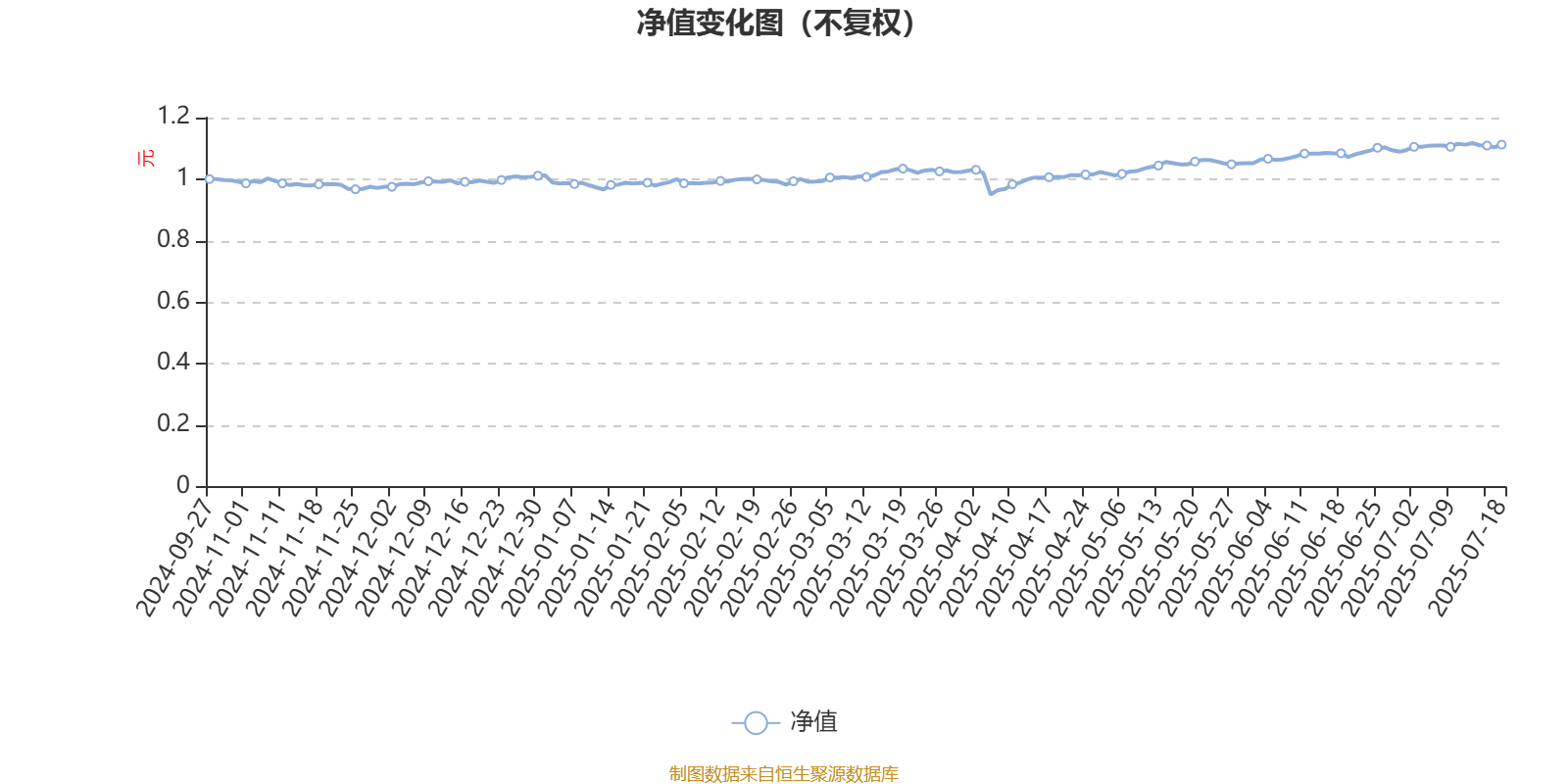
2025Q2末银行股机构筹码追踪:主动筹码增幅有限
ZHESHANG SECURITIES· 2025-07-21 10:08
Investment Rating - The industry investment rating is "Positive" (maintained) [8] Core Viewpoints - As of Q2 2025, institutional holdings in bank stocks have increased, primarily driven by passive investments, with limited growth in active public fund holdings. The overall chip structure remains healthy, with shares of state-owned banks and city commercial banks favored due to their low valuations or strong fundamentals [1][2] - The report suggests a continued positive outlook for the banking sector, emphasizing a long-term bullish trend rather than a mid-cycle correction. It recommends focusing on state-owned banks in 2024 and improving banks in economically developed regions in 2025, while also highlighting value-oriented banks with state-owned enterprise backgrounds in the Hong Kong market [5][6] Summary by Sections Overall Holdings - By the end of Q2 2025, the proportion of bank stocks held by public funds and northbound funds increased by 8.5% compared to Q1 2025, with a 0.7 percentage point rise in the proportion of free-floating shares. The main contributors to this increase were passive funds, while active public funds showed limited growth [1] - The holdings of small and medium-sized banks increased, with state-owned banks, joint-stock banks, city commercial banks, and rural commercial banks seeing respective increases of 0.1, 1.2, 1.0, and 0.6 percentage points in their institutional holdings [1] Individual Bank Performance - The banks with the largest increases in institutional holdings include Minsheng, CITIC, Ping An, Chongqing, and Yunnan Agricultural Bank, with respective increases in the proportion of free-floating shares of 3.2, 2.9, 2.7, 2.6, and 2.6 percentage points [2] Northbound Funds - Northbound funds maintained stable holdings, with a 2.3% increase in the number of shares held by the end of Q2 2025. The proportion of holdings in state-owned banks and joint-stock banks increased, while rural commercial banks experienced a notable outflow [3] Passive Public Funds - Passive holdings continued to rise, with a 39.0% increase in the number of bank stocks held by index funds by the end of Q2 2025, driven by index expansions and weight adjustments [4] Active Public Funds - Active public fund holdings increased by 6.3%, with a slight rise in the proportion of free-floating shares. However, the overall growth was below expectations, with significant increases in holdings of low-valuation or fundamentally strong joint-stock banks and city commercial banks [5]


二十年银行股复盘:由基本面预期和成长思维转向策略和交易思维
Orient Securities· 2025-07-21 01:44
Core Insights - The report indicates a shift in the banking sector's focus from fundamental expectations and growth thinking to strategy and trading thinking, highlighting the evolving landscape of investment approaches in the industry [2][29]. Group 1: Regulatory Actions - Three significant regulatory actions have guided the banking industry from "wild growth" to orderly expansion: 1. In 2011, the tightening of city commercial banks' cross-regional expansion and the central bank's credit scale control ended the disorderly expansion of the banking sector [16][20]. 2. The introduction of the MPA assessment in 2016 served as a core regulatory framework, preventing small and medium-sized banks from circumventing regulations and promoting stability [21][23]. 3. The implementation of asset management regulations in 2018 significantly constrained the expansion of non-standard assets in banks, addressing risks associated with shadow banking [24][28]. Group 2: Valuation Framework - A new understanding of the valuation framework for banks is presented, emphasizing the "PB-ROE" model, where banks with higher ROE typically correspond to higher PB ratios. The introduction of dividend yield and payout ratio into this framework suggests that banks with an ROE above 11.7% could justify a PB valuation above 1 [32][33]. - The report notes a shift in the driving logic behind bank stock price increases from growth logic to dividend strategies, indicating a transition in market focus from numerator-driven factors (like ROE) to denominator-driven factors (like dividend yield) [32][33]. Group 3: Historical Performance Review - A comprehensive review of bank stocks from 2008 to 2022 reveals that the banking sector has outperformed the CSI 300 index, achieving nine rounds of excess returns lasting over three months. The core driving factors shifted from growth to dividends over this period [8][29]. - Specific periods of excess returns are highlighted, such as: 1. From November 2008 to July 2009, the sector achieved an absolute return of 139.8% and an excess return of 15.3% [19]. 2. In 2011, despite negative absolute returns, the sector still managed an excess return of 17.6% [19]. 3. The period from October 2014 to December 2014 saw an absolute return of 60% and an excess return of 14.9% [19]. Group 4: Investment Recommendations - The report suggests two main investment themes: 1. Anticipating a reduction in insurance preset interest rates in Q3 2025, it recommends focusing on high-dividend banks such as China Construction Bank, Industrial and Commercial Bank of China, and Chongqing Rural Commercial Bank [3]. 2. The strong performance of small and medium-sized banks since the beginning of the year is expected to continue, with recommendations for banks like Industrial Bank, CITIC Bank, and Nanjing Bank based on valuation, dividends, and fundamentals [3].
中证沪港深红利成长低波动指数下跌0.23%,前十大权重包含中国银行等
Jin Rong Jie· 2025-07-17 12:48
Core Viewpoint - The China Securities Index for Hong Kong, Shanghai, and Shenzhen Dividend Growth Low Volatility Index (SHS Dividend Growth LV) has shown positive performance trends, with a 1.64% increase over the past month, 9.07% over the past three months, and an 8.71% increase year-to-date [1]. Group 1: Index Performance - The SHS Dividend Growth LV Index opened lower but closed higher, down 0.23% at 7477.8 points with a trading volume of 37.679 billion yuan [1]. - The index is composed of 100 securities selected from the mainland and Hong Kong markets, focusing on companies with continuous cash dividends, stable profit growth, and low volatility [1]. Group 2: Index Holdings - The top ten holdings in the SHS Dividend Growth LV Index include major banks such as China Construction Bank (2.5%), Postal Savings Bank (2.14%), and Industrial and Commercial Bank of China (1.85%) [1]. - The index's market allocation shows that the Shanghai Stock Exchange accounts for 55.01%, the Hong Kong Stock Exchange for 24.53%, and the Shenzhen Stock Exchange for 20.46% [2]. Group 3: Sector Allocation - The sector distribution of the index indicates that the financial sector holds the largest share at 45.02%, followed by industrial (19.67%) and healthcare (7.71%) sectors [2]. - Other sectors represented include consumer discretionary (7.22%), communication services (6.68%), utilities (5.44%), materials (4.59%), energy (1.96%), and consumer staples (1.70%) [2]. Group 4: Index Adjustment and Fund Tracking - The index samples are adjusted biannually, with changes implemented on the next trading day following the second Friday of June and December [2]. - Public funds tracking the SHS Dividend Growth LV Index include several funds managed by Invesco Great Wall [2].


6月金融数据点评:新增社融、信贷均超预期,M1增速加速回升
Orient Securities· 2025-07-17 03:03
Investment Rating - The industry investment rating is "Positive (Maintain)" [6] Core Viewpoints - The external environment's uncertainty is increasing, and the continuation of loose monetary policy is expected, with the overall expected return rate for society trending downward in the medium to long term. The effectiveness of low-volatility dividend strategies is likely to persist. The public fund reform is expected to assist banks in achieving excess returns as the allocation style returns to normal [3][26] - The banking sector's fundamentals are expected to improve marginally in Q2 2025 compared to Q1 2025, primarily due to alleviated pressure on other non-interest income growth [3][26] Summary by Sections Investment Suggestions and Targets - Two main investment lines are currently being focused on: 1. Preparing for the anticipated reduction in insurance preset rates in Q3 2025 by investing in high-dividend banks, with recommendations to pay attention to China Construction Bank (601939, not rated), Industrial and Commercial Bank of China (601398, not rated), and Chongqing Rural Commercial Bank (601077, Buy) [4][27] 2. Continuing to favor small and medium-sized banks that have performed strongly since the beginning of the year, with recommendations to focus on Industrial Bank (601166, not rated), CITIC Bank (601998, not rated), Nanjing Bank (601009, Buy), Jiangsu Bank (600919, Buy), and Hangzhou Bank (600926, Buy) [4][27] Financial Data Insights - In June 2025, the social financing (社融) year-on-year growth was 8.9%, with a month-on-month increase of 0.2 percentage points, and the monthly increment was 4.20 trillion yuan, exceeding the consensus expectation of 494.2 billion yuan [9][10] - The increase in loans was primarily driven by corporate short-term loans, with total loans growing by 7.1% year-on-year in June 2025, and the monthly increment was 2.24 trillion yuan, also surpassing expectations [15][20] - M1 growth accelerated to 4.6% year-on-year in June 2025, with M2 growth at 8.3%, indicating a narrowing gap between M2 and M1 growth rates [20][21] Structural Changes in Financing - The increase in social financing was mainly supported by government bonds and loans, with government bonds increasing by 507.2 billion yuan year-on-year [11][10] - Corporate direct financing also saw a year-on-year increase of 36.2 billion yuan, primarily due to a rise in bond financing [11][10]