
Air China(601111)

Search documents
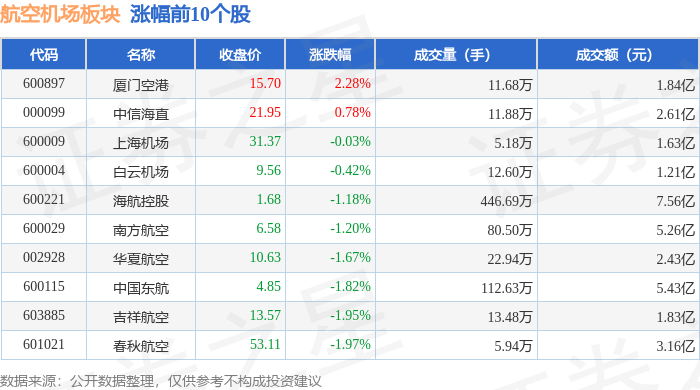
航空机场板块10月24日跌1.41%,中国国航领跌,主力资金净流出1.97亿元
Zheng Xing Xing Ye Ri Bao· 2025-10-24 08:27
Group 1 - The aviation and airport sector experienced a decline of 1.41% on October 24, with China National Aviation leading the drop [1] - The Shanghai Composite Index closed at 3950.31, up 0.71%, while the Shenzhen Component Index closed at 13289.18, up 2.02% [1] - Xiamen Airport saw a closing price of 15.70, with an increase of 2.28%, while China Eastern Airlines closed at 4.85, down 1.82% [1] Group 2 - The aviation and airport sector had a net outflow of 197 million yuan from institutional investors, while retail investors saw a net inflow of 100 million yuan [2] - Shenzhen Airport had a net inflow of 14.99 million yuan from institutional investors, while China National Aviation experienced a net outflow of 10.24 million yuan [2] - The overall capital flow showed that retail investors contributed positively to some stocks, despite the overall sector decline [2]



新型航空燃料热浪来袭!碳减排最多达九成
Zheng Quan Shi Bao Wang· 2025-10-24 03:40
Core Insights - The global aviation industry is entering the "SAF era," driven by policy changes and increasing demand for sustainable aviation fuel (SAF) [1][2][5] - The SAF market is expected to grow significantly, with a projected supply-demand gap exceeding 26 million tons from 2030 to 2035, leading to a market size in the thousands of billions of yuan [1][2] - SAF can reduce carbon dioxide emissions by 69% to 90% compared to traditional fuels, making it a viable path for the aviation industry's decarbonization efforts [2][5] Industry Developments - The European Union has mandated that by 2030, 6% of fuel used in flights from its airports must be SAF, with a target of 70% by 2050 [2][3] - China's SAF consumption is projected to exceed 20,000 tons this year, with various initiatives and policies being implemented to support the industry [3][6] - Major Chinese airlines are beginning to incorporate SAF into their operations, with commitments to increase SAF usage significantly by 2030 [3][6] Market Dynamics - The price of SAF has surged, with recent figures exceeding $2,700 per ton, driven by regulatory requirements and rising raw material costs [4][10] - The competition for SAF production capacity is intensifying, with numerous companies launching projects to meet the growing demand [6][7] - The current collection of waste cooking oil in China is limited to about 5 million tons annually, which is insufficient to meet future SAF demand [8][9] Challenges and Opportunities - The high cost of SAF production remains a significant barrier to widespread adoption, with estimates suggesting that SAF could be 4.2 times more expensive than conventional jet fuel [9][10] - Companies are exploring diverse raw materials for SAF production to enhance supply and reduce costs, including non-food biomass and green hydrogen [8][9] - The industry is witnessing a shift in production locations, with potential growth in regions rich in agricultural waste and renewable resources [9]


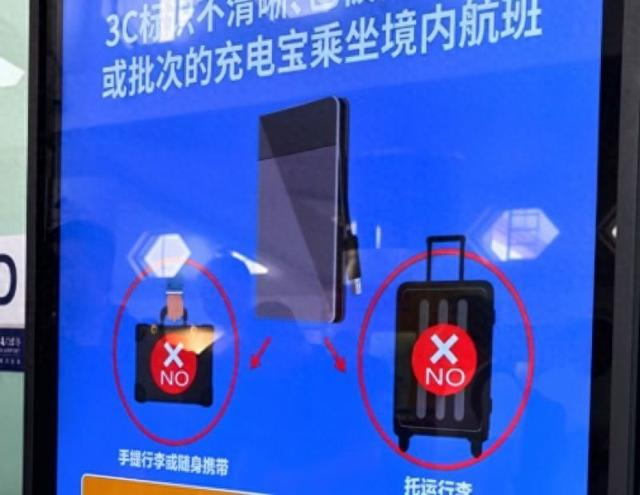
充电宝“3C认证”后再发机上火情,国际航协推锂电携带指南
Hua Xia Shi Bao· 2025-10-24 00:06
Core Viewpoint - The aviation industry is facing ongoing safety concerns related to lithium battery devices, prompting new regulations and safety campaigns to mitigate risks associated with their transport on flights [2][3][4]. Regulatory Developments - Following multiple incidents of lithium battery fires on flights, the Civil Aviation Administration of China (CAAC) implemented new regulations prohibiting the transport of certain types of power banks starting June 28, 2023, to enhance aviation safety [5][9]. - The International Air Transport Association (IATA) launched a global safety initiative called "Lithium Battery Safe Travel" to educate travelers on safe practices for carrying lithium battery-powered devices [6][8]. Incident Reports - On October 18, 2023, a lithium battery in a passenger's carry-on luggage caught fire on China International Airlines flight CA139, leading to an emergency landing in Shanghai. No injuries were reported, but the incident raised public concern about the safety of lithium batteries on flights [3][4]. Safety Awareness - IATA's recent survey revealed that while 93% of travelers believe they understand the rules for carrying lithium battery devices, many hold misconceptions about what is permissible, such as placing power banks in checked luggage [7][8]. - The "Lithium Battery Safe Travel" initiative includes seven simple guidelines aimed at improving traveler awareness and compliance with safety regulations [6][8]. Industry Response - The aviation industry has established detailed emergency response plans for incidents involving lithium batteries, with ongoing training for crew members to handle such emergencies effectively [4][5]. - Various countries have updated their regulations in response to lithium battery fire incidents, with some airlines banning the use of power banks on board entirely [5][9].
中国国航:肖鹏辞任总工程师
Zhi Tong Cai Jing· 2025-10-23 14:13
Core Viewpoint - China National Airlines (601111) announced the resignation of its employee director, Mr. Xiao Peng, from the position of Chief Engineer due to age reasons, effective immediately [1] Company Summary - The resignation of Mr. Xiao Peng is a significant change in the company's leadership structure, as he held the position of Chief Engineer [1]
中国国航:高级管理人员辞任
Zheng Quan Ri Bao Wang· 2025-10-23 14:13
Core Viewpoint - China National Airlines (601111) announced the resignation of its Chief Engineer, Mr. Xiao Peng, due to age reasons [1] Company Summary - The company's board of directors received the resignation letter from Mr. Xiao Peng, who served as the Chief Engineer [1]
中国国航(00753.HK):肖鹏辞去总工程师职务
Ge Long Hui· 2025-10-23 14:10
Core Points - China National Airlines (00753.HK) announced the resignation of employee director Xiao Peng from his position as Chief Engineer due to age reasons, effective immediately [1] Company Summary - The resignation of Xiao Peng marks a significant change in the company's leadership structure, particularly in the engineering department [1] - The company will need to address the potential impact of this leadership change on its operational capabilities and future projects [1] Industry Summary - The aviation industry may see shifts in leadership dynamics as companies adapt to changes in personnel, which can influence strategic directions and operational efficiencies [1] - Leadership changes in major airlines like China National Airlines can have broader implications for industry standards and practices, especially in engineering and safety protocols [1]
中国国航(00753):肖鹏辞任总工程师
智通财经网· 2025-10-23 14:07
Core Viewpoint - China National Airlines (00753) announced the resignation of its employee director, Mr. Xiao Peng, from his position as Chief Engineer due to age reasons, effective immediately [1] Company Summary - The resignation of Mr. Xiao Peng marks a significant change in the company's leadership structure [1] - The company will need to address the implications of this leadership change on its operations and strategic direction [1]
中国国航(00753) - 公告高级管理人员辞任
2025-10-23 14:01
香港交易及結算所有限公司及香港聯合交易所有限公司對本公告之內容概不負責,對其 準確性或完整性亦不發表任何聲明,並明確表示概不會就因本公告全部或任何部分內容 而產生或因倚賴該等內容而引致的任何損失承擔任何責任。 00753 公告 高級管理人員辭任 中國國際航空股份有限公司(「本公司」)董事(「董事」)會(「董事會」)近日收到職工董事肖 鵬先生(「肖先生」)的辭呈。因年齡原因,肖先生辭去本公司總工程師職務,即日起生 效。 肖鵬先生確認與董事會和本公司無意見分歧,亦不存在本公司股東需要知悉的有關上述 辭任的其他事宜。董事會對肖先生任職期間對本公司做出的貢獻表示誠摯的感謝。 中國北京,二零二五年十月二十三日 於本公告日期,本公司的董事為劉鐵祥先生、王明遠先生、崔曉峰先生、Patrick Healy (賀以禮)先生、肖鵬先生、徐念沙先生*、禾雲先生*、譚允芝女士*及高春雷先生*。 * 本公司獨立非執行董事 承董事會命 中國國際航空股份有限公司 公司秘書 肖烽 ...
中国国航(00753) - 海外市场公告
2025-10-23 13:36
香港交易及結算所有限公司及香港聯合交易所有限公司對本公告之內容概不負責,對其 準確性或完整性亦不發表任何聲明,並明確表示概不會就因本公告全部或任何部分內容 而產生或因倚賴該等內容而引致的任何損失承擔任何責任。 (於中華人民共和國註冊成立的股份有限公司) (股份代號:00753) 海外市場公告 本公告乃根據香港聯合交易所有限公司證券上市規則第13.10B條的規定而發表。 中國國際航空股份有限公司 關於召開2025年第三季度業績說明會的公告 承董事會命 中國國際航空股份有限公司 公司秘書 肖烽 中國北京,二零二五年十月二十三日 於本公告日期,本公司的董事為劉鐵祥先生、王明遠先生、崔曉峰先生、Patrick Healy (賀以禮)先生、肖鵬先生、徐念沙先生*、禾雲先生*、譚允芝女士*及高春雷先生*。 * 本公司獨立非執行董事 附件為中國國際航空股份有限公司於上海證券交易所刊發之 证券代码:601111 证券简称:中国国航 公告编号:2025-047 中国国际航空股份有限公司 关于召开 2025 年第三季度业绩说明会的公告 本公司董事会及全体董事保证本公告内容不存在任何虚假记载、误导性陈述 或者重大遗漏,并对其内容的 ...
新航季国航452条航线覆盖195座城市
Zhong Guo Min Hang Wang· 2025-10-23 11:32
Core Viewpoint - Air China will implement its 2025/26 winter-spring flight schedule starting from October 26, significantly expanding its flight network and capacity to meet passenger demand [1][2]. Flight Network Expansion - Air China plans to operate 452 routes, including 114 international routes, 13 regional routes, and 325 domestic routes, covering 46 countries and regions, and 195 cities [1][3]. - The average daily flights will be approximately 1,725, representing a 16% increase compared to the 2024/25 winter-spring season, with international and regional flights averaging 250 daily, a 13% increase [1][3]. Domestic Route Development - New domestic routes include Beijing to Panzhihua, Beijing to Xishuangbanna, Hangzhou to Zhuhai, and Urumqi to Kashgar, with over 40 routes seeing increased frequency [3]. - The frequency of domestic routes from Beijing to Huizhou, Zhanjiang, Altay, Changsha, and from Chengdu to Beihai, Sanya, Shenyang, and Mangshi will increase by approximately 15% compared to the previous season [3]. International Route Development - Internationally, Air China will increase the frequency of 17 routes, including Beijing to Seoul, Irkutsk, Vladivostok, and Ho Chi Minh City, and will launch a new route from Hangzhou to Hanoi [3]. - The overall frequency of international and regional flights is expected to increase by about 17% compared to the previous winter-spring season [3]. Hub Development - Air China will continue to enhance its hub operations in Beijing and Chengdu, optimizing flight schedules and routes at Beijing Capital Airport [5]. - At Beijing Capital Airport, Air China plans to operate 139 routes with over 672 daily flights at T3 and 29 routes with 85 daily flights at T2, while also optimizing schedules at Beijing Daxing Airport [5]. Product and Service Upgrades - The Air China Express service will expand to 13 routes, including new routes from Beijing to Wuhan and Urumqi, focusing on providing a fast and enjoyable travel experience [7]. - The service will offer dedicated check-in counters, priority security checks, and exclusive baggage claim areas, enhancing convenience for passengers [7]. - A new program, "Zhiyin Baby - Launch Plan," will be introduced for young travelers aged 0-12, promising a commitment to their growth [7].