
INDUSTRIAL BANK(601166)

Search documents
上市银行,密集出手!9家赎回,超1000亿!
券商中国· 2025-12-25 11:55
Core Viewpoint - The motivation for listed banks to redeem existing "high-interest" preferred shares is increasing in a low-interest-rate environment, aiming to save on interest costs [1][4]. Group 1: Redemption of Preferred Shares - Changsha Bank announced the redemption of 6 billion yuan of its preferred shares "Changyin You 1" on December 25, 2025, marking it as the fifth bank to redeem preferred shares in December [1][4]. - A total of 9 banks have redeemed preferred shares since 2025, with a cumulative redemption amount exceeding 1,000 billion yuan [4][5]. - The redemption actions include banks such as Nanjing Bank (4.9 billion yuan), Shanghai Bank (20 billion yuan), and Beijing Bank (4.9 billion yuan) [3][4]. Group 2: Market Trends and Supply - The total outstanding preferred shares of banks is 6,453.5 billion yuan, accounting for 99.58% of the preferred share market [5]. - Since 2020, the issuance of new preferred shares has nearly halted, leading to a gradual reduction in the outstanding volume [5][6]. - The introduction of perpetual bonds in 2019 has diversified the capital supplement tools available to banks, reducing the attractiveness of preferred shares [5][6]. Group 3: Investment Dynamics - Preferred shares are becoming increasingly scarce, making them a valuable asset for asset management institutions, including public funds and insurance funds [8][9]. - As of June 2025, approximately 3,079 billion yuan of bank preferred shares were held by wealth management products, representing 40.66% of the total outstanding preferred shares [8]. - The liquidity of bank preferred shares remains low compared to other capital supplement tools, with a low turnover rate in the market [9].







兴业研究系列丛书赠书 | 以真知赠同行,以灼见答时代
Guo Ji Jin Rong Bao· 2025-12-25 09:57
Core Viewpoint - The article emphasizes the importance of transitioning the banking industry towards a new economic model that focuses on technology, industry, and finance, particularly in the context of China's 14th and 15th Five-Year Plans [1][5][9]. Group 1: Industry and Economic Transition - The banking sector faces challenges in adapting to high-quality development and must better serve the real economy to support the construction of a financial powerhouse [6][9]. - The shift from a "land-finance" model to a "technology-industry-finance" model is crucial, as the traditional reliance on real estate as collateral is becoming less viable [7][8]. - China's manufacturing sector has become a global leader, with manufacturing output accounting for approximately 35% of global production in 2023, surpassing the G7 countries combined [8]. Group 2: Research and Development Initiatives - The establishment of the "Xingye Research" in 2015 aimed to address the complex challenges faced by the banking industry and has resulted in a series of publications that provide insights into financial practices [6][13]. - The series of publications focuses on various aspects of financial support for innovation, including the role of technology finance in providing stable capital for research and development [14][15]. Group 3: Financial Strategies and Innovations - The article highlights the need for financial institutions to integrate their services with the modern industrial system, emphasizing the importance of supporting competitive and valuable enterprises [9][10]. - Innovation is identified as a key driver for development, with a focus on the application of technology in industries to achieve sustainable growth [10][11]. - The concept of "from 1 to N" is crucial for transforming innovations into widespread applications, which is essential for economic development [10][11]. Group 4: Global Economic Dynamics - Chinese companies are increasingly expanding their operations globally, with overseas business margins surpassing domestic ones since 2022, indicating improved profitability and risk management capabilities [12]. - The shift from a "Northern globalization" centered around developed economies to a "Southern globalization" led by emerging markets, including China, is noted as a significant trend in the global economy [12].


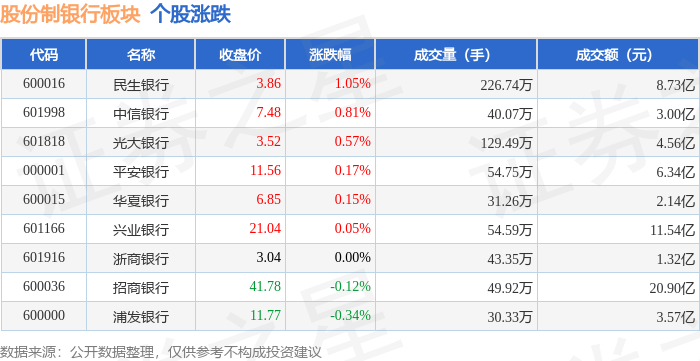
股份制银行板块12月25日涨0.12%,民生银行领涨,主力资金净流入1.22亿元
Zheng Xing Xing Ye Ri Bao· 2025-12-25 09:03
Group 1 - The banking sector saw a slight increase of 0.12% on December 25, with Minsheng Bank leading the gains [1] - The Shanghai Composite Index closed at 3959.62, up 0.47%, while the Shenzhen Component Index closed at 13531.41, up 0.33% [1] - The trading volume for Minsheng Bank was 2.2674 million shares, with a transaction value of 873 million yuan [1] Group 2 - The net inflow of main funds in the banking sector was 122 million yuan, while retail funds experienced a net outflow of 69.36 million yuan [1] - The detailed fund flow for individual banks shows that Ping An Bank had a net inflow of 51.47 million yuan from main funds [2] - Industrial Bank experienced the highest net outflow from main funds at 70.30 million yuan [2]




商业银行“出海”验成色:中行领跑,谁在悄然发力?
2 1 Shi Ji Jing Ji Bao Dao· 2025-12-25 08:34
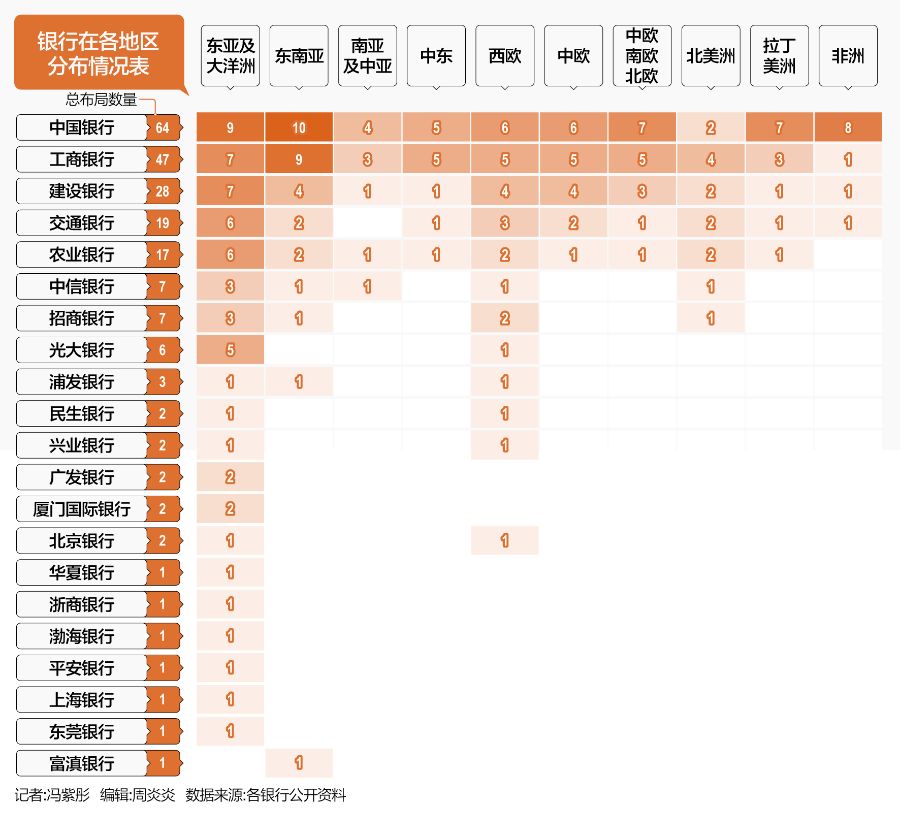
Core Insights - Chinese banks are expanding their overseas presence, establishing a comprehensive service network that covers major financial centers globally and key regions along the Belt and Road Initiative [1][4] - The internationalization strategy of Chinese banks has shifted from focusing primarily on traditional markets in Europe and the US to emerging markets in Southeast Asia, the Middle East, Latin America, and countries involved in the Belt and Road Initiative [1][9] Group 1: Overseas Expansion Strategies - Chinese banks utilize three main forms for overseas expansion: representative offices, branches, and subsidiaries, with larger banks often establishing branches or subsidiaries in mature markets and starting with representative offices in emerging markets [2][4] - The distribution of overseas institutions varies among banks, with a notable focus on new emerging markets and developing countries [2][4] Group 2: Performance of Major Banks - Bank of China leads in global presence with 539 overseas branches in 64 countries, including 45 countries involved in the Belt and Road Initiative, and has a strong focus on enhancing its competitive edge in Southeast Asia [4][12] - Industrial and Commercial Bank of China has 413 overseas institutions in 49 countries, with a significant presence in 30 Belt and Road countries, showcasing a flexible internationalization strategy [4][12] - Agricultural Bank of China has established 13 branches and 4 representative offices, focusing on supporting high-quality Belt and Road initiatives [4][12] Group 3: Revenue Growth and Performance Metrics - In the first half of 2025, Bank of China reported overseas revenue of 783.13 billion yuan, a 14.4% increase from the previous year, with overseas revenue accounting for 23.77% of total revenue [11][12] - Agricultural Bank of China achieved a 21.03% increase in overseas revenue, while Construction Bank's overseas revenue grew by 40.92%, indicating strong expansion momentum [12][14] - Shanghai Pudong Development Bank's overseas revenue surged by 119.37%, marking a significant growth and highlighting the effectiveness of its international strategy [14] Group 4: Challenges and Market Dynamics - Chinese banks face regulatory challenges in overseas markets, including compliance with both domestic and foreign regulations, which can lead to significant penalties [15][19] - The demand from Chinese enterprises for overseas financial services is evolving, with a shift towards more complex needs such as global treasury management and cross-border mergers and acquisitions [16][17] - Small and medium-sized enterprises are becoming a key growth driver for overseas financial services, emphasizing the need for lower financing thresholds and cost-effective payment solutions [16][17] Group 5: Future Directions and Strategic Focus - The future competitiveness of Chinese banks in international markets will depend on enhancing global collaboration, improving localization capabilities, and strengthening compliance risk management [18][19] - Emphasis on financial technology innovation and the development of cross-border digital infrastructure will be crucial for expanding their international footprint [19]




兴业银行发布元旦期间积存金业务(含添利金条)营业时间安排
Jin Tou Wang· 2025-12-25 03:54
2026年1月5日(周一)9:00起,恢复正常营业。 2025年12月18日,兴业银行(601166)发布公告称,根据国家关于2026年节假日规定及上海黄金交易所 节假日休市安排,2026年元旦假期期间,兴业银行积存金业务(含添利金条)营业时间安排如下: 2025年12月31日(周三)15:30起,停止营业。 ...
兴业银行南京分行落地江苏省首单公募基金柜台债交易 助力区域债券市场扩容升级
Yang Zi Wan Bao Wang· 2025-12-25 03:22
Core Viewpoint - The successful launch of Jiangsu Province's first public fund counter bond transaction by Industrial Bank Nanjing Branch and Xinyuan Fund Management marks a significant breakthrough in the bond market innovation in Jiangsu Province [1] Group 1: Transaction Details - Xinyuan Fund invested 10 million yuan in policy financial bonds through the counter channel, indicating a new investment path for public funds in the interbank bond market [1] - The collaboration has resulted in a cumulative counter bond trading volume exceeding 2.5 billion yuan, enhancing liquidity in the regional bond market [1] Group 2: Future Outlook - Industrial Bank Nanjing Branch aims to leverage this business launch as a new starting point to deepen customer service and enhance business innovation capabilities [2] - The bank plans to continue following the policy directives of the People's Bank of China Jiangsu Branch to contribute to the high-quality development of Jiangsu's financial market and support the real economy [2]
山证资管汇利一年定期开放债券型证券投资基金新增兴业银行股份有限公司为销售机构的公告
Zhong Guo Zheng Quan Bao - Zhong Zheng Wang· 2025-12-25 01:14
Group 1 - The company will add Industrial Bank Co., Ltd. as a sales institution for its fixed-income fund starting from December 26, 2025 [1] - Investors can perform account opening, subscription, redemption, and fund conversion through Industrial Bank [1] - Specific business processes, handling times, methods, and fee discounts will be subject to the regulations of the sales institution [1][2] Group 2 - The announcement emphasizes that the company retains the right to interpret the announcement [1] - Investors are advised to follow the sales institution's regulations for business transactions [2] - The announcement includes contact information for both Industrial Bank and the company for further inquiries [3]
力生制药:使用闲置募集资金8500万元认购兴业银行结构性存款
Zheng Quan Ri Bao· 2025-12-24 13:08
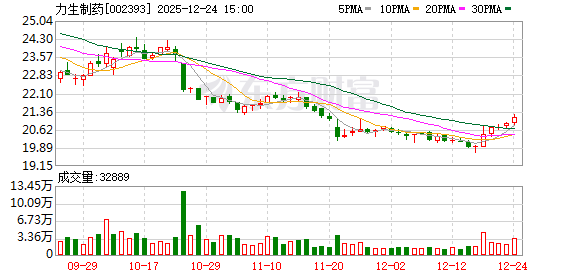
Group 1 - The company announced an investment of 85 million yuan in a structured deposit with a floating return from Industrial Bank's Tianjin branch, with an expected annual yield of 1.20%-1.60% [2] - As of the announcement date, the company has a cash management balance of 155 million yuan, which is below the authorized limit of 600 million yuan [2]

天津发展(00882.HK):力生制药认购兴业银行8500万元结构性存款
Ge Long Hui· 2025-12-24 10:09
Group 1 - The core announcement is that Tianjin Development (00882.HK) has entered into a financial agreement with Industrial Bank for a structured deposit worth RMB 85 million, equivalent to approximately HKD 93.41 million [1] - The agreement is the twelfth financial agreement between the company and Industrial Bank, indicating a continued partnership [1] - The structured deposit is set to mature on December 24, 2025, suggesting a long-term investment strategy [1]
天津发展附属认购8500万元兴业银行结构性存款
Zhi Tong Cai Jing· 2025-12-24 09:59
天津发展(00882)发布公告,于2025年12月24日,力生制药(002393)(公司间接非全资附属公司)与兴业 银行订立第12份兴业银行理财协议,以本金金额人民币8500万元(相当于约港币9340.66万元)认购另一项 结构性存款。 ...