
BOB(601169)

Search documents
抢占全球市场!金融助力专精特新企业“破浪出海”|聚焦2025服贸会
Hua Xia Shi Bao· 2025-09-12 09:49
Group 1 - The 2025 China International Service Trade Fair (CIFTIS) is being held in Beijing with the theme "Digital Intelligence Leading, Service Trade Renewed," highlighting financial services as a key focus [2][4] - The "Jingfan Navigation, Financial Support for Collaborative Innovation Development" conference showcased experiences from specialized enterprises in the Beijing-Tianjin-Hebei region regarding technology and product internationalization [2][3] - Financial services are positioned as a crucial support for enterprises' internationalization, with Beijing Bank launching several financial service plans to assist companies in going global [4][6] Group 2 - The financial industry is a core pillar of Beijing's economy, playing an essential role in stimulating innovation and nurturing new productive forces [4][6] - Beijing Bank introduced the "Artificial Intelligence+" service plan and other specialized financial services aimed at supporting high-quality enterprise development [4][6] - Financial institutions are developing a comprehensive service system to support enterprises in expanding into international markets, including tailored financing solutions and professional services [7][8] Group 3 - The conference featured presentations from specialized enterprises, such as Beijing Titanium Technology, which introduced an "automotive smart skin" solution based on elastic wave technology [3][5] - The event emphasized Beijing's role as a hub for international cooperation and its established relationships with over 30 capitals and key cities along the Belt and Road [3][4] - The financial sector in Beijing is characterized by a high concentration of financial elements, with the city serving as a central financial management hub [4][6]


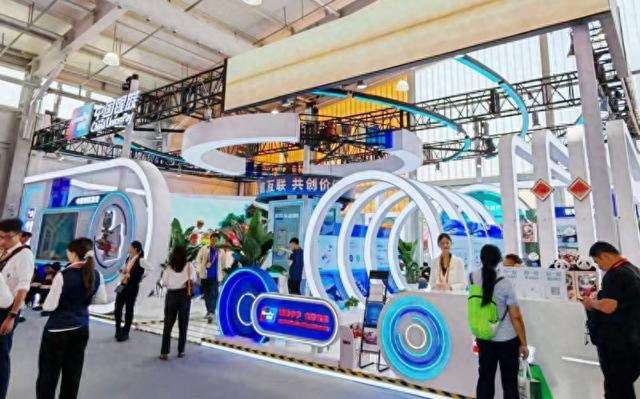
北京银行打造沉浸式金融之旅 数智成果大放异彩
Zhong Guo Jing Ji Wang· 2025-09-12 08:41
Core Points - The 2025 China International Service Trade Fair is being held in Beijing from September 10 to 14, with Beijing Bank actively participating and supporting the event through innovative exhibitions and enhanced cooperation [1] Group 1: Company Initiatives - Beijing Bank showcased its intelligent interactive digital robot "Jing Xiaobao," which has strong AI dialogue capabilities to assist visitors with financial product inquiries and introduce the bank's achievements in digital banking [3] - The bank created an immersive technology innovation experience space at the exhibition, allowing visitors to engage with various financial services, including technology finance, green finance, and inclusive finance [5] - Beijing Bank collaborated with over 20 partners, including technology and fintech companies, to explore innovative development paths in the era of digital finance [5] Group 2: Digital Currency Promotion - For the third consecutive year, Beijing Bank set up an exhibition on Digital Renminbi Avenue, themed "Digital Currency Ecosystem, Enjoying Beijing's Color," focusing on the integration of digital currency with consumer scenarios [7] - The bank established an immersive market space to promote the convenience of digital Renminbi payments and support its application [7] Group 3: Long-term Commitment - Since 2021, Beijing Bank has participated in the service trade fair for five consecutive years, continuously enhancing its service level and brand influence through tailored financial services and thematic forums [9] - The bank aims to leverage the fair as a platform for financial innovation and to contribute to the high-quality development of the capital and the prosperity of global service trade [9]
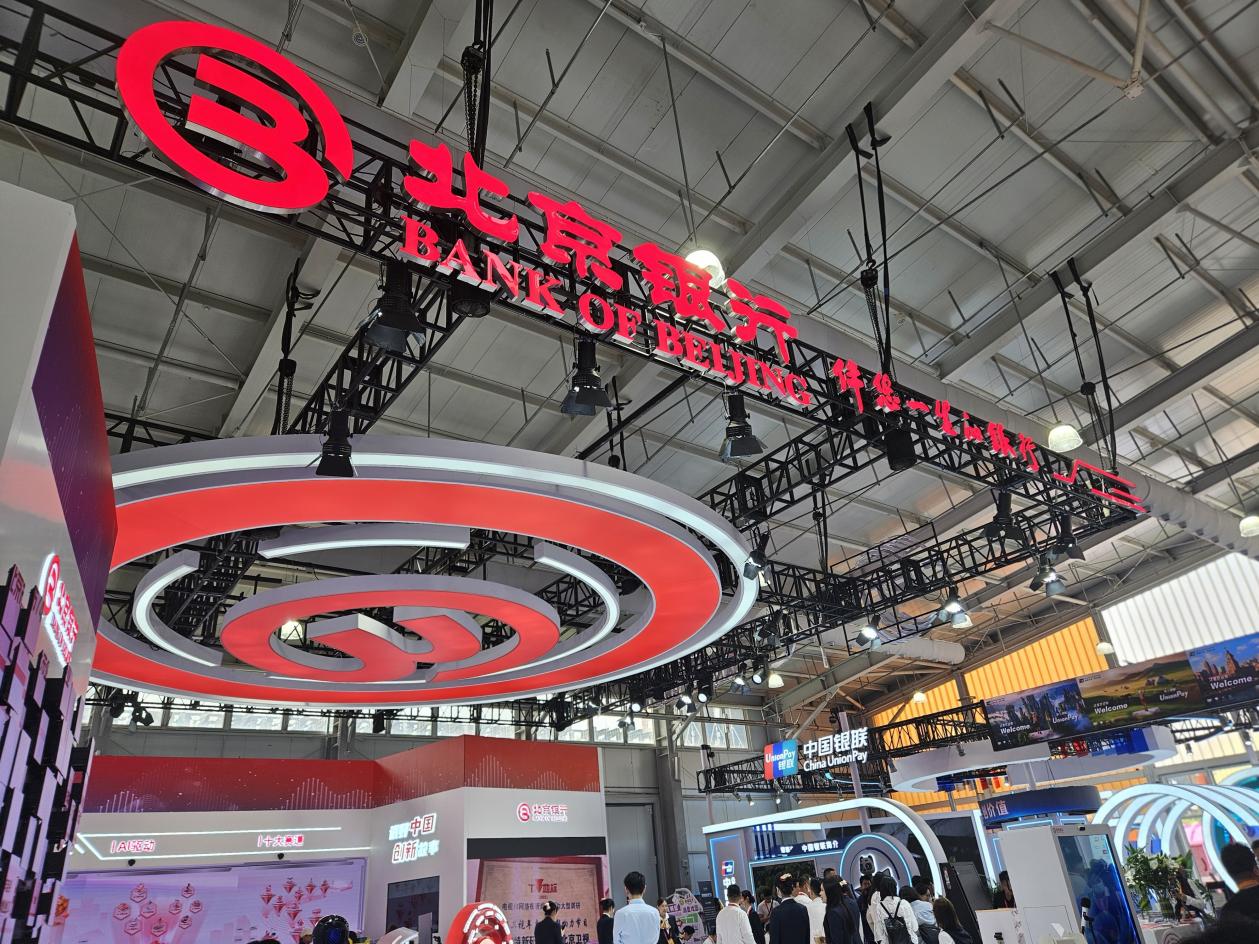
直击服贸会|“AI+金融”成亮点 银行智能场景加速落地
Zhong Guo Jing Ying Bao· 2025-09-12 08:16
Group 1 - The 2025 China International Service Trade Fair was held in Beijing from September 10 to 14, showcasing the latest achievements in the integration of finance and artificial intelligence by several banks [1] - Industrial and Commercial Bank of China (ICBC) and Beijing Housing Provident Fund Management Center launched an upgraded "Digital AI Customer Service" that allows users to complete identity verification and queries easily, enhancing user experience in housing consumption scenarios [1] - Beijing Bank introduced two new products: the "AI+" service plan aimed at providing financial support across the AI industry chain, and the Beiyin Jinke Xuanji Data Agent product, which enhances decision-making and financial service efficiency through multi-modal interactions [1] Group 2 - KPMG China released a report highlighting that enterprise AI value creation involves three stages: empowerment, integration, and evolution, requiring simultaneous enhancement of foundational, functional, and enterprise-level AI capabilities [2] - The report indicates a coexistence of ecological integration and differentiated applications in AI deployment across various industries, with a focus on high-quality data supply and digital infrastructure [2] - In the financial sector, AI applications should prioritize the comprehensive use of existing information to optimize decision-making, improve business process efficiency, and strengthen risk management rather than directly creating customer-facing tools [2]

北京银行跌2.14%,成交额14.71亿元,主力资金净流出4.14亿元
Xin Lang Cai Jing· 2025-09-12 06:27
Core Viewpoint - Beijing Bank's stock has experienced a decline in recent trading sessions, with a current price of 5.94 CNY per share and a market capitalization of 125.59 billion CNY, indicating a challenging market environment for the bank [1]. Financial Performance - As of June 30, Beijing Bank reported a net profit of 15.05 billion CNY for the first half of 2025, reflecting a year-on-year growth of 3.25% [2]. - The bank's cumulative cash dividends since its A-share listing amount to 71.53 billion CNY, with 20.09 billion CNY distributed over the past three years [3]. Shareholder Information - The number of shareholders for Beijing Bank decreased to 135,800, a reduction of 3.17% compared to the previous period, while the average number of circulating shares per person increased by 3.28% to 155,651 shares [2]. - Among the top ten circulating shareholders, Hong Kong Central Clearing Limited holds 943 million shares, a decrease of 12.16 million shares from the previous period, while China Securities Finance Corporation maintains its holding of 324 million shares [3]. Stock Market Activity - On September 12, Beijing Bank's stock fell by 2.14%, with a trading volume of 1.471 billion CNY and a turnover rate of 1.16% [1]. - Year-to-date, the stock price has increased by 1.89%, but it has seen declines of 1.98% over the last five trading days, 4.96% over the last twenty days, and 10.54% over the last sixty days [1].
金融助力企业协同创新发展大会举办,嘉宾热议跨界合作
Bei Jing Ri Bao Ke Hu Duan· 2025-09-12 02:34
Core Insights - The conference "Jing Fan Yin Hang, Rong Tong Chu Hai" focused on financial support for enterprise collaborative innovation and development, emphasizing the importance of multi-business synergy and industry-finance collaboration [1][2] Group 1: Financial Services and Innovation - Beijing Bank aims to enhance its international financial services, focusing on a collaborative model that includes "large ships leading, small ships following, and financial protection" to support enterprises going global [1][2] - The bank introduced the "Artificial Intelligence+" service plan, which includes specialized financial products such as "Computing Power Loan" and "Jing Zhi Risk Avoidance" to support innovation in technology enterprises [3] Group 2: Collaborative Efforts and Industry Development - The partnership between Beijing Bank and Beijing Broadcasting Television aims to foster new productive forces and contribute to the construction of an international science and technology innovation center, with a focus on deepening cross-industry cooperation [1][2] - The conference highlighted the significance of promoting cross-sector collaboration among government, banks, and enterprises to explore new financial empowerment models for the real economy [2]
北京银行增长新引擎有哪些?这个发布会有答案
Zheng Quan Ri Bao Zhi Sheng· 2025-09-12 01:34
Core Viewpoint - Beijing Bank has demonstrated steady performance in the first half of 2025, maintaining growth in profitability and improving risk indicators amidst a declining interest rate environment. Group 1: Customer Base and Funding Sources - The bank aims to stabilize interest margins by adjusting its liability structure to increase low-cost deposits, with effective customers exceeding 330,000, a growth of 12.6% [2] - Retail customers reached 31.5 million, also reflecting a 12.6% increase since the beginning of the year, supported by innovative initiatives in pension finance, children's finance, and the promotion of the third-generation social security card [2] - The bank has deepened its engagement with central enterprises, state-owned enterprises, and regional leading companies, achieving over 80 billion yuan in retail payroll business, thereby establishing a more stable funding source [2] Group 2: Pricing Management and Interest Margin - In the context of market interest rate liberalization and intensified competition, pricing capability has become crucial for managing interest margins, with the bank optimizing its internal FTP mechanism to enhance responsiveness to market fluctuations [4] - The bank's "Seven Crystal Ball" customer management system integrates CRM for corporate and retail sectors, allowing for flexible pricing based on comprehensive customer contributions [4] - The bank focuses on loans as core assets, utilizing policy tools and implementing targeted marketing strategies to enhance service coverage, while also increasing loan proportions for small and medium-sized enterprises [4] Group 3: Risk Management - The bank's non-performing loan ratio has decreased to 1.30%, and the provision coverage ratio has risen to 195.74%, indicating a continuous improvement in risk mitigation capabilities [5] - The bank emphasizes prudent management principles in both credit expansion and investment diversification, ensuring that growth is aligned with stability [5] - The bank's multi-faceted initiatives have gradually formed new growth engines, reflecting its commitment to serving the real economy and enhancing the quality of financial supply [5]
持续加码技术投入 上市银行加力数智转型
Jing Ji Ri Bao· 2025-09-12 01:11
Core Insights - Digital finance is continuously evolving, becoming a powerful tool for enhancing efficiency and innovation in financial institutions [1] - Listed banks are steadily increasing their support for the real economy while achieving stable development, driven by robust digital finance [1] Group 1: Investment in Digital Finance - In 2024, six major state-owned commercial banks reported a total investment of 125.459 billion yuan in financial technology, a 2.15% increase from 2023 [2] - The total number of technology personnel in these banks has surpassed 100,000 for the first time [2] - Continuous investment has led to improved operational performance, with China Construction Bank achieving precise customer identification and marketing through technology and data [2] Group 2: Digital Transformation Achievements - Beijing Bank reported a revenue of 36.218 billion yuan and a net profit of 15.053 billion yuan in the first half of the year, reflecting a year-on-year growth of 1.02% and 1.12% respectively [3] - The bank has accelerated its transformation into an AI-driven commercial bank, establishing an integrated AI system with over 300 application scenarios [2][3] Group 3: Technological Support and Infrastructure - Major banks are enhancing their digital technology capabilities to lay a solid foundation for future strategic layouts [4] - China Bank has accelerated its digital transformation, with a total of 40,000 cloud platform servers and 352 applications connected to its distributed technology platform by mid-2025 [4] - Shanghai Pudong Development Bank has built a comprehensive digital infrastructure, achieving a full-stack domestic computing platform and a collaborative model service matrix [4] Group 4: Risk Management and Compliance - Digital finance is increasingly playing a crucial role in risk management and compliance [6] - Ping An Bank has deepened the application of intelligent algorithms to enhance its risk control system, improving efficiency across various processes [6] Group 5: Integration of Digital and Intelligent Finance - Listed banks view digital finance, particularly AI technology, as essential for improving operational efficiency and customer experience [7] - Everbright Bank has developed an intelligent policy assistant that enhances compliance execution efficiency by linking policy documents with business scenarios [7] - The bank has also launched an intelligent analysis tool that integrates AI and business intelligence, covering over 2,000 data indicators [7][8]

“城商行一哥”易主 北京银行为何被超越
Nan Fang Du Shi Bao· 2025-09-11 23:09
Core Viewpoint - Beijing Bank has been surpassed by Jiangsu Bank as the new leader among city commercial banks, marking a significant shift in the competitive landscape [4][5][12]. Financial Performance Comparison - As of mid-2025, Beijing Bank's total assets reached 4.75 trillion yuan, growing by 12.53% year-to-date, while Jiangsu Bank's total assets were 4.79 trillion yuan, with a year-on-year growth rate of 26.99% [6]. - Beijing Bank reported operating income of 36.218 billion yuan, a year-on-year increase of 1.02%, and a net profit attributable to shareholders of 15.053 billion yuan, up 1.12% [6]. - Jiangsu Bank achieved operating income of 44.864 billion yuan, a 7.78% increase, and a net profit of 20.238 billion yuan, growing by 8.05% [6]. Loan and Asset Quality - As of June 2025, Beijing Bank's total loans and advances amounted to 2.39 trillion yuan, with a growth of 8.18% year-to-date, while Jiangsu Bank's total loans reached 2.43 trillion yuan, reflecting a year-on-year growth of 15.98% [6]. - Jiangsu Bank's non-performing loan (NPL) ratio was 0.84%, a historical low, with a provision coverage ratio of 331.02%, indicating stronger asset quality compared to Beijing Bank's NPL ratio of 1.30% and provision coverage ratio of 195.74% [7][16]. Profitability and Efficiency - Jiangsu Bank's net interest margin (NIM) stood at 1.78%, compared to Beijing Bank's 1.31%, although both are on a downward trend [7]. - Despite a lower average deposit cost of 1.59% for Beijing Bank, Jiangsu Bank's average loan interest rate was significantly higher at 4.45%, indicating better asset pricing and revenue generation capabilities [7][15]. Strategic Focus and Future Outlook - Under the leadership of Chairman Huo Xuewen, Beijing Bank is focusing on technology finance and digital transformation, aiming to enhance operational efficiency and asset quality [8][10]. - Jiangsu Bank's growth strategy is deeply tied to regional economic development, particularly in the Yangtze River Delta, although this has led to a concentration risk in its loan portfolio [12][13].


金融赋能 绘就经济新图景
Sou Hu Cai Jing· 2025-09-11 21:21
Group 1 - The financial services section of the 2025 Service Trade Fair focuses on "Digital Intelligence Driving Open Win-Win," providing a platform for global financial institutions to collaborate and showcase new trends in finance [1] - A total of 97 companies participated in the financial services section, with 51 domestic and 46 foreign institutions, resulting in an internationalization rate of 47.4% [10] - The event highlighted the importance of financial technology in promoting inclusive finance, with innovations such as voiceprint technology for elderly clients to facilitate transactions [10] Group 2 - The digital RMB was prominently featured, with various banks offering promotional activities to encourage its use, including a "red envelope rain" event [11][12] - Innovative applications of digital RMB were showcased, such as the collaboration between Industrial and Commercial Bank of China and Meituan to develop a digital RMB prepaid card [12] - The event also emphasized the value of investment, with companies like Galaxy Securities and Jianxin Fund using the fair to engage with a wide audience and promote their services [13][14]


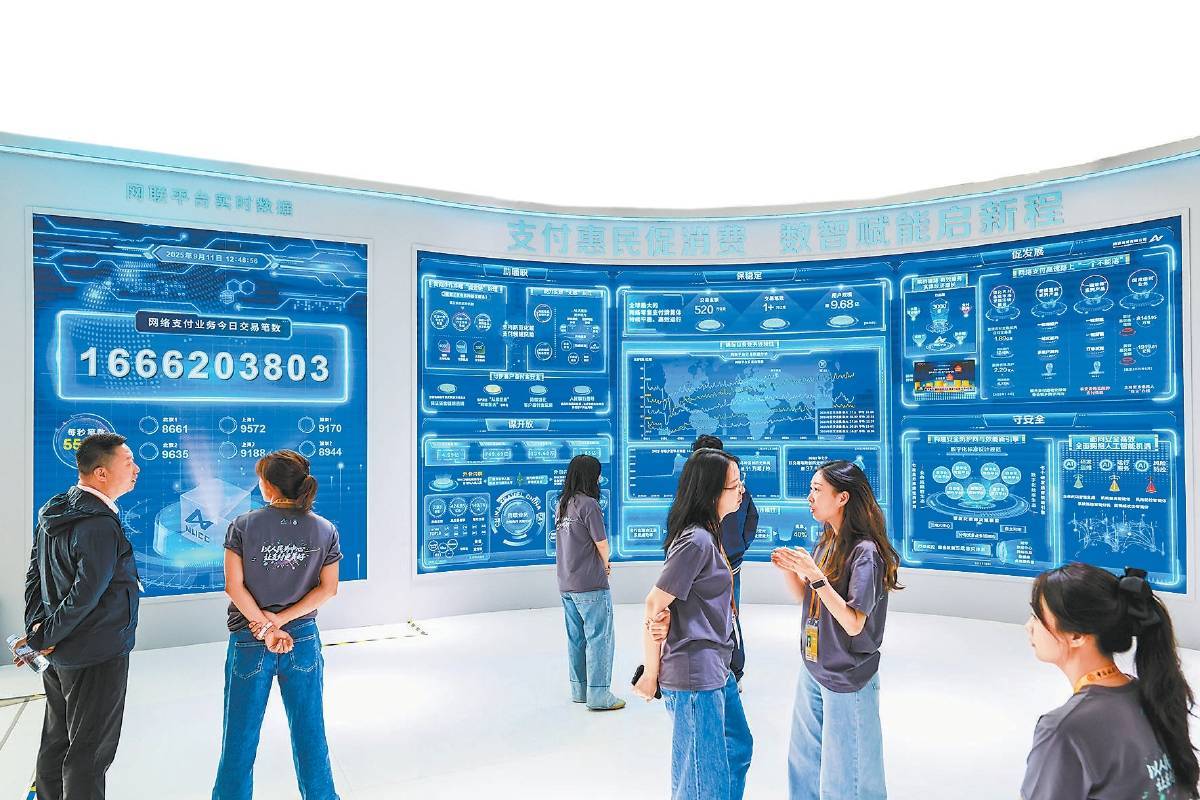
跟机器人打太极、唠家常!服贸会上的“科技之光”
Zhong Guo Zheng Quan Bao· 2025-09-11 15:09
Core Insights - The 2025 China International Service Trade Fair was held at Shougang Park from September 10 to 14, showcasing the integration of finance and technology through various innovative exhibits [1][2]. Group 1: Technological Innovations in Finance - Several banks collaborated with technology companies to enhance the fair with smart and interactive experiences, such as personalized fridge magnets and AI-driven newspaper printing [1][2]. - The exhibition featured advanced technologies like humanoid robots and holographic projections, significantly improving visitor engagement and interaction [2][3]. Group 2: Collaborative Ecosystem Development - The event served as a platform for banks like Shanghai Pudong Development Bank to establish cross-domain ecological collaboration, aiming to embed financial services into various ecological scenarios [2][4]. - Beijing Bank showcased its partnership with over 20 collaborators, including tech firms, to explore innovative development paths in the digital finance era [4]. Group 3: Showcasing Client Innovations - The humanoid robot "Xingdong Q5," developed by Xingdong Era, exemplifies the strong R&D capabilities of tech firms supported by banks, highlighting the banks' role in fostering innovation [3][4]. - Beijing Bank's "Xiao Jing" robot utilized a dual-mode explanation system combining human and AI, indicating the potential for broader applications in banking services [3][4].
