
Guotai Haitong Securities(601211)

Search documents
研报掘金丨国泰海通:恺英网络积极布局AI领域,维持“增持”评级
Ge Long Hui A P P· 2026-02-12 08:47
格隆汇2月12日|国泰海通证券研报指出,恺英网络在AI应用领域多维布局,战略投资公司自然选择在 研多个C端AI产品,情感陪伴产品《EVE》持续推进,近期推出的《Elys》则是在AI社交领域的一次积 极探索。看好公司AI布局及其远期价值与估值提升潜力。公司积极布局AI领域,包括C端AI应用(自然 选择)和B 端AI 游戏工具(杭州极逸),有望持续受益于AI技术的发展和自身产品完善。预计2025- 2027年公司EPS分别为1.05/1.40/1.66元(相比上次预测下调了2025年EPS预测,主要由于营业外收入的 预测值减少),维持公司2026年目标价34.48元,对应2026年PE为24.6x。维持"增持"评级。 ...


国泰海通:AI转产驱动下传统布超预期提价 26年特种布将进入量利兑现期
智通财经网· 2026-02-12 07:53
Core Viewpoint - The report from Guotai Junan indicates that the price increase of traditional fiberglass electronic cloth has accelerated since February, confirming the view that the shift of weaving machine capacity to AI electronic cloth has led to a supply shortage of traditional cloth [1][2]. Group 1: Price Increase and Supply Shortage - The price of traditional electronic cloth has risen significantly in February, with the first week of February seeing prices for 7628 electronic cloth ranging from 4.9 to 5.45 yuan per meter, an increase of 0.5 to 0.6 yuan per meter compared to the previous month [2]. - The announcement from Taiyao Technology on February 10 regarding reduced supply of E-glass products due to strong demand for low-dielectric materials has further fueled expectations of a shortage in traditional cloth [2]. Group 2: Inventory Levels and Profitability - Current inventory levels for leading traditional electronic cloth manufacturers are only two weeks, compared to a normal level of 1 to 1.5 months, primarily due to the impact of weaving machines shifting to produce AI specialty cloth [3]. - The expected increase in prices is likely to boost profitability for leading companies, with China Jushi's traditional electronic cloth capacity at 1 billion meters and Jiantao's at 800 million meters [3]. Group 3: AI Electronic Cloth Demand - The shortage of traditional cloth and the strong demand for AI electronic cloth are interconnected, with 2026 expected to be a year of realization for AI specialty cloth demand [4]. - The demand for CTE cloth has been driven by the packaging board needs of AI chips and consumer electronics, while low-dielectric cloth is expected to see stable demand from specific applications [4]. Group 4: Recommended Stocks - The report recommends investment in China Jushi (600176.SH), Jiantao Laminated Board (01888), and China National Materials (002080.SZ), along with related companies such as International Composites (301526.SZ) and Honghe Technology (603256.SH) [5].


国泰海通业务拓展与人事变动引关注,股价震荡资金流向波动
Jing Ji Guan Cha Wang· 2026-02-12 03:47
Group 1 - The core viewpoint of the news highlights Guotai Junan's recent developments in business expansion and personnel changes, particularly its leading position in the innovative REITs sector with a significant share in the first batch of REITs applications [1] - Guotai Junan is acting as a financial advisor for 6 out of the 10 REITs that aim to raise a total of 37.7 billion yuan, indicating its strong foothold in this emerging market [1] - The company has recently welcomed renowned analyst Zhang Yidong to Guotai Junan International, which is expected to enhance the group's domestic and international research collaboration and support its internationalization strategy [1] Group 2 - As of February 12, Guotai Junan's A-share price was 19.96 yuan, reflecting a 0.94% decrease from the closing price of 20.15 yuan on February 5, with a price fluctuation of 2.13% during this period [2] - On February 11, there was a net outflow of 62.56 million yuan in principal funds, accounting for 4.69% of the total transaction volume, but on February 12, the data showed a reversal with a net inflow of 15.15 million yuan [2] - The margin financing and securities lending balance was 7.236 billion yuan on February 11, representing a decrease of 0.53% from the previous day, while the Hong Kong stock performance was relatively strong with a 1.31% increase during the same period [2]
国泰君安期货商品研究晨报-农产品-20260212
Guo Tai Jun An Qi Huo· 2026-02-12 01:54
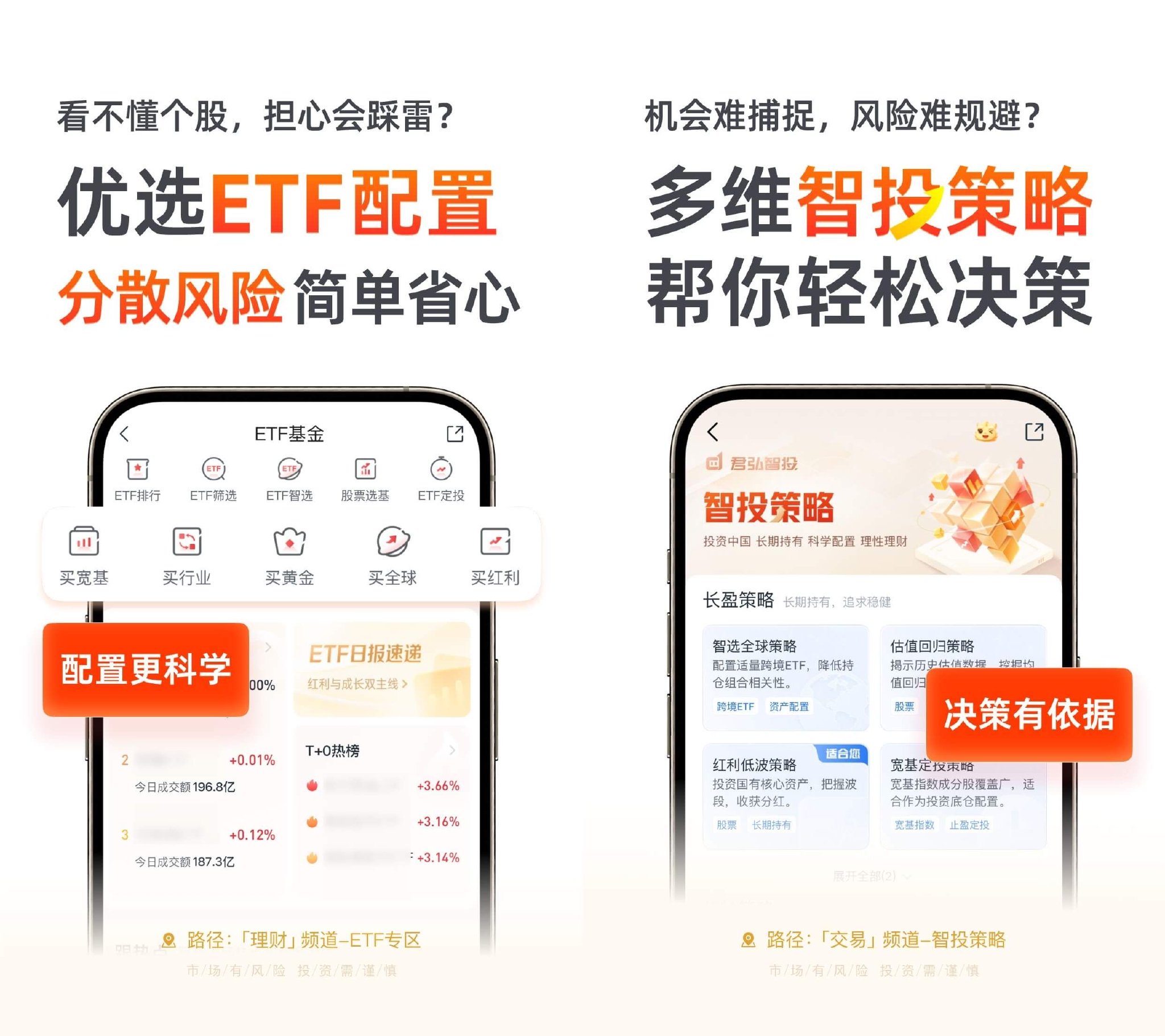
1. Report Industry Investment Rating There is no information provided in the report regarding the industry investment rating. 2. Core Views of the Report - **Palm Oil**: With limited fundamental drivers, it is expected to undergo a sideways adjustment [2][4]. - **Soybean Oil**: The report lacks highlights, and it is likely to trade within a range [2][4]. - **Soybean Meal**: After the overnight slight increase in US soybeans, the Dalian soybean meal may fluctuate [2][11]. - **Soybean**: The market is strong, and attention should be paid to changes in positions [2][11]. - **Corn**: It is expected to be slightly bullish and fluctuate upwards [2][14]. - **Sugar**: Attention should be paid to low - basis opportunities [2][18]. - **Cotton**: It is expected to maintain a sideways trend before the holiday [2][23]. - **Eggs**: It is expected to undergo a sideways adjustment [2][27]. - **Hogs**: The peak - season stocking is over, and the futures price has a premium over the small - standard warehouse receipts [2][35]. - **Peanuts**: It is expected to trade sideways [2][36]. 3. Summary by Related Catalogs Palm Oil - **Fundamental Data**: The closing price of the palm oil main contract on the day session was 8,906 yuan/ton, with a decline of 0.38%, and 8,868 yuan/ton at night, down 0.43%. The trading volume decreased by 91,226 lots, and the open interest decreased by 7,350 lots. The spot price in Guangdong was 8,950 yuan/ton, down 100 yuan/ton. The basis was 44 yuan/ton [4]. - **Macro and Industry News**: From February 1 - 10, 2026, Malaysia's palm oil yield decreased by 9.16% month - on - month, the oil extraction rate increased by 0.3%, and the production decreased by 7.58%. Indonesia's decision to suspend the expansion of biodiesel blending ratio and the expectation of increased production in the coming months may put pressure on palm oil prices, but strong demand and overall slowdown in production growth may limit the downside. The GAPKI expects palm oil prices to fluctuate between 4,100 - 4,400 ringgit per ton in the first half of 2026 and then decline to 4,000 - 4,300 ringgit in the second half [5][7][8]. - **Trend Intensity**: 0 [10] Soybean and Soybean Meal - **Fundamental Data**: The closing price of DCE soybean 2605 was 4,519 yuan/ton during the day session, up 60 yuan (+1.35%), and 4,563 yuan at night, up 62 yuan (+1.38%). The closing price of DCE soybean meal 2605 was 2,773 yuan/ton during the day session, up 40 yuan (+1.46%), and 2,768 yuan at night, up 10 yuan (+0.36%). The trading volume of soybean meal was 4.54 million tons per day, and the inventory was 88.16 million tons per week [11]. - **Macro and Industry News**: On February 11, CBOT soybean futures closed higher due to technical buying and expectations of Chinese demand. Brazil has started harvesting a record - high soybean crop, but the prospect of China buying more US soybeans has boosted the futures market. Heavy rain in Brazil's Mato Grosso state has raised concerns about soybean quality [11][13]. - **Trend Intensity**: The trend intensity of soybean meal is 0, and that of soybean is +1 [13] Corn - **Fundamental Data**: The closing price of C2603 was 2,298 yuan/ton during the day session, up 1.37%, and 2,303 yuan at night, up 0.22%. The trading volume increased by 54,540 lots, and the open interest decreased by 47,441 lots. The closing price of C2605 was 2,316 yuan/ton during the day session, up 1.58%, and remained unchanged at night. The trading volume increased by 402,301 lots, and the open interest increased by 199,841 lots [15]. - **Macro and Industry News**: The northern corn bulk shipping port price remained flat at 2,290 - 2,300 yuan/ton, and the container - shipped first - class grain port price remained flat at 2,310 - 2,330 yuan/ton. The price in Guangdong Shekou also remained flat. The price of deep - processed corn in the Northeast decreased in some areas, while the price in North China increased slightly [16]. - **Trend Intensity**: 0 [17] Sugar - **Fundamental Data**: The raw sugar price was 13.84 cents/pound, down 0.28 cents. The mainstream spot price was 5,330 yuan/ton, unchanged. The futures main contract price was 5,266 yuan/ton, down 12 yuan. The 15 - spread was 46 yuan/ton, up 31 yuan; the 59 - spread was - 9 yuan/ton, up 1 yuan; the mainstream spot basis was 64 yuan/ton, up 12 yuan [18]. - **Macro and Industry News**: As of January 31, the sugar production in the 25/26 season in India increased by 17% year - on - year. Brazil exported 2.02 million tons in January, a 2.1% year - on - year decrease. China imported 580,000 tons of sugar in December, an increase of 190,000 tons. As of the end of January, the cumulative sugar production in Guangxi in the 25/26 season was 4.03 million tons, a decrease of 790,000 tons [18]. - **Trend Intensity**: - 1 [21] Cotton - **Fundamental Data**: The closing price of CF2605 was 14,745 yuan/ton during the day session, up 0.61%, and 14,815 yuan at night, up 0.47%. The trading volume decreased by 134,609 lots, and the open interest decreased by 5,168 lots. The closing price of CY2605 was 20,590 yuan/ton during the day session, up 0.73%, and 20,650 yuan at night, up 0.29%. The trading volume decreased by 1,999 lots, and the open interest increased by 1,045 lots [23]. - **Macro and Industry News**: The spot trading of cotton was light, and the basis was generally stable. The cotton yarn market was in the final stage, and textile enterprises will concentrate on taking holidays in the second half of the week, resulting in a shrinking trading volume. ICE cotton futures continued to rebound slightly, and the near - month warehouse receipts continued to increase [24]. - **Trend Intensity**: 1 [25] Eggs - **Fundamental Data**: The closing price of egg 2603 was 2,923 yuan/500 kg, up 0.31%, with a trading volume decrease of 18,675 lots and an open - interest decrease of 17,042 lots. The closing price of egg 2604 was 3,156 yuan/500 kg, up 0.32%, with a trading volume increase of 3,339 lots and an open - interest increase of 411 lots [27]. - **Trend Intensity**: 0 [28] Hogs - **Fundamental Data**: The Henan spot price was 12,280 yuan/ton, up 200 yuan; the Sichuan spot price was 10,850 yuan/ton, unchanged; the Guangdong spot price was 11,660 yuan/ton, unchanged. The closing price of hog 2603 was 10,845 yuan/ton, up 100 yuan; the closing price of hog 2605 was 11,555 yuan/ton, up 85 yuan; the closing price of hog 2607 was 12,260 yuan/ton, up 100 yuan [32]. - **Market Information**: Guangxi Yangxiang registered 100 lots of warehouse receipts for the March contract; Dekang registered 525 lots; Fuyuan registered 22 lots; and Muyuan registered 80 lots [33]. - **Trend Intensity**: - 1 [34] Peanuts - **Fundamental Data**: The price of Liaoning 308 general peanuts was 9,100 yuan/ton, unchanged; the price of Henan Baisha general peanuts was 7,200 yuan/ton, unchanged; the price of Xingcheng Xiaoriben peanuts was 8,660 yuan/ton, unchanged; the price of Sudan refined peanuts was 8,650 yuan/ton, unchanged. The closing price of PK603 was 8,020 yuan/ton, down 0.32%; the closing price of PK605 was 7,970 yuan/ton, up 0.23% [36]. - **Spot Market Focus**: In Henan, Nanyang Baisha general peanuts were around 3.6 - 3.8 yuan/jin, and Kaifeng large peanuts were around 3.9 - 3.95 yuan/jin. In Jilin, 308 general peanuts were around 4.6 - 4.7 yuan/jin. In Liaoning, 308 general peanuts were around 4.5 - 4.6 yuan/jin. In Shandong, most areas had basically ended pre - holiday trading [37]. - **Trend Intensity**: 0 [38]
商品周期驱动与轮动的再审视
Guo Tai Jun An Qi Huo· 2026-02-11 11:07
1. Industry Investment Rating No information about the industry investment rating is provided in the report. 2. Core Views - The factors affecting commodity prices are complex, with the core factors being financial and commodity attributes. The financial attributes include macro - liquidity, risk preference, and the role of the US dollar as a pricing "anchor". The commodity attributes involve supply - demand fundamentals, including both normal and abnormal influencing factors [2][3][7]. - Commodity prices do not rise and fall synchronously but follow a certain rotation order. Based on financial attributes, the mean - reversion of commodity ratios drives price rotation. Based on commodity attributes, economic cycle rotation and inventory cycles lead to the rotation of "precious metals - industrial metals - energy - agricultural products" [11][15][19]. - The current commodity pricing is influenced by the re - construction of the monetary "anchor", the abnormal supply - demand factors in commodity attributes, such as technological revolutions, industrial transformation, supply - chain re - construction under geopolitical influence, and strategic reserves. These factors have a more significant impact on prices compared to traditional supply - demand drivers [3]. - In the past two years, some commodities have shown strong performance, mainly led by precious metals and non - ferrous metals. The current commodity rally is mainly based on macro - narrative logic changes rather than traditional demand - driven cycles. If the economic cycle recovers more clearly, the traditional demand and cycle rotation will contribute more to commodity price increases [4]. 3. Summary by Directory 3.1 Commodity Pricing Factors and Rotation Analysis Framework 3.1.1 Commodity Pricing Factors - Financial attributes: Conventional factors include macro - liquidity (e.g., monetary policy, interest rates, inflation expectations) and risk preference. At a higher level, the US dollar serves as the pricing "anchor" for commodities, and its "de - anchoring" can lead to significant price re - evaluation [2][7]. - Commodity attributes: Core drivers are based on supply and demand. Normal factors include supply - demand gaps, production costs, and inventory levels. Abnormal factors on the demand side include technological revolutions, industrial transformation, and national strategic reserves; on the supply side, they include policy regulation, wars, pandemics, export controls, and weather [3][8]. 3.1.2 Commodity Rotation Framework - Based on financial attributes, the mean - reversion of commodity ratios (price - ratio effect) promotes price diffusion and rotation. For example, when the price ratio of copper to gold or oil exceeds the historical average, it may trigger a mean - reversion [15]. - Based on commodity attributes, economic cycle rotation and inventory cycles lead to the rotation of "precious metals - industrial metals - energy - agricultural products". In the recession period, precious metals are favored for their hedging value; in the recovery period, industrial metals take the lead; in the over - heating period, energy performs strongly; and in the stagflation period, agricultural products make up for the late - stage increase [15][19]. 3.2 Two Rounds of Typical Commodity Cycle Trends Review - The first round was in the 1970s, during the depression of the fourth Kondratieff cycle. The breakdown of the Bretton Woods system and two oil crises led to a tripling of the CRB index. Gold led the rally, followed by oil, and then agricultural products [28][34]. - The second round was in the early 21st century, driven by China's rise. The CRB index also tripled. LME copper led the early stage, oil had a more significant increase in the later stage, and agricultural products had a late - stage rally [28][37]. - After the 2008 subprime mortgage crisis, commodities followed the economic cycle rotation. Precious metals led in early 2009, industrial metals rebounded in the second and third quarters of 2009, oil prices climbed as the economy recovered, and after 2011, oil and agricultural products remained stable while precious metals and non - ferrous metals declined [40]. 3.3 Current Fundamental Situation and Rotation Status - In recent years, the prices of precious metals and non - ferrous metals have risen significantly, leading to expectations of a new commodity super - cycle. In 2025, precious metals and non - ferrous metals led the rally, energy was at the bottom, and agricultural products had not yet started [42]. - The drivers include the decline of the US dollar's reserve status, the double - loose monetary and fiscal policies in the Kondratieff depression, the demand for upstream resources driven by the AI technological revolution, the deepening of geopolitical contradictions leading to increased strategic reserves, and the return of manufacturing. However, due to the uncertain economic recovery, the typical commodity diffusion and rotation based on the cycle have not yet occurred. If the traditional economic cycle rotation becomes more obvious, the commodity rally will spread to black metals, energy, and agricultural products [46][54].
“五福临门”迎新春,国泰海通资产配置服务启财富新程
Zhong Guo Jin Rong Xin Xi Wang· 2026-02-11 10:07
Group 1 - The core idea of the news is that Guotai Junan is launching the "2026 Five Blessings" campaign to enhance asset allocation services, aiming to meet the growing demand for wealth management among clients [1][2] - The campaign integrates professional asset allocation services with a festive theme, utilizing digital platforms to create engaging experiences for clients, thereby enhancing their understanding of wealth management [1][2] - Guotai Junan emphasizes the importance of asset allocation in a low-interest-rate environment, aiming to provide systematic investment research and differentiated solutions to improve long-term returns for clients [3][4] Group 2 - The company has developed a diverse product matrix covering multiple asset classes, including private equity and public funds, to cater to various risk preferences and investment needs [4] - The Junhong APP serves as a comprehensive wealth management platform, offering a full-service experience from pre-investment to post-investment, enhanced by AI capabilities [5][9] - Future plans include continuing to focus on client-centric services to meet the wealth management needs of a broader customer base, reinforcing the company's commitment to professional wealth management [12]

国泰海通:AI视频迎来创作平权与产业奇点 看好应用加速落地长期发展空间
智通财经网· 2026-02-11 08:04
国泰海通发布研报称,近期,字节旗下的即梦团队发布Seedance2.0全新视频生成大模型,真正实现了 从"能生成"到"能商用"的跨越式突破,该模型首次实现了文字理解与字幕动效生成,可自动解析参考图 中的文字并添加合理动态效果。此进展标志着AI正从"单模态理解"向"全双工连续感知"与"跨模态深度 创作"跃迁。Seedance2.0的自主创作能力不仅重塑了内容生产与交互模式,更催生了涵盖视频生成、实 时交互、设计工具、端侧智能等环节的全新产业链投资机会。该行看好AI应用加速落地的长期发展空 间。 国泰海通主要观点如下: 根据极客公园测算,Seedance2.0生成15秒视频的可用率或达到90%,相较此前行业内平均值大概20%, 提升幅度较大。当生成的视频可用率提升后,可降低实际成本,以做90分钟的视频项目为例,成本有望 从1万多降低到2000元左右,将提升行业的使用量,其巨大的成本压缩,或可改变整个行业的底层逻 辑。 Seedance2.0标志着AI视频生成从"技术可行"向"商业可用"的关键跨越 过去一年,视频生成领域已完成从512像素静态图像到10秒电影级短片的代际跃升。此次升级的多镜头 叙事与角色一致性保障能 ...
国泰海通:1月造纸行业提价逐步落地 盈利进入改善通道
Zhi Tong Cai Jing· 2026-02-11 06:54
白纸板:提价函推动价格上涨,经销商补库意向弱 截至1月28日,250-400g平张白卡纸市场成交含税月均价4268元/吨,环比+0.73%,同比-0.74%。影响价 格变动主要原因系:1)成本压力缓解有限,规模纸厂继续发函促涨;2)贸易商售价与成本出现倒挂,暂以 走货降库为主,价格拉涨谨慎;3)终端订单放量有限,贸易商出货欠佳。 箱瓦纸:纸厂涨价计划未落地,盈利承压 截至1月28日,中国AA级瓦楞纸120g市场月均价2751元/吨,环比-11.60%,同比5.82%。影响价格变动 主要原因系:1)月初规模纸厂涨价函未能落实,转为保价政策并多次下调出厂价格,中小纸厂库存高 位,选择主动让利出货;2)主要原料废纸延续跌势,纸厂为规避高价原料风险,连续下调原料收购价 格,成本支撑不足;3)终端春节订单陆续放量,下游包装厂订单量增加,对瓦楞纸消耗量增加。 废纸:国废消费量下降,价格整体下跌 国泰海通发布研报称,1月进口木浆现货市场中多空因素并存、结构性差异明显导致价格走势分化。其 中阔叶浆价格上涨,白卡纸继续发布提价函,文化纸价格企稳,盈利略有承压,预计木浆市场供应先降 后增,需求跟进不足,白纸价格逐步传导,黑纸价格 ...
“五福临门”迎新春 国泰海通推出资产配置服务启财富新程
Sou Hu Cai Jing· 2026-02-11 06:43
Core Viewpoint - Guotai Junan is committed to digital wealth management transformation, focusing on customer-centric services and long-term value creation to enhance asset allocation for clients [1][2]. Group 1: Asset Allocation Services - The importance of asset allocation has increased in a low-interest-rate environment, prompting Guotai Junan to develop a systematic buy-side research and service framework covering 22 countries and regions, focusing on equities, fixed income, and alternative investments [6][7]. - The company has introduced the "Junying 50" asset allocation model for qualified investors, utilizing a tool-based small collective FOF product matrix to enhance advisory service efficiency and client experience [6][7]. Group 2: Product Offerings - Guotai Junan has created a diverse product matrix, including "Star 50" for selected private equity and "Star 100" for public funds, catering to various risk preferences and investment needs [7]. - The "Junying V50" product leverages top-tier research capabilities to offer high-end private wealth management solutions, while "Junying 100 E-start" focuses on ETF strategies, providing a comprehensive wealth management solution [7]. Group 3: Client Engagement and Education - The "2026 Five Blessings" event integrates asset allocation services with a festive theme, offering interactive financial education through games and activities to enhance clients' understanding of investment concepts [8][12]. - The event includes features like the "MBTI investment personality" assessment and various engaging activities to foster a deeper connection with clients and promote financial literacy [12]. Group 4: Digital Platform Enhancements - The Junhong App serves as a comprehensive wealth management platform, providing end-to-end online services for asset allocation, including diagnosis, planning, and tracking [13]. - The app has been upgraded to include an ETF section and a hot search list, offering a variety of investment products and services tailored to clients' risk-return preferences [13]. Group 5: Future Commitment - Guotai Junan aims to continue prioritizing customer needs in wealth management, expanding its professional capabilities to serve a broader client base and fulfill its mission as a leading wealth management institution [21].

国泰海通:阿里巴巴-W押注模型、生态与AI基础设施 争夺下一代平台主导权
Zhi Tong Cai Jing· 2026-02-11 03:05
国泰海通发布研报称,阿里巴巴-W(09988)AI战略的核心不再是单一模型规模或跑分,而是把"通义千 问"与阿里数字经济体高频场景(电商、本地生活、支付、出行、办公等)系统性打通,形成"能办事、办 成事"的闭环体验,并把AI从流程"外挂"升级为用户接入服务的首要界面(AI即入口)。阿里巴巴AI顶层 战略由比模型转向拼体系,依托千问入口化与云钉百炼平台协同,并加大云与AI基础设施资本开支, 打造闭环能力以争夺下一代平台主导权。 AI2C负责用户规模与超级应用,AI2B面向企业商业化 千问App"入口化宣言"落地,以"办事能力+生态级连接"建立差异化。2026年1月进一步重大升级,全面 接入淘宝、支付宝、淘宝闪购、飞猪、高德等生态业务,标志着阿里将C端"入口之战"从构想推向实 战。钉钉被定位为"企业级AI智能体平台",承载把模型能力嵌入企业工作流与业务系统;供给侧"云钉一 体"与百炼共同指向Agent规模化,商业模式从卖功能订阅走向"卖效果、卖产出"。 明确将资金大规模投向云与AI基础设施 风险提示:AI技术发展不及预期,AI商业落地不及预期,市场竞争加剧的风险。 国泰海通主要观点如下: 阿里的顶层战略正在发生变 ...
