
GZP(601228)

Search documents
航运港口板块1月12日涨1.65%,招商轮船领涨,主力资金净流出2.31亿元
Zheng Xing Xing Ye Ri Bao· 2026-01-12 09:04
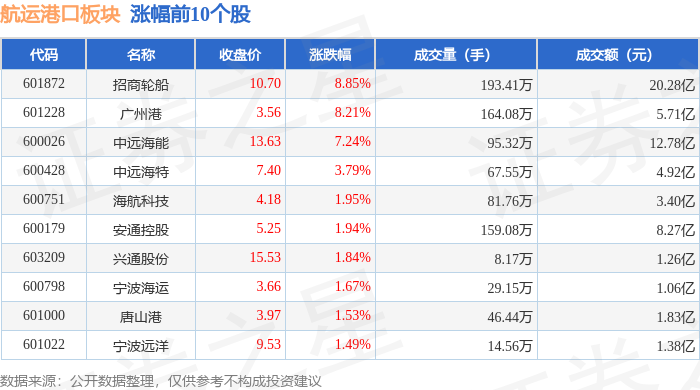
Core Viewpoint - The shipping and port sector experienced a rise of 1.65% on January 12, with China Merchants Energy leading the gains, reflecting positive market sentiment in the industry [1]. Group 1: Market Performance - The Shanghai Composite Index closed at 4165.29, up by 1.09% [1]. - The Shenzhen Component Index closed at 14366.91, up by 1.75% [1]. - Key stocks in the shipping and port sector showed significant increases, with China Merchants Energy rising by 8.85% to a closing price of 10.70 [1]. Group 2: Stock Performance - China Merchants Energy (601872) closed at 10.70, with a trading volume of 1.9341 million shares and a transaction value of 2.028 billion [1]. - Guangzhou Port (601228) closed at 3.56, up by 8.21%, with a trading volume of 1.6408 million shares [1]. - COSCO Shipping Energy (600026) closed at 13.63, up by 7.24%, with a trading volume of 953,200 shares [1]. Group 3: Capital Flow - The shipping and port sector saw a net outflow of 231 million in main funds, while retail investors contributed a net inflow of 214 million [2]. - The sector's stocks experienced varied capital flows, with China Merchants Energy seeing a net inflow of 924.23 million from retail investors despite a net outflow from main funds [3].




中国港口逆风破浪 吞吐量迭破纪录,重构全球航运棋局
2 1 Shi Ji Jing Ji Bao Dao· 2026-01-09 23:07
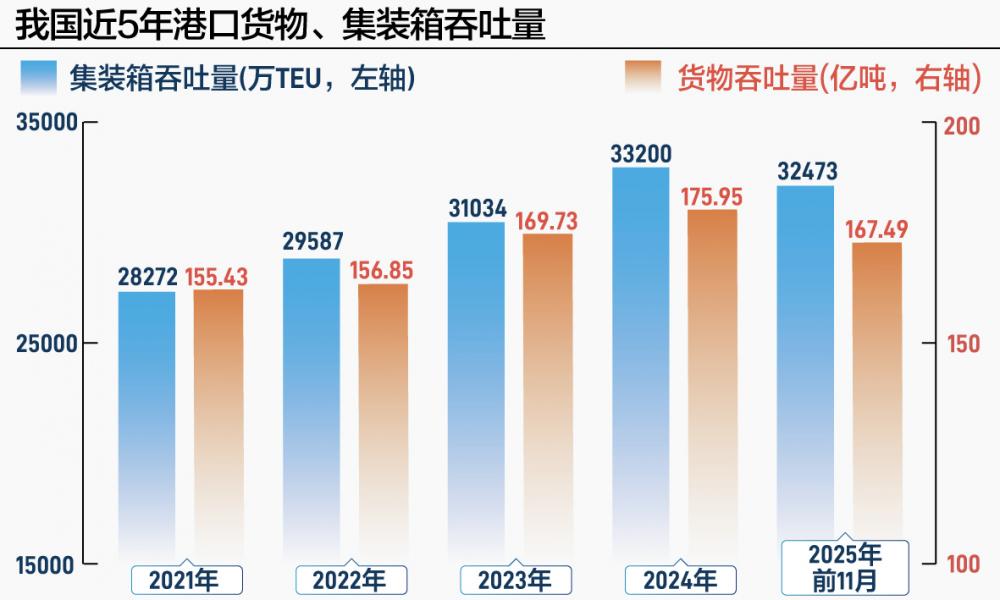
Core Insights - China's ports have demonstrated resilience and growth in cargo throughput despite global trade uncertainties, with major ports like Shanghai and Ningbo-Zhoushan maintaining their positions at the forefront of global shipping [1][3][4] Group 1: Performance Metrics - In the first eleven months of 2025, China's ports achieved a cargo throughput of 16.75 billion tons, marking a year-on-year increase of 4.4% [3] - Shanghai Port's container throughput reached 55.06 million TEUs, maintaining its status as the world's busiest port for the sixteenth consecutive year [8] - Ningbo-Zhoushan Port became the first global port to exceed 1.4 billion tons in annual cargo throughput [3][8] Group 2: Structural Changes and Trends - China's ports are transitioning from scale advantages to becoming supply chain hubs, enhancing their roles in logistics and distribution [2][4] - The growth in throughput is attributed to improved competitiveness in the global shipping system and the implementation of policies supporting smart and green shipping [3][4] Group 3: Market Expansion and Trade Dynamics - China's share of global container exports increased from 34% in 2019 to 38% in 2025, reflecting the resilience of Chinese manufacturing and technology [9] - New trade routes are being established, with ports like Beibu Gulf opening international routes to the Middle East and others expanding to emerging markets in Latin America and Africa [9][10] Group 4: Future Outlook and Innovations - The development of smart and green shipping policies is expected to accelerate the digitalization and automation of ports, enhancing their roles as intelligent hubs [16] - The establishment of new supply chain structures and trade routes will require ports to adapt and optimize their operations in response to geopolitical changes [12][15]



全国集装箱吞吐量前15港口出炉
2 1 Shi Ji Jing Ji Bao Dao· 2026-01-09 15:17
Core Insights - Despite global trade uncertainties, China's port throughput has shown resilient growth, with a total of 16.75 billion tons handled in the first eleven months of 2025, marking a 4.4% year-on-year increase [1][2] - Major ports like Shanghai and Ningbo-Zhoushan have maintained their positions as global leaders, with Ningbo-Zhoushan becoming the first port to exceed 1.4 billion tons in annual throughput and Shanghai retaining the top spot in container throughput for the sixteenth consecutive year [1][5] - The growth in port throughput is attributed to China's increasing competitiveness in the global shipping system and the implementation of policies related to free trade zones and smart and green shipping [2][3] Port Performance - In 2025, major ports in China have reported significant increases in container throughput, with Ningbo-Zhoushan at 39.99 million TEUs (10.6% increase), Shenzhen at 32.41 million TEUs (6.6% increase), and Qingdao at 30.37 million TEUs (7.0% increase) [2] - Emerging ports like Yangpu and Beibu Gulf have also shown remarkable growth, with Yangpu's container throughput increasing by 65% year-on-year [1][5] Economic Context - The stable growth in port cargo and container volumes indicates the resilience of China's economy and international trade, even amidst external instability [3][6] - China's share of global container exports has risen from 34% in 2019 to 38% in 2025, reflecting the competitiveness of Chinese manufacturing and technology [5][6] Trade Route Developments - Chinese ports are expanding into emerging markets, with new international shipping routes being established to regions like the Middle East, Latin America, and Africa [6][7] - The trade volume with ASEAN countries grew by 8.5%, and trade with the EU increased by 5.4% in the first eleven months of 2025 [6] Future Trends - The implementation of smart and green shipping policies is expected to enhance the port industry, with a focus on digitalization and automation [13] - The establishment of new shipping routes, such as the "Sea Defense Silk Road Fast Shipping" line, indicates a shift towards more efficient logistics and trade networks [7][12]

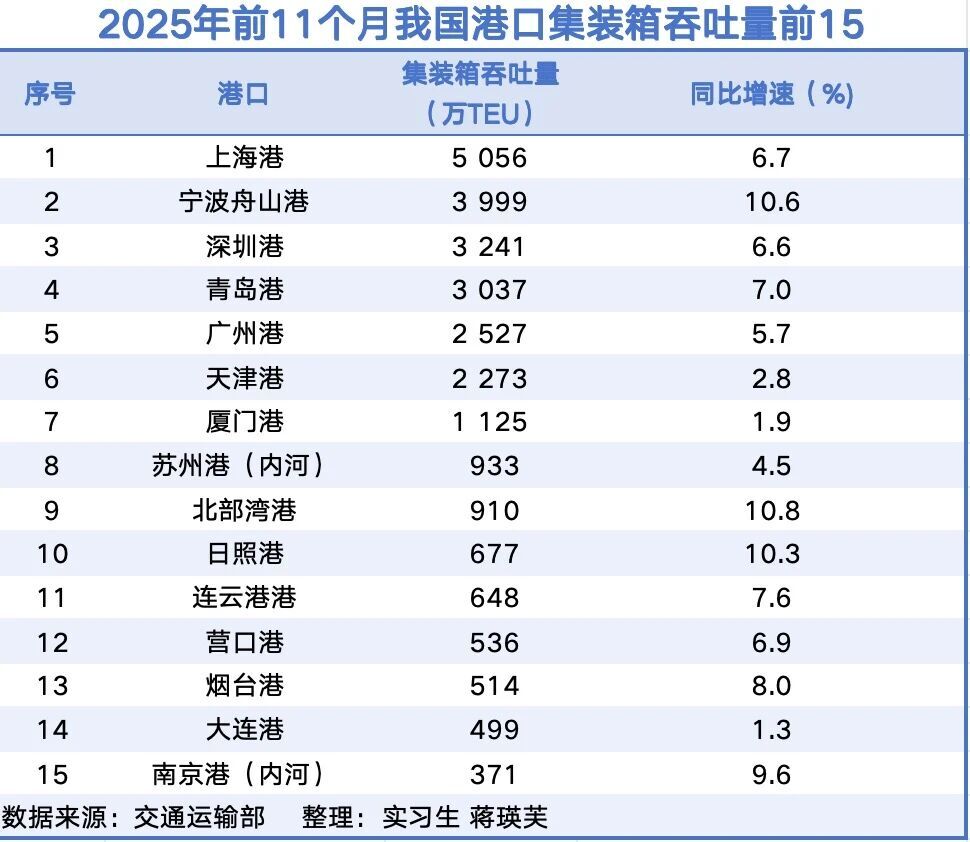
锦江航运又一东南亚精品航线首航!
Xin Lang Cai Jing· 2026-01-07 10:52
Core Viewpoint - The launch of the "Thailand Silk Road Express" by Jinjiang Shipping represents a strategic initiative to enhance regional shipping services and establish the company as a leading regional shipping enterprise focused on container transportation [1][5][6]. Group 1: Launch Event - The inaugural ceremony for the "Thailand Silk Road Express" took place on January 5, 2026, at Shanghai Port, attended by key figures from various organizations, including the Shanghai International Port Group and the Thai Consulate [1][5]. - The event marked the collaboration between Jinjiang Shipping and multiple domestic and international terminal units, emphasizing the company's commitment to developing high-quality shipping routes in Southeast Asia [1][5]. Group 2: Strategic Goals - Jinjiang Shipping aims to deepen its presence in the regional shipping market and is focused on becoming a "regionally excellent shipping enterprise" centered on container transportation [1][5]. - The company has successfully established multiple Southeast Asian boutique shipping routes, receiving positive market feedback for its fast shipping model [3][6]. Group 3: Collaborative Efforts - The launch also included the initiation of the "Thailand Silk Road Express" international fast line and a service commitment for international transit from Thailand to Shanghai and onward to the West Coast of the United States [5][6]. - This initiative signifies a deeper collaboration among regional port and shipping enterprises, leveraging resource advantages to promote high-quality development in regional shipping [7].

广州港1月6日获融资买入2336.12万元,融资余额3.42亿元
Xin Lang Cai Jing· 2026-01-07 01:31
Group 1 - The core viewpoint of the news highlights the financial performance and trading activities of Guangzhou Port, indicating a mixed outlook with a slight decline in net profit despite revenue growth [1][2]. - As of January 6, Guangzhou Port's stock price increased by 1.23%, with a trading volume of 111 million yuan. The net financing buy was negative at -56,800 yuan, indicating more repayments than new purchases [1]. - The financing balance for Guangzhou Port reached 344 million yuan, accounting for 1.38% of its market capitalization, which is above the 90th percentile of the past year, suggesting a high level of leverage [1]. Group 2 - As of December 19, the number of shareholders for Guangzhou Port was 61,400, a slight decrease of 0.10%, while the average circulating shares per person increased by 0.10% to 122,919 shares [2]. - For the period from January to September 2025, Guangzhou Port reported a revenue of 11.163 billion yuan, reflecting a year-on-year growth of 12.07%, while the net profit attributable to shareholders decreased by 8.63% to 748 million yuan [2]. - Since its A-share listing, Guangzhou Port has distributed a total of 2.4 billion yuan in dividends, with 943 million yuan distributed over the past three years [3].
去年广州港货物吞吐量超6.96亿吨 集装箱吞吐量稳居全球前六
Guang Zhou Ri Bao· 2026-01-06 08:20
Core Insights - Guangzhou Port is projected to handle over 696 million tons of cargo and exceed 28 million TEUs in container throughput by 2025, maintaining its position among the top six ports globally [1] - The port has successfully transformed from being the largest domestic trade port to a dual circulation hub, with foreign trade cargo throughput growth of 10.73% and container throughput growth of nearly 20% [1] Group 1: Port Performance and Growth - In 2025, Guangzhou Port's foreign trade container throughput growth is among the highest in coastal ports in China, with over 50% of its container throughput being foreign trade [1] - The port has established a comprehensive shipping network, adding 10 new foreign trade routes and opening a direct route from Nansha to South America, totaling 182 foreign trade routes [2] - The port's sea-rail intermodal volume surpassed 700,000 TEUs in 2025, reflecting a year-on-year growth of 15.7% [3] Group 2: Infrastructure and Technological Advancements - Guangzhou Port has developed a seamless multi-modal transport system, connecting with rail, road, and inland waterways, and has maintained its status as the largest domestic trade container port for 17 consecutive years [3] - The Nansha Port Area has established the world's first fully automated multi-modal terminal, increasing container handling efficiency by 30% and reducing labor costs [3] - The port has implemented a 24-hour pilot service with zero waiting time, reducing the average stay time for container ships to 0.87 days [4] Group 3: Economic Impact and Strategic Partnerships - In 2025, Guangzhou signed a memorandum to deepen strategic cooperation with Maersk Group, establishing partnerships with all of the world's top ten shipping companies [2] - The Guangzhou Nansha Economic Development Conference in June 2025 resulted in the signing of 21 projects with a total investment of nearly 7 billion yuan, expected to generate additional revenue of nearly 10 billion yuan [4] - The port's automotive throughput reached 1.5032 million vehicles in 2025, with a year-on-year growth of 37.6%, highlighting its role in the automotive logistics sector [4] Group 4: Regional and Global Positioning - Guangzhou has risen to 12th place globally in the Xinhua-Baltic International Shipping Center Development Index, ranking 4th in China, showcasing its growing global influence [5] - The Guangdong-Hong Kong-Macao Greater Bay Area ports collectively account for about one-quarter of the national container handling capacity, with Guangzhou Port being the largest comprehensive hub in South China [6] - The port cluster in the Greater Bay Area is not only a cornerstone of China's foreign trade but also a critical component of the global supply chain [6]
研报掘金丨太平洋:维持锦江航运“增持”评级,看好公司“一主两翼”的发展战略
Ge Long Hui· 2026-01-06 05:27
Core Viewpoint - Pacific Securities report indicates that Jinjiang Shipping achieved a total operating revenue of 5.176 billion in the first three quarters of this year, representing a year-on-year increase of 21.37% [1] - The company's net profit attributable to shareholders reached 1.185 billion, reflecting a year-on-year growth of 64.76% [1] - The net cash flow from operating activities amounted to 1.725 billion [1] Financial Performance - Total operating revenue for the first three quarters: 5.176 billion, up 21.37% year-on-year [1] - Net profit attributable to shareholders: 1.185 billion, up 64.76% year-on-year [1] - Net cash flow from operating activities: 1.725 billion [1] Dividend Distribution - The company has distributed approximately 259 million in dividends for the mid-year of 2025 [1] Fleet Expansion and Strategy - The company has signed contracts for the construction of 2+2 units of 1100TEU container ships and initiated a project for 4+4 units of 1800TEU new ships, with 2 units of 1100TEU and 4 units of 1800TEU being fundraising projects [1] - The company is advancing its capacity renewal plan and optimizing its capacity structure to strengthen its operational foundation [1] - The recently disclosed shipbuilding contracts are seen as a firm execution of the "Quality Improvement and Efficiency Enhancement Action Plan" [1] Development Strategy - The company is viewed positively for its "one main and two wings" development strategy, and the rating of "buy" is maintained [1]
世界级港口群,打法变了
2 1 Shi Ji Jing Ji Bao Dao· 2026-01-06 03:53
新年刚上班,两份港口的"成绩单"就摆在了眼前: 连续17年雄踞中国内贸第一港的广州港,外贸集装箱占比首次突破50%;深圳港集装箱吞吐量突破3500 万标箱,创下历史新高。 看似是两件事,说的却是同一个趋势:在全球贸易的版图上,粤港澳大湾区的港口群,正在改变打法。 广东"十五五"规划建议多次提及港口群,明确提出打造世界一流港口群,强化大机场、大港口的整体统 筹、功能集成。 2025年,以香港为国际航运中心,广州港、深圳港为枢纽,东莞港、佛山港等为喂给港的粤港澳大湾区 港口群,集装箱处理能力约占到全国总量的四分之一。大湾区这片中国最繁忙的港口群,用实实在在的 行动,划出了三条通向"世界最强"的清晰轨迹。 第一,越是风高浪急,越要把大门敞开。当"逆全球化"的声音不时传来,这里的港口,正把航线铺向更 远的地方。 广州港一年新增10条外贸航线,首次把航线直接拉到了南美西海岸;深圳港的"国际朋友圈"扩大到29个 友好港。它们没有收缩,反而把网络织得更密。广州港目前已与全球100多个国家和地区的400多个港口 建立了紧密的航运联系,深圳港国际集装箱班轮航线累计达279条,覆盖全球6大洲12大航区。 这张不断延伸的航线网络, ...
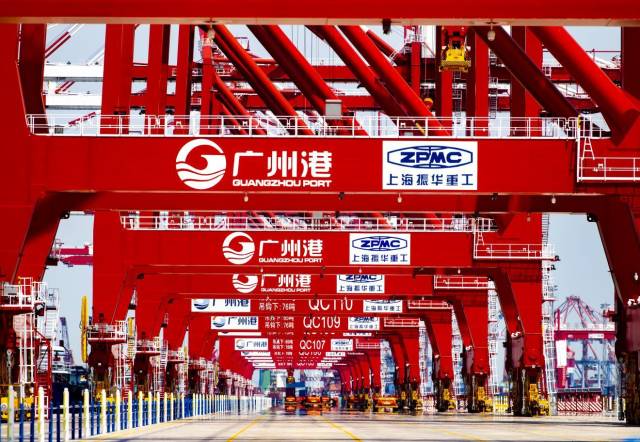
2025年广州港强势破局:6.96 亿吨吞吐量+外贸占比超50%
Zhong Guo Jin Rong Xin Xi Wang· 2026-01-06 02:57
Core Insights - Guangzhou Port is projected to handle over 696 million tons of cargo and exceed 28 million TEUs in container throughput by 2025, maintaining its position among the top six global ports. The foreign trade cargo throughput is expected to grow by 10.73%, with foreign trade container throughput increasing by nearly 20%, leading the growth among coastal ports in China [1][2]. Global Network Expansion - Since 2025, Guangzhou Port has expanded its global shipping network, adding 10 new foreign trade routes, including a direct route from Nansha to South America. The port now operates 182 foreign trade liner routes, with 152 routes under the Belt and Road Initiative and 98 routes to RCEP countries, establishing connections with over 400 ports in more than 100 countries and regions [2][4]. Multimodal Transport System - Guangzhou Port has developed an efficient multimodal transport system, achieving seamless connections with rail, road, and inland waterway transport. The sea-rail intermodal volume surpassed 700,000 TEUs in 2025, marking a 15.7% year-on-year increase. The port operates 39 sea-rail intermodal trains, connecting 38 inland ports across 11 provinces [5]. Business Environment Optimization - The port has implemented a 24-hour pilot service with zero waiting time, reducing the average stay of container vessels to 0.87 days. Innovations such as "onboard certificate processing" have streamlined administrative services. In 2025, Guangzhou hosted a high-quality development conference, signing 21 projects with a total investment of nearly 7 billion yuan [7]. Infrastructure Upgrades - The Nansha Port Area has established the world's first fully automated multimodal terminal, increasing container handling efficiency by 30%. The port has also achieved 100% shore power coverage, with over 17 million kilowatt-hours of shore power supplied to vessels, resulting in a carbon reduction of 11,730 tons [8][9]. International Ranking Improvement - In 2025, Guangzhou surpassed Tokyo to rank 12th globally in the Xinhua-Baltic International Shipping Center Development Index, solidifying its position as the fourth in China. The Pearl River cruise brand also ranked first globally in the International Urban Cruise Vitality Index Report, with over 4 million visitors in 2025 [10][12]. Strategic Port Cluster Development - The Guangdong-Hong Kong-Macao Greater Bay Area port cluster, with Guangzhou, Shenzhen, and Hong Kong as key hubs, accounts for about one-quarter of the national container handling capacity. This strategic collaboration aims to transition from being the "largest" to the "strongest" in global supply chains, enhancing China's foreign trade capabilities [13].
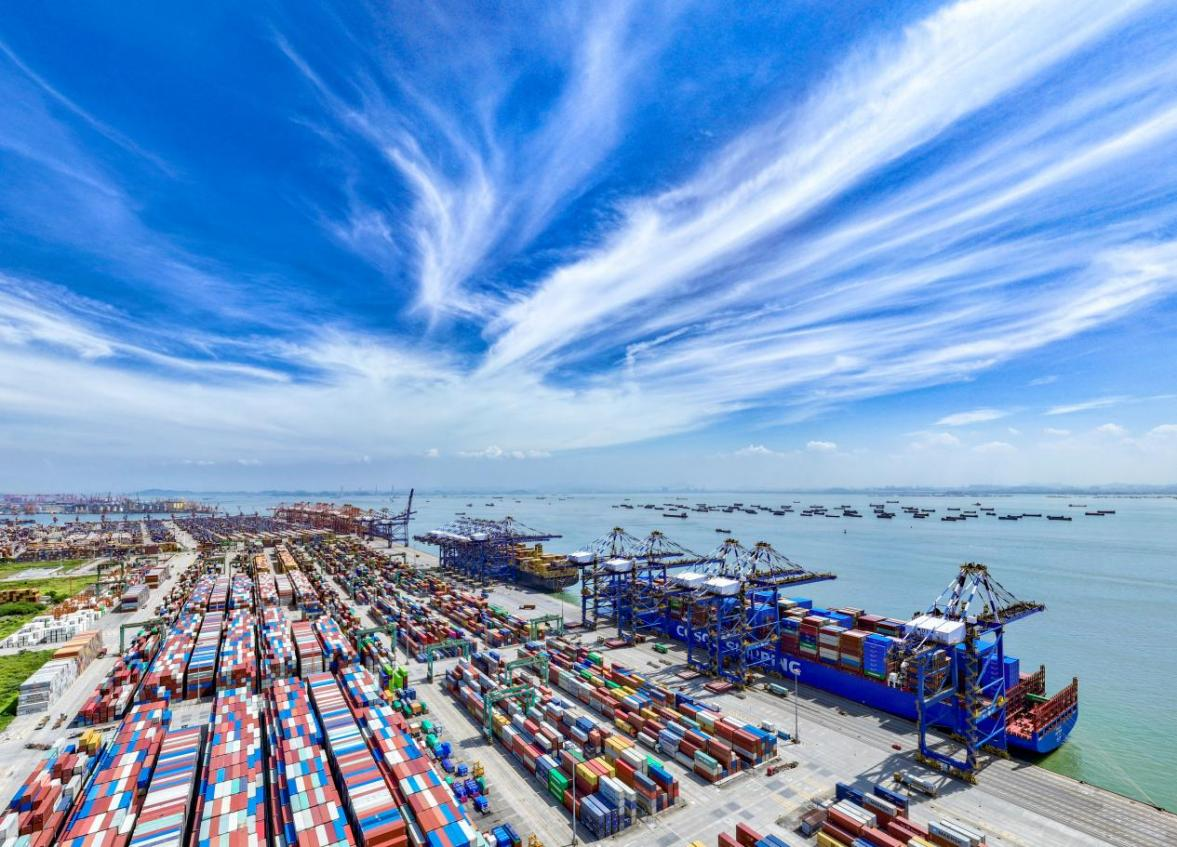
广州港股份有限公司2025年12月份及1-12月 主要生产数据提示性公告
Zhong Guo Zheng Quan Bao - Zhong Zheng Wang· 2026-01-05 16:54
Core Viewpoint - Guangzhou Port Co., Ltd. has reported significant growth in container and cargo throughput for December 2025 and the entire year, indicating a positive trend in operational performance [1]. Group 1: December 2025 Performance - The company expects to achieve a container throughput of 2.326 million TEUs in December 2025, representing an 11.6% year-on-year increase [1]. - The projected cargo throughput for December 2025 is 50.869 million tons, reflecting a 6.2% year-on-year growth [1]. Group 2: Full Year 2025 Performance - For the full year 2025, the company anticipates a total container throughput of 27.131 million TEUs, which is a 7.7% increase compared to the previous year [1]. - The expected total cargo throughput for 2025 is 582.974 million tons, showing a 2.6% year-on-year growth [1].