PING AN OF CHINA(601318)

Search documents
中国平安涨2.00%,成交额20.29亿元,主力资金净流入7814.67万元
Xin Lang Zheng Quan· 2025-11-25 05:55
Core Viewpoint - China Ping An's stock price has shown a year-to-date increase of 18.91%, with recent fluctuations indicating a slight decline over the past five days and a modest increase over the past 20 days [1] Financial Performance - As of September 30, 2025, China Ping An reported a net profit attributable to shareholders of 132.86 billion yuan, reflecting a year-on-year growth of 11.47% [2] - The company has cumulatively distributed dividends amounting to 391.90 billion yuan since its A-share listing, with 134.54 billion yuan distributed over the past three years [3] Stock Market Activity - On November 25, 2023, China Ping An's stock price reached 59.57 yuan per share, with a trading volume of 2.03 billion yuan and a turnover rate of 0.32% [1] - The net inflow of main funds was 78.15 million yuan, with significant buying and selling activity from large orders [1] Shareholder Information - As of September 30, 2025, the number of shareholders for China Ping An was 696,200, a decrease of 3.43% from the previous period [2] - The average number of circulating shares per shareholder remained unchanged at 15,401 shares [2]

多重因素支持中国权益资产表现,A500ETF嘉实(159351)均衡覆盖各行业龙头
Xin Lang Cai Jing· 2025-11-25 02:43
Core Viewpoint - The Chinese equity market is expected to perform well due to multiple supporting factors, with a tactical overweight view on A/H shares maintained by Guotai Junan Securities [1] Group 1: Market Performance - On November 25, 2025, the three major A-share indices opened higher, with the CSI A500 index rising by 1.10% [1] - Key stocks such as Huadian Co., Ltd. and Shenzhen South Circuit rose significantly, with Huadian hitting the daily limit and others like Shenghong Technology and Fuhua also seeing substantial gains [1] Group 2: Investment Outlook - Guotai Junan Securities highlights that the recent volatility and panic selling have released micro trading risks, creating a favorable environment for the market to establish new expectations as the 14th Five-Year Plan begins [1] - The firm believes that the regulatory authorities are determined to stabilize the capital market, and factors that previously caused valuation discounts have dissipated, indicating a potential upward trend in valuations [1] Group 3: Index Composition - As of October 31, 2025, the top ten weighted stocks in the CSI A500 index include major companies like CATL, Kweichow Moutai, and China Ping An, accounting for a total of 19.36% of the index [1] Group 4: Investment Products - Investors without stock accounts can access the A500 ETF through the A500 ETF Jiashi linked fund, allowing for a one-click investment in the top 500 A-share companies [2]




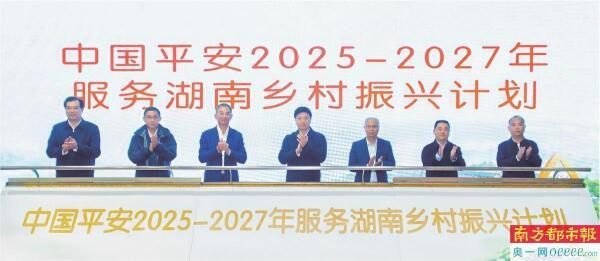
为湖南地区提供10亿元涉农贷款
Nan Fang Du Shi Bao· 2025-11-24 23:11
Core Viewpoint - China Ping An officially launched the "China Ping An 2025-2027 Hunan Rural Revitalization Plan," committing to support rural revitalization in Hunan through various initiatives, including financial assistance and industry support, with a total investment of 10 billion yuan in agricultural loans and 70 million yuan in industry support over the next three years [1][6]. Group 1: Financial Support and Investment - Over the next three years, China Ping An will provide 10 billion yuan in agricultural loans and 70 million yuan in industry support, along with 16 million yuan for agricultural insurance risk reduction services [6]. - In the past five years, China Ping An has invested over 140 billion yuan to support the county economy in Hunan, with a total of approximately 1.5 billion yuan in consumption assistance, including 1.3 billion yuan for agricultural products from the Eighteen-Dong Village [1][4]. - Ping An Bank has provided approximately 120 billion yuan in credit funds to Hunan Province, with 45.6 billion yuan in inclusive credit [4]. Group 2: Community and Social Support - China Ping An has established 132 party-building co-construction points across 14 cities, 84 counties, 120 townships, and 128 assisted villages in Hunan, donating 4.76 million yuan for party-building support [4]. - The company has invested nearly 4 million yuan in local livelihood assistance, recruited over 700 volunteers for teaching, and upgraded 50 rural health clinics [5]. - Ping An Property & Casualty has donated 800,000 yuan to support the care of left-behind elderly individuals in rural areas [2][5]. Group 3: Agricultural and Industrial Development - The "Ping An Revitalization Insurance" product has been launched, with 26 local specialty agricultural industries receiving 22.461 billion yuan in risk protection from 2022 to 2025 [5]. - The company aims to support the construction of agricultural product brands in Hunan, with a focus on local specialties such as mountain tea oil, committing to purchase 20 million yuan worth of these products [6]. - China Ping An plans to establish 100 grassroots party-building co-construction points in Hunan and conduct 40 financial promotion activities [6][7].

上市六年即离场,金融壹账通退市落定,股价低迷与业绩承压是“导火索”
第一财经· 2025-11-24 15:41
Core Viewpoint - Financial One Account, a fintech company under Ping An, is officially delisting after receiving approval for its privatization plan from the Grand Court of the Cayman Islands, marking a swift exit from the public markets within just six years of its listing [3][4][6]. Group 1: Privatization Details - Financial One Account has withdrawn its listing status from the Hong Kong Stock Exchange and its American Depositary Shares (ADS) on the New York Stock Exchange have been permanently suspended, with the delisting process expected to complete by December 1 [3][4]. - The privatization offer was made by its controlling shareholder, Platinum Yu Limited, which is a subsidiary of Ping An, proposing to acquire all issued shares at HKD 2.068 per share, representing a premium of approximately 23.10% over the last trading price [4][5]. - The total cash required for the privatization is estimated at approximately HKD 1.689 billion, to be funded through internal cash resources and/or financing [5]. Group 2: Reasons for Delisting - The decision to privatize comes amid a broader trend of privatization in the Hong Kong market, where major shareholders believe that the market price does not reflect the company's value, allowing them to focus on long-term strategic development without the pressures of public market performance [8][9]. - Financial One Account's stock price has plummeted over 95% since its listing, attributed to low liquidity, reduced investor interest, and insufficient coverage from brokerage reports [10]. - The company has faced significant operational challenges, including a heavy reliance on Ping An for revenue, which has been criticized as a major weakness, and has struggled to increase third-party revenue despite efforts to do so [10][11]. Group 3: Financial Performance - Financial One Account's revenue from ongoing operations is projected to decrease by approximately 36.16% from FY2023 to FY2024, leading to increased operating losses [11]. - The company reported losses for both the previous fiscal year and the first half of the current year, failing to maintain profitability despite previous one-time gains from the sale of a virtual bank [11]. - The management aims to combine extensive industry knowledge with leading technology to enhance customer relationships and expand its ecosystem and overseas business, with plans to inject additional financial resources post-privatization [12].

上市六年即离场,金融壹账通退市落定,股价低迷与业绩承压是“导火索”
Di Yi Cai Jing· 2025-11-24 12:39
Core Viewpoint - Financial One Account, a fintech company under Ping An, is set to delist from both the NYSE and HKEX following its privatization plan, which has been approved by the Grand Court of the Cayman Islands [1][2][4]. Group 1: Delisting and Privatization - Financial One Account has withdrawn its listing status from HKEX as of November 21, with the final delisting process from NYSE to be completed by December 1 [1]. - The privatization offer was made by its controlling shareholder, Platinum Yu Limited, which is a subsidiary of Ping An Group, proposing to acquire all issued shares at HKD 2.068 per share, representing a premium of approximately 23.10% over the last closing price [2][3]. - Following the privatization, Ping An's ownership in Financial One Account will increase to 100% [2]. Group 2: Financial Performance and Market Conditions - Since its listing in December 2019, Financial One Account's stock price has dropped over 95%, attributed to low liquidity, reduced investor interest, and insufficient coverage by brokerage reports [6][7]. - The company's revenue from ongoing operations is projected to decrease by approximately 36.16% from FY2023 to FY2024, leading to increased operating losses [7]. - Financial One Account has faced challenges in diversifying its revenue sources, remaining heavily reliant on Ping An for income, which has been a significant concern for investors [6][7]. Group 3: Strategic Direction Post-Privatization - After privatization, the company plans to focus on long-term strategic goals, including enhancing customer relationships, optimizing products, and expanding its ecosystem and overseas business [7][8]. - The controlling shareholder, Platinum Yu, aims to inject additional financial resources and integrate the company further into the broader Ping An ecosystem once it becomes a wholly-owned subsidiary [8].
58家寿险公司上半年盈利1763亿元 国寿、平安、太保领跑
2 1 Shi Ji Jing Ji Bao Dao· 2025-11-24 10:37
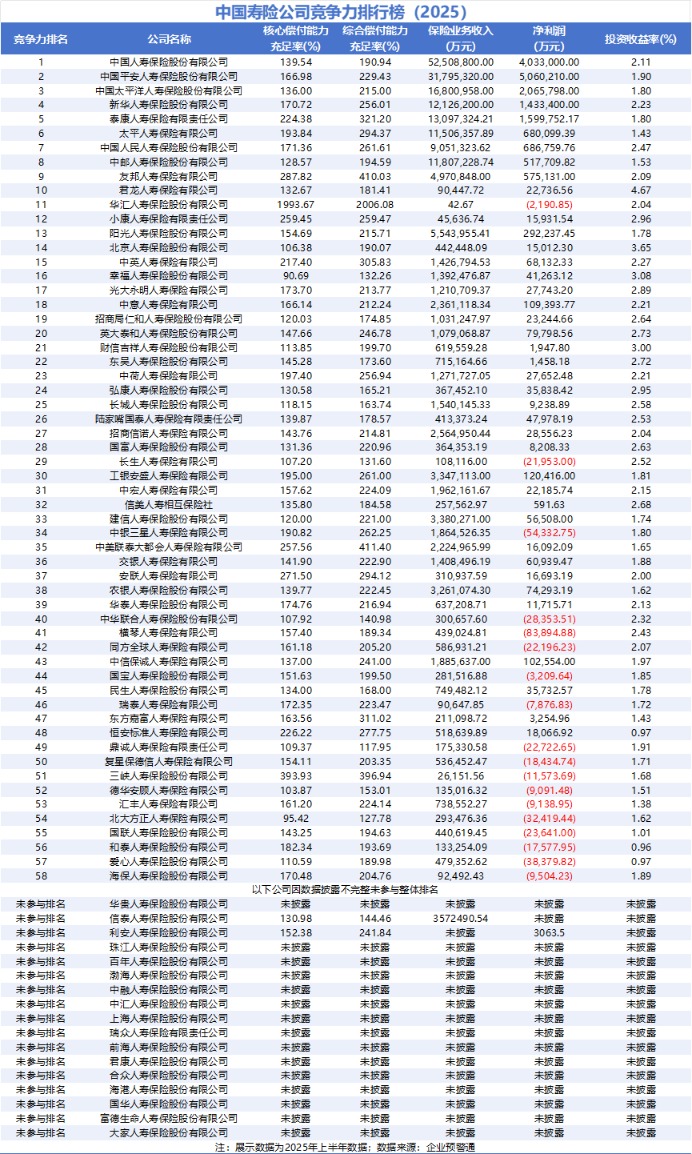
Core Insights - The report indicates a significant "stronger gets stronger" trend in China's life insurance industry, with the top ten companies accounting for 94.6% of the net profits in the first half of 2025 [1][5] - The top five life insurance companies achieved a combined premium income of 1.25 trillion yuan, showcasing their dominant market position [4][5] Group 1: Industry Overview - The report categorizes life insurance companies into four types: life insurance, property insurance, pension insurance, and health insurance, analyzing their competitiveness based on various dimensions [1] - In the first half of 2025, the life insurance sector's total profit reached 176.31 billion yuan, with 58 companies participating in the competitiveness ranking [1] Group 2: Top Companies Performance - The top five life insurance companies are China Life, Ping An Life, Taiping Life, New China Life, and TaiKang Life, all achieving net profits exceeding 10 billion yuan in the first half of 2025 [2][5] - China Life led with a premium income of 525.09 billion yuan and a net profit of 40.33 billion yuan, maintaining its market leadership [5] - Ping An Life reported a net profit of 50.60 billion yuan, the highest among life insurers [5] Group 3: Financial Metrics - The solvency ratios of the top companies remained robust, with TaiKang Life having a core solvency ratio of 224.38% and a comprehensive solvency ratio of 321.20% [5] - New China Life and Ping An Life also reported comprehensive solvency ratios exceeding 200% [5] Group 4: Investment Performance - New China Life achieved the highest investment return rate of 2.23% among the top five companies, followed by China Life at 2.11% [6] - Overall, the investment returns for the leading companies remained stable within a healthy range [6] Group 5: Market Dynamics - The report highlights a growing divide between large and small insurance companies, with 18 out of 58 companies reporting losses in the first half of 2025 [9] - Companies like Huahui Life, despite high solvency ratios, faced challenges due to low business income, indicating a need for operational revitalization [9] Group 6: Regulatory Impact - The insurance industry is transitioning from scale expansion to value creation, driven by regulatory changes such as the introduction of a dynamic adjustment mechanism for premium rates linked to market rates [10] - The report emphasizes that leading companies are focusing on cost control and risk management to adapt to the evolving market landscape [10]


保险业竞争力报告:老三家地位稳固 融通等凭专业化进十强
2 1 Shi Ji Jing Ji Bao Dao· 2025-11-24 10:35
Core Insights - The report indicates a clear trend in the Chinese property insurance industry shifting from scale-driven growth to efficiency-oriented development since 2024, entering a phase of high-quality growth [1][6] - The profitability of leading companies is increasing, while smaller insurers are facing significant challenges, with nearly half of the companies reporting underwriting losses [1][6] Group 1: Industry Overview - The "2025 China Insurance Industry Competitiveness Research Report" highlights that 40 out of 82 participating property insurance companies had a comprehensive cost ratio exceeding 100% in the first half of 2025, indicating that nearly half are operating at a loss [1][6] - The top three companies, People's Insurance Company of China (PIC), Ping An Property & Casualty Insurance, and China Pacific Insurance, collectively accounted for approximately 77% of the industry's total profit, reinforcing the "stronger getting stronger" competitive landscape [1][2] Group 2: Company Rankings - PIC ranked first with a core solvency adequacy ratio of 213.16%, total insurance revenue of 3,240.16 billion yuan, and a net profit of 243.76 billion yuan in the first half of 2025 [2][3] - Ping An ranked second with a core solvency adequacy ratio of 179.60%, total insurance revenue of 1,720.61 billion yuan, and a net profit of 103.66 billion yuan [2][3] - China Pacific Insurance ranked third with a core solvency adequacy ratio of 195.80%, total insurance revenue of 1,138.29 billion yuan, and a net profit of 57.33 billion yuan [3] Group 3: Emerging Competitors - Companies such as Jiulong Insurance, China Railway Property Insurance, and Dinghe Insurance have entered the top ten by focusing on specialized and niche markets [4][5] - These specialized companies generally have solvency ratios above the industry average, indicating a unique competitive advantage [5] Group 4: Challenges and Policy Environment - The report notes that the property insurance industry is facing challenges such as high claims costs from new energy vehicle insurance and natural disasters, which are pressuring the comprehensive cost ratios of many companies [6][8] - Regulatory measures introduced since 2024 aim to promote high-quality development and mitigate inefficient competition within the industry [7][8]
2025年金融消费趋势洞察研究报告
Sou Hu Cai Jing· 2025-11-24 09:16
Core Insights - The report reveals a shift in financial consumption trends from "instant gratification" to "future security," with a growing emphasis on insurance and healthcare products, particularly among the post-95 generation who prioritize retirement planning over entertainment spending [1][8][19] - Consumer pain points include a lack of tailored wealth management solutions, underwhelming product returns, complicated services, and a desire for more transparent information, with over 90% of consumers seeking a "hassle-free, time-saving, and cost-effective" financial service experience [1][8][30] Chapter 1: Consumption Trend Insights - Financial consumers are increasingly adopting a conservative asset allocation strategy, focusing on risk mitigation rather than high returns, with the structure of financial products shifting towards insurance over consumption and investment [15][19] - The demand for healthcare and insurance products is rising, with 62.8% of respondents concerned about healthcare and 36% about retirement, indicating a desire for financial products that provide real value during critical times [28][29] Chapter 2: User Pain Points Analysis - The primary consumer demographic consists of middle-aged women aged 31-50, who are often the decision-makers in family financial matters, leading to a demand for comprehensive financial solutions that address various family needs [32][34] - Key pain points include low product returns, complicated service processes, lack of personalization, and unclear product terms, with 86.7% of consumers dissatisfied with product features and performance [38][39][46] Chapter 3: Breaking the "Impossible Triangle" - The financial industry faces a dilemma known as the "impossible triangle," where achieving high returns, low risk, and high liquidity simultaneously is challenging, particularly in the healthcare and retirement sectors [29][30] - Financial institutions must not only provide asset management solutions but also help consumers establish long-term financial security, addressing the need for products that balance stable returns with long-term guarantees [29][30] Chapter 4: Practical Example - Ping An's "Three Savings Project" - Ping An's "Three Savings Project" serves as a model for integrating comprehensive financial services with healthcare and retirement planning, leveraging technology, product innovation, and professional services to enhance customer satisfaction [1][29] - The project has resulted in significant achievements, including a customer base exceeding 242 million and home care services covering 75 cities, demonstrating the effectiveness of a customer-centric approach in financial services [1][29] Chapter 5: Conclusion - Path to "Finance for the People" - The essence of "finance for the people" is centered around customer needs, emphasizing the importance of simplifying processes, enhancing transparency, and fostering collaboration to make financial services more accessible and user-friendly [1][12][29]

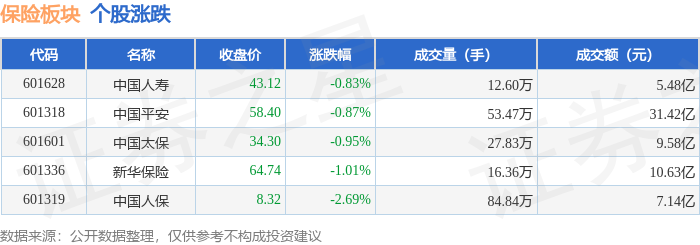
保险板块11月24日跌1.12%,中国人保领跌,主力资金净流出1.62亿元
Zheng Xing Xing Ye Ri Bao· 2025-11-24 09:12
| 代码 | 名称 | 主力净流入(元) | 主力净占比 游资净流入 (元) | | 游资净占比 散户净流入 (元) | | 散户净占比 | | --- | --- | --- | --- | --- | --- | --- | --- | | 601318 中国平安 | | = 170.25万 | 0.05% | -8620.72万 | -2.74% | 8450.47万 | 2.69% | | 601628 中国人寿 | | -1301.28万 | -2.37% | 2832.46万 | 5.17% | -1531.18万 | -2.79% | | 601319 中国人保 | | -3669.59万 | -5.14% | 1798.55万 | 2.52% | 1871.03万 | 2.62% | | 601601 中国太保 | | -4434.85万 | -4.63% | 6462.75万 | 6.74% | -2027.91万 | -2.12% | | 601336 新华保险 | | -6998.32万 | -6.58% | 7.75万 | 0.01% | 6990.57万 | 6.57% | 以上内容 ...


Ping An Unveils "Ancient Tree Guardian Action" at UN Climate Change Conference (COP30)
Prnewswire· 2025-11-24 08:55
Core Viewpoint - Ping An Insurance has launched the "Ancient Tree Guardian Action" project, integrating insurance, technology, and social welfare to protect over 55,000 ancient trees in China, showcasing innovative efforts in biodiversity conservation and climate change mitigation [1][3]. Group 1: Project Overview - The "Ancient Tree Guardian Action" was presented at COP 30, emphasizing the integration of insurance and technology for sustainable protection of ancient trees [1]. - The project aims to address the threats faced by approximately 5.08 million ancient trees in China due to climate change, pests, and funding shortages [2]. Group 2: Technological Integration - Ping An employs a unique "Insurance + Technology" model, utilizing big data, AI, and IoT for comprehensive assessments of ancient trees [3]. - The project has implemented a full-chain model for disaster management, providing over RMB 700 million (approximately USD 98 million) in risk protection as of October 2025 [3]. Group 3: Monitoring and Prevention - Technology plays a crucial role in the program, with IoT and environmental sensors monitoring soil moisture, air quality, and tree health in real-time [4]. - The proprietary "EagleX" system tracks extreme weather and issues alerts, shifting focus from post-disaster compensation to pre-disaster prevention [5]. Group 4: Community Engagement and Economic Growth - Ping An engages in public welfare activities, including educational programs and eco-tourism campaigns, to raise awareness and stimulate local economies [6]. - The "Travel with Ancient Trees" campaign reached 250 million users, promoting ecological knowledge and local green economic growth [6]. Group 5: Green Finance Strategy - The "Ancient Tree Guardian Action" is part of Ping An's broader green finance strategy, which includes insurance for carbon-sequestering ecosystems [7]. - By the end of 2024, Ping An's Carbon Sink Insurance had expanded to cover 18 provinces, providing financial support for ecological preservation [8]. Group 6: Financial Metrics - As of June 30, 2025, Ping An's green investments totaled RMB 144.482 billion (approximately USD 20 billion), with green loan balances at RMB 251.746 billion (around USD 35.3 billion) [9]. - Premium income from green insurance for the first three quarters of 2025 amounted to RMB 55.279 billion (about USD 7.7 billion) [9]. Group 7: Future Outlook - Ping An aims to continue innovating in green finance, developing a wider range of green insurance and investment products to support sustainable development [10].