
PICC(601319)

Search documents
中国人保(601319)披露证券变动月报表,12月1日股价下跌4.97%
Sou Hu Cai Jing· 2025-12-01 14:47
Core Points - As of December 1, 2025, China People's Insurance Company (601319) closed at 8.23 yuan, down 4.97% from the previous trading day, with a total market capitalization of 363.963 billion yuan [1] - The stock opened at 8.65 yuan, reached a high of 8.66 yuan, and a low of 8.08 yuan, with a trading volume of 2.069 billion yuan and a turnover rate of 0.71% [1] - The company announced that as of November 30, 2025, there were no changes in the legal/registered capital or the number of issued shares for both H-shares and A-shares [1] - The total number of H-shares is 8,726,234,000 shares, and the total number of A-shares is 35,497,756,583 shares, both with a par value of 1 yuan [1] - The total registered capital at the end of the month is 44,223,990,583 yuan, with zero treasury shares [1] - The company confirmed that the securities issuance this month complies with relevant listing rules and legal regulations [1]
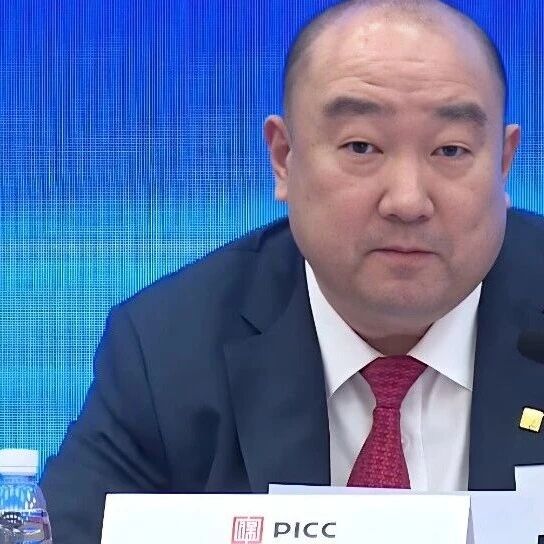
中国人保大跌4.97%,人保财险总裁于泽被传失联
凤凰网财经· 2025-12-01 14:24
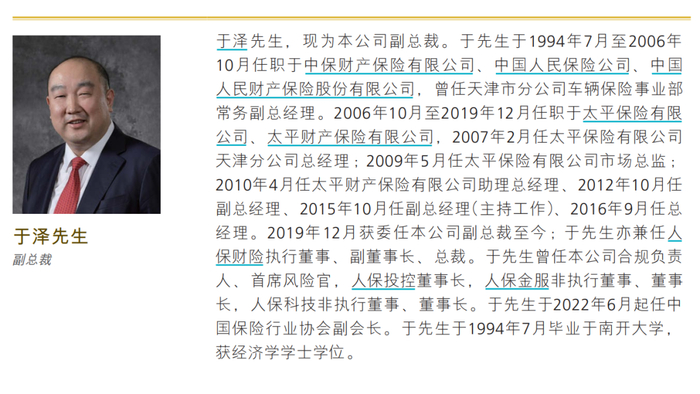
以下文章来源于风财眼 ,作者凤凰网财经 风财眼 . 风财眼致力于银行领域的原创报道,旨在履行媒体监督职责,以期共营健康的金融环境。 【 热门视频推荐 】 点击在 看 持续关注↓↓↓ 12月1日,中国人保收盘大跌4.97%,盘中一度跌超6%。据多家媒体报道,人保集团党委委员、副总裁,人保财险总裁于泽疑似失联。凤凰网财经分别联系 人保集团、人保财险,均未获回应。 公开信息显示,于泽1971年10月出生,于 1994 年 7 月至 2006 年 10 月任职于中保财产保险有限公司、中国人民保险公司、中国人民财产保险股份有限公 司,曾任天津市分公司车辆保险事业部常务副总经理。 2006 年 10 月至 2019 年 12 月任职于太平保险有限公司、太平财产保险有限公司,2007 年 2 月任太平保险有限公司天津分公司总经理;2009 年 5 月任太平 保险有限公司市场总监;2010 年 4 月任太平财产保险有限公司助理总经理、2012 年 10 月任副总经理、2015 年 10 月任副总经理(主持工作)、2016 年 9 月任总经理。 2019 年 12 月,于泽回归人保集团,获委任人保集团副总裁,同时他还兼任人保财 ...

人保财险三任“一把手”落马,现任于泽疑似失联引发震动
Zhong Jin Zai Xian· 2025-12-01 13:45
Core Viewpoint - The recent disappearance of Yu Ze, the Vice President of PICC Group and President of PICC Property and Casualty, has raised significant concerns within the insurance industry, leading to notable stock declines for the company amidst overall market gains [1][6]. Group 1: Company Impact - Yu Ze's disappearance has resulted in a sharp decline in PICC's stock prices, with A-shares dropping by 4.97% and Hong Kong shares experiencing declines of 5.25% and 2.72% [1]. - The company has faced scrutiny as three of the last five leaders have been investigated for misconduct, indicating a troubling trend within its leadership [1][5]. - Under Yu Ze's leadership, PICC Property and Casualty has been implementing a strategy to reduce costs and eliminate intermediaries, which has shown some initial success in new business areas like new energy vehicle insurance and health insurance [3]. Group 2: Industry Context - The insurance industry is currently experiencing heightened regulatory scrutiny, with at least 10 mid-to-senior level executives being investigated this year, reflecting a broader trend of accountability within the sector [5]. - The property insurance market is facing intense competition, particularly in the auto insurance segment, which remains highly sensitive to market fluctuations [6]. - PICC Property and Casualty's performance is seen as a barometer for the industry, given its significant market share, and its ongoing challenges may impact the overall health of the property insurance sector [6].
突发!财险巨头总裁被带走,公司年收保费约5400亿元,股价应声大跌
Mei Ri Jing Ji Xin Wen· 2025-12-01 10:28
12月1日,多家媒体传出消息,人保财险总裁于泽被带走调查。《每日经济新闻》记者从多个渠道证实了这一消息的真实性。当日,受该消息影响,在保 险板块整体上涨的A股和港股市场,人保相关股票跌幅明显,A股中国人保收跌4.97%,港股中国人民保险集团、人保财险(HK02328,中国财险)均一度 跌超6%,最终分别收跌5.25%和2.72%。 编辑|金冥羽陈俊杰 杜恒峰 校对|程鹏 封面图来源:视觉中国 MACD金叉信号形成,这些股涨势不错! | 中国人保 | 8.23 | -4.97% | | --- | --- | --- | | 沪 601319 | | | | 中国人民保险集团 | 6.680 | -5.25% | | HK 1339 | | | | 中国财险 | 17.180 | -2.72% | | HK 2328 | | | 公开资料显示,于泽生于1971年,1994年毕业于南开大学,随后进入保险业,其保险业的履历大致可分为人保、太平、回归人保三个阶段。1994年7月至 2006年10月,在中保财产保险有限公司(老人保)、人保财险天津分公司任职;2006年10月至2019年12月,在太平保险任职,历任太平财 ...

12.1犀牛财经晚报:白银价格创历史新高券商资管子公司申请公募牌照热情退去
Xi Niu Cai Jing· 2025-12-01 10:23
Group 1: Silver Market - Silver prices reached a historic high, surpassing $57 per ounce, with a year-to-date increase of over 90% [1] - The decline in silver production has led to a persistent supply shortage, with global exchange silver inventories at a near ten-year low [1] - The rental market for silver has seen a spike in short-term leasing rates, indicating a significant supply crunch [1] - The current gold-to-silver price ratio is approximately 75:1, which is notably higher than the 20-year average of 60:1, suggesting silver is relatively undervalued [1] - Bank of America has raised its 2026 silver price target to $65 per ounce [1] Group 2: Asset Management Licenses - All four broker asset management subsidiaries that were in line for public fund licenses have withdrawn their applications, resulting in a "clean slate" for approvals [2] - The focus for these companies is now on consolidating their existing asset management business and enhancing core competencies [2] Group 3: NAND Flash Market - NAND Flash wafer supply is tightening, with contract prices for some products increasing by over 60% in November due to strong demand from AI applications and enterprise SSD orders [3] - Manufacturers are prioritizing capacity allocation for high-margin products, leading to a rapid contraction of older process capacities [3] - The expectation is that contract prices will continue to rise in December due to the strong pricing power of manufacturers and ongoing supply constraints [3] Group 4: Express Delivery Industry - China's express delivery volume has surpassed 1.8 billion packages this year, marking a historical high and reflecting strong economic momentum [4] - The integration of technology in logistics, such as the use of robots and AI, has significantly improved operational efficiency across various stages of the delivery process [4] Group 5: Insurance Sector - The president of China Insurance Group has been reported to be taken away for investigation, leading to a significant drop in the stock prices of related companies [5][6] - The insurance sector is experiencing volatility as a result of this incident, with shares of China Insurance Group falling over 5% [5][6] Group 6: Banking Sector - Zhejiang Securities Regulatory Bureau has mandated corrective measures for Zhejiang Chouzhou Commercial Bank due to several compliance issues, including unqualified personnel and inadequate risk assessment procedures [7] Group 7: IPO and Stock Issuance - Lin Qingxuan has stated that its IPO application has expired but is in the process of updating its prospectus and has received a filing notice from the securities regulatory authority [8] - Youfa Group has decided to terminate its plan to issue A-shares due to the expiration of authorization and current market conditions [9] - Top Group is planning to issue H-shares and list on the Hong Kong Stock Exchange [10] Group 8: Cement and Construction Materials - Ningbo Fuda is planning to sell 100% equity of its subsidiary, with an estimated value of 1.5752 million yuan [11] Group 9: Automotive Industry - Hanma Technology reported a 149.94% year-on-year increase in truck sales for November, with total sales for the year up 55.8% [12] - SAIC Group's vehicle sales in November decreased by 3.75%, although electric vehicle sales increased by 19.75% [13] - Changhua Group has received a project development notification from a domestic automaker, with an expected total sales amount of approximately 732 million yuan [14] Group 10: Project Bids - Zhongchao Holdings announced that its subsidiaries have won contracts totaling 1.318 billion yuan from the State Grid and other entities [15]




人保财险总裁于泽疑失联传闻引发股价震荡,公司暂未回应
Nan Fang Du Shi Bao· 2025-12-01 10:14
记者注意到,于泽最近一次公开露面是在今年8月28日的中国人保中期业绩发布会上。彼时他在会上表 示,随着2025年新能源汽车出口量预计突破百万台,增长超过70%,公司看好这块业务并加大了发展力 度。"以中国香港、泰国的项目经验为支点,深化全球合作,预计海外业务将成为公司新的增长点。"于 泽当时这样描述公司的新能源车险出海战略。 公开资料显示,于泽1971年10月出生,拥有丰富的财险行业从业经验。1994年7月,他加入中国人民保 险公司(人保集团前身),开启职业生涯。1994年7月至2003年7月,于泽历任中国人民保险公司天津分 公司物业管理中心副经理,静海县支公司副总经理、副总经理(主持工作);2003年7月至2006年10 月,于泽进入人保财险,任静海县支公司副总经理(主持工作)、总经理,天津分公司车辆保险事业部 常务副总经理。 2006年10月,于泽转至太平财产保险有限公司(以下简称"太平财险"),历任天津分公司总经理、市场 总监、助理总经理、副总经理、总经理,并于2016年9月至2019年12月任太平财险总经理;2019年12 月,于泽回归人保集团,任集团副总裁,同时兼任人保财险执行董事、副董事长、总裁, ...

金融圈突发!54岁于泽被曝失联,有业内人士称“各种举报没有停过”
Zhong Guo Jing Ying Bao· 2025-12-01 09:53
12月1日消息,现任中国人民保险集团股份有限公司党委委员、副总裁于泽疑似失联。 据《证券时报》报道,记者了解到,上周末业内就开始有于泽被带走的消息流传,数位接近人保的人士 证实了这一消息。据了解,人保集团已为此召开党委会会议。虽然略显突然,但也有人士称,对于泽出 事"不意外","各种举报没有停过"。 另据《每日经济新闻》报道,记者从多个渠道证实了这一消息的真实性。 公开资料显示,于泽1971年出生,1994年7月至2006年10月任职于中保财产保险有限公司、中国人民保 险公司、中国人民财产保险股份有限公司,曾任天津市分公司车辆保险事业部常务副总经理。 2006年10月至2019年12月任职于太平保险有限公司、太平财产保险有限公司,2007年2月任太平保险有 限公司天津分公司总经理;2009年5月任太平保险有限公司市场总监;2010年4月任太平财产保险有限公 司助理总经理、2012年10月任副总经理、2015年10月任副总经理(主持工作)、2016年9月任总经理。 2019年12月,于泽回归人保集团,获委任人保集团副总裁,同时他还兼任人保财险执行董事、副董事 长、总裁。 于泽担任人保财险总裁期间,正是财险行业变 ...
中国人保(601319) - H股公告
2025-12-01 09:15
股份發行人及根據《上市規則》第十九B章上市的香港預託證券發行人的證券變動月報表 截至月份: 2025年11月30日 狀態: 新提交 致:香港交易及結算所有限公司 公司名稱: 中國人民保險集團股份有限公司 呈交日期: 2025年12月1日 I. 法定/註冊股本變動 | 1. 股份分類 | 普通股 | 股份類別 | H | | 於香港聯交所上市 (註1) | | 是 | | | --- | --- | --- | --- | --- | --- | --- | --- | --- | | 證券代號 (如上市) | 01339 | 說明 | | | | | | | | | | 法定/註冊股份數目 | | | 面值 | | 法定/註冊股本 | | | 上月底結存 | | | 8,726,234,000 | RMB | | 1 RMB | | 8,726,234,000 | | 增加 / 減少 (-) | | | 0 | | | RMB | | 0 | | 本月底結存 | | | 8,726,234,000 | RMB | | 1 RMB | | 8,726,234,000 | | 2. 股份分類 | 普通股 | 股份 ...
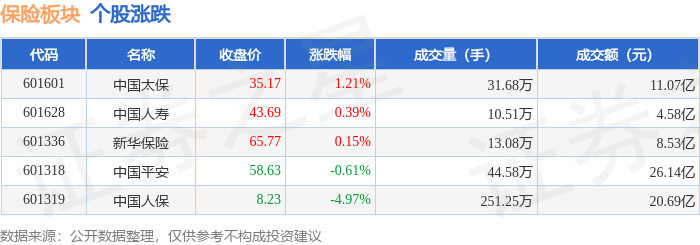
保险板块12月1日跌0.56%,中国人保领跌,主力资金净流出7194.41万元
Zheng Xing Xing Ye Ri Bao· 2025-12-01 09:09
Core Insights - The insurance sector experienced a decline of 0.56% on December 1, with China Life Insurance leading the losses [1] - The Shanghai Composite Index closed at 3914.01, up 0.65%, while the Shenzhen Component Index closed at 13146.72, up 1.25% [1] Insurance Sector Performance - China Pacific Insurance (601601) closed at 35.17, up 1.21% with a trading volume of 316,800 shares - China Life Insurance (601628) closed at 43.69, up 0.39% with a trading volume of 105,100 shares - New China Life Insurance (601336) closed at 65.77, up 0.15% with a trading volume of 130,800 shares - Ping An Insurance (601318) closed at 58.63, down 0.61% with a trading volume of 445,800 shares - China Reinsurance (601319) closed at 8.23, down 4.97% with a trading volume of 2,512,500 shares [1] Capital Flow Analysis - The insurance sector saw a net outflow of 71.94 million yuan from institutional investors, while retail investors contributed a net inflow of 25.40 million yuan [1] - The detailed capital flow for individual stocks shows: - New China Life Insurance had a net inflow of 4.39 million yuan from retail investors but a net outflow of 4.47 million yuan from institutional investors [2] - China Reinsurance experienced a net outflow of 2.03 million yuan from institutional investors and a net inflow of 131 million yuan from retail investors [2] - Ping An Insurance had a net outflow of 5.31 million yuan from institutional investors but a net inflow of 99.46 million yuan from retail investors [2]




中国人民保险集团(01339) - 截至二零二五年十一月三十日止月份之股份发行人的证券变动月报表
2025-12-01 08:33
股份發行人及根據《上市規則》第十九B章上市的香港預託證券發行人的證券變動月報表 截至月份: 2025年11月30日 狀態: 新提交 公司名稱: 中國人民保險集團股份有限公司 呈交日期: 2025年12月1日 I. 法定/註冊股本變動 | 1. 股份分類 | 普通股 | 股份類別 | H | | 於香港聯交所上市 (註1) | | 是 | | | --- | --- | --- | --- | --- | --- | --- | --- | --- | | 證券代號 (如上市) | 01339 | 說明 | | | | | | | | | | 法定/註冊股份數目 | | | 面值 | | 法定/註冊股本 | | | 上月底結存 | | | 8,726,234,000 | RMB | | 1 RMB | | 8,726,234,000 | | 增加 / 減少 (-) | | | 0 | | | RMB | | 0 | | 本月底結存 | | | 8,726,234,000 | RMB | | 1 RMB | | 8,726,234,000 | | 2. 股份分類 | 普通股 | A 股份類別 | | | 於香港聯 ...