ICBC(601398)

Search documents
沪市两个多月现金分红近3500亿
第一财经· 2026-02-05 14:54
Core Viewpoint - The article highlights the significant cash dividends being distributed by companies in the Shanghai stock market, particularly focusing on the banking sector, which is leading the trend of pre-Spring Festival cash distributions to investors [3][4]. Group 1: Cash Dividends Distribution - Nearly 20 companies in the Shanghai market are set to distribute a total of 25.8 billion yuan in cash dividends before the Spring Festival [3]. - From December 2025 to the pre-Spring Festival period, the total cash dividends distributed by the Shanghai market will exceed 347.6 billion yuan, with 321.8 billion yuan already distributed by February 5 [3]. - Industrial Bank is set to distribute over 11.9 billion yuan in cash dividends to A-share investors, with a per-share cash dividend of 0.565 yuan (tax included) [3]. Group 2: Banking Sector Performance - The banking sector is the main contributor to cash distributions, with nine banks, including Industrial Bank, Jiangsu Bank, and China Merchants Bank, announcing a total of nearly 70 billion yuan in cash dividends for the first half of 2025 [3][4]. - China Merchants Bank announced a cash dividend of approximately 25.5 billion yuan (tax included) for A+H shares, with a distribution ratio of 35% [3]. Group 3: Other Industries - Other traditional industries are also participating in cash distributions, with companies like Yangtze Power and Da Ren Tang planning to issue cash dividends before the Spring Festival [4]. - Yangtze Power will distribute over 5.1 billion yuan in cash dividends on February 12, having committed to a high cash dividend ratio since 2016 [4]. - Da Ren Tang announced a cash dividend of 2.45 yuan per share (tax included), totaling 1.887 billion yuan, with a cumulative cash dividend of 5.117 billion yuan since its listing [5]. Group 4: Regulatory Environment and Investor Sentiment - Industry insiders note that the continuous strengthening of cash dividend regulations and disclosure requirements by regulatory authorities is enhancing shareholder return awareness among listed companies [6]. - Investors are increasingly inclined to choose companies that can withstand economic cycles and are willing to consistently return value to shareholders, marking a significant trend in value investing [6].





工商银行行长刘珺拜会河南省委省政府主要领导
Xin Lang Cai Jing· 2026-02-05 13:05
Core Viewpoint - The Industrial and Commercial Bank of China (ICBC) is committed to enhancing cooperation with the Henan provincial government to promote high-quality economic and social development in the region [1][3]. Group 1: Meetings and Discussions - ICBC President Liu Jun met with Henan Provincial Party Secretary Liu Ning and Governor Wang Kai to discuss deepening government-bank cooperation [1][3]. - Liu Jun also held discussions with Zhengzhou Municipal Party Secretary An Wei and engaged in a working meeting at the Zhengzhou Airport Economic Zone [1][3]. Group 2: Strategic Initiatives - ICBC aims to implement the important speeches and directives from President Xi Jinping regarding Henan, focusing on serving national strategies and supporting local development [1][3]. - The bank plans to increase financing efforts and resource input, leveraging its advantages in funding, innovation, scenarios, and internationalization to provide comprehensive financial solutions [1][3]. Group 3: Commitment to Economic Development - ICBC is dedicated to strengthening the foundation of the real economy in Henan and contributing to the modernization of the Central Plains region [1][3].

工商银行发布支持“出口中国”全面金融解决方案
Xin Lang Cai Jing· 2026-02-05 13:05
Core Insights - The "Shared Big Market · Export China" event for 2026 was held in Beijing, attended by key officials including the Minister of Commerce and the Mayor of Beijing, along with over 150 international guests [1][3]. Group 1: Financial Solutions - Industrial and Commercial Bank of China (ICBC) launched a comprehensive financial solution (CFS) to support the "Export China" initiative, leveraging its global network to provide robust financial services for foreign enterprises entering the Chinese market [1][3]. - The CFS includes integrated international settlement, trade financing, exchange rate and interest rate management, and comprehensive cross-border e-commerce services, aiming to enhance the integration of capital, trade, and information chains [1][3]. Group 2: Strategic Initiatives - ICBC is committed to implementing the spirit of the 20th National Congress of the Communist Party and the trade power strategy, having conducted the "Spring融行动" for several years to strengthen financial support for foreign trade enterprises [4]. - By 2025, ICBC is expected to have processed over 3.3 trillion USD in international settlements and provided over 1 trillion CNY in trade financing for foreign trade enterprises [4]. Group 3: Event Background - The "Shared Big Market · Export China" series was initiated by the Ministry of Commerce and officially launched in November 2025, representing a pragmatic effort to expand autonomous openness and promote balanced import and export development [2][4].
工商银行:2025年累计为外贸企业办理国际结算超3.3万亿美元
Xin Lang Cai Jing· 2026-02-05 13:02
Group 1 - The core point of the article is that the Industrial and Commercial Bank of China (ICBC) plans to facilitate over $3.3 trillion in international settlements for foreign trade enterprises by 2025, along with providing trade financing exceeding 1 trillion yuan [1]
金价震荡,银行黄金投资策略现“左右手” :一手严控风险,一手降价揽客
Xin Jing Bao· 2026-02-05 12:24
Core Viewpoint - The recent fluctuations in gold prices have led to a divergence in strategies among banks regarding their gold accumulation services, with some increasing investment thresholds while others are reducing fees to attract investors [1][4][9]. Group 1: Gold Price Fluctuations - On February 4, gold prices rose back to $5,000 per ounce, but by February 5, spot gold prices fell below $4,800 per ounce, experiencing a drop of over 3% in a single day [1][6]. - The volatility in gold prices has prompted banks to adjust their strategies in gold accumulation services, reflecting their responses to market risks [1][4]. Group 2: Bank Strategies - Some banks, like Changsha Bank, have temporarily waived fees for personal gold accumulation purchases and regular accumulation deductions from February 1 to March 31, reducing the fee from 0.5% to 0% [1][7]. - Industrial and Commercial Bank of China (ICBC) has also seen local branches lowering fees to attract investors, despite the bank's overall increase in investment thresholds and risk warnings [2][8]. - The differentiation in strategies among banks is not contradictory but rather a tailored response based on their positioning, customer base, and market strategies [1][4][9]. Group 3: Accumulation Methods - Gold accumulation services, often referred to as "electronic gold," have gained popularity due to their low entry point of just 1 gram of gold and the ability to trade in real-time [3][8]. - The investment methods for gold accumulation include active accumulation, where customers initiate purchases based on real-time prices, and regular accumulation, which functions similarly to a systematic investment plan [3][8]. Group 4: Market Insights - The first quarter is typically a critical period for banks, often referred to as "opening red," where some banks choose to lower fees as a marketing strategy to capture market investors [4][9]. - Analysts suggest that banks are raising thresholds for gold accumulation primarily for risk control, ensuring that investors are aware of the inherent risks associated with these investments [5][9]. - Economic experts recommend that investors view gold as a stabilizing asset in their portfolios, suggesting a strategic allocation of 5%-15% of investable assets to gold to hedge against risks in other asset classes [10].
刘宁王凯会见中国工商银行行长刘珺
He Nan Ri Bao· 2026-02-05 11:47
2月4日,省委书记刘宁、省长王凯在郑州会见中国工商银行党委副书记、行长刘珺一行。 刘宁、王凯代表省委、省政府向刘珺一行表示欢迎,对中国工商银行给予河南金融事业发展的支持表示 感谢。刘宁说,去年以来,全省上下把深入贯彻习近平总书记在河南考察时重要讲话精神和关于河南工 作的重要论述作为重要政治任务,与学习贯彻党的二十届四中全会精神结合起来,聚焦"1+2+4+N"目标 任务体系,加力增优势、增动能、增活力、增效益,全省经济社会发展态势良好。我们认真学习贯彻习 近平总书记关于金融工作的重要论述,扎实做好金融"五篇大文章",统筹做好防风险、强监管、促高质 量发展各项工作,金融服务实体经济质效持续提升。"十五五"时期是我省发展扬长补短、全面崛起的关 键阶段,各类金融需求旺盛。希望中国工商银行充分发挥国有大行领军功能和资源优势,积极开展多层 次、全方位金融合作,在重大国家战略实施、现代化产业体系建设、融入服务全国统一大市场等方面提 供更多帮助,吸引更多优质企业落户中原,助力河南经济社会高质量发展。我们将一如既往支持中国工 商银行在豫发展,持续优化金融生态、营造良好环境,共同开创政银携手、互利共赢新局面。 刘珺感谢河南省委、 ...
银行股,资金出手了
3 6 Ke· 2026-02-05 11:21
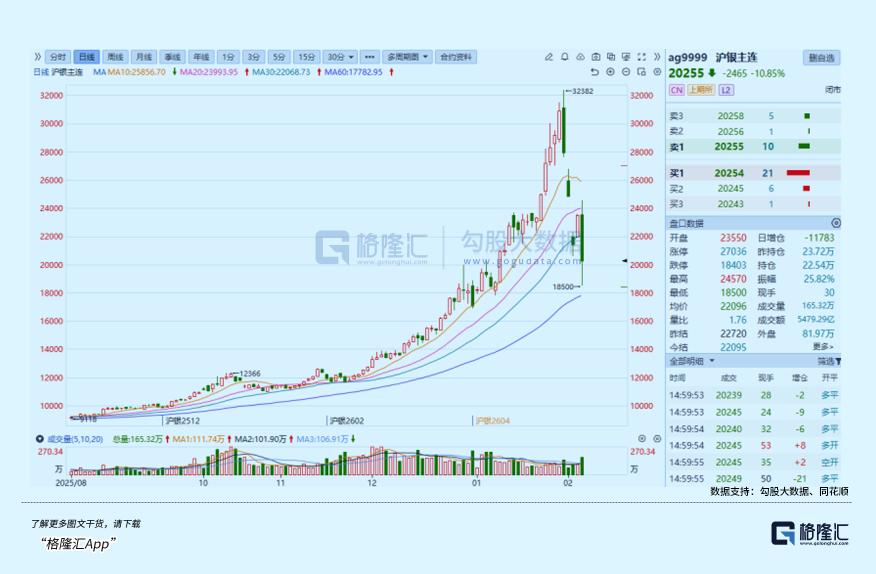
Core Viewpoint - A significant market shift occurred as global funds fled from technology stocks and precious metals, leading to a notable decline in major indices and a surge in bank stocks as a safe haven for investors [1][2][3]. Group 1: Market Reactions - On February 4, U.S. tech stocks experienced a sharp decline, with the Nasdaq dropping over 2% and major companies like Nvidia, Meta, and Tesla falling more than 3%. AMD saw a staggering drop of 17.3%, marking its largest single-day decline in nearly nine years [1][3]. - The panic spread to A-shares and Hong Kong stocks, with sectors like solar energy and precious metals witnessing significant sell-offs. Silver futures plummeted nearly 20% at one point, exacerbating market fears [2][5]. - Despite the overall market turmoil, the banking sector in A-shares rose by 2.1%, with all 42 bank stocks closing in the green, indicating a flight to safety among investors [2][10]. Group 2: Capital Flows - Southbound funds recorded a net purchase of over 22 billion HKD, with major Chinese banks like ICBC, CMB, and CCB becoming core targets for accumulation [3][13]. - A significant shift in capital is underway, with funds moving from tech and precious metals to banks, which are perceived as having a higher safety margin [3][9]. Group 3: Banking Sector Performance - The banking sector is supported by strong earnings growth and historically low valuations, making it an attractive option for risk-averse investors [15][20]. - As of February 4, several banks reported robust earnings, with Qingdao Bank, Hangzhou Bank, and others showing significant profit increases, further solidifying the sector's appeal [16][18]. - The banking sector's average dividend yield ranges from 4.87% to 5.2%, significantly higher than the 10-year government bond yield of around 2%, enhancing its attractiveness in a low-interest-rate environment [21][22]. Group 4: Future Outlook - The recent market volatility raises questions about whether the declines in tech stocks and precious metals will lead to further panic selling. However, the influx of funds into bank stocks suggests a potential shift in market sentiment [23].



银行股,资金出手了!
Ge Long Hui· 2026-02-05 10:50
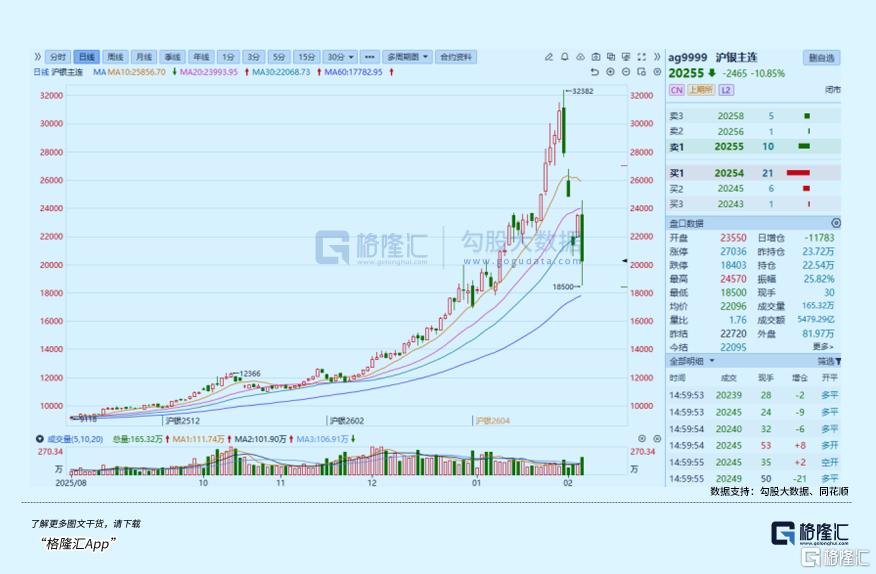
Core Viewpoint - A significant market sell-off occurred globally, particularly affecting technology stocks in the US, leading to a shift in investment sentiment towards safer assets like bank stocks [1][4][21]. Group 1: Market Reaction - The US tech sector experienced a sharp decline, with the Nasdaq dropping over 2% and major companies like Nvidia, Meta, and Tesla falling more than 3%. AMD saw a staggering drop of 17.3%, erasing its gains for the entire year [1][4]. - Panic spread to A-shares and Hong Kong stocks, with sectors like solar energy and precious metals experiencing significant declines. Silver futures plummeted nearly 20% in one day, exacerbating market fears [2][5]. Group 2: Capital Flow - Southbound capital saw a net inflow of over 22 billion HKD, with major Chinese banks like ICBC, CMB, and CCB becoming key targets for accumulation [3][12]. - The banking sector in A-shares rose by 2.1%, with all 42 bank stocks closing in the green, indicating a flight to safety among investors [2][9]. Group 3: Banking Sector Performance - The banking sector is viewed as a "safe haven" due to strong earnings growth and historically low valuations. Recent performance reports from banks like Qingdao Bank and Ningbo Bank showed robust profit increases [14][15]. - The average dividend yield for bank stocks is between 4.87% and 5.2%, significantly higher than the 10-year government bond yield of around 2%, making them attractive to investors seeking stable returns [19][20]. Group 4: Future Outlook - Despite the current volatility, there are signs of a potential shift in investment style towards bank stocks, driven by their strong fundamentals and recovery potential [21]. - Institutional interest in bank stocks is increasing, with significant research and investment activity noted, suggesting a possible influx of capital into the sector [20].

银行股,资金出手了!
格隆汇APP· 2026-02-05 10:15
Core Viewpoint - A significant market shift is occurring, characterized by a mass exodus of funds from technology and precious metals sectors, with a notable influx into bank stocks as a safe haven amid rising panic and volatility [2][5][21]. Group 1: Market Dynamics - The U.S. tech stocks experienced a sharp decline, with the Nasdaq dropping over 2%, and major companies like Nvidia, Meta, and Tesla falling more than 3%. AMD saw a staggering drop of 17.3%, marking its largest single-day decline in nearly nine years [2][5]. - Panic spread to A-shares and Hong Kong stocks, with sectors like solar energy and oil equipment witnessing significant sell-offs. Precious metals, which had recently rebounded, also faced a sharp decline, with silver futures plummeting nearly 20% in a single day [3][5]. - The market turmoil was triggered by negative news affecting U.S. tech stocks, leading to a valuation bubble burst. Despite AMD's strong performance, its results fell short of the most optimistic analyst expectations, resulting in a drastic stock price drop [5][6]. Group 2: Bank Sector Resilience - In contrast to the broader market, the banking sector saw a rise, with A-share bank stocks collectively increasing by 2.1%. All 42 bank stocks closed in the green, with Xiamen Bank hitting a rare limit-up and several city commercial banks rising over 3% [3][15]. - Southbound funds significantly targeted bank stocks, with a net purchase exceeding 22 billion HKD, focusing on major banks like ICBC, CMB, and CCB as core investment targets [4][20]. - The banking sector is viewed as a "safe haven" due to its strong earnings growth and historically low valuations, making it an attractive option for risk-averse investors [21][22]. Group 3: Earnings and Valuation - Recent earnings reports from several banks indicate robust growth, with Qingdao Bank, Hangzhou Bank, and Shanghai Pudong Development Bank showing significant increases in net profits. For instance, Qingdao Bank reported a net profit of 51.88 billion CNY, a 21.66% year-on-year increase [23][25]. - The banking sector has undergone a six-month correction, leading to a new valuation bottom. The sector's price-to-earnings ratio stands at a low 6.7 times, and the average dividend yield is between 4.87% and 5.2%, making it appealing in a low-interest-rate environment [27][28]. - Institutional interest in bank stocks is rising, with over 370 institutions conducting research on 11 listed banks, indicating a strategic shift towards these stocks amid market volatility [28][29].



银行业2025年报业绩前瞻:盈利改善,不良平稳,优质城商行或超预期
Shenwan Hongyuan Securities· 2026-02-05 08:08
Investment Rating - The report maintains a positive outlook on the banking industry, indicating that high-quality city commercial banks may exceed expectations [1]. Core Insights - The report forecasts that listed banks will exhibit "stable revenue and gradually improving profit growth" characteristics in 2025, with a projected revenue growth of 0.9% year-on-year and a recovery in net profit growth to 1.9% [3]. - Performance differentiation among various types of banks is expected, with city commercial banks showing superior results, while state-owned banks and leading joint-stock banks maintain stable positive growth [3]. - Key drivers for stable profit growth include narrowing interest margin declines, improved market sentiment, and stable asset quality ensuring credit costs do not significantly erode profits [3]. Summary by Sections Revenue and Profit Forecast - Listed banks are expected to see a revenue growth of 0.9% in 2025, with net profit growth recovering to 1.9% [3]. - State-owned banks are projected to have a revenue growth of 1.5%, while joint-stock banks are expected to see a revenue decline of 1.8% [3]. - City commercial banks in regions like Jiangsu and Zhejiang are anticipated to maintain high single-digit profit growth, with some banks achieving double-digit growth [3]. Non-Interest Income and Market Conditions - Non-interest income is influenced by market conditions and the timing of revenue recognition by banks, with a projected recovery in 2025 due to a low base from 2024 [3]. - The report notes that banks are likely to see a 3% year-on-year growth in non-interest income in the first half of 2025 and 4.6% by the end of the third quarter [3]. Interest Income and Credit Growth - Interest income is expected to stabilize as banks manage their asset pricing and liability costs effectively, with a projected decline in interest margin narrowing to about 10 basis points [4]. - Credit growth is anticipated to remain stable, with a focus on corporate lending, while retail lending shows weaker performance [3]. Asset Quality and Provisioning - The report indicates that the non-performing loan (NPL) ratio for listed banks is expected to remain stable at around 1.22% [4]. - The provisioning coverage ratio is projected to decrease slightly to 236%, with banks advised to focus on those with low NPL generation and high provisioning ratios [4]. Investment Recommendations - The report suggests focusing on high-quality banks that are likely to recover towards a price-to-book (PB) ratio of 1, particularly city commercial banks with strong credit growth [4]. - It highlights the potential for dividend yields to attract investors, with a current dynamic dividend yield of approximately 4.8% [4].