
CPIC(601601)

Search documents
ETF资金榜 | 半导体设备ETF 广发(560780):净流入1.30亿元,居全市场第一梯队-20260107
Xin Lang Cai Jing· 2026-01-08 02:35
拉长时间看,该基金近5个交易日有3天资金净流入,合计吸金2.25亿元,居可比基金前三。 资金流入也助力了份额的提升,该基金最新份额较前一日增加6500.00万份,突破9.20亿份。与此同时, 该基金最新规模突破18.00亿元,创历史新高。 2026年1月7日,半导体设备ETF 广发(560780.SH)收涨7.82%,成交2.10亿元。净流入1.30亿元(净申购 份额*单位净值),居全市场第一梯队。 半导体设备ETF 广发(560780.SH),场外联接(A:020639;C:020640)。 ...
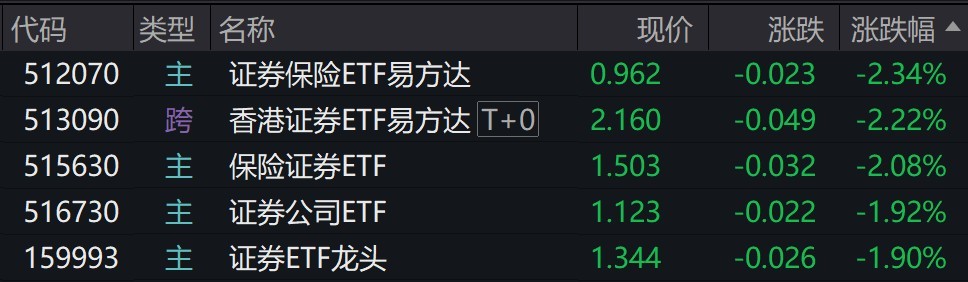
非银金融概念股走弱,证券保险相关ETF跌约2%
Mei Ri Jing Ji Xin Wen· 2026-01-08 02:20
Group 1 - Non-bank financial stocks weakened, with Huatai Securities and GF Securities dropping over 3%, while China Ping An, Guotai Junan, China Pacific Insurance, and China Life fell over 2% [1] - Securities and insurance-related ETFs declined approximately 2% [1] Group 2 - Some brokerages indicate that the fundamentals of the brokerage sector will continue to improve in 2025, but the sector is currently "stagnant" with significantly undervalued valuations; looking ahead to 2026, broker ROE is expected to return to an upward trend, with margin financing balances and derivative business becoming the main leverage direction for brokerages, and accelerated mergers and acquisitions among leading brokerages expected to enhance industry concentration [2] Group 3 - In the insurance sector, the liability side showed strong performance, with leading insurance companies leveraging product structure optimization and market concentration advantages to lay a solid foundation for annual performance growth; simultaneously, the asset side continues to show resilience, as the spring market activity is expected to improve investment returns for insurance companies, further boosting profit expectations; the low base effect from the first quarter of last year is likely to amplify this year's year-on-year performance growth [3] - The dual benefits from both the liability and asset sides strengthen the valuation repair momentum for the insurance sector [3]






ETF融资榜 | 半导体设备ETF 广发(560780)融资净买入764.02万元,居全市场第一梯队-20260107
Xin Lang Cai Jing· 2026-01-08 02:09
Group 1 - The semiconductor equipment ETF, Guangfa (560780.SH), experienced a significant increase of 7.82% on January 7, 2026, with a trading volume of 210 million yuan [1] - The ETF saw a net financing purchase of 7.64 million yuan, ranking it among the top tier in the market [1] - Financing buy amounted to 14.51 million yuan, while financing repayment was 6.87 million yuan [1] Group 2 - The ETF has an off-market connection with classes A (020639) and C (020640) [1]
资金动态20260108
Qi Huo Ri Bao Wang· 2026-01-08 01:32
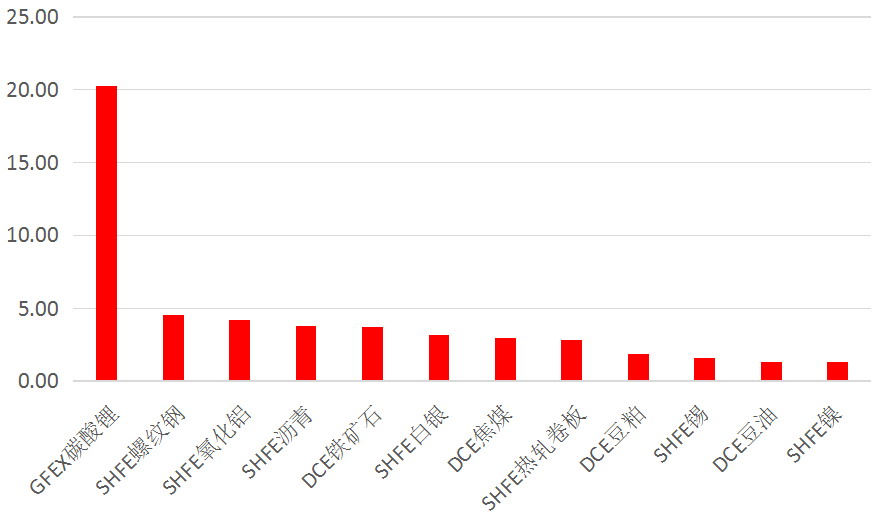
Core Insights - The article highlights significant inflows into commodity futures, particularly in lithium carbonate, rebar, aluminum oxide, asphalt, and iron ore, with inflows of 2.025 billion, 0.455 billion, 0.421 billion, 0.376 billion, and 0.375 billion respectively [1] - Conversely, there were notable outflows in gold, copper, aluminum, polysilicon, and apples, with outflows of 0.595 billion, 0.317 billion, 0.226 billion, 0.142 billion, and 0.074 billion respectively [1] - Overall, the commodity futures market experienced a substantial inflow, particularly in non-ferrous metals and black metals, while the financial sector saw outflows [1] Commodity Futures Inflows - Major inflows were observed in non-ferrous metals and black metal sectors, with a focus on lithium carbonate, rebar, aluminum oxide, iron ore, and silver [1] - The chemical and agricultural sectors also saw slight inflows, particularly in asphalt, soybean meal, and soybean oil [1] Commodity Futures Outflows - Key commodities experiencing outflows included gold, copper, aluminum, and stainless steel, indicating a potential shift in investor sentiment [1] - Apples and LPG also faced outflows, suggesting a cautious approach from investors in these areas [1] Financial Sector Insights - The financial sector, particularly the CSI 300 index futures and 30-year treasury futures, is highlighted as a focus area due to observed outflows [1]
上证深一度 | 具身机器人也有自己的保单 险企竞逐机器人保险业务
Shang Hai Zheng Quan Bao· 2026-01-08 00:06
Group 1 - The core viewpoint of the articles highlights the rapid growth of the robot rental market, which is expected to reach a scale of 100 billion yuan by 2026, leading to increased demand for insurance products tailored for robots [1][2] - The first "insurance + rental" policy for humanoid robots has been launched by Ping An Property & Casualty Insurance, which includes comprehensive coverage such as third-party liability and product quality liability, addressing the limitations of traditional insurance models [3][4] - Major insurance companies like PICC and Taikang are actively developing robot insurance products, offering flexible coverage options to meet diverse market needs, indicating a shift towards a dynamic financial ecosystem that supports the entire lifecycle of the robot industry [4][5] Group 2 - The development of robot insurance faces challenges such as data barriers, difficulty in risk assessment, and unclear liability definitions, which need to be addressed through collaboration and innovation within the industry [6][7] - Experts suggest that establishing a data-sharing platform involving regulatory bodies, technology companies, and insurance institutions is crucial for overcoming pricing and data challenges in robot insurance [6][7] - The insurance sector is moving from providing static risk coverage to creating a comprehensive financial ecosystem that supports the dynamic needs of the robot industry, reflecting a fundamental upgrade in the financial industry's support logic for robotics [4][5]


具身机器人也有自己的保单 险企竞逐机器人保险业务
Shang Hai Zheng Quan Bao· 2026-01-07 17:51
Core Insights - The insurance market for robots is rapidly evolving, with leading insurance companies actively expanding their robot insurance offerings to meet diverse needs [2][7] - The shift in the financial industry's support for the robot sector is moving from static risk coverage to a dynamic financial ecosystem that encompasses the entire lifecycle of the industry [2][7] - The development of embodied intelligent robot insurance in China is still in its early stages, facing challenges such as data barriers, risk assessment difficulties, and unclear liability definitions [3][8] Group 1: Market Demand and Innovations - The demand for robot leasing is expected to grow significantly, with projections indicating the market could reach 10 billion yuan by 2026 [2] - Major insurance companies are innovating in robot insurance, with products like Ping An's first "insurance + leasing" policy for embodied robots, which includes comprehensive coverage for third-party liability and product quality [4][6] - The "insurance + leasing" model addresses information asymmetry in single-device insurance and promotes a full-chain risk management approach from manufacturing to usage [6] Group 2: Challenges and Solutions - The development of robot insurance faces several challenges, including difficulties in risk assessment due to a lack of public risk data, poor product adaptability, and unclear liability among multiple stakeholders [8][9] - Experts suggest establishing a data-sharing platform involving regulatory bodies, tech companies, and insurance institutions to create industry standards for risk evaluation and pricing [9] - There is a need for policy guidance and industry innovation to overcome barriers in robot insurance development, including incentives for companies to insure and for insurers to innovate [8][9]


证券研究报告、晨会聚焦:非银葛玉翔:OCI选择权的两面性,税务追溯对现金流影响有限-20260107
ZHONGTAI SECURITIES· 2026-01-07 13:24
Core Insights - The report discusses the dual nature of the OCI (Other Comprehensive Income) option in the context of the tax adjustments for insurance companies transitioning to new accounting standards, indicating that the impact on cash flow from tax retroactivity is limited [3][4][6]. Summary by Sections Tax Adjustment Overview - The Ministry of Finance and the State Administration of Taxation issued a notice regarding the tax treatment for the transition to new insurance contract standards, effective from 2026, allowing companies to smooth out tax differences over five years [3][6]. - The overall impact of this tax adjustment on listed insurance companies is deemed limited, as most have already implemented the new standards since early 2023 [3][4]. Profitability and Tax Rates - Listed insurance companies have seen record high profits, with pre-tax profits in the first three quarters of 2025 exceeding the total for 2024, while actual tax rates have remained low, indicating a disconnect between tax obligations and operational performance [4][5]. - The average effective tax rates from 2020 to Q3 2025 were 10%, 8%, -1%, -6%, 12%, and 17%, with some companies reporting negative tax rates in certain years [4]. Impact of New Accounting Standards - The core difference in profits under the old and new accounting standards is attributed to the 750 curve, which has declined, affecting net profit levels, particularly for life insurance companies [5]. - The new standards provide an OCI option that mitigates the impact of interest rate declines on net profit, but it also removes the tax shield previously available under the old standards [5]. Cash Flow Implications - The tax adjustments are expected to have a minimal impact on operating cash flows, with the average effect on listed insurance companies estimated at 2.27%, while companies like Xinhua and China Life may experience a more significant impact of around 14% [6]. - The choice of how to account for retained earnings from the new standards will influence the actual cash flow effects, with options to either include them in the taxable income for 2026 or spread them over five years [6]. Investment Recommendations - The report suggests monitoring major listed insurance companies such as China Life, Ping An, China Pacific Insurance, Xinhua Insurance, and China Property & Casualty Insurance for potential investment opportunities [7].

ETF主力榜 | 短融ETF(511360)主力资金净流入8.90亿元,居全市场第一梯队-20260107
Xin Lang Cai Jing· 2026-01-07 10:06
Core Viewpoint - The short-term bond ETF (511360.SH) experienced a slight increase of 0.02% on January 7, 2026, indicating stable market interest in this financial instrument [1] Group 1: Fund Performance - The short-term bond ETF recorded a net inflow of 890 million yuan from major funds (transactions over 1 million yuan), ranking it first in the market [1] - The latest trading volume for the fund reached 214 million units, with a total transaction value of 24.161 billion yuan, also placing it at the top of the market [1]
99只股收盘价创历史新高
Zheng Quan Shi Bao Wang· 2026-01-07 09:51
Core Viewpoint - The Shanghai Composite Index rose by 0.05%, with 99 stocks reaching all-time high closing prices, indicating a strong market performance despite a majority of stocks declining [1][2]. Group 1: Market Performance - Among the tradable A-shares today, 2,173 stocks increased in price, accounting for 39.80%, while 3,190 stocks decreased, making up 58.42% [1]. - A total of 99 stocks closed at all-time highs, with 47 from the main board, 27 from the ChiNext, and 23 from the STAR Market [1]. - The average price increase for stocks reaching all-time highs was 7.25%, with notable gainers including Shaoyang Hydraulic, Meihua Medical, and Nanda Optoelectronics [1]. Group 2: Sector Analysis - The electronics, machinery equipment, and non-ferrous metals sectors had a significant concentration of stocks reaching all-time highs, with 27, 13, and 11 stocks respectively [1]. - The highest closing price was recorded by Source Technology at 700.70 yuan, which increased by 8.47% [1]. Group 3: Capital Flow - The net inflow of main funds into stocks reaching all-time highs totaled 3.97 billion yuan, with 62 stocks experiencing net inflows [2]. - The top three stocks with the highest net inflow were Northern Huachuang, Tongyu Communication, and Nanda Optoelectronics, with inflows of 1.385 billion yuan, 1.313 billion yuan, and 871 million yuan respectively [2]. - Conversely, 35 stocks saw net outflows, with China Satellite Communications, Goldwind Technology, and Sanbo Brain Science leading in outflows of 1.615 billion yuan, 1.232 billion yuan, and 685 million yuan respectively [2]. Group 4: Market Capitalization - The average total market capitalization of stocks reaching all-time highs was 49.407 billion yuan, with an average circulating market capitalization of 44.857 billion yuan [2]. - The stocks with the highest total market capitalization included Luoyang Molybdenum, Northern Huachuang, and China Pacific Insurance, valued at 383.615 billion yuan, 373.409 billion yuan, and 327.809 billion yuan respectively [2].



ETF主力榜 | 中证A500ETF富国(563220)主力资金净流出1.80亿元,居全市场第一梯队-20260107
Xin Lang Cai Jing· 2026-01-07 09:00
Group 1 - The core point of the article highlights that the Zhongzheng A500 ETF (563220.SH) experienced a decline of 0.16% on January 7, 2026, with a significant net outflow of main funds amounting to 180 million yuan, ranking it first in the market [1] - Over the past three days, the fund has seen an accelerated outflow of main funds totaling 261 million yuan, also placing it at the top tier of the market [1] - The latest trading volume for the Zhongzheng A500 ETF is reported at 849 million units, with a total transaction amount of 1.094 billion yuan, indicating that the net outflow of main funds accounted for 16.41% of the transaction amount on that day [1]