
China Life(601628)

Search documents
A股五大上市险企集体飘红,多股创历史新高
21世纪经济报道· 2026-01-06 11:44
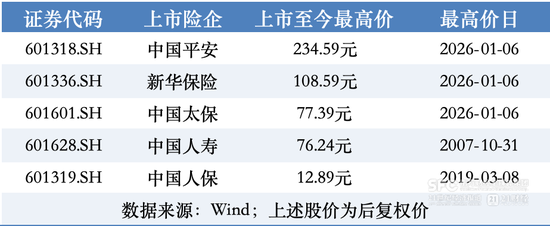
Core Viewpoint - The insurance sector is experiencing a strong performance driven by a bull market, favorable policies, improved industry fundamentals, and institutional support for valuation recovery [2][3][5]. Group 1: Market Performance - In the first two trading days of 2026, the insurance industry index rose by 3.29%, with all five major listed insurance companies in A-shares showing positive performance [1]. - Several insurance stocks reached historical highs, with China Ping An (601318.SH) hitting a peak of 234.59 yuan per share, marking a record since its listing [2][1]. - The total market capitalization of the five major listed insurance companies reached approximately 3.89 trillion yuan, an increase of about 128.8 billion yuan from the previous trading day [1]. Group 2: Driving Factors - The bull market is identified as a key driver for the insurance stock performance, with expectations of market growth enhancing the earnings elasticity and valuation recovery potential of the insurance sector [3]. - Recent policy adjustments by the National Financial Regulatory Administration, including changes to risk factors for insurance companies, are expected to lower capital constraints and expand investment opportunities [3]. - The improvement in the industry fundamentals is also a significant factor, with expectations of a strong performance in insurance premiums for 2026, driven by liability cost optimization and a shift in product structure [4]. Group 3: Financial Metrics - In the first eleven months of 2025, the insurance industry reported a total premium income of 5.76 trillion yuan, reflecting a year-on-year growth of 7.6%, with life insurance premiums growing by 9.2% [4]. - The total assets of the insurance industry surpassed 40 trillion yuan, with net assets reported at 3.68 trillion yuan [4]. Group 4: Future Outlook - The insurance sector is expected to maintain its upward trend in 2026, supported by strong demand for protection and savings products, as well as ongoing policy support [5]. - However, potential risks include the pace of valuation recovery and the sustainability of liability-side improvements, which need to be monitored closely [5].







保险股开年成“亮眼的仔”,政策与业绩双轮驱动板块普涨
Bei Jing Shang Bao· 2026-01-06 11:18
Core Viewpoint - The A-share insurance sector has shown remarkable performance at the beginning of 2026, continuing the strong trend from 2025, with major companies experiencing significant stock price increases [3][4]. Group 1: A-share Performance - As of January 6, 2026, major A-share insurance companies such as Xinhua Insurance and China Pacific Insurance saw stock price increases exceeding 5%, while China Life and Ping An rose over 2% [1][3]. - On the first trading day of 2026, all five major A-share listed insurance companies recorded gains of over 5%, with Xinhua Insurance leading at an increase of 8.87% and China Pacific at 7.52% [3]. - The stock prices of Xinhua Insurance and China Pacific reached historical highs, while Ping An closed at 72.36 yuan per share, marking a five-year peak [3]. Group 2: Industry Fundamentals - The insurance industry has shown solid growth, with total premium income reaching 5.76 trillion yuan in the first eleven months of 2025, reflecting a year-on-year increase of 7.56% [3]. - Life insurance companies experienced a premium income growth of 9.1%, while property insurance companies saw a 3.9% increase, indicating a stable development trajectory for the industry [3]. Group 3: Market Drivers - Analysts attribute the strong performance of insurance stocks to a combination of policy benefits, improved earnings, valuation recovery, and favorable capital allocation [4]. - Recent regulatory changes aimed at encouraging long-term investments by insurance funds have alleviated market concerns regarding investment restrictions, facilitating a systematic valuation recovery for the sector [4]. - The current market sentiment, risk appetite, and liquidity are favorable for the stock market, benefiting the equity allocation of insurance funds [4][5]. Group 4: Future Outlook - The insurance sector is expected to continue its upward trend in 2026, supported by a favorable liquidity environment and the potential for double-digit growth in new business value (NBV) [5]. - The easing of policies has provided insurance companies with enhanced operational support, contributing to performance improvements [5]. - The characteristics of insurance stocks make them attractive for passive investment, further solidifying their position in the market [5].

保险股延续“开门红”,新华、太保、平安均创历史新高
Xin Lang Cai Jing· 2026-01-06 11:05
Core Viewpoint - The insurance sector has shown strong performance at the beginning of 2026, driven by multiple factors including a bull market, favorable policies, improved industry fundamentals, and institutional support for valuation recovery [1][2][4] Market Performance - The insurance industry index (886055.WI) rose by 3.29%, leading the industry in gains, with all five major listed insurance companies in A-shares showing positive performance [1][6] - Several insurance stocks reached historical highs on January 6, 2026, with China Ping An (601318.SH) hitting a peak of 234.59 yuan per share, marking a record since its listing [1][2][6] - The total market capitalization of the five major listed insurance companies reached approximately 3.89 trillion yuan, an increase of about 128.8 billion yuan from the previous trading day [7] Policy Environment - In December 2025, the National Financial Regulatory Administration adjusted risk factors for certain insurance company businesses, which is expected to enhance investment capacity and support the sector [3][9] - The release of favorable policies is expected to encourage long-term investments in A-shares, aligning with the strategic direction of "financial support for the real economy" [3][9] Industry Fundamentals - The insurance sector is anticipated to experience a "New Year" surge in premiums, potentially exceeding expectations, driven by a positive feedback loop between assets and liabilities [3][9] - The insurance industry reported a total premium income of 5.76 trillion yuan for the first eleven months of 2025, reflecting a year-on-year growth of 7.6%, with life insurance premiums growing by 9.2% [3][9] Asset Management - The recovery of the equity market and high dividend asset allocation are expected to enhance investment returns, alleviating pressure from interest rate differentials [4][10] - The total assets of the insurance industry surpassed 40 trillion yuan in 2025, with net assets reported at 3.68 trillion yuan [4][10] Future Outlook - The insurance sector is positioned for continued strength in 2026, supported by high demand for protection and savings products, as well as potential inflows of new capital into the market [4][10] - However, attention should be paid to the pace of valuation recovery and the sustainability of the liability side, particularly regarding product structure optimization and agent channel reforms [4][10] Long-term Trends - The industry is shifting from a "scale-driven" model to a "value growth" approach, with leading insurance companies demonstrating greater resilience due to asset-liability matching advantages [5][11]
年内举牌超30次 让险资为之“疯狂”的机构都有哪些特点
Mei Ri Jing Ji Xin Wen· 2026-01-06 10:36
Core Viewpoint - Insurance capital's involvement in listed companies is increasing, with a record number of shareholding actions in 2025, particularly favoring the financial sector, especially H-shares [1][2][4]. Group 1: Shareholding Activities - By the end of 2025, insurance capital had conducted over 30 shareholding actions, marking a significant increase compared to previous years [1]. - A total of 14 insurance institutions participated in 35 shareholding actions in 2025, with Ping An Life being the most active, conducting 12 actions [2]. - The month of August saw the highest activity, with 7 shareholding actions, including Ping An Life's investments in major banks [2]. Group 2: Investment Preferences - Financial stocks, particularly H-shares of banks, are the primary targets for insurance capital, with 15 actions in the financial sector [4]. - Insurance companies prefer low-valuation, high-dividend stocks with stable performance, which aligns with the new accounting standards that favor high-dividend stocks [4][5]. - The valuation of H-shares is generally lower than A-shares, providing greater appreciation potential, along with tax benefits through the Hong Kong Stock Connect [4][5]. Group 3: Market Impact and Trends - The shareholding actions by insurance capital have positively influenced stock prices, with notable increases following such actions [7]. - Major insurance companies have shown strong stock performance, with significant annual increases in share prices, outperforming the broader market indices [9]. - The trend of insurance capital's involvement in the equity market is expected to continue, driven by considerations of dividend yield and return on equity (ROE) [10].


年内举牌超30次 让险资为之“疯狂”的机构都有哪些特点⋯⋯
Mei Ri Jing Ji Xin Wen· 2026-01-06 10:17
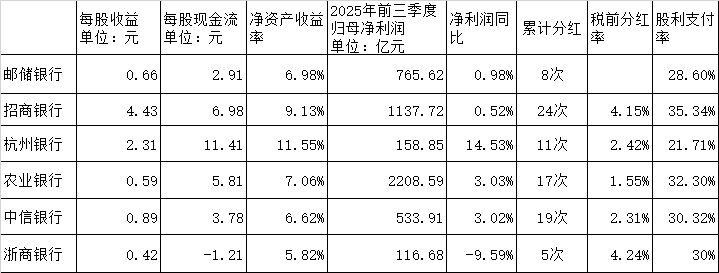
Core Viewpoint - Insurance capital's stake in listed companies has significantly increased, with over 30 instances of stake acquisitions in 2025, marking a new high in recent years [1][10]. Group 1: Stake Acquisition Trends - In 2025, insurance companies made 35 stake acquisitions, up from 20 in 2024, indicating a growing trend in equity market participation [2][11]. - The financial sector is the primary focus for insurance capital, with 15 stake acquisitions involving 6 banks and 2 insurance companies [1][4]. - The H-share market is the main venue for these acquisitions, as it offers better valuation opportunities compared to A-shares [1][4]. Group 2: Active Participants - A total of 14 insurance institutions participated in stake acquisitions in 2025, with Ping An Life leading with 12 acquisitions [2][11]. - Other notable participants include Great Wall Life and China Post Life, each with 4 acquisitions, and several others with fewer [2][11]. - August 2025 was particularly active, with 7 acquisitions, including Ping An Life's significant stake in Postal Savings Bank [2][11]. Group 3: Investment Characteristics - Insurance capital favors low-valuation, high-dividend stocks with stable performance, particularly in the banking sector [4][13]. - The new accounting standards encourage insurance companies to increase stake acquisitions to stabilize profit and loss fluctuations [3][12]. - Financial stocks, especially H-shares, are preferred due to their higher dividend yields compared to long-term bond yields [4][13]. Group 4: Financial Performance of Target Companies - Six banks targeted by insurance capital showed a range of return on equity (ROE) from approximately 6% to 11.55% [5][14]. - The banks reported stable dividend distributions, with China Merchants Bank having the highest number of cumulative dividends at 24 [5][14]. - In the first three quarters of 2025, five banks reported year-on-year profit increases, with Postal Savings Bank achieving a net profit of 765.62 billion yuan, up 0.98% [5][14]. Group 5: Market Reactions and Future Outlook - Stake acquisitions by insurance capital have positively influenced stock prices, often leading to short-term price surges [6][16]. - Insurance stocks have outperformed other sectors, with significant annual increases in stock prices for major insurance companies [8][18]. - The trend of insurance capital acquisitions is expected to continue into 2026, driven by considerations of dividend yield and return on equity [9][19].



南向资金 | 中国平安获净买入18.40亿港元
Di Yi Cai Jing· 2026-01-06 09:46
南向资金近日净买入28.79亿港元,中国平安、阿里巴巴-W、中国人寿净买入额位列前三,分别获净买 入18.40亿港元、16.19亿港元、5.88亿港元。净卖出方面,中国移动、腾讯控股、华虹半导体分别遭净 卖出8.75亿港元、8.04亿港元、2.08亿港元。 ...


保险板块1月6日涨3.46%,新华保险领涨,主力资金净流入2.27亿元
Zheng Xing Xing Ye Ri Bao· 2026-01-06 09:00
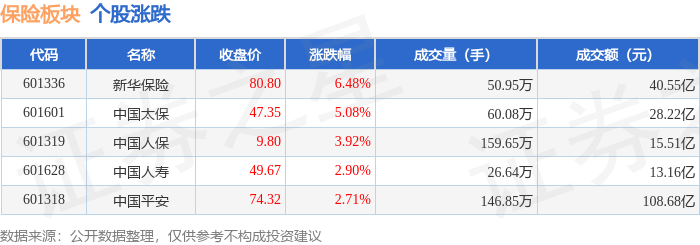
证券之星消息,1月6日保险板块较上一交易日上涨3.46%,新华保险领涨。当日上证指数报收于 4083.67,上涨1.5%。深证成指报收于14022.55,上涨1.4%。保险板块个股涨跌见下表: 以上内容为证券之星据公开信息整理,由AI算法生成(网信算备310104345710301240019号),不构成投资建议。 | 代码 | 名称 | 主力净流入(元) | | 主力净占比 游资净流入 (元) | | 游资净占比 散户净流入(元) | | 散户净占比 | | --- | --- | --- | --- | --- | --- | --- | --- | --- | | 601336 新华保险 | | | 1.74亿 | 4.28% | -1988.11万 | -0.49% | -1.54亿 | -3.79% | | 601319 中国人保 | | | 5508.29万 | 3.55% | 1964.36万 | 1.27% | -7472.65万 | -4.82% | | 601628 中国人寿 | | | 4756.28万 | 3.61% | -6890.21万 | -5.23% | 2133.93万 | ...
预定利率新周期,保险业谋变
Xin Lang Cai Jing· 2026-01-06 08:47
Core Viewpoint - The insurance industry is facing dual challenges of declining asset-side returns and rigid liability-side costs, prompting a fundamental transformation in operational logic as it enters a new cycle of predetermined interest rate adjustments to 2.0% by 2025 [3][22]. Group 1: Industry Challenges and Transformations - The insurance industry is undergoing a structural transformation due to the continuous decline in asset-side returns and the inflexible nature of liability-side costs, which is not merely a cyclical issue but a systemic challenge [3][22]. - The transition path involves reducing liability-side costs and enhancing investment-side returns, moving away from high-interest customer acquisition models towards floating yield products like dividend insurance [3][22]. - The "reporting and operation integration" policy and strict inspections are reshaping the channel ecosystem, pushing the sales model towards value orientation and leading the market into a new phase of high-quality development [3][22]. Group 2: Investment Strategies and Market Trends - As the capital market recovers, insurance capital's enthusiasm for equity investments has significantly increased, with a total investment in stocks and securities funds reaching 5.59 trillion yuan, accounting for over 14% of total fund utilization, marking a historical high [4][23]. - Experts suggest increasing equity allocation to enhance long-term returns, as domestic long-term capital allocation in equity has traditionally been low compared to international standards [4][23]. - The insurance industry is shifting towards a "low guarantee + high floating" product design, with dividend insurance and investment-linked insurance expected to gain significant market share [12][30]. Group 3: Regulatory Changes and Asset-Liability Management - The National Financial Regulatory Administration has emphasized the importance of enhancing asset-liability management capabilities within the insurance industry, which is crucial for the health of the industry and company operations [5][24]. - A new draft regulation on asset-liability management is set to be implemented by December 2025, aiming to strengthen regulatory oversight and improve the overall risk management capabilities of insurance companies [6][38]. - The insurance industry is expected to maintain a stable predetermined interest rate of 2.0% in 2026, with a focus on reducing short-term yield speculation and returning to the essence of risk protection [35][39]. Group 4: Future Outlook and Market Dynamics - The continuous decline in the predetermined interest rate research value reflects the dual pressures of the market interest rate environment and the insurance industry's asset-liability management [7][26]. - The insurance market is witnessing a significant shift towards dividend insurance, which now accounts for over one-third of the market share, indicating a profound restructuring of the industry's underlying logic [31][32]. - The long-term asset duration gap remains a challenge, with the average liability duration for life insurance at 16.3 years, necessitating a focus on overseas asset allocation to bridge this gap [33][34].

保险股开年成“亮眼的崽”,政策与业绩双轮驱动板块普涨
Bei Jing Shang Bao· 2026-01-06 07:37
Core Viewpoint - The A-share insurance sector has shown remarkable performance at the beginning of 2026, continuing the strong trend from 2025, with major companies experiencing significant stock price increases [3][4]. Group 1: A-share Insurance Performance - As of January 6, 2026, major A-share insurance companies such as Xinhua Insurance and China Pacific Insurance saw stock price increases exceeding 5%, while China Life and Ping An rose over 2% [1][3]. - On the first trading day of 2026, all five major A-share listed insurance companies recorded gains of over 5%, with Xinhua Insurance leading at an increase of 8.87% and China Pacific at 7.52% [3]. - The stock prices of Xinhua Insurance and China Pacific reached historical highs, while Ping An closed at 72.36 yuan per share, marking a five-year peak [3]. Group 2: Industry Fundamentals - The insurance industry has shown solid growth, with total premium income reaching 5.76 trillion yuan in the first eleven months of 2025, reflecting a year-on-year increase of 7.56% [4]. - Specifically, life insurance companies reported a premium income growth of 9.1%, while property insurance companies saw a 3.9% increase, indicating a stable development trajectory for the industry [4]. Group 3: Market Dynamics and Policy Impact - Analysts attribute the strong performance of insurance stocks to a combination of policy benefits, improved earnings, valuation recovery, and favorable capital allocation [4]. - Recent regulatory changes aimed at encouraging long-term investments by insurance funds have alleviated market concerns regarding investment restrictions, facilitating a systematic valuation recovery for the sector [4]. - The shift towards index-based investment products by the government positions insurance stocks as prime candidates for passive investment, enhancing their appeal in the market [4][5]. Group 4: Future Outlook - The overall bullish trend in insurance stocks throughout 2025 is expected to continue into 2026, supported by favorable liquidity conditions and policy relaxations that enhance the operational capabilities of insurance companies [5]. - The outlook for new business value (NBV) and premium growth remains positive, driven by favorable deposit migration trends and improved interest margins [5].
国寿财险山西省分公司被罚30万元:利用开展保险业务为其他机构或者个人牟取不正当利益
Xin Lang Cai Jing· 2026-01-06 07:32
1月6日金融一线消息,国家金融监督管理总局山西监管局行政处罚信息公开表显示,中国人寿财产保险 股份有限公司山西省分公司因利用开展保险业务为其他机构或者个人牟取不正当利益,被国家金融监督 管理总局山西监管局罚款30万元;郭照宇(时任中国人寿财产保险股份有限公司山西省分公司农村业务 部副总经理)对上述违法行为负责,被警告,并处10万元罚款。 1月6日金融一线消息,国家金融监督管理总局山西监管局行政处罚信息公开表显示,中国人寿财产保险 股份有限公司山西省分公司因利用开展保险业务为其他机构或者个人牟取不正当利益,被国家金融监督 管理总局山西监管局罚款30万元;郭照宇(时任中国人寿财产保险股份有限公司山西省分公司农村业务 部副总经理)对上述违法行为负责,被警告,并处10万元罚款。 责任编辑:李琳琳 责任编辑:李琳琳 | 序 | 当事人 | 行政处罚 决定书文 | 主要违法违规 | 行政处罚依 | 行政处 | 作出决 | 作出 决定 | | --- | --- | --- | --- | --- | --- | --- | --- | | 号 | 名称 | 号 | 行为 | 据 | 罚内容 | 定机关 | 时间 | | ...