
YONGHUI SUPERSTORES(601933)

Search documents
永辉超市(601933) - 永辉超市股份有限公司关于高管集中竞价减持股份计划公告
2025-10-15 10:02
高管持股的基本情况 截止本公告日,永辉超市股份有限公司(以下简称"公司")副总裁罗雯霞女 士持有公司股份 435,160 股,占公司总股本的 0.0048%。 集中竞价减持计划的主要内容 公司近日收到罗雯霞女士的《股份减持计划告知函》,现将上述有关减持计 划情况公告如下:因个人资金需求原因,罗雯霞女士拟通过集中竞价方式减持公 司股份不超过 108,790 股。减持价格视市场情况确定。本减持计划自公告之日 起十五个交易日后的三个月内进行。若减持计划期间公司有送股、资本公积金转 增股本等股份变动事项,上述减持数量将相应进行调整。 | 股东名称 | 罗雯霞 | | | | --- | --- | --- | --- | | 股东身份 | 控股股东、实控人及一致行动人 | □是 | √否 | | | 直接持股 5%以上股东 | □是 | √否 | | | 董事、监事和高级管理人员 | √是 | □否 | | | 其他:不适用 | | | | 持股数量 | 435,160股 | | | | 持股比例 | 0.0048% | | | | 当前持股股份来源 | 股权激励取得:435,160股 | | | 证券代码:6019 ...

永辉超市:副总裁罗雯霞拟减持不超过10.9万股公司股份
Xin Lang Cai Jing· 2025-10-15 09:44
永辉超市(601933.SH)公告称,公司副总裁罗雯霞因个人资金需求,计划通过集中竞价方式减持公司股 份不超过108,790股。减持计划自公告之日起十五个交易日后的三个月内进行。减持价格视市场情况确 定。 ...
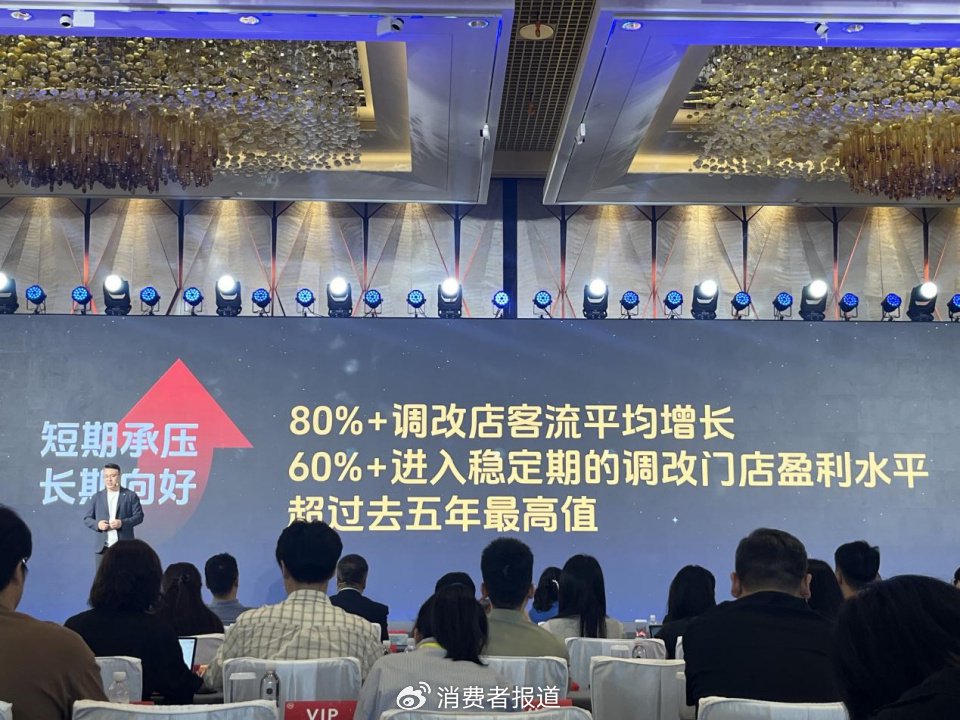
永辉超市CEO王守诚:调改店客流平均增长80%
Bei Jing Shang Bao· 2025-10-15 09:19
Core Insights - Yonghui Supermarket's CEO announced an average customer traffic increase of 80% in remodeled stores, with over 60% of these stores achieving profitability levels surpassing the peak of the past five years [1] - The company is focusing on "people" and "products" for future remodeling efforts, transitioning from broad horizontal adjustments to refined deep upgrades [1] - Yonghui has launched two product series, "Yonghui Custom" and its private label "Quality Yonghui," covering over 20 products across various categories [1][2] Customer Experience - The average Net Promoter Score (NPS) for 102 remodeled stores exceeds 40, with 19 stores achieving scores over 50, indicating a strong customer satisfaction level [1] - The company has a five-year development plan to create 500 private label products, enhancing its product offerings [1][2] Employee Engagement - From January to August 2025, Yonghui Supermarket distributed over 31 million yuan in employee bonuses, with the highest monthly bonus per store exceeding 300,000 yuan [1] - Nearly 5,000 employees participated in skill certification programs, achieving a professional pass rate of 78.2% [1] Product Strategy - Yonghui Supermarket's "Product Centered" strategy aims to establish 200 core strategic partnerships and develop 100 billion-yuan level products within three years [2] - The product structure includes high-quality items from well-known brands, Yonghui Custom products, and the Quality Yonghui private label, focusing on quality and price balance [2]
一般零售板块10月15日涨1.75%,国光连锁领涨,主力资金净流出3733.61万元
Zheng Xing Xing Ye Ri Bao· 2025-10-15 08:37
Market Overview - The general retail sector increased by 1.75% on October 15, with Guoguang Chain leading the gains [1] - The Shanghai Composite Index closed at 3912.21, up 1.22%, while the Shenzhen Component Index closed at 13118.75, up 1.73% [1] Key Performers in General Retail Sector - Guoguang Chain (605188) closed at 20.90, up 10.00% with a trading volume of 497,000 shares and a transaction value of 982 million [1] - Gongxiao Daji (000564) closed at 2.70, up 4.65% with a trading volume of 8.9632 million shares [1] - Nanning Department Store (600712) closed at 6.95, up 4.35% with a trading volume of 301,300 shares [1] - Other notable performers include Ningbo Zhongbai (600857) up 3.29%, Huijia Times (603101) up 3.03%, and Xiaoshangpin City (600415) up 2.99% [1] Fund Flow Analysis - The general retail sector experienced a net outflow of 37.3361 million from institutional investors, while retail investors saw a net outflow of 68.7188 million [2] - Speculative funds had a net inflow of 106 million [2] Individual Stock Fund Flow - Yonghui Supermarket (601933) had a net inflow of 124 million from institutional investors but a net outflow of 43.9539 million from speculative funds and 79.5655 million from retail investors [3] - Gongxiao Daji (000564) saw a net inflow of 109 million from institutional investors, with net outflows from both speculative and retail investors [3] - Other stocks like Huajian Co. (000882) and Hongqi Chain (002697) also showed significant net inflows from institutional investors [3]


于东来最新透露:胖东来账上资金41亿元,没有一分钱贷款
Zhong Guo Ji Jin Bao· 2025-10-15 07:47
Group 1 - The founder of Pang Donglai, Yu Donglai, emphasizes that companies should avoid blind expansion and focus on employee happiness and social responsibility [1][2] - Pang Donglai currently has a cash balance of 4.1 billion yuan and operates with zero debt, which distinguishes it in the competitive retail industry [2] - As of October 14, 2025, Pang Donglai's total sales have exceeded 18.5 billion yuan, with sales during the National Day and Mid-Autumn Festival holiday reaching 820 million yuan [2] Group 2 - Yonghui Supermarket, referred to as a "student" of Pang Donglai, has reported an average customer flow increase of 80% in its reformed stores, with over 60% of these stores achieving profitability levels surpassing the highest in the past five years [3][5] - The reform at Yonghui Supermarket began in May 2024, focusing on a "product-centered" strategy, with plans to collaborate with 200 strategic partners to create 100 billion-yuan products over the next three years [3][5] - Despite the positive outcomes from the reform, Yonghui Supermarket faced a revenue decline of 20.73% in the first half of 2025 and closed 227 unprofitable stores [5]
于东来最新透露:胖东来账上资金41亿元,没有一分钱贷款
中国基金报· 2025-10-15 07:43
Group 1 - The core viewpoint emphasizes that companies should not pursue blind expansion but rather focus on social responsibility and employee well-being [4][5] - The founder of Pang Donglai revealed that the company currently has 4.1 billion yuan in cash and operates with zero debt, which distinguishes it in the competitive retail industry [4][5] - Pang Donglai's sales for 2025 have already exceeded 18.5 billion yuan, with 820 million yuan generated during the recent National Day and Mid-Autumn Festival holiday [4][5] Group 2 - Yonghui Supermarket, referred to as "Pang Donglai's apprentice," has shown significant improvement after a year-long adjustment, with an average customer flow increase of 80% in remodeled stores [6][7] - Despite the positive changes, Yonghui Supermarket still faces challenges, including a net loss of 241 million yuan in the first half of 2025 and a 20.73% decline in revenue [9] - The company's reform strategy focuses on "product centralization," aiming to collaborate with 200 strategic partners to create 100 billion-level products over the next three years [7][9]
永辉新CEO首次亮相,调改要神似而不是“形似”
Tai Mei Ti A P P· 2025-10-15 06:56
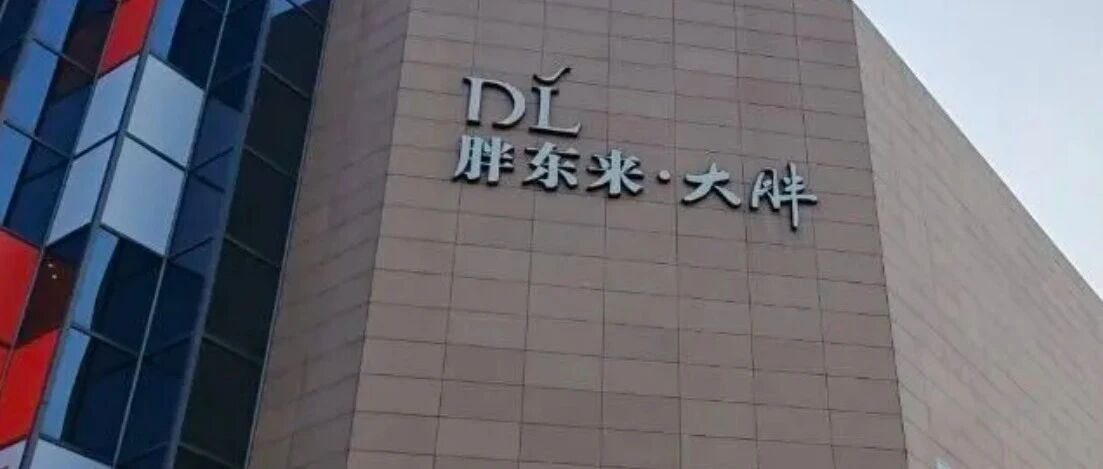
Core Insights - Yonghui Supermarket appointed 34-year-old Wang Shoucheng as the new CEO, marking a significant leadership change aimed at revitalizing the company through extensive reforms [2][3] - The company has initiated the largest reform in China's supermarket retail sector, focusing on both the successes and challenges faced during the past 500 days of transformation [2][4] - Wang emphasized the importance of a customer-centric approach, with an average customer traffic increase of 80% in reformed stores, and over 60% of these stores achieving profitability levels surpassing the highest in the past five years [2][5] Reform Strategy - The reform process is characterized by a shift from superficial changes to a deeper understanding of Yonghui's identity, rather than merely replicating other successful models [4][5] - Wang detailed a systematic evaluation of reformed stores using a "Five Color Card" system, which quantifies various performance metrics across 320 detailed criteria [5][6] - Financial metrics will be integrated into the evaluation process after stores reach a stable operational state, indicating a shift in focus from immediate financial performance to long-term operational health [6] Product Strategy - Yonghui plans to implement a "product-centered" strategy, aiming to collaborate with 200 core strategic partners to develop 100 billion-level flagship products over the next three years [7][8] - The company has introduced its own brand products and customized items, with sales during the recent holiday period showing over 100% year-on-year growth [7][8] - Yonghui's approach to product quality emphasizes value over low prices, aiming to break the cycle of high prices and low quality through collaborative risk-sharing with suppliers [8][9] Long-term Vision - Wang outlined a ten-year blueprint for Yonghui's transformation, divided into three phases: survival in the next 2-3 years, regaining customer trust in 3-5 years, and ultimately becoming a nationally recognized supermarket brand within 5-10 years [8][9]
8个月员工累计分红超3100万元,永辉超市CEO:规模已经回到2016年水平
Xin Lang Cai Jing· 2025-10-15 04:39
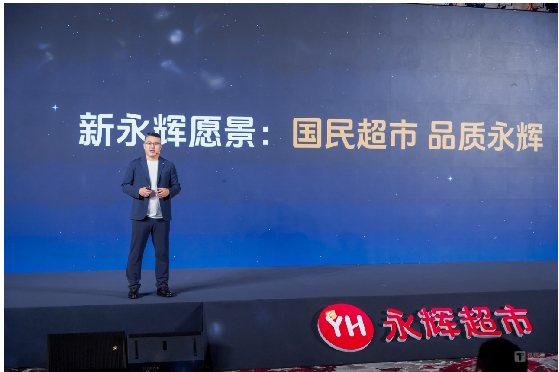
Core Insights - YH Supermarket's scale has returned to 2016 levels after a year of restructuring, with a significant increase in customer traffic and profitability in remodeled stores [1] - The company reported over 100% year-on-year sales growth during the recent Mid-Autumn and National Day holidays, with a notable increase in customer footfall and sales of key products [2] Group 1: Store Performance and Customer Engagement - YH Supermarket has 102 remodeled stores with an average Net Promoter Score (NPS) exceeding 40, and 19 stores surpassing 50 [1] - Average customer traffic in remodeled stores has increased by 80%, with over 60% of these stores achieving profitability levels higher than the past five years [1] Group 2: Sales Growth and Product Performance - During the recent holiday period, overall sales in remodeled stores grew by over 100% year-on-year, with customer transactions increasing by over 80% [2] - Sales of 16 key products increased by over 10 times, with the "Ice Fresh Norwegian Salmon" alone selling over 1 million units in a single day [2] Group 3: Employee Incentives and Development - From January to August, YH Supermarket distributed over 31 million yuan in employee bonuses, benefiting 32,094 employees, with the highest monthly bonus exceeding 300,000 yuan [4] - As of August 31, 4,665 employees participated in technical certification programs, emphasizing the company's focus on human resources as a core value [4] Group 4: Product Strategy and Brand Development - YH Supermarket is advancing its "Quality YH" brand, aiming to enhance its proprietary product offerings, with plans to launch approximately 60 new products this year and expand to 500 by 2029 [9] - The company emphasizes quality over low cost, focusing on operational efficiency and supply chain optimization to provide consumers with value [9] Group 5: Regional Adaptation and Market Strategy - The newly opened YH store in Guangzhou integrates local culinary preferences, featuring regional specialties to cater to local tastes [9] - The company plans to challenge the "tree-ripened" model by leveraging local tropical fruit resources to enhance product quality [9] Group 6: Strategic Partnerships and Product Centralization - YH Supermarket is undergoing a transformation towards product centralization, with plans to establish 200 core strategic partnerships and develop 100 billion-yuan level products within three years [10]
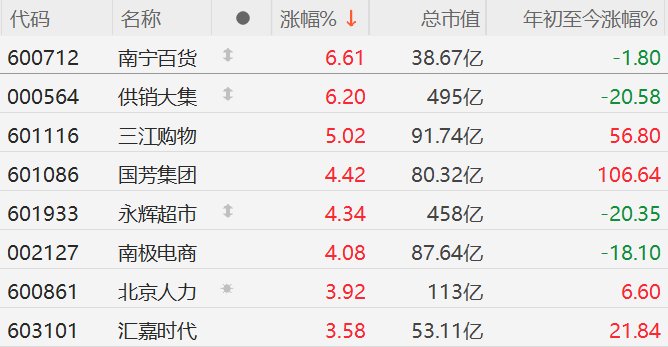
A股零售股上涨,南宁百货、供销大集涨超6%
Ge Long Hui A P P· 2025-10-15 03:33
Core Viewpoint - The retail sector in the A-share market has seen significant gains, with several companies experiencing notable increases in stock prices, indicating positive market sentiment and potential investment opportunities [1][2]. Group 1: Stock Performance - Nanning Department Store (南宁百货) increased by 6.61%, with a total market capitalization of 3.867 billion [2]. - Supply and Marketing Group (供销大集) rose by 6.20%, with a market cap of 49.5 billion [2]. - Sanjiang Shopping (三江购物) saw a 5.02% increase, with a market value of 9.174 billion [2]. - Guofang Group (国芳集团) grew by 4.42%, with a market capitalization of 8.032 billion [2]. - Yonghui Supermarket (永辉超市) increased by 4.34%, with a total market cap of 45.8 billion [2]. - Antarctic E-commerce (南极电商) rose by 4.08%, with a market value of 8.764 billion [2]. - Beijing Human Resources (北京人力) increased by 3.92%, with a market cap of 1.13 billion [2]. - Huijia Times (汇嘉时代) saw a 3.58% increase, with a market value of 5.311 billion [2]. Group 2: Year-to-Date Performance - Sanjiang Shopping has a year-to-date increase of 56.80% [2]. - Guofang Group has shown a remarkable year-to-date increase of 106.64% [2]. - Other companies like Supply and Marketing Group and Yonghui Supermarket have experienced declines of 20.58% and 20.35% respectively year-to-date [2].


永辉超市股价涨5.17%,南方基金旗下1只基金位居十大流通股东,持有6735.67万股浮盈赚取1683.92万元
Xin Lang Cai Jing· 2025-10-15 03:27
10月15日,永辉超市涨5.17%,截至发稿,报5.09元/股,成交11.22亿元,换手率2.47%,总市值461.92 亿元。 资料显示,永辉超市股份有限公司位于福建省福州市鼓楼区湖头街120号,成立日期2001年4月13日,上 市日期2010年12月15日,公司主营业务涉及商品零售业连锁经营。主营业务收入构成为:食品用品 56.78%,生鲜及加工38.42%,其他3.30%,租赁收入1.51%。 从永辉超市十大流通股东角度 风险提示:市场有风险,投资需谨慎。本文为AI大模型自动发布,任何在本文出现的信息(包括但不 限于个股、评论、预测、图表、指标、理论、任何形式的表述等)均只作为参考,不构成个人投资建 议。 责任编辑:小浪快报 南方中证500ETF(510500)成立日期2013年2月6日,最新规模1134.38亿。今年以来收益27.41%,同类 排名1733/4220;近一年收益30.04%,同类排名1557/3857;成立以来收益141.75%。 南方中证500ETF(510500)基金经理为罗文杰。 截至发稿,罗文杰累计任职时间12年180天,现任基金资产总规模1389.99亿元,任职期间最佳基金回 ...