
YONGHUI SUPERSTORES(601933)

Search documents
永辉超市“胖改店”再落子,亮相广州正佳广场
Xin Lang Cai Jing· 2026-01-30 10:52
Core Insights - Yonghui Supermarket has officially opened its Guangzhou Zhengjia Plaza store, marking the eighth location in the city and indicating an accelerated expansion phase in the South China market [1][2] - The Zhengjia Plaza store is situated in the core area of the Tianhe business district, which is a national AAAA-level tourist attraction and a cultural and commercial complex, expected to attract over 50 million visitors in 2024 [1] - On the first day of the New Year holiday, the store recorded a single-day foot traffic exceeding 280,000 [1] Company Strategy - Yonghui Supermarket aims to appeal to younger consumers with modern products and immersive experiences, positioning the Zhengjia Plaza store as a preferred destination for families to purchase New Year goods and as a reliable neighborhood store for daily quality living [2]

永辉超市(601933) - 永辉超市股份有限公司2026年第一次临时股东会资料
2026-01-30 10:30
永辉超市股份有限公司二〇二六年第一次临时股东会 会议资料 永辉超市股份有限公司 二〇二六年第一次临时股东会会议资料 | 永辉超市股份有限公司二〇二六年第一次临时股东会会议议程 3 | | --- | | 永辉超市股份有限公司二〇二六年第一次临时股东会会议议案 4 | 2 永辉超市股份有限公司二〇二六年第一次临时股东会 会议资料 永辉超市股份有限公司 二〇二六年第一次临时股东会会议议程 二〇二六年一月 1 永辉超市股份有限公司二〇二六年第一次临时股东会 会议资料 目 录 3 三、 股东发言 四、 宣读表决方法 五、 投票表决 六、 宣读现场表决结果 七、 律师宣读本次股东会法律意见书 永辉超市股份有限公司二〇二六年第一次临时股东会 会议资料 永辉超市股份有限公司 二〇二六年第一次临时股东会会议议案 议案一:关于公司 2025 年度关联交易执行情况及 2026 年 关联交易计划的议案 一、 宣布股东签到及确认到会情况 二、 议案简介: | 序号 | | 非累积投票议案名称 | | --- | --- | --- | | | 关于公司 | 年度关联交易执行情况及 年关联交易计划的议 2025 2026 | | 1 ...
永辉超市广州正佳广场店试营业 开启品质盛宴
Zheng Quan Ri Bao Wang· 2026-01-30 10:11
Core Insights - Yonghui Supermarket has officially opened its Guangzhou Zhengjia Plaza store, marking its eighth store in Guangzhou and accelerating its expansion in the South China market [1][2] - The new store aims to attract young consumers by offering a modern shopping experience and a diverse range of quality products, positioning itself as a reliable choice for daily life [1][2] Group 1 - The Zhengjia Plaza store is the fifth "Fat Yonghui" in the urban area of Guangzhou, focusing on young and trendy products to enhance the shopping experience [1] - The store features a total of 5,442 carefully selected products, including 45 new popular items from well-known brands, with imported goods accounting for 13.2% of the offerings [2] - The store aims to create an immersive shopping environment that combines entertainment and social interaction, appealing to young families and consumers seeking quality and trendy products [2] Group 2 - The store's design emphasizes a fun and engaging shopping experience, with unique offerings such as themed decorations from popular IPs like Sanrio and My Little Pony, which have quickly become popular among young consumers [2] - The integration of traditional cultural elements with modern trends aims to attract younger shoppers, encouraging them to choose Yonghui over traditional markets for their festive shopping needs [2]
永辉北京鸿坤广场店恢复营业,此前陷入物业纠纷停业近一周
Bei Ke Cai Jing· 2026-01-30 04:36
Core Viewpoint - The recent temporary closure of Yonghui Supermarket's Hongkun Plaza store in Beijing has raised concerns, but the store has now resumed operations after addressing issues with the property management [1][2]. Group 1: Store Operations - Yonghui Supermarket's Hongkun Plaza store was closed for nearly a week due to issues with the property management, which included the inability to access the main entrance [1]. - The store has now officially resumed operations, with sufficient product supply and all staff in place [1]. - The closure was attributed to the property management's unilateral actions, including cutting off water and heating, which hindered normal operations [2]. Group 2: Financial and Operational Context - The Hongkun Plaza store is the third location in Beijing to undergo a transformation aimed at emulating the successful model of "Fat Donglai" [1]. - Since its reopening after renovation in March of the previous year, the store has served the local community for nearly 10 months [2]. - Yonghui Supermarket has been facing financial challenges, with a projected loss of 2.14 billion yuan for 2025, compared to a loss of 1.47 billion yuan in the previous year, marking the fifth consecutive year of losses [3].
永辉超市北京鸿坤广场店恢复营业
Cai Jing Wang· 2026-01-30 03:03
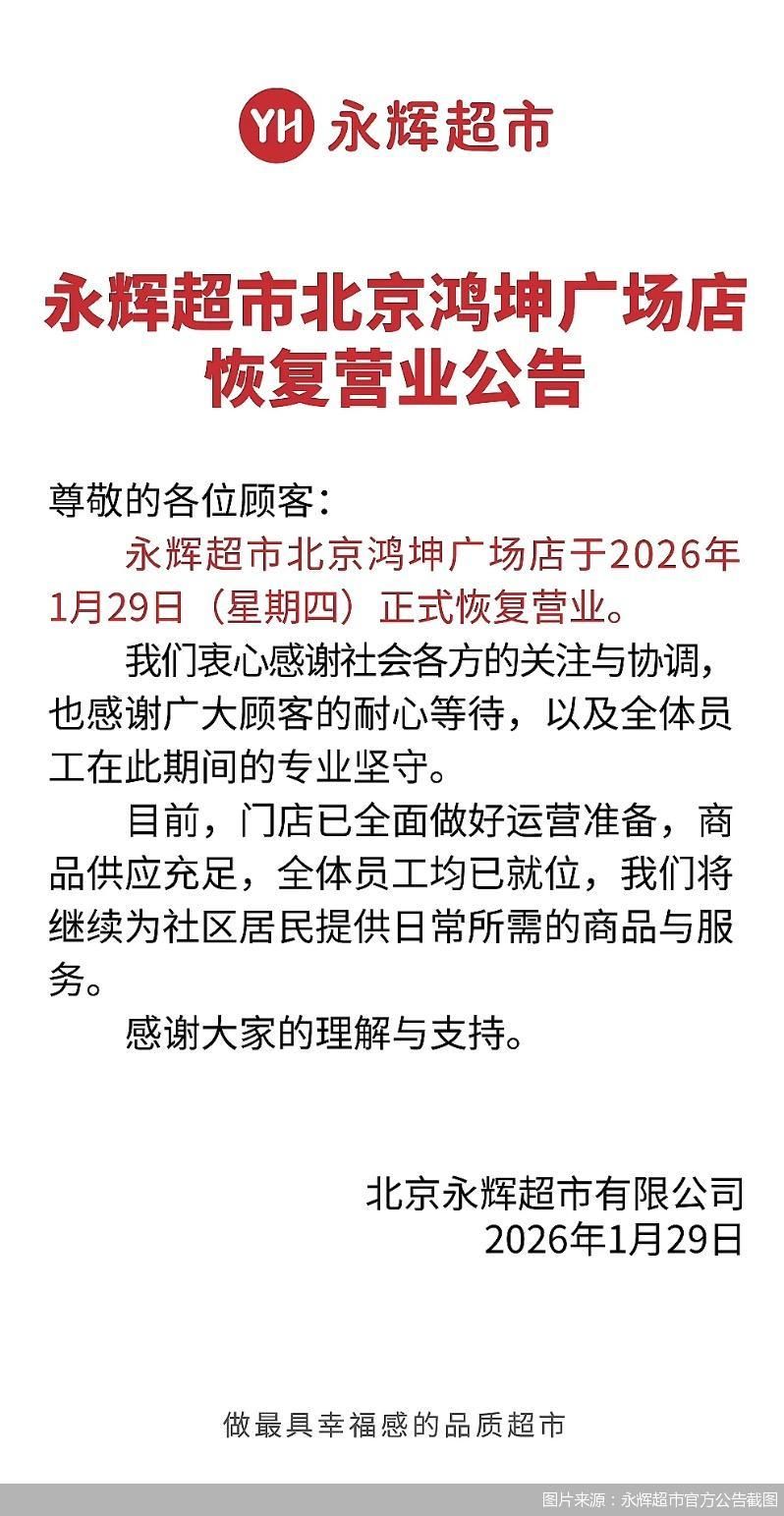
(企业视频号) 1月29日,北京永辉超市(601933)于微信视频号发布公告称,永辉超市北京鸿坤广场店于2026年1月29 日(星期四)正式恢复营业。目前,门店已全面做好运营准备,商品供应充足,全体员工均已就位,永 辉超市将继续为社区居民提供日常所需的商品与服务。 ...
永辉超市(601933):永辉超市深度报告:回归产品本质,启航品质新程
Changjiang Securities· 2026-01-30 01:02
Investment Rating - The investment rating for the company is "Buy" and is maintained [15] Core Insights - The report indicates that the company maintains its leading position in the industry during periods of volatility, undergoing deep reforms to enhance product and service capabilities, establishing a long-term competitive edge based on open and transparent supplier relationships [5][13] - As store closures and adjustments come to an end, the company has entered a phase of refined and detailed operations, which is expected to boost revenue and release profit elasticity [5][13] Industry Overview - From 2020 to 2025, the supermarket industry faces challenges due to weak demand and intensified competition, leading to declining revenues. The core issue is to boost income, with the industry currently in a loss-reduction phase [9][23] - Online retail penetration is stabilizing between 25%-30%, and rental levels for shops in major cities are expected to decrease by over 20% from 2021 to 2025 [9][32] - The average store efficiency for supermarkets is projected to be 27.77 million yuan in 2024, and the average employee efficiency is expected to be 1.25 million yuan, reflecting significant improvements in operational capabilities [9][32] Company Review - The company is a leading domestic hypermarket that has deeply participated in the rapid transformation of the retail industry over the past 20 years, with a solid foundation in management experience and brand recognition [10][39] - The company has completed its national layout, with strong brand awareness and a robust supply chain, and is now focusing on quality retail reforms to adapt to the inevitable trend of shifting from product "richness" to "value for money" [10][63] Quality Reform - The company is undergoing a quality retail reform initiated in May 2024, which includes internal promotions and external recruitment to quickly build a core management team [11][40] - The company aims to enhance its private label development, targeting a penetration rate of 30%-40% for its private brands by 2025, focusing on safety and health in ingredients and processes [12][58] Investment Recommendation - The report expresses optimism about the company's growth potential through its quality-focused transformation, expecting improvements in revenue stability and profitability from 2025 to 2027, with projected EPS of -0.24, 0.07, and 0.15 yuan respectively [13][15]
永辉超市北京鸿坤广场店恢复营业 主力店运营要求稳
Bei Jing Shang Bao· 2026-01-29 15:08
Core Viewpoint - Yonghui Supermarket's Beijing Hongkun Plaza store has officially resumed operations after nearly a week of closure due to a rental dispute with the property management, highlighting the importance of stable anchor tenants in community commercial projects [1][6][10]. Group 1: Store Operations - The Yonghui Supermarket at Beijing Hongkun Plaza resumed operations on January 29, 2026, with full staff and sufficient product supply [3][10]. - Prior to the reopening, the store was completely closed, with the B1 level experiencing a water supply cut and the main entrance being locked [5][6]. Group 2: Rental Dispute - The closure was linked to a rental disagreement, with Yonghui Supermarket reportedly not paying any rent or associated fees since the store's renovation completion on March 28, 2025 [6][9]. - Yonghui Supermarket claimed that the property management's statements regarding unpaid rent lacked contractual and factual basis, citing a court order that required them to suspend rent payments to protect creditor interests [9][10]. Group 3: Community Commercial Strategy - The stability of anchor stores like supermarkets and cinemas is crucial for building long-term trust with local residents, as these stores provide essential services and a sense of security [10][11]. - Community commercial projects should focus on maintaining stable anchor tenants while regularly refreshing supporting retail and dining options to keep consumer interest alive [10][11].

永辉超市北京鸿坤广场店恢复营业!“之前双方沟通有问题,已解决”
Bei Jing Shang Bao· 2026-01-29 13:03
Core Viewpoint - Yonghui Supermarket has resolved communication issues with the property management of Hongkun Plaza, leading to the resumption of operations at the store after a temporary closure due to disputes over operational conditions and unpaid fees [1][4]. Group 1: Store Operations - Yonghui Supermarket's Hongkun Plaza store has officially resumed operations on January 29, 2026, after resolving previous communication problems with the property management [1]. - The store had been temporarily closed due to the property management's unilateral actions, including cutting off water and heating, which hindered normal operations [4]. - Other Yonghui Supermarket locations in Beijing are operating normally, and the company is actively communicating with relevant parties to ensure the Hongkun Plaza store remains operational [8]. Group 2: Dispute Details - The property management claimed that Yonghui Supermarket closed the store without proper communication, while Yonghui stated that the closure was due to the property management's actions [4][8]. - Yonghui Supermarket has indicated that the property management's claims regarding unpaid fees lack contractual and factual basis, and the company has received court documents related to a debt dispute involving the property management [4][9]. - The shopping center asserts that Yonghui has not paid any rent or associated fees since the store's renovation, despite continuing to provide essential services like water and electricity [9].
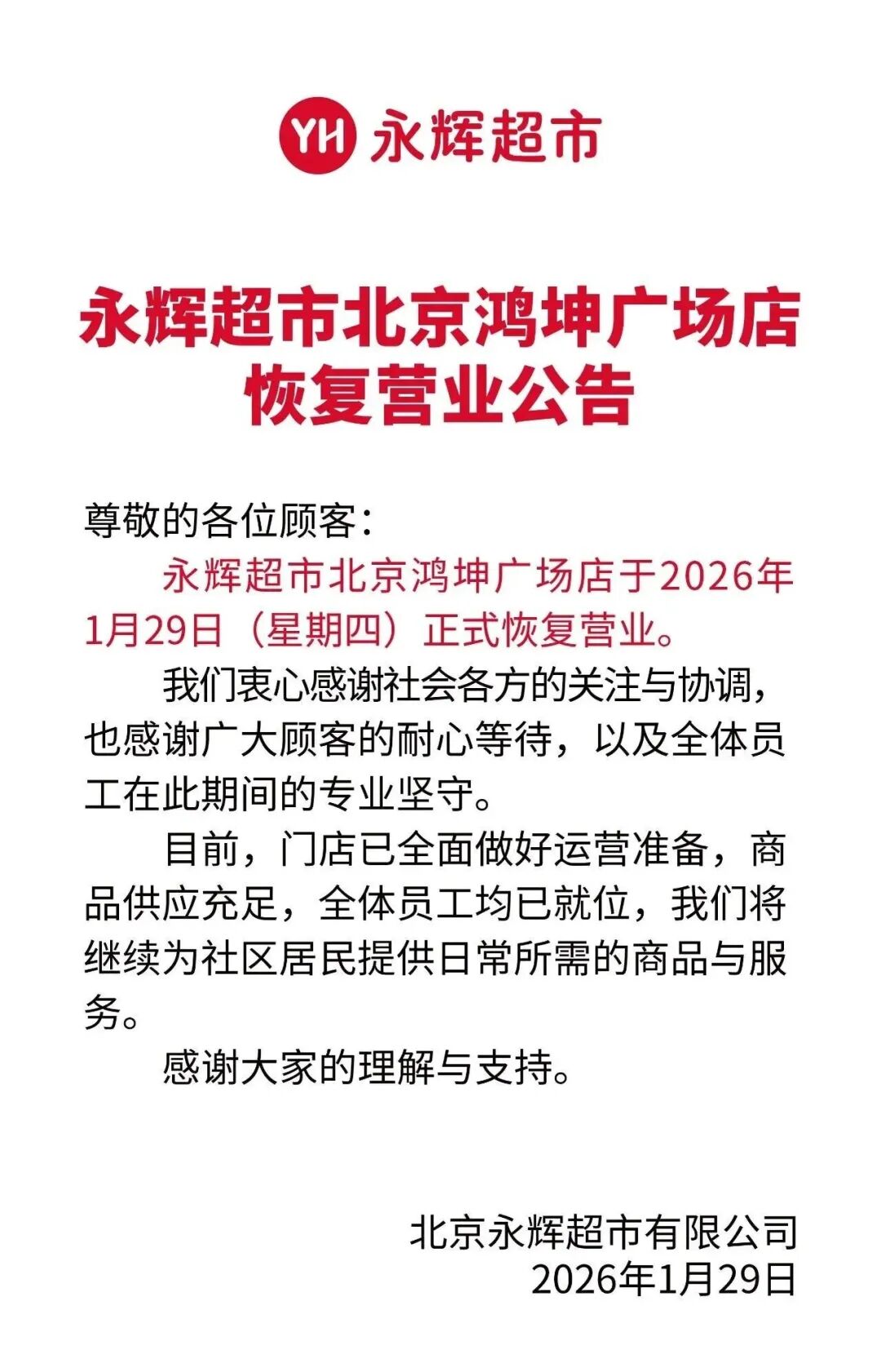
与永辉对调高管,大润发不满足于做前置仓
3 6 Ke· 2026-01-29 11:01
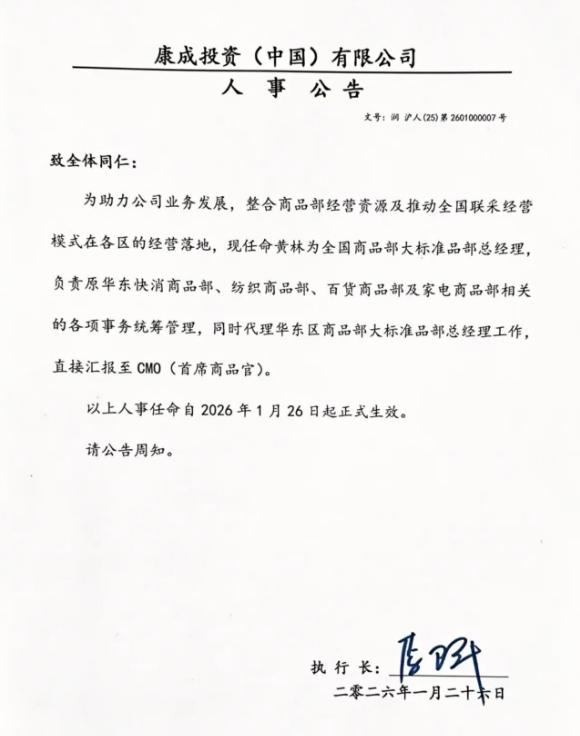
Core Insights - The recent executive changes at RT-Mart and Yonghui Supermarket reflect a strategic shift in the retail industry, highlighting differing approaches to transformation and supply chain management [4][10][21] Group 1: Executive Changes and Strategic Implications - The departure of Li Chunde from RT-Mart and the appointment of Huang Lin, a former executive at Yonghui, signifies a strategic realignment aimed at enhancing supply chain integration and product management [1][3] - The exchange of key personnel between RT-Mart and Yonghui illustrates a competitive talent acquisition strategy, with both companies seeking to leverage each other's strengths in product sourcing and retail operations [6][21] - Huang Lin's role will focus on consolidating procurement across various product categories, aiming to improve operational efficiency and cost-effectiveness for RT-Mart [9][11] Group 2: Financial Performance and Market Position - Yonghui Supermarket has faced significant financial challenges, with a projected net loss of 2.14 billion RMB for 2025, prompting a strategic overhaul to regain market share [6][7] - The transformation efforts at Yonghui include optimizing store layouts and enhancing the fresh food supply chain, resulting in an 80% increase in customer traffic at remodeled stores [7][8] - RT-Mart's parent company, Gao Xin Retail, reported a revenue of 71.55 billion RMB and a net profit of 386 million RMB for the 2025 fiscal year, indicating a successful turnaround through cost control measures [8][17] Group 3: Supply Chain and Retail Strategy - The integration of a national procurement system at RT-Mart aims to unify product quality and pricing across its extensive store network, enhancing competitiveness against online retailers [9][10] - RT-Mart's strategy includes the development of a multi-format retail matrix, combining large hypermarkets, supermarkets, and front warehouses to meet diverse consumer needs [17][20] - The front warehouse model is positioned as a response to the rise of instant retail, with projections indicating a market size of 227.7 billion RMB by 2025, growing at a CAGR of 49.2% [12][14] Group 4: Future Challenges and Industry Dynamics - The ongoing transformation in the retail sector emphasizes the need for companies to adapt to changing consumer behaviors and competitive pressures, moving beyond traditional growth strategies [23] - The success of RT-Mart's new initiatives, including the "cloud supermarket" concept, will depend on effective execution and the ability to navigate internal and external challenges [22][23] - The retail landscape is shifting towards a comprehensive competition model that prioritizes product quality, supply chain efficiency, and digital capabilities, marking the end of an era dominated by rapid expansion without strategic depth [23]
红旗连锁:持股5%以上股东永辉超市减持股份达0.79%
Xin Lang Cai Jing· 2026-01-28 12:36
Core Viewpoint - Yonghui Supermarket, a shareholder holding more than 5% of Hongqi Chain, plans to reduce its stake in the company between January 23 and January 28, 2026, without affecting the control of the company [1] Group 1 - Yonghui Supermarket will reduce its holdings by a total of 10.77 million shares, which accounts for 0.79% of the total share capital [1] - The reduction consists of 1.122 million shares through centralized bidding, representing 0.08% of the total share capital, and 9.6492 million shares through block trading, representing 0.71% of the total share capital [1] - After the reduction, Yonghui Supermarket's holdings will decrease to 93.0586 million shares, reducing its ownership percentage from 7.63% to 6.84% [1]
