
CCB(601939)

Search documents
金价大涨,多家银行宣布:上调!
Sou Hu Cai Jing· 2025-11-11 13:18
Core Insights - Several banks have adjusted the thresholds for gold accumulation business in response to the recent rise in international gold prices, which have surpassed $4100 per ounce [1][3]. Group 1: Bank Adjustments - China Construction Bank announced an increase in the daily accumulation starting amount from 1000 RMB to 1200 RMB, effective November 15, 2025 [1]. - CITIC Bank has raised the minimum investment amount for its regular gold accumulation plan from 1000 RMB to 1500 RMB, also effective November 15, 2025 [3]. - The last adjustment by CITIC Bank occurred in March 2024, when the minimum investment was raised from 500 RMB to 1000 RMB [5]. Group 2: Market Context - The recent surge in international gold prices has been significant, with London gold prices exceeding $4141 per ounce at the time of reporting [5]. - In addition to the changes in accumulation thresholds, Zheshang Bank has adjusted the daily limit for physical gold redemption through its JD Finance channel to 10,000 RMB, effective November 18, while maintaining an annual limit of 200,000 RMB [5].




“取现1万以上要扫码报备,现场核实”| 实测多家银行取款门槛
Xin Lang Cai Jing· 2025-11-11 12:41
Core Viewpoint - Recent incidents of banks questioning the purpose of cash withdrawals below 50,000 yuan in Dongying, Shandong, have raised public concern about the implementation of anti-fraud measures in banking practices [1][3] Group 1: Regulatory Changes - The People's Bank of China, along with other financial regulatory bodies, has proposed a new draft regulation that aims to relax the previous requirement for cash withdrawals over 50,000 yuan to disclose the source and purpose of funds, effective from August 4, 2025 [4][10] - The previous regulation, which mandated that cash transactions over 50,000 yuan be documented for their source and purpose, was met with criticism and is now being reconsidered to balance fraud prevention with customer convenience [9][11] Group 2: Regional Variations in Banking Practices - A survey conducted across various provinces revealed significant discrepancies in the requirements for cash withdrawals, with some banks enforcing strict verification processes for amounts as low as 10,000 yuan [5][6] - In Dongying, banks like the Industrial and Commercial Bank of China and China Construction Bank have implemented stringent measures, such as requiring identification and purpose verification for withdrawals exceeding 20,000 yuan [6][8] - Conversely, some banks in regions like Anhui and Zhejiang have higher thresholds for questioning the source of funds, with some not requiring any verification for withdrawals below 50,000 yuan [7][8] Group 3: Impact on Customers - The stringent measures are primarily aimed at protecting elderly customers from fraud, as there have been numerous cases of scams targeting this demographic [6][7] - The inconsistency in withdrawal policies across different regions may lead to confusion and frustration among customers, highlighting the need for clearer guidelines from regulatory authorities [5][6]

逆市上涨!农业银行涨超2%,逼近前高!双百亿银行ETF(512800)站稳所有均线,资金寻求“当下确定性”
Xin Lang Ji Jin· 2025-11-11 11:59
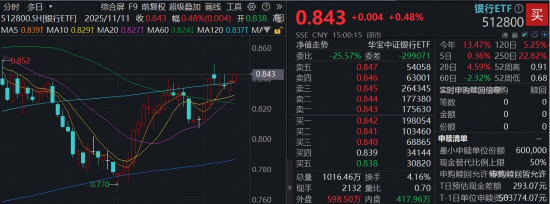
Core Viewpoint - The banking sector is experiencing a resurgence, with the bank ETF (512800) showing positive performance amidst market volatility, indicating strong buying interest and a favorable medium to long-term outlook [1][4]. Group 1: Market Performance - The bank ETF (512800) closed up 0.48% today, with intraday premium trading reflecting positive buying sentiment [1]. - The ETF has shown a two-day consecutive increase and is positioned above all moving averages, suggesting an optimistic medium to long-term trend [1]. - The ETF's latest scale exceeds 20.4 billion, with an average daily trading volume of over 800 million this year, making it the largest and most liquid bank ETF in A-shares [4]. Group 2: Stock Performance - Individual bank stocks are mostly performing well, with Xi'an Bank rising nearly 3%, Agricultural Bank up over 2%, and several others, including Qingdao Bank and China Merchants Bank, also showing gains [2][3]. - Over 10 listed banks have seen significant share purchases by shareholders or executives this year, indicating strong market confidence [3]. Group 3: Investment Sentiment - The current market environment has led to a shift towards stable cash flow and high-dividend sectors, with banks expected to attract more investment due to their stable and high dividend characteristics [3]. - The banking sector is perceived as being in a high cost-performance zone, with the bank ETF tracking a price-to-book ratio of only 0.72, indicating a mid-low range compared to the past decade [4]. - The dividend yield of the index tracked by the bank ETF is 4.02%, significantly exceeding the risk-free rate of 1.8%, highlighting its "quasi-fixed income" nature [4].

多家银行宣布,上调积存金起购门槛
新华网财经· 2025-11-11 11:44
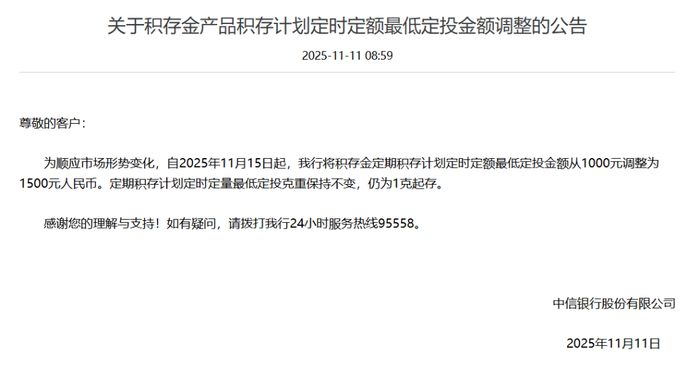
Core Viewpoint - The recent adjustments in gold accumulation business thresholds by banks are likely a response to the rising international gold prices, aimed at mitigating market risks [4][6][11]. Group 1: Bank Adjustments - On November 11, China CITIC Bank announced an increase in the minimum investment amount for its gold accumulation plan from 1000 RMB to 1500 RMB, effective from November 15, 2025, while maintaining the minimum weight requirement at 1 gram [1][7]. - China Construction Bank also revised its gold accumulation business rules, raising the daily accumulation starting amount from 1000 RMB to 1200 RMB, effective from November 15, 2025 [2][3][8]. - This marks the second adjustment by China Construction Bank in 2023, having previously raised the starting amount from 800 RMB to 1000 RMB in April [9]. Group 2: Market Context - The adjustments coincide with a significant rise in international gold prices, with spot gold reaching approximately 4140 USD per ounce as of November 11 [6][11]. - Industry experts suggest that these changes are intended to control potential risks associated with increased trading activity in the gold market, particularly to prevent irrational trading behaviors among small investors [4][9]. Group 3: Historical Trends - The adjustments reflect a broader trend in the banking sector, with multiple banks raising their gold accumulation thresholds throughout 2023, indicating a shift towards higher entry points for investors [11][12]. - Since March 2023, several banks, including China Construction Bank and others, have progressively increased their minimum investment amounts, with some banks raising thresholds from as low as 600 RMB to over 1000 RMB [11][12].

女子建行存单30年无法兑现,系统生僻字致3个月无进展
3 6 Ke· 2025-11-11 11:02
Core Points - A customer, Ms. Gu, has been unable to withdraw her savings from China Construction Bank (CCB) for three months due to issues related to her long-term deposit certificates from 1997 [1] - The deposits were for three years, with an initial amount of 3000 yuan each, and accumulated interest of approximately 2000 yuan [1] - The bank cited system upgrade issues and the use of a rare character in the customer's name as the main reasons for the delay [2] Group 1 - Ms. Gu has two long-term deposit certificates from CCB, which she attempted to redeem in June 2025, but was told that the bank needed to verify information due to the age of the deposits [1] - The bank's staff indicated that the delay was primarily due to a system upgrade and the rare character in Ms. Gu's name, which caused complications in processing her request [2] - After three months of waiting without any updates, Ms. Gu expressed increasing anxiety regarding the situation [1]
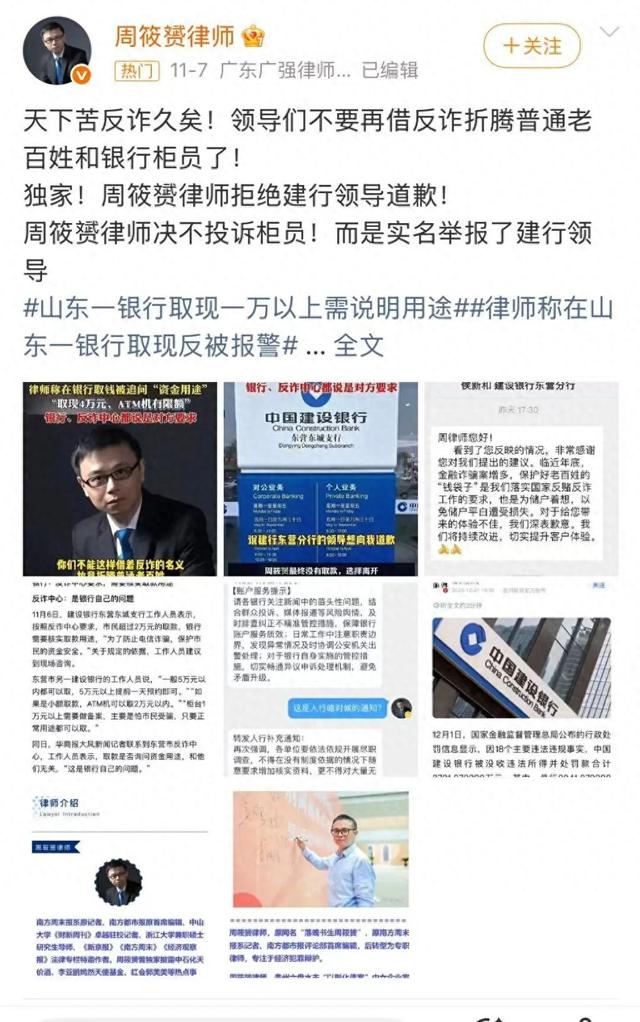
建行取款一万遭盘问,当事人最新发声:不能把客户当犯罪嫌疑人
Guan Cha Zhe Wang· 2025-11-11 10:42
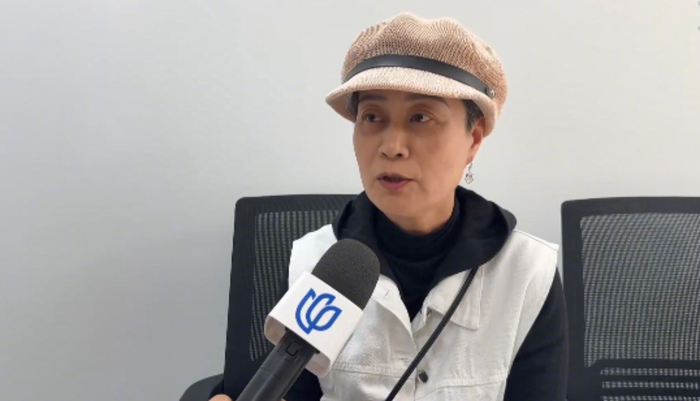
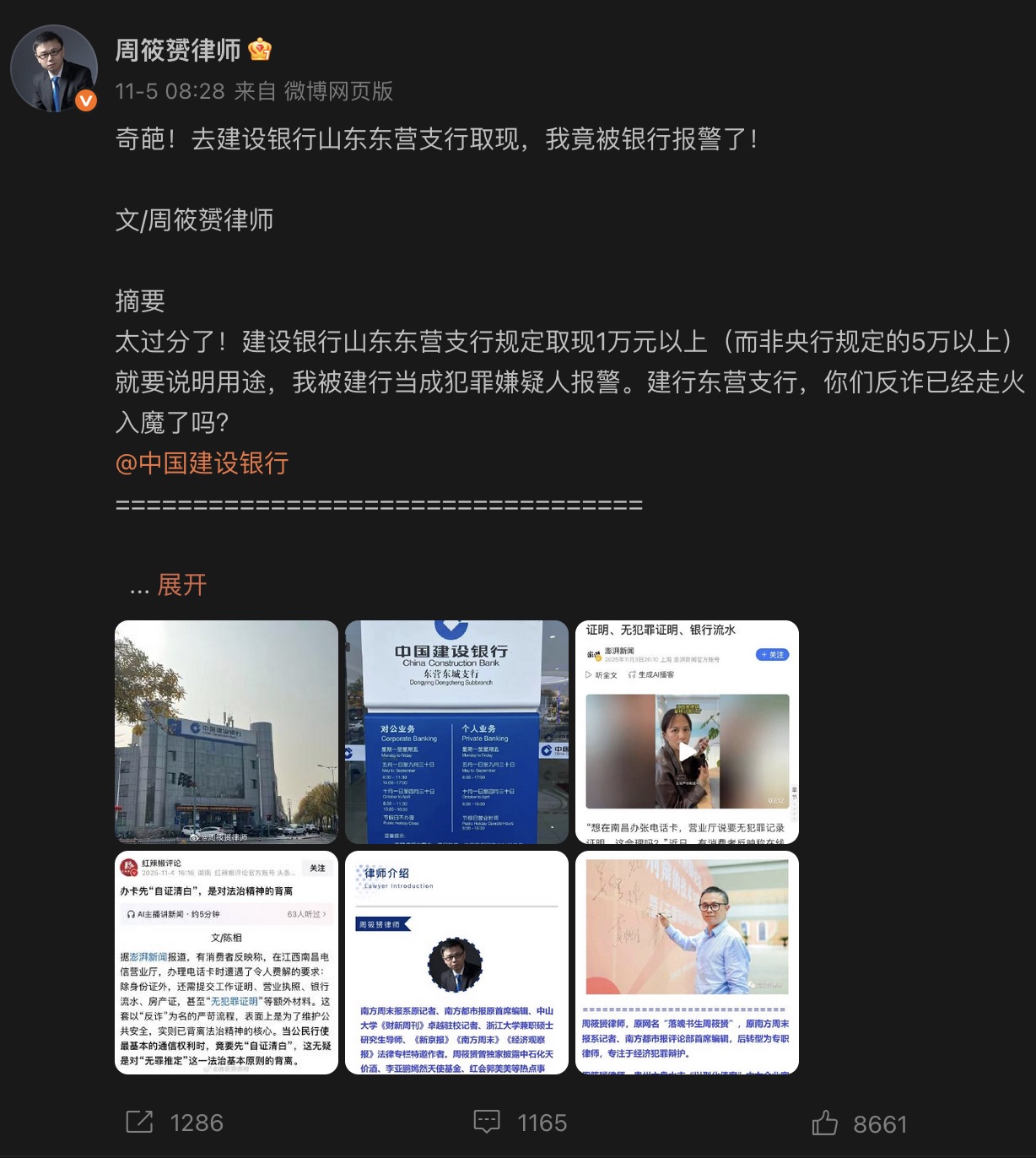
【文/羽扇观金工作室】 11月5日,微博认证为"周筱赟律师"的用户在社交媒体发文,讲述自己在中国建设银行山东东营支行取款时遭遇银行盘问并报警的经历,引发社会广泛关 注。 周筱赟称,他当时在东营出差,正好赶上朋友婚礼,于是想去银行取点现金随礼,但柜员连续询问"取现是什么用途""上个月某某某的人给你转了若干元, 这笔钱是什么"。 由于当事人没有"积极配合",柜员随后表示:已经打电话给反诈中心和派出所,但是电话没人接,现在只能让反诈中心出警来向你核实。 11日,周筱赟在社交平台再次评论该事件:不能对反诈层层加码,故意折腾普通老百姓和银行柜员,"银行现在的做法,不仅侵犯了客户的隐私权,而且是 把所有的客户当做犯罪嫌疑人来审问"。 事件发酵:律师坚称银行"严重侵权" 根据周筱赟律师的陈述,事件发生于近期其在建设银行东营东城支行办理取款业务时。周筱赟原计划取现4万元,但在柜台办理时被告知,取款1万元以上需 要登记资金用途。 当周筱赟表示"个人消费"时,柜员称该选项不符合要求;当其改称"朋友结婚给红包"时,又被告知系统中没有该选项。 周筱赟在微博稳重提及,在问及取款用途后,柜员又问:上个月的某月某日,有个叫某某某的人给你转 ...
【会员观市】中国建设银行:11月交易员汇市观察
Sou Hu Cai Jing· 2025-11-11 10:29
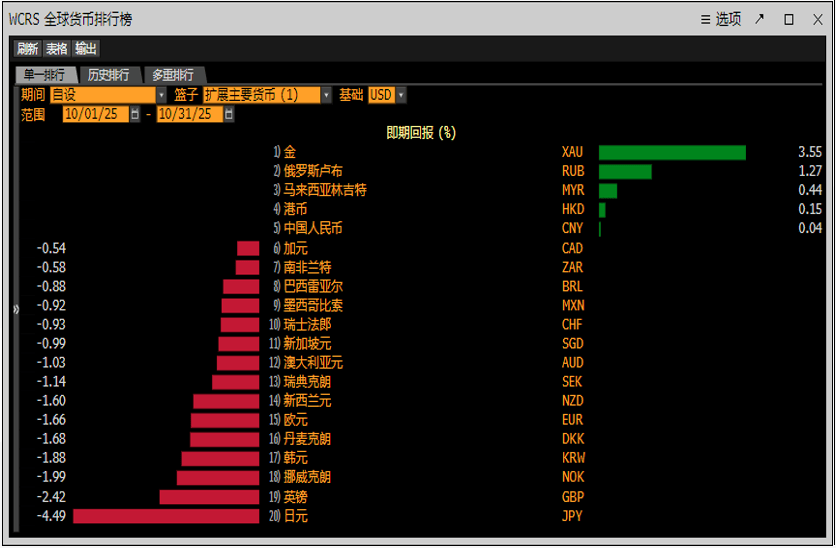
Market Overview - The US dollar index rebounded to 99.55 in October, with a monthly increase of 1.76%. Most non-USD currencies declined, except for the ruble and the ringgit, while gold hit a yearly high before retracing, and commodity prices mostly fell [1]. Economic Data - US inflation data showed a lower-than-expected CPI of 3% year-on-year for September, compared to the expected 3.1%. Core CPI increased by 0.3% month-on-month, below the anticipated 0.4% [4]. - The labor market outlook is concerning, with September's non-farm employment and unemployment rate data delayed due to the government shutdown. The ADP employment report showed a decrease of 32,000 jobs, significantly below the expected increase of 52,000 [5]. - Consumer confidence continues to decline, with the University of Michigan's consumer sentiment index for October at 53.6, below the expected 55, marking a fourth consecutive month of decline [5]. - Manufacturing showed signs of recovery, with the S&P Global Manufacturing PMI for October at 52.5, up from 52.2 previously [5]. Federal Reserve Actions - The Federal Reserve lowered the federal funds rate target range by 25 basis points in October, from 4%-4.25% to 3.75%-4%. There were internal divisions regarding future rate cuts, with Chairman Powell indicating that a December rate cut is not guaranteed due to missing economic data from the government shutdown [10][11]. - The market's expectations for a December rate cut have diminished, with the Fed's hawkish stance providing support for the dollar [10]. Currency Performance - The euro weakened in October, failing to maintain its strength from September, dropping from a high of 1.1733 to 1.1534 by month-end, breaking below an upward channel formed since April 2025 [16]. - The Japanese yen faced pressure, with USDJPY rising 4.7% in October, reaching a high of 153.99, driven by expectations of delayed interest rate hikes from the Bank of Japan [19][20]. - The British pound also declined, down 2.2% in October, influenced by weak economic data and increased expectations for a rate cut from the Bank of England in December [23][24]. - The Malaysian ringgit showed resilience, with a GDP growth of 5.2% in Q3 and a trade surplus of 19.9 billion ringgit, despite external pressures [29][30]. Commodity Prices - Commodity prices generally fell, with notable declines in energy prices such as Brent crude oil down 0.60% and natural gas prices fluctuating [4]. - Gold prices retraced after reaching a yearly high, while other commodities like iron ore and steel also saw declines [4]. Outlook - The US economy may face a challenging environment with persistent labor market weakness and rising inflation pressures due to tariffs, leading to a potential stagflation scenario [14]. - The euro is expected to remain under pressure, with a forecasted trading range of 1.14 to 1.18 in November [16]. - The Japanese yen may continue to weaken if US economic data remains strong or if Japan's fiscal stimulus exceeds expectations, with a projected range of 151 to 158.5 for USDJPY in November [20]. - The British pound is likely to remain weak, with a trading range of 1.27 to 1.34 anticipated for November [24]. - The Malaysian ringgit is expected to continue its range-bound movement, with a forecasted range of 4.15 to 4.30 for USD/MYR [30].
1500元!银行积存金起购门槛再刷新高
Di Yi Cai Jing· 2025-11-11 10:27
Group 1 - Several banks have raised the minimum investment threshold for gold accumulation plans, with Citic Bank increasing the minimum investment amount from 1000 RMB to 1500 RMB effective November 15, 2025 [1] - China Construction Bank has revised its personal gold accumulation business rules, raising the daily accumulation starting amount from 1000 RMB to 1200 RMB, effective November 15 [2] - International gold prices have surged, with spot gold reaching as high as 4140 USD [3] Group 2 - On November 3, multiple banks, including Industrial and Commercial Bank of China (ICBC) and China Construction Bank, announced a suspension of certain gold accumulation services, including real-time purchases and physical gold exchanges [3] - ICBC later announced the resumption of its gold accumulation services on the same day [3]
45万亿建行新曲线:绿色、普惠、科技三轮驱动
市值风云· 2025-11-11 10:15
Core Viewpoint - The article emphasizes that China Construction Bank (CCB) is focusing on high-quality development amidst a challenging industry environment, characterized by pressure on interest margins and a shift towards value-driven growth in the banking sector [3][17]. Financial Performance - For the first three quarters of 2025, CCB reported operating income of 573.7 billion yuan, a year-on-year increase of 0.82%, and net profit attributable to shareholders of 257.4 billion yuan, up 0.62% year-on-year [4][6]. - In Q3 2025, CCB achieved a net profit of 95.3 billion yuan, reflecting a significant year-on-year growth of 4.19%, indicating a positive trend in profitability [5][6]. Revenue Structure - Non-interest income reached 146.1 billion yuan, growing by 13.95% year-on-year, becoming a key driver of revenue growth [6]. - The net interest margin for the first three quarters was 1.36%, a decrease of 4 basis points from the previous half-year, primarily due to declining asset yields [6]. Asset Quality and Capital Strength - As of September 30, 2025, CCB's total assets amounted to 45.37 trillion yuan, an increase of 11.83% from the end of the previous year, with total loans and advances reaching 27.68 trillion yuan, up 7.1% [7][10]. - The non-performing loan (NPL) ratio stood at 1.32%, a slight decrease of 2 basis points, indicating stable asset quality [8][10]. - CCB's capital adequacy ratios remain strong, with a core Tier 1 capital ratio of 14.36% and a total capital ratio of 19.24%, positioning the bank favorably within the industry [10][18]. Strategic Initiatives - CCB is actively pursuing digital transformation and strategic breakthroughs in areas such as green finance and inclusive finance, with green loan balances increasing by 18.38% year-to-date [12][13]. - The bank has also made significant strides in supporting small and micro enterprises, with loans in this segment exceeding 3.8 trillion yuan [13][18]. Future Outlook - CCB plans to continue enhancing its "retail + inclusive + green" collaborative development strategy, leveraging digital transformation to optimize its asset-liability structure and improve risk pricing capabilities [19].
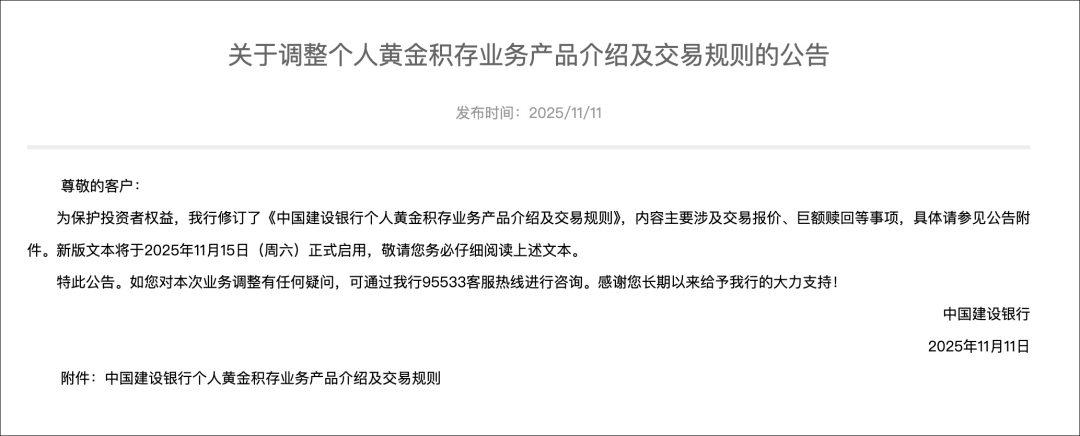
事关黄金业务,建行宣布调整!
Jin Rong Shi Bao· 2025-11-11 09:43
Core Viewpoint - China Construction Bank (CCB) announced adjustments to its personal gold accumulation business rules to protect investor rights, with the new rules set to take effect on November 15, 2025 [1] Group 1: Adjustments to Trading Rules - CCB will adjust customer pricing based on international and domestic gold price trends, trading positions, market liquidity, and RMB exchange rates, allowing for price adjustments according to market conditions [3] - There will be a price difference between personal gold accumulation buy/sell quotes and the Shanghai Gold Exchange or international market prices due to trading costs and liquidity [3] - CCB reserves the right to adjust the timing of periodic accumulation prices and will announce any changes through official channels [3] Group 2: Redemption Rules - A cumulative net redemption request exceeding 20% of CCB's total accumulation balance from the previous trading day will be classified as a large redemption, and CCB may refuse the excess requests [3] - If large redemptions occur for two consecutive trading days or more, CCB may suspend redemption transactions the following trading day, with announcements made through official channels [3] - CCB also reserves the right to adjust redemption share requirements based on business conditions, with prior announcements through official channels [3] Group 3: Minimum Investment Amount - The starting amount for periodic gold accumulation will be raised to 1200 RMB [4] Group 4: Industry Context - Other banks, such as Citic Bank, are also adjusting their gold accumulation plans, with Citic Bank increasing the minimum investment amount from 1000 RMB to 1500 RMB starting November 15, 2025 [5] - Major banks, including ICBC and CCB, have made significant adjustments to their gold accumulation businesses, including account openings and physical exchanges, which have since returned to normal [5] - The precious metals market is experiencing a new round of price increases, with spot gold surpassing 4130 USD per ounce and domestic gold jewelry prices rising significantly [6]
