BANK OF CHINA(601988)

Search documents
滨江开发区商会完成换届
Xin Hua Ri Bao· 2026-01-25 19:18
Group 1 - The fourth first member representative meeting of the Nanjing Jiangning Binjiang Economic Development Zone Chamber of Commerce was held on January 22, where a new leadership team was elected and key work priorities were established [1] - Wang Yin was elected as the new president of the chamber, with Wan Jinglin and Xu Wei serving as executive vice presidents, representing various industries such as manufacturing, technology, food, and environmental protection [1] - The new leadership aims to unite members and act as a bridge to promote the healthy development of private enterprises and the growth of private economic individuals [1] Group 2 - A strategic cooperation agreement was signed between the Binjiang Development Zone Chamber of Commerce and the Bank of China Nanjing Jiangning Branch, which will provide comprehensive and customized financial services to member enterprises [1] - The first session of the "Binjiang Business Path" lecture series was held, featuring an expert in artificial intelligence who shared insights on how AI can help enterprises reduce workforce and costs while increasing efficiency [1]

过于火爆,部分暂停预约!很多人懵了:这都要抢?
Sou Hu Cai Jing· 2026-01-25 09:48
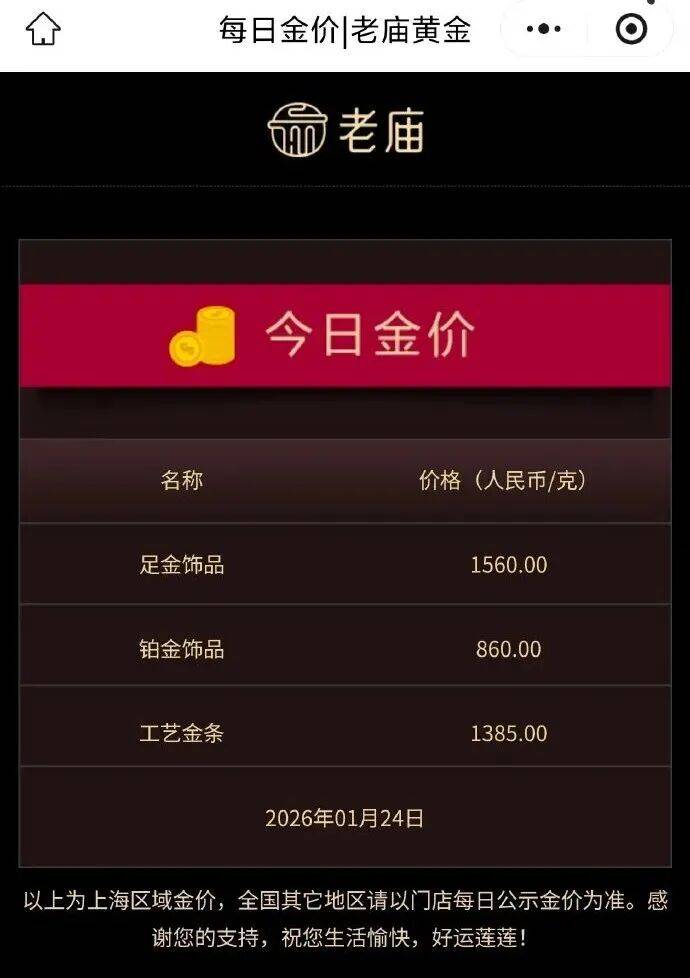
Group 1: Gold Price Surge - The gold price has recently reached a new high, with New York futures surpassing $5000 per ounce on January 24 [1] - Domestic gold jewelry prices have also increased, with Chow Sang Sang's gold jewelry priced at 1551 RMB per gram, up 6 RMB from the previous day [2] Group 2: Demand for Safe Deposit Boxes - There is a growing concern among consumers about the safety of storing gold at home, leading to increased demand for bank safe deposit boxes [5] - Many banks are experiencing a shortage of safe deposit boxes, with some customers facing wait times of two to three months for new rentals [8][10] - The supply of safe deposit boxes has not kept pace with the rising demand due to space limitations and operational costs, resulting in a scarcity of available boxes [11] Group 3: Bank Responses and Alternatives - Major state-owned banks have stopped accepting new customers for safe deposit boxes, while some smaller banks still have limited availability [9][12] - Smaller banks offer more flexible rental terms and lower prices, making them an alternative for customers unable to secure boxes from larger banks [12]




二级资本债周度数据跟踪-20260125
Soochow Securities· 2026-01-25 07:11
1. Report Industry Investment Rating There is no information about the industry investment rating in the provided content. 2. Core Viewpoints of the Report - This week (January 19 - January 23, 2026), there were no new secondary capital bonds issued in the inter - bank market and the exchange market [1]. - This week, the total trading volume of secondary capital bonds was approximately 334.2 billion yuan, an increase of 69.1 billion yuan compared to last week. The top three bonds in terms of trading volume were 25 Bank of China Secondary Capital Bond 02BC (44.352 billion yuan), 25 China Guangfa Bank Secondary Capital Bond 01BC (21.98 billion yuan), and 25 Bank of China Secondary Capital Bond 03A(BC) (7.753 billion yuan) [2]. - In terms of the issuing regions, the top three regions in terms of trading volume were Guangdong Province, Shanxi Province, and Shandong Province, with trading volumes of approximately 252.1 billion yuan, 29.9 billion yuan, and 14.7 billion yuan respectively [2]. - As of January 23, the changes in the yields to maturity of 5Y secondary capital bonds with ratings of AAA -, AA +, and AA compared to last week were - 2.18BP, - 2.84BP, and - 3.84BP respectively; for 7Y secondary capital bonds, the changes were - 2.72BP for all ratings of AAA -, AA +, and AA; for 10Y secondary capital bonds, the changes were - 4.60BP, - 5.09BP, and - 5.09BP respectively [2]. - This week, the overall deviation of the average trading price valuation of secondary capital bonds was not significant. The proportion of discount transactions was greater than that of premium transactions, and the discount amplitude was greater than the premium amplitude [3]. 3. Summary by Related Catalogs 3.1 Primary Market Issuance - This week (January 19 - January 23, 2026), there were no new secondary capital bonds issued in the inter - bank market and the exchange market [1]. 3.2 Secondary Market Transactions - **Trading Volume**: The total trading volume of secondary capital bonds this week was approximately 334.2 billion yuan, an increase of 69.1 billion yuan compared to last week. The top three bonds in terms of trading volume were 25 Bank of China Secondary Capital Bond 02BC (44.352 billion yuan), 25 China Guangfa Bank Secondary Capital Bond 01BC (21.98 billion yuan), and 25 Bank of China Secondary Capital Bond 03A(BC) (7.753 billion yuan) [2]. - **Regional Distribution**: In terms of the issuing regions, the top three regions in terms of trading volume were Guangdong Province, Shanxi Province, and Shandong Province, with trading volumes of approximately 252.1 billion yuan, 29.9 billion yuan, and 14.7 billion yuan respectively [2]. - **Yield to Maturity**: As of January 23, the changes in the yields to maturity of 5Y secondary capital bonds with ratings of AAA -, AA +, and AA compared to last week were - 2.18BP, - 2.84BP, and - 3.84BP respectively; for 7Y secondary capital bonds, the changes were - 2.72BP for all ratings of AAA -, AA +, and AA; for 10Y secondary capital bonds, the changes were - 4.60BP, - 5.09BP, and - 5.09BP respectively [2][10]. 3.3 Top Thirty Bonds with Valuation Deviation - **Discount Bonds**: The top three discount bonds were 23 Kecheng Rural Commercial Secondary Capital Bond 01 (- 1.7012%), 22 Xinchang Rural Commercial Bank Secondary Capital Bond 01 (- 1.6229%), and 25 Ninghai Rural Commercial Secondary Capital Bond 01 (- 1.6108%). The Zhongzhai implicit ratings were mainly AAA -, AA +, and AA -, and the bonds were mainly distributed in Beijing, Zhejiang, and Guangdong [3][13]. - **Premium Bonds**: The top three premium bonds were 25 Jilin Bank Secondary Capital Bond 02 (0.6619%), 22 Shengjing Bank Secondary Capital Bond 01 (0.1965%), and 24 Shengjing Bank Secondary Capital Bond 01 (0.1959%). The Zhongzhai implicit ratings were mainly AAA -, AA, and AA +, and the bonds were mainly distributed in Beijing, Zhejiang, and Liaoning [3][14].
中国银行业理财市场年度报告(2025年)
Xin Lang Cai Jing· 2026-01-25 06:34
Core Insights - The year 2025 is a pivotal year marking the end of the 14th Five-Year Plan and the beginning of the 15th, with China's economy demonstrating resilience and vitality despite internal and external pressures [1] Group 1: Economic Performance - China's economy has shown a stable and progressive development trend, achieving significant advancements in both hard and soft power over the past five years [1] - The banking wealth management market is projected to reach a total scale of 33.29 trillion yuan by the end of 2025, reflecting an 11.15% increase from the beginning of the year [1] - A total of 3.34 million new wealth management products were issued throughout the year, raising funds amounting to 76.33 trillion yuan [1] Group 2: Support for the Real Economy - Wealth management products have supported approximately 21 trillion yuan in funding for the real economy through investments in bonds, non-standardized debt assets, and equity assets [1] - The number of investors holding wealth management products reached 143 million, marking a 14.37% increase since the beginning of the year [1] - The total returns generated for investors throughout the year amounted to 730.3 billion yuan [1] Group 3: Pension Wealth Management - By the end of 2025, the personal pension wealth management product sector supported the issuance of 37 products by six wealth management companies [2] - The central data exchange platform for wealth management products facilitated sales data exchange for 966 issuing and selling institutions, with a total transaction volume of 142 trillion yuan for subscription and redemption activities [2] - The wealth management industry information disclosure platform has published over 500,000 announcements and more than 2.7 million product net value information entries [2]
个人贷款不良率骤增 银行超低折竞抛
经济观察报· 2026-01-25 04:58
Core Viewpoint - The article discusses the increasing trend of personal non-performing loan (NPL) transfers in the banking sector, driven by regulatory changes and the rising pressure of bad debts on financial institutions [1][5]. Group 1: Market Dynamics - The personal NPL transfer market is experiencing a surge, with transaction volumes rising from 186.48 billion in 2021 to 965.30 billion in 2023, and projected to reach 1583.50 billion in 2024 [3][4]. - As of January 22, 2026, there were 20 new announcements for personal NPL transfers within the month, indicating heightened activity in the market [2][8]. - The average discount rate for personal NPL packages has significantly decreased, with rates dropping from 8%-10% before 2023 to around 5% in 2026 [10][11]. Group 2: Regulatory Impact - A regulatory notification extended the trial period for bulk transfers of personal NPLs until December 31, 2026, allowing a wider range of financial institutions to participate in the transfer process [2][4]. - The expansion of trial institutions to include city commercial banks and rural commercial banks has led to a notable increase in the volume of NPL transfers [5][17]. Group 3: Borrower Profile and Economic Context - The borrower demographic for personal NPLs includes failed entrepreneurs, unemployed individuals relying on credit cards for living expenses, and consumers with excessive debt [4][20]. - The economic backdrop, characterized by macroeconomic fluctuations and income instability, has exacerbated the bad debt situation, compelling banks to offload risk assets [5][20]. Group 4: Challenges in Asset Recovery - The recovery rates for NPLs have declined, with some packages facing average recovery rates below 6%, marking the lowest in five years [12][13]. - Financial institutions are facing challenges in asset valuation and recovery due to incomplete documentation and inefficient legal processes [26][28]. Group 5: Strategic Adjustments - Banks are adapting their strategies by improving the quality of NPL packages, such as reducing overdue times and increasing the concentration of borrowers in economically developed areas [24][25]. - There is a push for enhanced transparency and standardization in the NPL transfer process to improve market confidence and asset pricing [28].


抢疯了!金饰克价突破1500元,银行保管箱业务火爆,预约排到两三个月后,网友:这都要抢?
Mei Ri Jing Ji Xin Wen· 2026-01-25 03:50
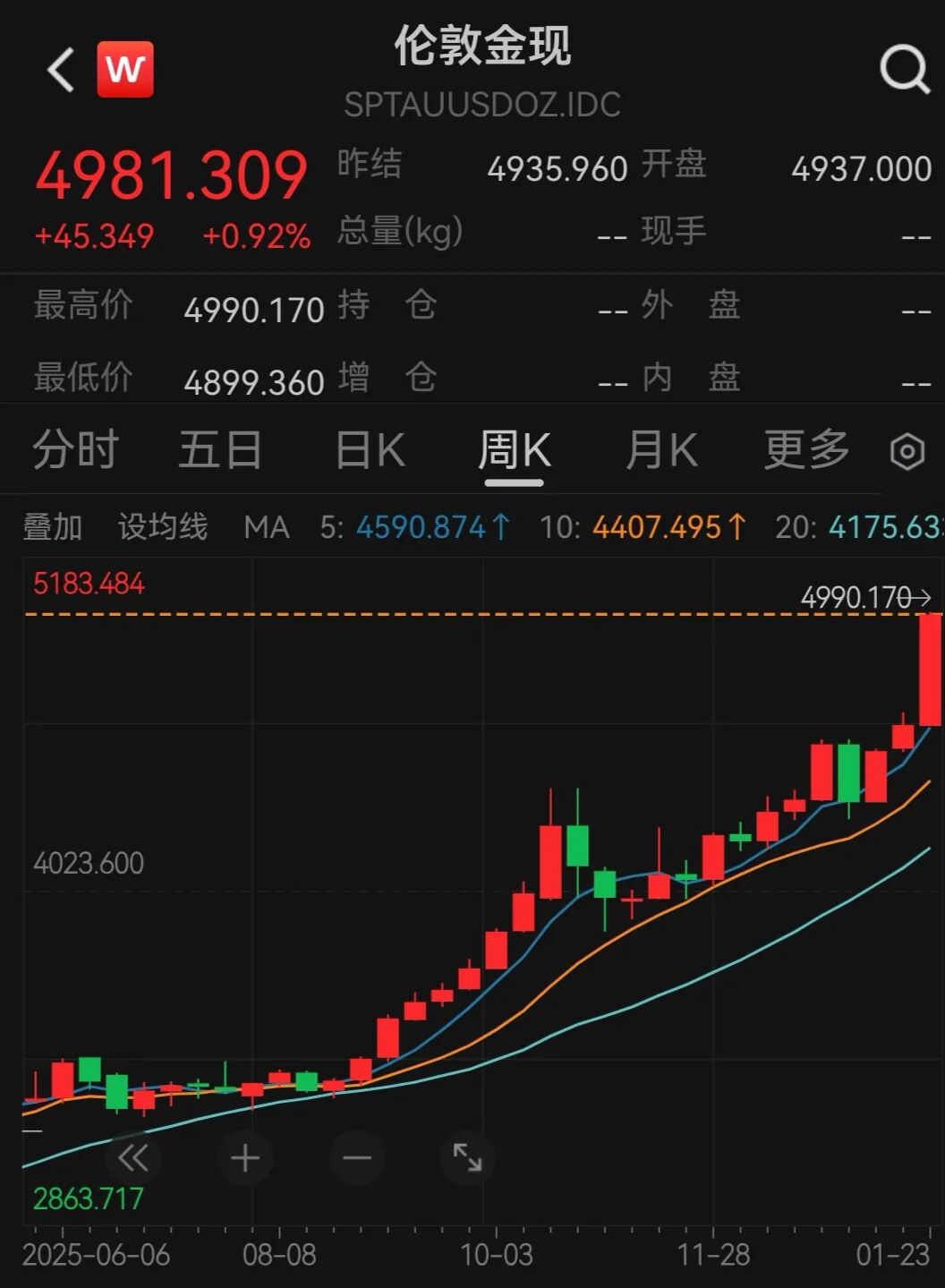
Group 1: Gold Price Surge - The price of gold has surged significantly, with spot gold reaching $4981.309 per ounce, approaching the $5000 mark [1] - Domestic gold prices have also increased, with several brands of gold jewelry exceeding 1500 yuan per gram, and some reaching 1548 yuan, marking a daily increase of over 50 yuan [3] Group 2: Demand for Bank Safe Deposit Boxes - The demand for bank safe deposit boxes has skyrocketed, with many banks reporting that all available boxes are rented out, leading to waiting lists for new customers [7][9] - In Hangzhou, major banks have completely rented out their safe deposit boxes, and new customers must wait for existing customers to return their boxes before they can rent one [8] - The surge in demand for safe deposit boxes is attributed to the increasing need for secure storage of high-value items like gold bars, particularly among high-net-worth individuals in major cities [9]

2025年4季度公募基金银行持仓点评:主动基金配置比例仍处低位
Guolian Minsheng Securities· 2026-01-25 02:04
2025 年 4 季度公募基金银行持仓点评 主动基金配置比例仍处低位 glmszqdatemark 分析师:王先爽 分析师:乔丹 执业证书:S0590525120014 执业证书:S0590526010003 邮箱:wangxianshuang@glms.com.cn 邮箱:qiaodan@glms.com.cn 推荐 维持评级 相对走势 -10% 3% 17% 30% 2025/1 2025/7 2026/1 银行 沪深300 相关研究 本公司具备证券投资咨询业务资格,请务必阅读最后一页免责声明 证券研究报告 1 2026 年 01 月 25 日 [Table_Author] 25Q4 公募基金持仓银行情况。为了追踪市场偏股公募基金对银行的持仓情况, 我们把其分为三类:1、主动基金:主动股票、偏股混合和灵活配置型基金;2、 ETF 基金:追踪沪深 300、中证 A500 等与银行相关的主要指数的 ETF 基金;3、 非 ETF 指数基金:追踪以上主要指数的非 ETF 类被动指数、指数增强型基金。25 年四季度主动、ETF 和非 ETF 指数基金分别持有银行板块 305.8、2607.2、574.1 亿元,分 ...


金融行研系列:17 中国私人银行业2025发展报告
Xin Lang Cai Jing· 2026-01-24 23:03
Core Insights - The Chinese private banking industry is undergoing a historic shift from "scale expansion" to "value cultivation," with high-quality growth expected by 2025 [3][4] - The number of high-net-worth individuals (HNWIs) in China has surpassed 3 million, with assets under management (AUM) reaching 24.6 trillion yuan, projected to grow to 42 trillion yuan by 2030, reflecting a compound annual growth rate (CAGR) of 9.5% [3][6] - The market is characterized by a dual trend of "head concentration and distinctive breakthroughs," with major state-owned banks dominating the sector [3][8] Industry Overview - The private banking sector in China continues to show steady growth, with AUM reaching 18.8 trillion yuan by mid-2025, a 9.3% increase from the end of 2024 [5][6] - The number of clients served by 16 banks reached 1.649 million, a year-on-year growth of 13.17% [5] - The market is highly concentrated, with the top four state-owned banks holding nearly 70% of the total AUM among the 12 major private banks [8][7] Market Dynamics - Business innovation is becoming a new driving force for industry development, with family trusts and insurance trusts experiencing rapid growth [4][19] - By Q3 2025, the total scale of family trusts exceeded 950 billion yuan, while insurance trusts reached 420 billion yuan, reflecting growth rates of 5.6% and 19.1% respectively [4][19] - The industry faces challenges such as stricter regulations, talent shortages, and intensified competition [4][29] Client Demographics - The number of high-net-worth families in China reached 2.066 million by 2025, with the total wealth of billionaires growing to 1.8 trillion USD, a 22.2% increase [12][6] - The average age of high-net-worth individuals is 35, with a significant portion being young entrepreneurs [13][12] - The income sources of high-net-worth individuals are diverse, with business income being the primary source [13][16] Business Model Innovations - Family office services are rapidly developing, with over 85% of private banking departments establishing independent family office service systems by the end of 2023 [22] - The demand for family office services is expected to grow, with annual expenditures on tax planning projected to reach 2.8 million yuan by 2025 [23] - ESG investments are becoming a key focus, with ESG-themed financial products seeing significant growth [24][25] Digital Transformation - The digital transformation of the private banking sector is entering a deepening phase, with at least 60% of institutions expected to adopt AI-driven advisory systems by 2025 [26][27] - Technology investments are projected to exceed 4.8 billion yuan, with a CAGR of 27.3% [26] - The integration of digital services is crucial for enhancing customer experience and operational efficiency [28] Regulatory Environment - The regulatory environment is becoming stricter, leading to increased compliance costs, which are expected to rise by 23 percentage points of operating income [29][30] - The implementation of new asset management regulations is reshaping product design and increasing the entry barriers for new players [29][30] Talent Shortage - The private banking industry faces a significant talent shortage, with a demand gap of approximately 24,000 professional bankers by 2025 [33][34] - The ratio of talent supply to demand is 1:8, indicating a critical need for skilled professionals [33] - The industry is increasingly focusing on talent training and recruitment to address this gap [34]
平安港股通红利精选混合发起式A:2025年第四季度利润1196.43万元 净值增长率3.5%
Sou Hu Cai Jing· 2026-01-24 09:43
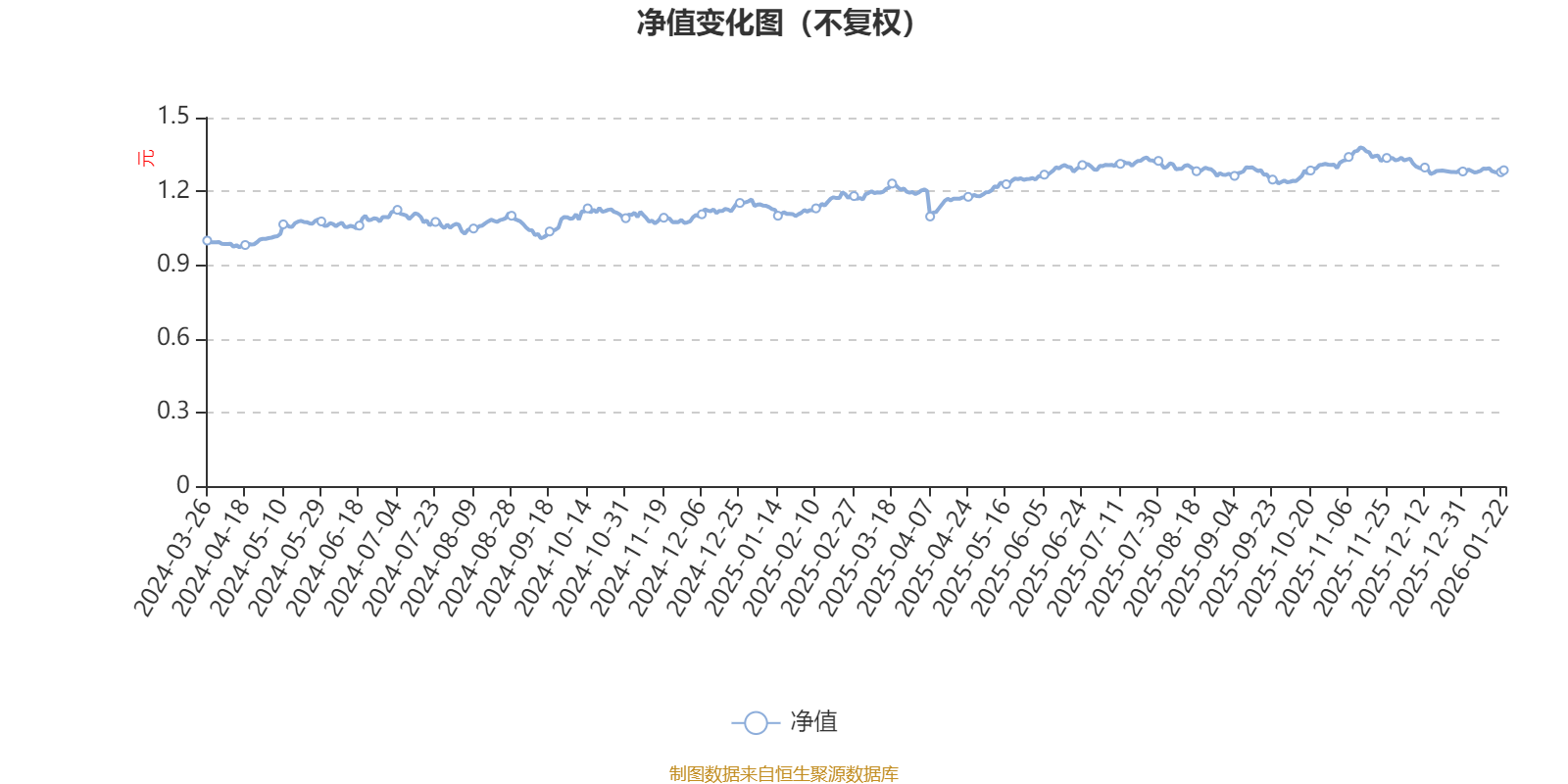
Core Viewpoint - The AI Fund Ping An Hong Kong Stock Connect Dividend Select Mixed Fund A (021046) reported a profit of 11.96 million yuan for Q4 2025, with a net asset value growth rate of 3.5% during the period [3]. Fund Performance - As of January 22, the fund's unit net value was 1.286 yuan, with a fund size of 389 million yuan [3][17]. - The fund's performance over the past three months showed a return of -0.63%, ranking 588 out of 621 comparable funds; over the past six months, it returned -0.69%, ranking 607 out of 621; and over the past year, it achieved a return of 19.68%, ranking 525 out of 613 [4]. Investment Strategy - The fund manager indicated that in the context of declining cash yields, high-dividend assets have shown a "quasi-fixed income" characteristic, becoming a dominant investment style in Q4. In contrast, growth sectors faced increased volatility and pressure due to market sentiment and fluctuating fundamental expectations [3]. - The fund will continue to focus on stable high-dividend stocks, particularly in the financial, telecommunications, energy, and public utility sectors, which are expected to provide visibility and stable profits during the economic recovery [3]. Risk Metrics - The fund's Sharpe ratio since inception is 1.3198, indicating a favorable risk-adjusted return [9]. - The maximum drawdown since inception is 10.87%, with the largest quarterly drawdown occurring in Q2 2025 at 9.1% [12]. Portfolio Composition - The average stock position since inception is 85.49%, with a peak of 89.53% at the end of H1 2024 and a low of 71.51% at the end of Q3 2024 [15]. - The fund has a high concentration of holdings, with the top ten stocks including China National Offshore Oil, China Mobile, CITIC Bank, Bank of China, and others [20].


中国银行:2026中国银行个人金融全球资产配置白皮书
Sou Hu Cai Jing· 2026-01-24 08:01
Core Viewpoint - The report outlines the global asset allocation strategy for personal finance by Bank of China, predicting a slow recovery in the global economy in 2026, with a focus on the performance of various asset classes amid changing monetary policies and economic conditions. Economic Overview - In 2025, global economic growth is expected to slow down with inflation receding, leading G10 countries (excluding Japan) into a rate-cutting cycle. The Federal Reserve's continued rate cuts are anticipated to push the US dollar index down, resulting in strong global asset performance, particularly in gold and silver, while oil is expected to be the only asset with negative returns. The Chinese asset market is entering a phase of value reassessment, with a slow bull market forming and the RMB expected to appreciate against the USD [1][8]. - For 2026, the global economy may continue its weak recovery, with uncertainties remaining. China's economy is projected to stabilize and grow between 4.7% and 5.0% due to supportive macro policies. The US is expected to see reduced policy uncertainty, while the Eurozone's economic fundamentals remain robust, and the UK economy shows resilience [1][8][10]. Equity Market - The internationalization and value reassessment of Chinese assets are ongoing, with the A-share market expected to solidify its slow bull market and potentially evolve into a long bull market. Hong Kong stocks are positioned to benefit from global liquidity inflows as a core hub for RMB asset allocation. The US stock market is expected to rise but may underperform compared to non-US markets, while European and Japanese markets are anticipated to see moderate gains [1][9][12]. Bond Market - The bond market is influenced by the Federal Reserve's rate cuts and balance sheet expansion, leading to a downward shift in US Treasury yields. The UK bond market shows high allocation value, while German bonds are expected to perform slightly weaker. In China, the 10-year government bond yield is projected to fluctuate between 1.6% and 1.9% [2][10][11]. Foreign Exchange Market - The trend of "de-dollarization" is expected to continue, with the US dollar's central tendency likely to decline. Non-US currencies are showing mixed performance, with the Euro and Malaysian Ringgit slightly stronger, while the Japanese Yen, British Pound, Australian Dollar, and Indonesian Rupiah are in the middle range. The RMB is expected to fluctuate within a stable range against the USD and may depreciate slightly against other major non-US currencies [2][10][20]. Commodity Market - The long-term upward trend for gold remains solid, with expectations for new historical highs in 2026, albeit with increased volatility. Silver is also expected to trend upwards due to multiple support factors. The demand dynamics for copper and aluminum are being reshaped by AI developments, while oil is expected to remain in a supply surplus situation. Prices for polyester and industrial silicon are anticipated to recover due to supportive policies, and lithium carbonate is expected to see price fluctuations based on supply and demand changes [2][11][12]. Asset Allocation Strategy - The recommended global asset allocation order for 2026 is precious metals, non-ferrous metals, equities, and bonds. Gold and silver are expected to outperform copper and aluminum, while non-US equities are projected to outperform US stocks. In the bond sector, US Treasuries are favored over Chinese bonds, and oil is suggested for lower allocation [3][11][12].