BANK OF CHINA(601988)

Search documents
中国银行取得语料数据处理方法专利
Sou Hu Cai Jing· 2026-01-09 06:15
Group 1 - The core point of the article is that the Bank of China has obtained a patent for a method, device, and electronic equipment for processing corpus data, with the patent granted under announcement number CN115391539B and the application date being August 2022 [1] - The Bank of China was established in 1983 and is located in Beijing, primarily engaged in monetary financial services [1] - The registered capital of the Bank of China is approximately 29.44 billion RMB [1] Group 2 - The Bank of China has made investments in 16 enterprises and has participated in 5,000 bidding projects [1] - The company has a total of 1,474 trademark information entries and 5,000 patent information entries [1] - Additionally, the Bank of China holds 255 administrative licenses [1]
中国银行取得金融舆情情感分析专利
Sou Hu Cai Jing· 2026-01-09 04:56
Group 1 - The core point of the article is that the Bank of China has obtained a patent for a financial sentiment analysis method and system, indicating its focus on innovation in financial technology [1] - The patent was granted with the announcement number CN114942978B, and the application date was May 2022 [1] - The Bank of China, established in 1983 and located in Beijing, primarily engages in monetary financial services, with a registered capital of approximately 29.44 billion RMB [1] Group 2 - According to data from Tianyancha, the Bank of China has made investments in 16 companies and participated in 5,000 bidding projects [1] - The bank holds 1,474 trademark registrations and has 5,000 patent records, showcasing its extensive intellectual property portfolio [1] - Additionally, the Bank of China possesses 255 administrative licenses, reflecting its regulatory compliance and operational capabilities [1]
中国银行浙江省分行原行长程军被查
Xi Niu Cai Jing· 2026-01-09 03:44
2025年12月31日,据中央纪委国家监委驻中国银行纪检监察组、天津市纪委监委消息,中国银行浙江省分行党委书记、行长程军涉嫌严重违纪违法,目前正 接受中央纪委国家监委驻中国银行纪检监察组纪律审查和天津市监察委员会监察调查。 此前中国银行浙江省分行已有一位行长被查。2024年4月,中国银行浙江省分行原党委书记、行长郭心刚接受审查调查。中央纪委国家监委网站2024年12月 通报,郭心刚被开除党籍。 公开资料显示,2015年至2020年,程军被派驻海外,先后担任中国银行约翰内斯堡分行行长和新加坡分行行长。2024年3月,程军从新加坡分行行长调任中 国银行浙江省分行党委书记,同年7月16日正式获得国家金融监督管理总局浙江监管局核准担任浙江省分行行长。 ...


汉高集团成功发行首笔熊猫债,德国工业巨头首次登陆人民币债券市场,中国银行担任独家中资主承销商
Xin Lang Cai Jing· 2026-01-09 01:21
汉高集团成功发行首笔熊猫债,德国工业巨头首次登陆人民币债券市场,中国银行担任独家中资主承销商 2026年1月7日 ,中国银行宣布,作为唯一中资主承销商,成功协助德国工业与消费品巨头汉高集团(Henkel AG & Co. KGaA)在中国银行间债券市场发行15亿元人民币熊猫债。此次发行不仅是汉高集团在人民币债券市场的"首秀",也是2026 年全市场首单外资熊猫债,标志着这家百年跨国企业进一步深化其在华战略布局。 汉高集团首次亮相熊猫债市场,延续多元化融资策略 本次15亿元熊猫债的成功发行,是汉高集团在全球资本市场多元化融资的重要一步。作为首次进入中国境内债券市场的尝 试,该笔债券体现了汉高对中国经济韧性和人民币资产长期价值的信心。 在此之前,汉高集团主要通过欧洲及国际资本市场进行融资,包括发行欧元、美元计价的公司债和商业票据。近年来,随着 其在华业务持续扩张——涵盖粘合剂技术、施华蔻(Schwarzkopf)等高端美护品牌,以及2024年收购宝洁沙宣大中华区护发 业务——汉高对本地化、低成本、长期稳定的融资渠道需求日益增长。 此次熊猫债发行不仅优化了其债务结构,也为其在华运营提供了直接的人民币资金支持,有效对 ...

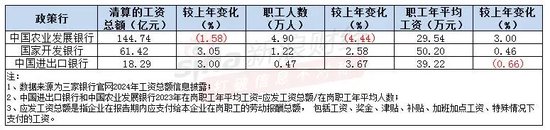
哪家政策行薪酬最高?国开行2024年人均薪酬50.2万
Xin Lang Cai Jing· 2026-01-09 01:15
近期,多家银行披露了2024年度职工工资情况。 从薪酬表现看,三家政策性银行年度人均薪酬分化明显。其中,国家开发银行职工年平均工 资最高,为50.2万元;中国进出口银行较上年微降,为39.22万元;中国农业发展银行2024年 清算的工资总额及职工人数均有下降,但人均薪酬逆势上涨,增至29.54万元。此外,国有 大行中的工行、农行、中行、建行、交行也披露了2024工资分配信息,人均薪酬均超23万 元,交行在五大行中排名首位,达31.64万元。 此外,上述银行的职工队伍普遍呈现扩张之势,2024年仅中国农业发展银行和工商银行职工 人数缩减,其他均较上年增加,整体来看,中国进出口银行涨幅超3.6%;国家开发银行和 交通银行均超2.5%。 国开行2024人均薪酬超50万, 进出口银行微降 | 政策行 | 清算的工资 | 较上年变化 | 职工人数 | 较上年变化 | In REFER | 技 上年变化 | | --- | --- | --- | --- | --- | --- | --- | | 总额(亿元) | | %) | (万人) | (%) | 工资(万元) | (%) | | 中国农业发展银行 | 144.7 ...


中国金石股东将股票存入中国银行(香港) 存仓市值2494.38万港元
Zhi Tong Cai Jing· 2026-01-09 00:40
Group 1 - On January 8, China Goldstone (01380) shareholders deposited stocks into Bank of China (Hong Kong), with a market value of HKD 24.9438 million, accounting for 6.73% [1] - On November 12, 2025, An Junjie increased his holdings in China Goldstone by 28.089888 million shares at a price of HKD 0.178 per share, totaling approximately HKD 5 million. After the increase, his total holdings amount to approximately 28.08999 million shares, representing 5.61% [1] - On the same day, Zeng Yanqun increased his holdings in China Goldstone by 33.707865 million shares at a price of HKD 0.178 per share, totaling approximately HKD 6 million. After the increase, his total holdings amount to approximately 33.707865 million shares, representing 6.73% [1]
中国金石(01380)股东将股票存入中国银行(香港) 存仓市值2494.38万港元
智通财经网· 2026-01-09 00:39
Group 1 - The latest data from the Hong Kong Stock Exchange shows that on January 8, shareholders of China Goldstone (01380) deposited stocks worth HKD 24.9438 million, accounting for 6.73% of the total [1] - On November 12, 2025, An Junjie increased his holdings in China Goldstone by 28.089888 million shares at a price of HKD 0.178 per share, totaling approximately HKD 5 million. After the increase, his total holdings amount to approximately 28.08999 million shares, representing 5.61% of the company [1] - On the same day, Zeng Yanqun also increased his holdings in China Goldstone by 33.707865 million shares at the same price of HKD 0.178 per share, totaling around HKD 6 million. Following this transaction, his total holdings are approximately 33.707865 million shares, which is 6.73% of the company [1]
中国银行携手中国银联发行长城卓悦 PLUS 信用卡
Jin Rong Jie Zi Xun· 2026-01-08 14:04
Core Viewpoint - The collaboration between Bank of China and China UnionPay aims to enhance consumer experience and support national consumption policies through the launch of the "Zhuoyue Global Shared Benefits" event and the issuance of the Bank of China UnionPay Great Wall Zhuoyue PLUS credit card [1][2][3] Group 1: Event Overview - The "Zhuoyue Global Shared Benefits" event was successfully held in Shanghai, marking the launch of the Bank of China UnionPay Great Wall Zhuoyue PLUS credit card and the "Zhonghang Hui" series of consumer payment brands [1] - Key figures from both organizations, including Bank of China Vice President Cai Zhao and China UnionPay Chairman Dong Junfeng, attended and delivered speeches emphasizing the importance of consumer-driven financial services [1][2] Group 2: Strategic Goals - Bank of China aims to contribute to economic growth by promoting consumption and enhancing the quality of life for consumers, aligning with national policies to boost consumption [1][3] - The partnership with China UnionPay is seen as a critical step in integrating financial resources and addressing consumer needs, facilitating the dual circulation development pattern and promoting the internationalization of the Renminbi [2][3] Group 3: Product Features - The newly launched credit card features enhanced design, additional benefits, and improved services, including cashback, points, and airport VIP services, aimed at providing a superior consumer experience [2] - The "Zhonghang Hui" brand is part of a broader initiative to create a beneficial financial ecosystem, focusing on various sectors such as daily life, tourism, and cross-border services [3] Group 4: Future Outlook - Bank of China plans to continue collaborating with China UnionPay and other partners to optimize product and service experiences, ensuring that financial benefits reach households across the country [3]
中国银行间交易商协会:债务融资工具发行规模连续两年突破十万亿元
Di Yi Cai Jing· 2026-01-08 11:41
Group 1 - The core viewpoint of the article highlights that in 2025, the China Interbank Market Dealers Association supports over 2,300 enterprises to issue debt financing instruments amounting to 10.1 trillion yuan, marking the second consecutive year of surpassing 10 trillion yuan [1] - The net financing amount is reported to be 1.7 trillion yuan, with both the issuance amount and net financing accounting for over 60% of the corporate credit bond market [1] - By the end of 2025, the outstanding scale of corporate credit bonds is expected to exceed 18 trillion yuan, reflecting a year-on-year growth of 10%, which is 3 percentage points higher than the overall growth rate of corporate credit bonds [1]
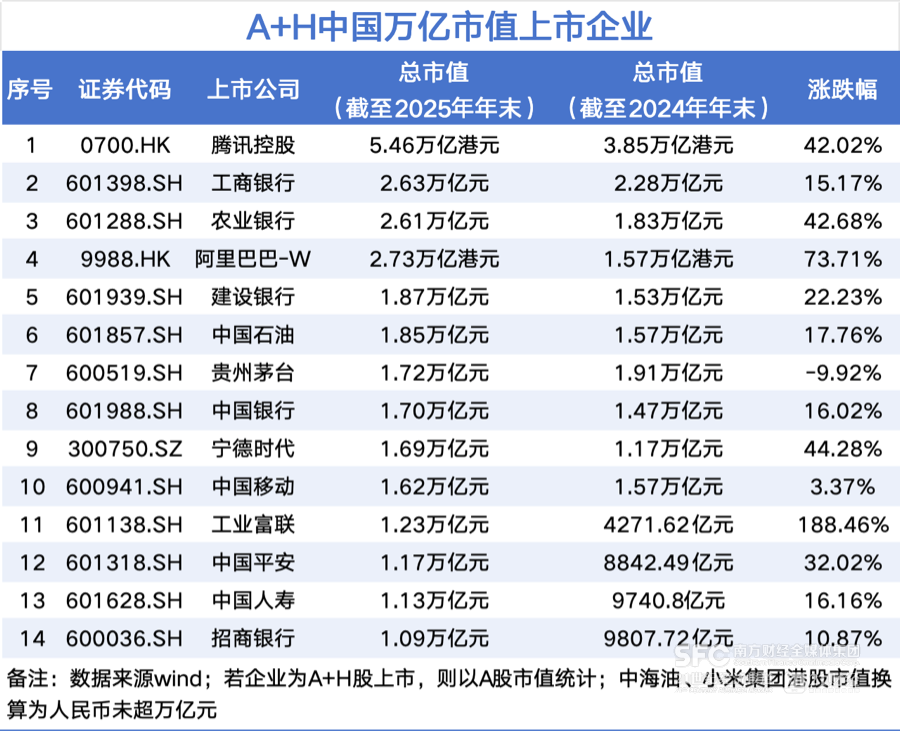
中国万亿市值公司之变:4家新贵晋级,工业富联狂飙近200%
2 1 Shi Ji Jing Ji Bao Dao· 2026-01-08 11:38
Core Insights - The number of companies with a market capitalization exceeding 1 trillion yuan in mainland China has increased to 14 by the end of 2025, up from 10 at the end of the previous year, with a total market capitalization increase of approximately 9 trillion yuan, representing a growth rate of over 50% [1][4][15] Group 1: Market Capitalization Growth - The newly added companies to the trillion-yuan market cap club include Industrial Fulian, China Ping An, China Life, and China Merchants Bank, with four of them headquartered in Shenzhen [1][4] - The market capitalization ranking shows a "pyramid" structure, with Tencent leading at approximately 5 trillion yuan, followed by three companies (ICBC, ABC, Alibaba) in the 2-5 trillion yuan range, while most companies are in the 1-2 trillion yuan range [1][13] Group 2: Sector Performance - The growth in market capitalization is characterized by a leading performance in technology and new sectors, while financial and energy sectors show stable growth [1][9] - Technology and new sector companies have seen growth rates exceeding 40%, while financial and energy companies have growth rates concentrated in the 10%-35% range [9][15] Group 3: Notable Companies - Industrial Fulian has emerged as a standout performer with a staggering market cap increase of approximately 188%, driven by its core business in AI and precision manufacturing [4][5] - China Ping An, China Life, and China Merchants Bank represent the financial sector's recovery, with respective market cap growth rates of 32.02%, 16.16%, and 10.87% [4][5] Group 4: Financial Sector Dynamics - China Life has successfully transformed its product and business structure, achieving a total premium income exceeding 700 billion yuan and a significant increase in investment income [6] - China Ping An operates as a comprehensive service group with a strong customer base, which has contributed to its valuation recovery [6] - China Merchants Bank, known for its retail banking strength, reported a total revenue of 251.42 billion yuan in the first three quarters of 2025, maintaining its position as a leading bank [7] Group 5: AI Impact on Market - Tencent and Alibaba have both seen their market capitalizations increase by over 1 trillion yuan, driven by their advancements in AI technology and integration into their business models [9][10] - Tencent's market cap reached 5.46 trillion HKD, with a year-on-year increase of over 40%, while Alibaba's market cap rose to 2.73 trillion HKD, supported by a recovery in its e-commerce business [9][10][11]