
CNCB(601998)

Search documents
中小银行跟进“停卡潮” 信用卡行业驶入存量竞争新航道
Xin Lang Cai Jing· 2025-12-12 01:24
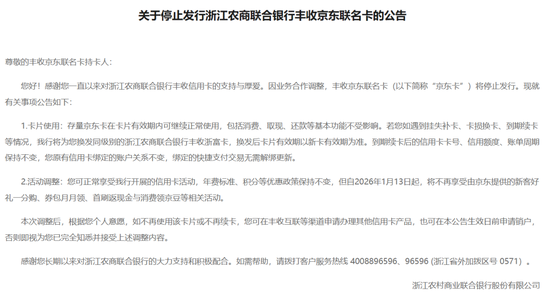
Core Viewpoint - The credit card market is undergoing significant adjustments, with many banks, especially smaller ones, halting the issuance of co-branded credit cards due to rising costs and risks associated with these products [1][5][6]. Group 1: Market Trends - The trend of halting credit card issuance is not isolated, as it has become a common practice among both national and regional banks throughout the year [1][6]. - Major banks, including China Construction Bank and Postal Savings Bank, have collectively stopped issuing over 100 credit card products since the beginning of 2025, with co-branded cards being a significant portion of these [6][11]. - The total number of credit cards in circulation has decreased by 100 million over the past three years, indicating a shift away from the previous era of aggressive expansion [10][11]. Group 2: Bank Strategies - Banks are transitioning from a focus on quantity to quality in their credit card offerings, prompted by regulatory changes and market dynamics [11][12]. - The recent adjustments include the closure of credit card centers and the integration of credit card functionalities into main banking apps, reflecting a strategic shift towards efficiency and cost reduction [14][15]. - The halting of co-branded cards is seen as a necessary step for banks to concentrate resources on more viable products and improve operational efficiency [8][9]. Group 3: Future Directions - The future of credit card business is expected to focus on three main transformation directions: integrating various service scenarios, upgrading technology for better digital experiences, and deepening customer segmentation to enhance value creation [16].





构建“五圈”生态,中信银行描绘科技金融高质量发展新蓝图
Zhong Guo Zheng Quan Bao· 2025-12-11 14:37
Core Viewpoint - The development of technology finance is essential for commercial banks, and CITIC Bank has made significant strides in product innovation, investment-loan linkage, and ecosystem construction to support technology enterprises [1] Group 1: Establishment of Technology Finance Center - CITIC Bank established a Technology Finance Center in 2022 to drive the development of technology finance across the bank, acting as a strategic implementation center, development driving center, and resource coordination center [1][2] - The center has selected 21 key technology finance branches and over 200 pioneering branches to create an agile action team that connects upper and lower levels [2] Group 2: Resource Coordination and Risk Management - The Technology Finance Center optimizes systems, integrates resources, and allocates special policies, including incorporating technology finance indicators into the assessment system and providing special subsidies [3] - It has implemented differentiated approval mechanisms to enhance credit efficiency and accessibility for technology enterprises [3] Group 3: Product Innovation and Service Offerings - CITIC Bank focuses on product innovation to create a competitive service system, introducing products like the credit financing model based on innovation scores and the Torch Loan for precise evaluation of technology enterprises [4][5] - The bank offers a full lifecycle of financial services tailored to different stages of enterprise growth, from startup loans to bond issuance and mergers and acquisitions for mature companies [5] Group 4: Ecosystem Development - CITIC Bank aims to provide comprehensive services to technology enterprises, especially startups, by building a multi-dimensional ecosystem through five circles: capital assistance, government empowerment, listing cultivation, industry traction, and result transformation [7] - The bank actively collaborates with various stakeholders, including government departments and market service institutions, to support technology enterprises [7] Group 5: New Subsidiary Launch - CITIC Bank announced the establishment of its wholly-owned subsidiary, Xinyin Financial Asset Investment Co., Ltd., which has been approved to operate, marking it as the second shareholding bank financial asset investment company in China [8] - The new subsidiary will focus on market-oriented debt-to-equity swaps and equity investment in strategic emerging industries, enhancing the bank's comprehensive operational capabilities [8]

中信银行资产管理业务中心原副总裁罗金辉一审被判12年9个月
Bei Jing Shang Bao· 2025-12-11 11:18
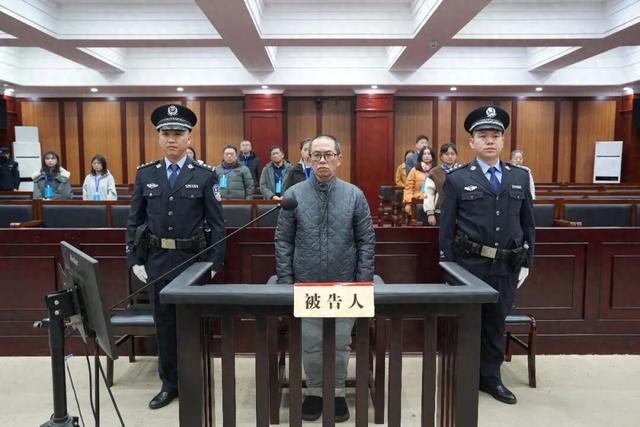
Core Viewpoint - The case of Luo Jinhui, former vice president of the Asset Management Business Center of CITIC Bank, highlights significant corruption within the banking sector, resulting in a prison sentence and substantial fines for the accused [1] Summary by Relevant Sections Legal Proceedings - The Intermediate People's Court of Liupanshui City, Guizhou Province, sentenced Luo Jinhui to 12 years and 9 months in prison for bribery, along with a fine of 2 million RMB [1] - The court ordered the confiscation of Luo's illicit gains, totaling over 44.37 million RMB, which he received from 2014 to 2020 while holding various senior positions in major banks [1] Corruption Details - Luo utilized his positions at Industrial and Commercial Bank of China, Bank of Communications, and CITIC Bank to facilitate financing and stock transactions for enterprises and individuals, receiving substantial bribes in return [1] - The court deemed the amount of bribery particularly large, warranting severe punishment [1] Mitigating Factors - Luo confessed to his crimes and provided information on additional bribery activities not previously known to the authorities, which contributed to a lighter sentence [1] - All illicit funds and assets were returned, further influencing the court's decision to impose a reduced penalty [1]


中信银行资产管理业务中心原副总裁罗金辉受贿案一审宣判
Xin Lang Cai Jing· 2025-12-11 11:01
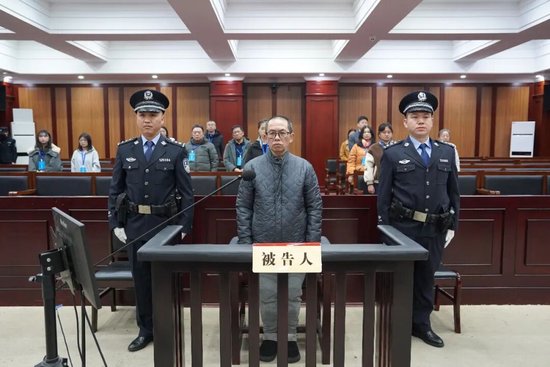
Core Viewpoint - The case of Luo Jinhui, former vice president of the Asset Management Business Center of CITIC Bank, highlights significant corruption within the banking sector, resulting in a prison sentence and fines for the accused [1][7]. Group 1: Case Details - Luo Jinhui was sentenced to 12 years and 9 months in prison and fined 2 million RMB for accepting bribes totaling over 44.37 million RMB from 2014 to 2020 [1][5][9]. - The court found that Luo utilized his positions at various banks to facilitate financing and stock transactions for companies and individuals, leading to his illegal gains [3][9]. Group 2: Court Ruling - The court deemed Luo's actions as constituting a particularly large amount of bribery, warranting legal punishment [5][11]. - Factors such as Luo's confession, cooperation with authorities, and full restitution of illicit gains were considered for a lighter sentence [5][11]. - Luo expressed acceptance of the verdict and did not appeal the decision [6][11].
中信银行股份有限公司资产管理业务中心原副总裁罗金辉受贿案一审宣判
Huan Qiu Wang· 2025-12-11 09:36
Core Points - The case involves Luo Jinhui, former Vice President of the Asset Management Business Center at CITIC Bank, who was sentenced to 12 years and 9 months in prison for bribery, along with a fine of 2 million RMB [1][3] - The court found that from 2014 to 2020, Luo utilized his positions at various banks to facilitate financing and stock transactions for companies and individuals, receiving bribes totaling over 44.37 million RMB [1][3] Summary by Sections - **Bribery Conviction**: Luo Jinhui was convicted of bribery with a particularly large amount involved, leading to a significant prison sentence and financial penalties [3] - **Details of the Offense**: The investigation revealed that Luo exploited his roles at China Industrial Bank, Bank of Communications, and CITIC Bank to provide illegal assistance in financial transactions, accumulating substantial illicit gains [1][3] - **Court's Ruling**: The court acknowledged Luo's confession and cooperation during the investigation, which contributed to a lighter sentence despite the severity of the crime [3]
银行行业资金流入榜:浦发银行、交通银行等净流入资金居前
Zheng Quan Shi Bao Wang· 2025-12-11 09:27
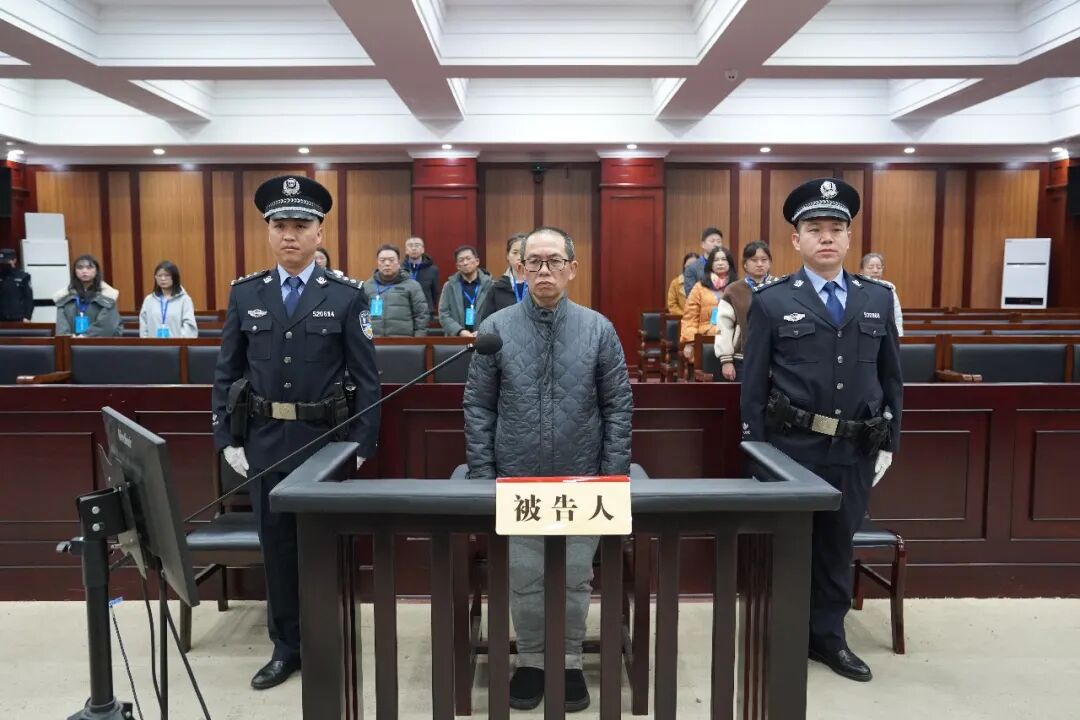
Core Viewpoint - The banking sector showed resilience with a slight increase of 0.17% on December 11, despite a broader market decline, indicating potential strength in this industry amidst overall market challenges [2][3]. Market Performance - The Shanghai Composite Index fell by 0.70% on the same day, with only one sector, banking, experiencing an increase [2]. - The banking sector was the top performer among industries, while the comprehensive and communication sectors faced significant declines of 4.31% and 3.14%, respectively [2]. Capital Flow - There was a net outflow of 744.67 billion yuan from the two markets, with only the banking sector seeing a net inflow of 67.49 million yuan [2]. - The electronic industry faced the largest net outflow of 13.586 billion yuan, followed by the communication sector with 11.340 billion yuan [2]. Individual Stock Performance - Within the banking sector, 42 stocks were tracked, with 21 stocks rising and 20 stocks falling [3]. - The top three banks by net inflow were: - Shanghai Pudong Development Bank with a net inflow of 119 million yuan [4]. - Bank of Communications with 80.991 million yuan [4]. - Nanjing Bank with 67.811 million yuan [4]. - The banks with the highest net outflows included: - China Merchants Bank with a net outflow of 303 million yuan [6]. - Minsheng Bank with 45.949 million yuan [6]. - Hangzhou Bank with 40.973 million yuan [6]. Detailed Capital Flow in Banking Sector - The following banks had notable capital flows: - Shanghai Pudong Development Bank: +1.42% with a turnover rate of 0.32% and a capital flow of 118.58 million yuan [4]. - Bank of Communications: +0.68% with a turnover rate of 0.45% and a capital flow of 80.99 million yuan [4]. - Agricultural Bank of China: +1.41% with a turnover rate of 0.09% and a capital flow of 49.85 million yuan [5].




中信银行资产管理业务中心原副总裁罗金辉一审被判十二年九个月
Bei Jing Ri Bao Ke Hu Duan· 2025-12-11 09:25
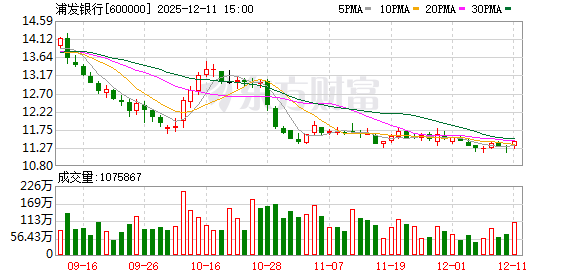
Core Points - The case involves the sentencing of Luo Jinhui, former Vice President of the Asset Management Business Center of CITIC Bank, for bribery, receiving a prison sentence of 12 years and 9 months along with a fine of 2 million RMB [1] - Luo Jinhui was found guilty of accepting bribes totaling over 44.37 million RMB from 2014 to 2020 while holding senior positions in various banks, including China Industrial Bank and Bank of Communications [3] - The court acknowledged Luo's confession and cooperation during the investigation, which contributed to a lighter sentence despite the significant amount of bribery [5] Company Summary - Luo Jinhui held key positions in major banks, including CITIC Bank, where he utilized his authority to facilitate financing and stock transactions for enterprises and individuals [3] - The court's decision reflects the legal consequences of corruption within the banking sector, emphasizing the importance of integrity in financial institutions [5] - The case highlights the potential risks associated with senior management positions in banks, where the misuse of power can lead to significant legal repercussions [3][5]
践行数字金融 中信银行郑州分行创新驱动服务升级
Huan Qiu Wang· 2025-12-11 09:00
Core Viewpoint - The successful launch of the direct connection service for housing fund contributors by CITIC Bank's Zhengzhou branch significantly enhances customer experience through a fully online process for loan applications, approvals, and disbursements [1] Group 1: Service Innovation - CITIC Bank Zhengzhou branch has implemented a fully online process for the housing fund loan service, allowing for "instant application, instant approval, and instant disbursement" [1] - The previous offline model for housing fund loans was time-consuming and inefficient, leading to poor customer experience [1] Group 2: Operational Improvements - A professional guidance team was established to support the implementation of the new service, providing precise support throughout the entire process, from business design to risk control [1] - The bank actively communicated with the housing fund service center in Huai County to create an efficient coordination mechanism and optimize data transmission channels [1] Group 3: Strategic Goals - The launch of the direct connection service is a key initiative for CITIC Bank in promoting digital finance and inclusive finance [1] - The bank aims to deepen technological applications and innovate products and business models to provide better and more convenient financial services to local customers [1] - CITIC Bank is committed to contributing to the high-quality development of the local economy and society [1]
银行净息差专题报告:负债管理能力成为业绩分化的关键
GUOTAI HAITONG SECURITIES· 2025-12-11 08:03
Investment Rating - The report assigns an "Overweight" rating for the banking sector [7]. Core Insights - The report emphasizes the significant improvement in the cost of liabilities for banks in 2025, with a notable decrease of 28 basis points (bp) in the first half of the year, compared to only 4 bp in the same period last year. This improvement is primarily driven by reductions in deposit and interbank liabilities costs, contributing 19 bp and 7 bp respectively [3][11]. - The net interest margin (NIM) is expected to decline by approximately 5 bp in 2026, with the downward pressure on margins continuing to ease marginally, suggesting that some banks may stabilize their NIMs [2][10]. Summary by Sections 1. Liability Cost Improvement in 2025 - The first half of 2025 saw a significant reduction in the cost of interest-bearing liabilities, with the cost rate dropping to 1.70%, a decrease of 28 bp from 2024. This was supported by improvements in both deposit and interbank liability costs [11]. 2. Liability Side: Deposit Maturity and Repricing Benefits 1) **Term Structure**: The proportion of long-term deposits entering the repricing cycle has increased, with the share of deposits with a remaining maturity of 1-5 years declining by 1.5 percentage points (pct) to 22.6% by the end of Q2 2025. Some banks, such as those in Ningbo and Chongqing, experienced declines exceeding 10 pct [4]. 2) **Price Factors**: Regulatory focus on maintaining reasonable NIM levels has increased, with expectations of further interest rate cuts. The maximum reduction for three-year deposits could exceed 100 bp, indicating substantial room for cost improvement [5]. 3. Asset Side: Yield Pressure Expected to be Better than 2025 1) **Loans**: The repricing pressure on loans is expected to ease, with the five-year Loan Prime Rate (LPR) declining by only 10 bp in 2025, significantly less than the 50 bp drop the previous year [6]. 2) **Debt Replacement**: The shift from high-interest to low-interest debt is anticipated to have a limited impact on net interest margins, estimated to drag down margins by about 4 bp [6]. 3) **Bond Maturity**: The widening gap between new bond issuance rates and existing bond yields is expected to exert downward pressure on investment yields, with an estimated drag of 6 bp on margins from the reallocation of bonds maturing within one year [6]. 4. NIM Projections - The report forecasts a 5 bp decline in NIM for 2026, with the downward trend continuing to converge. The asset yield is expected to decrease by 17 bp, while the cost of liabilities is projected to improve by 13 bp, with deposit costs improving by 17 bp [7][10].

融资“堵点”变“通途” 小微企业融资协调工作机制见“实”效
Jin Rong Shi Bao· 2025-12-11 03:39
Core Insights - The financing challenges faced by small and micro enterprises are critical to their survival and the overall economic vitality, prompting the establishment of a coordination mechanism to address these issues [1][2] Group 1: Mechanism Establishment and Implementation - The small and micro enterprise financing coordination mechanism was established in October last year to tackle financing difficulties from both supply and demand sides [1][2] - Banks have adopted innovative strategies to enhance the efficiency of financial services, ensuring that low-cost credit flows more effectively to small and micro enterprises [1][2] - As of October 2025, the balance of small and micro enterprise loans in the banking sector reached 36.5 trillion yuan, reflecting a year-on-year growth of 12.1% [3] Group 2: Innovative Banking Practices - Citic Bank implemented a "Five Special, Five Strengthen" model to enhance service delivery, establishing a dedicated team and optimizing specialized products for small and micro enterprises [2] - By the end of October 2025, Citic Bank's small and micro enterprise loan balance reached 1.75 trillion yuan, an increase of over 84 billion yuan since the beginning of the year [2] - Guangfa Bank has visited over 150,000 small and micro enterprises, providing credit exceeding 140 billion yuan to 36,000 of them [2] Group 3: Digital Transformation in Financing - The digital transformation in banking has significantly improved the efficiency of financing for small and micro enterprises, allowing for quicker approvals and disbursements [4][5] - Citic Bank's "Order e-loan" product enabled a construction company to secure a 5 million yuan loan rapidly through an online process, showcasing the effectiveness of digital solutions [4] - Guangfa Bank's "Mall E-loan" product has provided over 3 billion yuan in loans to more than 500 small and micro enterprises, demonstrating the impact of tailored digital financial services [5] Group 4: Support for Cross-Border Trade - Banks are enhancing support for small and micro foreign trade enterprises by streamlining processes and reducing the time required for transactions [6][7] - Citic Bank has established a special task force to support small foreign trade enterprises, facilitating quicker access to financial services [6] - Huaxia Bank has developed customized financial service plans based on operational information for small export enterprises, aiding their participation in international trade [7]
