TRANSSION(688036)

Search documents
传音控股(688036):经营触底回暖,积极探索下一代智能生态
Hua Yuan Zheng Quan· 2025-09-02 10:57
Investment Rating - The investment rating for the company is "Buy" (maintained) [5] Core Views - The company is experiencing a recovery in operations and is actively exploring the next generation of smart ecosystems [5] - In the first half of 2025, the company reported revenue of 29.077 billion yuan, a year-on-year decline of 15.86%, and a net profit attributable to shareholders of 1.213 billion yuan, down 57.48% year-on-year [6] - The second quarter of 2025 saw revenue of 16.074 billion yuan, a year-on-year decline of 6.09% but a quarter-on-quarter increase of 23.61%, with a net profit of 7.23 billion yuan, down 41.03% year-on-year but up 47.47% quarter-on-quarter [6] - The gross margin for the second quarter was 20.76%, an increase of 1.49 percentage points quarter-on-quarter [6] - The company holds a 12.5% market share in the global smartphone market, ranking third among global smartphone brands, with a 7.9% share in the global smartphone market, ranking sixth [6] - The company is expected to maintain a high level of operation in the second half of the year due to the demand peak season and the anticipated interest rate cuts by the Federal Reserve [6] Summary by Sections Market Performance - The closing price as of September 1, 2025, was 90.00 yuan, with a one-year high of 129.51 yuan and a low of 71.58 yuan [3] - The total market capitalization is 102,631.55 million yuan, with a circulating market capitalization of the same amount [3] Financial Data - The company’s total share capital is 1,140.35 million shares, with a debt-to-asset ratio of 54.64% and a net asset value per share of 17.38 yuan [3] Revenue and Profit Forecast - Revenue for 2025 is projected at 71.417 billion yuan, with a year-on-year growth rate of 3.93% [8] - The net profit attributable to shareholders for 2025 is expected to be 4.546 billion yuan, reflecting a year-on-year decline of 18.07% [8] - Earnings per share (EPS) for 2025 is estimated at 3.99 yuan, with a projected P/E ratio of 22.57 [8] Market Share Insights - In the African smartphone market, the company regained a high market share of 51%, significantly ahead of the second-place Samsung at 18% [6] - In Southeast Asia, the company holds an 18% market share, with a year-on-year growth of 17% [6] Strategic Initiatives - The company is collaborating with Google Cloud to build an AI ecosystem, transitioning from a hardware manufacturer to an "AI + terminal + service" model [6] - This partnership aims to create a next-generation AI smart ecosystem that can autonomously execute tasks and enhance operational capabilities [6]

社保基金最新动向曝光!二季度抄底了这些“科创宝藏”
Di Yi Cai Jing· 2025-09-02 10:49
Core Insights - The social security fund has newly invested in 19 stocks in the second quarter, focusing on high-performing sectors such as biomedicine, computers, and electronics, which are aligned with national strategic priorities and economic transformation [1][5] Investment Trends - As of the end of the second quarter, the social security fund held 77 stocks in the Sci-Tech Innovation Board, with a total holding of 337 million shares valued at 15.37 billion yuan, having newly entered 19 stocks and increased holdings in 28 stocks [1][2] - The fund's investment style is characterized by a cautious approach, emphasizing value investment and long-term returns, with a notable increase in allocations to technology innovation companies [1][2] Sector Focus - The fund's holdings are primarily concentrated in four sectors: electronics (20 companies), biomedicine (13 companies), machinery (10 companies), and computers (11 companies) [1] - In terms of stock count, the fund's top holdings include 7 stocks with over 10 million shares, with Transsion Holdings (382.64 million shares) leading, followed by Western Superconducting (205.81 million shares) [2] Performance Metrics - The newly added 19 stocks showed median year-on-year growth rates of 25.7% in revenue and 28.14% in net profit, significantly outperforming the overall market [6] - The fund's focus on biomedicine is evident, with 4 new investments in this sector, alongside 2 each in electronics, military, communications, and computers [6] Notable Stock Movements - The fund increased its holdings in several key stocks, including a significant increase of 6.37 million shares in Transsion Holdings, marking the largest single stock increase for the quarter [3][4] - Other notable increases include 5 stocks in the biomedicine sector and 4 in the computer sector, with specific increases exceeding 1 million shares [4][5] Reduction in Holdings - In the second quarter, 38 stocks on the Sci-Tech Innovation Board were reduced in holdings by the social security fund, with 24 of these seeing reductions of over 1 million shares [8] - Some stocks that were reduced have since experienced significant price increases, indicating a potential misalignment in the fund's timing of trades [8]


传音控股(688036):25H1业绩承压,新兴市场领先优势不变
Tai Ping Yang Zheng Quan· 2025-09-02 09:48
Investment Rating - The report maintains a "Buy" rating for Transsion Holdings (688036) [1][8] Core Views - Despite facing pressure in H1 2025, Transsion Holdings retains its leading advantage in emerging markets [5][7] - The company reported a revenue of 29.077 billion yuan in H1 2025, a year-on-year decrease of 15.86%, and a net profit of 1.213 billion yuan, down 57.48% year-on-year [4][5] - The company is actively implementing a diversification strategy, expanding into digital accessories and home appliances, while also enhancing its mobile internet services [5][7] Summary by Sections Company Performance - In H1 2025, Transsion's smartphone revenue was 24.389 billion yuan, down approximately 17% year-on-year, with a gross margin of 19.19% [5] - Feature phone revenue was 1.704 billion yuan, down about 35% year-on-year, with a gross margin of 24.72% [5] - The company's global smartphone market share was 12.5%, ranking third among global smartphone brands, with a 7.9% share in the global smartphone market, ranking sixth [5] Market Position - Transsion holds the number one position in the African smartphone market and ranks first in Pakistan and Bangladesh, while ranking eighth in India [5] - The company benefits from the ongoing transition from feature phones to smartphones in emerging markets, establishing a solid foundation for growth [7] Research and Development - In H1 2025, the company invested 1.362 billion yuan in R&D, representing a 4.68% R&D expense ratio, an increase of 1.26 percentage points year-on-year [6] - The company emphasizes continuous technological innovation to enhance user experience and product competitiveness [6] Financial Forecast - Revenue projections for 2025-2027 are 72.399 billion yuan, 81.063 billion yuan, and 93.264 billion yuan, respectively [8] - Expected net profits for the same period are 3.921 billion yuan, 5.082 billion yuan, and 6.932 billion yuan, with corresponding PE ratios of 26.18, 20.20, and 14.80 [8]
社保基金持有79只科创板股:新进20股,增持21股
Zhong Guo Jing Ji Wang· 2025-09-02 01:44
财报季,社保基金持股动向曝光!二季度末社保基金共现身79只个股前十大流通股东榜,新进20只,增持21 只。 证券时报•数据宝统计显示,社保基金最新出现在79只科创板股前十大流通股东名单中,合计持股量3.40亿股, 期末持股市值合计154.70亿元。持股变动显示,新进20只,增持21只,减持20只,18只股持股量保持不变。新进股 中,益方生物、金盘科技、新致软件等持股量居前。 社保基金持有科创板股中,从前十大流通股东名单中社保基金家数来看,社保基金家数最多的是合合信息,共 有4家社保基金出现在前十大流通股东名单中,即汇添富基金管理股份有限公司-社保基金17022组合、全国社保基 金一一一组合、全国社保基金四一一组合、全国社保基金一一零组合,分别位列公司第二大、第五大、第八大、第 十大流通股东,持股量合计为195.87万股,占流通股比例为7.00%。 从持股比例看,社保基金持有比例最多的是安达智能,持股量占流通股比例为11.90%,其次是合合信息,社保 基金持股比例为7.00%,持股比例居前的还有聚和材料、三一重能、南微医学等。持股数量方面,社保基金持股数 量在1000万股以上的共有7只,社保基金持股量最多的是传 ...
“非洲机王”被“偷家”,小米狂飙、传音失速
阿尔法工场研究院· 2025-09-02 00:03
Core Viewpoint - The African smartphone market is undergoing significant changes, with Transsion facing strong competition from Xiaomi, which is rapidly increasing its market share and sales in the region [2][4][23]. Market Dynamics - In Q2 2025, Xiaomi's smartphone shipments in Africa surged by 32% to 2.8 million units, while Transsion's shipments grew only 6% to 9.7 million units, maintaining a market share of 51% [5][6]. - Xiaomi's market share in Africa rose to 14.4%, positioning it as the third-largest player, just 4 percentage points behind Samsung [5][6]. Financial Performance - Xiaomi reported total revenue exceeding 227.25 billion yuan in H1 2025, a year-on-year increase of 38.2%, with smartphone revenue at approximately 96.13 billion yuan, reflecting a growth of 3.37% [4][11]. - Transsion's revenue for H1 2025 was 29.08 billion yuan, a decline of 15.86%, with net profit dropping 57.48%, marking the first time since its IPO in 2019 that both revenue and profit fell [11][12]. Competitive Strategies - Xiaomi's strategy in Africa includes aggressive pricing, channel expansion, and localization efforts, particularly in key markets like Nigeria and Egypt [8][14]. - Transsion's product pricing strategy focuses on low-cost models, while Xiaomi is targeting both low-end and mid-range segments, with products priced from approximately 60-80 USD to 200-450 USD [21][22]. Market Trends - The African smartphone market is experiencing a dual phase of smartphone penetration and consumer upgrade, with a growing demand for higher performance devices [22][26]. - Xiaomi's comprehensive ecosystem, including IoT products, enhances user engagement compared to Transsion's focus on mobile hardware [22][24]. Future Outlook - The competitive landscape in the African smartphone market is expected to intensify, with multiple brands vying for market share, indicating a shift from Transsion's previous dominance [24][27]. - Xiaomi's recent organizational changes in Africa suggest a commitment to refining its operational strategy in the region [26].


传音控股:2025年上半年净利润12.13亿元 拟10派8元
Sou Hu Cai Jing· 2025-09-01 07:27
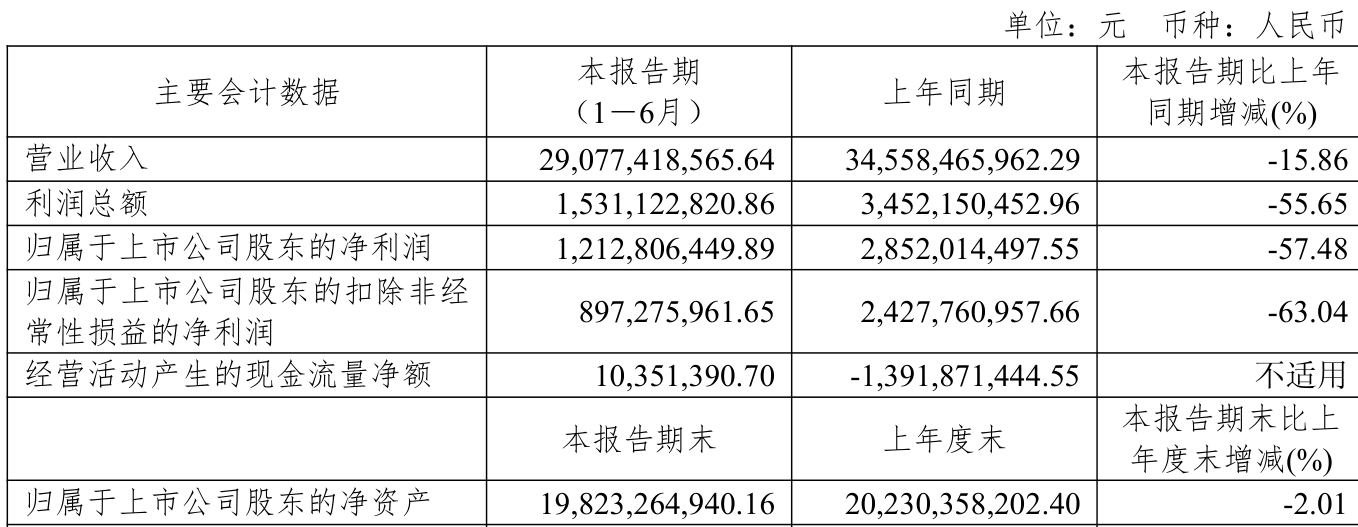
Financial Performance - For the first half of 2025, the company's operating revenue was approximately 29.08 billion, a decrease from 34.56 billion in the same period last year, representing a decline of about 15.5% [1] - The total profit for the same period was approximately 1.53 billion, down from 3.45 billion, indicating a decrease of about 55.7% [1] - The net profit attributable to shareholders was approximately 1.21 billion, down from 2.85 billion, reflecting a decline of about 57.5% [1] - The net profit after deducting non-recurring gains and losses was approximately 897.28 million, down from 2.43 billion, a decrease of about 63.0% [1] - The net cash flow from operating activities was approximately 10.35 million, a significant improvement from a negative cash flow of 1.39 billion in the previous year [1] Asset and Liability Changes - As of the end of the first half of 2025, the company's net assets attributable to shareholders were approximately 19.82 billion, a slight decrease from 20.23 billion at the end of the previous year [1] - The company's trading financial assets decreased by 48.36% compared to the end of the previous year, while cash and cash equivalents increased by 31.02% [37] - Inventory increased by 7.32%, and intangible assets saw a significant increase of 133.42% [37] Shareholder Structure - As of the end of the first half of 2025, the largest shareholder was Shenzhen Transsion Investment Co., Ltd., holding approximately 49.15% of the shares [50] - Other notable shareholders include Hong Kong Central Clearing Limited and various social security funds, with some increasing their holdings [50][51] Valuation Metrics - As of August 27, 2025, the company's price-to-earnings (P/E) ratio was approximately 24.89, the price-to-book (P/B) ratio was about 4.91, and the price-to-sales (P/S) ratio was around 1.54 [1]
养老金持有21只科创板股:新进6股 增持3股
Zheng Quan Shi Bao Wang· 2025-09-01 05:19
Group 1 - The core viewpoint of the article highlights the investment behavior of pension funds in the STAR Market, revealing that they have appeared in the top ten circulating shareholders of 21 stocks, with a total holding of 72.68 million shares valued at 3.456 billion yuan [1] - Pension funds have newly entered 6 stocks, increased holdings in 3 stocks, and reduced holdings in 6 stocks, while 6 stocks maintained their holding levels [1] - The stocks with the highest holding ratios by pension funds include Haitai Xinguang at 4.20%, Rongzhi Rixin at 4.04%, and Huafeng Technology at 2.67% [1] Group 2 - From an industry perspective, pension fund holdings are primarily concentrated in the electronics, pharmaceutical and biological, and national defense industries, with 5, 4, and 3 stocks respectively [2] - A total of 15 stocks have been continuously held by pension accounts for more than two reporting periods, with Yubang Power and Kaili New Materials being held for 12 reporting periods [3] - Among the stocks held by pension funds, 10 reported year-on-year net profit growth in the first half of the year, with Rongzhi Rixin achieving the highest growth rate of 2063.42% [3] Group 3 - The average increase in the stocks held by pension funds in the STAR Market since July is 17.79%, with Huafeng Technology showing the best performance with a cumulative increase of 64.04% [3] - The stock with the largest decline is Guoke Military Industry, which has decreased by 5.33% [3] - The detailed list of stocks held by pension funds includes notable holdings such as Transsion Holdings with 17.72 million shares and a market value of 1.412 billion yuan [3]


传音摊上事儿了,这次盯上它的竟然是华为?
Hu Xiu· 2025-09-01 02:47
Core Viewpoint - The core issue revolves around Huawei's lawsuit against Transsion for allegedly using Huawei's patented video compression technology without permission, specifically a technology that enhances video quality post-compression, known as AI image restoration master [1] Group 1 - Huawei applied for the European patent in 2011, which is now at the center of the legal dispute [1] - The technology in question is designed to prevent video quality degradation after compression, indicating its significance in video processing [1] - The lawsuit suggests that Transsion may have utilized Huawei's proprietary technology in its video processing capabilities, raising concerns about intellectual property theft [1]
养老金持有21只科创板股:新进6股,增持3股
Zheng Quan Shi Bao Wang· 2025-09-01 01:56
Core Insights - Pension funds have emerged as significant shareholders in 21 stocks listed on the Sci-Tech Innovation Board, with a total holding of 72.68 million shares valued at 3.456 billion yuan at the end of Q2 [1][2] - The pension funds have increased their positions in 6 new stocks, added to 3 existing holdings, and reduced their stakes in 6 stocks, while 6 stocks remained unchanged in holdings [1] Group 1: Pension Fund Holdings - The stock with the highest holding ratio by pension funds is Haitai New Light, accounting for 4.20% of its circulating shares, followed by Rongzhi Rixin at 4.04% and Huafeng Technology at 2.67% [1] - The top three stocks by the number of shares held by pension funds are Transsion Holdings (17.72 million shares), Sany Heavy Energy (5.36 million shares), and Shengyi Electronics (5.33 million shares) [1] - The top three stocks by market value held by pension funds are Transsion Holdings (1.412 billion yuan), Huafeng Technology (277 million yuan), and Shengyi Electronics (273 million yuan) [1] Group 2: Industry Focus - Pension fund investments are primarily concentrated in the electronics, pharmaceutical, and defense industries, with 5, 4, and 3 stocks respectively [1] - Among the stocks held for over two reporting periods, 15 stocks have been continuously held, including Yubang Power and Kaili New Materials, which have been held for 12 reporting periods [1] Group 3: Performance Metrics - In terms of performance, 10 stocks held by pension funds reported year-on-year net profit growth in the first half of the year, with Rongzhi Rixin showing the highest growth at 2063.42% [2] - The average increase of the pension fund-held Sci-Tech Innovation Board stocks since July is 17.79%, with Huafeng Technology leading at a cumulative increase of 64.04% [2] - The stock with the largest decline is Guoke Military Industry, which has decreased by 5.33% [2]


小米和传音在非洲“打起来了”,鹿死谁手犹未可知
3 6 Ke· 2025-09-01 01:02
Core Viewpoint - The competition between Xiaomi and Transsion in the African smartphone market is intensifying, with Xiaomi aiming to capture market share from Transsion, which has been a dominant player in the region for years [1][3][18]. Group 1: Market Context - The African smartphone market is characterized by fierce competition among manufacturers, with limited growth opportunities leading to aggressive strategies [2][3]. - Xiaomi's decision to enter the African market is driven by the saturation of the domestic market and the need to explore new growth avenues [3][4]. Group 2: Xiaomi's Strategy - Xiaomi has previously succeeded in India by leveraging online sales and effective marketing strategies, achieving a market share of 27% by 2017 [6][9]. - The company aims to replicate its success in Africa, targeting a young population with a median age of 19.4 years and a growing demand for smartphones [10][11]. - Xiaomi's approach in Africa is to position its products as high-end, contrasting with Transsion's more budget-friendly offerings, thereby appealing to urban elite consumers [19][21]. Group 3: Transsion's Position - Transsion, established in 2006, has focused on the African market from the beginning, tailoring its products to meet local needs and preferences [13][14]. - The company has built a robust distribution network across Africa, making its products widely accessible [16]. - Recent financial reports indicate a significant decline in Transsion's revenue and profit, with a 25.45% drop in revenue and a 69.87% decrease in net profit in the first quarter of 2025 [24]. Group 4: Competitive Landscape - The African smartphone market is becoming increasingly competitive, with other brands like Samsung, Realme, and Honor also vying for market share alongside Xiaomi and Transsion [27]. - Xiaomi's entry into the market poses a direct challenge to Transsion, which has historically dominated the region, indicating a potential shift in market dynamics [18][25].