Jinko Solar(688223)

Search documents
(活力中国调研行)中国光伏产业跃迁:从世界工厂到全球技术枢纽
Zhong Guo Xin Wen Wang· 2025-07-14 11:13
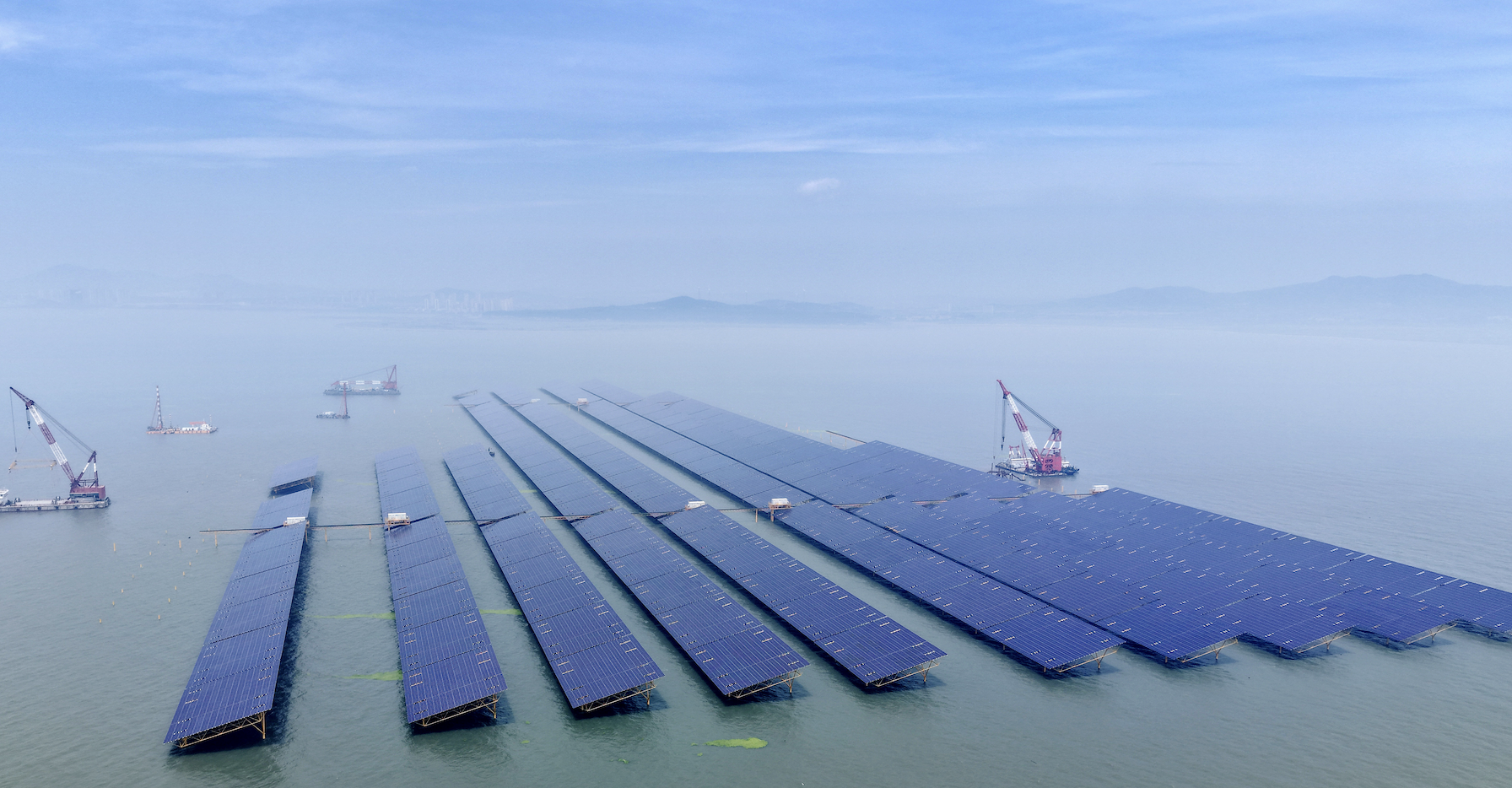
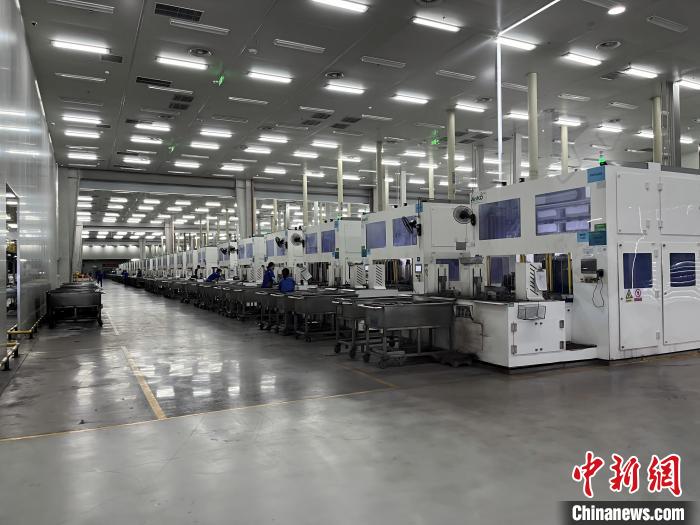
Core Insights - The Chinese photovoltaic industry is transitioning from being the "world factory" to a global technology hub, driven by technological innovation and increased production efficiency [1][3][5]. Industry Overview - The Jinko Solar factory in Jiangxi, known as a "super engine," showcases advanced automation with AGV vehicles and robotic arms, producing an average of 3.9 million solar cells daily, equating to 45 cells per second [1][3]. - Continuous technological innovation is identified as a key theme for Chinese photovoltaic companies, which have evolved from merely exporting products to extending their services and supply chains internationally [3][5]. Global Expansion - Chinese photovoltaic companies are establishing manufacturing bases in countries like Malaysia, Vietnam, the USA, and Saudi Arabia, while also creating localized marketing and service networks in Germany, Brazil, and Japan [4][5]. - The global solar installation market is expected to enter the terawatt (TW) era by 2030, with a forecast of sustained double-digit growth in solar installations in the coming years [3][5]. Strategic Partnerships - Companies like Longi Green Energy and Hongyang New Energy are forming strategic partnerships to build manufacturing bases in Indonesia and Nigeria, respectively, with significant production capacities planned [5]. - Jinko Solar is actively seeking partnerships in overseas markets to combine its technological and management strengths with local capital and market advantages [3][5]. Future Outlook - The industry is expected to see a shift in manufacturing capacity towards Europe, with some companies exporting solar equipment and services to support local production [6]. - The Middle East and ASEAN countries are highlighted as key regions for future expansion, driven by favorable sunlight resources and supportive renewable energy policies [6].


“反内卷”见效!多家硅片厂商上调报价,光伏ETF基金(159863)上涨超1%
Xin Lang Cai Jing· 2025-07-10 02:49
Group 1 - The core viewpoint is that the photovoltaic industry is experiencing a significant price increase in silicon wafers, with various sizes seeing price hikes between 8% and 11.7% [1] - The photovoltaic industry index (931151) has shown strong performance, with component stocks such as Hongyuan Green Energy (603185) and Xiexin Integration (002506) rising by 6.84% and 6.15% respectively [1] - The photovoltaic ETF fund (159863) has also increased by 1.26%, reflecting the overall positive trend in the industry [1] Group 2 - The current focus for the photovoltaic industry is to break away from "involutionary" competition, which is crucial for policy and corporate self-rescue [2] - This transformation is expected to shift the industry from "price wars" to "quality for price," allowing for the orderly exit of backward production capacity [2] - The top ten weighted stocks in the photovoltaic industry index account for 55.39% of the index, indicating a concentration of market influence among leading companies [3]


“反内卷”第一波超级行情来了!
格隆汇APP· 2025-07-09 10:01
Core Viewpoint - The photovoltaic industry chain has returned to the market spotlight after four years, with significant stock price increases across various segments, indicating a strong market recovery and investor interest [1][2][4]. Summary by Sections Market Performance - On July 8, A-share photovoltaic concept stocks saw three stocks hit the 20% daily limit, with nearly 30 stocks rising over 10%, showcasing a rare market phenomenon [1]. - As of July 9, nearly 70 photovoltaic concept stocks had increased by over 10% in July, with 25 stocks rising over 20%, marking it as a significant month for the sector [8]. Price Trends and Influences - The recent surge in the photovoltaic industry began in late June following important government commentary on "anti-involution" and subsequent meetings [5]. - Key stocks like Xinling Electric and Yamaton have shown remarkable price increases, with Xinling Electric rising 62.45% over five trading days [9][10]. - The price of polysilicon, a critical material for photovoltaic cells, has seen a significant increase, with a recent rise of 7% and a cumulative increase of over 30% [11]. Industry Dynamics - The photovoltaic industry is experiencing a strong recovery driven by policy support and rising material prices, leading to a high degree of certainty in valuation recovery [14]. - Historical patterns indicate that the industry has undergone several supply contraction cycles, suggesting potential for further price increases [17][18]. Valuation and Investment Opportunities - The photovoltaic sector has faced significant valuation pressures, with many companies experiencing up to 80% declines since their peak in 2021 [19][20]. - Despite the challenges, there are signs of stabilization, with industry losses narrowing and potential for performance recovery among leading companies [21][22]. - The photovoltaic ETF has outperformed many individual stocks, indicating a favorable investment vehicle for exposure to the sector [23]. Broader Implications - The "anti-involution" trend is not limited to photovoltaics but extends to other sectors such as construction materials and chemicals, suggesting a broader market recovery [24][25]. - The potential for significant investment opportunities exists, particularly for leading companies and those with competitive advantages in the current market environment [26].





光伏行业“内卷”严重,国家层面政策信号密集释放 光伏产业大省如何“反内卷”
Si Chuan Ri Bao· 2025-07-09 00:24
Core Viewpoint - The recent surge in the photovoltaic (PV) equipment sector in the A-share market is driven by a series of favorable policies aimed at combating "involution" and promoting high-quality development within the industry [1][2]. Policy Background - The central government has intensified signals against "involution," with the Ministry of Industry and Information Technology (MIIT) mandating PV companies to report their cost prices, threatening penalties for those selling below cost [2][4]. - High-level meetings involving major PV companies indicate a strong governmental commitment to addressing disordered competition and enhancing product quality [2][4]. - The "anti-involution" measures have been a recurring theme in government discussions since last year, with multiple policy documents emphasizing the need for comprehensive regulation [2][4]. Industry Background - The PV industry is experiencing severe overcapacity, with significant price declines across the supply chain. In 2024, prices for polysilicon, silicon wafers, batteries, and modules are expected to drop by 39%, 50%, 40%, and 29% respectively [6][7]. - The industry's rapid expansion has led to a situation where many companies are selling products below cost, resulting in substantial losses. In 2024, major PV companies reported losses exceeding 600 billion yuan [6][7]. - The growth of the PV sector is notable, with projected installation capacity growth rates of 13.9%, 59.3%, 148.1%, and 28.3% from 2021 to 2024 [6]. Sichuan Countermeasures - Sichuan, a major player in the PV industry, is implementing strategies to address overcapacity while promoting technological upgrades and competitive advantages [9][10]. - The province is witnessing short-term challenges, including production cuts and layoffs, but long-term benefits are anticipated as companies stabilize and innovate [10][11]. - A combination of self-initiated production cuts and government policies aims to reduce capacity and enhance competitiveness [12][14]. Future Outlook - Despite current challenges, the PV industry is expected to rebound as the market corrects itself. The International Renewable Energy Agency projects that global PV installations will need to reach 18,200 GW by 2050 to meet carbon neutrality goals [14].

江西上饶综保区正式封关运行 分为五大功能区
Zhong Guo Xin Wen Wang· 2025-07-08 12:31
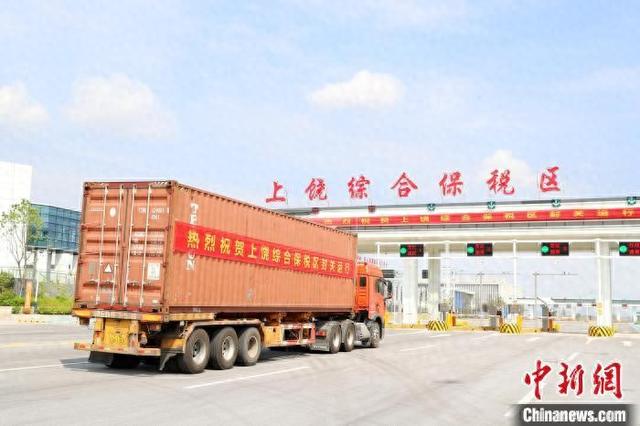
Core Points - Jiangxi Shangrao Comprehensive Bonded Zone officially commenced operations on July 8, 2023, focusing on industries such as photovoltaic and new energy vehicles [1][3] - The zone covers a total planned area of 0.55 square kilometers and is divided into five functional areas, with the first phase expected to be completed by March 2025 [1] - The first business transaction involved JinkoSolar Co., Ltd., which declared three trucks of N-type photovoltaic components valued at 67,000 yuan, marking the first operational activity in the zone [3] Industry Development - The Shangrao Comprehensive Bonded Zone aims to establish a "bonded+" industrial ecosystem by attracting projects related to cross-border e-commerce, manufacturing, logistics, bonded warehousing, testing and maintenance, and research and design [4] - The efficient entry process for goods is supported by a strict process control system, ensuring smooth customs clearance and data interoperability across the supply chain [3]
光伏ETF基金(159863)大涨5.08%,政策上再度重申“供给侧预期再起”
Sou Hu Cai Jing· 2025-07-08 06:05
Group 1 - The photovoltaic ETF fund (159863.SZ) has increased by 5.08%, with major components such as Sungrow Power (up 8.98%), Longi Green Energy (up 6.08%), Tongwei Co. (up 10.00%), Daqo New Energy (up 14.84%), and TBEA Co. (up 3.02%) [1] - There are rumors that silicon material does not have a guiding price and cannot be sold below their full cost, with policies reiterating "supply-side expectations rising" [1] - The photovoltaic industry is currently undergoing a clearing process that can be categorized into financial, policy, and technical clearings, with expectations of challenges in domestic demand in Q3 and an anticipated increase in polysilicon production in July [1] Group 2 - Zhongyi Securities' strategy team notes that the current market environment is similar to the end of 2014, with investors having accumulated profit effects in the industry, and policy expectations stabilizing [1] - China Post Securities highlights that the photovoltaic industry has been officially named for "involution-style" competition, with leading photovoltaic glass companies planning to collectively reduce production by 30% starting in July [2] - The Ministry of Industry and Information Technology has signaled stronger regulatory measures, requiring companies to report cost prices and planning to impose heavy penalties on low-price sales, indicating an escalation in industry governance [2]


光伏再度猛攻!通威股份涨停,光伏龙头ETF(516290)放量涨超4%,供给侧出清步入“深水区”,光伏的春天来了?
Sou Hu Cai Jing· 2025-07-08 03:50
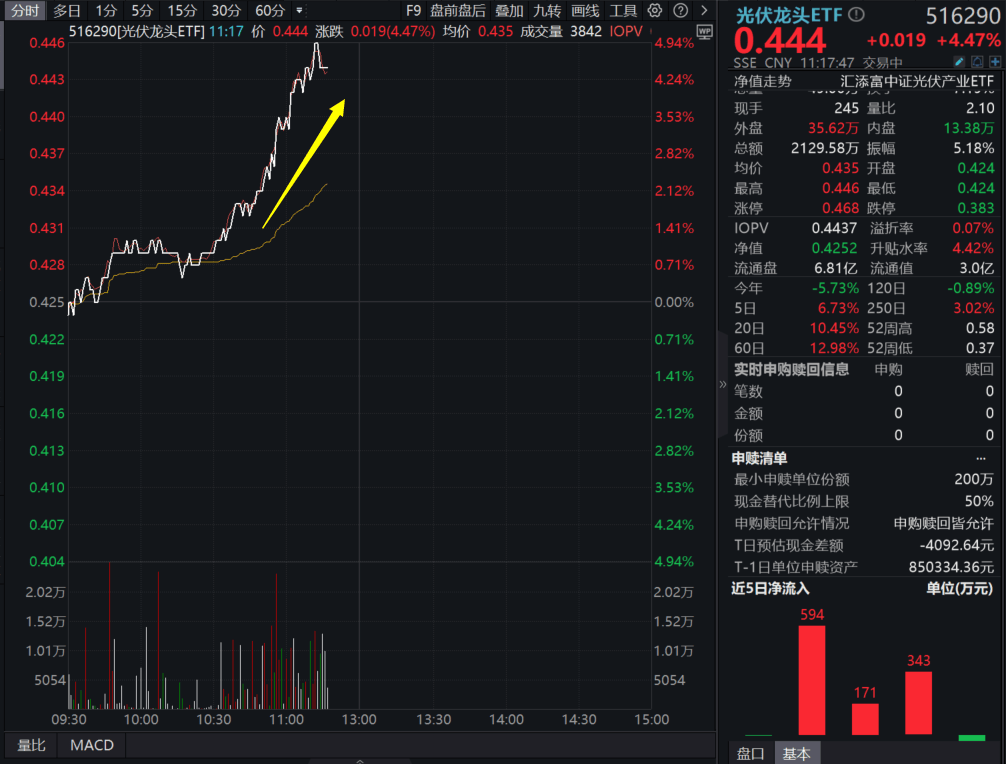
Core Viewpoint - The photovoltaic sector is experiencing a significant rebound, with the leading photovoltaic ETF (516290) surging over 4% in trading volume, indicating a potential bottom reversal in the market [1] Group 1: Market Performance - The photovoltaic leading ETF (516290) saw a price increase of 4.47%, reaching 0.444, with a trading volume of 3,842 million [1] - Major component stocks of the ETF, such as Daqo New Energy, Tongwei Co., and Sungrow Power Supply, reported substantial gains, with Daqo New Energy rising over 14% and Tongwei Co. hitting the daily limit [1] Group 2: Industry Insights - In May, the newly installed capacity for photovoltaic systems reached 93 GW, marking a year-on-year increase of 388%, with a historical high of nearly 100 GW in new installations driven by a rush to install [2] - The photovoltaic industry is addressing supply-side excess, with expectations for specific measures to be implemented, which could benefit segments like silicon materials and BC battery efficiency improvements [3] Group 3: Future Outlook - The photovoltaic sector is anticipated to undergo a fundamental recovery, with positive sentiment expected to shift as new technologies and government initiatives promote market clearing [4] - The photovoltaic leading ETF (516290) is highlighted as a low-fee option in the market, with management and custody fees significantly lower than the industry average [4]
新一轮反内卷冲锋号吹响!
第一财经· 2025-07-08 02:16
Core Viewpoint - A new round of anti-"involution" competition has been initiated, affecting both traditional industries like steel and cement, as well as emerging sectors such as photovoltaics, new energy vehicles, and lithium batteries. The central government has signaled a commitment to address low-price disorderly competition and promote the orderly exit of backward production capacity [1][4][6]. Group 1: Government Initiatives - The Central Economic Committee's recent meeting emphasized the need to govern low-price disorderly competition legally and systematically, aiming to enhance product quality and facilitate the exit of outdated production capacity [1][6]. - The Ministry of Industry and Information Technology (MIIT) has held discussions with photovoltaic industry leaders to address the challenges posed by low-price competition and to promote high-quality development within the sector [11][12]. - The revised Anti-Unfair Competition Law, effective from October 15, 2025, aims to provide legal tools to combat "involution" competition, particularly targeting platform operators who enforce below-cost pricing [9][10]. Group 2: Industry Responses - Various industry associations, including those in steel, cement, and battery sectors, have called for a collective response against "involution" competition, advocating for quality over price in market competition [3][16][19]. - The photovoltaic industry is experiencing significant pressure, with upstream silicon material prices plummeting, leading to a collective financial strain across the entire supply chain [12][14]. - Industry leaders have highlighted the necessity for consolidation and stricter control of production capacity to overcome the challenges posed by "involution" competition, suggesting that cooperation is essential for long-term sustainability [14][19]. Group 3: Economic Context - The current "involution" phenomenon is attributed to two main factors: a cyclical economic adjustment leading to heightened price sensitivity among consumers, and external pressures from a de-globalizing environment that compel companies to compete primarily on price [7][8]. - The imbalance between supply and demand in various sectors, particularly in the steel industry, has resulted in increased production despite declining consumption, exacerbating the "involution" issue [18][19].


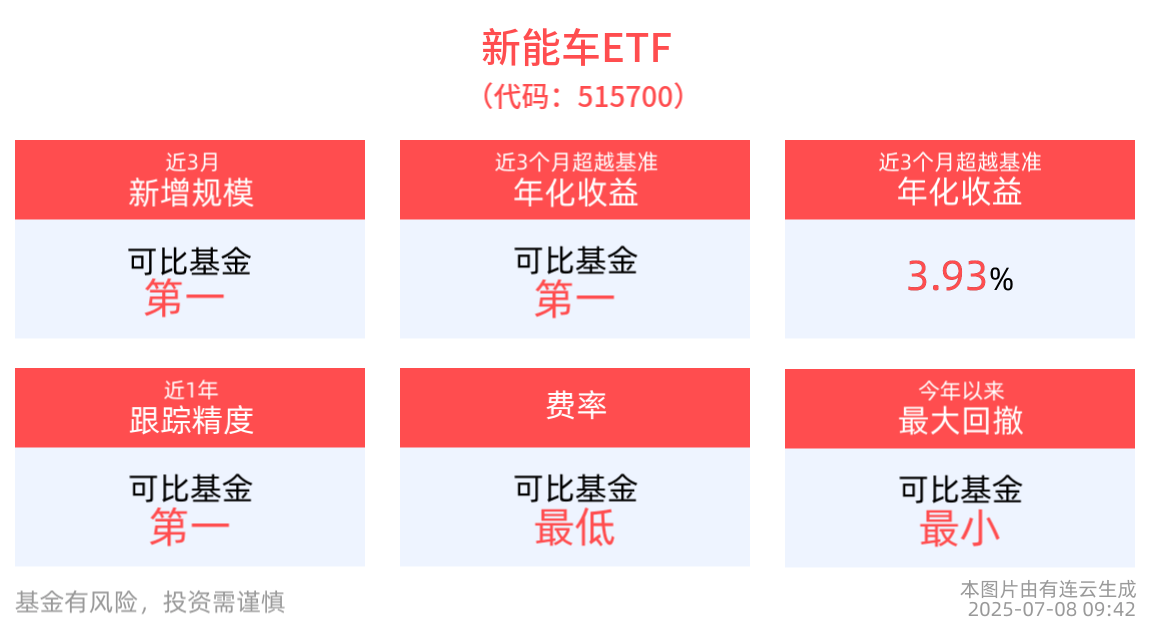
四部门发文推动大功率充电设施建设,新能车ETF(515700)多只成分股上涨,光伏ETF基金(516180)盘中飘红
Sou Hu Cai Jing· 2025-07-08 02:13
Group 1: New Energy Vehicle Industry - The China Securities New Energy Vehicle Industry Index (930997) increased by 0.39%, with key stocks like Defu Technology (301511) rising by 3.57% and Huayou Cobalt (603799) by 2.92% [1] - The National Development and Reform Commission and other departments announced plans to establish over 100,000 high-power charging facilities by the end of 2027, aiming for improved service quality and technology upgrades [1] - CITIC Securities forecasts that domestic electric vehicle sales will reach 16.52 million units in 2025, with a year-on-year growth rate of 15-22% expected in 2026 [2] Group 2: Photovoltaic Industry - The China Securities Photovoltaic Industry Index (931151) rose by 0.15%, with major stocks like Sungrow Power (300274) increasing by 1.62% [4] - The top ten weighted stocks in the photovoltaic index account for 55.39% of the total index, indicating a concentrated market [9] Group 3: Automotive Parts Industry - The China Securities Automotive Parts Theme Index (931230) increased by 0.29%, with stocks like Zhengmei Machinery (601717) rising by 2.51% [4] - The top ten weighted stocks in the automotive parts index represent 41.05% of the total index, highlighting key players in the sector [9] Group 4: New Materials Industry - The China Securities New Materials Theme Index (H30597) rose by 0.50%, with stocks like Yake Technology (002409) increasing by 4.58% [6] - The top ten weighted stocks in the new materials index account for 51.27% of the total index, showcasing significant contributors to the industry [10]






新一轮反内卷冲锋号吹响,新兴产业民企占比高需因业施策
Di Yi Cai Jing· 2025-07-07 14:04
Group 1 - The core viewpoint emphasizes that comprehensive rectification of "involutionary" competition is a key measure to address current economic development contradictions, affecting both traditional and emerging industries [1][4][5] - The new round of anti-involution policies includes not only traditional industries like steel and cement but also emerging sectors such as photovoltaics, new energy vehicles, and lithium batteries, which have a higher proportion of private enterprises [1][4][5] - The recent Central Economic Committee meeting highlighted the need to legally govern low-price disorderly competition and promote the orderly exit of backward production capacity, signaling a national-level response to involution [2][5] Group 2 - The Ministry of Industry and Information Technology (MIIT) has initiated discussions with photovoltaic industry leaders to address production, innovation, and market competition challenges, aiming to support high-quality development in the sector [10] - The photovoltaic industry has faced significant pressure, with prices for silicon materials and components dropping below cash costs, leading to a substantial decline in profit margins [11][12] - Various industry associations, including those in steel, cement, and battery sectors, have called for a collective response to involution, advocating for quality over price competition and industry cooperation [13][15] Group 3 - The revised Anti-Unfair Competition Law, effective from October 15, 2025, aims to provide institutional tools to curb "involutionary" competition, particularly targeting platform operators to prevent forced low-cost sales [9] - Experts have identified two main causes of the current involution phenomenon: domestic economic adjustments leading to price sensitivity and external pressures on Chinese enterprises due to de-globalization [6][7] - The steel industry is particularly affected by involution, with a significant increase in crude steel production despite declining apparent consumption, indicating a supply-demand imbalance [15]