
Cambricon(688256)

Search documents
龙头IPO过会叠加“去日化”预期升温,半导体设备ETF(561980)午后拉升,长川科技、寒武纪领涨!
Sou Hu Cai Jing· 2026-02-26 06:42
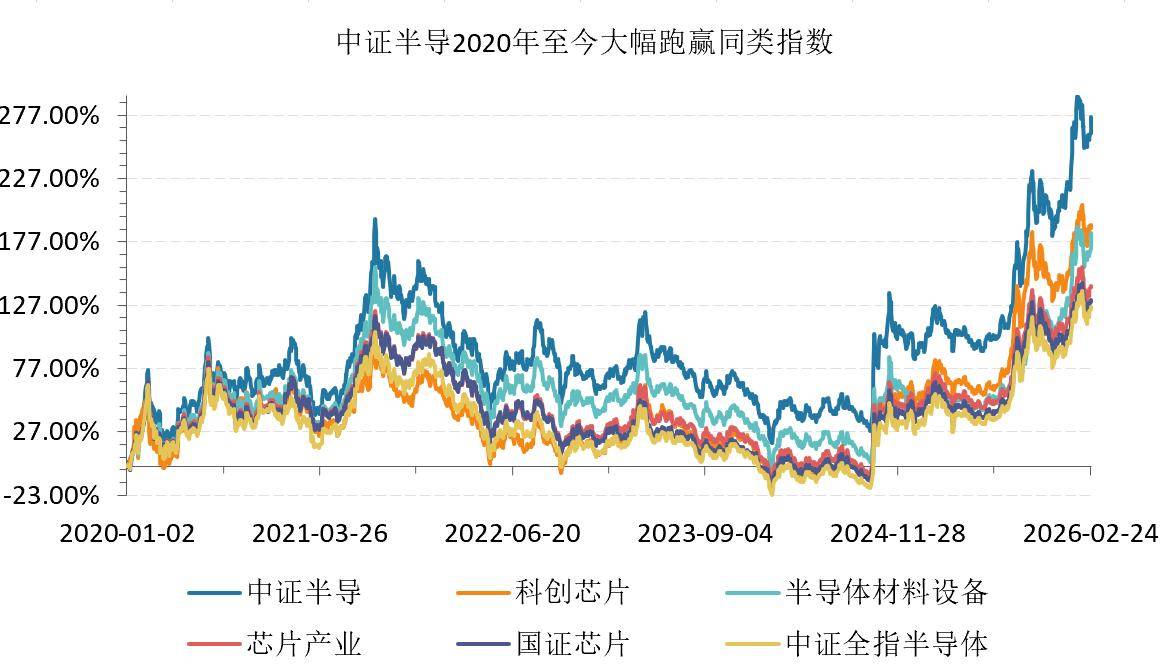
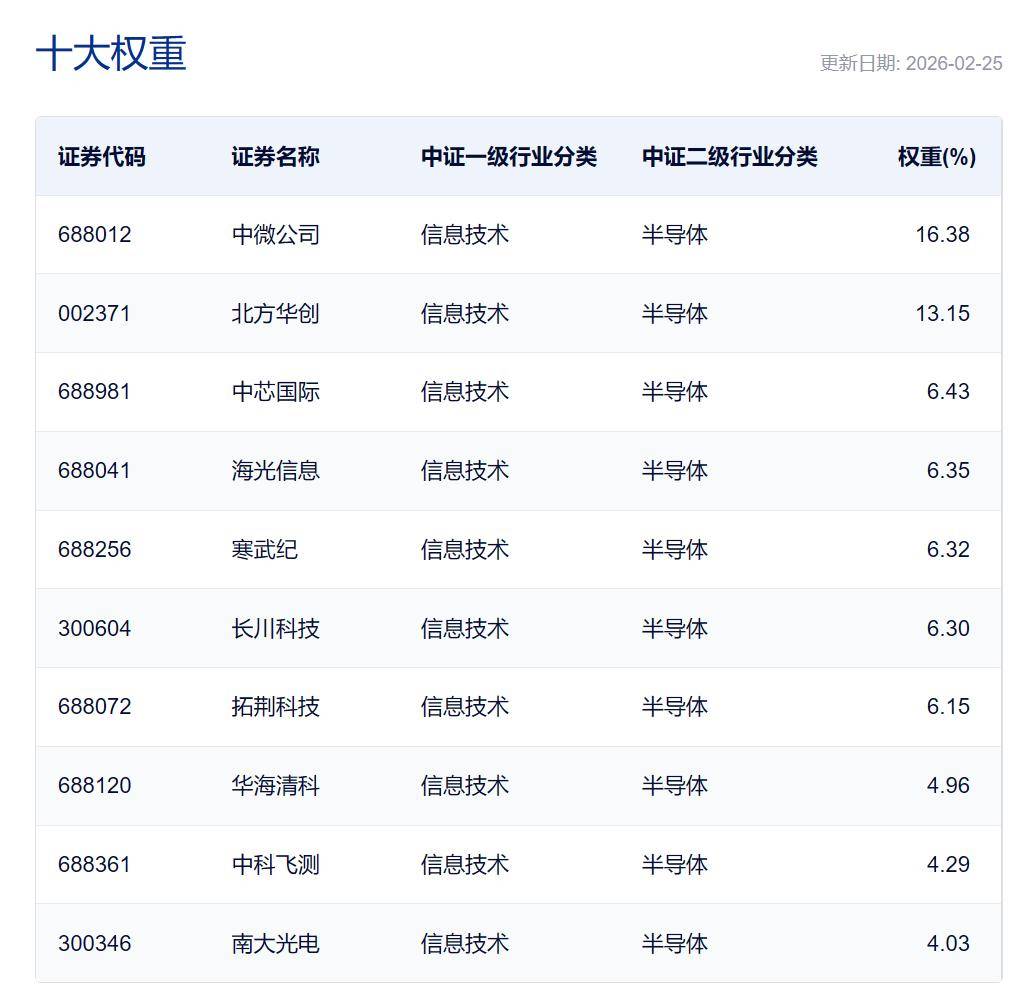
Core Viewpoint - The semiconductor equipment and chip design sectors are experiencing a strong rally, driven by various industry catalysts and positive performance from key companies [1][3]. Group 1: Market Performance - The semiconductor equipment ETF (561980) rose by 1.13%, with a peak increase of over 2%, and a real-time transaction volume of 2.58 billion yuan [1]. - Notable stock performances include Cambrian rising by 7%, and several companies like Changchuan Technology and Jingyi Equipment increasing by over 5% [2]. Group 2: Catalysts for Growth - Catalyst 1: The tightening of Sino-Japanese relations is reinforcing the logic of domestic substitution, with potential benefits for domestic equipment manufacturers as Japan's semiconductor equipment leaders focus on specific technologies [4]. - Catalyst 2: The successful IPO of Shenghe Jingwei, which aims to raise 4.8 billion yuan for advanced packaging projects, is expected to drive demand for packaging equipment, benefiting related equipment suppliers [5]. - Catalyst 3: Strong earnings reports from both domestic and international AI chip leaders confirm an upward trend in the chip industry, with Nvidia reporting a 73% year-over-year revenue increase and domestic companies like Haiguang Information and Cambrian also showing significant growth [6]. Group 3: ETF Insights - The semiconductor equipment ETF (561980) tracks the semiconductor industry index, with over 90% weight in equipment, materials, and design, featuring leading companies such as Zhongwei Company and Beifang Huachuang [7]. - As of February 25, the ETF's latest scale is 3.527 billion yuan, with its index having risen over 290% since 2020, indicating a stronger rebound compared to similar indices [7].


半导体设备、材料、设计深度分析:三重共振下的黄金主线赛道
Sou Hu Cai Jing· 2026-02-26 06:25
Core Viewpoint - The semiconductor equipment and materials market is expanding into AI chip design, with strong performance from companies like Nvidia and domestic players such as Haiguang Information and Cambrian, indicating a robust growth trajectory in the sector [1][4]. Group 1: Company Performance - Nvidia reported a revenue of $68.1 billion, a 73% year-over-year increase, with strong growth in its data center business and a positive outlook extending to 2027 [4]. - Haiguang Information expects a revenue increase of 62.91% to 75.82% year-over-year for Q1 2026, building on a 57% increase in 2025 [1]. - Cambrian anticipates a net profit increase of 575% for 2025, showcasing the strong demand for domestic AI chips [1][4]. Group 2: Market Trends - The semiconductor equipment ETF (561980) has shown resilience, recovering from a 2% dip to gain over 2% during the day, reflecting investor confidence in the sector [1]. - The semiconductor theme index has outperformed other indices since 2020, with a significant increase of 290.72% compared to other chip-related indices [2][3]. - The supply-demand dynamics in the storage chip market have shifted, with SK Hynix indicating a transition to a seller's market, leading to expected price increases [4]. Group 3: Industry Outlook - The growth in semiconductor equipment, materials, and design is expected to continue until at least 2027, driven by strong demand and capacity expansion in the industry [4]. - The domestic semiconductor industry is benefiting from increased localization, with the localization rate for wafer manufacturing equipment expected to rise from 25% in 2024 to 30% in 2026 [4]. - The increasing demand for AI computing power, coupled with rising storage prices and accelerated domestic substitution, is favorable for the equipment, materials, and design sectors [4].




芯片概念股午后拉升,科创芯片相关ETF涨超2%
Mei Ri Jing Ji Xin Wen· 2026-02-26 05:58
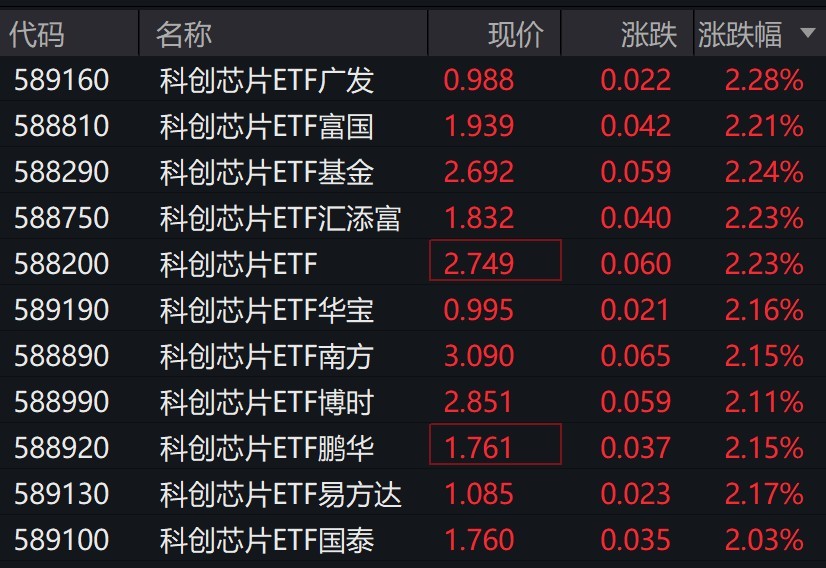
Group 1 - Chip concept stocks experienced a significant afternoon rally, with Cambrian rising over 7%, Tuojing Technology up over 4%, and Haiguang Information and Chip Origin both increasing by over 3% [1] - The related ETFs for innovative chips rose by more than 2% due to market influences [1] Group 2 - Various innovative chip ETFs showed positive performance, with the following price changes: - GF Innovation Chip ETF increased by 2.28% to 0.988 - Fuguo Innovation Chip ETF rose by 2.21% to 1.939 - Fund Innovation Chip ETF went up by 2.24% to 2.692 - Huatai Innovation Chip ETF increased by 2.23% to 1.832 - Other ETFs also showed similar upward trends [2] - Research institutions indicate that the application of AI chips is expanding from cloud computing data centers to edge computing, smart terminals, and intelligent manufacturing, highlighting a broader market penetration [2] - AI chips are driving continuous breakthroughs in computing power through architectural innovations, with TPU achieving significant performance improvements in specific scenarios compared to traditional architectures, and NPU showing notable enhancements in energy efficiency [2] - The global market for AI chips is highly concentrated, while the domestic supply chain in China is steadily improving, with a noticeable acceleration in the process of local substitution [2]


PCB大爆发,沪电股份涨停,创历史新高!寒武纪登顶A股吸金榜,电子ETF(515260)盘中拉升2.3%冲击5连阳
Xin Lang Cai Jing· 2026-02-26 05:56
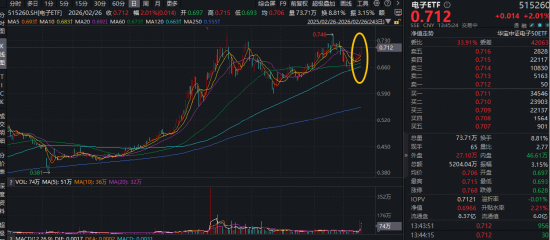
Core Viewpoint - The electronic ETF (515260), which has nearly 28% exposure to Nvidia's supply chain, experienced a significant price increase, rising nearly 2.3% intraday and currently up 2.01%, marking five consecutive days of gains [1][14]. Industry Summary - The PCB (Printed Circuit Board) sector is leading the gains, with major stocks like Huadian Co. and Shenzhen South Circuit reaching their daily limit, while Dongshan Precision rose over 9% and Shenghong Technology increased by more than 8% [3][14]. - Nvidia reported impressive quarterly revenue of $68 billion and provided strong guidance, with CEO Jensen Huang stating that AI capabilities are at a turning point, directly translating computing power into revenue [4][14]. - The electronic sector saw a net inflow of 28.252 billion yuan, leading among 31 first-level industries in the Shenwan classification, with Cambrian Technology attracting 3.238 billion yuan, topping the A-share capital inflow rankings [5][15]. Company Insights - The PCB is considered the "skeleton and blood vessels" of AI servers, with the value of ordinary server PCBs around 800 yuan, while AI server PCBs can reach between 6,000 to 12,000 yuan, representing a value increase of 5 to 10 times [6][16]. - According to CITIC Securities, the PCB industry's benefits will continue to extend from cloud applications to end-user devices, with significant growth expected in AI servers and related technologies [6][16]. - The electronic ETF (515260) tracks a popular technology index, with major tech companies like Apple, Nvidia, and Google holding significant weightings of 45.19%, 27.87%, and 21.85% respectively, indicating strong ties to global tech growth [6][16]. Investment Tools - The electronic ETF (515260) and its linked funds passively track the electronic 50 index, heavily investing in semiconductor and consumer electronics sectors, including AI chips, automotive electronics, and PCBs [8][18]. - The ETF is a financing and interconnectivity tool, providing an efficient way to invest in core assets within the electronic sector [8][18].


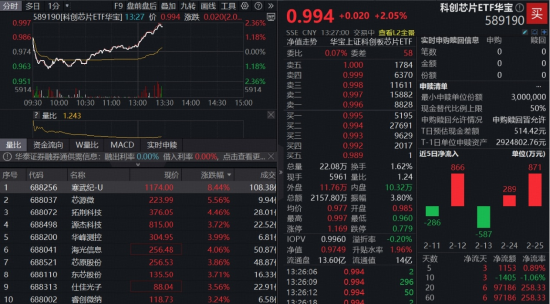
千亿巨头突发,寒武纪涨近10%!“全芯”科创芯片ETF(589190)涨超2%,海光信息业绩爆了
Xin Lang Cai Jing· 2026-02-26 05:56
Core Viewpoint - The semiconductor industry is experiencing a significant upturn, driven by the demand for AI-related chips, with several leading companies reporting substantial revenue growth and profitability improvements [3][11]. Group 1: Company Performance - Haiguang Information reported a revenue of 14.376 billion yuan for 2025, a year-on-year increase of 56.91%, with a net profit of 2.542 billion yuan, up 31.66% [11]. - Cambrian's earnings forecast indicates expected revenue between 6 billion to 7 billion yuan for 2025, representing a year-on-year growth of 410.87% to 496.02%, with a projected net profit of 1.85 billion to 2.15 billion yuan [11]. - Lanke Technology anticipates a net profit of 2.15 billion to 2.35 billion yuan for 2025, reflecting a year-on-year increase of 52.29% to 66.46% [11]. Group 2: Industry Trends - The semiconductor industry is currently experiencing a rising demand due to AI's influence on computing power chips, storage chips, and wafer foundry sectors [11]. - Dongguan Securities highlights that the semiconductor equipment sector is entering a historic development window, suggesting a focus on performance realization in the equipment and storage sectors [11]. - The "super cycle" in the chip industry is being emphasized, with a recommendation to select high-growth stocks [11]. Group 3: ETF Performance - The Huabao Sci-Tech Chip ETF (589190) has shown a year-to-date price increase of over 2%, with significant contributions from leading companies like Cambrian and Xinyuan Micro [1][10]. - The Shanghai Stock Exchange Sci-Tech Chip Index has an annualized return of 17.93%, outperforming similar indices and demonstrating a better risk-return profile [13][14]. - The index has shown a maximum drawdown of -56.81%, indicating a relatively lower risk compared to other indices [14].
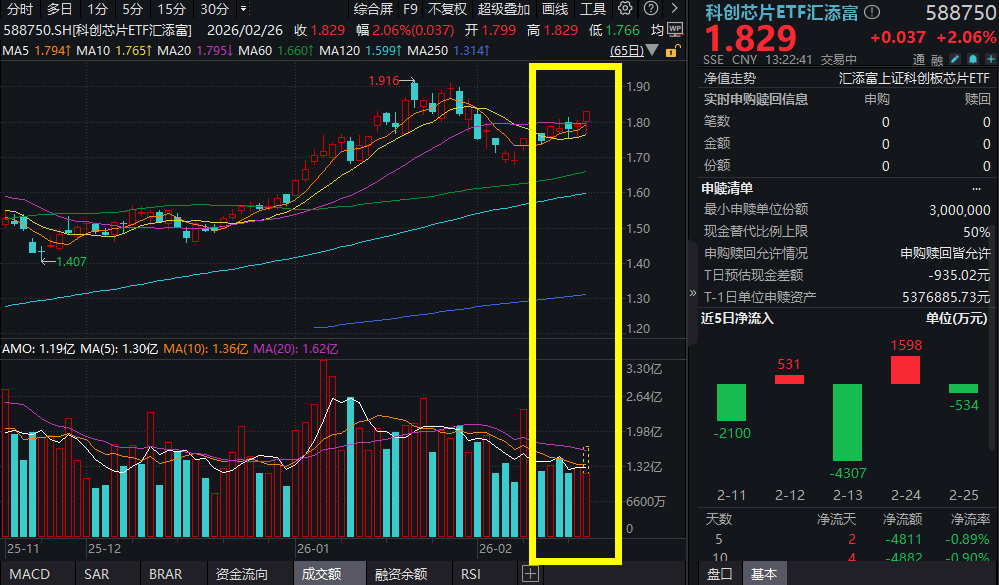
AI算力午后飙升,寒武纪暴涨8%,科创芯片ETF汇添富(588750)放量涨超2%,英伟达业绩大超预期,黄仁勋最新发声:算力即营收!
Sou Hu Cai Jing· 2026-02-26 05:55
Core Viewpoint - The AI industry chain is experiencing significant growth, with notable increases in stock prices for key companies in the sector, driven by strong demand for AI chips and applications [2][5]. Group 1: Market Performance - The A-share market saw a surge in the afternoon, with the Sci-Tech Chip ETF Huatai (588750) rising over 2% and the Sci-Tech AI ETF Huatai (589560) increasing by 1.86% [2]. - Major component stocks of the Sci-Tech Chip ETF showed strong performance, with Cambricon Technologies soaring over 8%, and other companies like Chipone Technology and Tuojing Technology rising over 4% [2][3]. Group 2: Nvidia's Financial Performance - Nvidia reported a revenue of $68.1 billion for Q4 of fiscal year 2026, exceeding expectations of $65.91 billion, and showing a significant increase from $39.33 billion in the same quarter last year [4]. - The data center revenue reached $62.38 billion, also surpassing expectations, with a nearly 13-fold increase since the launch of OpenAI's ChatGPT [4]. Group 3: AI Demand and Chip Industry - The AI chip demand is expected to grow significantly, with a price increase trend spreading across the entire industry chain, driven by substantial capital expenditures and accelerated application commercialization [5][6]. - Domestic AI computing power is anticipated to enter a new cycle, with increased demand for AI chips and a recovery in domestic AIDC bidding expected by Q4 2025 [6][7]. Group 4: Application and Market Transformation - The shift from traditional SEO to GEO in search paradigms is accelerating the commercialization of AI applications, with significant user engagement expected from major AI applications [8]. - The AI application landscape is evolving from technology experimentation to large-scale practical use, indicating a robust demand for AI computing resources [8]. Group 5: ETF and Index Performance - The Sci-Tech Chip ETF (588750) focuses on high-tech segments of the chip industry, showing strong growth potential with a projected net profit growth rate of 94% for the first three quarters of 2025 [11][12]. - The index has demonstrated a maximum increase of 236% since September 24, 2024, indicating strong upward elasticity compared to other industry indices [12][13].
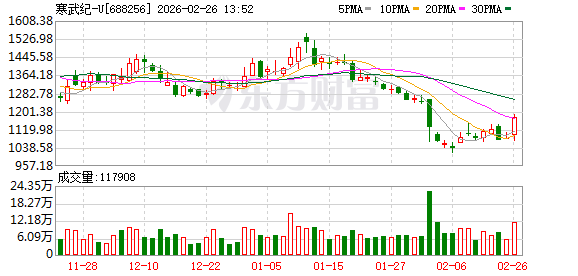
寒武纪,直线拉升
Shang Hai Zheng Quan Bao· 2026-02-26 05:51
Core Viewpoint - The AI chip sector is experiencing significant growth, with notable stock price increases for companies like Cambricon, Starry Technology, and Anlu Technology, driven by positive market sentiment and strong earnings reports from major players like NVIDIA [1][3][5]. Group 1: Stock Performance - Cambricon's stock price surged to 1173.99 CNY per share, marking an increase of 8.44%, with a total market capitalization exceeding 490 billion CNY and trading volume surpassing 11.3 billion CNY [1]. - Starry Technology's stock rose over 15%, while Anlu Technology and Yuntian Lifa saw increases of over 14% and 8%, respectively [3][4]. Group 2: Earnings Reports - NVIDIA reported a total revenue of 68.13 billion USD for Q4 of fiscal year 2026, exceeding analyst expectations of 66.2 billion USD, with earnings per share of 1.62 USD, surpassing the forecast of 1.53 USD [5]. - NVIDIA's guidance for Q1 of fiscal year 2027 anticipates revenue of 78 billion USD, with a variance of 2%, excluding revenue from data centers in China [5]. Group 3: Market Indices - The ChiNext 50 Index experienced a rise of 1.3% in the afternoon trading session, reflecting the overall positive trend in the tech sector [5].
A股算力芯片概念午后拉升,寒武纪涨近10%
3 6 Ke· 2026-02-26 05:48
Core Viewpoint - The A-share computing chip sector experienced a significant rally in the afternoon, with notable gains in several companies, indicating a positive market sentiment towards this industry [1] Company Summaries - Cambricon Technologies saw an increase of nearly 10% in its stock price, reflecting strong investor interest [1] - Other companies that followed suit include Yuntian Lifei, Haiguang Information, Dongxin Co., Chipone Technology, and Moer Thread, all of which also experienced stock price increases [1]


半导体板块午后持续走高,欧莱新材涨近19%
Mei Ri Jing Ji Xin Wen· 2026-02-26 05:45
Group 1 - The semiconductor sector experienced a significant rise in the afternoon, with notable gains in various companies [1] - Olin New Materials surged nearly 19%, while Anlu Technology increased by over 14% [1] - Cambrian Intelligence saw an increase of over 8%, with Xinxiang Micro and Changchuan Technology also following the upward trend [1]


