Qingdao Gaoce(688556)

Search documents
高测股份:目前公司光伏主业盈利能力逐步修复,基本面稳健
Zheng Quan Ri Bao· 2025-12-30 13:43
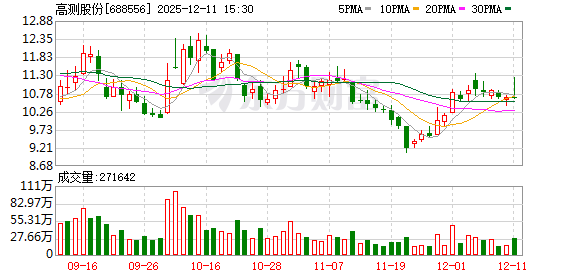
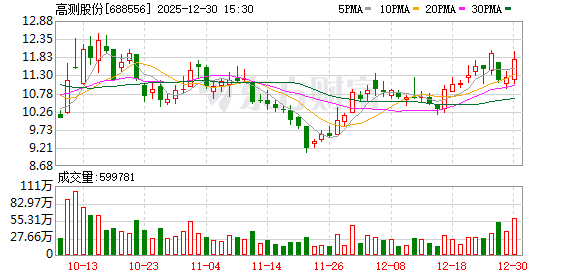
证券日报网讯 12月30日,高测股份在互动平台回答投资者提问时表示,股价波动受多重因素影响,目 前公司光伏主业盈利能力逐步修复,基本面稳健,人形机器人相关业务稳步推进,无应披露而未披露的 重大事项。公司一直致力于规范运作及稳健经营,并高度重视股东长期价值回报。公司将持续加大研发 投入,加速主业盈利修复进程,快速拓展人形机器人各业务,不断强化核心竞争力,持续提升业绩,为 股东创造更多长期投资价值。 (文章来源:证券日报) ...


高测股份:公司三季度已实现单季度盈利
Zheng Quan Ri Bao· 2025-12-30 12:05
Group 1 - The core viewpoint is that the photovoltaic industry is experiencing a recovery in profitability due to the implementation of anti-involution policies, leading to a gradual increase in prices across various segments [2] - The company has reported a recovery in the profitability of its silicon wafer cutting and processing services, which is expected to further enhance its main business profitability [2] - In the third quarter, the company achieved a quarterly profit, and with the ongoing support of anti-involution policies and internal cost reduction efforts, the main business profitability is anticipated to continue improving [2]
高测股份:公司减速器业务目前主要配合海外客户定制研发
Zheng Quan Ri Bao Wang· 2025-12-30 11:41
Core Viewpoint - The company is rapidly expanding its presence in the humanoid robotics sector by leveraging its established technological platforms in precision cutting, grinding, and electroplating chemistry [1] Group 1: Technological Capabilities - The company has developed three platform technologies: precision cutting, precision grinding, and electroplating chemistry, which support its growth in the humanoid robotics field [1] - The core capability of rapid migration of R&D scenarios enables the company to adapt quickly to new market demands [1] Group 2: Product Development - The company is focusing on the development of planetary roller screw grinding equipment, dexterous composite metal tendons, and reducer products for humanoid robots [1] - The reducer business is currently tailored for overseas clients, and the development progress is reported to be smooth [1] Group 3: Investment Considerations - The related products for the reducer business are still in the very early stages of development, indicating potential uncertainties and risks for investors [1]
高测股份:光伏业务市占率持续提升叠加人形机器人业务的潜在新增长动力;重申买入评级
2025-12-29 01:04
abc 2025 年 12 月 24 日 Global Research 高测股份 光伏业务市占率持续提升叠加人形机器人业务 的潜在新增长动力;重申买入评级 光伏业务有望反转;人形机器人业务带来中长期上行空间 受出货量增长推动,Q325公司切片服务业务收入同比增长148%。尽管行业 供应过剩,公司在硅片市场的份额从2024年的4.6%扩大至Q325的10.8%。 叠加公司对电池片厂商和垂直一体化巨头进一步渗透,我们认为公司成本优 势已被广泛认可,这将在行业盈利能力持续承压的情况下为公司带来更多市 占率上行空间。此外,在行业反内卷推动价格企稳的背景下,我们认为公司 通过降本增效或实现利润率回升。我们预计公司2025年实现盈亏平 衡,2026/27年净利润达2.19亿元/3.56亿元,得益于金刚线和硅片切片服务 业务市占率和利润率均进一步提升。 人形机器人业务进展 基于已有技术积累的可拓展性,公司已进军人形机器人零部件/设备领 域:1)自4月产品发布以来,灵巧手用钨丝腱绳业务已确认来自多个国内客 户的收入;2)丝杠磨床设备研发进展顺利推进(拟于春节前后进行内 测);3)公司还与海外一线客户合作开发减速器产品。我们 ...

光伏HJT设备,2026年将继续爆发
Ge Long Hui· 2025-12-19 10:51
Core Insights - The U.S. photovoltaic (PV) market is experiencing a dual turning point of "demand explosion + capacity return" in 2025, driven by AI computing power expansion and a declining interest rate cycle, leading to a projected installation capacity of over 60GW in 2025 with a compound annual growth rate of 20% [1][2]. Demand Side - The U.S. renewable energy generation share is low at approximately 10%, significantly below the global average of 30%, indicating substantial room for energy structure transformation [2]. - The demand for PV is catalyzed by the electricity gap created by AI data centers and manufacturing recovery, as these centers operate continuously and require stable power sources, making PV a preferred clean energy option [2]. - The arrival of a declining interest rate cycle has amplified demand potential, as the internal rate of return (IRR) for PV projects is highly correlated with interest rates, leading to lower financing costs and increased investment willingness from developers [2]. Policy Support - The U.S. government is promoting domestic PV production through a combination of "manufacturing subsidies + trade protection," establishing a solid foundation for local capacity expansion [2]. - Although the Investment Tax Credit (ITC) for distributed projects will gradually phase out after 2027, subsidies for manufacturing remain strong, with 4 cents per cell and 7 cents per module, reducing cost pressures for domestic manufacturers [2]. Domestic Capacity and Challenges - The planned domestic PV capacity in the U.S. is set to reach 60-70GW, with approximately 40GW already in production for modules, but only single-digit capacity for cells, highlighting a significant supply gap [3]. - The U.S. PV manufacturing faces challenges such as high labor, energy, and compliance costs compared to China, necessitating the adoption of more efficient and lower-cost technologies like HJT (Heterojunction Technology) [3][4]. HJT Technology Advantages - HJT technology requires only four core processes, resulting in lower operational costs (OPEX) of $5.4-5.5 million per GW, compared to $7.2 million for TOPCon technology, with a cost difference of 2 cents per watt [4]. - Even without government subsidies, HJT can achieve a profit of 1.6 cents per watt, indicating sustainable profitability post-subsidy reduction [5]. Patent Landscape - HJT technology has a patent advantage, as its core patents expired in 2015, allowing U.S. companies to expand capacity without the risk of patent litigation, unlike TOPCon and BC technologies [8]. - Several U.S. companies have announced HJT capacity expansion plans, totaling over 30GW, expected to materialize between 2026 and 2028, providing certainty for the supply chain [8][9]. Equipment Supply Chain - The surge in HJT capacity in the U.S. will benefit Chinese equipment manufacturers, who dominate the global HJT equipment market with over 70% market share, providing a competitive edge in terms of cost and service [10]. - U.S. companies prefer Chinese equipment due to significant cost advantages (60%-70% cheaper than overseas options) and faster service response times, which are crucial for meeting rapid production ramp-up needs [10]. Investment Opportunities - The expansion of domestic PV capacity and the adoption of HJT technology create clear investment themes focused on "equipment leaders + technology support," balancing performance certainty with growth potential [11]. - Key players include: - Maiwei Co., which leads in HJT equipment with over 70% market share, benefiting from U.S. capacity expansion [11]. - Aotwei, a leader in module packaging equipment, with ongoing demand from the 40GW of installed capacity [11]. - Gaomei Co., a core supplier of HJT wafer cutting equipment, benefiting from technology upgrades and U.S. capacity expansion [11]. Auxiliary Investment Themes - The demand for low-temperature silver paste and TCO targets will rise with HJT technology, driving exports of related materials [12]. - Companies producing photovoltaic glass and encapsulants are well-positioned to meet the supply chain needs of U.S. module production, leveraging global presence and cost advantages [12].



光伏HJT设备,2026年将继续爆发
格隆汇APP· 2025-12-19 10:13
Core Viewpoint - The U.S. photovoltaic (PV) market is expected to experience a "demand explosion + capacity return" by 2025, driven by AI computing power expansion and a declining interest rate cycle, leading to a projected installation capacity of over 60GW in 2025 with a compound annual growth rate of 20% [5][6]. Demand Side - The share of renewable energy generation in the U.S. is approximately 10%, significantly lower than the global average of 30%, indicating substantial potential for energy structure transformation [7]. - The demand for PV is catalyzed by the electricity needs of AI data centers and the recovery of the manufacturing sector, as these facilities operate continuously and require stable energy sources, making PV an attractive option [7]. - The arrival of a declining interest rate cycle enhances the demand potential, as the internal rate of return (IRR) for PV projects is closely linked to interest rates, leading to lower financing costs and increased investment willingness from developers [8]. Policy Side - The U.S. government is promoting domestic PV industry localization through a combination of manufacturing subsidies and trade protection measures. Although the Investment Tax Credit (ITC) for distributed projects will gradually be phased out after 2027, subsidies for manufacturing continue to support the industry [9]. - Current domestic PV capacity planning in the U.S. is set at 60-70GW, with approximately 40GW of component capacity already in operation, but a significant gap remains in battery cell production, highlighting a structural imbalance in the industry [9]. Manufacturing Challenges - U.S. PV manufacturing faces three main pressures: high labor costs, high energy consumption, and high compliance costs, necessitating the adoption of more efficient and lower-cost technology solutions [10]. - The cost structure for U.S. manufacturing is significantly higher than that of China, with labor costs being 3.5 times higher, energy costs 2.1 times higher, and depreciation costs 1.3 times higher [11]. - The shift in market focus from capital expenditure (CAPEX) to operational expenditure (OPEX) favors technologies like Heterojunction Technology (HJT), which offers superior operational efficiency compared to traditional technologies [11]. HJT Technology Advantages - HJT technology has a unique advantage in the U.S. market due to its lack of patent barriers, as its core patents expired in 2015, allowing companies to avoid patent litigation risks [15]. - The recognition of HJT technology has led to substantial capacity expansion plans, with several U.S. companies announcing HJT capacity increases totaling over 30GW by the end of 2025 [15]. Chinese Equipment Suppliers - The expansion of HJT capacity in the U.S. will benefit Chinese PV equipment manufacturers, who hold a dominant position in the global market, particularly in HJT production line equipment [18]. - Chinese equipment suppliers, such as Maiwei, have over 70% market share in HJT equipment, providing a cost-effective solution that meets U.S. environmental and technical standards [18]. - The competitive advantages of Chinese equipment include lower prices (60%-70% of overseas equipment) and faster service response times, making them the preferred choice for U.S. manufacturers [18]. Investment Focus - The clear investment theme emerging from the U.S. PV market expansion and HJT technology adoption focuses on "equipment leaders + technology support," balancing performance certainty with growth potential [19]. - Key players include Maiwei, a leader in HJT equipment with significant market share, and Aotwei, a leader in component packaging equipment, both of which are well-positioned to benefit from the ongoing capacity expansion [20]. - Supporting lines of investment include materials and technology companies that supply low-temperature silver paste and TCO targets, which are essential for HJT technology [21].

机械行业2026年投资策略:聚焦新技术,拥抱顺周期
ZHONGTAI SECURITIES· 2025-12-16 08:41
Group 1: Market Review and Outlook - The mechanical equipment industry outperformed the market in 2025, with an overall increase of 27.80%, surpassing the Shanghai Composite Index by 17.65 percentage points [10][11] - The industry saw a recovery in performance, with revenue reaching 15,337 billion yuan, a year-on-year increase of 6.34%, and net profit of 1,103 billion yuan, up 14.19% [11] - The outlook for 2026 is optimistic, with expectations of a moderate recovery in macroeconomic conditions and improvements in domestic manufacturing demand [15][18] Group 2: Investment Directions: New Technologies - Focus on new technologies such as humanoid robots, nuclear fusion, quantum technology, low-speed unmanned systems, and perovskite solar cells, which are expected to drive industry upgrades and innovation [15][19] - Humanoid robots are shifting from theme-driven investments to value verification, with a focus on production schedules and scene orders [28][30] - Nuclear fusion is gaining momentum with accelerated technological progress and policy support, particularly in the Tokamak technology route [19][60] Group 3: Investment Directions: Cyclical Recovery - The cyclical recovery is driven by overseas expansion and policy support, with expectations for high export demand in 2026 [23][24] - The engineering machinery sector is showing strong recovery momentum, with significant growth in overseas exports and stabilization in domestic sales [23] - The oil service sector is entering an upward cycle, driven by the natural gas industry and AI computing power demands [23] Group 4: Recommended Stocks and Investment Portfolio - The investment strategy emphasizes a dual approach, focusing on both global benchmark chains and domestic supply chains [52][53] - Key recommended stocks include Sanhua Intelligent Controls, Beite Technology, and Yushun Technology, which are positioned to benefit from the growth in humanoid robots and related technologies [53][54] - The portfolio should balance between high visibility stocks linked to Tesla's supply chain and those offering higher growth potential in the domestic market [54][55]





中国人形机器人 - 灵巧手生态线上调研要点:数据、寿命、散热问题仍需时间解决,成本随规模扩大China Humanoid Robot_ Takeaways from Dexterous Hand Ecosystem Virtual Tour_ Data, lifespan, thermal problems still require time, while cost less of an issue with scale
2025-12-15 02:51
Our key takeaways from the virtual tour are: 14 December 2025 | 9:55PM HKT Equity Research CHINA HUMANOID ROBOT Takeaways from Dexterous Hand Ecosystem Virtual Tour: Data, lifespan, thermal problems still require time, while cost less of an issue with scale As the humanoid robot industry has made significant strides in dynamic walking and interactive capabilities in 2025, human-level dexterity has been the central challenge. To delve into the various aspects of dexterous hand technology progress, we invited ...




高测股份:人形机器人行星滚柱丝杠磨削设备研发顺利推进
Zheng Quan Ri Bao Wang· 2025-12-11 10:43
Core Viewpoint - The company has successfully launched a new type of low creep, high wear-resistant metal composite tendon for humanoid robots, which has already generated small batch orders [1] Group 1: Product Development - The company has developed a new tendon suitable for humanoid robot dexterous hands and other parts [1] - The research and development of humanoid robot planetary roller screw grinding equipment is progressing smoothly [1] Group 2: Business Progress - The reducer business is steadily advancing [1]
高测股份:复合钨丝腱绳综合性能优势突出
Zheng Quan Ri Bao· 2025-12-11 10:36
Core Viewpoint - The company Gaoce Co., Ltd. has highlighted the advantages of its composite tungsten wire tendon ropes, which are designed for humanoid robot dexterous hands, emphasizing their superior performance characteristics compared to other materials [2] Group 1: Product Features - The composite tungsten wire tendon ropes exhibit low creep, small bending radius, and high wear resistance, making them suitable for compact mechanical designs [2] - The ropes have a significantly high anti-creep capability, which enhances transmission accuracy [2] - The unique molecular structure of the ropes provides better wear and fatigue resistance, thereby extending the lifespan of dexterous hand components [2] Group 2: Performance Metrics - The composite tungsten wire tendon ropes demonstrate notable advantages in breaking strength and high-temperature resistance [2] - The overall performance of the composite tungsten wire tendon ropes is highlighted as being outstanding, offering reliable, durable, and precise power transmission solutions for humanoid robot applications [2]