
FINANCIAL STREET(000402)

Search documents
2025金融街论坛年会闭幕 嘉宾热议变局中构建韧性合作未来
2 1 Shi Ji Jing Ji Bao Dao· 2025-10-31 03:40
Core Viewpoint - The 2025 Financial Street Forum emphasized the importance of resilient international economic cooperation amidst global changes, focusing on investment patterns and development dynamics to enhance global and regional economic collaboration [1][7]. Group 1: Key Insights from Speakers - The World Bank aims to promote growth and job creation through investments in infrastructure, regulatory reforms, and reducing non-tariff barriers to facilitate trade [1]. - The need for mutually beneficial cooperation in response to economic globalization challenges was highlighted, emphasizing the importance of resilient logistics networks and inclusive financial services [2]. - The shipping industry is shifting towards building resilient logistics networks, requiring strong financial support and collaboration across global supply chains [3]. Group 2: Financial Sector Perspectives - Financial institutions must integrate biodiversity risks into their assessment frameworks to address environmental threats to the global economy [2]. - Central banks face the challenge of balancing multiple objectives, including inflation control, financial stability, and economic growth, particularly in developing countries [4][5]. - The rapid development of financial technologies like blockchain necessitates a resilient financial system that effectively supports the real economy [5]. Group 3: Forum Achievements - The forum successfully hosted 38 high-quality events, attracting over 400 officials and experts from more than 30 countries, marking a record in scale and influence [7]. - The event served as a platform for international cooperation, expanding its reach with additional overseas venues and engaging representatives from various global financial centers [7]. - Significant outcomes included the establishment of new institutions and the signing of multiple international cooperation agreements, facilitating substantial investment discussions [7].


金融街论坛年会观察:金融AI应用如何创造价值?
Huan Qiu Wang· 2025-10-31 03:37
Core Insights - The integration of AI in the financial sector is enhancing operational efficiency and service quality, with AI's accuracy in risk control audits reaching 90% [1][8] - The 2025 Financial Street Forum highlighted the transition of AI from a technological application to a value-creating tool in finance, sparking discussions among experts [1][2] AI in Financial Services - AI is driving the intelligent upgrade of traditional insurance processes, improving pricing accuracy and risk prevention, thus addressing the shortcomings of conventional insurance models [1][2] - The penetration rate of large models in the financial sector is currently at 35%, with a focus on understanding specific scene demands and pain points for effective implementation [2] Data Governance and Collaboration - Emphasis on enhancing data governance through better data integration, quality improvement, and risk prevention is crucial for the development of digital insurance [2] - Collaboration between insurance institutions and academic research organizations is necessary to cultivate interdisciplinary talent for digital insurance [2] Financial Institutions' Practices - The financial support for technological innovation is increasing, but challenges remain, such as the reliance on indirect financing and mismatches in risk control for tech enterprises [3] - Asset management institutions are encouraged to focus on human-centered approaches to discover new asset values and optimize investor demand profiles [3] AI's Role in Banking - AI is becoming essential for city commercial banks to navigate challenges like narrowing net interest margins and intensified competition, transitioning from a cost center to a core service and value creation tool [4][5] - Different financial institutions are advised to adopt AI evolution paths suited to their capabilities, with regional banks encouraged to start with practical applications [5] Regional Financial Cooperation - The digital financial landscape among Shanghai Cooperation Organization (SCO) countries presents opportunities for collaboration despite existing disparities in digital finance levels [5] - Beijing is positioned to lead in areas such as digital currency, cross-border settlement, and data security, leveraging its technological and policy advantages [5][6] AI and Risk Management - Experts agree that AI is transforming financial business models, necessitating the establishment of matching risk governance systems [7] - The challenges posed by AI, including algorithmic opacity and data integrity, require a focus on human-machine collaboration and clear accountability in decision-making [7][8]
大咖云集!2025金融街论坛年会闭幕式上他们说……
Jin Rong Shi Bao· 2025-10-31 02:49
Group 1: Global Economic Cooperation - The 2025 Financial Street Forum focused on "Resilient Cooperation in International Trade under Global Changes," discussing global investment patterns and development dynamics [1] - The World Bank aims to promote growth and job creation through investments in infrastructure, regulatory reforms, and reducing non-tariff barriers to enhance trade [1][2] - The need for resilient and efficient logistics networks to support international trade was emphasized, highlighting the importance of financial rules and innovation in global economic development [2] Group 2: Industry Perspectives - The shipping industry is shifting from optimization to building resilient global logistics networks, requiring strong financial support and collaboration across global supply chains [3] - The importance of digitalization and green development in creating new opportunities for international cooperation was noted, with a focus on integrating developing countries into global value chains [3] Group 3: Financial Sector Insights - The rapid development of financial technologies like tokenization and blockchain poses challenges for central banks in maintaining financial stability while supporting the real economy [5] - The need for central banks to balance multiple objectives, including inflation control and economic growth, was highlighted as a key challenge in the current global landscape [4][5] Group 4: Forum Achievements - The forum successfully hosted 38 high-quality events, attracting over 400 officials and experts from more than 30 countries, with significant online engagement [7] - The forum's role as a "wind vane" for financial policy was reinforced, providing stability and confidence in the evolving global financial system [7] - International cooperation mechanisms were expanded, with multiple agreements signed and significant investment discussions held, promoting financial services for the real economy [7]
奏响变革下的金融开放合作时代强音——2025金融街论坛年会观察
Xin Hua Wang· 2025-10-31 02:35
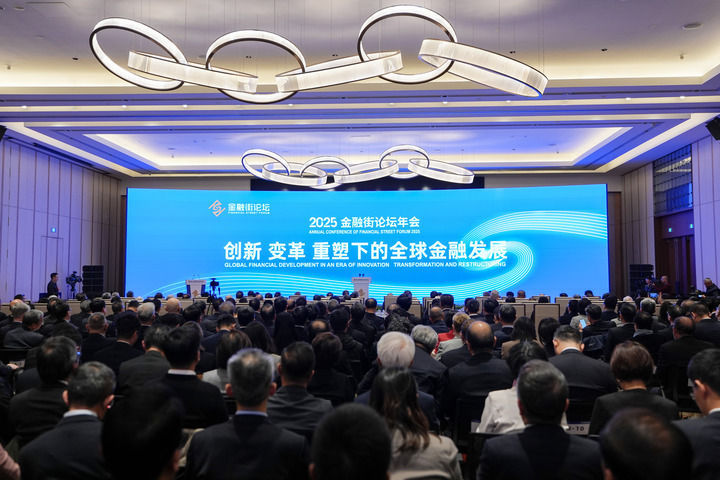
Core Insights - The 2025 Financial Street Forum held in Beijing focused on "Global Financial Development under Innovation, Transformation, and Reshaping," highlighting the importance of open cooperation in navigating uncertainties in the global economy [1][3] Group 1: Global Financial Cooperation - The forum featured over 400 participants from more than 30 countries, emphasizing the need for deeper partnerships and capital flow to build a tighter global financial network [3] - The event included five overseas sub-forums in key international financial centers, showcasing a strong desire for enhanced communication within the global financial community [3][6] - Discussions on topics such as "Financial and Technological Empowerment for High-Quality Development" and "Risk Prevention and Collaborative Governance in the Digital Era" were prominent, indicating a focus on innovation and collaboration [3][6] Group 2: China's Financial Market and Policies - HSBC's increased stake in Chinese financial entities reflects a positive response to China's financial opening policies, indicating confidence in the Chinese market [4][5] - The forum introduced initiatives like the "Sci-Tech Radar" digital platform by China Construction Bank, aimed at supporting small and micro tech enterprises with comprehensive services [6] - Beijing's release of policies to promote venture capital and equity investment signals a commitment to enhancing the investment environment and supporting mergers and acquisitions [6][7] Group 3: Technological Innovation and Investment - The forum highlighted the role of artificial intelligence in transforming the financial ecosystem, with calls for AI to serve humanity and ensure transparent governance [5][7] - The release of the "2025 China Digital Financial Unicorn List" showed that over 40% of the listed companies are based in Beijing, particularly excelling in AI and green finance sectors [7] - The event facilitated partnerships, such as the memorandum of understanding between Beijing Financial Street Service Bureau and Casablanca Finance City, indicating a trend towards international collaboration in finance [7][8] Group 4: Future Directions and Economic Strategy - The forum served as a platform for interpreting policies and fostering dialogue, particularly in light of the recent national economic strategies aimed at enhancing financial governance and market adaptability [8][9] - Insights from industry leaders emphasized China's shift from low-cost manufacturing to high-value production, providing a model for other countries [9] - The forum's discussions underscored China's commitment to an open financial stance and innovative growth, aiming for high-quality development and international cooperation [9]
2025金融街论坛年会闭幕 于变局中构建韧性合作未来
Bei Ke Cai Jing· 2025-10-31 01:57
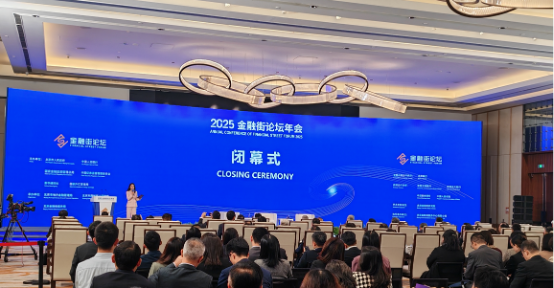
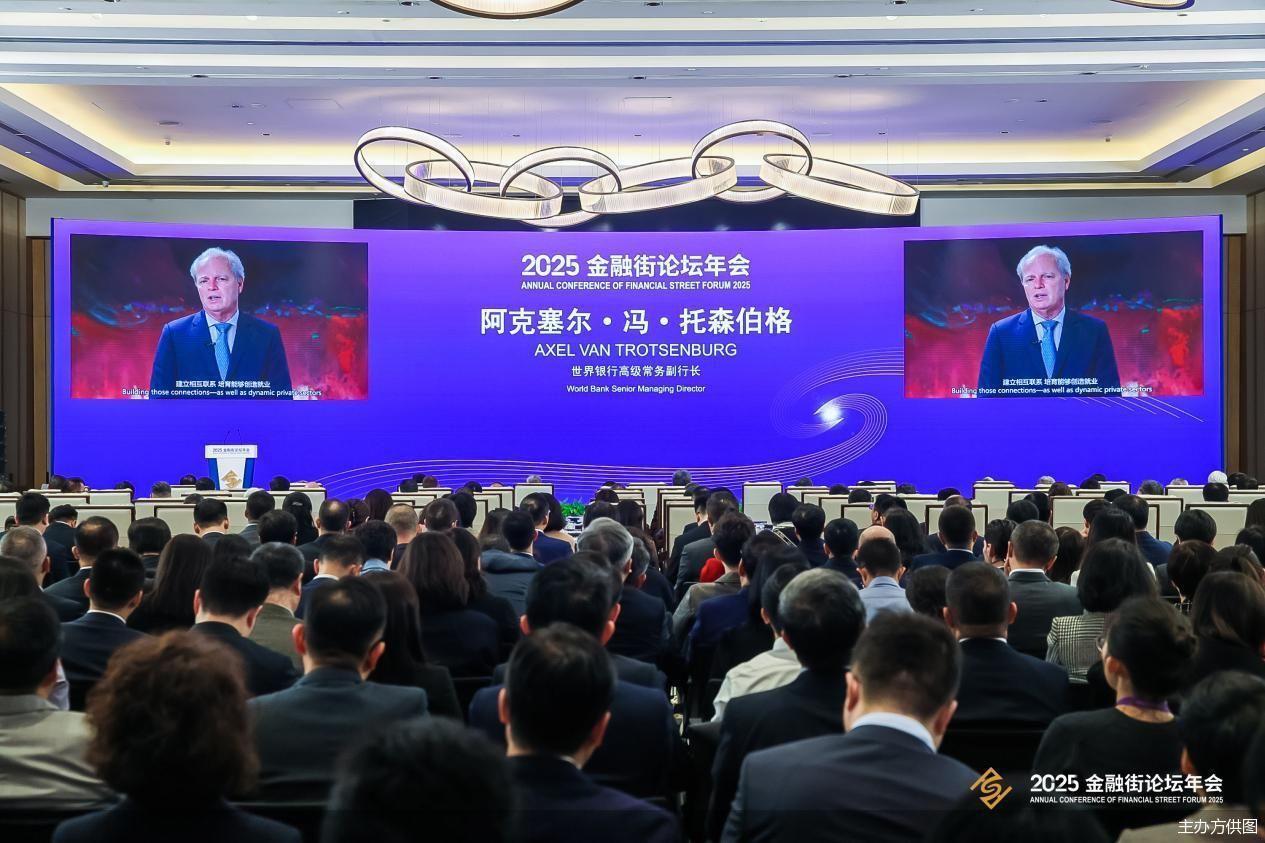
Group 1 - The main forum and closing ceremony of the Financial Street Forum focused on "Resilient Cooperation in International Trade and Economy under Global Changes," discussing global investment patterns and development dynamics [1] - The forum successfully hosted 38 high-quality events, gathering over 400 officials, international organization leaders, and financial executives from more than 30 countries and regions, with over 6,000 on-site participants and billions of online interactions, marking the largest scale and impact in its history [2] Group 2 - The closing ceremony featured keynote speeches from prominent figures, including the Deputy Director of the State Administration of Foreign Exchange and leaders from major financial institutions, emphasizing the need for reducing non-tariff barriers and deepening regional integration to facilitate domestic and regional trade [3] - The World Bank's Senior Vice President highlighted the importance of building economies that promote growth and job creation, focusing on infrastructure investment, regulatory reforms, and reducing trade barriers [4] - The Chairman of China Merchants Group stressed the need for resilient and efficient logistics networks to support international trade and called for precise and inclusive financial services [8] Group 3 - Henry Paulson emphasized the financial industry's role in addressing biodiversity risks and suggested innovative financing mechanisms and reforms in agricultural subsidies to protect biodiversity [11] - The Chairman of China Ocean Shipping Group proposed collaborative efforts in building resilient shipping logistics networks and digital shipping chains to enhance cooperation between the shipping and financial sectors [14] - The Deputy Director-General of the WTO noted the profound changes in the global trade environment and the need for countries to support multilateralism and trade liberalization, particularly for developing nations [17] Group 4 - A roundtable discussion included leaders from various financial institutions discussing the future of global investment patterns and development dynamics [20] - A high-level dialogue addressed the role of central banks in the new global landscape, with emphasis on balancing multiple objectives such as inflation control, financial stability, and economic growth [24][26] - The Chief Executive of Hong Kong and the Mayor of Beijing highlighted their commitment to enhancing their respective financial centers' roles in supporting national development and attracting global financial institutions [33][34]
2025金融街论坛年会取得一批重要成果 共绘金融创新发展新图景
Ren Min Ri Bao· 2025-10-30 22:29
Group 1 - The 2025 Financial Street Forum Annual Meeting was held in Beijing from October 27 to 30, with over 400 guests from more than 30 countries participating in 38 discussion sessions, resulting in significant outcomes [1] - The People's Bank of China emphasized a supportive monetary policy stance, implementing moderately loose monetary policies and utilizing various tools to maintain relatively loose social financing conditions [1] - The National Financial Regulatory Administration aims to create a new financial service model that integrates direct and indirect financing, aligns investment in goods and people, matches financing terms with industrial development, and links domestic and international markets [1] Group 2 - The forum featured a global meeting on "Financial Ecological Transformation in the Age of Artificial Intelligence," attended by all 29 global systemically important banks, marking a record high in participation [2] - Beijing's Deputy Mayor highlighted the importance of reinforcing regulatory collaboration, legal guarantees, technological empowerment, and open cooperation to ensure high-quality financial development and security [2] - The forum established five overseas sub-venues, the highest number to date, facilitating a global dialogue network and resulting in over 100 significant outcomes in financial technology, green development, and industrial finance [3] Group 3 - The Beijing Financial Court, in collaboration with various financial associations, released multiple important results during the forum, emphasizing the role of law as a foundation for the financial market [3] - The "Central-Local-School Partnership Cooperation Plan" was launched to enhance talent development and regional growth, focusing on innovation through collaboration [3] - Over 300 quality enterprises engaged in in-depth discussions with more than 100 investment institutions, leading to substantial cooperation that supports financial services for the real economy [3]
中外嘉宾2025金融街论坛年会共论数智科技助力绿色金融
Zhong Guo Xin Wen Wang· 2025-10-30 19:48
Core Viewpoint - The forum emphasizes the integration of digital technology and green finance to support global sustainable development, highlighting the critical role of green finance in achieving carbon neutrality and addressing climate change [1][2][3]. Group 1: Green Finance and International Cooperation - Green finance is essential for China's dual carbon goals and global sustainable development, serving as a necessary tool for international climate change efforts [1]. - The "Belt and Road" Green Development International Alliance is a key platform for promoting global green cooperation, focusing on green investment and financing [1]. - Denmark's experience in reducing carbon emissions while growing its economy showcases the potential of green finance, with China emerging as a global leader in this area [2]. Group 2: Policy and Framework Development - Beijing is enhancing its green development framework through policy guidance, promoting green buildings, and transitioning to renewable energy sources [3]. - The establishment of a new energy system and smart power grid is crucial for China's energy transition, with digital technology playing a vital role [4]. Group 3: International Collaboration and Knowledge Sharing - The forum featured discussions on the application of digital technology in green finance, with experts sharing insights on future challenges and opportunities [2]. - The launch of the International Expert Workstation for Green Innovation aims to create a collaborative space for research and technology transfer in the field of green and technological innovation [4].
对话蚂蚁集团余滨:AI不是纯粹的技术,而是科技与业务的结合体丨直击金融街论坛
Sou Hu Cai Jing· 2025-10-30 19:25
Core Insights - The integration of AI in finance is transitioning from exploration to value validation, focusing on the growth potential AI can bring rather than just its capabilities [1] - AI is becoming essential for financial institutions, shifting from a cost center to a core element of service, marketing, and value creation [1] Group 1: Challenges Faced by Financial Institutions - Leading financial institutions have ample resources and talent but face challenges in leveraging AI for deeper value extraction and innovation [2] - Smaller financial institutions are more focused on immediate business growth challenges due to narrowing net interest margins and increased competition [2][3] Group 2: AI Evolution Paths for Financial Institutions - Regional banks with limited budgets should start with scenario applications and gradually increase investment based on effectiveness [3] - Some banks are upgrading existing mobile applications to AI-enabled platforms to enhance user experience and engagement [3] - The ideal model involves establishing a dedicated team to create a comprehensive knowledge base and data set, leveraging AI for end-to-end business process transformation [3] Group 3: "Pay for Performance" Model - The "pay for performance" model is designed to ensure AI applications deliver tangible business results, addressing concerns of smaller institutions regarding initial investments [6][7] - This model allows institutions to pay based on agreed business outcomes, fostering a collaborative approach to AI implementation [7] Group 4: Data Compliance and AI Model Support - Ant Financial's approach to data compliance involves a two-phase training strategy for AI models, utilizing public data for initial training and proprietary data for further refinement [8] - The company adheres to regulatory requirements by ensuring data flows are compliant and leveraging privacy computing technologies to protect sensitive information [8]

2025金融街论坛|年会闭幕,全球嘉宾共探变局中韧性合作未来
Bei Jing Shang Bao· 2025-10-30 16:27
Group 1 - The World Bank aims to help countries build economies that promote growth and job creation, focusing on infrastructure investment, regulatory reforms, and reducing non-tariff barriers to enhance trade and economic cooperation [1] - The chairman of China Merchants Group emphasizes the need for mutually beneficial cooperation to address challenges in economic globalization, highlighting the importance of resilient logistics networks and innovative financial support for international trade [3] - The chairman of China Ocean Shipping Group points out that the shipping industry is shifting towards building resilient global logistics networks, which requires strong support from the financial sector and collaboration across global supply chains [4] Group 2 - The former governor of the People's Bank of China discusses the need for central banks to balance multiple objectives, including inflation control, financial stability, and economic growth, particularly in developing countries [5] - The Chief Executive of the Hong Kong Special Administrative Region emphasizes the importance of continuous innovation and transformation in finance, aiming to strengthen Hong Kong's position as a global financial center and enhance its role in international trade [5]
金融街(000402.SZ)发布前三季度业绩,归母净亏损13.5亿元
智通财经网· 2025-10-30 16:18
智通财经APP讯,金融街(000402.SZ)发布2025年三季度报告,前三季度,公司实现营业收入62.87亿 元,同比下降46.21%。归属于上市公司股东净亏损13.5亿元。归属于上市公司股东的扣除非经常性损益 净亏损12.24亿元。 ...