
JINKE PROPERTY(000656)

Search documents
金科2025业绩预盈超300亿,打造“先破后立”标杆范本
Zhong Jin Zai Xian· 2026-01-30 11:27
Core Viewpoint - Jinke Property Group Co., Ltd. has announced a significant turnaround in its financial performance, projecting a net profit of 30 billion to 35 billion yuan for 2025, marking a transition from losses to substantial profitability [1][2]. Financial Performance - The company expects to achieve a net profit attributable to shareholders of 30 billion to 35 billion yuan in 2025, with basic earnings per share projected between 2.8 yuan and 3.3 yuan [2]. - By December 31, 2025, the company's equity attributable to shareholders is anticipated to turn positive, estimated between 5 billion and 7 billion yuan, following a debt restructuring that is expected to yield approximately 68 billion to 70 billion yuan [1][2]. Restructuring Process - Jinke is the first national real estate company in China to successfully complete a judicial restructuring, which was supported by a collaborative effort involving government guidance, investor trust, creditor support, and the commitment of the company's management [3][4]. - The restructuring plan was approved by creditors amidst a complex situation involving 147 billion yuan in debt and over 8,400 creditors, laying the groundwork for a market-oriented and legal resolution of risks [3]. Strategic Transformation - Post-restructuring, Jinke aims to redefine itself as a "technology-driven comprehensive real estate operator," moving away from its previous high-debt, high-leverage model [4]. - The company's new strategy focuses on urban renewal, asset management, operational management, and technology empowerment, with an emphasis on maximizing asset value and operational efficiency through digital transformation [4][5]. - A new board of directors and management team, led by experienced professionals from various sectors, will support the company's governance and resource integration for future growth [4].

*ST金科:预计2025年净利润300亿元-350亿元 同比扭亏为盈
Ge Long Hui A P P· 2026-01-30 10:47
格隆汇1月30日|*ST金科(000656.SZ)公告称,预计2025年度归属于上市公司股东的净利润为300亿 元-350亿元,上年同期亏损319.70亿元。报告期内公司重整计划执行完毕并终结公司重整程序,重整完 成后形成重整收益,预计该重整收益约680-700亿元。上述重整收益计入当期非经常性损益。 ...
*ST金科:预计2025年净利润300亿元-350亿元 扣非后净亏损290亿元-350亿元
Di Yi Cai Jing· 2026-01-30 10:46
*ST金科公告,预计2025年度归属于上市公司股东的净利润为300亿元-350亿元,上年同期亏损319.70亿 元。扣非后净亏损290亿元-350亿元,上年同期亏损284.18亿元。报告期内公司重整计划执行完毕并终 结公司重整程序,重整完成后形成重整收益,预计该重整收益约680-700亿元。上述重整收益计入当期 非经常性损益。 ...
金科股份(000656) - 2025 Q4 - 年度业绩预告
2026-01-30 10:35
本公司及董事会全体成员保证信息披露的内容真实、准确、完整,没有 虚假记载、误导性陈述或重大遗漏。 重要内容提示 ●金科地产集团股份有限公司(以下简称"金科股份"或"公司")预计 2025 年度归属于上市公司股东的净利润为 300 亿元-350 亿元。 ●公司预计 2025 年度扣除非经常性损益后的净利润为亏损 290 亿元–350 亿元,主要原因为本年度结转收入及结转利润减少、符合利息资本化的项目及对 应的金额减少,对应有息负债利息费用化金额增加、公司及其下属部分房地产开 发项目计提资产减值损失和信用减值损失等。 ●报告期内,公司重整计划执行完毕,重整完成后形成债务重整收益,预 计该重整收益约 680-700 亿元,上述重整收益计入当期非经常性损益。本报告期 业绩预告相关的财务数据未经会计师事务所审计,系公司初步测算的结果,具体 财务数据以经会计师事务所审计后数据为准。 ●若公司 2025 年度经审计的财务报告出现《股票上市规则》第 9.3.12 条 规定的情形,公司股票存在被终止上市的风险。 一、本期业绩预计情况 金科地产集团股份有限公司 2025 年度业绩预告 证券简称:*ST 金科 证券代码:00065 ...
*ST金科(000656) - 关于公司股票可能被终止上市的风险提示公告
2026-01-30 10:33
金科地产集团股份有限公司 关于公司股票可能被终止上市的风险提示公告 证券简称:*ST 金科 证券代码:000656 公告编号:2026-004 号 本公司及董事会全体成员保证信息披露的内容真实、准确、完整,没有 虚假记载、误导性陈述或重大遗漏。 特别提示: 1、因金科地产集团股份有限公司(以下简称"公司")经审计 2024 年度 期末净资产为负值,同时公司 2022 年、2023 年及 2024 年连续三年扣除非经常 性损益前后净利润均为负值,且最近一年审计报告显示公司持续经营能力存在 不确定性,根据《深圳证券交易所股票上市规则》(以下简称"《股票上市规 则》")的相关规定,公司股票交易被实施退市风险警示并叠加其他风险警示。 若公司出现《股票上市规则》第 9.3.12 条规定的情形,公司股票存在被终止上 市的风险。 2、根据《股票上市规则》第 9.3.6 条规定:"上市公司因触及本规则第 9.3.1 条第一款第一项至第三项情形,其股票交易被实施退市风险警示后,应当在其 股票交易被实施退市风险警示当年会计年度结束后一个月内,披露股票可能被 终止上市的风险提示公告,在首次风险提示公告披露后至年度报告披露前,每 十 ...
房企化债提速 月内4家获关键进展
Bei Jing Shang Bao· 2026-01-27 03:07
Group 1 - The core viewpoint of the articles highlights the significant progress in debt restructuring for real estate companies in early 2026, continuing the trend from 2025 where major firms like Sunac China and Country Garden successfully restructured debts totaling approximately 1.2 trillion yuan [1][5]. - In January 2026, several companies, including Vanke and Kaisa, announced important developments in their debt restructuring processes, indicating a positive start to the year [2][3]. - The "white list" financing system for real estate projects has been optimized, extending the loan extension period from a maximum of 2.5 years to 5 years, providing companies with more financial flexibility [1][7]. Group 2 - Vanke's debt restructuring plan includes a combination of fixed payments, cash buybacks, and interest prepayments, which has garnered high approval from bondholders [2][3]. - Kaisa's restructuring has entered a critical judicial phase, as indicated by a ruling from the Hong Kong High Court, marking a significant step in its overseas debt restructuring [3]. - The debt restructuring efforts have been characterized as a "blood transfusion" for companies, addressing immediate liquidity crises while emphasizing the need for companies to restore their operational capabilities [5]. Group 3 - The debt restructuring process has seen major milestones, such as Jinke's judicial restructuring involving 147 billion yuan in debt, which is the largest case in the real estate sector [4]. - Sunac China is expected to reduce its overall debt pressure by nearly 60 billion yuan, while Country Garden's overseas debt restructuring aims to reduce approximately 11.7 billion USD, equivalent to about 84 billion yuan in interest-bearing debt [4]. - The "white list" financing mechanism has been crucial in supporting real estate companies, with over 7 trillion yuan in loan approvals by September 2025, facilitating the construction and delivery of nearly 20 million housing units [6][7].


破局与重构——解码重庆上市公司转型升级新路径
Zheng Quan Ri Bao Zhi Sheng· 2026-01-26 16:38
本报记者 冯雨瑶 "十四五"期间,重庆上市公司从57家升至78家,总市值突破万亿元。在此期间,重庆资本市场以坚实的 步伐勾勒出区域经济转型升级的生动图景——从传统产业到高端装备、新能源、新材料等战略性新兴产 业的崛起,一条以新旧动能转换为核心的产业演进主线日益清晰。 Wind资讯数据显示,截至2025年12月末,重庆上市公司总市值约1.21万亿元。2025年上半年,重庆上市 公司研发投入合计147.68亿元,同比增长42.10%,增幅居全国第一。2025年前三季度,重庆上市公司合 计实现营业收入5721.85亿元,归母净利润319.58亿元,分别较2020年同期增长57.64%、15.34%。 深处内陆的重庆,如何突破地理与产业结构的双重约束,实现产业跃迁?近日,《证券日报》记者采访 多家企业,试图从它们各自的实践中,梳理出共性经验与模式。这条兼顾基础升级与前沿布局的发展路 径,正为全国同类地区的产业变革提供一份具有参考意义的"重庆方案"。 纵向升级 重庆是制造业重镇。2023年,重庆吹响制造业高质量发展的号角,提出要着力打造"33618"现代制造业 集群体系,迭代升级制造业产业结构。其中,智能网联新能源汽车 ...
月内4家获关键进展 房企化债提速
Bei Jing Shang Bao· 2026-01-26 16:37
Core Viewpoint - The real estate industry is experiencing a significant debt restructuring process in early 2026, with multiple companies making important progress in their debt resolution efforts, indicating a continuation of the trend from 2025 [1][2]. Group 1: Debt Restructuring Progress - In January 2026, companies such as Vanke, Road King, and Fantasia have disclosed important developments in their debt restructuring [2][3]. - Vanke's debt restructuring plan includes a combination of fixed payments, cash buybacks, and interest prepayments, which has garnered high approval from bondholders [2]. - Fantasia's restructuring has entered a critical judicial phase, as indicated by a ruling from the Hong Kong High Court [3]. Group 2: Scale of Debt Restructuring - In 2025, significant progress was made in debt restructuring, with 21 distressed real estate companies completing their restructuring, amounting to a total debt relief of approximately 1.2 trillion yuan [5]. - Jin Ke Co., for instance, completed a judicial restructuring involving a debt scale of 147 billion yuan, marking it as the largest case in the industry [4]. - Sunac China and Country Garden have also successfully implemented their debt restructuring plans, with Sunac reducing its overall debt pressure by nearly 60 billion yuan [4]. Group 3: Policy Support - The "white list" financing mechanism has been crucial in supporting the debt restructuring efforts, allowing for a shift from relying on company credit to focusing on project assets [6][7]. - As of January 2026, the loan extension period for qualifying "white list" projects has been increased from 2.5 years to 5 years, providing companies with more financial flexibility [7]. - This policy change is expected to enhance the operational stability of quality private real estate companies, allowing them to diversify their business and mitigate risks [7].
房企开年化债提速 一个月内四家获关键进展
Bei Jing Shang Bao· 2026-01-26 11:04
Group 1: Debt Restructuring Progress - In January 2026, several real estate companies, including Vanke, Road King, and Fantasia, reported significant progress in debt restructuring, continuing the trend from 2025 [1][3] - A total of 21 distressed real estate companies completed debt restructuring or received approval for reorganization in 2025, with a total debt relief scale of approximately 1.2 trillion yuan [1][6] - The restructuring efforts are seen as a necessary step to alleviate liquidity crises, with a focus on restoring companies' operational capabilities [6] Group 2: Policy Support and Financing Mechanisms - The "white list" system for real estate financing was optimized in January 2026, extending the loan extension period for eligible projects from a maximum of 2.5 years to 5 years, providing companies with more financial flexibility [1][8] - The "white list" mechanism has been crucial in supporting distressed companies, with over 7 trillion yuan in loan approvals by September 2025, facilitating the construction and delivery of nearly 20 million housing units [7][8] - Analysts suggest that the extended loan terms will benefit financially healthier private real estate companies, allowing them to stabilize operations and diversify their business [9] Group 3: Case Studies of Successful Restructuring - Jin Ke Co., Ltd. completed a judicial reorganization in December 2025, involving a debt scale of 147 billion yuan and covering over 8,400 creditors, marking it as the largest judicial reorganization case in the real estate sector [5] - Sunac China is expected to reduce its overall debt pressure by nearly 60 billion yuan through its restructuring efforts, while Country Garden aims to reduce its offshore debt by approximately 11.7 billion USD, equivalent to about 84 billion yuan [5] Group 4: Market Confidence and Recovery - The debt restructuring process is viewed as a "blood transfusion" to address temporary liquidity issues, while the long-term solution lies in restoring companies' operational capabilities and ensuring project deliveries [6] - The synergy between debt restructuring and project delivery is expected to rebuild market confidence, creating a positive cycle of trust restoration, sales recovery, and capital replenishment [6]

房企开年化债提速,一个月内四家获关键进展
Bei Jing Shang Bao· 2026-01-26 10:51
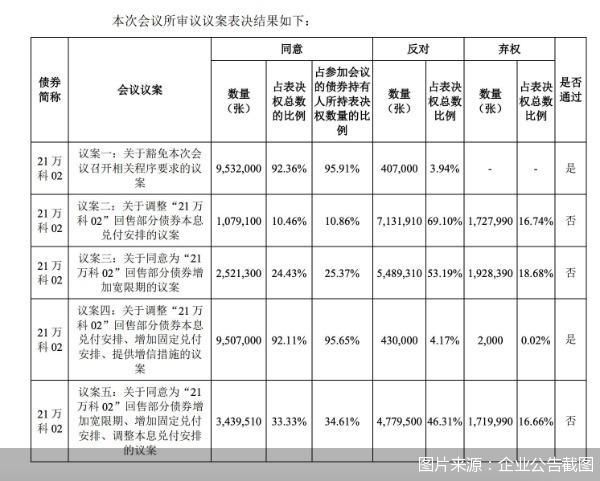
Group 1: Debt Restructuring Progress - In January 2026, several real estate companies, including Vanke, Road King, and Fantasia, reported significant progress in debt restructuring, continuing the trend from 2025 [1][3] - In 2025, 21 distressed real estate companies completed debt restructuring, with a total debt relief of approximately 1.2 trillion yuan [1][6] - The restructuring efforts are seen as a transition from addressing immediate liquidity crises to a more comprehensive resolution of debt risks in the real estate sector [5] Group 2: Policy Support and Financing Mechanisms - The "white list" financing system for real estate projects was optimized in January 2026, extending the loan extension period from 2.5 years to 5 years, providing companies with more financial flexibility [1][8] - The "white list" system has facilitated over 7 trillion yuan in loan approvals by September 2025, supporting nearly 20 million housing units [7] - The recent policy changes are expected to benefit financially healthier private real estate companies, allowing them to stabilize operations and diversify their business [9] Group 3: Specific Company Developments - Vanke announced a bond buyback plan on January 21, 2026, offering to repay 40% of the principal of certain bonds while extending the remaining 60% for one year, which was well-received by bondholders [3][4] - Fantasia's restructuring has entered a critical judicial phase, with the Hong Kong High Court approving a meeting for creditors to discuss the restructuring plan [4] - Jin Ke Co. completed a judicial restructuring in December 2025, involving a debt scale of 147 billion yuan, marking it as the largest case in the real estate sector [5]