Workflow
GOTION(002074)
icon
Search documents
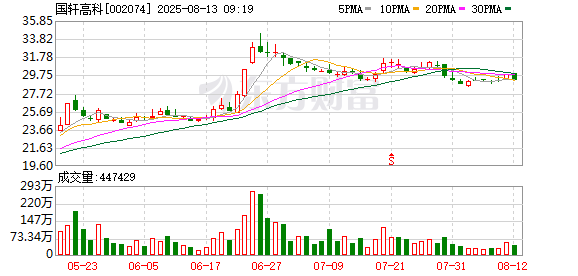
国轩高科成功准入日本电力一次调整市场
人民财讯7月30日电,记者获悉,近日,由国轩高科(002074)与日本爱迪生能源(Edison Power)合作开 发的佐仓储能电站顺利通过日本一次调频市场综合测试,可按秒级响应电网需求,快速调节输出功率以 维持系统频率稳定。国轩高科成为首家打入该市场的中国储能厂商,标志着中国储能系统首次在日本最 核心的电力辅助服务市场落地应用。 ...
30+固态电池正极材料富锂锰基核心生产企业名录
起点锂电· 2025-07-29 10:01
Core Viewpoint - Lithium-rich manganese-based cathode materials are ideal for solid-state batteries due to their high specific capacity, high voltage characteristics, cost advantages, and compatibility with solid-state battery systems, showing significant potential in enhancing energy density, safety, and reducing costs [2]. Group 1: Industry Overview - The maturity of solid-state battery technology is expected to accelerate the penetration of lithium-rich manganese-based materials in high energy density demand scenarios such as new energy vehicles and low-altitude economy [2]. - According to incomplete statistics from SPIR, there are currently 34 core production enterprises of lithium-rich manganese-based cathode materials for solid-state batteries in China [2]. Group 2: List of Companies - A list of 34 companies producing lithium-rich manganese-based cathode materials includes: - Tsinghua Tongfang Technology - Rongbai Technology - Guoxuan High-Tech - Hunan Youneng - Greeenme - Ningbo Yian Lithium - Wanrun New Energy - Tianli Lithium Energy - Kunming Technology - Zhongke Gonen - Shenzhen Kejing - Changyuan Lithium Technology - Fengyuan Co., Ltd. - Huayou Cobalt - Zhenhua New Materials - Yibin Lithium Treasure - Jiangte Electric - BASF Shanshan - Chuanglu Advanced - Jinlongyu - Greenme - Xiangtan Electrochemical - Mengguli - Xiamen Tungsten New Energy - Chuangneng Huitong - Jusheng Technology - Sufang New Energy - Longli New Energy - Chuangneng New Materials - Zhuhai Guanyu - Tianhua New Energy - Su Lithium Technology - Ningxia Hanyao - Boshik High-Tech [3].
绿色驱动力:中国新能源汽车出口的战略布局与全球视野,头豹词条报告系列
Tou Bao Yan Jiu Yuan· 2025-07-28 13:17
Investment Rating - The report indicates a positive investment outlook for the electric vehicle export industry, highlighting growth potential and strategic opportunities in emerging markets [4]. Core Insights - The report emphasizes that in 2024, China's electric vehicle exports reached 1.284 million units, marking a year-on-year increase of 6.7%, driven by technological innovation, industry chain integration, and government support [4][17]. - Key players like BYD and NIO have made significant technological breakthroughs, enhancing their competitiveness in the global market [4]. - The report outlines a shift from "product export" to "standard export," indicating a maturation of the industry as Chinese companies expand their global footprint [5]. Summary by Sections Industry Definition - The electric vehicle export industry involves the sale of vehicles produced in China to overseas markets, encompassing complete vehicles, components, and related services [5]. - The industry is driven by global green transportation goals and domestic overcapacity, with a focus on internationalization strategies by leading manufacturers [5]. Industry Characteristics - The industry features diverse business models, including complete vehicle exports, component exports, and local production through investments and acquisitions [6][7]. - The concentration of the market is increasing due to technological and cost advantages held by leading companies [8]. Development History - The industry has evolved through several stages: initial exploration (2010-2015), formation (2016-2020), rapid growth (2021-2023), and current adjustments (2024-present) [10][11]. - The rapid growth phase saw exports surge, with 2023 witnessing a 345% increase in exports compared to 2021 [15]. Current Market Dynamics - In 2024, the export volume reached 1.284 million units, with a focus on diversifying markets beyond Europe and North America to regions like Southeast Asia and Latin America [9][44]. - The report notes that over 40% of China's electric vehicle exports are directed towards the Asian market, reflecting a strategic pivot in response to changing global policies [9]. Supply Chain Analysis - The supply chain is characterized by upstream material suppliers, midstream vehicle manufacturers, and downstream sales channels, with a focus on optimizing each segment for better market penetration [19][30]. - The report highlights the importance of local production and service networks to enhance competitiveness and reduce trade barriers [21]. Market Size and Growth Forecast - The electric vehicle export market is projected to grow significantly, with exports expected to reach 1.4 million units in 2025, reflecting a nearly 10% annual growth rate [39]. - The market size is anticipated to exceed $40 billion by 2029, driven by continued demand and technological advancements [39][43]. Competitive Landscape - The competitive landscape is increasingly concentrated, with leading companies like BYD and SAIC dominating the market, accounting for over 50% of total exports [50]. - The report identifies a tiered structure in the industry, with top-tier companies leveraging technology and brand recognition to maintain their market positions [50][53].
2025H1中国锂电池正极材料出货量公布!
起点锂电· 2025-07-28 09:59
Group 1: Core Insights - The core viewpoint of the article highlights the growth in the shipment volumes of lithium battery cathode materials in China for the first half of 2025, with significant increases in different categories of cathodes [2][4][6]. Group 2: Shipment Volumes of Different Cathode Materials - In the first half of 2025, the shipment volume of ternary cathode materials reached 321,000 tons, representing a year-on-year growth of 4.2% [2]. - The top 10 companies in ternary cathode shipments include Ruixiang New Materials, Rongbai Technology, and Bamo Technology [3]. Group 3: Phosphate Iron Lithium Cathodes - The shipment volume of phosphate iron lithium cathodes was 1,606,000 tons in the first half of 2025, showing a remarkable year-on-year increase of 68.5% [4]. - The leading companies in this category are Hunan Youneng, Wanrun New Energy, and Defang Nano [5]. Group 4: Cobalt Lithium Cathodes - The shipment volume of cobalt lithium cathodes was 53,500 tons in the first half of 2025, with a year-on-year growth of 24.2% [6]. - The top 5 companies in cobalt lithium shipments include Xiamen Tungsten New Energy and Bamo Technology [7].
近40GWh储能项目延期、终止!
鑫椤锂电· 2025-07-28 01:41
Core Viewpoint - The U.S. energy storage industry is facing significant challenges due to policy uncertainty and financing issues, leading to the cancellation or postponement of approximately 40GWh of planned energy storage system (ESS) capacity by 2028 [1][2] Group 1: Capacity Reduction - Major companies such as FREYR, KORE Power, and iM3NY have canceled their factory construction plans for 2028, totaling 20.6GWh of annual capacity [1] - Five companies, including ABF, Guoxuan High-Tech, Microvast, Kontrolmatik, and ONE, have key projects that are currently stalled, affecting an annual capacity of 19.2GWh [1] - Several GWh-level annual production projects in the Midwest and Southeast regions of the U.S. have also been forced to halt [1] Group 2: Underlying Challenges - The adjustments in capacity are primarily influenced by new tariffs and policy changes in the U.S., compounded by multiple complex challenges [2] - Uncertainty in policies leaves companies in a state of indecision, while market fluctuations, such as lithium price volatility and slowing electric vehicle demand, exacerbate investment risks [2] - Domestic supply chain weaknesses, including insufficient autonomy in key materials and technologies, create significant technical barriers [2] Group 3: Need for Strategic Balance - The withdrawal of nearly 40GWh of capacity serves as a warning that there is an urgent need to balance policy stability, global supply chain collaboration, and breakthroughs in key technologies [2] - Achieving this balance is crucial for the U.S. energy storage industry to overcome its challenges and meet clean energy goals [2]
从“产品出海”到“产能出海” 锂电产业绽放全球市场
Zheng Quan Shi Bao· 2025-07-25 18:12
Core Viewpoint - The lithium battery industry is experiencing rapid growth in global markets, with Chinese companies leading the way in exports and production capacity, but they must navigate challenges in policy, market dynamics, and cost management to maintain competitive advantages. Industry Overview - China supplies 70% of battery materials and 60% of power batteries globally, showcasing its competitive edge in the lithium battery supply chain [2] - From 2020 to 2024, China's lithium battery exports are projected to grow from $15.9 billion to $61.1 billion, with a compound annual growth rate of approximately 40% [2] - Major companies like CATL and Guoxuan High-Tech have significantly increased their overseas revenues, indicating a shift from product export to capacity export [2] Market Trends - The overseas market is still in a "blue ocean" phase with high demand and limited local supply, prompting companies to establish production facilities abroad [3] - Companies such as Hunan Youneng and Tianqi Materials are announcing substantial overseas investment plans, indicating a trend of industry collaboration in international expansion [3] Investment and Financing - The trend of overseas listings is gaining momentum, with companies like Guoxuan High-Tech and Gree Energy issuing GDRs to support global expansion [5] - Hong Kong has become a preferred listing destination for many lithium battery companies, driven by supportive policies and the need for funding [6] Production Capacity and Profitability - Several leading lithium battery companies have reported full order books and are beginning to achieve profitability from their overseas factories [9] - CATL's factory in Germany has reached profitability, and its Hungarian facility is expected to follow suit, benefiting from lessons learned in Germany [9] Localized Operations - Companies are focusing on localizing their operations to enhance customer loyalty and reduce trade barriers [4] - The establishment of joint ventures and acquisitions is a strategy employed by companies like EVE Energy and Rongbai Technology to integrate into local markets [12] Strategic Considerations - The lithium battery industry must consider various factors such as downstream order demand, policy changes, and local operational capabilities when expanding internationally [11] - Companies are investing in training and development to prepare their teams for overseas operations, ensuring successful project implementation [11]
动力电池二线厂商求解“活下去”
经济观察报· 2025-07-25 11:34
Core Viewpoint - The lithium battery industry is experiencing intense price competition, leading to a significant decline in profitability across the sector, with the average price of square lithium iron phosphate power cells dropping to 0.32 yuan/Wh [1][6]. Industry Overview - The market is dominated by a few key players, with CATL and BYD holding over 65% market share as of June 2025, while other companies like Contemporary Amperex Technology Co., Ltd. (CATL), Guoxuan High-Tech, and others make up the "second tier" with individual shares between 2% and 8% [3][4]. - The second-tier companies are facing widespread profitability challenges, with companies like XINWANDA reporting a net loss of 1.587 billion yuan in their battery business for 2024 [4][9]. Price Competition and Market Dynamics - The price war has led to a situation where 65 out of 104 listed lithium battery companies in A-shares reported a decline in net profits in 2024, with over 60 companies experiencing a drop in gross margins [6][8]. - The average global lithium battery pack price fell to a historical low of $115/kWh in 2025, with China's price at $94/kWh, the lowest globally [6]. Technological and Structural Challenges - The industry is facing structural challenges due to rapid changes in mainstream technology routes, with lithium iron phosphate battery installations increasing by 73% year-on-year, capturing over 81% of the market share, while ternary batteries saw a 10.8% decline [8][9]. - The profitability of leading companies like CATL serves as a benchmark for others, with CATL achieving a net profit of 50.745 billion yuan in 2024, despite the price war [9]. Cost Control Strategies - Companies are focusing on cost control as a primary strategy for survival, with significant emphasis on manufacturing efficiency, design cost reduction, and management optimization [13][14]. - For instance, Bee Nest Energy aims to achieve profitability by 2026, with 80% of the contribution expected from cost reductions [14]. Differentiation and Market Positioning - To break through the competitive landscape, companies are exploring differentiated technology routes, with Bee Nest Energy pursuing a dual strategy of both ternary and lithium iron phosphate batteries [18][20]. - The demand for higher energy density products in specific markets, such as overseas high-end clients, is driving this strategic choice [19][20]. Capital Investment and Future Outlook - Continuous and substantial capital investment is necessary for both cost reduction and differentiation strategies, with companies like Yiyuan Lithium Energy and XINWANDA planning to tap into capital markets for funding [21]. - The competitive landscape is expected to evolve, with companies needing long-term patience and commitment to navigate the challenges of the trillion-dollar market [22].
每日速递 | 国轩高科启动全固态电池量产线设计
高工锂电· 2025-07-25 10:22
Battery - The second-generation Longlin Jia battery from Hive Energy officially launched on July 22, featuring the world's largest mass-produced 800V ternary hybrid battery with a capacity of 65KWh and 5C ultra-fast charging capability, enhancing user charging experience [2][3] - Tesla reported a decline in both revenue and profit for Q2 2025, with revenue at $22.496 billion, down 12% year-on-year, and net profit at $1.172 billion, down 16% year-on-year [4][5] - Ruipu Lanjun's heavy-duty truck battery installation volume surged in the first half of 2025, achieving a market share of 7.5% in the new energy heavy truck battery sector and 18% in battery swapping, both ranking second nationally, indicating strong competitiveness in the heavy truck market [6][7] - Tesla plans to build its third energy storage super factory near Houston, Texas, with the first lithium iron phosphate battery factory expected to be operational by the end of the year [8][9] - Guoxuan High-Tech has initiated the design of the first-generation all-solid-state battery production line, with its Jinshi battery currently in the pilot production stage [10][12] Materials - Zhejiang YouShan New Materials is set to invest in a project in Bijie City, Guizhou Province, to produce 600,000 tons of phosphoric iron annually, along with supporting water treatment facilities [14][15] Overseas - German startup Vulcan received €104 million in government funding for a zero-carbon lithium project, with a total investment of €690 million, aiming for production by the end of 2026 with an annual output of 24,000 tons to meet the demand of 500,000 electric vehicles [16][17] - The Argentine government approved Galan Lithium's $217 million lithium mining project to join the "Large Investment Incentive Program," while China's Ganfeng Lithium's Mariana project was rejected for not meeting criteria [18][20]
东兴证券晨报-20250725
Dongxing Securities· 2025-07-25 07:13
Core Insights - The report highlights the ongoing support from the Ministry of Agriculture and Rural Affairs for Hainan to enhance agricultural technology innovation and develop tropical agriculture and marine fisheries [2] - The People's Bank of China and the Ministry of Agriculture and Rural Affairs have issued opinions to strengthen financial services for rural reform and promote comprehensive rural revitalization [2] - The report notes the significant growth in the medical insurance sector, with 2.53 billion people participating in maternity insurance and a cumulative expenditure of 4,383 billion yuan by June 2025 [2] - The logistics and supply chain in the clothing sector are evolving with a trend towards multi-format integration, including online and offline retail models [2][5] Company-Specific Insights - New Beiyang has won a bid for the cash handling equipment procurement project for China Construction Bank, indicating its strong market position [6] - Angel Yeast plans to acquire a 55% stake in Shengtong Sugar Industry for 506 million yuan, which will enhance its presence in the sugar industry [6] - Guoke Tiancai has received approval from the Shenzhen Stock Exchange for its application to issue convertible bonds, reflecting its growth strategy [6] - NIO has established a comprehensive network of 1,001 battery swap stations across major highways, addressing user concerns about charging anxiety [6] Industry Insights - The clothing consumption market in China is showing resilience, with a projected retail sales figure of 1,071.62 billion yuan for 2024, and a 1.5% year-on-year growth in online retail sales [2][5] - The report indicates that the smart connected vehicle market is expected to grow significantly, with the wireless communication module market projected to reach 50 billion yuan by 2024, growing at a compound annual growth rate of 21% [12] - The report emphasizes the importance of the automotive sector's transition to international markets, with companies like Ningbo Gaofa planning to establish production bases overseas [8][10]
动力电池二线厂商求解“活下去”
Jing Ji Guan Cha Bao· 2025-07-25 06:05
Core Insights - The core theme of the article revolves around the challenges faced by the battery industry, particularly the price wars and profitability issues that have become prevalent in 2024, impacting companies like蜂巢能源 and others in the second tier of the market [2][3]. Industry Overview - The global battery market is dominated by 宁德时代 and 比亚迪, which together hold over 65% market share, while other companies like 中创新航, 国轩高科, and 蜂巢能源 occupy a smaller share of 2% to 8% each [2]. - The second-tier companies have faced significant profitability challenges in 2024, with companies like 欣旺达 reporting a net loss of 1.587 billion yuan in their battery business [3]. Pricing and Market Dynamics - The price of lithium batteries has reached historical lows, with the average price of square lithium iron phosphate cells dropping to 0.32 yuan/Wh, and global lithium battery pack prices falling to 115 USD/kWh, with China's price at 94 USD/kWh [4][5]. - The market is experiencing overcapacity and homogenization, leading to a decline in profit margins for many companies, with 65 out of 104 listed lithium battery companies in A-shares reporting a drop in net profits in 2024 [5]. Profitability and Cost Control - 宁德时代 remains a benchmark for profitability, achieving a net profit of 50.745 billion yuan in 2024, while second-tier companies struggle with losses and rising debt levels [6]. - 蜂巢能源's CEO emphasizes that 80% of future profitability will come from cost reductions, with a target to achieve profitability by 2026 [9]. Strategic Responses - Companies are focusing on cost control strategies, including improving production efficiency and reducing material costs. 蜂巢能源 has reported a first-pass yield exceeding 90% and a 28% reduction in scrap rates [9]. - Differentiation through technology is also a key strategy, with 蜂巢能源 pursuing a dual strategy of both三元 and iron-lithium batteries to capture higher margins and meet specific market demands [10][11]. Market Trends and Future Outlook - The demand for三元 batteries is expected to grow due to their higher energy density, particularly in hybrid and plug-in hybrid vehicles, while the market for磷酸铁锂 batteries is becoming increasingly competitive [11]. - 蜂巢能源 has successfully supplied over 100,000 battery packs to international clients, indicating a growing presence in overseas markets [12]. - The need for continuous capital investment is critical for second-tier companies to sustain their operations and pursue strategic initiatives, with many seeking to tap into capital markets for funding [13].