GOTION(002074)

Search documents
2月乘用车出口延续高增,关注北京车展及新车发布节奏
BOCOM International· 2026-03-15 00:45
Investment Rating - The report assigns a "Buy" rating to multiple companies in the automotive industry, indicating a positive outlook for their future performance [2][5]. Core Insights - The automotive market in February faced pressure, with a notable decline in retail sales, down 25.4% year-on-year and 33.1% month-on-month, totaling 1.034 million vehicles [5]. - Domestic brands saw a decrease in market share, dropping 4.3 percentage points to 61.2%, while joint venture brands experienced a recovery in market share [5]. - The penetration rate of new energy vehicles (NEVs) increased to 44.9%, despite a year-on-year decline in NEV retail sales by 32.0% [5]. - Exports of passenger vehicles remained strong, with a total of 555,000 units exported in February, marking a 56.0% year-on-year increase [5]. - The report suggests that the market may gradually recover due to local consumption promotion policies and upcoming auto shows [5]. Summary by Sections Market Performance - February retail sales of passenger vehicles were 1.034 million units, down 25.4% year-on-year and 33.1% month-on-month [5]. - Domestic brands sold 630,000 units, a decrease of 30% year-on-year, while joint venture brands sold 270,000 units, down 19% year-on-year [5]. New Energy Vehicles - NEV retail sales reached 464,000 units in February, with a penetration rate of 44.9%, up 6.3 percentage points month-on-month [5]. - The market share of mainstream joint venture NEVs increased to 3.1%, while domestic brand NEVs saw a decline in market share [5]. Exports - Passenger vehicle exports totaled 555,000 units in February, with domestic brands exporting 478,000 units, a 52% increase year-on-year [5]. - NEV exports reached 269,000 units, a 124.7% increase year-on-year, accounting for 48.5% of total exports [5]. Investment Recommendations - The report recommends focusing on companies such as XPeng Motors, Geely, and BYD, highlighting their potential for growth and market expansion [5].




国轩亮剑,极寒低温电池再添实力派
高工锂电· 2026-03-14 11:07
Core Viewpoint - The article discusses how Guoxuan High-Tech has successfully developed battery technology capable of operating in extreme low temperatures, specifically at -40°C, overcoming a significant barrier for electric vehicles in cold climates [4][11]. Group 1: Performance Validation - Guoxuan High-Tech's G-series battery, in collaboration with Changan Qiyuan A06, successfully completed winter validation tests in Inner Mongolia, demonstrating stable performance under extreme low temperatures [5][7]. - After 24 hours of outdoor freezing, the G-series battery charged from 20% to 80% in just 14 minutes and 15 seconds, showcasing its rapid charging capabilities even in -40°C conditions [7][8]. Group 2: Technical Innovations - The G-series battery utilizes a high-entropy doped, nano-coated lithium manganese iron phosphate (LMFP) and a low-viscosity, wide-temperature electrolyte, achieving a capacity retention rate of 93% at -20°C [9][10]. - The battery's design includes a "sand dune self-assembled network electrode" that reduces charging resistance by 25%, enabling 6C ultra-fast charging capabilities [9][10]. Group 3: Research and Development Investment - In the first three quarters of 2025, Guoxuan High-Tech invested 1.605 billion yuan in R&D, a 17.1% increase year-on-year, and has filed approximately 12,000 patents [10]. - The company has established a robust patent barrier around liquid low-temperature batteries, with over 400 patents related to key areas such as wide-temperature electrolytes and low-temperature charging strategies [10]. Group 4: Market Implications - The breakthrough in low-temperature battery technology is expected to expand market applications, particularly in northern regions of China where electric vehicle penetration is currently low due to cold weather [12]. - The ability to overcome low-temperature performance issues is seen as a key to unlocking new market opportunities, both domestically and globally, particularly in high-latitude regions where cold weather significantly impacts battery performance [12][13].

报名通道 | 2026高工固态电池技术与应用峰会倒计时41天
高工锂电· 2026-03-13 11:05
Core Viewpoint - The solid-state battery industry is entering a critical year in 2026, transitioning from technology validation to large-scale production, driven by policies, technology, capital, and application scenarios [2][3]. Group 1: Industry Development - The standard system for solid-state batteries has been established, marking the end of conceptual confusion, with the Ministry of Industry and Information Technology identifying solid-state batteries as a core breakthrough direction [2]. - The focus of the industry has shifted from basic research to production, with semi-solid batteries entering testing and commercial validation phases, while full solid-state batteries face significant challenges in stability and yield [3]. - The mainstream research direction is now focused on sulfide electrolytes due to their high ionic conductivity, while other routes like oxides and polymers are pursuing differentiated strategies [3]. Group 2: Application Scenarios - High-end passenger vehicles remain the primary market for solid-state battery deployment, while new applications in eVTOL, humanoid robots, AIDC data centers, commercial aerospace, and low-altitude economies are emerging [3]. - The industry is developing a multi-dimensional application landscape, with consumer electronics like two-wheelers and wearables seeing increased adoption of solid-state batteries [3]. Group 3: Industry Collaboration - Competition in the solid-state battery sector is evolving from individual companies to a collaborative ecosystem involving materials, equipment, cells, vehicles, resources, and applications [3]. - Vertical integration within the supply chain is becoming more pronounced, with automakers and upstream resource giants accelerating their involvement [3]. Group 4: Cost and Supply Chain - Solid-state batteries currently cost over 30% more than traditional lithium batteries, with low yield rates and shortages of high-end materials posing significant production challenges [4]. - The industry is shifting its focus from competing on technical parameters to creating value throughout the entire lifecycle, emphasizing collaborative innovation across the supply chain [4]. Group 5: Summit Highlights - The 2026 Solid-State Battery Technology and Application Summit will feature over 200 key enterprises and 300 industry leaders, facilitating technical exchanges and new product showcases [7]. - The agenda includes discussions on overcoming production bottlenecks, core material breakthroughs, and the impact of national standards on industry dynamics [8]. Group 6: Invited Enterprises - Notable companies in the battery sector include CATL, BYD, and Guoxuan High-Tech, while material and equipment sectors feature firms like Tianqi Lithium and Liyuan Technology [9].


多氟多/鹏辉/楚能/蓝京/创明/小鲁/利维能/联动天翼/大族锂电/嘉智信诺/亿鑫丰/孚悦/华普森/鹏锦智能等邀您共聚起点锂电圆柱电池技术论坛
起点锂电· 2026-03-13 10:27
Group 1 - The core theme of the forum is "Full-Tab Technology Leap, Leading the Large Cylindrical Market," focusing on the technological breakthroughs and market opportunities in the cylindrical battery industry [3][12]. - The cylindrical battery industry is expected to experience explosive growth in 2025, with a reported year-on-year increase of over 15% in China's cylindrical battery shipments, and a remarkable growth rate of over 40% for large cylindrical batteries [5]. - Key players in the industry, such as EVE Energy, Dodo New Energy, and Penghui Energy, are facing continuous demand that exceeds supply, particularly for large cylindrical products used in electric two-wheelers, household energy storage, and automotive power [5]. Group 2 - The forum will feature three core sessions: 1. Cylindrical Battery Technology and Applications, which will release the "2026 China Cylindrical Battery White Paper" and discuss the competitive landscape [7]. 2. New Materials and New Processes, focusing on the mass production of high-nickel cathodes and silicon-based anodes, as well as breakthroughs in thermal management and intelligent manufacturing solutions [7]. 3. Full-Tab Large Cylindrical Battery Technology Innovation, addressing the production challenges of 46 series full-tab cells and exploring applications in AI robotics and drones [7]. - The event will gather over 600 industry elites, including top battery manufacturers, downstream application giants, and leading equipment companies, creating a comprehensive platform for collaboration across the entire industry chain [9][12]. Group 3 - The forum will provide various participation options, including SVIP and VIP tickets, with benefits such as access to industry maps, presentations, and networking opportunities [10][20]. - The event is scheduled for April 10, 2026, at the Venus Royal Hotel in Shenzhen, with a registration deadline of March 31, 2026 [11][23]. - The agenda includes keynote speeches, specialized sessions, and roundtable discussions on critical topics such as market entry barriers and emerging application markets for cylindrical batteries [13][14].



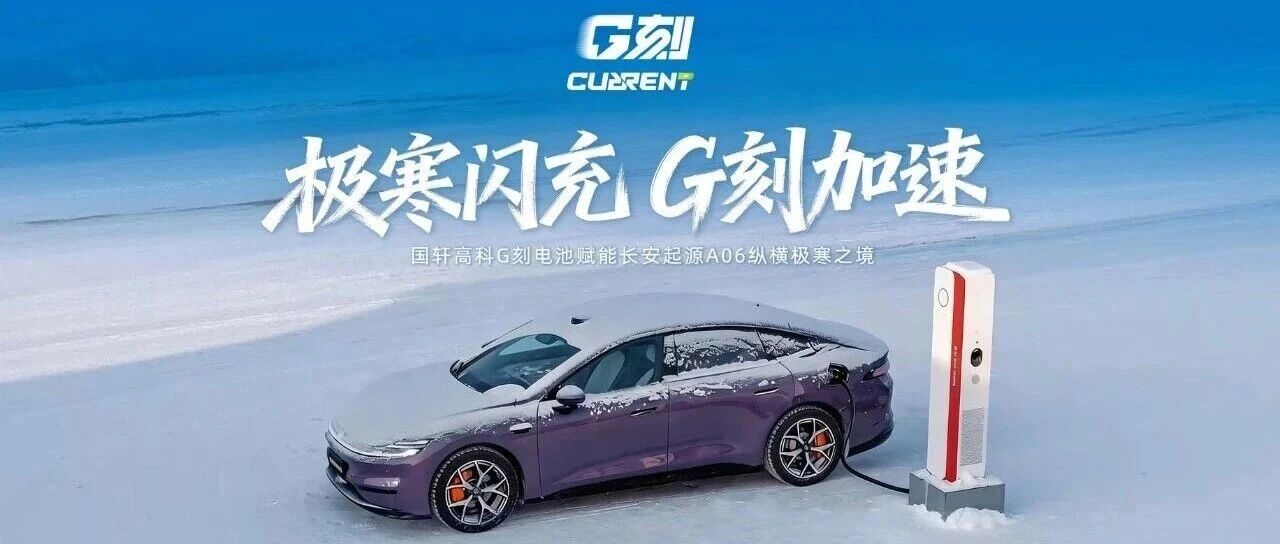
国轩高科G刻电池携手长安启源A06完成-40℃冬标极限验证
起点锂电· 2026-03-13 10:27
Group 1 - The core theme of the article is the upcoming 2026 Second Cylinder Battery Technology Forum, focusing on advancements in all-tab technology and the leadership of large cylindrical batteries in the market [2] - The event will take place on April 10, 2026, at the Venus Hall of the Venus Royal Hotel in Shenzhen, organized by Qidian Lithium Battery and Qidian Research Institute SPIR [2] - Key sponsors and speakers include companies such as Penghui Energy, Dofluorid, Chuangming New Energy, and others, highlighting the industry's collaboration [2] Group 2 - Guoxuan High-Tech's G-series battery successfully completed extreme winter testing at -40°C, demonstrating its capability for rapid charging and performance stability [3][6] - The G-series battery achieved a remarkable charging time of 14 minutes and 15 seconds to go from 20% to 80% charge, and added 200 kilometers of range in just 6 minutes of charging [2][6] - The successful winter testing reflects Guoxuan High-Tech's commitment to technological innovation and its collaboration with Changan Qiyuan, setting a new benchmark for high-end electric vehicles in extreme cold conditions [7]

极寒淬炼真闪充!国轩高科G刻电池携手长安启源A06完成-40℃冬标极限验证
鑫椤锂电· 2026-03-13 08:44
Core Viewpoint - The article highlights the successful winter performance testing of the G-series battery by Guoxuan High-Tech in extreme cold conditions, showcasing its advanced fast-charging capabilities and solidifying its leading position in the fast-charging battery sector [1][2][4]. Group 1: Battery Performance - The G-series battery demonstrated impressive performance by charging from 20% to 80% in just 14 minutes and achieving a range increase of 200 kilometers with only 6 minutes of charging, even at -40°C [4][5]. - The battery's design incorporates a 6C fast-charging technology, which enhances current-carrying capacity by 25% and significantly reduces charging resistance, ensuring stable temperature management during high-current charging [5][7]. Group 2: Technological Innovation - Guoxuan High-Tech's G-series battery is positioned as a benchmark solution in the industry, focusing on ultra-fast charging, long lifespan, and high safety [5][7]. - The successful testing reflects the company's deep commitment to technological innovation and collaboration within the industry, particularly with Changan Qiyuan, to integrate core technologies into vehicle products [7]. Group 3: Market Implications - The successful implementation of the G-series battery technology addresses common industry challenges related to winter charging and range reduction, potentially expanding the application of electric vehicles in cold regions [7].
鑫椤锂电一周观察 | 宁德时代2025年净利润722亿创历史新高
鑫椤锂电· 2026-03-13 07:25
Core Viewpoint - The article provides a comprehensive overview of the lithium battery industry, highlighting key market trends, company performances, and price movements across various segments, including lithium carbonate, electrolytes, and battery materials. Lithium Carbonate Market - The domestic lithium carbonate market continues to experience price fluctuations, with the latest prices for battery-grade lithium carbonate at 154,000-159,000 yuan/ton and industrial-grade at 139,000-145,000 yuan/ton [7][6]. Company Performances - CATL reported a record net profit of 72.2 billion yuan for 2025, with a revenue of 423.7 billion yuan, marking a year-on-year growth of 17.04% and a net profit increase of 42.28% [1]. - Tianqi Lithium announced plans to invest up to 2.1 billion yuan in a new energy materials industrial park in Hubei, focusing on iron source and lithium iron phosphate production [2]. - Guoxuan High-Tech is investing 3.2 billion yuan in a new industrial park in Jiangxi, aiming for a total output value of 10 billion yuan during the 14th Five-Year Plan period [3]. Material Prices - The price of ternary materials remains stable, with the latest prices for single crystal 5 series at 193,000-200,000 yuan/ton and 8 series 811 type at 193,000-211,000 yuan/ton [9]. - Phosphate lithium prices have seen an increase, with the latest prices for power-type phosphate lithium at 53,300-54,300 yuan/ton and energy storage-type at 53,100-54,100 yuan/ton [10]. Battery and Energy Storage Market - The domestic battery cell market prices are stable, with square ternary power cells priced at 0.44-0.50 yuan/Wh and square lithium iron phosphate power cells at 0.29-0.38 yuan/Wh [16]. - The energy storage battery market is experiencing price increases, with a notable demand for 587mAh cells, which are expected to be integrated into industrial storage solutions [17]. Industry Trends - The overall market for lithium-ion battery materials is expected to see continued growth, driven by increasing demand in the electric vehicle and energy storage sectors, despite some short-term price volatility [6][8].


多氟多/鹏辉/楚能/蓝京/创明/小鲁/利维能/联动天翼/大族锂电/嘉智信诺/亿鑫丰/孚悦/华普森/鹏锦智能等邀您共聚起点锂电圆柱电池技术论坛
起点锂电· 2026-03-11 10:39
Group 1 - The core theme of the forum is "Full-Tab Technology Leap, Leading the Large Cylindrical Market," focusing on the technological breakthroughs and market opportunities in the cylindrical battery industry [3][12]. - The cylindrical battery industry is expected to experience explosive growth in 2025, with a reported year-on-year increase of over 15% in China's cylindrical battery shipments, and large cylindrical batteries seeing growth rates exceeding 40% [5]. - Key players in the industry, such as EVE Energy, Dodo New Energy, and Penghui Energy, are facing continuous demand that exceeds supply, particularly for large cylindrical products used in electric two-wheelers, household energy storage, and automotive power [5]. Group 2 - The forum will feature three core sessions: 1. Cylindrical Battery Technology and Applications, which will release the "2026 China Cylindrical Battery White Paper" and discuss the competitive landscape [7]. 2. New Materials and New Processes, focusing on high-nickel cathodes and silicon-based anodes, addressing cost control and yield improvement challenges [7]. 3. Full-Tab Large Cylindrical Battery Technology Innovation, which will explore production pain points and application potential in emerging markets like AI robots and drones [7]. - The event will gather over 600 industry elites, including top battery manufacturers, downstream application giants, and leading equipment companies, creating a comprehensive platform for collaboration across the entire industry chain [9][12]. Group 3 - The forum will provide various participation options, including SVIP and VIP tickets, with benefits such as access to industry maps, presentations, and networking opportunities [10][19]. - The registration deadline for the forum is March 31, 2026, and participants are required to register in advance [23].

首期总投资32亿元!国轩高科落子江西赣州
鑫椤锂电· 2026-03-11 07:41
Group 1 - The article provides a comprehensive overview of the lithium battery market trends and forecasts for 2025, covering various segments such as lithium carbonate, electrolytes, copper foil, and more [1] - It highlights the significant investment in the Guoxuan High-Tech (Ganzhou) Industrial Park project, which aims to focus on low-altitude economy and new energy, with a total investment of 3.2 billion yuan and expected total output value of 10 billion yuan during the 14th Five-Year Plan period [2] - The project is expected to create over 500 fixed job positions and contribute more than 1 billion yuan in taxes, supporting the industrial transformation and high-quality development of Nankang [2] Group 2 - The article mentions the upcoming research report on global lithium battery application market trends and competitive strategies from 2025 to 2029, indicating a growing interest in market analysis [3]
代表委员声音︱能源转型“破局”,绿电、储能、绿氢如何发力?
国家能源局· 2026-03-11 00:53
Grid - The importance of enhancing ultra-high voltage infrastructure protection policies and defining responsibilities within protection zones for ultra-high voltage transmission lines and substations is emphasized [3] - There is a focus on improving resource allocation capabilities in the grid, promoting clean energy integration, and ensuring safe power supply through the development of microgrids and green energy applications [4] Green Electricity - The need for accelerated standard supply and the establishment of clear guidelines for zero-carbon park planning and carbon emission accounting is highlighted [5] - The article discusses the importance of refining market mechanisms for green electricity, including the identification of roles for microgrids and virtual power plants in the electricity market [5] Energy Storage - The necessity for a national energy storage capacity database and the establishment of stricter industry standards for energy storage systems is outlined [9] - The article mentions the need for improved market mechanisms for energy storage to ensure that its value in providing ancillary services is adequately compensated [10] - It is suggested that energy storage systems should be integrated into power station planning to achieve deep integration with the grid [11] Green Hydrogen - The article advocates for local consumption of green hydrogen and the integration of hydrogen storage with AI computing centers to enhance energy resilience [13] - It discusses the promotion of green hydrogen in various sectors, including shipping and steel production, to replace traditional fossil fuels [13] Computing and Electricity Coordination - The need for a dual approach where computing power follows electricity supply and vice versa is emphasized, particularly in the context of transferring high-load AI training demands to western regions [15] - The article calls for the optimization of the national computing strategy and the establishment of a three-tier computing architecture to enhance resource allocation efficiency [16]