BANK OF QINGDAO(002948)

Search documents
青岛银行跌1.07% 垫底银行板块
Zhong Guo Jing Ji Wang· 2025-12-11 09:26
(责任编辑:徐自立) 中国经济网北京12月11日讯 青岛银行(002948.SZ)今日收报4.61元,跌幅1.07%。银行板块今日涨 0.09%,青岛银行为银行板块跌幅最大的公司。 ...
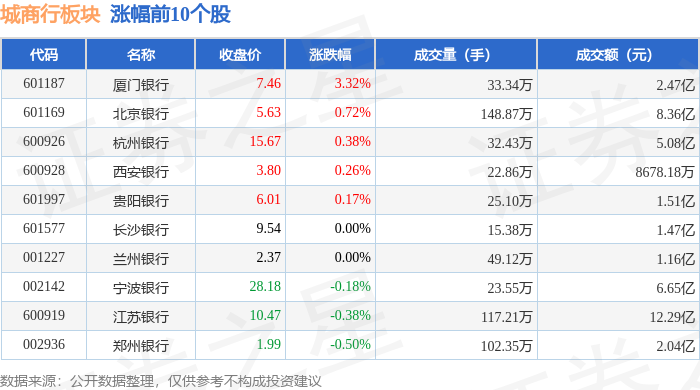
城商行板块12月11日跌0.07%,青岛银行领跌,主力资金净流出7715.14万元
Zheng Xing Xing Ye Ri Bao· 2025-12-11 09:08
证券之星消息,12月11日城商行板块较上一交易日下跌0.07%,青岛银行领跌。当日上证指数报收于 3873.32,下跌0.7%。深证成指报收于13147.39,下跌1.27%。城商行板块个股涨跌见下表: 从资金流向上来看,当日城商行板块主力资金净流出7715.14万元,游资资金净流入6492.73万元,散户 资金净流入1222.41万元。城商行板块个股资金流向见下表: 以上内容为证券之星据公开信息整理,由AI算法生成(网信算备310104345710301240019号),不构成投资建议。 ...


银行净息差专题报告:负债管理能力成为业绩分化的关键
GUOTAI HAITONG SECURITIES· 2025-12-11 08:03
Investment Rating - The report assigns an "Overweight" rating for the banking sector [7]. Core Insights - The report emphasizes the significant improvement in the cost of liabilities for banks in 2025, with a notable decrease of 28 basis points (bp) in the first half of the year, compared to only 4 bp in the same period last year. This improvement is primarily driven by reductions in deposit and interbank liabilities costs, contributing 19 bp and 7 bp respectively [3][11]. - The net interest margin (NIM) is expected to decline by approximately 5 bp in 2026, with the downward pressure on margins continuing to ease marginally, suggesting that some banks may stabilize their NIMs [2][10]. Summary by Sections 1. Liability Cost Improvement in 2025 - The first half of 2025 saw a significant reduction in the cost of interest-bearing liabilities, with the cost rate dropping to 1.70%, a decrease of 28 bp from 2024. This was supported by improvements in both deposit and interbank liability costs [11]. 2. Liability Side: Deposit Maturity and Repricing Benefits 1) **Term Structure**: The proportion of long-term deposits entering the repricing cycle has increased, with the share of deposits with a remaining maturity of 1-5 years declining by 1.5 percentage points (pct) to 22.6% by the end of Q2 2025. Some banks, such as those in Ningbo and Chongqing, experienced declines exceeding 10 pct [4]. 2) **Price Factors**: Regulatory focus on maintaining reasonable NIM levels has increased, with expectations of further interest rate cuts. The maximum reduction for three-year deposits could exceed 100 bp, indicating substantial room for cost improvement [5]. 3. Asset Side: Yield Pressure Expected to be Better than 2025 1) **Loans**: The repricing pressure on loans is expected to ease, with the five-year Loan Prime Rate (LPR) declining by only 10 bp in 2025, significantly less than the 50 bp drop the previous year [6]. 2) **Debt Replacement**: The shift from high-interest to low-interest debt is anticipated to have a limited impact on net interest margins, estimated to drag down margins by about 4 bp [6]. 3) **Bond Maturity**: The widening gap between new bond issuance rates and existing bond yields is expected to exert downward pressure on investment yields, with an estimated drag of 6 bp on margins from the reallocation of bonds maturing within one year [6]. 4. NIM Projections - The report forecasts a 5 bp decline in NIM for 2026, with the downward trend continuing to converge. The asset yield is expected to decrease by 17 bp, while the cost of liabilities is projected to improve by 13 bp, with deposit costs improving by 17 bp [7][10].






探寻利率方向(4):从M2看2026年债市流动性
GF SECURITIES· 2025-12-10 11:48
Investment Rating - The report assigns a "Buy" rating for the banking sector, indicating an expectation that stock prices will outperform the market by more than 10% over the next 12 months [40]. Core Insights - The growth of M2 is primarily driven by government and corporate leverage, with government leverage's contribution increasing from 23.9% in 2015 to 45.5% in 2025, while corporate leverage is expected to contribute 63.6% to M2 growth in 2025 [5][14]. - The report highlights a divergence between the social financing (社融) and M2 growth rates, indicating a liquidity accumulation in the financial system when the demand for financing from the real economy is insufficient, which can lead to a decline in bond yields [5][19]. - The expected social financing-M2 differential for 2026 is projected to be 0.56%, with a quarter-on-quarter increase of 33 basis points [32]. Summary by Sections M2 and Liquidity Analysis - M2 includes cash, personal deposits, corporate deposits, non-bank deposits, and deposits from non-deposit financial institutions. The main contributors to M2 growth are government and corporate leverage [5][13]. - The report discusses the relationship between the social financing-M2 differential and bond market performance, noting a shift in correlation since the second half of 2022 [5][19]. Social Financing Projections - For 2026, the report forecasts a total of 16.3 trillion yuan in new loans under the social financing framework, with a growth rate of 8.11% [32][34]. - The report anticipates that the net issuance of government bonds will reach 14.8 trillion yuan in 2026, with a focus on maintaining a proactive fiscal policy [34]. M2 Growth Forecast - The M2 growth rate for 2026 is projected at 7.55%, influenced by factors such as net fiscal deposits, the strengthening of the equity market, and cross-border capital flows [32][36].
多家银行公告:增资扩股!
Xin Lang Cai Jing· 2025-12-09 09:32
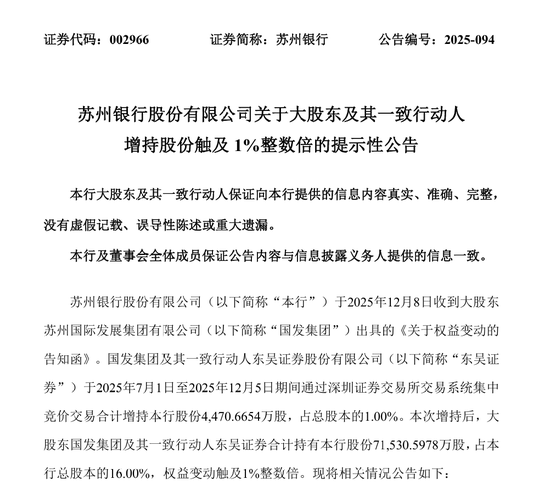
Core Viewpoint - The capital replenishment of small and medium-sized banks is entering a "sprint period" as they increasingly rely on methods such as capital increase and targeted fundraising to address capital adequacy pressures, with a new wave of capital replenishment accelerating [1][4]. Group 1: Recent Developments in Capital Increases - On December 8, Suzhou Bank announced that its major shareholder, Suzhou International Development Group, would increase its holdings by 44.7 million shares, accounting for 1.00% of the total share capital, between July 1, 2025, and December 5, 2025 [1]. - Hunan Bank has completed its capital increase, receiving approval to raise its registered capital by 1 billion RMB, increasing from approximately 7.75 billion RMB to about 8.75 billion RMB, a nearly 13% increase [3][8]. - Hunan Bank issued 1 billion shares to nine specific entities, raising a total of 4.01 billion RMB, with a net amount of 4.009 billion RMB after deducting issuance costs [3][8]. Group 2: Capital Adequacy and Regulatory Context - As of the end of Q3 2025, the capital adequacy ratio for commercial banks (excluding foreign bank branches) was 15.36%, with tier one capital adequacy at 12.36% and core tier one capital adequacy at 10.87% [4][9]. - The capital adequacy ratios for city commercial banks and rural commercial banks were 12.40% and 13.20%, respectively, which are lower than the average levels of 17.99% for large commercial banks and 13.48% for joint-stock commercial banks [4][9]. Group 3: Role of Local State-owned Capital - Local state-owned capital has become a significant force in the current wave of capital increases among small and medium-sized banks, with Hunan Bank's issuance entirely directed to state-owned entities [10][11]. - The involvement of local state-owned capital not only provides immediate financial support but also contributes to long-term capital generation effects, as local governments often promote such investments [5][11].
青岛银行济宁分行:“链”上发力,精准滴灌机械制造产业
Qi Lu Wan Bao· 2025-12-09 05:57
Core Viewpoint - The Qingdao Bank Jining Branch is actively enhancing financial support for the mechanical manufacturing industry in Jining through a structured financial empowerment initiative, aiming to inject strong financial momentum into the local industrial economy [1][7]. Group 1: Mechanism and Structure - The Qingdao Bank Jining Branch has established a leadership group to coordinate resources across various departments, creating a comprehensive service system for the mechanical manufacturing sector [2]. - A pre-approval mechanism for loans has been implemented to improve service efficiency, significantly reducing approval times for manufacturing enterprises [2]. - The bank has incorporated metrics such as loan volume and the number of serviced enterprises into performance evaluations to encourage staff engagement in financial services [2]. Group 2: Government and Enterprise Collaboration - The bank is deepening collaboration with government and industry associations to broaden service channels and better understand the financing needs of local technology manufacturing enterprises [3]. - Innovative cooperation models between the bank and government entities have been developed to lower financing thresholds and costs for enterprises [3]. Group 3: Financial Product Innovation - The Qingdao Bank Jining Branch has launched specialized financial products like "Kechuang Fast Loan" and "Kechuang Easy Loan" to meet the diverse financing needs of different manufacturing enterprises [4]. - "Kechuang Fast Loan" supports technology transformation for innovative enterprises using a comprehensive credit evaluation system, while "Kechuang Easy Loan" targets small and micro technology enterprises with simplified application processes [4]. Group 4: Personalized Service - A specialized financial service team has been formed to provide tailored financial solutions to manufacturing enterprises, ensuring a deep understanding of their operational and financial situations [5]. - The bank successfully provided a customized financing solution of 50 million yuan to a fluid control enterprise, addressing its cash flow challenges and supporting its supply chain [5][6]. Group 5: Service Outcomes - As of the end of Q3 2025, the bank's loans to the manufacturing sector reached nearly 500 million yuan, with funds directed towards emerging industries such as high-end equipment manufacturing and new materials [7]. - The financial services align with Jining's strategic focus on industrial economic growth and innovation, contributing to the city's ambitious economic goals [7].
城商行板块12月8日跌0.31%,上海银行领跌,主力资金净流入1.29亿元
Zheng Xing Xing Ye Ri Bao· 2025-12-08 09:09
Group 1 - The city commercial bank sector experienced a decline of 0.31% on December 8, with Shanghai Bank leading the drop [1] - The Shanghai Composite Index closed at 3924.08, up 0.54%, while the Shenzhen Component Index closed at 13329.99, up 1.39% [1] - Key individual stock performances in the city commercial bank sector included Xiamen Bank rising by 3.32% and Shanghai Bank falling by 1.43% [1][2] Group 2 - The net inflow of main funds into the city commercial bank sector was 129 million yuan, while retail investors saw a net outflow of 156 million yuan [2] - The table of fund flows indicated that Jiangsu Bank had a net outflow of 56.86 million yuan from main funds, while Hangzhou Bank had a net inflow of 49.79 million yuan [3] - The overall trend showed that retail investors were withdrawing funds from several banks, with notable outflows from Suzhou Bank and Qingdao Bank [3]



百年金库焕新颜 半岛小记者解锁金融研学新体验
Sou Hu Cai Jing· 2025-12-08 07:16
Core Insights - The event organized by the Peninsula Junior Reporter Group at the Qingdao Bank's renovated old vault provided a unique financial knowledge experience for children, combining historical exploration, practical activities, and in-depth interviews [1][15] Group 1: Historical Context - The venue features historical artifacts such as the old vault door, vintage financial documents, and old currencies, showcasing the century-long history of Qingdao Bank [4] - Children learned about the evolution of the banking industry from the Republican era to modern financial technology, making abstract financial concepts tangible through historical stories and exhibits [4] Group 2: Interactive Learning - In the fun experience area, children participated in activities like "panning for gold," which allowed them to experience the joy of labor and achievement through hands-on practice [7] - The "murder mystery" role-playing segment encouraged teamwork and logical thinking as children worked together to solve puzzles based on historical clues and exhibit details [7] Group 3: Interview Segment - During the interview session, children asked insightful questions about balancing historical preservation with modern experiences and future educational activities aimed at youth [11] - The staff provided detailed answers, enriching the children's knowledge and enhancing their communication and adaptability skills [11] Group 4: Overall Impact - The event broke away from traditional educational methods, making financial knowledge accessible and engaging through immersive experiences, thus stimulating children's interest in learning [15] - The Peninsula Junior Reporter Group plans to continue exploring diverse educational scenarios to provide children with a rich and varied growth platform [15]

银行业周度追踪2025年第48周:保险长钱入市,聚焦红利与科创-20251208
Changjiang Securities· 2025-12-08 05:32
Investment Rating - The report maintains a "Positive" investment rating for the banking sector [10] Core Insights - The banking sector has experienced a third consecutive week of decline, primarily due to a rebound in market risk appetite, leading to the outflow of previously defensive capital. The bond market has also adjusted, affecting investment returns. Despite short-term style changes, the report remains optimistic about the revaluation direction of bank stocks, particularly favoring large banks like Bank of Communications and China Merchants Bank, as well as leading city commercial banks such as Nanjing Bank, Jiangsu Bank, and Hangzhou Bank [2][7] - Recent adjustments in insurance risk factors encourage long-term allocations towards low volatility dividend stocks and technology innovation sectors. The National Financial Regulatory Administration has lowered risk factors for certain indices, which is expected to enhance the solvency of insurance companies and promote long-term investments in quality equity assets [4][39] Summary by Sections Market Performance - The banking index fell by 1.1% this week, underperforming the CSI 300 and ChiNext indices by 2.3% and 2.9% respectively. The average dividend yield for the six major state-owned banks in A-shares rose to 3.85%, with a 200 basis point spread over the 10-year government bond yield. H-shares maintain a 5% average dividend yield, with a 23% discount compared to A-shares [7][20][26] Credit Growth - As of the end of October 2025, credit growth across various regions remains differentiated, with major provinces like Jiangsu, Zhejiang, Shandong, Sichuan, and Anhui maintaining growth rates above 8%. Sichuan leads with a growth rate of 10.8%. Corporate loans continue to be the main growth driver, with Jiangsu and Sichuan showing growth rates of 13.6% and 13.3% respectively [6][34] Insurance Capital Allocation - Insurance capital is in a continuous process of increasing allocations to bank stocks, particularly during the third quarter adjustment period. The report outlines three core strategies for capital allocation: large insurance funds strategically investing in state-owned banks and leading city commercial banks, and smaller insurance companies seeking long-term equity investment opportunities in smaller banks [5][39]


银行业周报(20251201-20251207):数字人民币定位有望晋级,支付领域大有可为-20251207
Huachuang Securities· 2025-12-07 11:45
Investment Rating - The report maintains a "Recommended" investment rating for the banking sector, indicating a positive outlook for the industry in the near term [1]. Core Insights - The positioning of the digital RMB is expected to advance, with significant potential in the payment sector. The People's Bank of China (PBOC) is working on optimizing the management system for digital RMB, which may evolve from a cash-like payment instrument (M0) to broader monetary categories (M1, M2) [2][8]. - Infrastructure development for digital RMB is progressing, with the establishment of international and operational centers in Shanghai and Beijing, respectively. As of September 2025, the cumulative transaction amount in pilot areas reached 14.2 trillion yuan, with 2.25 billion personal wallets opened [3][8]. - The banking sector is expected to see a systematic recovery in valuations in 2026, transitioning from a defensive to a growth-oriented investment logic. Key investment themes include high dividend yields and low valuations, particularly as risk-free interest rates decline [9]. Summary by Sections Industry Overview - The banking sector comprises 42 listed companies with a total market capitalization of approximately 1.15 trillion yuan, representing 13.04% of the market [4]. - The average daily trading volume for A-shares was 10,583.60 billion yuan, reflecting a 0.65% increase from the previous week [8]. Performance Metrics - The absolute performance of the banking sector over the past month is 5.0%, with a relative performance of 2.8% compared to the benchmark [5]. - The report highlights that the banking index underperformed the CSI 300 index by 2.46 percentage points during the week [8]. Investment Recommendations - The report suggests focusing on three main investment lines: 1. State-owned banks and major commercial banks like China Merchants Bank. 2. Quality joint-stock banks and city commercial banks with improving net interest margins and credit costs. 3. City commercial banks benefiting from regional policies and showing significant performance potential [9]. - Specific banks recommended for investment include China Merchants Bank, CITIC Bank, and several city commercial banks such as Chengdu Bank and Chongqing Bank [9][10].