BANK OF SUZHOU(002966)

Search documents
苏州银行风波背后:业绩增速连年走低 消费贷占比攀升 合作“汉辰系”
Xin Lang Cai Jing· 2025-12-22 11:07
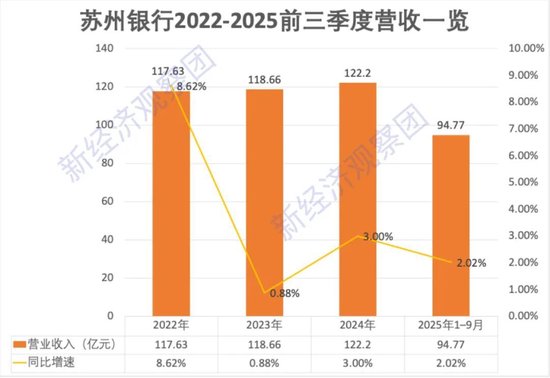
Core Viewpoint - Suzhou Bank is facing challenges related to asset quality and rising credit risks, highlighted by its recent legal action against Wuxi Xuelang Environmental Technology Co., Ltd. due to a loan dispute, reflecting the bank's struggle with potential credit risks and deteriorating asset quality [1][22][30]. Financial Performance - Suzhou Bank has maintained double growth in revenue and profit from 2022 to the first three quarters of 2025, but the growth rate is gradually slowing down. In the first three quarters of 2025, revenue and profit growth rates fell to 2.02% and 7.12%, respectively [5][27]. - The bank's revenue for 2022, 2023, and 2024 was 117.63 billion, 118.66 billion, and 122.2 billion, with growth rates of 8.62%, 0.88%, and 3.0%, indicating a decline in growth momentum [4][25]. - The net profit for 2022, 2023, and 2024 was 39.18 billion, 46.01 billion, and 50.7 billion, with growth rates of 26.13%, 17.41%, and 10.2%, showing a noticeable slowdown [8][27]. Asset Quality - The non-performing loan (NPL) ratio for Suzhou Bank from the end of 2022 to the first three quarters of 2025 was 0.88%, 0.84%, 0.83%, and 0.83%, indicating stable risk control capabilities [6][28]. - The provision coverage ratio decreased significantly from 530.81% in 2022 to 420.59% in the first three quarters of 2025, reflecting a conservative approach to risk provisioning amid profit pressures [7][29]. Loan Structure - The proportion of corporate loans has increased from 67.50% in 2022 to 75.40% in the first three quarters of 2025, indicating a growing reliance on corporate business [10][31]. - Personal loans have decreased in proportion, from 32.50% in 2022 to 24.60% in the first three quarters of 2025, with a notable focus on personal consumption loans, which have become increasingly important [12][33]. Regulatory and Compliance Issues - Suzhou Bank's partnerships with internet lending platforms, particularly those associated with the "Hancheng System," have raised compliance concerns due to frequent exposure of these partners for regulatory issues [20][41]. - The bank is required to ensure compliance and risk isolation from its partners, especially with the upcoming regulations emphasizing strict management of internet lending practices [42].

东方红嘉享混合型发起式证券投资基金基金份额发售公告
Shang Hai Zheng Quan Bao· 2025-12-21 19:20
二〇二五年十二月二十二日 重要提示 1、东方红嘉享混合型发起式证券投资基金(以下简称本基金)的募集申请经中国证券监督管理委员会 (以下简称中国证监会)2025年11月28日证监许可[2025]2630号文准予注册。中国证监会对本基金的注 册并不代表中国证监会对本基金的风险和收益做出实质性判断、推荐或者保证。 2、本基金是契约型开放式、发起式、混合型证券投资基金。 3、本基金A类基金份额的基金代码为026284,C类基金份额的基金代码为026285。 登录新浪财经APP 搜索【信披】查看更多考评等级 基金管理人:上海东方证券资产管理有限公司 基金托管人:苏州银行股份有限公司 6、本基金的销售机构包括基金管理人的直销机构和代销机构。直销机构包括基金管理人的直销中心和 网上交易系统。代销机构具体名单请见基金管理人网站披露的基金销售机构名录。 7、本基金的发售对象为符合法律法规规定的可投资于证券投资基金的个人投资者、机构投资者、发起 资金提供方、合格境外投资者以及法律法规或中国证监会允许购买证券投资基金的其他投资人。 8、投资者购买本基金应使用本公司的开放式基金账户。若投资者已经开立本公司的开放式基金账户, 则无须再 ...
机构密集调研银行股 息差改善成市场关注焦点
Zhong Guo Jing Ying Bao· 2025-12-20 04:00
Core Viewpoint - Several brokerage firms, funds, and insurance asset management institutions are evaluating listed banks to optimize asset allocation and investment strategies for the coming year, with a focus on net interest margin performance [1] Group 1: Net Interest Margin Stability - Multiple banks have indicated that net interest margins have shown signs of stabilization in Q3, with a narrowing of the overall decline and an improvement in funding costs expected over the next three years [1] - Hangzhou Bank reported that its net interest margin remained stable at the end of Q3 compared to the end of Q2, with a marginal narrowing of the annual decline expected [1] - Suzhou Bank stated that its net interest margin has narrowed less than the industry average this year, supporting growth in net interest income [2] Group 2: Strategies for Managing Interest Margin - Banks are actively exploring ways to alleviate interest margin pressure through optimizing asset-liability structures and enhancing non-interest income [1] - Chongqing Rural Commercial Bank noted that its Q3 interest margin stabilized due to a slowdown in the decline of asset yields and a faster decrease in liability interest rates [2] - Ouyang Rihui emphasized the importance of increasing the proportion of intermediary business income and investing in information technology to improve interest margin management [3] Group 3: Regional Banks' Performance - The Q3 reports of listed banks show structural differentiation in net interest margins, with some regional banks experiencing improvement [3] - A report indicated that net interest margins for city commercial banks and rural commercial banks continued to stabilize in the first three quarters of 2025, with a decrease in the cost of interest-bearing liabilities [4] - Some regional banks, such as Jiangyin Bank and Chongqing Bank, reported an increase in net interest margins at the end of Q3 compared to the end of Q2 [3][4] Group 4: Future Outlook - Some banks anticipate that the trend of improving interest margins will continue into 2026, with Qingnong Commercial Bank indicating that its interest margin is expected to remain stable [5] - Factors such as the repricing of existing loans and adjustments in deposit pricing strategies are expected to support net interest margins moving forward [5]


巧合还是问责?苏州银行抽贷风波后,57岁风控总监提前退居二线
Xin Lang Cai Jing· 2025-12-19 02:17
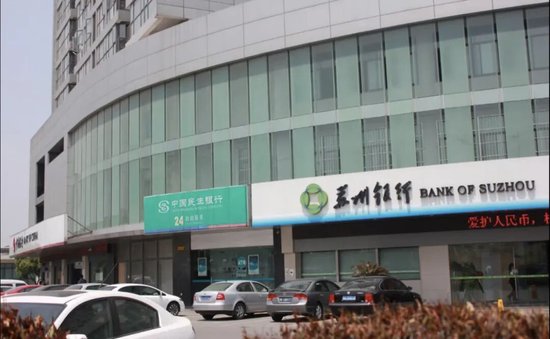
Core Viewpoint - Suzhou Bank is facing significant scrutiny regarding its risk management system due to two recent incidents: a lawsuit related to early loan recovery and the unexpected resignation of its long-serving risk director, highlighting the need for optimization in its risk control processes [2][9]. Loan Recovery Incident - On December 3, Suzhou Bank's Wuxi branch filed a lawsuit against Xuelang Environmental Technology Co., seeking to recover approximately 49.01 million yuan (about 7 million USD) in loans due to a financial contract dispute [10][11]. - The bank had initially signed an 80 million yuan (about 11.5 million USD) loan agreement, disbursing 60 million yuan (about 8.6 million USD), with a maturity date set for December 14, 2025 [10]. - Following Xuelang's announcement of a pre-restructuring application on November 19, Suzhou Bank opted to recover the loan early to mitigate bad debt risks, leading to the current legal dispute [10][11]. - The bank's recovery efforts have proven ineffective, with only 357.16 thousand yuan (about 51 thousand USD) available in frozen accounts, significantly lower than the claimed amount [11]. Risk Director Resignation - On December 11, Suzhou Bank announced the resignation of its risk director, Hou Bin, who stepped down for age-related reasons, despite being below the legal retirement age [12][13]. - Hou Bin has been a key figure in the bank's risk management since 1999, contributing to its development and risk management framework for over 12 years [12][13]. - The timing of his resignation coincides with the loan recovery incident, raising concerns about the bank's risk management adjustments [12][13]. Asset Quality Indicators - As of the first half of 2025, Suzhou Bank reported a non-performing loan balance of 3.012 billion yuan (about 430 million USD), an increase of 247 million yuan (about 35 million USD) from the previous year [13][14]. - The overdue loan balance reached 3.591 billion yuan (about 515 million USD), with a year-on-year increase of 140 million yuan (about 20 million USD) [13][14]. - Despite maintaining a low non-performing loan ratio of 0.83% and a high provision coverage ratio of 420.59%, structural risks are evident in the bank's asset quality [13][14]. Regional and Sectoral Risk Analysis - The loan balance in Suzhou, the bank's core business area, accounts for 55.88% of total loans, with a non-performing loan rate rising to 0.80%, while other regions in Jiangsu saw a decrease in non-performing rates [13][14]. - High-risk sectors include agriculture, manufacturing, and wholesale/retail, with non-performing loan rates of 1.54%, 1.16%, and 0.94%, respectively, indicating vulnerabilities in key investment areas [13][14]. Overall Performance - For the first three quarters of 2025, Suzhou Bank reported total assets exceeding 776.04 billion yuan (about 111.5 billion USD), reflecting an 11.87% year-on-year growth, and a net profit of 4.477 billion yuan (about 640 million USD), up 7.12% [14][15]. - The dual challenges of the loan recovery incident and leadership changes in risk management underscore the urgent need for the bank to enhance its risk control processes and fill key personnel gaps [14][15].
临近尾盘20%涨停!这个板块,突然活跃
Zheng Quan Shi Bao· 2025-12-18 11:51
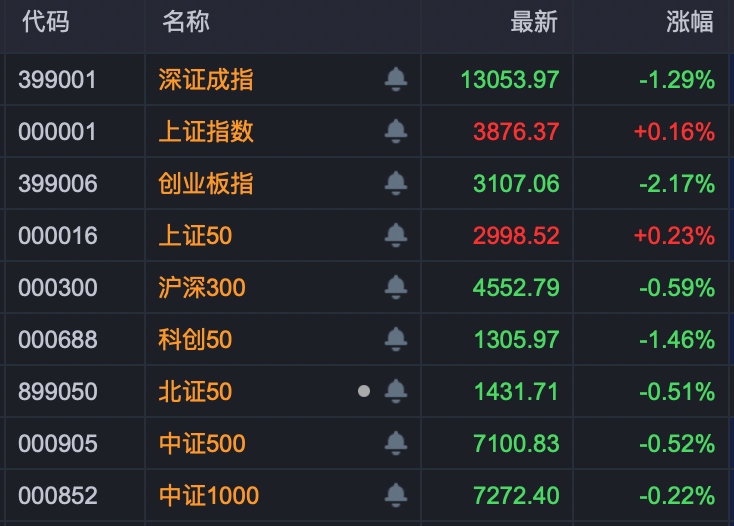
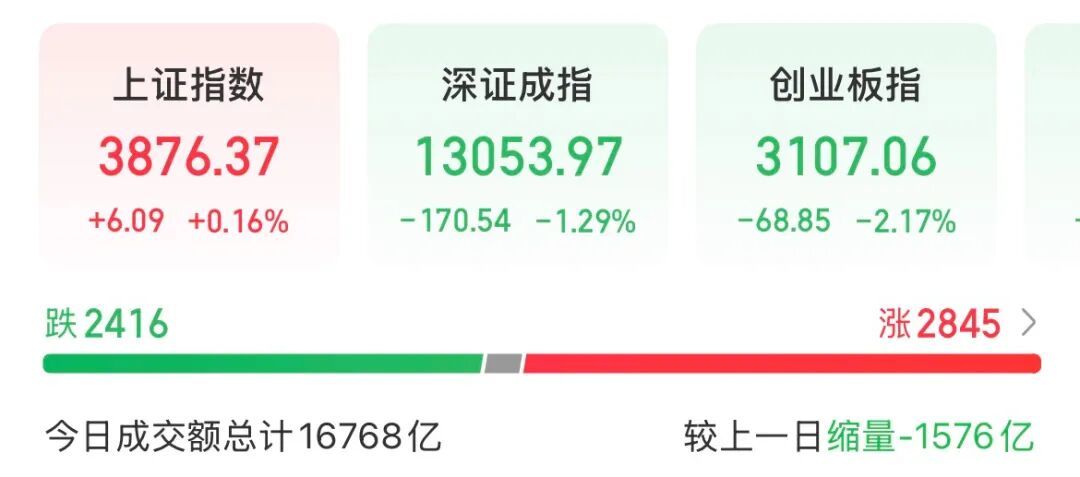
Market Overview - The A-share market experienced slight fluctuations today, with large-cap blue-chip stocks showing strength, as the Shanghai Composite Index and the Shanghai 50 Index slightly rose, while technology growth stocks faced adjustments, leading to small declines in the ChiNext Index, Sci-Tech 50, and North China 50. The market turnover reached 1.68 trillion yuan [1]. Index Performance - The Shenzhen Component Index closed at 13,053.97, down by 1.29% - The Shanghai Composite Index closed at 3,876.37, up by 0.16% - The ChiNext Index closed at 3,107.06, down by 2.17% - The Sci-Tech 50 Index closed at 1,305.97, down by 1.46% - The North China 50 Index closed at 1,431.71, down by 0.51% [2]. Sector Performance - Active sectors included pharmaceutical commerce, high-dividend stocks, elderly care concepts, and commercial aerospace, while sectors such as Hainan, consumer electronics, glass fiber, and power grid equipment saw the largest declines [2]. - Defense and military industry attracted over 9.5 billion yuan in net inflows, while banking received over 5.5 billion yuan. Other sectors like automotive and biopharmaceuticals also saw significant inflows exceeding 4 billion yuan [3]. Investment Insights - Huazhang Securities noted that historically, years of significant gains see increased volatility in January of the following year, suggesting a potential adjustment phase ahead. Investors are advised to remain patient and await clearer signals for upward trends. The AI industry is highlighted as a stable long-term investment focus [3]. - Guotai Junan emphasized that the spring market typically starts between December and April, with potential early initiation if prior market adjustments and favorable policy expectations align. Current market conditions present a crucial window for positioning in the spring rally [3]. High Dividend Stocks - High-dividend stocks saw a strong performance in the afternoon, with all bank stocks rising. Notable gainers included Shanghai Bank and Chongqing Rural Commercial Bank [4]. - The demand for stable cash flows from long-term funds like insurance and pension funds has increased significantly in a low-interest-rate environment. Insurance companies are projected to increase equity allocations by over 410 billion yuan in the first three quarters of 2025, with high-dividend assets comprising over half of the new positions [4]. Elderly Care Sector - The elderly care concept stocks were notably active, with companies like Jiayou Meikang and Waineng Health hitting their daily limit up of 20% [4]. - The National Health Commission has issued a plan to enhance elderly care services, aiming for a more comprehensive system by 2027 [5]. Silver Economy - The silver economy market in China is projected to reach 8.3 trillion yuan by 2024 and exceed 20 trillion yuan by 2030, with the consumption potential of the elderly population expected to grow to 106 trillion yuan by 2050, positioning China as a leader in the global silver economy market [6]. - CITIC Securities forecasts that the number of new pension recipients will increase by approximately 5.5 to 6 million annually over the next 2-3 years, which will be a significant driver for the silver economy and domestic demand expansion [6].



直线涨停,不到4分钟
Zhong Guo Zheng Quan Bao· 2025-12-18 08:42
Banking Sector - The banking sector experienced a rebound, with Shanghai Bank rising over 3% [3] - The average dividend yield for the banking sector is currently 5.2%, significantly higher than the 10-year government bond yield [8] - The sector is transitioning from "cyclical speculation" to a new phase of "allocation dividends," with a focus on high dividend investments [8] Retail Sector - Retail concepts strengthened, with Central Plaza and Shanghai Jiubai reaching their daily limit [3] - New World City, a major modern department store, is actively expanding its appeal to the "Z generation" consumer group [3] Commercial Aerospace Sector - The commercial aerospace sector saw a surge, with companies like Starry Technology and Shunhao Co. hitting their daily limit [5][9] - Starry Technology reported successful delivery of products for rocket launch ground equipment, with plans for mass production starting in 2026 [11] - Recent policies and technological advancements are expected to accelerate the development of the commercial aerospace industry in China [11][12] Pharmaceutical Sector - The pharmaceutical commercial sector continued its strong performance, with companies like Luyan Pharmaceutical achieving consecutive gains [5]



直线涨停!不到4分钟
Zhong Guo Zheng Quan Bao· 2025-12-18 08:40
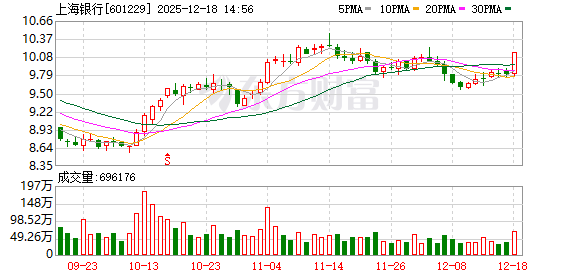
Banking Sector - The banking sector experienced a rebound, with Shanghai Bank and Chongqing Rural Commercial Bank both rising over 3% [7][9] - Recent reports indicate that listed banks are expected to see improved revenue and profit growth in 2026 and 2027, driven by narrowing net interest margin pressure, quality-focused credit issuance, and stabilizing fee income growth [9] - The average dividend yield for the banking sector is currently at 5.2%, significantly higher than the 10-year government bond yield, indicating a shift towards a "high dividend + high quality" investment cycle [9][10] Retail Sector - The retail sector showed strength, with Central Plaza and Shanghai Jiubai hitting the daily limit, and New World achieving a rapid surge shortly after market opening [3] - New World is focusing on attracting the "Z generation" consumer group and has plans to launch popular IP exhibitions [3] Commercial Aerospace Sector - The commercial aerospace sector is witnessing a surge, with companies like Star Technology and Shunhao Co. hitting the daily limit [5][11] - Star Technology has secured several orders in the commercial aerospace field and plans to initiate mass production in 2026 to meet the growing demand from private aerospace companies [14] - Recent policy support from the National Space Administration aims to promote high-quality development in the commercial aerospace sector, which is expected to accelerate the implementation of various industry chain segments [14][15]

【A股收评】创业板调整逾2%,商业航天依旧火热!
Sou Hu Cai Jing· 2025-12-18 07:49
Group 1 - The three major indices showed mixed performance, with the Shanghai Composite Index up 0.16%, while the Shenzhen Component Index and the ChiNext Index fell by 1.29% and 2.17% respectively, with a total trading volume of approximately 1.66 trillion yuan [2] - The pharmaceutical retail sector saw a resurgence, with companies like Huaren Health and Shuyuan Pingmin rising by 20%, and Yixin Tang increasing by 10%, indicating strong market interest [2] - Ant Group announced an upgrade of its AI health application to "Ant Ai Fu," focusing on a "health+" strategy, which aims to assist users in managing their health like a personal friend [2] Group 2 - The commercial aerospace sector remains active, with Tianyin Electromechanical rising over 16% and Aerospace Huanyu increasing by 14.71%, reflecting investor confidence in the industry [3] - The Long March 12A reusable rocket, developed by China Aerospace Science and Technology Corporation, is set for its historic first launch in December 2025, marking a significant milestone in China's space endeavors [3] - A report from Huaxi Securities highlights a shift in the commercial aerospace sector towards reusable manufacturing, with companies like SpaceX leading the way in reducing costs through increased reuse and launch frequency [3] Group 3 - The Central Economic Work Conference emphasized expanding domestic demand as a top priority for 2025, focusing on structural changes in consumption to stimulate growth [4] - Bank stocks performed well, with Shanghai Bank, Chongqing Rural Commercial Bank, and Suzhou Bank showing positive movements, indicating investor confidence in the banking sector [4] Group 4 - CICC's report forecasts that listed banks will see revenue growth rates of 2.5% and 3.6% for 2026 and 2027 respectively, with net profit growth rates of 1.9% and 2.6% [5] - The battery, AI, and PCB sectors experienced collective declines, with companies like Huasheng Lithium Battery dropping over 10%, indicating potential challenges in these industries [5] - Other sectors such as brokerage, automotive, liquor, and semiconductors also faced downturns, with notable declines in stocks like Muxi and BYD [5]




银行板块午后走强,上海银行、苏州银行涨近3%,中期分红进行时,26家银行拟合计派息超2600亿元
2 1 Shi Ji Jing Ji Bao Dao· 2025-12-18 06:56
Group 1 - The core viewpoint of the articles highlights a positive trend in bank stocks, with several banks experiencing significant gains amid a peak period for interim dividends [2][3] - As of December 17, 2025, 26 A-share listed banks have disclosed plans for interim or quarterly dividends, with a total proposed payout exceeding 264.6 billion yuan [2] - The PB valuation of the Shenwan first-level banking index has increased from 0.52 times at the beginning of the year to 0.54 times by December 17, 2025, indicating a revaluation driven by dividend themes [2] Group 2 - Insurance funds have significantly increased their investments in bank stocks during the third quarter, reflecting a strong preference for bank stocks among institutional investors [3] - The Bank AH Preferred ETF (517900) tracks the Bank AH Index, which includes 14 Hong Kong bank stocks and 28 A-share bank stocks, with respective weights of 37% and 63% [3] - Since early 2019, the Bank AH total return index has seen a cumulative increase of 95.69%, outperforming the CSI Bank total return index, which rose by 87.54% in the same period [3]
银行股,全线飘红
Di Yi Cai Jing Zi Xun· 2025-12-18 05:39
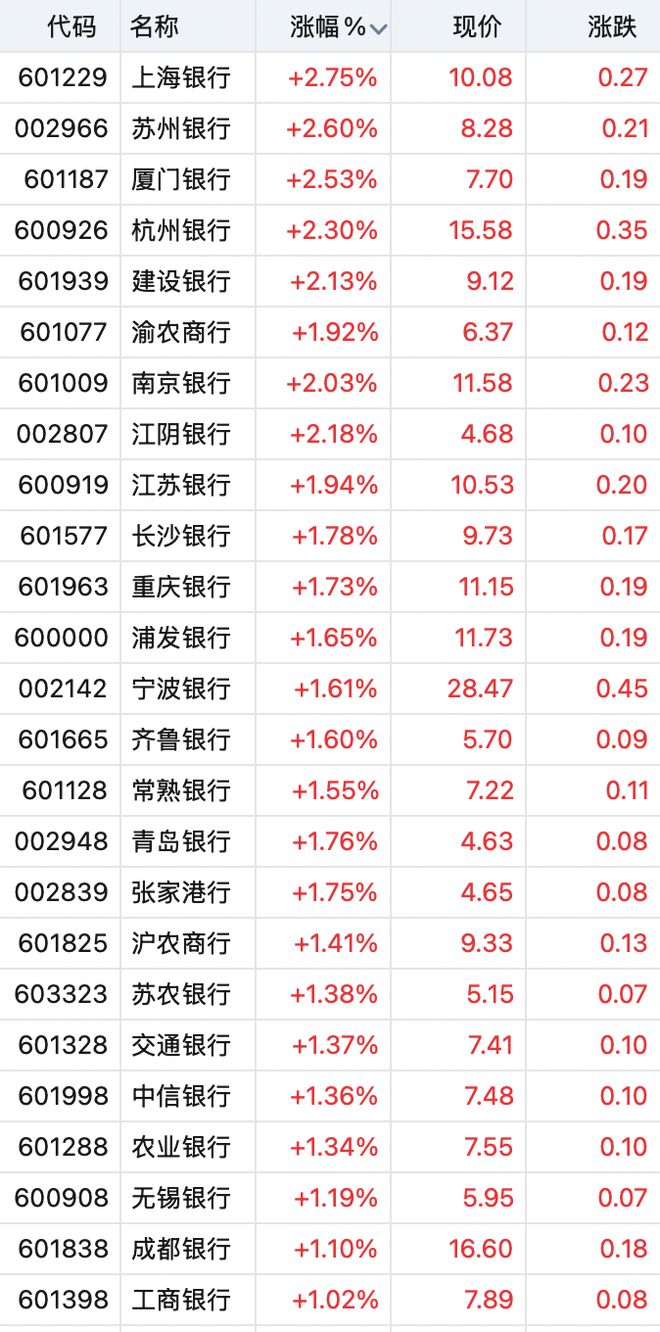
Core Viewpoint - The banking sector experienced a rebound on December 18, with all banks in the sector showing positive performance, indicating a potential recovery trend in the market [1]. Group 1: Stock Performance - Shanghai Bank saw an increase of 2.75%, reaching a price of 10.08 with a rise of 0.27 [2]. - Suzhou Bank increased by 2.60%, with a current price of 8.28, up by 0.21 [2]. - Xiamen Bank rose by 2.53%, now priced at 7.70, an increase of 0.19 [2]. - Hangzhou Bank's stock went up by 2.30%, reaching 15.58, with a rise of 0.35 [2]. - Construction Bank increased by 2.13%, priced at 9.12, up by 0.19 [2]. - Other notable increases include: - Chongqing Bank +1.73% to 11.15 [3] - Agricultural Bank +1.34% to 7.55 [3] - Industrial and Commercial Bank +1.02% to 7.89 [3]. Group 2: Overall Market Sentiment - The overall positive sentiment in the banking sector suggests a favorable environment for investment, as multiple banks reported gains exceeding 2% [1][2]. - The performance of various banks indicates a broad-based recovery, which may attract further investor interest in the sector [1].