
EVE(300014)

Search documents
——25Q3公募基金可转债持仓点评:二级债基增持显著,电新转债占比提升
Huachuang Securities· 2025-11-19 02:35
1. Report Investment Rating No investment rating information is provided in the report. 2. Core Viewpoints - In 2025Q3, the market value of convertible bonds held by public - funds increased, with the bond - type funds being the main force of the increase, and they mainly added positions in power equipment convertible bonds. The position of convertible bonds held by public - funds also rose. Although the convertible bond market continued to shrink, the convertible bond assets still had considerable returns under the catalysis of equity enthusiasm [2][8][9]. - The performance of convertible bond funds outperformed the index in 2025Q3, showing net subscriptions and scale expansion. However, the overall position and leverage ratio of these funds declined. Both public - funds and convertible bond funds focused on adding positions in power equipment convertible bonds [5][8][9]. 3. Summary by Directory 3.1 Public - funds Increase Convertible Bond Positions and Add Positions in Power Equipment Convertible Bonds 3.1.1 Market Value of Convertible Bonds Held by Public - funds Increases Month - on - Month, and Positions Rise - In 2025Q3, the market value of convertible bonds held by public - funds was 316.618 billion yuan, a month - on - month increase of 16.09% and a year - on - year increase of 12.72%. The ratio of the market value of convertible bonds held by public - funds to the market value of bond investments was 1.57%, a 0.28 - percentage - point increase from 25Q2; the ratio to net worth was 0.87%, a 0.07 - percentage - point increase from 25Q2 [13]. - The market value changes of convertible bonds held by different types of funds varied month - on - month. Stock - type and secondary bond - type funds significantly increased their positions. From the perspective of absolute amount changes, the bond - type funds had the largest increase in market value, with a month - on - month increase of 48.61 billion yuan in 25Q3 [17][19]. - The overall position of public - funds in convertible bonds increased, but the position of convertible bond funds was diluted. According to the Wind fund primary classification, the convertible bond position of stock - type funds remained flat at 0.02% month - on - month, that of hybrid funds decreased by 0.26 percentage points to 0.59%, and that of bond - type funds increased by 0.49 percentage points to 2.73% [23][25]. 3.1.2 Public - funds Inversely Increase Positions, while Insurance Funds, Enterprise Annuities, and Securities Firms' Proprietary Trading Reduce Positions - As of the end of 2025Q3, the total face value of convertible bonds held by the Shanghai and Shenzhen Stock Exchanges was 599.489 billion yuan, a decrease of 55.679 billion yuan from the end of 25Q2, a month - on - month decrease of 8.50%. Insurance institutions, enterprise annuities, and securities firms' proprietary trading significantly reduced their positions, while public - funds significantly increased their positions inversely, with a month - on - month increase of 7.68% to 233.561 billion yuan [35]. 3.1.3 Public - funds Mainly Add Positions in Power Equipment, and Bank Convertible Bonds Further Shrink - In terms of industry layout in 25Q3, banks were still the primary layout sector, but the overall position market value shrank significantly under the early redemption of multiple bank convertible bonds, with only a 233 - million - yuan difference from the power equipment market value. From the perspective of the market value month - on - month change rate, 24 industries had positive month - on - month changes, with the petrochemical, power equipment, and beauty care industries leading in growth [42]. 3.1.4 Industrial Convertible Bonds Maintain the First - Positioned Heavy - Position Bond - Industrial convertible bonds were the first - positioned heavy - position bond of public - funds, and EVE and Industrial convertible bonds led in terms of incremental positions. Among the top ten convertible bonds in terms of total position market value, there were 3 bank convertible bonds, which was fewer than in Q2. The types of bottom - position bonds gradually diversified [50]. 3.2 Convertible Bond Funds' Performance Outperforms the Index, and Convertible Bond Positions and Leverage Ratios Decline 3.2.1 Net Asset Value after Reinvestment Increases, and Overall Net Subscriptions Occur - As of 2025Q3, there were 39 convertible bond funds in the market. The performance of convertible bond funds outperformed the convertible bond index, showing net subscriptions and scale expansion. The scale of convertible bond funds in 25Q3 was 63.284 billion yuan, a significant increase of 11.635 billion yuan from 25Q2, a month - on - month increase of 22.53% [55]. - By observing the asset allocation changes of high - performing convertible bond funds, most of the larger - scale funds had reduced convertible bond positions. The top five funds in terms of net value performance in 25Q3 all had a certain scale, and most of them reduced their positions in stocks and convertible bond assets [57][58]. 3.2.2 Convertible Bond Positions Slightly Decrease Month - on - Month, and Leverage Ratios Decline Month - on - Month - The overall position of 39 convertible bond funds slightly decreased, and the leverage ratio declined month - on - month. In the third quarter of 2025, the ratio of the market value of convertible bonds to the net value of convertible bond funds was 84.18%, a month - on - month decrease of 1.16 percentage points; the median position was 85.54%, a more obvious month - on - month decrease of 6.14 percentage points. The average leverage ratio of 39 convertible bond funds was 114.13%, a decrease of 2.79 percentage points month - on - month, continuing the downward trend [5][68]. 3.2.3 Convertible Bond Funds Focus on Adding Positions in Power Equipment - From the perspective of the quarterly change in the number of times funds held convertible bonds, more than half of the industries had an increase in the number of holdings in 25Q3, with power equipment, electronics, and machinery leading in the increase. From the perspective of the quarterly change in the proportion of the market value of fund positions, the proportion of power equipment increased by 4.46 percentage points, leading by a large margin [6]. - Among the 39 convertible bond funds, Industrial convertible bonds were still the main heavy - position bond and increased in position. The banking and power equipment industries remained at the forefront of heavy - position industries [6].


高工锂电年会直击①:缺货涨价信号显现,锂电上行周期开启
高工锂电· 2025-11-18 13:05
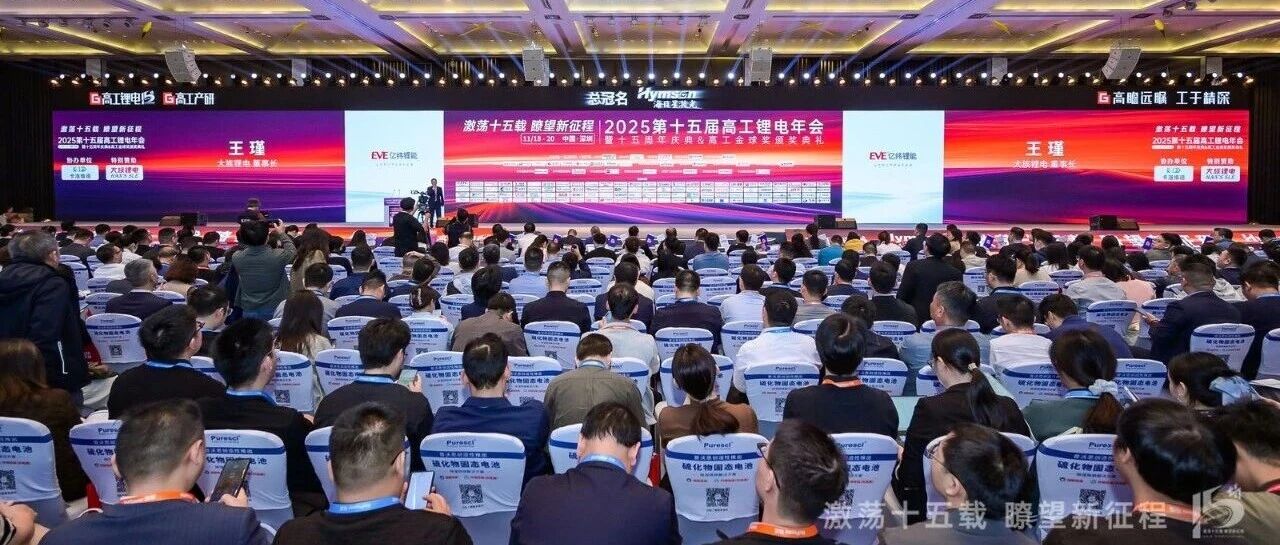
Core Insights - The Chinese lithium battery industry has experienced significant growth over the past 15 years, expanding from less than 2 GWh to over 2000 GWh, showcasing its robust development and global competitiveness [1][2]. Industry Development - The industry has produced several leading companies that rank among the top globally, highlighting China's strong industrial capabilities in lithium batteries [2]. - The future of the lithium battery sector involves facing new technological challenges, such as solid-state batteries, and establishing a global ecosystem focused on technology standards and innovative business models [3]. Event Overview - The 2025 (15th) High-Performance Lithium Battery Annual Conference was held in Shenzhen, gathering over 400 companies and more than 1200 industry leaders [4][5]. - The event featured keynote speeches from prominent figures in the lithium battery industry, discussing the future trajectory and innovations within the sector [8]. Keynote Highlights - The chairman of High-Performance Lithium Battery, Zhang Xiaofei, emphasized that the lithium battery industry is the fastest-growing sector globally, with expectations for significant growth in battery shipments by 2025 [10]. - Solid-state batteries are projected to dominate over 80% of the global market share in the next 15 years [11]. - Zhao Shengyu, chairman of Haimuxing Laser, discussed the shift from scale-driven growth to high-quality, sustainable development, emphasizing the need for improved equipment quality and service [14]. Company Innovations - Companies like Dazhu Lithium and EVE Energy are focusing on high-quality development cycles, with innovations in laser technology and battery manufacturing processes to enhance efficiency and precision [23][26]. - EVE Energy's chairman highlighted the importance of long-term strategies in battery technology, advocating for a diversified approach to meet evolving market demands [29][30]. Market Trends - The demand for lithium batteries is expected to continue rising, leading to increased prices for materials and equipment, as well as a significant expansion in production capacity [10][14]. - The industry is witnessing a transition towards high-quality, sustainable practices, with companies investing in advanced technologies and global expansion strategies [26][49]. Future Outlook - The lithium battery sector is poised for further growth, with companies like Ganfeng Lithium and Guoxuan High-Tech focusing on building comprehensive ecosystems that encompass resource extraction, battery production, and recycling [45][49]. - The emphasis on innovation and collaboration within the industry is expected to drive advancements in battery technology and contribute to the global energy transition [48][50].



华宝新能与亿纬锂能达成战略合作伙伴关系
Zheng Quan Ri Bao Wang· 2025-11-18 12:14
Core Viewpoint - The strategic partnership between Huabao New Energy and EVE Energy aims to enhance the development and commercialization of solid-state battery technology in the consumer energy storage sector, focusing on outdoor power supplies, balcony energy storage, and small household green energy systems [1][2] Group 1: Strategic Partnership - Huabao New Energy and EVE Energy formalized their strategic cooperation at Huabao's headquarters, marking a significant step in their long-term collaboration [1] - The partnership is expected to leverage both companies' strengths in the industry chain and global capacity layout, facilitating a precise connection between application scenarios and technological advancements [1] Group 2: Focus on Solid-State Batteries - The collaboration will prioritize the research and development of solid-state batteries, which are recognized for their energy density and safety advantages, addressing key challenges in consumer energy storage products [1] - Both companies plan to work together on aligning solid-state battery technology with consumer energy storage applications, ensuring that product performance meets diverse scenario requirements [1] Group 3: Industry Impact - This long-term cooperation is seen as a catalyst for upgrading the consumer energy storage industry, driving it towards higher technical standards and improved product experiences [2] - The partnership is anticipated to accelerate the global energy storage industry's transition towards greater efficiency and safety [2]
超4亿!又有2企赢得储能系统采购
行家说储能· 2025-11-18 10:20
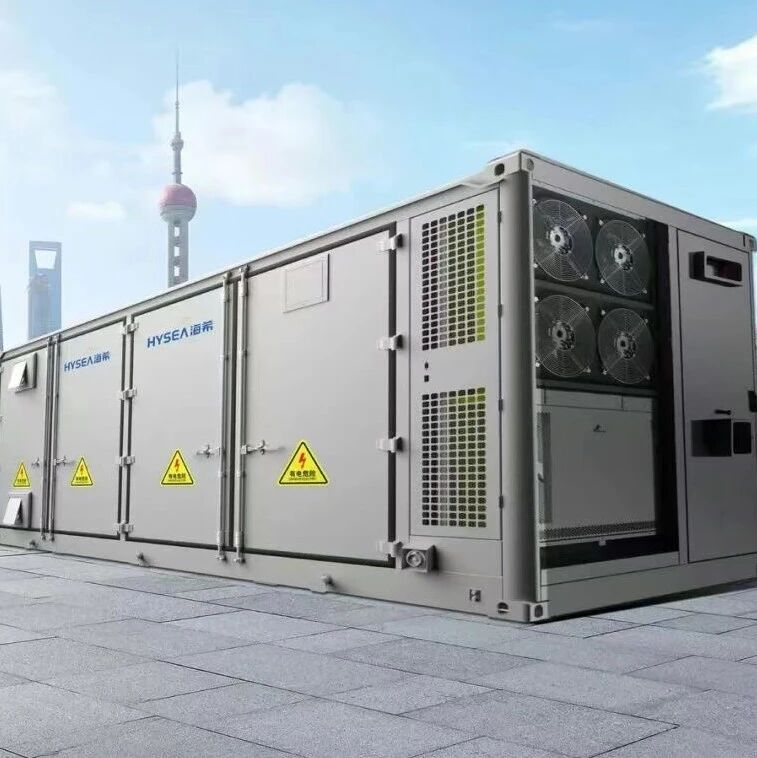
Core Insights - The article highlights recent developments in the energy storage sector, particularly focusing on contracts won by Chinese companies in the domestic market, indicating a growing trend in energy storage projects [2]. Group 1: Haixi Communications - Haixi Communications announced a procurement contract for energy storage systems worth 402 million yuan (approximately 57.5 million USD) with Zhejiang Zhaohui Energy Technology [3]. - The project involves a 400MW/800MWh energy storage system, which is a significant initiative for the Shandong provincial grid, implemented in two phases: the first phase is 194MW/388MWh costing 197.88 million yuan, and the second phase is 200MW/400MWh costing 204 million yuan, both including a 13% tax [3]. - Haixi's energy storage solutions have been applied across various industries, achieving significant cost savings, such as over 1 million yuan in annual electricity savings at a demonstration station in Zhejiang and over 30% monthly electricity savings at a manufacturing facility in Anhui [3]. Group 2: Yiwei Power - Yiwei Power is the first candidate for a competitive bidding process for a 60MWh energy storage system as part of a 100MW photovoltaic project, with a bid of 28.8864 million yuan (approximately 4.1 million USD) [4][6]. - The bid translates to a unit price of 0.481 yuan/Wh, indicating competitive pricing in the energy storage market [6]. - The project includes a total installed capacity of 120MWp for the photovoltaic system, along with a 15MW/60MWh energy storage system [7].

电力设备行业资金流出榜:阳光电源等61股净流出资金超亿元
Zheng Quan Shi Bao Wang· 2025-11-18 09:11
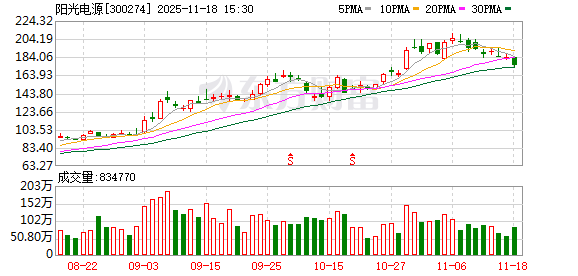
Market Overview - The Shanghai Composite Index fell by 0.81% on November 18, with only four sectors experiencing gains, led by Media and Computer industries, which rose by 1.60% and 0.93% respectively [2] - The Coal and Electric Equipment sectors had the largest declines, with drops of 3.17% and 2.97% respectively [2] Capital Flow Analysis - The main capital outflow from the two markets totaled 88.764 billion yuan, with only four sectors seeing net inflows [2] - The Computer sector had the highest net inflow of 2.730 billion yuan, followed by the Media sector with 2.434 billion yuan [2] Electric Equipment Sector Performance - The Electric Equipment sector saw a decline of 2.97%, with a net capital outflow of 24.670 billion yuan [3] - Out of 364 stocks in this sector, 49 stocks rose, while 315 stocks fell, including 9 that hit the daily limit down [3] - The top three stocks with the highest net inflow were Copper Crown Copper Foil (2.771 billion yuan), Trina Solar (1.921 billion yuan), and Weike Technology (1.407 billion yuan) [3] Top Gainers in Electric Equipment Sector - The top gainers in the Electric Equipment sector included: - Copper Crown Copper Foil: +4.42%, 7.88% turnover, 277.12 million yuan inflow - Trina Solar: +0.24%, 3.36% turnover, 191.57 million yuan inflow - Weike Technology: +3.93%, 24.35% turnover, 140.80 million yuan inflow [4] Top Losers in Electric Equipment Sector - The top losers in the Electric Equipment sector included: - Sunshine Power: -4.77%, 5.25% turnover, -2.3716 billion yuan outflow - CATL: -1.48%, 0.93% turnover, -1.7408 billion yuan outflow - Tianci Materials: -10.00%, 11.74% turnover, -1.3169 billion yuan outflow [5]




2025年前三季度 全球基站&数据中心备电 出货量 Top10
鑫椤锂电· 2025-11-18 08:08
Core Insights - The article highlights a 3% year-on-year growth in global backup power supply shipments for base stations and data centers, reaching 10 GWh from January to September 2025 [2]. Company Rankings - The top 10 companies in the global backup power supply market are listed as follows: 1. Guoxuan High-Tech 2. Nandu Power 3. EVE Energy 4. Samsung 5. Ganfeng Lithium 6. Penghui Energy 7. Geely 8. Zhongtian Energy Storage 9. Pylon Technologies 10. LG Energy [2][5].




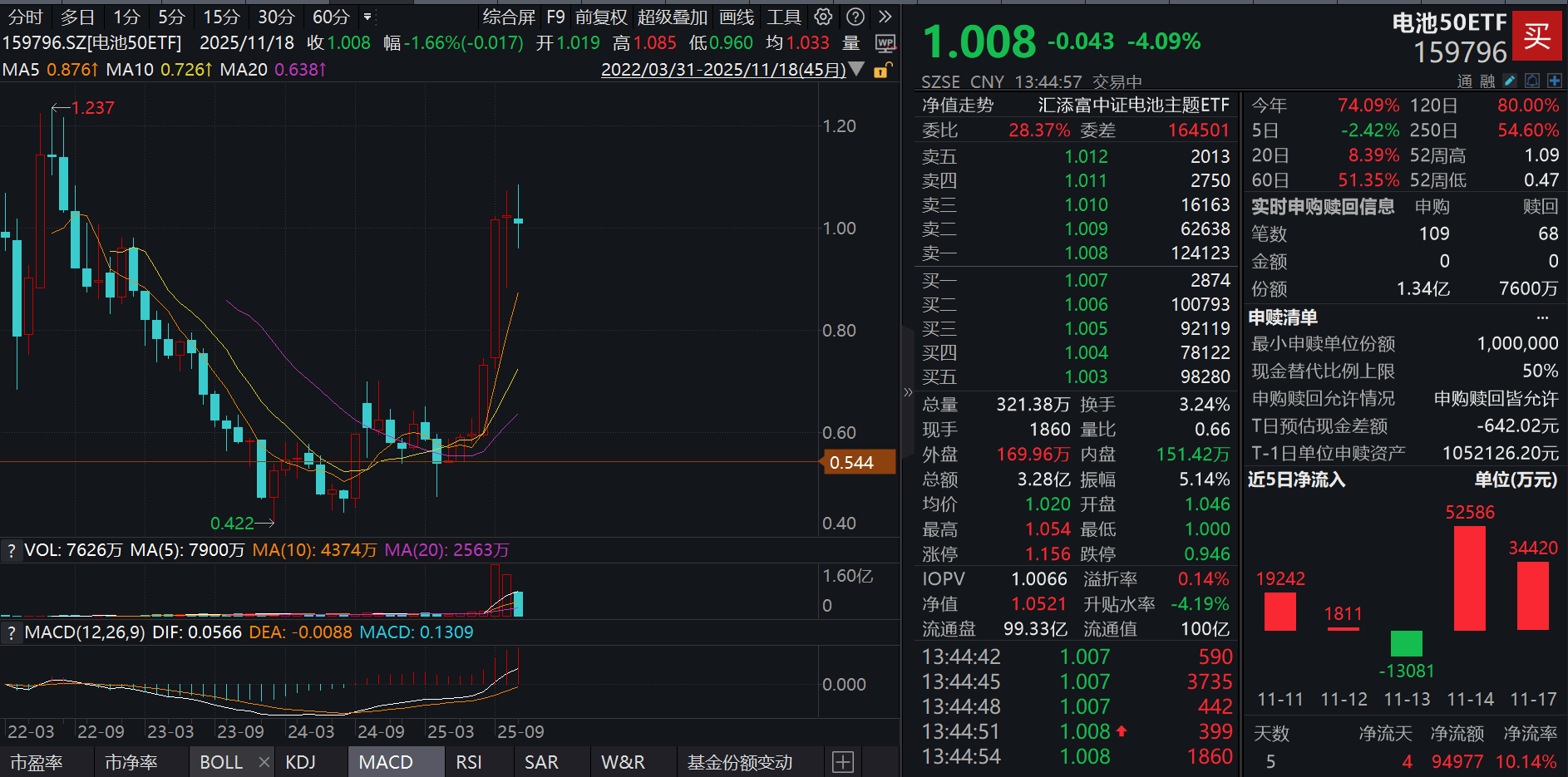
电池板块重挫,是危是机?天赐材料一度跌停!电池50ETF(159796)回调超4%,资金逆势净流入6000万元!碳酸锂期货续涨,价格传导效率提升?
Sou Hu Cai Jing· 2025-11-18 06:16
Core Viewpoint - The A-share market experienced a volatile pullback on November 18, with the battery sector facing significant declines, particularly the Battery 50 ETF (159796), which dropped over 4% despite a net inflow of 60 million yuan during the day, bringing its total inflow over the past two days to more than 870 million yuan, reaching a new high of over 10.45 billion yuan in total assets [1][3]. Market Performance - The Battery 50 ETF (159796) saw most of its constituent stocks decline, with the battery materials sector leading the losses. Notable declines included Fu Lin Precision Engineering down over 15%, Xinzhou Bang and Hunan Youneng down over 10%, and Tianqi Materials and Putailai hitting their daily limit down [3][4]. - The top ten constituent stocks of the Battery 50 ETF included major players like Longi Green Energy and CATL, with declines ranging from 2.05% to 6.47% [4]. Stock Movements - CATL's shareholder Huang Shilin plans to transfer 45.63 million shares at a price of 376.12 yuan per share, which has been fully subscribed by 16 institutional investors [4]. - The recent sell-off in battery materials coincided with a continued upward trend in lithium carbonate futures prices, which have surged from less than 70,000 yuan/ton in July to nearly 90,000 yuan/ton in November [5][7]. Industry Trends - The lithium battery upstream raw materials have been experiencing a collective price increase since July, with lithium carbonate and lithium hexafluorophosphate prices seeing significant rises, impacting the pricing of electrolytes and other components [7][8]. - The demand for negative electrode materials has also increased, with a year-on-year growth of over 15% in graphite demand, leading to price increases among major producers [8]. Storage Market Insights - The domestic energy storage market is approaching an economic inflection point, driven by the marketization of renewable energy and capacity pricing, with expectations of over 30% growth in lithium battery demand next year [9][10]. - Analysts predict that the global energy storage installation will see a growth of 50-60% next year, with significant demand expected from emerging markets [10]. ETF Investment Strategy - The Battery 50 ETF (159796) is highlighted for its high exposure to the energy storage sector, which constitutes 26% of its index, and a substantial 42% exposure to solid-state battery technology, indicating strong growth potential [11][13]. - The ETF is noted for its low management fee of 0.15% per year, making it an attractive option for investors looking to capitalize on the battery sector's growth [16].


多晶硅价格波动加剧 上市公司加大套保!
Zheng Quan Shi Bao Wang· 2025-11-18 03:41
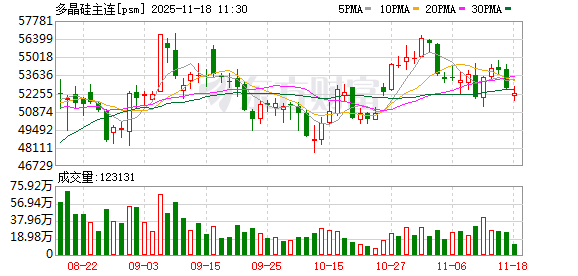
Core Viewpoint - The recent volatility in the prices of upstream raw materials, such as polysilicon, has led listed companies in the new energy sector to increase their participation in the futures market significantly, recognizing the importance of price risk management [2][3]. Group 1: Increase in Hedging Activities - In October alone, 458 listed companies announced hedging-related activities, a 2.3-fold increase compared to the same period in 2024, indicating a growing awareness of price risk management [2][3]. - Companies like JinkoSolar and EVE Energy have significantly raised their hedging limits, with JinkoSolar increasing its margin requirements from 660 million yuan to 1.5 billion yuan, and EVE Energy raising its limits from 350 million yuan to 1 billion yuan [3]. - The trend suggests that the number of companies participating in hedging activities is expected to exceed 2,000 by the end of the year [2][7]. Group 2: Polysilicon Price Volatility - Polysilicon prices have experienced significant fluctuations, dropping from 56,000 yuan per ton at the beginning of the year to 34,400 yuan per ton by the end of June, a decline of 38.6% [4]. - Following a rebound driven by "anti-involution" policies, polysilicon prices rose to 47,100 yuan per ton by the end of July, marking a 36.9% increase within a month [4]. - The futures market for polysilicon saw a record high of 57,945 yuan per ton on September 5, reflecting a 91% increase from late June [4]. Group 3: Industry Dynamics and Strategies - The "anti-involution" policy has created an uneven benefit distribution across the supply chain, with upstream polysilicon prices rising first before impacting downstream sectors like silicon wafers and battery cells [6]. - The domestic polysilicon production is projected to be around 382,000 tons in Q4, a slight increase of 3% year-on-year, while the total production for 2025 is expected to drop by 27.3% to approximately 1.34 million tons [6]. - Analysts emphasize the importance of differentiated strategies and risk control for companies, suggesting that production firms should focus on selling hedges, while downstream companies should engage in buying hedges [5][6]. Group 4: Market Participation and Trends - The number of A-share listed companies involved in hedging activities has surged, with 312 companies publishing 473 hedging-related announcements in October, a year-on-year increase of 231.91% [7]. - Overall, 1,737 A-share listed companies have reported hedging activities in the first ten months of the year, reflecting a 15.6% increase compared to the previous year [7]. - The electronics, basic chemicals, and power equipment sectors have the highest number of companies participating in hedging, with participation rates exceeding 40% in several industries [7].

多晶硅价格过山车,新能源企业加码期货
Huan Qiu Wang· 2025-11-18 03:39
Core Viewpoint - The renewable energy industry is undergoing a significant pressure test due to drastic fluctuations in upstream raw material prices, particularly polysilicon, which has seen a dramatic price drop followed by a rapid rebound, leading to a survival competition among companies focused on risk management [1][2]. Group 1: Price Fluctuations and Industry Impact - Polysilicon prices fell from 56,000 yuan/ton at the beginning of 2025 to 34,400 yuan/ton by the end of June, a decline of nearly 40%, resulting in six consecutive quarters of deep losses for the industry [1]. - Following a policy push for healthy competition, prices rebounded sharply, increasing by 36.9% within a month, with futures prices reaching a new high in September [1]. Group 2: Increased Reliance on Hedging Tools - Major companies in the renewable energy sector are significantly increasing their hedging limits, indicating a strong commitment to risk mitigation [2]. - JinkoSolar announced an increase in its futures hedging margin limit from 660 million yuan to 1.5 billion yuan, with a maximum contract value of 10.3 billion yuan [2]. - EVE Energy raised its commodity hedging margin and premium limits from 350 million yuan to 1 billion yuan, with maximum contract values increasing from 3.5 billion yuan to 8.5 billion yuan [2]. Group 3: Broader Market Trends - The trend of embracing futures markets is not limited to the renewable energy sector but is becoming a consensus among listed companies in China, with 458 companies announcing hedging activities in October 2025, a 2.3-fold increase from the previous year [3]. - A total of 1,737 A-share listed companies participated in hedging activities in the first ten months of the year, a year-on-year increase of 15.6% [3]. - Manufacturing sectors such as electronics, basic chemicals, and power equipment are the main participants, with over 50% participation from industries like non-ferrous metals and home appliances [3].

亿纬锂能股价跌5.03%,恒越基金旗下1只基金重仓,持有19.8万股浮亏损失83.16万元
Xin Lang Cai Jing· 2025-11-18 03:39
Group 1 - The core point of the news is that EVE Energy Co., Ltd. experienced a 5.03% decline in stock price, trading at 79.25 CNY per share, with a total market capitalization of 162.125 billion CNY [1] - EVE Energy's main business includes the research, production, and sales of consumer batteries (including lithium primary batteries, small lithium-ion batteries, and ternary cylindrical batteries) and power batteries (including electric vehicle batteries and energy storage batteries) [1] - The revenue composition of EVE Energy is as follows: power batteries account for 45.26%, energy storage batteries 36.56%, consumer batteries 18.03%, and others 0.16% [1] Group 2 - From the perspective of major fund holdings, one fund under Hengyue Fund has a significant position in EVE Energy, with 198,000 shares held, representing 7.33% of the fund's net value, making it the third-largest holding [2] - The Hengyue Advantage Select Mixed Fund (011815) has achieved a return of 144.74% year-to-date, ranking 3rd out of 8140 in its category, and a one-year return of 151.33%, ranking 4th out of 8057 [2] - The fund manager, Wu Haining, has been in position for 2 years and 227 days, with the fund's total asset size at 262 million CNY, achieving a best return of 88.56% and a worst return of -42.19% during his tenure [3]