
SUNWODA(300207)

Search documents
人形机器人电池的技术、生态与经济账
2 1 Shi Ji Jing Ji Bao Dao· 2025-08-08 05:13
Group 1: Market Overview - The humanoid robot market is expected to reach a scale of 6.339 billion yuan by 2025, with projections indicating exponential growth, potentially reaching 38 billion USD by 2035 [2] - The current growth is driven by the urgent demand for automation and intelligent upgrades in manufacturing and logistics sectors, with significant contributions from household services and healthcare applications, which may account for 45% of the market [2] Group 2: Battery Technology Importance - Batteries are crucial for humanoid robots, serving as their "heart" and determining their economic viability and application boundaries [3] - Major battery manufacturers in China, such as CATL and A123 Systems, are actively incorporating humanoid robots into their strategic planning [3] Group 3: Cost Structure and Demand - The battery cost in humanoid robots is relatively low, estimated at around 0.5% of the total cost for Tesla's Optimus robot, but the demand potential is significant, with an expected need for 12.5 GWh of batteries by 2030 [4][5] - The performance of batteries directly impacts the robots' operational efficiency, including their working hours and maintenance frequency, making long-term economic considerations essential [5] Group 4: Current Limitations and Innovations - Current humanoid robots typically have a battery life of only 3 to 6 hours, which limits their operational capabilities and increases operational costs due to frequent charging [5][6] - Innovations in battery technology, such as solid-state batteries, are being pursued to enhance energy density and extend operational time, with a target of achieving 8 hours of runtime [7][8] Group 5: Performance Requirements - Humanoid robots require batteries that can provide stable power output and high energy density, with current lithium batteries primarily using cylindrical cells with energy densities between 250-300 Wh/kg [6][8] - The need for high power output and energy efficiency is critical, especially for complex movements, necessitating advancements in battery technology to meet these demands [8][9] Group 6: Customization and Industry Collaboration - Companies like A123 Systems are developing customized battery solutions to meet the unique structural needs of humanoid robots, focusing on lightweight materials and hybrid battery architectures [9] - Collaboration with industry partners is emphasized to accelerate the commercialization of humanoid robots and establish industry standards [9]


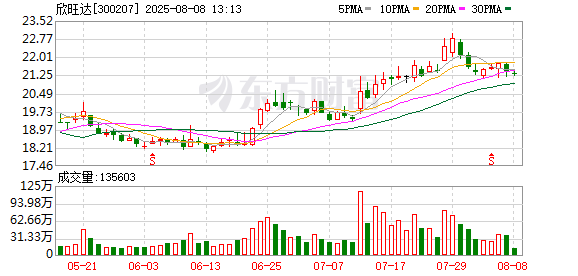
500亿深圳电池巨头赴港上市 加码海外产能布局
2 1 Shi Ji Jing Ji Bao Dao· 2025-08-08 00:08
21世纪经济报道记者 林典驰 实习生林绮蓓 深圳报道 业务横跨消费电池、储能、动力电池的欣旺达(300207.SZ)要冲刺港交所了。 近期,欣旺达正式向港交所递交H股上市申请,这家锂电池龙头,意图借助香港拓展全球资本版图。 欣旺达成立于1997年,由王明旺与堂弟王威共同创立,初期为电池OEM、ODM供应商。公司抓住了锂 电池在消费电子领域的崛起,成功于2011年在深交所上市,此后公司相继拓展了动力电池和储能电池业 务,全年营收站上500亿大关。 欣旺达储能系统业务2024年的销量达到9.6GWh,同比增加108.7%,目前已经和2024年出货量计全球前 五的交流侧储能系统供应商建立了业务关系。 欣旺达在消费电池长期领先,动力电池连同国轩高科(002074.SZ)、中创新航(3931.HK)、蜂巢能源等 企业位居第二梯队,储能系统近年来增速明显,但对营收的贡献程度有限。 电池量增价减 近年来,受限于市场周期影响,欣旺达整体营收略有起伏,根据招股书,欣旺达2022年至2024年,营收 分别是为521.6亿元、478.6亿元及560.2亿元,复合年增长率为3.6%。 受季节影响,消费电池、动力电池和储能系统的第一季 ...
562kWh!大容量储能柜将主导工商储市场?
行家说储能· 2025-08-06 10:51
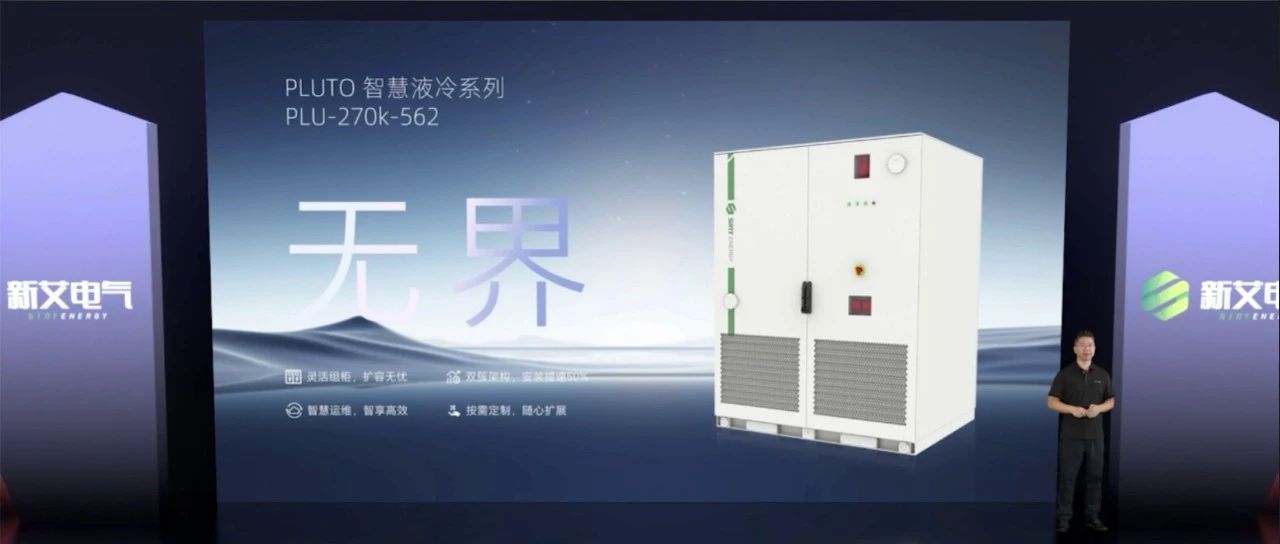
Core Insights - The article highlights the launch of the new PLUTO liquid-cooled energy storage solution by New Ai Electric, emphasizing its versatility and efficiency in commercial and industrial applications [3][4] - There is a growing trend in the energy storage industry towards larger capacity storage cabinets, with over 22 companies introducing systems with capacities exceeding 500kWh [6][7] Group 1: New Product Launches - New Ai Electric has introduced the PLUTO liquid-cooled series, specifically the PLU-270k-562 storage solution, which allows for flexible configurations and applications [3][4] - The PLU-270k-562 system features a modular design that supports various capacities (261/281kWh for single cabinets and 522/562kWh for combined setups), enhancing installation efficiency by 50% and reducing footprint by 30% [4][6] Group 2: Industry Trends - The shift towards larger capacity energy storage systems is evident, with more than 60% of companies offering products in the 500kWh to 522kWh range, and over 80% utilizing 314Ah battery cells [6][7] - Companies like Sungrow Power, EVE Energy, and others have launched systems with capacities around 835kWh to 840kWh, indicating a significant move towards higher capacity solutions for industrial applications [6][8] Group 3: Product Specifications - The article provides a detailed comparison of various energy storage systems, listing capacities and specifications from different companies, such as Sungrow Power's 836kWh system and EVE Energy's 836kWh modular cabinet [8] - New Ai Electric's PLUTO series is designed to meet diverse customer needs, allowing for customizable configurations based on performance and cost requirements [4][6]



eVTOL27.5亿美金大单背后,30GWh电池需求浮现
高工锂电· 2025-08-06 10:14
Core Viewpoint - The eVTOL (electric Vertical Take-Off and Landing) industry is on the brink of commercial explosion, driven by significant order inflows and accelerated airworthiness certification processes, with a projected demand for lithium batteries reaching 30GWh by 2030, indicating a new growth avenue for the lithium battery sector [2][4][8][15]. Group 1: eVTOL Orders and Market Dynamics - In July, significant orders were secured by eVTOL companies, with a total value of $2.75 billion, including a $1 billion deal for 350 E20 eVTOLs and a $1.75 billion order for 500 VE25-100 eVTOLs [2][3]. - As of 2025, eVTOL companies have reported over 1,500 intent orders, reflecting a robust market interest and potential for growth [2]. Group 2: Supply Chain and Cost Advantages - The rapid order growth is attributed to the maturity of the domestic supply chain in China, which offers cost advantages of 30%-50% lower than Western counterparts, and a significantly reduced manufacturing cost [5]. - eVTOL is expected to share 80% of its supply chain with the electric vehicle industry, allowing for the transfer of technology and experience, thus reducing development costs and time [5]. Group 3: Battery Technology and Requirements - The battery constitutes 20%-40% of the eVTOL's overall cost, and as the market scales, the demand for battery replacements will create a stable growth opportunity [8]. - eVTOL requires batteries that balance energy density, power density, and safety, with a target energy density of over 350Wh/kg for effective urban commuting [9][10]. Group 4: Solid-State Battery Development - Solid-state batteries are emerging as a key solution for eVTOL, offering high energy density and safety features that align with the industry's needs [12]. - Leading battery manufacturers are actively developing solid-state batteries, with companies like CATL and Aulton already making significant advancements in this area [13][14]. Group 5: Future Outlook - The commercial wave of eVTOL is becoming evident, with dense orders and accelerated certification processes pushing the industry from concept to reality [15]. - The collaboration between battery technology advancements and the eVTOL market is expected to deepen, paving the way for integration into urban transportation systems [15].


欣旺达赴港IPO,为小米、荣耀供应消费类电池,业绩存在波动
Ge Long Hui· 2025-08-06 07:49
Core Viewpoint - XINWANDA, the largest mobile battery manufacturer globally, is seeking to go public on the Hong Kong Stock Exchange, aiming to raise funds for international expansion and technological upgrades [1][8]. Company Overview - XINWANDA was founded in 1997 and has grown to become a significant player in the lithium battery industry, focusing on research, design, manufacturing, and sales of various battery types [4][10]. - The company has a market capitalization of approximately 40.1 billion RMB as of August 6, 2023 [4]. Financial Performance - XINWANDA's revenue for 2022, 2023, 2024, and the first quarter of 2025 was approximately 52.16 billion RMB, 47.86 billion RMB, 56.02 billion RMB, and 12.29 billion RMB, respectively [23]. - The net profit for the same periods was about 7.63 billion RMB, 3.31 billion RMB, 5.34 billion RMB, and 0.3 billion RMB, indicating significant fluctuations in profitability [23]. - The company has distributed dividends totaling nearly 500 million RMB over the past three years [8]. Product Segmentation - XINWANDA's revenue is primarily derived from consumer batteries, contributing over 53% of total income, followed by power batteries at over 20% [11][12]. - The average selling price of consumer batteries decreased from 66.2 RMB per unit in 2022 to 46 RMB per unit in 2025, while power batteries dropped from 1.1 RMB per Wh to 0.5 RMB per Wh during the same period [24][23]. Market Position - XINWANDA holds a 34.3% market share in the global mobile battery market, making it the largest supplier, and a 21.6% share in the laptop and tablet battery market, ranking second [25]. - The company has established partnerships with major clients such as Xiaomi, Lenovo, and OPPO, with significant revenue concentration from its top five customers [13][16]. Industry Trends - The global lithium battery market is experiencing growth, with consumer battery shipments projected to increase from 3.936 billion units in 2020 to 4.159 billion units in 2024, and power battery shipments expected to rise from 183 GWh to 1002 GWh in the same timeframe [20][22]. - The lithium-ion battery technology is favored for its safety, reliability, and environmental benefits, making it a mainstream choice across various applications [19].

动力电池业务挤压欣旺达谋港上市补血
Xin Lang Cai Jing· 2025-08-05 21:08
Core Viewpoint - The company is seeking to raise funds through a Hong Kong IPO to support its struggling power battery business amid fierce price competition in the Chinese market [2][3]. Group 1: Company Overview - XINWANDA Electronics Co., Ltd. was founded in 1997 and initially focused on consumer batteries, later entering the power battery sector in 2014 [4]. - The company has become a leading player in consumer batteries and has seen significant growth opportunities in the rapidly developing Chinese electric vehicle (EV) market [4]. - XINWANDA's power battery revenue is projected to grow from 12.7 billion yuan in 2022 to 15.1 billion yuan (approximately 2 billion USD) by 2024 [4]. Group 2: Market Position and Challenges - The company currently holds a 2.87% market share in the Chinese EV battery market, ranking seventh, while CATL and BYD dominate with a combined market share of 67% [5]. - Despite maintaining profitability through its consumer battery business, XINWANDA's power battery segment has been struggling, with a gross margin of only 12.9% compared to 20.2% for consumer batteries [5]. - The power battery business has incurred losses, with a reported loss of 1.56 billion yuan in 2023 alone [5]. Group 3: Strategic Initiatives - To navigate the challenging market landscape, XINWANDA plans to accelerate its overseas expansion, particularly as the domestic EV market becomes saturated [6]. - The company has initiated a global production capacity layout, including a significant battery production base in Thailand with an investment exceeding 10 billion yuan [6]. - XINWANDA aims to enhance its competitive edge by increasing R&D investments to create differentiated technology barriers [6].
欣旺达: 关于2024年限制性股票激励计划第一个归属期归属结果暨股份上市的公告
Zheng Quan Zhi Xing· 2025-08-05 16:20
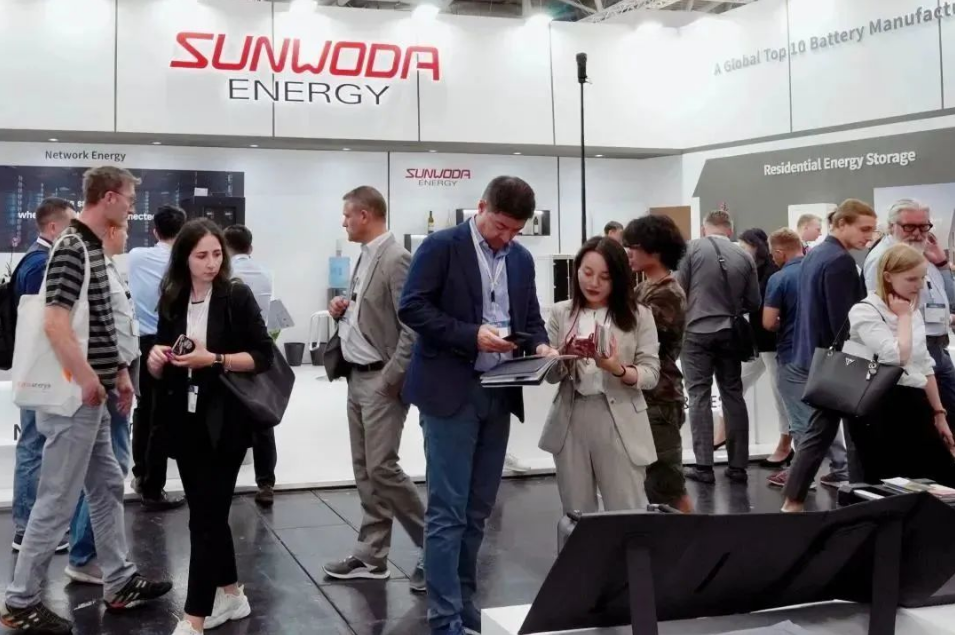
证券代码:300207 证券简称:欣旺达 公告编号: <欣> 2025-057 欣旺达电子股份有限公司 关于2024年限制性股票激励计划 第一个归属期归属结果暨股份上市的公告 本公司及董事会全体成员保证信息披露内容的真实、准确和完整,没有虚假 记载、误导性陈述或重大遗漏。 重要内容提示: 比例为 0.38%。 欣旺达电子股份有限公司(以下简称"公司")于 2025 年 7 月 1 日分别召 开第六届董事会第十八次会议及第六届监事会第十八次会议,审议通过了《关于 理了 2024 年限制性股票激励计划第一个归属期股份登记工作,现将相关情况公 告如下: 一、本激励计划简述 公司《2024 年限制性股票激励计划(草案)》(以下简称"《激励计划》") 及其摘要已经公司第六届董事会第七次会议、第六届监事会第七次会议及公司 (一)授予限制性股票的股票来源 本计划采用的激励工具为限制性股票(第二类限制性股票),涉及的标的股 票来源于从二级市场回购的公司 A 股普通股股票。 (二)本激励计划授予的限制性股票在各激励对象间的分配情况如下表所 示(调整前): | | | | | 占本计划 | | | | --- | --- | - ...
动力电池业务挤压 欣旺达谋港上市补血
Xin Lang Cai Jing· 2025-08-05 13:55
Core Viewpoint - The company, XINWANDA, is seeking to raise funds through a Hong Kong IPO to support its struggling power battery business amid fierce price competition in the industry [2][3]. Group 1: Company Overview - XINWANDA was founded in 1997 and initially focused on consumer batteries, becoming a leading manufacturer in the mobile phone battery sector by 2020 [3]. - The company entered the power battery market in 2014 and has seen significant growth opportunities due to the rapid development of China's new energy vehicle industry [3]. - In 2022, XINWANDA's power battery business generated revenue of 12.7 billion yuan, projected to grow to 15.1 billion yuan (approximately 2 billion USD) by 2024 [3]. Group 2: Financial Performance - Despite overall profitability, XINWANDA's power battery segment has been operating at a loss, with a reported loss of 1.56 billion yuan in 2023 [5]. - The gross margin for the power battery business was only 12.9% in Q1 2023, compared to 20.2% for its consumer battery segment [5]. - The company has maintained profitability over the past decade, with Q1 2023 revenue of 12.3 billion yuan and a net profit of 387 million yuan, reflecting a year-on-year increase of 21% [5]. Group 3: Market Position and Competition - XINWANDA holds a 2.87% market share in China's electric vehicle battery market, ranking seventh behind industry leaders CATL and BYD, which together account for 67% of the market [4]. - The company faces intense competition and pricing pressures, leading to a challenging environment for profitability in the power battery sector [5]. Group 4: Strategic Initiatives - XINWANDA plans to accelerate its overseas expansion due to the saturation of the domestic electric vehicle market, with 40% of its overall sales coming from international markets in Q1 2023 [6]. - The company is investing over 10 billion yuan in a large battery production facility in Thailand, which has received local government approval [7]. - To navigate the price war, XINWANDA aims to increase R&D investment to build differentiated technology and achieve a pricing advantage [7].
2025起点户储及便携式储能电池巡回采访活动火热进行中!
起点锂电· 2025-08-05 10:36
Core Viewpoint - The article emphasizes the importance of the 2025 lithium battery research and interview activities, focusing on identifying quality battery brands and products in the energy storage sector [2][4]. Group 1: Research Activities - The 2025 lithium battery research and interview activities will take place from August 4 to August 22, 2025, covering regions such as Shenzhen, Dongguan, and Huizhou, with visits to major companies like BYD, Gotion High-tech, and EVE Energy [7]. - The research process includes factory visits, executive introductions, and discussions on industry trends and collaboration opportunities [6][5]. Group 2: Sponsorship Opportunities - Sponsorship options are available for the research activities, including full participation for over 20 sponsors and advertising placements in the WeChat account for a monthly fee of 10,000 [8]. - Sponsors will receive benefits such as a simplified version of the 2025 Global Lithium Battery White Paper and promotional opportunities during the research activities [8]. Group 3: Previous Research Reviews - The article mentions past research visits to key players in the lithium battery industry, including BYD, CATL, and EVE Energy, highlighting the ongoing engagement with leading companies [10][11].



欣旺达(300207) - 关于2024年限制性股票激励计划第一个归属期归属结果暨股份上市的公告
2025-08-05 09:17
证券代码:300207 证券简称:欣旺达 公告编号:<欣>2025-057 欣旺达电子股份有限公司 关于2024年限制性股票激励计划 第一个归属期归属结果暨股份上市的公告 公司《2024 年限制性股票激励计划(草案)》(以下简称"《激励计划》") 及其摘要已经公司第六届董事会第七次会议、第六届监事会第七次会议及公司 2024 年第四次临时股东大会审议通过,主要内容如下: 本公司及董事会全体成员保证信息披露内容的真实、准确和完整,没有虚假 记载、误导性陈述或重大遗漏。 重要内容提示: 1、本次限制性股票归属数量:707.9629 万股,占归属前上市公司总股本的 比例为 0.38%。 2、本次限制性股票归属价格:6.63 元/股(调整后)。 3、本次归属限制性股票总人数:690 名激励对象。 4、股票来源:公司从二级市场回购的公司 A 股普通股股票。 5、本次归属的限制性股票上市流通日:2025 年 8 月 5 日。 欣旺达电子股份有限公司(以下简称"公司")于 2025 年 7 月 1 日分别召 开第六届董事会第十八次会议及第六届监事会第十八次会议,审议通过了《关于 2024 年限制性股票激励计划第一个归属期归 ...