EMPYREAN(301269)

Search documents
半导体行业观察:EDA断供倒逼国产替代;华大九天、概伦电子并购提速
Jin Rong Jie· 2025-06-04 06:42
Core Insights - The U.S. has escalated its semiconductor technology blockade against China, focusing on the supply of EDA tools and IP cores, causing significant disruptions in the industry chain [1] - Domestic EDA companies are experiencing a surge in stock prices and demand, with firms like Huada Jiutian and Gai Lun Electronics accelerating their technological advancements through mergers and acquisitions [1][2] Group 1: Impact of U.S. Restrictions - The U.S. Department of Commerce has issued export restrictions to major EDA companies, including Synopsys, Cadence, and Siemens EDA, halting their supply of advanced EDA tools to China [2] - EDA tools are critical for chip design, and the supply disruption significantly impacts the entire chip design, manufacturing, and testing processes, particularly affecting digital chip design and advanced process development [2] - Approximately 90% of global EDA library resources are controlled by the aforementioned three companies, creating challenges for Chinese chip design firms in accessing mature IP libraries [2] Group 2: Opportunities for Domestic EDA Companies - Domestic EDA companies are seizing short-term market opportunities, with a notable increase in customer inquiries and orders [2] - Huada Jiutian reported a projected revenue of 1.22 billion yuan for 2024, reflecting a year-on-year growth of 20.98%, maintaining its leading market share among domestic firms [2] - Gai Lun Electronics has indicated that its product performance has surpassed some international competitors, lowering the barriers for user transition to domestic tools [2] Group 3: Challenges and Technological Gaps - Despite advancements in areas like analog circuits and memory design, high-end digital chip design and system-level verification still rely on international tools [3] - Experts highlight that EDA tool development requires long-term industry collaboration, and innovations in isolated tools cannot meet the comprehensive demands of the entire process [3] - Companies like Huada Jiutian and Gai Lun Electronics are making strategic acquisitions to enhance their capabilities, but significant technological gaps remain [3] Group 4: Mergers and Acquisitions Strategy - Mergers and acquisitions are becoming a strategic choice for domestic EDA companies to quickly address technological shortcomings [4] - Huada Jiutian has acquired several companies to build a comprehensive platform covering all design processes, while Gai Lun Electronics has integrated capabilities through multiple acquisitions [4] - Industry analysis suggests that the history of international EDA giants is marked by mergers, and domestic firms are following this trend to shorten the technology catch-up cycle [4] Group 5: Policy and Market Growth - Local governments are establishing EDA industry funds to promote the market application of domestic tools [4] - The domestic EDA market size is projected to grow from 12 billion yuan in 2023 to 44.56 billion yuan by 2026, driven by ongoing policy support [4] - Companies like Guangli Micro are expanding their global presence and investing in semiconductor industry funds to create a collaborative ecosystem from design to production [4] Group 6: Industry Collaboration - Domestic EDA companies need to deeply integrate with chip design firms and foundries to refine tool performance through practical projects [5] - Huada Jiutian has served nearly 700 clients across various design scenarios, while Gai Lun Electronics has established partnerships with international clients like Samsung and SK Hynix [5] - Analysts emphasize that expanding the user base will accelerate tool optimization, but full process replacement will require long-term investment [5]


这支基金“国家队”收获296个IPO
投中网· 2025-06-03 06:36
Core Viewpoint - The article emphasizes the role of the State Investment Fund (国投系基金) in accelerating industrial cultivation through strategic investments in key emerging industries, showcasing its significant contributions to the development of various sectors such as integrated circuits, smart connected vehicles, and biomedicine [2][3][4]. Group 1: Investment Strategy and Achievements - The State Investment Fund has successfully invested in 1,175 projects, aiding 296 companies to go public, including 143 on the Sci-Tech Innovation Board, and has helped break through 323 key core technologies [2]. - The fund has a management scale exceeding 2.7 trillion yuan, with over 50 funds under management, including more than 10 national-level government investment funds [2][4]. - The fund's investments have led to the creation of 319 national-level "little giant" enterprises, demonstrating its effectiveness in nurturing innovative companies [2]. Group 2: Focus Areas and Sectoral Impact - The fund focuses on strategic emerging industries such as integrated circuits, smart connected vehicles, biomedicine, and biomanufacturing, contributing to the construction of a modern industrial system [8][10]. - In the integrated circuit sector, the fund has invested 27.8 billion yuan across 336 projects, supporting companies like Tsinghua Unigroup and Cambricon Technologies to address critical technology bottlenecks [8][9]. - In the smart connected vehicle sector, the fund has invested 29.8 billion yuan in leading companies like CATL and BYD, facilitating the development of a closed-loop ecosystem in electric vehicles [9][10]. Group 3: Support for Private Enterprises - The fund has adopted a "mother fund + direct investment" model, managing over 120 billion yuan, which has mobilized over 1 trillion yuan to support technological innovation and foster around 4,000 innovative technology enterprises [12][13]. - More than two-thirds of the fund's investments are directed towards private enterprises, creating a new pattern of collaboration between state-owned capital and the private economy [13][14]. - The fund provides not only financial support but also resources and advantages to enhance the operational capabilities of invested enterprises, thereby promoting their innovation and growth [13].





EDA限制措施的潜在受益方
2025-06-02 15:44
Summary of Empyrean Technology Co Ltd Conference Call Company and Industry Overview - **Company**: Empyrean Technology Co Ltd (Ticker: 301269.SZ) - **Industry**: Greater China Technology Semiconductors - **Market Cap**: Rmb63,122.4 million - **Stock Rating**: Equal-weight - **Price Target**: Rmb115.00 - **Current Price (as of May 28, 2025)**: Rmb116.26 - **Average Daily Trading Value**: Rmb495 million Key Points and Arguments 1. **Impact of EDA Restrictions**: The Trump Administration has reportedly requested leading Electronic Design Automation (EDA) companies, including Synopsys and Cadence, to stop shipping tools to China. This has led to significant stock declines for these companies, with Cadence down 10.7% and Synopsys down 9.6% [1][2] 2. **Market Share Dynamics**: In 2024, Cadence, Synopsys, and Siemens held 82% of China's EDA market share, while Empyrean Technology accounted for 10%. If U.S. export restrictions tighten, it may accelerate the adoption of local EDA tools in China, potentially benefiting Empyrean [2] 3. **Financial Projections**: - **Revenue Estimates**: - 2024: Rmb1,222 million - 2025: Rmb1,558 million - 2026: Rmb2,000 million - 2027: Rmb2,666 million - **EPS Estimates**: - 2024: Rmb0.20 - 2025: Rmb0.66 - 2026: Rmb1.16 - 2027: Rmb1.65 [4] 4. **Valuation Methodology**: The base case value is derived from a residual income model, assuming a constant cost of equity at 8% and medium-term growth rates of 25% [6] 5. **Risks**: - **Upside Risks**: Faster-than-expected breakthroughs in digital IC EDA, fewer restrictions on semi equipment access, and an increase in local EDA talent [8] - **Downside Risks**: Slower breakthroughs in EDA, more restrictions on semi equipment access, and a drought in local EDA talent [8] Additional Important Information - **Earnings Growth**: The company is expected to see significant earnings growth, with EPS projected to increase from Rmb0.20 in 2024 to Rmb1.65 by 2027 [4] - **Market Position**: Empyrean's current market position may improve if local EDA tools gain traction due to geopolitical tensions affecting foreign EDA companies [2] - **Analyst Coverage**: The report includes multiple analysts from Morgan Stanley, indicating a robust research backing for the company's outlook [3] This summary encapsulates the critical insights from the conference call regarding Empyrean Technology Co Ltd and the broader semiconductor industry context.
美国全面断供EDA,谁影响最大?谁却没影响?
是说芯语· 2025-06-02 09:19
其实,老美拿着EDA搞事情,已经很多年了,之前是点对点,针对特定的国内单位和公司。 比如说,2018年, 美国 禁止 中兴 使用EDA工具。再比如, 2019年,华为海思 被列入实 体清单后,被迫切断与美国EDA公司的合作。这次就明确了针对全部中国客户。 以下文章来源于龙科多 ,作者龙科多 龙科多 . 深度科技观察,聚焦半导体、操作系统等底层技术。内容全平台发布。 今天聊聊最新的美国EDA禁令。龙科多认为,美国此举基本无法起到多少制裁作用, 利好国 产EDA发展 。但这个事,还是值得具体说道说道。 最近,《纽约时报》 等多个外媒称,美国商务部已向包括Cadence、新思科技和西门子等全 球领先的EDA公司发出通知,要求停止向中国供应EDA技术。 Cadence、新思科技 都是美国公司,西门子是德国公司。消息一出,国内还是非常关注。有 一些人士认为不大可能,认为报道不准确。 不过,外媒陆续报道 ,上述三家EDA公司都对外发布公告,表示收到了美方的通知。这下, 基本做实了。 EAD工具,主要是用于 半导体制造测试的设计和验证,以及监控性能和质量。 如果再细分, 包括 模拟IC设计与验证、数字IC设计与验证,晶圆制 ...



挨骂也要说:美国EDA全面暂停,中国该如何应对
是说芯语· 2025-06-01 09:13
Core Viewpoint - The recent BIS requirement for EDA companies to suspend all business with Chinese clients is significant, but its actual impact may be limited due to the presence of numerous domestic EDA companies in China [1][4]. Group 1: EDA Market Overview - The global EDA market is dominated by three major companies, which account for over 70% of the market share, and even more than 80% in China [1][2]. - Despite the dominance of these three companies, there are over 60 domestic EDA companies in China, which is a surprising number that exceeds the total number of global EDA firms [2][3]. Group 2: Challenges for Domestic EDA - Domestic EDA tools have been developed, but their usability and effectiveness remain questionable, particularly in advanced process nodes [2][3]. - The EDA industry faces a paradox where tools that are less used tend to be of lower quality, making it difficult for new entrants to improve their offerings without substantial industry adoption [3][4]. Group 3: Implications of BIS Regulations - The BIS regulations could provide an opportunity for domestic EDA companies to gain traction as fabless companies in China may have no choice but to use local tools [4][5]. - However, the complete reliance on domestic technology without the ability to utilize imported technology could lead to significant setbacks for the Chinese semiconductor industry [5][6]. Group 4: Current State of Semiconductor Production - The current ability to design and produce chips in China relies heavily on imported equipment and materials, indicating that a complete decoupling from foreign technology is not feasible at this time [6][7]. - The use of imported EDA tools is critical for the success of Chinese fabless companies, as they require close collaboration with foundries for design verification [6][7]. Group 5: Long-term Concerns - There is a growing concern that the window for utilizing foreign technology is closing, which could pose a significant risk if domestic capabilities do not catch up in time [9][10]. - The industry must accelerate the development of domestic technologies while also finding ways to extend the use of imported technologies as long as possible [9][10].

EDA:国产替代的幻觉与万亿鸿沟的真相
是说芯语· 2025-05-31 13:27
Core Viewpoint - The article discusses the significant impact of the EDA supply ban initiated by the Trump administration, highlighting the contrasting perspectives within the industry regarding the capabilities of domestic EDA tools and the challenges faced in achieving true competitiveness against established international giants [1][3]. Group 1: Market Position and Performance - The current market share of domestic EDA tools is only 11.5%, primarily in areas like analog circuits and yield testing, with a less than 30% localization rate for core digital chip design tools [5]. - Major international EDA companies like Synopsys and Cadence have seen substantial market capital losses, with Synopsys losing approximately $8.2 billion and Cadence about $8 billion in a single day, reflecting the volatility and sensitivity of the market [6][7]. - The revenue of Synopsys for 2024 is projected at $5.3 billion (approximately 38.3 billion RMB), while the revenue of domestic leader Huada Jiutian is only 1.22 billion RMB, representing just 3.2% of Synopsys' revenue [13]. Group 2: Challenges in Domestic EDA Development - Domestic EDA tools are reported to have longer verification cycles and lower yield rates compared to their international counterparts, with one engineer noting that using domestic tools for 28nm chip design resulted in a verification cycle three times longer than Synopsys and a 15% lower yield [6]. - The profitability of domestic EDA companies is significantly lower, with Synopsys achieving a net profit margin of 36.5%, while Huada Jiutian barely breaks even, indicating a substantial gap in operational efficiency and market trust [13][14]. - The domestic EDA industry is fragmented, with over 120 companies competing for a market worth 15.3 billion RMB, yet more than half of these companies report annual revenues of less than 10 million RMB, highlighting the challenges of scale and consolidation [17]. Group 3: Acquisition and Growth Strategies - The article emphasizes the importance of mergers and acquisitions in the EDA industry, noting that the top three international companies have completed over 270 acquisitions to build their competitive edge [16]. - Domestic leaders like Huada Jiutian and Gekun Electronics are struggling to grow through acquisitions, with their recent efforts yielding limited success compared to the scale of acquisitions by international giants [14][17]. - The integration of acquired tools and technologies poses significant risks, as compatibility and feature matching are critical for successful toolchain integration, which can take 3-5 years, a timeline that many smaller companies cannot afford [17].
美国EDA断供风暴下,A股这些公司正在改写芯片“命门”格局!
Sou Hu Cai Jing· 2025-05-31 04:44
Core Viewpoint - The U.S. government's restrictions on EDA tools from major suppliers like Siemens, Synopsys, and Cadence pose significant challenges for China's high-end chip design industry, particularly for advanced processes below 3nm [2][3]. Group 1: EDA Market Overview - EDA (Electronic Design Automation) is essential for chip design, covering the entire process from logic simulation to physical verification and layout design [3]. - The global EDA market is dominated by three major players: Synopsys, Cadence, and Siemens EDA, which together hold over 80% market share, while China's domestic market penetration is less than 12% [3]. - The cost of designing a 5nm chip using international tools is approximately $40 million, but without these tools, costs could soar to $7.7 billion, highlighting the critical role of EDA tools in chip design [3]. Group 2: Domestic EDA Companies - Huada Jiutian (301269.SZ) is a leader in analog circuit design, achieving a revenue of 1.01 billion yuan in 2023, a 26.6% year-on-year increase, and holds the largest market share among domestic companies [4][5]. - Gekun Electronics (688206.SH) specializes in device modeling and simulation, achieving international standards in SPICE simulation, with a revenue share of 30% from design-related EDA in 2023 [6]. - Guangli Micro (301095.SZ) focuses on yield analysis and manufacturing EDA, with over 80% of its business in testing equipment and a 34.3% year-on-year growth in software development and licensing in 2023 [7][8]. Group 3: Paths for Domestic EDA Breakthrough - Domestic EDA companies are pursuing three main strategies to overcome external restrictions: integrating AI with EDA tools, advancing Chiplet and packaging technologies, and fostering open-source ecosystems and international collaborations [10][11]. - Huada Jiutian has launched a 3DIC Chiplet design platform and is collaborating with Changjiang Electronics to develop domestic packaging EDA solutions [10]. - Companies like Gekun Electronics and Xinhua Zhang are working with international firms like Samsung and SK Hynix to mitigate technology isolation risks [12]. Group 4: Industry Outlook - The domestic EDA market is expected to exceed 20 billion yuan in the next three years, with an annual growth rate of 18.7%, potentially increasing the domestic market share to 25% by 2025 [13]. - Key technical focuses include integrating full-process platforms and developing independent PDKs in collaboration with major foundries like SMIC and Changjiang Storage [14][15]. - The education sector is responding to industry needs by establishing new "Integrated Circuit EDA" programs, aiming to train over 5,000 professionals annually [16].

机构:工业软件行业有望迎来新一轮发展机遇,数字经济ETF(560800)成交额超1000万元
Xin Lang Cai Jing· 2025-05-30 03:27
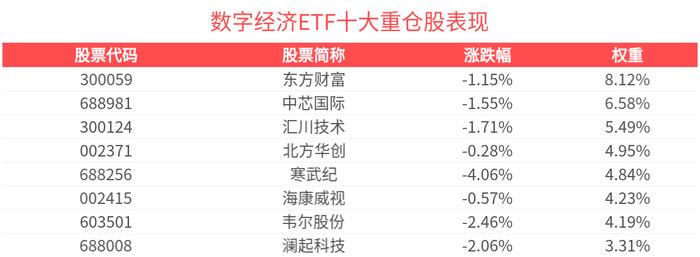
Core Viewpoint - The digital economy theme index has shown a decline, with notable fluctuations in constituent stocks, indicating mixed performance in the sector [1][2]. Market Performance - As of May 30, 2025, the CSI Digital Economy Theme Index (931582) decreased by 1.45%, with constituent stocks showing varied performance [1]. - The Digital Economy ETF (560800) also fell by 1.74%, with the latest price at 0.73 yuan [1]. - Over the past week, the Digital Economy ETF's scale increased by 14.19 million yuan, ranking it in the top half among comparable funds [1][2]. - The ETF experienced a significant increase in shares, growing by 12 million shares in the past week, also placing it in the top half of comparable funds [2]. Fund Flow and Investment Trends - In the last five trading days, the Digital Economy ETF saw net inflows on three occasions, totaling 10.27 million yuan, with an average daily net inflow of 2.05 million yuan [2]. - Recent reports from Zhongyin International highlight that the National Development and Reform Commission has included industrial software upgrades in the "two new" policy support scope, suggesting a potential growth opportunity for the industrial software sector [2]. Top Holdings - As of April 30, 2025, the top ten weighted stocks in the CSI Digital Economy Theme Index accounted for 51.5% of the index, with notable companies including Dongfang Wealth (300059) and SMIC (688981) [3][4].





美国要求芯片EDA巨头“断供”中国市场,将如何冲击国内产业链?
Tai Mei Ti A P P· 2025-05-30 03:25
Core Viewpoint - The U.S. Department of Commerce's Bureau of Industry and Security (BIS) has mandated that major American EDA companies, Synopsys and Cadence, cease supplying EDA software tools to Chinese companies, particularly those identified as "military end users" [2][4][7]. Group 1: Company Responses - Synopsys announced it received a notification from BIS regarding new export restrictions and is currently assessing the potential impact on its business and financial performance [2]. - Cadence confirmed it must obtain licenses for exporting EDA software to Chinese entities, especially those linked to military applications, as per BIS guidelines [4]. - Siemens EDA has also reportedly received similar notifications and is verifying EDA software needs with its Chinese clients [4]. Group 2: Market Impact - The new restrictions affect the three major EDA companies, which collectively hold over 80% of the Chinese market share, leading to a significant supply disruption for new products [5]. - Following the announcements, shares of U.S. EDA firms like Cadence and Synopsys fell by over 10%, while domestic EDA companies in China, such as Huada Empyrean and GY Electronics, saw stock increases of 15% and 20%, respectively [5]. Group 3: Industry Context - The global EDA software market was valued at approximately $13.437 billion in 2022, with a projected growth to $14.526 billion in 2023. In China, the EDA market was about 11.56 billion yuan in 2022, expected to reach 13.05 billion yuan in 2023 [6]. - Synopsys and Cadence hold 32% and 29% of the global EDA market, respectively, while their combined revenue from the Chinese market is projected to exceed 10 billion yuan in the 2024 fiscal year [6]. Group 4: Domestic EDA Development - The Chinese EDA ecosystem is still developing, with the number of domestic EDA companies increasing from 10 to over 120 in the past five years. The domestic EDA market is expected to grow at a compound annual growth rate of over 14% from 2021 to 2025 [12][16]. - Domestic EDA firms are actively pursuing mergers and acquisitions to enhance their capabilities and market presence, with notable transactions announced by Huada Empyrean and GY Electronics [12][16]. Group 5: Government and Regulatory Actions - The U.S. government has intensified export controls on EDA software, particularly targeting companies like Huawei and SMIC, which are on the entity list, thereby pushing China to accelerate the development of its own EDA tools [11][17]. - The Chinese government has expressed concerns over the U.S. export restrictions, stating that such actions threaten the stability of the global semiconductor supply chain and could ultimately harm U.S. industry competitiveness [17].

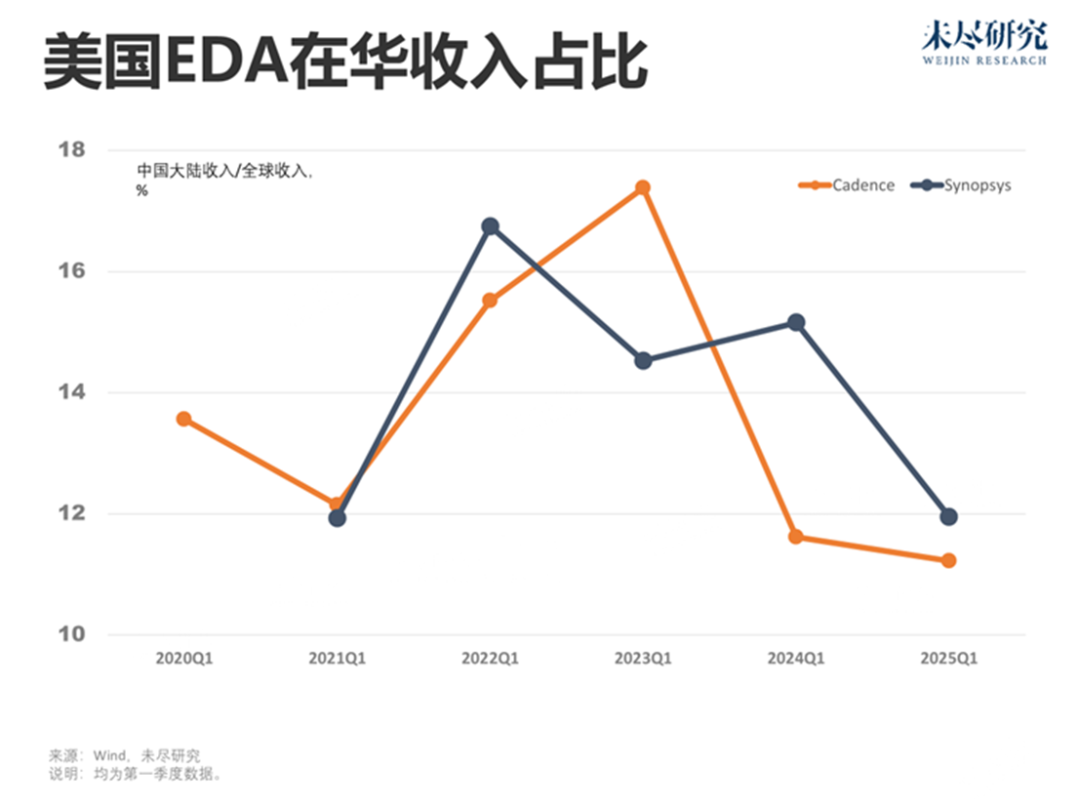
中国本土EDA并购,抢在美国断供前
Hu Xiu· 2025-05-30 02:16
美国几乎要把芯片战的工具箱用尽了。这回传言祭出的是有"芯片之母"之称的EDA软件禁令。没有EDA,也不会有芯片的设计、制造、封装。一周前,小 米设计出的3纳米SoC玄戒o1问世。 但禁令仍然只是尚未证实的传言。FT援引几位知情人士的话称,美国商务部主管出口管制的工业和安全局(BIS)以信函(letters)的形式,要求 Cadence、Synopsys和Siemens ED停止向中国提供技术。路透社则援引两位知情人士的话称,上周五,多家EDA公司收到信函,仅在获得许可证后,才能 向中国客户服务。有关禁令的更多细节阙如。暂不清楚信函发往了个别企业,还将是整个行业都必须遵守的;也暂不清楚遭到禁止的究竟涉及到哪些芯片 类型或技术路线。两家媒体都在一定程度上怀疑,这是美国在对华暂缓对等关税的谈判期的筹码。目前,相关公司的中国业务仍在正常进行,各公司仍在 等待更多明确信息。 不管怎么说,这些都不再是空穴来风。中国的EDA龙头企业,正在加快并购,谋求平台化,构建更完整的解决方案。 整个EDA行业的股价"东升西降"又上演一回。Cadence、Synopsys等美国EDA巨头股价跌去了10%左右;华大九天、概伦电子这两家中国 ...