Apple(AAPL)

Search documents
Siri“变身计划”被打散! 苹果(AAPL.US)内部测试翻车 “AI版Siri”被迫分期交付
智通财经网· 2026-02-12 01:40
Core Viewpoint - Apple's long-planned AI upgrade for Siri has encountered obstacles during recent testing, potentially delaying the release of anticipated new AI features, which may now be rolled out across multiple future versions of iOS instead of being included in the upcoming iOS 26.4 update [1][5][6]. Group 1: AI Upgrade Challenges - The AI upgrade for Siri, initially set to be included in iOS 26.4, is now likely to be split into multiple releases, with some features possibly delayed until iOS 26.5 (expected in May) and iOS 27 (expected in September) [1][5]. - Recent testing has revealed software issues that have contributed to the latest round of delays, with Siri struggling to accurately process user queries and taking too long to respond [5][8]. Group 2: Partnership with Google - Apple has partnered with Google to utilize the Gemini AI model as the technical foundation for the upgraded Siri, marking a significant shift towards AI integration in Apple's products [2][3]. - This collaboration has been beneficial for both companies, with Apple's agreement contributing to Alphabet's market valuation reaching $4 trillion [3]. Group 3: Future AI Features - The upgraded Siri is expected to allow users to control both Apple and third-party applications through voice commands, with a target launch date initially set for early 2025 but now pushed to 2026 [5][6]. - New features under development include enhanced capabilities for retrieving personal data and executing complex commands in a single voice instruction [7][9]. Group 4: AI Integration and User Experience - The integration of AI models into consumer electronics aims to create a more personalized AI assistant experience, similar to the concept of a "personal AI companion" depicted in the film "HER" [4]. - Apple's future AI plans include a complete overhaul of Siri, transforming it into a more advanced chatbot-like interface supported by Google's AI technology [10][11]. Group 5: Privacy Considerations - Apple's commitment to user privacy is influencing the development timeline of personalized AI features, with a focus on keeping user data secure and private [12].

美股高开低走,非农就业远超预期却吓坏市场,降息预期再度推迟
Jin Rong Jie· 2026-02-12 01:39
Group 1 - The U.S. labor market showed strong performance in January, with 130,000 new jobs added, significantly exceeding the Dow Jones estimate of 55,000, and the unemployment rate dropped to 4.3%, the lowest since August 2025 [1] - Following the employment report, traders adjusted their expectations for the Federal Reserve's interest rate cuts, pushing the anticipated timing from June to July, while the 10-year Treasury yield rose by 4 basis points to 4.18% [1] - The software sector faced selling pressure, with notable declines in stocks like Salesforce and ServiceNow, and the iShares Expanded Tech-Software Sector ETF (IGV) has retreated approximately 30% from its 52-week high [1] Group 2 - Despite the overall market decline, certain sectors benefited from positive economic data, particularly AI data center-related hardware companies, with Micron Technology rising over 6% after Deutsche Bank raised its target price and maintained a "buy" rating [1] - TSMC saw an increase of over 4%, while Apple’s stock rose by 2%, indicating strength in storage and precious metals sectors as well [1] - At market close, the three major indices experienced slight declines: the Dow Jones fell by 0.13% to 50,121.40 points, the Nasdaq dropped by 0.16% to 23,066.47 points, and the S&P 500 decreased by 0.01% to 6,941.45 points [2]


Omdia:2025年Q4全球智能手机市场同比增长4% 苹果以25%市场份额领跑
智通财经网· 2026-02-12 01:33
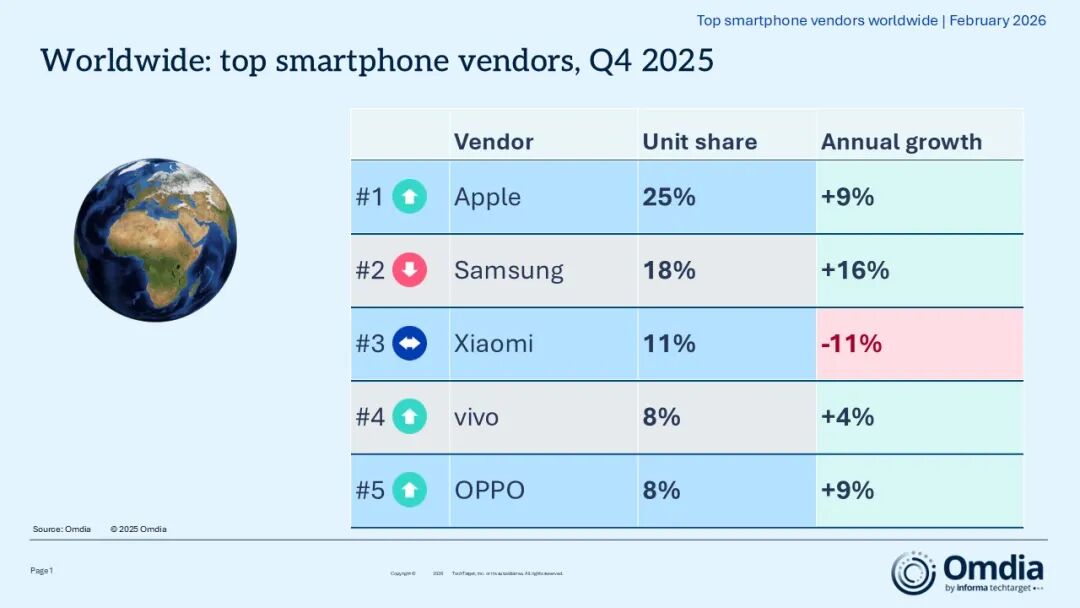
Core Insights - The global smartphone market is expected to grow by 4% year-on-year in Q4 2025, driven by seasonal demand recovery and improved inventory management, despite some manufacturers facing rising component costs [1] - Apple leads the market with a 25% share, benefiting from strong demand for the iPhone 17 series, achieving record quarterly shipments and maintaining its position as the largest smartphone manufacturer for three consecutive years, slightly ahead of Samsung [1] - Samsung holds the second position with an 18% market share, primarily driven by strong sales of models priced below $300, particularly the Galaxy A17 4G and 5G series [1] Global Market Rankings - In Q4 2025, the top smartphone vendors by unit share are: - Apple: 25% (+9% growth) - Samsung: 18% (+16% growth) - Xiaomi: 11% (-11% growth) - Vivo: 8% (+4% growth) - OPPO: 8% (+9% growth) [2] Regional Performance - In the APAC region (excluding Greater China), the top vendors are: - Samsung: 19% (+18% growth) - Apple: 18% (+4% growth) - Vivo: 15% (+11% growth) - OPPO: 11% (+6% growth) - Xiaomi: 10% (-23% growth) [4] - In Latin America, the rankings are: - Samsung: 33% (+21% growth) - Lenovo: 16% (+14% growth) - Xiaomi: 15% (+6% growth) - HONOR: 9% (+64% growth) - Apple: 7% (-8% growth) [4] - In India, the top vendors are: - Vivo: 25% (+16% growth) - OPPO: 16% (+4% growth) - Samsung: 14% (-11% growth) - Xiaomi: 12% (-26% growth) - Apple: 11% (-1% growth) [6] - In the United States, the rankings are: - Apple: 69% (+8% growth) - Samsung: 14% (-3% growth) - Lenovo: 9% (+13% growth) - Google: 3% (-15% growth) - TCL: 2% (-7% growth) [6] - In Brazil, the top vendors are: - Samsung: 39% (-1% growth) - Lenovo: 23% (+12% growth) - Xiaomi: 15% (+12% growth) - Apple: 11% (+10% growth) - realme: 5% (-7% growth) [7]


2025手机活跃存量增2% 苹果三星小米位列前三
Xin Lang Cai Jing· 2026-02-12 01:30
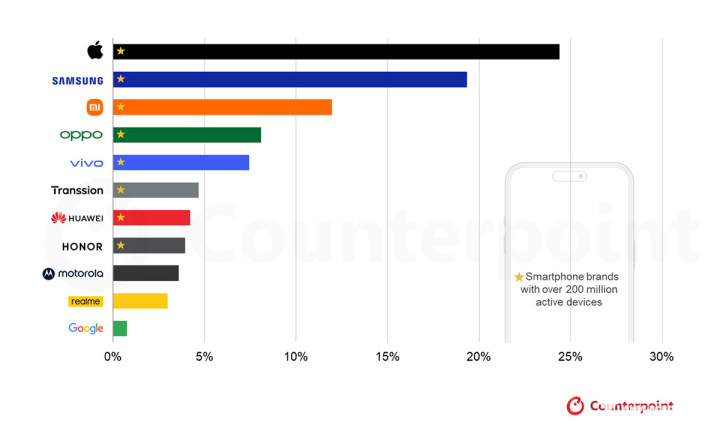
Counterpoint Research发布报告显示,当前全球已有八家手机厂商的活跃设备存量突破2亿台,这八大品 牌合计占据全球超过80%的活跃设备份额,苹果、三星、小米位列前三。 Counterpoint Research发布报告显示,2025年全球智能手机活跃设备存量同比增长2%,用户平均换机周 期已延长至近四年,行业正式进入存量博弈新阶段。 报告指出,当前全球已有八家手机厂商的活跃设备存量突破2亿台,这八大品牌合计占据全球超过80% 的活跃设备份额,行业集中度持续提升,呈现强者愈强格局。 单纯的硬件升级已难以推动用户频繁换机。未来,如何挖掘存量用户价值、拓展软件与服务收入,将成 为各手机品牌面临的核心挑战。 Counterpoint Research发布报告显示,当前全球已有八家手机厂商的活跃设备存量突破2亿台,这八大品 牌合计占据全球超过80%的活跃设备份额,苹果、三星、小米位列前三。 Counterpoint Research发布报告显示,2025年全球智能手机活跃设备存量同比增长2%,用户平均换机周 期已延长至近四年,行业正式进入存量博弈新阶段。 报告指出,当前全球已有八家手机厂商的活跃设备存量 ...
Omdia数据快闪:2025年第四季度,全球智能手机重点市场厂商排名
Canalys· 2026-02-12 01:03
要点 2025年第四季度,全球智能手机市场同比增长4%,这一增长得益于季节性需求回升和库存管理改善,尽管 部分厂商开始受到零部件成本上升的影响。增长主要集中在头部厂商,包括苹果和三星,在关键地区表现 突出。 2025年第四季度, 苹果 以25%的市场份额领跑全球智能手机市场,得益于iPhone 17系列需求强劲,季度出货 量创下历史新高,同时连续三年成为全球最大的智能手机厂商,小幅领先三星。 三星 位居第二,市场份额为 18%,主要受300美元以下机型的强劲销量推动,尤其是Galaxy A17 4G和5G系列。 小米 继续稳居第四季度及 全年第三名,尽管在第四季度部分核心市场出货受阻,其份额下降至11%。 vivo 以8%的市场份额再创佳绩, 主要得益于其在印度市场的领先地位。 OPPO 在第四季度恢复增长,重新进入全球前五,为2026年1月整合 realme业务前的积极回暖奠定基础。 以下为读者精选出2025年Q4重点区域及市场的厂商排名: 全球重点区域: Top smartphone vendors worldwide | February 2026 Europe: top smartphone vend ...

全球大公司要闻 | 苹果推迟新版Siri上线,Meta百亿押注AI基建
Wind万得· 2026-02-12 00:54
Group 1 - Meta plans to invest over $10 billion in building a data center park in Indiana, providing 1 GW of power capacity to support AI projects and core social media operations, while hedge fund Pershing Square disclosed a stake in Meta representing 10% of its capital, believing the market underestimates AI's long-term potential [2][3] - Apple faces delays in upgrading its Siri virtual assistant, with multiple new features potentially postponed until iOS 26.5 or iOS 27 due to issues with query handling, response times, and accuracy [2] - ByteDance is reportedly developing an AI chip and negotiating with Samsung for production, aiming to produce at least 100,000 chips this year and gradually increase output to 350,000, although a spokesperson claimed the information is inaccurate [3] Group 2 - NetEase's Q4 2025 revenue reached 27.5 billion yuan, a 3% year-on-year increase, but net profit attributable to shareholders fell nearly 30% to 6.2 billion yuan, missing expectations due to increased sales expenses and investment losses [5] - Zhiyuan Technology launched its new flagship model GLM-5, integrating DeepSeek sparse attention mechanism, targeting programming and intelligent agent capabilities, with internal evaluations indicating performance close to Claude Opus 4.5 [5] - Huazhu Group is under scrutiny from the Beijing Consumer Association for potentially unfair terms in its membership service agreement, prompting the company to initiate a self-examination and commit to improving the consumer environment [6] Group 3 - Amazon received approval from the US FCC to deploy an additional 4,500 low-Earth orbit satellites, expanding its constellation to 7,700 to enhance space internet competition [8] - Cisco reported Q2 revenue of $15.3 billion, exceeding analyst expectations, with product revenue of $11.64 billion, driven by a surge in orders from AI hyperscalers [8] - Ford anticipates achieving a record revenue of $187.3 billion in 2025, but expects a net loss of $8.182 billion, a 239.17% year-on-year decline, primarily due to rising supply chain costs and increased R&D investments [9] Group 4 - Samsung Electronics announced the Galaxy S26 series launch on February 26, featuring the 2nm Exynos 2600 chip and a 200-megapixel camera in the Ultra model, with continued strong demand for memory chips expected until 2027 [12] - Toyota is set to launch a pure electric version of the Highlander for the North American market, targeting a range of 320 miles, with plans to guide users of fuel/mixed models to the Grand Highlander series [12] - LG Energy Solution announced the acquisition of a 49% stake in a Canadian energy storage battery factory from Stellantis to strengthen its energy storage business [13]




The "Magnificent Seven" Plan to Spend $680 Billion Largely on Artificial Intelligence Capex: Is Now the Time to Pile Into the Group?
Yahoo Finance· 2026-02-12 00:36
Nvidia (NASDAQ: NVDA) will not report earnings until later this month, but it doesn't have high AI capex spending like the other hyperscalers because it is primarily in the business of selling GPUs, and doesn't manufacture its chips, so it's actually a capital-light business.Apple (NASDAQ: AAPL) continues to lag on AI capex and is only guiding for $13 billion of capex in 2026.Tesla (NASDAQ: TSLA) said it plans to more than double capex to about $20 billion in 2026 to fund the expansion of its robotaxi fleet ...



苹果发布VSSFlow模型:让无声视频「开口说话」,加速为国行版AI铺路?
3 6 Ke· 2026-02-12 00:31
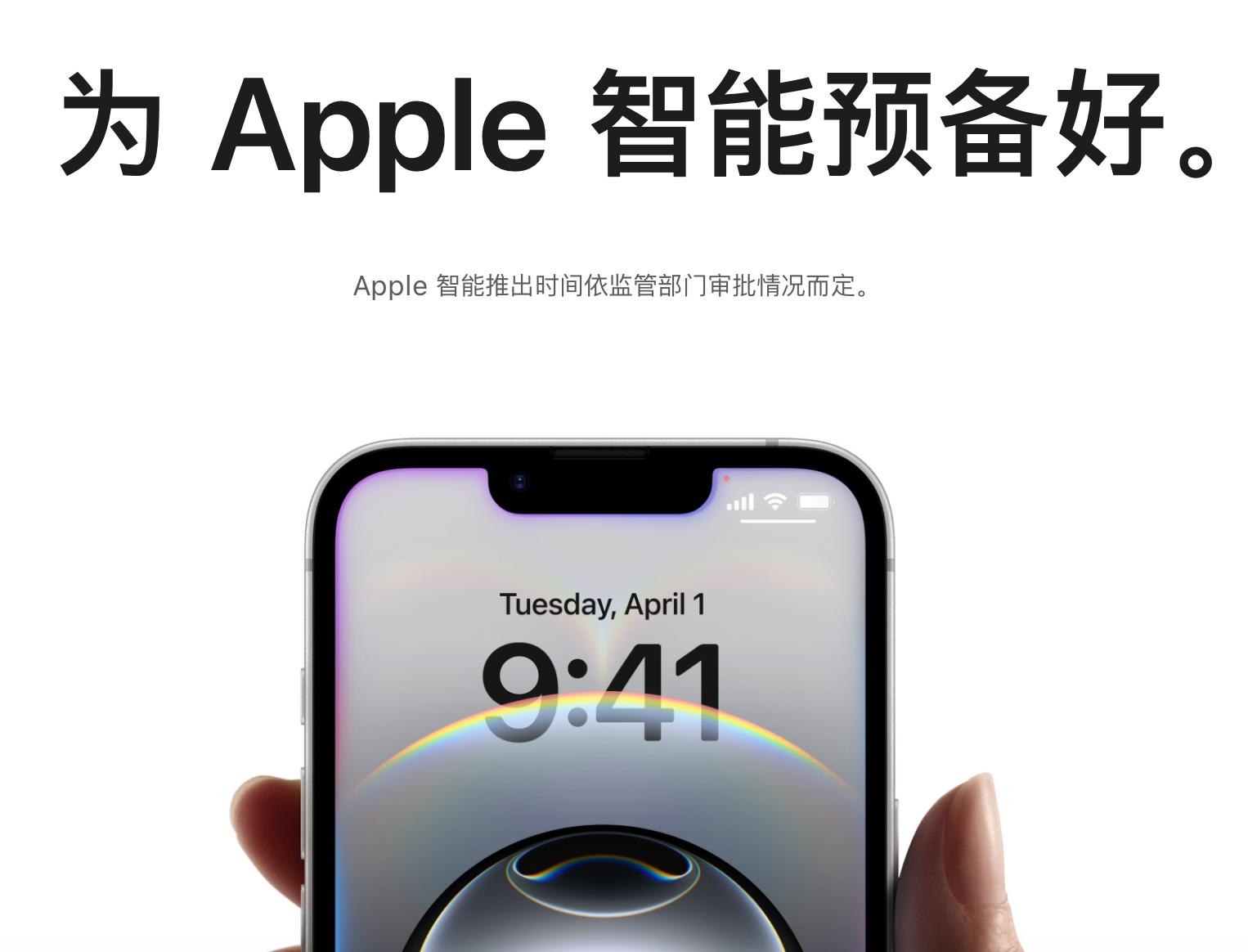
Core Insights - Apple announced its artificial intelligence platform, Apple Intelligence, at WWDC 2024, with testing set to begin in the U.S. in fall 2024, but the Chinese version has not yet launched due to regulatory approvals [1] - Apple, in collaboration with Renmin University of China, introduced the VSSFlow AI model, showcasing advancements in audio generation technology, which may signal positive developments for the Chinese version of Apple Intelligence [3][15] Group 1: Apple Intelligence and VSSFlow - Apple Intelligence is expected to expand its testing beyond the U.S. after initial trials, but its launch in China is contingent on regulatory approval [1] - VSSFlow is designed to generate both environmental sounds and dialogue simultaneously, overcoming previous limitations of separate audio generation for background noise and speech [3][6] - The VSSFlow model utilizes a technique called Flow-matching, which allows the AI to infer sounds based on video frames and contextual cues, enhancing audio quality and generation efficiency [6][8] Group 2: Applications and Market Position - VSSFlow's capabilities could be applied in various scenarios, including audio restoration for old films, assisting individuals with speech impairments, and dubbing for film and television [9][13] - Compared to existing models like Google's Deepmind V2A, VSSFlow aims to create a more integrated audio experience by mapping visual and auditory information [9][14] - The collaboration with Chinese universities indicates Apple's commitment to deepening its presence in the Chinese market and advancing the development of its AI technologies [15][18] Group 3: Challenges and Competitive Landscape - The rollout of the Chinese version of Apple Intelligence has faced delays due to engineering challenges and subpar performance compared to competitors [18][22] - Apple's AI capabilities have been criticized for lacking innovation and effectiveness, especially when compared to competitors like Samsung, which has successfully localized its AI offerings in China [20][22] - Despite the slow progress, the development of VSSFlow suggests that Apple is making strides in AI research, which could enhance its hardware capabilities in the future [22]
硅谷的这个春节,也难熬了
吴晓波频道· 2026-02-12 00:29
Core Viewpoint - The article discusses the intense competition and significant capital expenditures among major tech companies in the AI sector, highlighting the risks and uncertainties associated with their aggressive investments and marketing strategies [3][4][6]. Group 1: AI Investment Landscape - In 2026, major tech companies like Microsoft, Amazon, Google, and Meta are projected to spend $660 billion (approximately 4.58 trillion RMB) on AI, marking a 60% increase from 2025 and a staggering 165% increase from 2024 [7][8]. - This level of spending represents about 2.1% of GDP, surpassing historical investments in infrastructure projects like the interstate highway system and the Apollo moon landing [8]. - Microsoft plans to allocate $140 billion for capital expenditures by June, while Amazon aims to invest $200 billion in AI-related workloads, significantly exceeding market expectations [10][11]. Group 2: Market Reactions and Concerns - Despite strong financial reports, investor concerns are rising due to the massive capital expenditures, leading to significant stock price drops for companies like Microsoft and Amazon [10][11]. - Analysts predict a drastic decline in free cash flow for Google and Meta, with estimates suggesting a nearly 90% drop for both companies, while Amazon's cash flow may turn negative [13]. - The interconnected nature of AI investments raises concerns about potential distortions in incentives and the risks of over-reliance on single clients, as seen with Microsoft's dependence on OpenAI [11][12]. Group 3: Competitive Dynamics - Google is regaining momentum in the AI space with its Gemini model, which has shown superior performance compared to ChatGPT, leading to increased interest in Google Cloud services [16][20]. - The article highlights the competitive landscape where companies like OpenAI are exploring various monetization strategies, including subscription fees and API services, to sustain their operations amid high costs [21][22]. - The emergence of new AI platforms, such as Moltbook, reflects the public's complex attitudes towards AI, oscillating between fascination and skepticism [30][32].

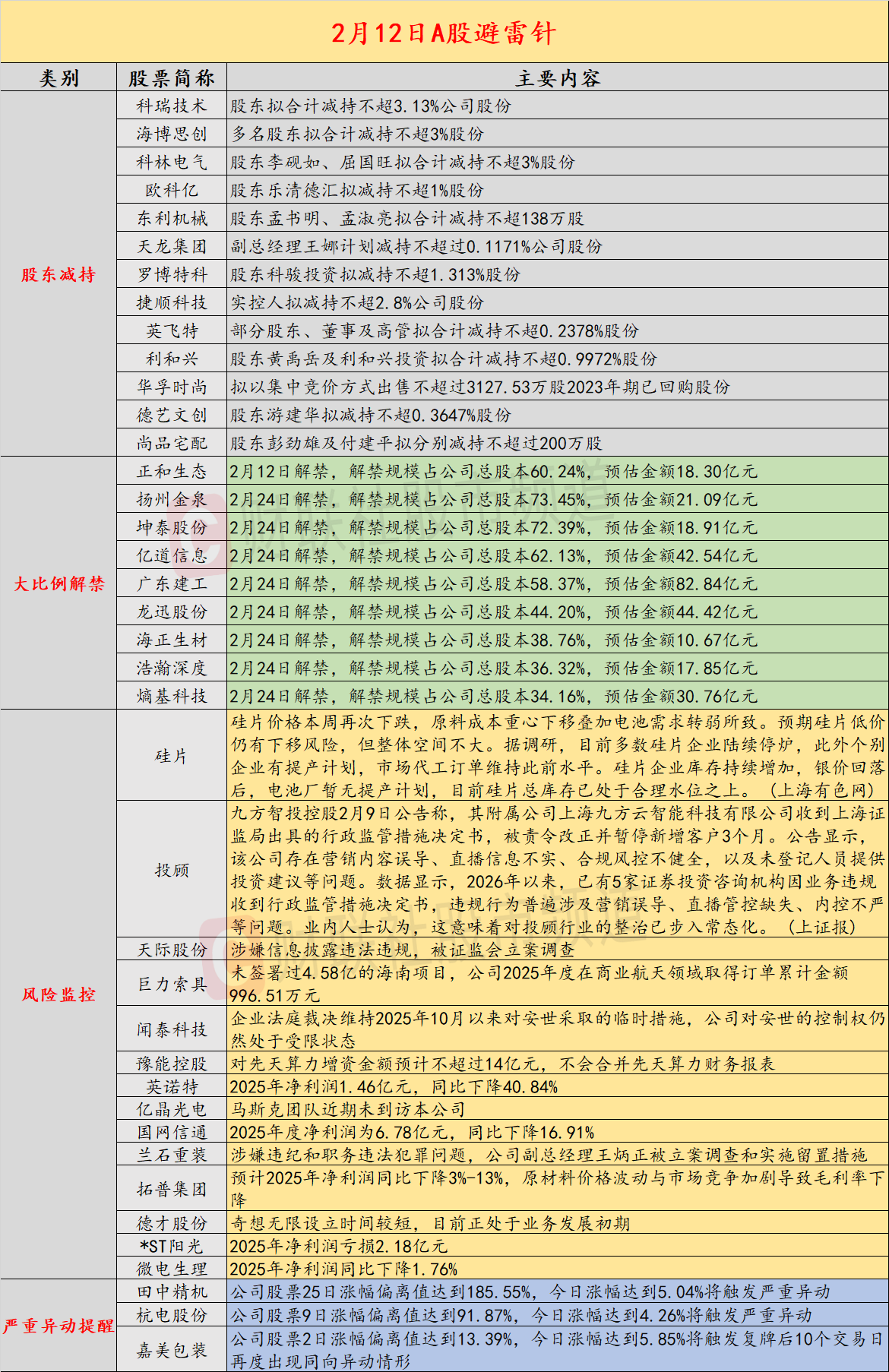
2月12日投资避雷针:商业航天人气股澄清 没有4.58亿海南项目且25年商业航天订单不足千万
Xin Lang Cai Jing· 2026-02-12 00:28
Economic Information - The price of silicon wafers has declined again this week due to a decrease in raw material costs and weakened battery demand. There is still a risk of further price drops, but the overall space for decline is limited. Most silicon wafer companies are halting production, while some have plans to increase output, maintaining previous levels of market orders. Total inventory of silicon wafers is currently above a reasonable level [2] - By early 2026, several companies in the photovoltaic industry are expected to announce project terminations, delays, or divestitures of photovoltaic assets. The reasons for these actions are changing, as the industry shifts from oversupply to a phase of accelerated capacity clearance, with expectations of more severe clearance in 2026 compared to 2025 [2] - NineFang Zhitu Holdings announced that its subsidiary received an administrative regulatory decision from the Shanghai Securities Regulatory Bureau, requiring it to correct issues and suspend new client acquisitions for three months due to misleading marketing content and inadequate compliance controls [2] - International oil prices have recently fluctuated upwards, leading to significant premiums in oil funds. Southern Fund has adjusted the purchase limit for its oil fund to 1 yuan, effectively closing the door to new investors. Other funds have also implemented strict purchase limits to prevent excessive speculative inflows and help the market return to rational pricing [2] Company Alerts - Tianji Co., Ltd. is under investigation by the China Securities Regulatory Commission for suspected violations of information disclosure [4] - Juyi Rigging announced it has not signed a 4.58 billion yuan project in Hainan, with a total order amount of 996.51 thousand yuan in the commercial aerospace sector for 2025 [4] - Several companies, including Keri Technology and Haibo Shichuang, have announced plans for significant shareholder reductions, with reductions not exceeding 3.13% and 3% respectively [4][7] - Wenta Technology is facing legal restrictions on its control over Anshi due to a court ruling [8] - YN Energy Holdings plans to increase its investment in a subsidiary by no more than 1.4 billion yuan, without consolidating financial statements [8] - In 2025, Innotech is projected to have a net profit of 146 million yuan, a year-on-year decrease of 40.84% [8] - The company Guowang Xintong is expected to report a net profit of 678 million yuan for 2025, down 16.91% year-on-year [8] - Lan Shi Heavy Industry is under investigation for disciplinary and criminal issues, with its deputy general manager being detained [8] - Top Group anticipates a year-on-year decline in net profit of 3%-13% for 2025 due to fluctuations in raw material prices and intensified market competition [8] - ST Sunshine is expected to report a net loss of 218 million yuan for 2025 [8]