Amazon(AMZN)

Search documents
微软发布3nm芯片,1400亿晶体管
半导体行业观察· 2026-01-27 01:26
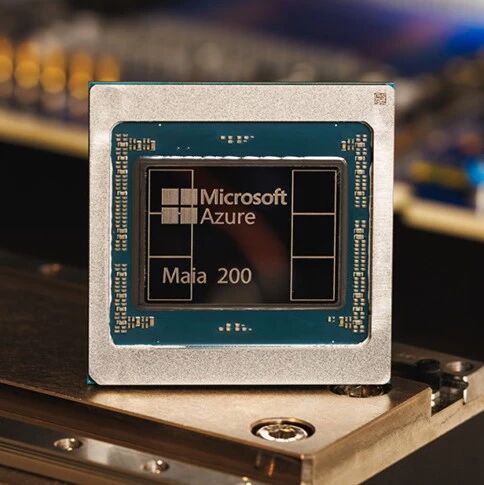
公众号记得加星标⭐️,第一时间看推送不会错过。 微软发布了新一代人工智能芯片 Maia 200,这款芯片有望成为英伟达领先处理器以及亚马逊和谷歌 等云服务竞争对手产品的潜在替代品。 Maia 200 的发布距离微软宣布开发首款人工智能芯片 Maia 100 已过去两年,但 Maia 100 从未向云 客户开放租赁。微软云和人工智能执行副总裁 Scott Guthrie 周一在一篇博客文章中表示,这款新芯 片"未来将面向更广泛的客户群体"。 Guthrie 称 Maia 200 是"微软迄今为止部署的最高效的推理系统"。开发者、学者、人工智能实验室 以及开源人工智能模型贡献者均可申请软件开发工具包的预览版。 微软表示,由 Mustafa Suleyman 领导的超级智能团队将使用这款新芯片。此外,面向商业生产力软 件套装的 Microsoft 365 Copilot 插件以及用于构建人工智能模型的 Microsoft Foundry 服务也将使 用该芯片。 云服务提供商面临着来自 Anthropic 和 OpenAI 等生成式人工智能模型开发商以及基于这些热门模 型构建人工智能代理和其他产品的公司的激增需求。数 ...






隔夜欧美·1月27日
Sou Hu Cai Jing· 2026-01-27 00:34
⑥美油主力合约收跌0.39%,报60.83美元/桶;布油主力合约跌0.26%,报64.9美元/桶; ⑦纽约尾盘,美元指数跌0.48%报97.0244,离岸人民币对美元跌2.5个基点报6.9490; ⑧伦敦基本金属多数上涨,LME期锌涨2.78%报3351.0美元/吨,LME期铝涨0.84%报3195.5美元/吨, LME期铜涨0.52%报13183.0美元/吨,LME期铅涨0.49%报2036.0美元/吨,LME期镍跌0.89%报18590.0美 元/吨,LME期锡跌4.09%报54495.0美元/吨; ⑨美债收益率集体下跌,2年期美债收益率跌0.18个基点报3.588%,3年期美债收益率跌0.27个基点报 3.654%,5年期美债收益率跌0.17个基点报3.819%,10年期美债收益率跌0.99个基点报4.211%,30年期 美债收益率跌2.13个基点报4.801%; ⑩欧债收益率集体下跌,英国10年期国债收益率跌1.5个基点报4.496%,法国10年期国债收益率跌5.8个 基点报3.434%,德国10年期国债收益率跌3.9个基点报2.865%,意大利10年期国债收益率跌4.7个基点报 3.464%,西班牙 ...


AI算力供给紧张 云计算大厂纷纷调高产品价格(附概念股)
Zhi Tong Cai Jing· 2026-01-27 00:28
Group 1 - Baidu Intelligent Cloud has set an ambitious AI-related revenue growth target of 200% by 2026, up from the previous target of 100%, aiming to become the leader in the AI cloud market [1] - According to IDC, the global AI cloud market is expected to exceed $400 billion by 2030, indicating significant growth potential in the sector [2] - In 2025, major Chinese cloud providers are projected to secure a total of 341 contracts related to large models, with a total bid amount of approximately 2.7 billion yuan [2] Group 2 - Baidu Intelligent Cloud has secured 109 projects with a total bid amount of about 900 million yuan, maintaining its position as the leader in both project count and bid amount for two consecutive years [2] - Citic Securities reports that the demand for AI computing power is expanding, leading to a positive outlook for the optical module industry and opportunities across the supply chain [2] - Citic Securities also notes that Amazon's recent 15% price increase for its AI computing service EC2 marks a break from the long-standing trend of decreasing cloud service prices, reflecting tight supply conditions [2] Group 3 - Citic Securities suggests monitoring cloud service providers for potential price increases and continues to recommend the AI computing sector and AI applications [3] - The AI computing sector is experiencing a period of adjustment, which Citic Securities views as an opportunity for investors [4] - Key Hong Kong stocks related to the AI computing sector include Changfei Optical Fiber, Cambridge Technology, Hongteng Precision, and Huiju Technology [5]



Big tech earnings land with AI winners still In question
The Economic Times· 2026-01-27 00:21
The An index tracking the group closed at a record on Oct. 29, and since then the shares of five of the seven members are down and trailing the S&P 500 Index. Alphabet, which has soared almost 20% during that stretch, and Amazon.com are the only stocks in the green. Bloomberg In response, traders have been piling into the recipients of Big Tech's largesse. Memory and storage maker Sandisk Corp. is up more than 130% since the Magnificent Seven index hit an all-time high and then retreated, while Micron Te ...

1月27日早餐 | AI应用迎多个催化;多个有色金属继续大涨
Xuan Gu Bao· 2026-01-27 00:01
Market Overview - US stock markets closed higher, with the Dow Jones up 0.64%, Nasdaq up 0.43%, and S&P 500 up 0.50% [1] - Silver experienced its strongest intraday surge since 2008 but later retraced gains, while gold surpassed the $5000 mark for the first time [2] - US natural gas prices surged nearly 30% [2] Corporate Developments - Trump administration is implementing a $1.6 billion debt and equity investment plan to acquire a 10% stake in USA Rare Earth [4] - Nvidia invested $2 billion in CoreWeave and is launching an independent CPU chip [5] - Nvidia plans to enter the Arm PC chip market, with Lenovo and Dell likely to be the first adopters [6] - Microsoft released its second-generation AI chip, Maia 200, aiming to reduce dependency on Nvidia [7] - SoftBank has paused its $50 billion data center acquisition of Switch [8] Industry Trends - The North Sea wind energy initiative is driving industry commitments to invest €9.5 billion [11] - The European Parliament has postponed its decision on whether to restore approval for the US-EU trade agreement [12] - The potential for a new US government shutdown is estimated at nearly 80% according to market predictions [13] Domestic Developments - The Ministry of Commerce announced the launch of a national digital trade demonstration zone and the establishment of relevant standards [14] - The AI healthcare sector is rapidly evolving, with Amazon's One Medical launching an AI health assistant that integrates with its existing medical services [19][20] - The digital trade sector is expected to grow significantly, with cross-border e-commerce reaching a total import and export volume of 2.75 trillion yuan by 2025 [21] Company Announcements - Zijin Mining plans to acquire 100% of United Gold for 28 billion yuan, with gold resources of 533 tons expected by the end of 2024 [22] - Dinglong Co. intends to acquire 70% of Haofei New Materials for 630 million yuan, a leading company in new lithium battery dispersants [22] - Haike New Source signed a long-term cooperation agreement with BYD for the supply of at least 100,000 tons of electrolyte solvent annually [22] - Chuanhuan Technology plans to invest 1.1 billion yuan to build a manufacturing headquarters in East China [22] - Longyuan Donggu's subsidiary received a notification for a project with a lifecycle sales amount estimated between 2.2 billion to 3 billion yuan [22] - Ruixin Microelectronics expects a net profit of 1.023 billion to 1.103 billion yuan for 2025, a year-on-year increase of 71.97% to 85.42% [22] - Multiple companies, including Multi-Fluorine and Lantian Electronics, are projecting significant profit increases for 2025 due to market demand in sectors like new energy and AI [23][24]



苹果涨近3%,英特尔跌近6%,白银拉升,特朗普宣布对韩国加征关税
21世纪经济报道· 2026-01-26 23:26
Market Performance - The three major U.S. stock indices closed higher on Monday, with the Dow Jones up 0.64% at 49,412.4 points, the S&P 500 up 0.5% at 6,950.23 points, and the Nasdaq up 0.43% at 23,601.36 points [1][2]. Company Updates - Major tech stocks mostly rose, with Apple increasing nearly 3% as it plans to announce a new version of Siri in late February, following a partnership with Google due to internal AI model challenges [2]. - Facebook rose over 2%, Google increased over 1%, while Tesla fell over 3% and Nvidia dropped 0.64% [2]. Earnings Season Insights - Over 90 companies in the S&P 500 are set to report quarterly earnings this week, including major players like Microsoft, Meta, Tesla, and Apple. So far, 76% of the companies that have reported exceeded earnings expectations [3]. - Investors are particularly interested in details regarding AI plans, investment speeds, and expected profits to assess the sustainability of the current bull market [3]. Semiconductor Sector - The Philadelphia Semiconductor Index fell by 0.39%, with Intel dropping over 5.7% after a significant decline of 17.03% the previous week. Intel's projected revenue for Q1 is between $11.7 billion and $12.7 billion, below analyst expectations [3]. Chinese Stocks - The Nasdaq China Golden Dragon Index decreased by 0.63%, with many popular Chinese stocks declining. Notable drops include Hesai down 10.06% and XPeng down 2.39%, while Li Auto rose 1.38% [3]. Commodity Market - Spot gold prices briefly surpassed $5,000 per ounce and then $5,100 per ounce. Long-term forecasts suggest that gold may continue to perform strongly, indicating a need for portfolio diversification [5]. - The cryptocurrency market saw a collective rise, with Bitcoin surpassing $88,000, while Ethereum increased by 4.14% [6]. Federal Reserve Outlook - The Federal Reserve is expected to announce its first policy decision of the year, with a 97.2% probability of maintaining the current overnight rate. Market speculation includes potential rate cuts later in the year [9].


库克等多位科技CEO造访白宫 只为特朗普夫人的一部纪录片
Feng Huang Wang· 2026-01-26 23:20
库克上周还跟随特朗普去了达沃斯,并在那里得到了特朗普本人的点名赞扬:"他很棒,干得不错。我 不知道有多少人干得比蒂姆好,但有些人和你水平相当。你最好赶紧行动起来,我告诉你。"(作者/箫 雨) 据娱乐媒体《好莱坞报道者》称,多位科技公司CEO出席了这场放映活动,还包括一场VIP晚宴。除库 克外,与会者还包括Zoom CEO袁征(Eric Yuan)、亚马逊CEO安迪·贾西(Andy Jassy)、亚马逊董事长杰夫 ·贝佐斯(Jeff Bezos)以及AMD CEO苏姿丰(Lisa Su)。 根据梅拉尼娅在X上发布的一张照片,库克坐在第二排。这只是库克为保持与特朗普良好关系所付出努 力的无数例子中的一个。他过去还赠送了特朗普一块玻璃制品、资助白宫东翼的拆除工程,以及向特朗 普的就职典礼捐赠100万美元。 凤凰网科技讯 北京时间1月27日,据科技网站MacRumors报道,苹果公司CEO蒂姆·库克(Tim Cook)上周 末在白宫拜访了美国总统特朗普,以参加即将在近期上映的纪录片《梅拉尼娅》的首映式。该片获得了 亚马逊的投资,记录了美国第一夫人梅拉尼娅·特朗普(Melania Trump)在特朗普第二次总统就职典礼 ...
Thatcher: Markets Seeking Stability & Top Picks in AMZN, IREN, Silver
Youtube· 2026-01-26 23:01
Market Overview - The current market environment is characterized by volatility, with significant events such as the Federal Reserve's decisions and earnings reports from major companies expected this week [2][3] - There are concerns regarding trade tensions, potential government shutdowns, and political unrest, echoing previous market conditions seen in early 2025 [3][4] Economic Indicators - Positive economic data points are emerging, including strong GDP growth and cooling inflation, but consumer sentiment remains mixed, with many Americans feeling financially constrained [5][6] - A shift from stimulatory economic measures to more durable economic conditions is necessary for sustained consumer confidence and market stability [6][10] Investment Opportunities - The AI economy presents potential investment opportunities, particularly in companies that address key bottlenecks such as energy access [15][16] - INEN IR, a company transitioning from Bitcoin mining to AI cloud services, has secured a significant $10 billion deal with Microsoft, positioning it well for growth [16][17] MAG 7 Insights - Among the MAG 7 companies, Amazon stands out due to its favorable price-to-earnings ratio of 33 and its strong position in the AI economy [18][19] - Amazon's growth is driven by its AWS cloud services and its logistics operations, which are increasingly automated with a large number of robots [20]
Why the Fed can hold off on lowering rates, CEOs call for de-escalation in Minnesota
Youtube· 2026-01-26 21:36
Market Overview - Stocks are showing gains after two weeks of decline, with the Dow up about 320 points or 0.67% [1] - The NASDAQ Composite is up over 0.5%, while the S&P 500 is performing similarly [2] - The Russell 2000, which had a record 14-day outperformance, is down approximately 0.3% [3] Bond Market and Currency - Yields in the bond market are down, with the 10-year Treasury yield at 4.21%, down three basis points [3] - The US dollar index has decreased by 0.5% amid potential currency intervention by the Bank of Japan [4] Sector Performance - Technology is leading the large-cap sectors, with notable performances from companies like Apple and Broadcom [4][5] - Consumer stocks are facing challenges, particularly in large-cap, with Nvidia down 0.7% and AMD down 3% [6] - Utilities and communication services are outperforming the S&P 500, while consumer discretionary and energy sectors are slightly in the red [5][6] Commodities - Natural gas prices have surged by 25% today, rising from $3 to $6.50 per unit due to increased heating demand [7][8] - Gold futures are above $5,000 an ounce, with Goldman Sachs raising their price target for gold [9] Corporate Developments - Microsoft has announced its new AI chip, the Maya 200, aimed at competing with Google and Amazon's chips, and reducing reliance on Nvidia [29][30] - GameStop's stock is seeing a boost after investor Michael Burry disclosed his bullish stance on the company [58][60] - CoreWeave has received a $2 billion investment from Nvidia to expand its AI cloud capabilities [63] Economic Outlook - Analysts expect a potential hit to US GDP in Q1, estimating a decrease of 0.5% to 1.5% [13] - The Fed is anticipated to maintain interest rates steady, with no cuts expected until at least June [92][94] CEO Responses to Social Issues - CEOs from major companies are publicly calling for de-escalation in response to unrest in Minneapolis, marking a rare moment of corporate intervention [39][40]



Big Tech Earnings Expectations in AMZN & GOOGL Cloud, META Volatility
Youtube· 2026-01-26 19:00
Core Insights - The earnings reports for the MAG 7 companies, including Meta, Microsoft, Tesla, and Apple, are highly anticipated this week, with over 90 S&P 500 companies reporting [2] Company-Specific Insights - Amazon is expected to show resilience due to its dual business model of AWS and consumer retail, with a focus on whether AWS can reaccelerate growth above 21% and the stability of its advertising business, which is currently valued at $65 billion and growing at 24% [3][4] - Meta is viewed as a potential mover in the market due to its affordable valuation, trading at less than 20 times the 2027 estimate, and the healthy digital ad market, with upcoming catalysts such as the World Cup and midterm elections [5][6] - Meta's ability to manage costs will be crucial, especially regarding capital expenditures (capex) and operational expenditures (opex), with expectations that higher capex could be offset by effective opex management [8][9] - Alphabet's Google Cloud business is critical for maintaining growth, with expectations of 35% year-over-year growth and a significant backlog of $155 billion, while the company is also seen as a leader in AI monetization [11][12][16] - Concerns exist regarding Alphabet's potential overspending, which could lead to disappointment despite strong performance in search and YouTube [15][17] - The overall sentiment indicates that execution will be more critical than bookings for these companies, with potential bottlenecks in energy and memory impacting future growth [18]