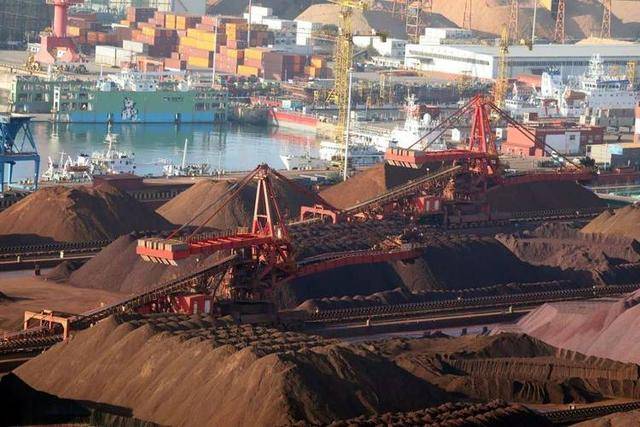
BHP(BHP)

Search documents
X @Bloomberg
Bloomberg· 2025-10-21 01:55
BHP Group boosted output of copper — a key growth pillar for the world’s biggest miner — in its first quarter, while production of iron ore was steady. https://t.co/3JEFChGY7y ...

打破国外资本垄断的铁矿石定价权,推行本币结算
Sou Hu Cai Jing· 2025-10-21 01:35
Core Viewpoint - China Mineral Resources Group has requested domestic buyers to suspend purchases of BHP's iron ore priced in USD, indicating a significant shift in the iron ore trade dynamics and China's intent to enhance its pricing power in the market [1][2][3] Group 1: Market Dynamics - China, as the largest iron ore buyer globally, has been unable to participate in pricing, leading to reduced profits for its steel companies and hindering industrial upgrades [2] - Major global iron ore suppliers, including BHP, Rio Tinto, and Vale, control over 70% of the maritime iron ore trade, creating a monopolistic environment that has historically disadvantaged Chinese steel producers [2][6] - The recent suspension of BHP's iron ore purchases by China marks an escalation in China's efforts to assert its influence over iron ore pricing [1][2] Group 2: Strategic Initiatives - China is working to establish an independent iron ore supply system, exemplified by the Simandou project in Guinea, which has significant reserves and high-quality ore [3] - The formation of China Mineral Resources Group aims to consolidate procurement efforts among Chinese steel companies, enhancing bargaining power against global suppliers [4] Group 3: Currency and Pricing Mechanisms - The focus of the current negotiations is on settling iron ore purchases in local currency, with precedents set in transactions with Brazil and Russia [5] - The dominance of USD in iron ore transactions has led to significant profit losses for Chinese companies, with BHP's profits from iron ore sales reaching $20 billion in 2023, compared to less than $10 billion for Chinese steel firms [5][6] Group 4: New Pricing Index - The launch of the "North Iron Index" by the Beijing Iron Ore Trading Center aims to provide a transparent pricing mechanism for iron ore, challenging the existing opaque pricing models dominated by financial capital [11][13] - The index is based on real transaction data, reducing subjective influences and aiming to establish a more equitable pricing structure in the iron ore market [13] Group 5: Industrial and Economic Implications - China's advancements in industrial capabilities and its strategic partnerships with resource-rich countries position it favorably in the global iron ore market [14][15] - The shift towards local currency transactions and the establishment of a new pricing index are expected to reshape the international iron ore pricing landscape, reducing reliance on Western-dominated financial systems [12][14]
Global Markets React to Policy Shifts, Trade Tensions, and Commodity Gains
Stock Market News· 2025-10-20 23:38
Group 1: Energy Sector Developments - The Canada Energy Regulator (CER) is implementing new exemption orders effective December 1, aimed at simplifying the approval process for "negligible-risk" oil and gas projects, which are defined as projects with existing authorization that do not cover certain additions like storage facilities [3][7] - BHP Group reported a 4% increase in first-quarter copper production, primarily due to an accelerated ramp-up at its Escondida project in Chile, while maintaining steady iron ore output and unchanged full-year guidance [6][7] Group 2: Market Movements and Economic Policies - Japanese equities have reached record highs, with the Nikkei 225 surging 2.9% to 48,970.40, driven by expectations of fiscal expansion under the anticipated premiership of Sanae Takaichi [4][7] - Major U.S. banks, including JPMorgan, Bank of America, and Goldman Sachs, are facing challenges in structuring a $20 billion loan for Argentina, highlighting concerns about the country's economic stability [8][7] Group 3: U.S. Housing Finance and Regulatory Changes - The Trump administration is evaluating a public offering for Fannie Mae and Freddie Mac, potentially by the end of 2025, with the aim of ending their government conservatorship established after the 2008 subprime mortgage crisis [5][7] - In the United Kingdom, Chancellor Rachel Reeves is set to announce regulatory cuts to boost economic growth, which could save businesses billions by streamlining processes [9] Group 4: International Trade and Investment Initiatives - The U.S. is considering new tariffs or restrictions on Nicaragua's benefits under the CAFTA-DR free trade pact due to concerns over human rights abuses, with proposed tariffs potentially reaching up to 100% on imports [10] - The European Investment Bank is seeking critical minerals investments in Australia to diversify supply chains and reduce dependence on single-country suppliers, particularly China [11]



澳洲铁矿、美国大豆都认可人民币!中方首拿铁矿定价权,澳最终妥协让步
Sou Hu Cai Jing· 2025-10-20 20:42
与中国矿产资源集团签署协议,接受人民币结算部分铁矿石贸易。这一突破标志着中国首次在铁矿石这一战略资源领域打破美元定价的垄断。 铁矿石作为 全球最庞大的实物贸易商品之一,年交易额超过1.2万亿美元,此前约80%以美元结算。 中国作为全球最大铁矿石进口国,占全球海运铁矿石贸易总量的75%,却长期在定价方面受制于人。 过去几十年,中国购买全球约七成的海运铁矿石,但 价格一直由国际矿商决定。 必和必拓、力拓和淡水河谷三大国际矿商通过操控现货溢价,曾让中国钢厂多支付超过200亿美元。 2021年,每吨铁矿石的溢价高达30美元,相当于中国钢 厂每生产一吨钢材就要多花200元人民币。 转机出现在2022年中国矿产资源集团的成立。 这家央企整合了国内钢铁厂的采购权,代表全国四成铁矿石进口量进行谈判,彻底改变了以往国内钢企分散 采购、被"逐个击破"的局面。 今年8月,中方在谈判中向必和必拓提出两个核心要求:用人民币结算,以及以80美元/吨的现货价格为基准锁定季度价格。 在澳方最初拒绝后,中国矿产 资源集团于9月30日发出暂停采购通知,导致谈判僵局公开化。 华东师范大学澳大利亚研究中心主任陈弘教授指出,这一举措撼动了美元主导的全 ...

铁矿石与煤炭:黄金周后关键信号表现如何-Iron Ore & Coal_ How are key signals tracking post-Golden Week_
2025-10-19 15:58
Summary of Key Points from the Conference Call Industry Overview - The conference call primarily discusses the **Iron Ore and Coal** industry, focusing on market trends, production data, and trade dynamics. Core Insights and Arguments 1. **Iron Ore Prices and Market Sentiment** - Iron ore prices have increased to **$109/t**, aligning with other commodities due to improved sentiment from the China Work Plan and Fed rate cut expectations [5][6] - The positioning in the Dalian market shifted from a net short position of approximately **-3Mt** before the Golden Week to a broadly neutral stance [5] 2. **China's Iron Ore Inventory and Shipments** - Iron ore inventories in China are stable at ports and have increased seasonally at mills ahead of the Golden Week [5] - Year-to-date shipments from Brazil and Australia have increased by **3%** and **1%** respectively, while non-traditional supply and domestic production in China remain soft [5] 3. **Steel Production and Exports in China** - Steel production in China slowed seasonally in late September, but the MySteel utilization rate remains high at over **90%** post-Golden Week [5] - China's steel exports reached approximately **120Mtpa** in September, reflecting a **10%** month-over-month increase despite rising trade restrictions [6] 4. **Company Ratings and Free Cash Flow Estimates** - Neutral ratings are maintained for Vale, RIO, BHP, and FMG, with a Sell rating on KIO. Estimated spot 2026 free cash flow yields are **5%** for BHP, **10%** for RIO, and over **15%** for Vale [5] 5. **September Trade Data from China** - Preliminary September trade data indicates a **10%** month-over-month increase in iron ore imports to a record high of **116Mt**, while coal imports decreased by **3%** year-over-year [6] Additional Important Insights 1. **Production Guidance and Performance** - RIO's 3Q production is expected to be **84Mt**, down **1Mt** year-over-year, while BHP's shipments are projected at **69Mt**, down **3Mt** year-over-year [9] - Vale's production is anticipated to increase by **2Mt** year-over-year to **93Mt** in the September quarter [9] 2. **Future Production Estimates** - RIO has trimmed its 2025 guidance by approximately **7Mt** due to weather disruptions, now targeting the lower end of the **323-338Mt** range [9] - BHP's FY26 guidance is set at **284-296Mt**, with FMG targeting **195-205Mt** including contributions from Iron Bridge [9] 3. **Coal Market Dynamics** - Glencore announced a **5-10Mt** curtailment at the Cerrejon thermal coal mine due to weak market conditions, with FY production now estimated at **11-16Mt** [9][12] 4. **Regional Production Trends** - Brazilian iron ore producers, including Vale, are tracking towards the mid-point of their 2025 guidance range of **325-335Mt** [9] - South African and Canadian producers are also adjusting their production estimates based on market conditions and operational performance [11] This summary encapsulates the key points discussed in the conference call, providing insights into the current state and future outlook of the iron ore and coal industries.


澳大利亚算计过头,铁矿石涨价15%,中方主动掀桌,不做冤大头了
Sou Hu Cai Jing· 2025-10-19 12:23
Core Viewpoint - China's decision to suspend the purchase of BHP iron ore priced in USD marks a significant shift in the iron ore market, challenging the pricing power of Australian mining giants and indicating a new era of negotiations based on RMB settlements [2][24]. Group 1: Market Dynamics - On September 30, China Mineral Resources Group notified major steel mills and traders to halt purchases of BHP iron ore priced in USD, including already delivered cargoes [2]. - BHP's request for a 15% increase in long-term contract prices to $109.5 per ton is seen as unreasonable, given the prevailing spot price of around $80 per ton [4][6]. - China accounts for 75% of global seaborne iron ore imports, with an annual import volume exceeding 1 billion tons, yet it has historically lacked pricing power due to the concentrated supply from Australian mining companies [6][11]. Group 2: Financial Implications - From 2003 to 2008, international iron ore prices surged by 337.5%, costing Chinese steel companies over 700 billion RMB [8]. - In 2021, the average import price of iron ore reached $179.1 per ton, contributing $17.3 billion to BHP's net profit, while the entire Chinese steel industry projected a profit of only 70 billion RMB in 2024 [8][11]. - BHP's mining costs range from $18 to $24 per wet ton, allowing for a profit margin exceeding 150% when sold to China at prices above $100 [10]. Group 3: Strategic Shifts - The establishment of China Mineral Resources Group in 2022 consolidated procurement efforts among major steel companies, enhancing negotiation power against international mining firms [17]. - China's diversification of supply chains has reduced its reliance on Australian iron ore, with significant projects like the Simandou iron ore project in Guinea expected to come online by the end of 2025 [19][21]. - The shift towards RMB settlements for iron ore trade represents a strategic move to reclaim pricing power and reduce dependence on USD transactions [28]. Group 4: Market Reactions - Following China's suspension of BHP iron ore purchases, international iron ore prices fell by 3%, and BHP's stock dropped by 6%, resulting in a market capitalization loss of 5 billion AUD [26]. - Australia's economy, heavily reliant on iron ore exports to China, faces potential GDP declines of 1.2% due to the halted purchases [26].
低头了!澳洲铁矿石巨头表态,澳媒热议,海外盛赞历史转折
Sou Hu Cai Jing· 2025-10-19 09:52
Core Viewpoint - The article discusses the rapid shift in BHP's stance towards China, highlighting the impact of China's decision to halt purchases of dollar-denominated iron ore, leading BHP to agree to settle transactions in RMB, reflecting a significant change in the global commodity settlement landscape [4][10][39]. Group 1: BHP's Initial Stance and Response - Initially, BHP maintained a strong position, believing that China needed their iron ore and would not easily walk away from the relationship [10][12]. - However, after China’s directive to stop purchasing dollar-denominated iron ore, BHP's stock price began to decline sharply, indicating market reactions to the situation [6][10]. - Within a week, BHP was compelled to agree to China's terms, demonstrating a rapid loss of negotiating power [12][14]. Group 2: China's Strategic Positioning - China's ability to leverage its position stems from years of strategic planning, consolidating the purchasing power of over 600 steel companies through the establishment of the China Mineral Resources Group [18][22]. - The diversification of iron ore sources, including long-term agreements with Brazil's Vale, has strengthened China's negotiating position [18][26]. - The West Mangdu iron ore project, expected to produce significant quantities by 2025, further enhances China's supply chain resilience [24]. Group 3: Shift in Global Commodity Settlement - The agreement to use RMB for iron ore transactions marks a significant shift in the global commodity settlement landscape, traditionally dominated by the US dollar [31][35]. - Other major players, including Vale and Fortescue Metals Group, have also agreed to RMB settlements, indicating a broader trend away from dollar dependency [33][35]. - This change is expected to gradually reduce the dollar's dominance in global commodity trade, with RMB becoming a more reliable option for international transactions [35][39].
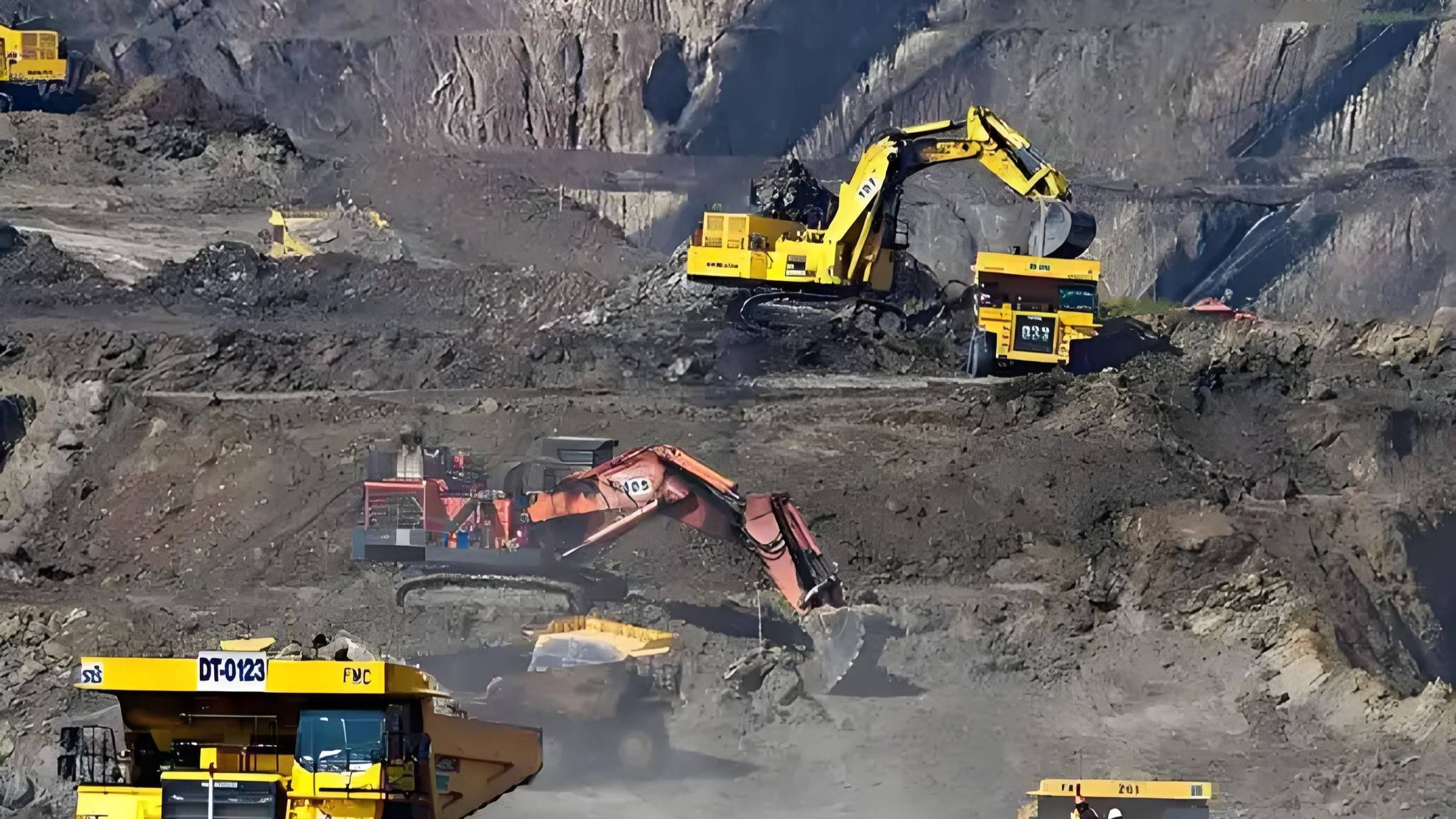
China Rare Earth Squeeze Sparks Interest In Australian Nickel Assets
Forbes· 2025-10-19 08:39
Core Insights - China's control over rare earths has led to increased interest in the nickel sector, particularly in Australia, as nickel prices have plummeted by 50% from $30,000 per ton in 2022 to $15,000 per ton [1][8] Group 1: Nickel Market Dynamics - The primary cause of the nickel price collapse is over-production in Indonesia, where mines and smelters are largely controlled by Chinese business interests, driving rival producers out of the market [3] - Nickel West, a division of BHP, is significantly affected and is seeking buyers who can compete with Indonesia's low-cost production [4] - Interest in nickel has surged due to its critical role in rechargeable batteries for electric vehicles, expanding its market beyond traditional stainless steel applications [7][8] Group 2: Investment Activities - Japanese companies Sumitomo Metal Mining and Mitsubishi Corporation have invested in the Goongarrie nickel and cobalt project in Australia, taking a 50% stake [5] - The Goongarrie project is expected to produce 30,000 tons of nickel and 2,000 tons of cobalt annually for 40 years, with a definitive feasibility study (DFS) underway, funded by a $64 million investment from the Japanese firms [6] - U.S.-based investment firms, including Denham Capital, Appian Capital, and Resource Capital Funds, have shown interest in acquiring Nickel West, which was trading at a loss when it was mothballed last year [9]

中国赢了!澳洲铁矿巨头妥协, 人民币结算铁矿石, 美元霸权再受创?
Sou Hu Cai Jing· 2025-10-18 06:55
Core Viewpoint - BHP has agreed to conduct iron ore transactions in RMB, marking a significant shift in the international trading landscape and a milestone in the internationalization of the RMB [1][3]. Group 1: Company Overview - BHP is Australia's largest iron ore group and has been the largest supplier of iron ore to China for decades [3]. - The company has been generating substantial profits from iron ore exports to China, earning over a billion dollars annually, significantly more than the profits of the Chinese steel industry [5]. Group 2: Strategic Moves by China - China has implemented a strategy to control steel production and established the China Mineral Resources Group to unify procurement negotiations, enhancing its bargaining power [7]. - The shift to RMB for iron ore transactions is part of China's broader strategy to reduce reliance on the US dollar and promote "de-dollarization" in international trade [9]. - China has diversified its iron ore supply sources beyond Australia, including Brazil and Russia, reducing its dependency on Australian iron ore [9]. Group 3: Infrastructure Development - China is investing in infrastructure to facilitate iron ore transportation from alternative sources, including constructing large-capacity ships and railways in Africa [9][11]. - This infrastructure development demonstrates China's capability to overcome geographical challenges in securing iron ore supplies [9]. Group 4: Implications for Global Trade - The agreement with BHP signifies a shift in power dynamics, where market strength and technological capabilities dictate trade rules [11]. - The successful model of using RMB for iron ore transactions can be replicated in other commodity markets, benefiting China's manufacturing sector and the broader economy [11].
中隐忍20年后,只用了9天时间,打赢了一场没有硝烟的战争
Sou Hu Cai Jing· 2025-10-18 03:23
Core Insights - The global iron ore market is undergoing a significant transformation as a major mining company shifts part of its transactions to be settled in Renminbi, indicating a potential change in the pricing structure of resources [1][9][27] Group 1: Market Dynamics - In early October 2025, a major buyer challenged the pricing and settlement currency for Australian iron ore, leading to a tense negotiation period that lasted nine days [3][9] - The shift to Renminbi settlement is seen as a breakthrough for buyers who have long been subjected to dollar-denominated pricing, marking a shift in pricing power [9][27] - The initial response from the mining company was cautious, reflecting the complexities and risks associated with transitioning to a new currency system [29][31] Group 2: Structural Changes - The transition to Renminbi settlement necessitated a complete overhaul of existing financial systems, including adjustments in banking structures and payment processes [11][27] - The introduction of Renminbi into the settlement system is viewed as a structural reconfiguration of the iron ore trading landscape, moving away from a dollar-dominated framework [11][33] - The first transactions using Renminbi were completed successfully, indicating a gradual acceptance of the new currency in the market [31][39] Group 3: Supply Chain Implications - The Simandou iron ore project in Guinea is set to disrupt the existing market dynamics by providing a new source of high-quality iron ore, potentially reducing the dominance of major players like BHP, Rio Tinto, and Vale [21][23] - As the Simandou project progresses, it is expected to significantly impact the supply chain, with the first shipments anticipated to commence soon [37][39] - The emergence of new supply sources, coupled with the shift to Renminbi settlement, is likely to alter the competitive landscape and pricing mechanisms in the iron ore market [25][41]