BIDU(BIDU)

Search documents
独家:他是最有希望被评为院士的高科技企业的高管之一!曾3次入围 但今年没来参选院士 是啥原因?
Xin Lang Cai Jing· 2025-11-29 00:22
Core Points - The recent election results for the Chinese Academy of Engineering revealed that 144 individuals were elected, with three coming from private enterprises, indicating a shift towards recognizing contributions from the private sector [1][3] - The establishment of a "special quota" for private technology leaders in the 2025 election guidelines reflects the government's desire to encourage talent from private enterprises [3] - Despite the new opportunities, notable figures like Baidu's CTO Wang Haifeng did not participate in this year's election, raising questions about the reasons behind his absence [4][6] Group 1 - The election results included three scientists from private companies: Wu Kai from CATL, Lian Yubo from BYD, and Huang Xianbo from Jinfat [1] - The new guidelines for the 2025 election specifically allocate eight slots for candidates from private technology enterprises, highlighting the government's support for this sector [3] - Wang Haifeng, despite his qualifications and previous nominations, chose not to participate this year, which is seen as a significant loss for the private sector representation [6][9] Group 2 - Wang Haifeng has a strong academic and practical background in AI, having led significant projects and received multiple awards, which positions him as a deserving candidate for the academy [6][10] - The contributions of high-level executives in private enterprises, like Wang Haifeng, are often overlooked compared to those from academia, despite their substantial impact on technology and innovation [9][10] - The sentiment expressed by industry leaders suggests that Wang Haifeng's achievements will eventually lead to recognition, even if this year's election did not result in his selection [10]




Securities Fraud Investigation Into Baidu, Inc. (BIDU) Announced – Shareholders Who Lost Money Urged to Contact Glancy Prongay & Murray LLP, a Leading Securities Fraud Law Firm
Businesswire· 2025-11-28 17:00
Core Viewpoint - Glancy Prongay & Murray LLP has initiated an investigation into Baidu, Inc. regarding potential violations of federal securities laws affecting investors [1] Group 1 - The investigation is on behalf of Baidu, Inc. investors who may have incurred financial losses [1] - The law firm is encouraging affected investors to inquire about pursuing claims to recover their losses [1]

香港不哭!大火无情,这些企业豪掷数亿紧急驰援
凤凰网财经· 2025-11-28 12:54
Core Viewpoint - The article highlights the rapid and generous response of various companies and organizations in Hong Kong to the recent fire disaster in Tai Po, showcasing their social responsibility and commitment to aiding affected individuals and communities [3][14]. Group 1: Donations and Contributions - Total donations from various entities have reached several hundred million Hong Kong dollars, demonstrating a strong collective effort to support disaster relief [5]. - Alibaba Group contributed a total of 60 million HKD, including 30 million from the Ma Yun Public Welfare Foundation, 20 million from Alibaba Group, and 10 million from Ant Group [5]. - The Li Ka Shing Foundation pledged an immediate 30 million HKD, with an additional 50 million HKD planned for future support, totaling 80 million HKD [6]. - The Zijing Cultural Group donated 10 million HKD and provided educational materials worth 2 million HKD for nearly 700 affected students [7]. - Other notable contributions include 30 million HKD from the Ho Ying Tung family, 20 million HKD from Chow Tai Fook Group, and various donations from other companies totaling millions [8][9][10]. Group 2: Direct Services and Support - Companies like Baidu Maps and Gaode Maps provided real-time updates on road conditions, helping to facilitate safe navigation around the disaster area [11]. - SF Express opened 146 locations in Hong Kong for free transportation of relief supplies, effectively enhancing the logistics of aid delivery [11]. - Anta Group supplied 20 million HKD worth of cold-weather gear, addressing immediate needs for warmth among the affected population [12]. Group 3: Social Responsibility and Community Impact - The article emphasizes that while financial contributions are significant, the direct services provided by companies during the disaster are equally crucial, reflecting a strong sense of social responsibility [11][14]. - The collective actions of these companies during the crisis highlight their commitment to community welfare, transcending their usual business operations [14].





产学研融合助力科技自强,一批京企无人车进高校
Bei Jing Ri Bao Ke Hu Duan· 2025-11-28 12:52
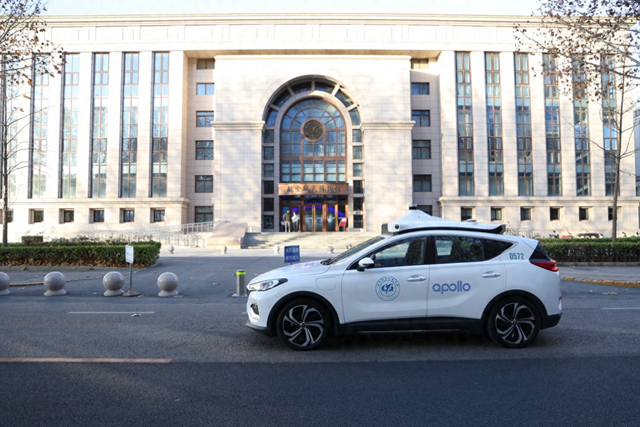
Core Insights - The collaboration between Baidu Apollo and Beihang University aims to enhance research, education, and talent development in the field of autonomous driving [1][3] - Baidu Apollo is recognized as a leader in the domestic autonomous driving sector, while Beihang University is one of the first institutions to offer a specialized program in this area [3] Group 1: Collaboration and Contributions - Baidu Apollo has donated autonomous vehicles to Beihang University to support research and education in autonomous driving [1] - The partnership has led to the establishment of China's first "autonomous driving" major and has been recognized as a typical project in the Ministry of Education's collaborative education initiative [3] Group 2: Future Plans and Initiatives - Baidu Apollo plans to launch the "Spark Program" in early 2025, which will involve donating autonomous vehicles and experimental platforms to multiple universities, including Wuhan University and Fudan University [3] - This initiative aims to foster the development of autonomous driving technology and cultivate more skilled professionals in the industry [3]
China's Google Baidu Begins Layoffs Hitting Multiple Units After Brutal Q3: Report - Alibaba Gr Hldgs (NYSE:BABA), Baidu (NASDAQ:BIDU)
Benzinga· 2025-11-28 12:26
Group 1 - Baidu Inc. has initiated layoffs across multiple business units, expected to continue until the end of the year [1][2] - Layoff numbers may reach as high as 40% for some teams, with the total number of jobs being cut not yet established [2] - The mobile ecosystem group will face the most significant cuts, while roles related to AI and cloud computing are largely protected [3] Group 2 - Baidu reported a 7% decline in total revenue and an 18% drop in online advertising revenue for Q3, resulting in a loss of RMB 11.23 billion ($1.59 billion) [3] - U.S.-listed shares of Baidu have fallen over 8% in the past month but have increased by 40.6% year-to-date [4] - Despite being the first major Chinese tech firm to launch a ChatGPT-style service called Ernie in 2023, Baidu has struggled against competitors like Alibaba and DeepSeek [5]

AI眼镜新品不断,夸克之后还有谷歌AR眼镜,明年将迎来新一轮产业高潮
Xuan Gu Bao· 2025-11-28 10:11
Group 1: Google AR Glasses Release - Google, in collaboration with XREAL, plans to officially release the AR glasses Project Aura in December 2025, with a market launch expected in 2026. This device will be the first official AR terminal equipped with the Android XR system and will integrate Google's Gemini AI technology for enhanced environmental semantic understanding and intelligent interaction [1][2] - Google has initiated two AI glasses projects, which are currently in the POC (Proof of Concept) stage, focusing on selection and ID design. The hardware manufacturing is being handled by Foxconn, with reference designs from Samsung and chips supplied by Qualcomm [1] Group 2: Competitors in the AI Glasses Market - Alibaba has launched its first AI glasses powered by its self-developed Qianwen model, entering the consumer-grade AI wearable market. The glasses are priced at 1899 yuan and are deeply integrated with Alibaba's ecosystem, including services like Alipay and Taobao [3] - Baidu introduced its first Xiaodu AI glasses, weighing only 45 grams, featuring first-person shooting and audio-visual translation capabilities, with a standby time of 56 hours. These glasses are expected to be priced above 2000 yuan and launched in the first half of 2026 [3] - Samsung announced plans for AI glasses, collaborating with Google and fashion eyewear brands. The smart glasses are expected to debut in early 2026, featuring capabilities to display digital content and recognize user actions [3] Group 3: Market Potential and Forecasts - Tianfeng Securities highlighted the vast global user base for glasses as a natural market for the intelligent upgrade of AI glasses, combined with the current low penetration rate of AI, indicating significant growth potential for the AI glasses market. Wellsenn XR predicts that global AI+AR smart glasses sales could reach approximately 1.4 billion units, corresponding to a 70% penetration rate at maturity [5] - Omdia forecasts that the shipment of AI glasses, driven by companies like Google and Xiaomi, will reach 10 million units for the first time next year [6] Group 4: Historical Performance of Industry Leaders - Oakley, a well-known eyewear brand, has partnered with tech giant Meta to develop smart glasses, with the results expected to be announced on June 20, 2025. This collaboration has positively impacted the smart glasses concept sector, leading to stock price increases for companies like Inpai and Jierong Technology [7]


Baidu launches major layoffs as ad revenue falls and AI competition intensifies: report
Invezz· 2025-11-28 09:19
Core Insights - Baidu has initiated large-scale layoffs to restructure its workforce in response to increasing competition in the artificial intelligence sector and declining advertising revenue [1] Company Summary - The layoffs are part of a broader strategy to adapt to the challenges posed by competitors in the AI market [1] - The company is experiencing a significant drop in advertising revenue, which is prompting these workforce changes [1] Industry Summary - The artificial intelligence industry is becoming increasingly competitive, which is affecting companies like Baidu [1] - The decline in advertising revenue is a common challenge faced by firms in the tech sector, impacting their operational strategies [1]

Baidu pushes deeper into AI chips as China races to replace Nvidia
Invezz· 2025-11-28 08:52
Core Viewpoint - Baidu is intensifying its focus on artificial intelligence (AI) chips as China aims to reduce its dependence on Nvidia technology amid global chip shortages and export restrictions [4][5][6]. Group 1: Baidu's AI Chip Strategy - Baidu's semiconductor division, Kunlunxin, is central to China's strategy for enhancing its AI infrastructure and is increasing investments and product plans [6][7]. - The company has outlined a five-year roadmap for Kunlunxin, introducing the M100 chip expected in 2026 and the M300 in 2027, aimed at supporting Baidu's ERNIE models [8][9]. - Baidu is positioning itself as a full-stack AI technology provider, integrating chips, servers, data centers, models, and applications [9]. Group 2: Market Dynamics and Demand - The demand for domestic AI hardware is projected to rise as Chinese hyperscalers shift towards local suppliers, reflecting a broader trend in the technology sector [10]. - China's AI sector is currently facing significant shortages in advanced chips, with major companies like Alibaba and Tencent reporting supply constraints impacting their capital spending [11][12]. - The combination of restricted imports and strong domestic demand is creating a larger market for companies capable of producing competitive AI chips [16]. Group 3: Competitive Landscape - Baidu is not the only company developing in-house semiconductors; Alibaba and other firms are also adapting their infrastructure to manage supply constraints [15]. - Analyst estimates suggest that Kunlunxin could see substantial valuation growth, supported by optimistic revenue forecasts for the upcoming years [15].

2026年互联网传媒投资策略:国内AI纵深发展,悦己消费全球化
Shenwan Hongyuan Securities· 2025-11-28 07:46
Group 1 - The core opportunity in the internet and media sectors for 2025 is centered around AI revaluation, particularly in cloud computing, and the globalization and youth-oriented trends in self-consumption, such as trendy toys, music, and concerts [3][4] - AI cloud capital expenditure (capex) is expected to expand in its second year, with a focus on return on investment (ROI) from AI investments, making capex/operating cash flow a key metric for investors [3][4] - Major companies to watch in the AI cloud space include Alibaba, Baidu, and Kingsoft Cloud, which are focusing on domestic production and infrastructure [3][12] Group 2 - The AI application landscape is shifting from conceptual discussions to a focus on commercial viability, with significant developments in AI advertising and video monetization expected in 2026 [3][4] - Tencent, Bilibili, Meitu, Kuaishou, and Focus Technology are highlighted as key players in the AI application ecosystem, with a particular emphasis on the monetization of chatbot applications and the evolution of AI video tools into community platforms [3][4] - The gaming sector is seeing structural opportunities driven by Generation Z and international expansion, with a focus on companies like Giant Network, Century Huatong, and Xindong Company [3][4] Group 3 - The self-consumption trend is expected to continue, with gaming, music, and trendy toys being key areas of growth, particularly as the market adjusts post-2025 [3][4] - The video sector is anticipated to reach a turning point, with policy stabilization and diverse monetization strategies being crucial for growth [3][4] - Companies such as Mango Super Media, Shanghai Film, and Reading Group are positioned to benefit from these trends [3][4] Group 4 - The report indicates a recovery in companies like Focus Media, Vision Source, and educational publishing firms, suggesting a positive outlook for these sectors [3][4] - The report emphasizes the importance of continuous performance and valuation adjustments in the context of evolving market conditions [3][4] Group 5 - The domestic cloud computing market is witnessing increased capital expenditure from major internet companies, with Alibaba and Tencent leading the charge [18][19] - The report highlights the importance of measuring the health of cloud investments through the capex/operating cash flow ratio, with Tencent's ratio being notably lower than its peers [19][29] - AI-driven cloud services are expected to maintain higher profit margins compared to traditional cloud offerings, with a focus on internal workload efficiencies [29][30] Group 6 - The report outlines the competitive landscape of AI applications, noting that Chinese companies are making significant strides in the global market, particularly in productivity tools and content generation [34][35] - The emergence of ChatGPT as a multi-functional platform is reshaping the AI application ecosystem, with significant implications for user engagement and commercial applications [35][39] - Advertising remains a critical area for AI commercialization, with companies like Meta, Tencent, and Bilibili leveraging AI to enhance ad performance and efficiency [43][49]



China's Baidu starts layoffs after reporting third-quarter loss - sources
Reuters· 2025-11-28 07:15
Core Insights - Baidu has initiated layoffs across multiple business units as it faces increasing competition in the artificial intelligence sector [1] Group 1: Company Actions - The layoffs are part of a broader strategy to streamline operations amid challenging market conditions [1] - Multiple sources indicate that the layoffs will affect various departments within the company [1] Group 2: Industry Context - The artificial intelligence industry is experiencing intensified competition, which is impacting companies like Baidu [1] - The current market dynamics are forcing companies to reassess their workforce and operational strategies to remain competitive [1]