Citi(C)

Search documents
趁乱抛售?最高法院刚裁决,对冲基金就对美元“下死手”
Xin Lang Cai Jing· 2026-02-24 14:05
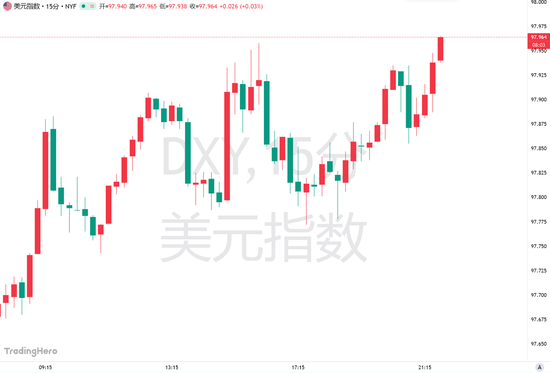
炒股就看金麒麟分析师研报,权威,专业,及时,全面,助您挖掘潜力主题机会! 来源:金十数据 根据外媒获得的一份美国银行报告,花旗的对冲基金客户在上周五美国最高法院对美国总统特朗普广泛 的关税政策作出裁决前后,抛售了美元。 上周五,在最高法院依据国家紧急状态法驳回了关税举措后,美元在波动的交易中下跌。 花旗外汇量化投资者解决方案全球主管Kristjan Kasikov在报告中表示:"花旗的对冲基金客户在关税裁 决前后是美元的净卖家。"他补充称,澳元是主要货币对中被买入最多的货币。 Kasikov补充道:"新兴市场货币,特别是亚洲和拉美的货币,也看到了一些资金流入。" 花旗指出,鉴于最高法院的裁决结果在预期之中,其观察到的交易量与过去的交易活动大体一致。 该报告还补充说,即使在上周五美元出现波动之后,花旗的货币仓位指标仍指向适度的美元多头仓位, 这主要是由对冲基金和实钱客户的资金流驱动的。 在特朗普于法院裁决后不久签署行政命令后,10%的关税于周二生效。此后他曾威胁将关税提高至 15%,但尚未发布正式指令来提高税率。 新浪声明:此消息系转载自新浪合作媒体,新浪网登载此文出于传递更多信息之目的,并不意味着赞同 其观点 ...


Citi sells another 24% of Banamex
Yahoo Finance· 2026-02-24 12:08
Core Viewpoint - Citi has agreed to sell an additional 24% of its Mexico retail-banking unit, Banamex, for approximately $2.5 billion, indicating a strategic move to divest from retail banking in Mexico as part of its broader restructuring efforts [1][4]. Group 1: Transaction Details - Citi will sell 499 million shares of Banamex, with the transaction expected to close by the end of the year, pending regulatory approval in Mexico [1][3]. - The buyers include General Atlantic, BTG Pactual, Chubb, and several funds managed by Blackstone, Liberty Strategic Capital, and Qatar Investment Authority, with no single investor acquiring more than 4.9% [2]. Group 2: Future Plans and Strategy - Citi does not plan to sell any more pieces of its Mexican retail operations until at least 2026, allowing current investors time to enhance value [3]. - The bank aims to launch Banamex's initial public offering (IPO) by 2026, with the timing and structure of the IPO dependent on various financial and market conditions [4][5]. Group 3: Ownership and Previous Sales - After the latest sale, Citi will retain a majority stake of 51% in Banamex, having previously sold a 25% stake to Mexican billionaire Fernando Chico Pardo [6]. - Citi had rejected a $9.3 billion bid from Grupo Mexico for a full acquisition of Banamex, which highlights the competitive landscape surrounding the asset [6].
Citigroup's hedge fund clients sold the dollar around Supreme Court tariff ruling
Yahoo Finance· 2026-02-24 12:03
LONDON, Feb 24 (Reuters) - Citigroup's hedge fund clients sold the dollar around Friday's U.S. Supreme Court ruling on President Donald Trump's sweeping tariffs, according to a note from the U.S. bank shared with Reuters late on Monday. The dollar fell in volatile trading on Friday after the Supreme Court struck down the tariffs based on a national emergency law. "Citi’s hedge fund clients were net USD (dollar) sellers around and after the tariff ruling," Kristjan Kasikov, global head of Citi FX ...
Citi enters $2.5bn deal to sell 24% of Banamex to investors
Yahoo Finance· 2026-02-24 11:42
Group 1 - Citigroup has agreed to sell a 24% stake in Grupo Financiero Banamex for approximately $2.5 billion to a group of institutional investors and family offices [1][2] - The transaction values Banamex at about 0.85 times its book value and 1.01 times tangible book value according to local accounting standards [2] - Completion of the transaction is subject to regulatory approval in Mexico and is expected to close in 2026 [2][3] Group 2 - Following this sale, Citigroup will have divested 49% of Banamex, with the largest private shareholder, Fernando Chico Pardo, having previously acquired a 25% stake [3] - Citigroup's head of International emphasized the backing of the new investors as a positive endorsement of Banamex's long-term strategy and growth prospects [4] - The company confirmed it does not plan further sales in 2026, focusing on the development of Banamex with the current investor group [4][5] Group 3 - Citigroup stated that selling Banamex remains a key objective, with future decisions on public listings or further share sales dependent on market conditions and regulatory approvals [5] - The company is also making progress in selling its consumer banking operations internationally, including an agreement to sell its consumer business in Poland [5]
花旗集团对中兴通讯的多头持仓比例降至5.85%
Xin Lang Cai Jing· 2026-02-24 09:11
Group 1 - The core point of the article is that Citigroup's long position in ZTE Corporation's H-shares decreased from 6.07% to 5.85% as of February 13, 2026 [1]

花旗集团将诺和诺德目标价从340丹麦克朗下调至309丹麦克朗。

Xin Lang Cai Jing· 2026-02-24 06:24
来源:滚动播报 花旗集团将诺和诺德目标价从340丹麦克朗下调至309丹麦克朗。 ...
花旗:下调澳门2月博彩收入预测至195亿澳门元
智通财经网· 2026-02-24 03:52
Core Viewpoint - Citi's report indicates that Macau's gaming revenue for the first 22 days of February is approximately 14.3 billion MOP, reflecting a daily average of about 786 million MOP, which is an 8% increase compared to the daily average of 730 million MOP on January 26 and a 45% increase compared to the daily average of 543 million MOP in the week of February 9 [1] Revenue Performance - The strong performance during the Lunar New Year, particularly on the fourth to sixth days, saw daily revenues of approximately 1.2 to 1.3 billion MOP, but the first four days of that week showed significantly lower VIP room win rates than normal [1] - VIP room gaming volume decreased by approximately 8% to 10% month-on-month, while mass gaming revenue fell by about 10% to 12% [1] Revenue Forecast Adjustments - Due to weaker-than-expected trends leading up to the Lunar New Year, the February gaming revenue forecast has been revised down from 20 billion MOP to 19.5 billion MOP, representing a year-on-year decline of 1%, which implies a daily average of about 867 million MOP for the remainder of the month [1] - The combined gaming revenue forecast for January and February (adjusted for the differing Lunar New Year dates) is now set at 42.1 billion MOP, reflecting an 11% year-on-year increase [1]
资讯早间报:隔夜夜盘市场走势-20260224
Guan Tong Qi Huo· 2026-02-24 03:04
Report Summary 1. Report's Industry Investment Rating No relevant information provided. 2. Core Viewpoints - Global financial markets are affected by multiple factors including geopolitical tensions, tariff policies, and corporate earnings, leading to significant fluctuations in various asset classes. For example, the US stock market declined due to Trump's tariff plan and EU's suspension of the trade - agreement approval, while the precious metals market rose due to increased risk - aversion [5][6]. - The energy market is influenced by the Iran - US nuclear negotiation, with expectations of increased Iranian oil supply putting downward pressure on oil prices [7]. 3. Summary by Directory Overnight Night - Market Trends - **Stock Markets**: US major indices (Dow, S&P 500, Nasdaq) fell, with IBM and American Express leading the decline. European indices (DAX, CAC40, FTSE 100) also closed lower. The reasons include Trump's tariff plan and EU's suspension of trade - agreement approval [5]. - **Precious Metals**: COMEX gold and silver futures rose due to increased risk - aversion from geopolitical tensions, tariff policy changes, and other factors [6]. - **Energy**: US crude oil and Brent oil futures fell as the Iran - US nuclear negotiation showed signs of progress, increasing the expectation of more Iranian oil supply [7]. - **Base Metals**: Most London base metals declined, except for LME tin which rose [7]. Important News Macro News - Shanghai Export Container Settlement Freight Index for European routes dropped 2.1%. The US will stop collecting certain illegal tariffs. There is still a risk of US military strikes against Iran. India postponed a trade delegation plan. China is assessing the impact of US tariff rulings and urges the US to cancel unilateral tariffs. The EU suspended the approval of a trade agreement with the US. The Trump administration is considering new "national security tariffs" [9][11]. Energy Futures - Saudi Aramco sold condensate oil. Methanol supply in Southeast Asia is restricted due to planned maintenance. Goldman Sachs and Morgan Stanley have different forecasts for oil prices, with Goldman Sachs raising price forecasts for Q4 2026 and 2027, and Morgan Stanley expecting a short - term increase followed by a decline [14][16][18]. Metal Futures - The US energy storage market is expected to grow 21%. Lebanon may sell part of its gold reserves. UBS is positive on gold, with a target price of $6200/ounce [20][21]. Black - Series Futures - China's iron ore arrivals decreased, but global iron ore shipments increased. Vietnam plans to build a large - scale steel plant. The blast furnace capacity utilization rate of Chinese pig - iron enterprises decreased, and inventory increased [23][25]. Agricultural Products Futures - Malaysian palm oil production and exports decreased in February. Argentina's soybean moisture conditions improved, and the production forecast remains unchanged [27][28]. Financial Markets Financial - 143 companies have submitted IPO applications in the Hong Kong stock market in 2026. Deloitte predicts a better performance in the Hong Kong IPO market this year [30]. Industry - Payment transactions on Chinese New Year's Eve increased. The real - estate market may show more stabilization signals. China's AI governance system is maturing [31]. Overseas - The US may adjust tariff application methods and continue steel - aluminum tariffs. The Fed has about 75 basis - points to reach the neutral rate. India plans to invest $200 billion in AI. The Australian central bank may tighten policy. UK unemployment reached a new high [32][34][35]. International Stock Markets - US and European stock markets rose, while the Japanese market fell. High - end companies made significant stock - position adjustments. The UK may adjust accounting rules to attract Chinese companies. Australia simplifies corporate governance rules. Some companies announced major transactions or reported good earnings [36][38][41]. Commodities - Precious metals, oil, and most base metals futures fell due to factors such as progress in the Iran - US nuclear negotiation and reduced risk - aversion [43]. Bonds - US Treasury yields had mixed changes. Japanese bonds rose, and the 2029 fiscal - year bond issuance may increase [45]. Foreign Exchange - The US dollar index rose slightly, and most non - US currencies fell [46]. Upcoming Economic Data and Events - **Economic Data**: Include Japan's trade balance, UK's inflation and housing - price index, US's new - home construction, and other data [48]. - **Events**: New Zealand's central - bank rate decision, European Central Bank officials' speeches, and the Fed's release of meeting minutes [50]. - **Market Closures**: Chinese, South Korean, and Vietnamese stock markets are closed due to the Spring Festival [52].





前花旗高管警告:未来AI机器人数量将超劳动人口
Xin Lang Cai Jing· 2026-02-24 00:14
一位前花旗集团高管于当地时间周一发出警告称,随着越来越多企业采用人工智能智能体并持续压缩成 本,未来几十年内,人工智能机器人数量将超过劳动人口。花旗全球洞察部前创新、科技与未来工作负 责人罗布 · 加里克在接受一档采访时表示,企业管理层持续将盈利放在首位,人类员工将被远远甩在身 后。 ...

Citigroup strikes Banamex stake sales with Blackstone, BTG
American Banker· 2026-02-23 23:18
Core Viewpoint - Citigroup Inc. is selling an additional 24% of its Mexican retail bank, Grupo Financiero Banamex, for approximately $2.5 billion to various investors, including private equity firms and a sovereign wealth fund, as Mexican billionaire Fernando Chico Pardo takes over the business [1][2]. Group 1: Transaction Details - The investors will purchase 499 million shares of Grupo Financiero Banamex for around 43 billion pesos ($2.5 billion), pending regulatory approval, with the transaction expected to close this year [2]. - The stakes acquired by the investors are all less than 5% each, including investments from Blackstone Inc., General Atlantic, Banco BTG Pactual SA, and Afore Sura [3]. - The latest stakes were sold at 0.85 times book value, slightly above the 0.8 times paid by Chico Pardo in the previous sale [7]. Group 2: Strategic Implications - The investment from these firms is seen as an endorsement of Banamex's long-term strategy and growth prospects, reinforcing its foundational position in Mexico's banking system [4][6]. - Citigroup is looking to fully exit its retail operations in Mexico, with plans for an initial public offering (IPO) for Banamex, contingent on market conditions and regulatory approvals [9]. Group 3: Management and Future Plans - Chico Pardo will lead Banamex alongside his sons and was involved in selecting the new investors [8]. - Citigroup has been divesting its retail arms globally to simplify its operations while retaining a corporate banking unit and brokerage in Mexico [11].