
CITIC Securities Co., Ltd.(CIIHY)

Search documents
中信证券获批发债800亿元,张佑君忙着谈合作
Sou Hu Cai Jing· 2026-02-28 10:18
Group 1 - The core viewpoint of the article highlights the collaboration between CITIC Securities and Moutai Group, focusing on enhancing financial services and investment strategies for mutual growth [1] - CITIC Securities aims to leverage its resources to support Moutai's diversified investment layout, promoting a virtuous cycle of "industry supporting capital and capital empowering industry" for higher quality development [1] - The meeting also emphasized the importance of expanding cooperation into broader, deeper, and more comprehensive areas [1] Group 2 - CITIC Securities is currently preparing for a board restructuring, having announced a delay in the board's election due to ongoing candidate nominations [3] - The board has made personnel adjustments, including the appointment of Sun Yi as an executive committee member, effective immediately [4] - The management team has been supplemented, with notable changes including the nomination of Wu Yonggao as a candidate for the board [5][7] Group 3 - As of 2026, CITIC Securities is focusing on expanding financing channels, including issuing bonds to enhance capital strength [9] - The company issued a short-term corporate bond of 10 billion yuan with a subscription multiple of 3.05 times, indicating strong market interest [9][10] - CITIC Securities received approval from the CSRC to publicly issue bonds totaling up to 80 billion yuan, marking the largest bond issuance approval for a brokerage this year [11][13] Group 4 - CITIC Securities has achieved an asset scale exceeding 2 trillion yuan, with a net profit surpassing 30 billion yuan [14] - The company's financial investments have shown significant growth, with total financial investments reaching 601.2 billion yuan at the end of 2022 and projected to be 932.01 billion yuan by the end of Q3 2025 [16]

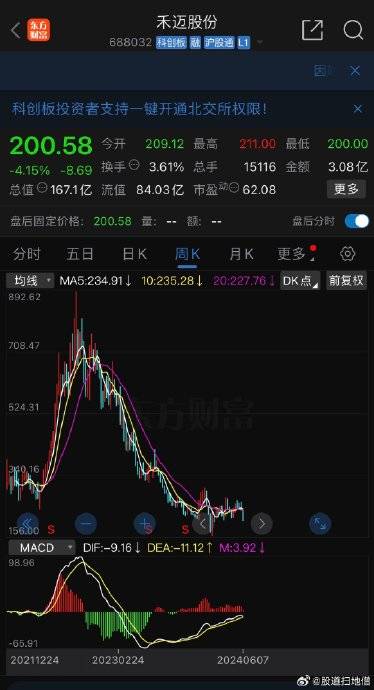
保荐机构中信证券在禾迈股份上市及后续股价波动中扮演了什么角色?
Sou Hu Cai Jing· 2026-02-28 01:21
Core Viewpoint - The article discusses the role of CITIC Securities as the sponsor of HeMai Co.'s IPO, highlighting the controversies surrounding its high issuance price and subsequent stock price collapse, raising questions about the responsibilities of the sponsor [1][11]. Group 1: Sponsorship Role and Controversies - CITIC Securities was the sponsor for HeMai Co.'s IPO in 2021, achieving a record issuance price of 557.8 yuan per share, which raised concerns about potential price manipulation during the inquiry process [2]. - The initial fundraising target was 500 million yuan, but the actual amount raised reached 5.578 billion yuan, resulting in an oversubscription rate of 1015%, significantly exceeding the company's actual needs [2]. Group 2: Stock Price Collapse and Sponsor Responsibility - Following the IPO, CITIC Securities pushed the stock price to a peak of 1338.88 yuan in 2022, a 140% increase from the issuance price, driven by short-term profit motives [3]. - The company's performance deteriorated, with a projected loss of 1.35 billion yuan in 2025, a 139% decline year-on-year, leading to an 83% drop in stock price from its peak [5]. - CITIC Securities failed to effectively supervise the use of the raised funds, with 4.5 billion yuan allocated to financial investments rather than business expansion, indicating a lack of oversight on the company's long-term development [6]. Group 3: Industry Ecosystem and Accountability Issues - CITIC Securities led the industry in underwriting with 246.7 billion yuan in 2025, but the HeMai case revealed a tendency to prioritize scale over quality, as the oversubscription allowed for higher underwriting fees [7]. - Despite regulatory emphasis on accountability, CITIC Securities faced no repercussions for alleged stock price manipulation, with 22 out of 30 companies it sponsored in 2025 experiencing stock price declines, while still collecting 2.8 billion yuan in sponsorship fees [8]. Group 4: Recommendations for Market Restoration - Regulatory authorities should impose limits on oversubscription ratios (e.g., not exceeding 200% of the planned fundraising amount) and require that excess funds be managed in dedicated accounts linked to core business investments [9]. - A proposal to extend the supervision period to five years post-IPO and to include stock price stability metrics in broker ratings was suggested, along with establishing a mechanism for compensating investor losses [10].
涪陵电力今日涨停,中信证券上海徐汇区漕溪北路证券营业部净卖出1.64亿元
Xin Lang Cai Jing· 2026-02-27 09:03
Group 1 - Fuling Power experienced a trading limit increase today, with a transaction amount of 1.693 billion yuan and a turnover rate of 8.49% [1] - The post-market dragon and tiger list indicates that the Shanghai-Hong Kong Stock Connect special seat bought 134 million yuan and sold 61.816 million yuan [1] - Two institutional special seats net bought 153 million yuan, while CITIC Securities' Shanghai Xuhui District Caoxi North Road Securities Office net sold 164 million yuan [1]

亚虹医药近8年均亏损 2022年上市募25亿中信证券保荐

Zhong Guo Jing Ji Wang· 2026-02-27 06:51
中国经济网北京2月27日讯 亚虹医药(688176.SH)近期发布2025年年度业绩预亏公告。经财务部门初步测算,预计2025年度实现归 属于母公司所有者的净利润为-37,766.54万元到-45,319.85万元,与上年同期相比,净利润增加-6,913.51万元(亏损同比增长18.00%)到 639.80万元(亏损同比减少1.67%)。 亚虹医药上市首日开盘即破发,当日盘中最高价报20.00元,为上市以来最高价。 亚虹医药首次公开发行股票募集资金总额为25.28亿元,扣除发行费用后募集资金净额为23.81亿元。亚虹医药最终募集资金净额比原 计划多3.11亿元。亚虹医药于2021年12月31日披露的招股说明书显示,该公司拟募集资金20.70亿元,拟分别用于药品、医疗器械及配套 用乳膏生产项目,新药研发项目,营销网络建设项目,补充流动资金。 亚虹医药首次公开发行股票的费用总额为1.47亿元,其中中信证券获得承销费及保荐费1.30亿元。 亚虹医药的控股股东、实际控制人、董事长兼总经理是PANKE,美国国籍。 预计公司2025年度归属于母公司所有者扣除非经常性损益后的净利润为-39,628.87万元到-47,554 ...

中信证券:维持右侧窗口期判断,AI机遇大于挑战
Ge Long Hui· 2026-02-27 02:03
Core Viewpoint - The narrative surrounding AI has led to a decline in domestic and foreign insurance stocks, primarily due to concerns over interest rate predictions and the sustainability of insurance companies' business models. However, the company believes that the potential negative impacts have been exaggerated, and the opportunities in the insurance sector outweigh the challenges, maintaining that the industry is in a significant opportunity period [1]. Group 1: Market Dynamics - Since early 2026, insurance stocks have experienced a notable correction, influenced by factors such as the stock market decline in Q4 2025 affecting 2025 annual reports, increased ETF volumes leading to funding pressures, and AI narratives causing emotional concerns [1]. - From an interest rate perspective, insurance stocks benefit from the steepening of China's bond yield curve. The company anticipates that China's fiscal deficit will be around 4% in 2026, with long-term bond supply remaining high. In a loose monetary policy environment, the bond yield curve is expected to continue its steepening trend observed since 2025 [1]. - The company projects that due to the unclear real estate situation and low CPI, interest rates in China will likely remain low for an extended period. Leading insurance companies are actively selling policies during this phase, expanding low-cost liabilities through dividend insurance and bank insurance channels, thus enjoying the benefits of term spreads [1]. Group 2: AI Impact on Insurance Value Chain - The company identifies six attributes that redefine the insurance value chain in the AI era, including necessity, amount, human behavior, frequency, service requirements, and trust requirements. The key is to balance human weaknesses (such as procrastination and optimism bias) with risk management needs. Products that counter human tendencies require stronger trust intermediaries and scenario-triggered mechanisms [2]. - AI applications present more opportunities than challenges for both tech companies and traditional insurers, given China's relatively low insurance penetration and diverse customer needs [2]. Group 3: Traditional vs. Tech Insurance Companies - Traditional insurance companies possess a strong competitive advantage, particularly in areas requiring long-term trust and complex service demands. They can continue to invest in extending their value into the physical world and human relationships, while also integrating technology to enhance standardization and data-driven processes [4]. - Tech companies have potential breakthroughs in various combinations of insurance products, including high-risk, scale, barrier, and flow combinations, each with specific characteristics and market opportunities [3]. Group 4: Investment Strategy and Regulatory Environment - The insurance sector is still in a significant opportunity period, with the adjustment of AI narratives creating a right-side investment window. Over the next 3-5 years, insurance companies are expected to benefit from a highly regulated and competitive environment, with market share likely to continue concentrating among the top seven companies [6]. - Regulatory policies are pushing the industry to strengthen asset-liability management and encourage insurance companies to participate as strategic investors in large-scale equity offerings. These policies are expected to act as catalysts for insurance stock prices [7].
破发股中科微至两年连亏 上市超募14亿中信证券保荐
Zhong Guo Jing Ji Wang· 2026-02-27 01:50
Group 1 - The company, Zhongke Weizhi (688211.SH), forecasts a revenue of between 235 million to 285 million yuan for the year 2025, with a projected net loss attributable to shareholders of between 13 million to 8.8 million yuan [1] - For the years 2022 to 2024, Zhongke Weizhi reported revenues of 2.315 billion yuan, 1.957 billion yuan, and 2.474 billion yuan respectively, with net losses attributable to shareholders of -119 million yuan, 20.85 million yuan, and -84.75 million yuan [1] - The company was listed on the Shanghai Stock Exchange's Sci-Tech Innovation Board on October 26, 2021, with an initial issuance of 33 million shares at a price of 90.20 yuan per share [1] Group 2 - On its first day of trading, Zhongke Weizhi opened at 90.00 yuan, which was the highest price since its listing, but is currently in a state of decline [2] - The total funds raised from the initial public offering amounted to 2.977 billion yuan, with a net amount of 2.749 billion yuan after deducting issuance costs, which was 1.409 billion yuan more than originally planned [2] - The company intended to use the raised funds for various projects, including the intelligent equipment manufacturing center and digital workshop construction, as well as for working capital [2]

中信证券:低利率环境下,储蓄存款向保险公司迁移趋势有望长期持续
Zhi Tong Cai Jing· 2026-02-27 01:16
Core Viewpoint - The insurance industry is expected to benefit from strict regulations and a competitive environment over the next 3-5 years, leading to increased market share concentration among the top seven companies [1] Group 1: Market Dynamics - The low interest rate environment is driving a migration of savings deposits to insurance companies, resulting in a win-win situation for banks, insurance companies, and customers [1] - This trend is anticipated to continue long-term, supporting capital patience and bolstering the development of the stock and bond markets as well as the real economy [1] Group 2: Regulatory Environment - Ongoing regulatory efforts are pushing the industry to enhance asset-liability management and advance the construction of the second and third phases of solvency regulations [1] - Smaller insurance companies are encouraged to reduce scale while improving quality, and insurance companies are being incentivized to act as strategic investors in large-scale equity financing for listed companies [1] - The southbound trading scheme is expected to increase its quota, allowing insurance companies to allocate more towards overseas high-yield bonds, with these policies acting as catalysts for stock prices in the insurance sector [1] Group 3: Future Outlook - For the first quarter and mid-year reports of 2026, there is a high certainty of growth in policy sales, investment returns, and profits based on a low base in 2025 [1] - Recent adjustments in AI narratives have created an investment window, with a recommendation to focus on leading companies that exhibit rapid growth in new business value, stable profitability and dividends, and low valuations [1]
中信证券:阿里与腾讯押注NPO,关注Scale up网络发展机遇
Xin Lang Cai Jing· 2026-02-27 01:07
Core Viewpoint - The current AI computing network is undergoing a critical transition towards all-optical interconnection, with NPO technology emerging as an ideal compromise to overcome bandwidth physical limitations. Major tech giants like Alibaba and Tencent are accelerating the implementation and standardization of NPO architecture, indicating that this technology has entered the stage of large-scale commercialization [1][7]. Group 1: NPO Technology and Its Advantages - NPO technology demonstrates a strong balance in signal integrity, power consumption, and maintainability, making it a suitable solution for the extreme challenges posed by the evolution of large model architectures in AI [2][8]. - Compared to traditional high-power pluggable optical modules and CPO (Co-Packaged Optics) solutions, NPO (Near-Package Optics) offers significant advantages by relocating the optical engine closer to the switching chip, thus reducing signal transmission distance and power consumption while maintaining the independent replaceability of the optical engine [2][8]. Group 2: Major Players and Developments - Leading CSP manufacturers are rapidly advancing the application of NPO-related solutions. Alibaba has released the "UPN512 Technical Architecture White Paper," aiming to construct a fully interconnected system with 512 xPUs, which is expected to reduce optical interconnection costs by over 30% [3][9]. - Alibaba has successfully activated a 3.2T NPO module that supports silicon photonics and VCSEL technology, with a typical TDECQ of only 1.9dB and a power consumption of just 20W. This module has already been applied in the new generation of domestic four-chip switches [3][9]. - Tencent is also actively exploring the evolution of NPO based on silicon photonics technology and has initiated a standardization project with Alibaba, with prototype systems expected to be operational by Q3 2026 [3][9]. Group 3: Industry Transformation and Opportunities - The acceleration of NPO technology by internet giants signifies its entry into large-scale commercial use, which will profoundly reshape the business models and supply chain structures within the optical communication industry [4][10]. - NPO technology requires optical module manufacturers to possess strong silicon photonics integration capabilities, high-precision packaging processes, and deep collaboration with chip manufacturers, pushing them from merely providing modules to becoming "optical interconnection solution providers" [4][10]. - Domestic leading companies are seizing this historic opportunity, with firms like Zhongji Xuchuang showcasing OpenSocket NPO solutions expected to be deployed on a large scale by 2027, and Huagong Technology's 3.2T NPO optical engine anticipated for large-scale commercialization by 2026 [4][10].

中信证券:中国企业在全球动力及储能电池领域仍将保持领先优势
智通财经网· 2026-02-27 00:48
根据SNE Research数据,四家海外电池企业25Q4合计动力电池装机量约56.2GWh,同比-0.7%,环 比-18.1%,环比下滑明显主要受北美电动车补贴取消影响较大;四家企业全球动力电池装机合计份额 19.0%,同比-3.5ppts;对比来看,中国企业宁德时代2025年全球动力电池装机份额39.2%,同比2024年 进一步提升1.2ppts。储能领域,海外电池企业仍处于起步阶段,市场占有率相对较低;根据SNE Research数据,仅三星SDI和LGES进入2025年全球储能出货量前十,分别位第九、第十名,出货量约 12/10GWh,市场份额各约2%左右,前八均为中国企业。 智通财经APP获悉,中信证券发布研究报告称,展望2026年,预计在动力电池市场,面对中国企业,日 韩企业仍将面临份额持续下滑的压力,北美地缘政策对中国企业的限制给予其储能业务较大机遇,但后 续产品验证、产能建设及订单兑现节奏仍有待观察。中国电池企业在全球动力及储能电池领域仍将保持 较强的领先优势,重点推荐海外份额持续提升、盈利能力领先、具备显著估值优势的国内头部电池企 业。 25Q4海外电池企业经营回顾:收入增长但盈利承压。 四 ...

中信证券:维持通信行业“强于大市”评级 关注Scale up网络发展机遇
智通财经网· 2026-02-27 00:41
Core Viewpoint - CITIC Securities maintains a "stronger than market" rating for the communication industry, highlighting the critical role of NPO technology in achieving all-optical interconnection amidst the evolution of AI large models towards MoE architecture [1] Group 1: AI and NPO Technology - The transformation of Scale-up networks driven by AI large models emphasizes the advantages of NPO technology, which addresses unprecedented challenges in bandwidth density and communication latency [2] - NPO technology, by relocating the optical engine closer to the switching chip, significantly reduces signal transmission distance and power consumption while maintaining signal integrity and serviceability [2] Group 2: Major Players and Innovations - Leading CSP manufacturers, including Alibaba and Tencent, are accelerating the implementation of NPO-related solutions, with Alibaba's UPN512 architecture aiming to reduce optical interconnection costs by over 30% [3] - Alibaba has successfully activated a 3.2T NPO module, which supports silicon photonics and VCSEL technology, with a typical TDECQ of 1.9dB and power consumption of only 20W [3] - Tencent is also exploring NPO evolution based on silicon photonics technology and has initiated a standardization project with Alibaba, with prototype systems expected to be operational by Q3 2026 [3] Group 3: Opportunities for Domestic Optical Module Manufacturers - The accelerated deployment of NPO technology by internet giants signifies the transition to large-scale commercial use, reshaping the business models and supply chain dynamics within the optical communication industry [4] - Domestic optical module manufacturers are seizing this historic opportunity to transition from "module providers" to "optical interconnection solution providers," necessitating strong silicon photonics integration capabilities and high-precision packaging processes [4] - Key domestic players like Zhongji Xuchuang and NewEase are advancing their NPO solutions, with large-scale deployment expected by 2027 and 2026, respectively [4]