
EHang(EH)

Search documents
美股收盘:躲过一场重大风暴,三大指数小幅收涨
财联社· 2025-07-16 22:35
Market Overview - The US stock market experienced a brief fluctuation due to the "fire Powell" drama but ultimately closed with slight gains, with the S&P 500 up 0.32% at 6263.7 points, the Nasdaq up 0.25% at 20730.49 points, and the Dow Jones up 0.53% at 44254.78 points [1]. Political Influence on Markets - The incident began when Trump hosted conservative Republican lawmakers to discuss a cryptocurrency bill, leading to rumors about Powell's potential dismissal. This caused a market drop until Trump clarified he had no intention of firing Powell, stating it was merely a conceptual discussion [2][3]. - Wall Street quickly rallied in support of Powell, with major bank CEOs emphasizing the negative consequences of political interference in the Federal Reserve [2]. Market Reactions and Predictions - The market's minor reaction to the rumors indicates a lack of belief that Trump would actually dismiss Powell. If such an event were to occur, predictions suggest a potential 3%-4% drop in the trade-weighted dollar and a significant sell-off in the US Treasury market [3]. Stock Performance - Major US tech stocks had mixed performances, with Apple up 0.5%, Microsoft down 0.04%, Amazon down 1.4%, Nvidia up 0.39%, Google-A up 0.53%, and Tesla up 3.5% due to the "six-seat Model Y" [5]. - Chinese concept stocks saw a decline, with the Nasdaq Golden Dragon China Index down 1.41%. Notable declines included Alibaba down 1.06%, JD.com down 1.25%, and Baidu down 7.48% [6]. - Stablecoin concept stock Circle surged 19.39% following a procedural vote in the House for a cryptocurrency bill, although legislative progress remains stalled due to bundling issues [6]. - MP Materials, a prominent US rare earth stock, announced a new stock issuance after a significant rise, leading to a drop of over 5% in after-hours trading [7].






盘前必读丨科创成长层配套新规出炉;*ST苏吴触及重大违法退市情形
Di Yi Cai Jing· 2025-07-13 23:26
Market Outlook - The market is expected to enter the next phase of an upward trend, with potential to break through the peak in the second half of 2024 due to existing discrepancies in market expectations [1][14]. Financial Performance - Zijin Mining anticipates a net profit of approximately RMB 23.2 billion for the first half of the year, representing a year-on-year increase of about 54% [9]. - Limin Co. forecasts a net profit of between RMB 260 million and RMB 280 million for the first half of 2025, reflecting a significant year-on-year growth of 719.25% to 782.27% [11]. - China Shenhua projects a net profit of between RMB 23.6 billion and RMB 25.6 billion for the first half of 2025, indicating a year-on-year decline of 13.2% to 20% due to decreased coal sales volume and average selling prices [13]. Corporate Actions - Fuda Alloy is planning to acquire at least 51% of the shares in Guangda Electronics, a company specializing in electronic paste products, which will enhance its product offerings in the solar energy sector [12]. Regulatory Developments - The Shanghai Stock Exchange has released new self-regulatory guidelines for companies listed on the Sci-Tech Innovation Board, allowing 32 unprofitable companies to enter the growth tier [5]. - The Ministry of Industry and Information Technology has outlined key points for the integration of information technology and industrialization, emphasizing support for AI applications in manufacturing [5]. Market Trends - Major U.S. stock indices closed lower, with the Dow Jones down 0.63%, S&P 500 down 0.33%, and Nasdaq down 0.22%, while large tech stocks showed mixed performance [4]. - International oil prices increased, with WTI crude oil rising by $1.88 to $68.45 per barrel, a 2.82% increase, and Brent crude oil up by $1.72 to $70.36 per barrel, a 2.51% increase [4]. - COMEX gold futures rose by $38.30 to $3,364.00 per ounce, a 1.15% increase, while silver futures surged by $4.22 to $39.075, marking a new high since 2011 [4].





亿航智能与清华大学共建低空航空技术联合研究院
news flash· 2025-07-11 14:27
Core Viewpoint - EHang Intelligent announced the establishment of the "Tsinghua EHang Low-altitude Aviation Technology Joint Research Institute" in collaboration with Tsinghua University, focusing on key technologies related to autonomous flying vehicles [1] Group 1: Research Directions - The joint research institute will concentrate on aerodynamic and overall design technology for medium and large autonomous flying vehicles [1] - Research will also cover energy and propulsion technology, automatic flight control technology, and low-altitude flight regulation technology [1] - Additional areas of focus include the automatic driving command center for low-altitude flying vehicles and the planning and design of flight takeoff and landing infrastructure [1]
BAESY or EH: Which Is the Better Value Stock Right Now?
ZACKS· 2025-07-10 16:40
Core Insights - Investors in the Aerospace - Defense Equipment sector may consider Bae Systems PLC (BAESY) or EHang Holdings Limited Unsponsored ADR (EH) as potential undervalued stocks [1] Valuation Metrics - Bae Systems PLC has a Zacks Rank of 2 (Buy), indicating a positive earnings outlook, while EHang Holdings Limited has a Zacks Rank of 3 (Hold) [3] - Bae Systems has a forward P/E ratio of 25.71, significantly lower than EHang's forward P/E of 853.50 [5] - The PEG ratio for Bae Systems is 1.93, compared to EHang's PEG ratio of 18.70, suggesting Bae Systems is more reasonably valued in relation to its expected earnings growth [5] - Bae Systems has a P/B ratio of 5.17, while EHang's P/B ratio is 9.65, indicating that Bae Systems is more attractive in terms of market value versus book value [6] - Based on these metrics, Bae Systems holds a Value grade of B, whereas EHang has a Value grade of F [6] Conclusion - Bae Systems has demonstrated stronger estimate revision activity and more favorable valuation metrics than EHang, making it the superior option for value investors at this time [7]

低空经济行业点评(第二十三期):中国民航局成立通用航空和低空经济工作领导小组,顶层设计强化
KAIYUAN SECURITIES· 2025-07-09 02:57
Investment Rating - The investment rating for the electric power equipment industry is "Positive" (maintained) [1] Core Insights - The report highlights the strengthening of top-level design for the low-altitude economy, with the establishment of a leadership group by the Civil Aviation Administration of China to enhance coordination and organization in the sector [17][21] - Local governments are actively promoting low-altitude economic development through various policies and initiatives, including financial support and the establishment of industry funds [4][24] - The report suggests that the low-altitude economy is entering a phase of vertical implementation, with opportunities across manufacturing, infrastructure, and operations [18] Summary by Sections 1. Market Review - The average price change for low-altitude economy A-share related stocks was +0.0%, with notable performers including Xicai Testing (+21.4%) and Lihang Technology (+11.4%) [12][14] - The report indicates a stable market performance with a focus on the low-altitude economy [12] 2. Industry Dynamics - The establishment of the leadership group by the Civil Aviation Administration aims to coordinate efforts in promoting general aviation and low-altitude economy [21] - Black龙江 Province has introduced 17 policy measures to support the aerospace industry, including subsidies for operational enterprises [22] - The first provincial low-altitude industry fund in Henan has been established with a total scale of 2 billion yuan [24] - Multiple regions are launching low-altitude flight service platforms to accelerate development [26] 3. Company Developments - EHang has signed a strategic cooperation agreement with Huabin Aviation Group and received an order for 50 EH216-S eVTOL aircraft from Guizhou Travel Group [28] - WoFei ChangKong has initiated the production licensing review for China's first tilt-rotor eVTOL [29] - GAC Group's GOVY AirJet has successfully completed its first flight, expected to operate at about twice the price of a taxi [30][31]

机械行业周报2025年第27周:智元两大核心产品启动量产,国产机器狗移速刷新世界纪录-20250707
EBSCN· 2025-07-07 14:44
Investment Rating - The report maintains a "Buy" rating for the mechanical industry [1] Core Insights - The mechanical industry is experiencing significant advancements, particularly in humanoid robots and automation technologies, with major companies launching mass production of innovative products [3][4][6] - The humanoid robot sector is expected to see a breakthrough in 2025, with mass production levels reaching thousands of units, which will enhance data collection and training capabilities [6] - The agricultural machinery market is facing challenges, but long-term demand is anticipated to rise due to policy support and export opportunities [9] - The engineering machinery sector is currently under pressure domestically but is witnessing growth in exports, with a positive outlook for infrastructure investments [13] - The low-altitude economy is gaining traction, with government support and increasing applications in tourism and logistics [24] Summary by Relevant Sections Humanoid Robots - On June 30, Junpu Intelligent's subsidiary launched mass production of humanoid robots, marking a significant milestone in the industry [3] - The Sichuan provincial government is promoting the development of humanoid robots and related AI products [3] - The humanoid robot industry is expected to see substantial growth, with a focus on complex functionalities and cost reduction in production [6] Agricultural Machinery - The agricultural machinery market's sentiment index is at 40.9%, indicating a downturn [8] - Despite current challenges, tractor exports have increased by 12.6% in quantity and 31.2% in value from January to May 2025 [9] Engineering Machinery - In May 2025, excavator sales reached 18,202 units, with domestic sales declining by 1.5% but exports increasing by 5.4% [13] - The engineering machinery sector is expected to recover as infrastructure investments rise [13] Low-altitude Economy - The low-altitude economy is being actively developed, with initiatives in low-altitude tourism and support for eVTOL aircraft [24][22] - The government is encouraging the application of low-altitude equipment and services across various sectors [22]




亿航智能、小鹏汇天、御风未来、沃飞长空、沃兰特,最新大动作
DT新材料· 2025-07-06 15:39
Core Viewpoint - The Chinese eVTOL (electric Vertical Take-Off and Landing) industry is transitioning from technology validation to large-scale operations, with significant advancements reported by companies such as EHang, XPeng, YF Future, and others in areas like airworthiness certification, technological breakthroughs, capacity planning, and commercial deployment [3]. Group 1: EHang Intelligent - EHang signed a strategic cooperation memorandum with FAdeA to focus on the airworthiness certification and local production of the EH216-S in Argentina and Latin America [4]. - EHang partnered with ANRA Technologies to promote urban air mobility development [4]. - EHang is collaborating with the Changchun Jingyue High-tech Industrial Development Zone to establish a low-altitude economy demonstration zone [4]. - EHang's EH216-S completed its first flight in Mexico, expanding its global flight footprint to 19 countries [6]. - EHang's production capacity is set to increase to 1,000 units by the end of 2025 due to the expansion of its Yunfu production base [7]. Group 2: XPeng Heavens - XPeng's production license application for the X3-F flying vehicle has been accepted, marking the beginning of the mass production review process [8]. - The construction of XPeng's flying car manufacturing base is progressing, with 70% completion expected by Q4 2025 [8]. - XPeng signed a cooperation framework with several companies in Shandong to innovate in low-altitude and cultural tourism scenarios [9]. Group 3: YF Future - The M1B eVTOL has completed several critical tests, including structural and power system tests, and is expected to achieve airworthiness certification by 2025 [11]. - YF Future signed a strategic cooperation agreement with AVIC Leasing for an intention order of 100 M1 eVTOLs, valued at over 1 billion RMB [12]. Group 4: WoFei ChangKong - The AE200 eVTOL has completed significant flight tests and is entering the mass production review phase [14]. - WoFei ChangKong has established strategic partnerships to accelerate low-altitude operation scenarios and develop electric drive systems for eVTOLs [16]. Group 5: WoLante - The first aircraft of the VE25-100 model has been produced, featuring a composite wing structure and a range of 200 to 400 kilometers [17]. - WoLante has secured initial orders for the VE25-100 model from China Southern General Aviation [18]. - The smart manufacturing base in Zigong is expected to achieve an annual production capacity of 300 units, generating over 7.5 billion RMB in output [19].

涉及低空载人飞行和驾驶员培育!广州黄埔低空经济再迎新政
Nan Fang Du Shi Bao· 2025-07-04 15:02
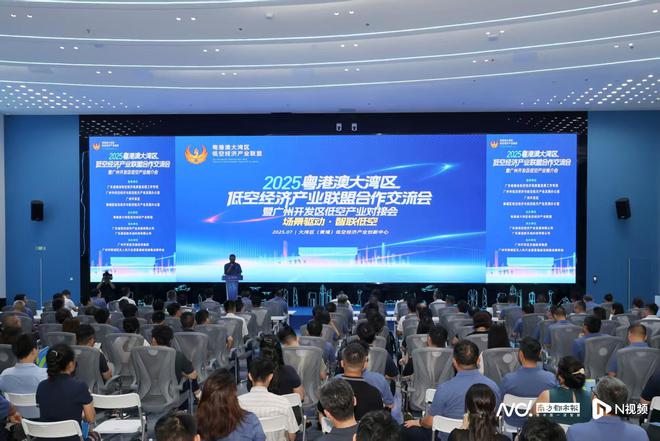
Core Viewpoint - The Guangdong-Hong Kong-Macao Greater Bay Area is advancing its low-altitude economy through the establishment of the Low-altitude Economic Industry Alliance and the release of supportive policies, aiming to enhance industrial integration and innovation in the sector [1][4]. Group 1: Industry Development - The Low-altitude Economic Industry Alliance welcomed new member units and released the "Low-altitude 11 Measures," which are expected to accelerate the formation of new productive forces in the low-altitude economy [1][4]. - Guangzhou is one of the three major clusters for low-altitude economic industries in Guangdong Province, with Huangpu District identified as a pioneering area for development [1][4]. - Huangpu aims to create a national model for low-altitude economy characterized by high-end manufacturing and technological innovation, with a focus on integrating low-altitude and aerospace industries [4][12]. Group 2: Financial Support and Infrastructure - The "Low-altitude 11 Measures" include financial incentives for various aspects such as project cultivation, infrastructure, and talent training, with individual measures offering up to 30 million yuan in rewards [4][5]. - Huangpu has established a comprehensive air traffic support system, including five digital vertical take-off and landing sites and 17 automated hangars, to facilitate low-altitude operations [5][8]. - The district plans to provide subsidies for infrastructure construction related to low-altitude operations, with a maximum annual subsidy of 6 million yuan per enterprise [5][8]. Group 3: Application Scenarios - Huangpu is implementing practical applications of low-altitude services, such as using drones for logistics and urban management, with successful operations already in place [8][9]. - The district has developed a low-altitude logistics platform that enables automated customs clearance for bonded goods, significantly reducing transportation time and costs [9][12]. - Huangpu encourages the development of commercialized demonstration projects in various sectors, including emergency rescue and medical services, to expand the low-altitude economy's reach [9][12]. Group 4: Industry Collaboration and Talent Development - Huangpu is fostering collaboration between enterprises and educational institutions to enhance research and development in the low-altitude economy, including training programs for drone operators [12][13]. - The district aims to attract over 100 low-altitude enterprises by the end of the year through strategic initiatives and support for high-impact projects [12][13]. - The introduction of innovative companies into the Low-altitude Economic Industry Alliance highlights the potential for growth and technological advancement in the sector [12][13].
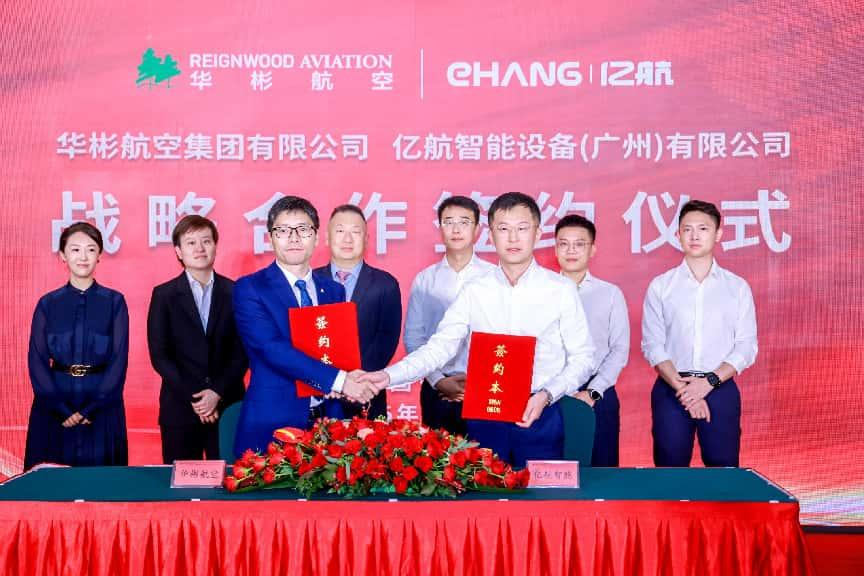
EHang Partners with Reignwood Aviation to Create a New Model of General Aviation and eVTOL Collaboration in the Low-altitude Economy
Globenewswire· 2025-07-01 15:35
Core Viewpoint - EHang Holdings Limited has entered into a strategic partnership with Reignwood Aviation Group to develop the low-altitude economy in China, focusing on integrating traditional aviation with next-generation eVTOL aircraft [1][7]. Group 1: Partnership Objectives - The partnership will initially focus on consumer applications such as low-altitude tourism and will expand to build a three-dimensional urban transportation network over time [2]. - Long-term goals include expanding into various low-altitude services such as passenger transportation, aerial logistics, and emergency response [2]. Group 2: Infrastructure and Services - EHang and Reignwood plan to establish integrated low-altitude service hubs that will offer flight demonstrations, aircraft takeoff and landing services, energy supply, and maintenance [3]. - A digitalized fleet management platform will be developed to support high-density and high-frequency low-altitude UAV and eVTOL flights [3]. Group 3: International Expansion - The partnership aims to promote local airworthiness certification and deploy the EH216-S eVTOL in key tourist areas in Southeast Asia, such as Bangkok and Phuket [4]. - This collaboration seeks to replicate China's low-altitude economy model in the ASEAN region, fostering the development of UAM ecosystems [4]. Group 4: Company Background - EHang is recognized as a leader in urban air mobility technology, having received the world's first airworthiness certificate for a pilotless aircraft [8]. - Reignwood Aviation Group is a top private general aviation enterprise in China, with a fleet of over 60 aircraft and a total investment of RMB 2.0 billion [5][9].
亿航智能获得贵旅集团50架EH216-S采购订单
news flash· 2025-07-01 00:28
Core Insights - EHang Intelligent has received a purchase order for 50 EH216-S passenger drones from Guizhou Fengjing Tourism Development Co., a subsidiary of Guizhou Provincial Tourism Industry Development Group [1] - The drones will be utilized for low-altitude tourism services in the scenic areas operated by the group [1] - Additionally, the company has signed a cooperation agreement with the Anshun Economic and Technological Development Zone Management Committee in Guizhou Province [1]