Ford Motor(F)

Search documents
福特或采购比亚迪电池加码混动市场?官方回应
Mei Ri Jing Ji Xin Wen· 2026-01-20 06:35
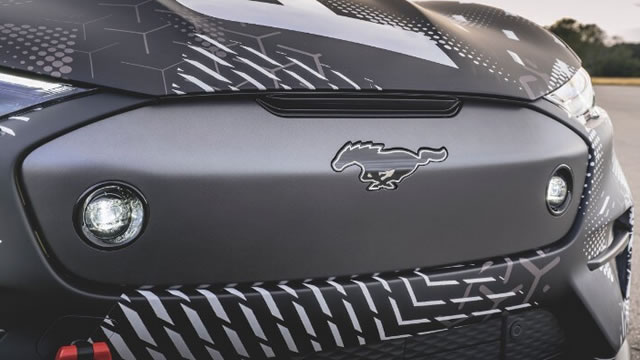
Core Viewpoint - Ford is in discussions with BYD for a battery cooperation plan, focusing on procuring BYD batteries for some of Ford's hybrid models, particularly for use in factories outside the U.S. [1] Group 1: Ford's Strategic Shift - Recently, Ford canceled a significant battery procurement contract with LG Energy Solution worth approximately 459 million RMB, retaining only a portion of the supply for 2026 to 2030 [2] - The cancellation was attributed to changes in policy environment and electric vehicle demand outlook, leading Ford to stop production of certain electric vehicle models [2] - Ford's recent strategic adjustment includes a shift towards high-return businesses, increasing investments in commercial vehicles and battery storage, while reducing focus on large electric vehicle production [4] Group 2: Battery Market Dynamics - The global battery installation volume reached 1,046 GWh in the first 11 months of 2025, marking a 32.6% year-on-year increase, with Chinese companies holding six out of the top ten spots in the global battery market [3] - BYD's lithium iron phosphate (LFP) battery technology is favored for its lower cost (30% cheaper than nickel-cobalt-manganese batteries) and superior safety and lifecycle performance [3] - The demand for LFP batteries is projected to grow by 38% to 420 GWh in 2025, capturing over 54% of the total battery market share [3] Group 3: Historical Context and Future Prospects - Ford and BYD have previously collaborated on battery supply, notably for the launch of the Ford Mustang's first electric SUV in 2021, establishing a foundation for renewed partnership [6] - The current strategic shift towards hybrid vehicles creates a pressing need for reliable and adaptable hybrid batteries, aligning with BYD's expertise in LFP battery production [6]



福特全球技术公司取得用于诊断发动机压缩比改变机构操作专利
Jin Rong Jie· 2026-01-20 04:39
Group 1 - The core point of the article is that Ford Global Technologies has obtained a patent for a method and system for diagnosing engine compression ratio changing mechanisms, indicating innovation in automotive technology [1] Group 2 - The patent was granted with the announcement number CN110030100B and was applied for on December 2018, showcasing the timeline of Ford's technological advancements [1]
2026 中国新能源汽车与动力电池手册_从自动驾驶到人工智能-2026 China EV & EV Battery Handbook_ From Autonomous Driving to AI
2026-01-20 01:50
Summary of Key Points from the Conference Call Industry Overview: Greater China Auto, EV, and EV Battery Industry Forecasts - **China's Auto Industry**: Expected to face challenges in 2026 with a forecasted decline in auto wholesales by **1.6% YoY** compared to a **10% YoY** increase in 2025. This decline is attributed to front-loaded demand in 2025 [1] - **Domestic EV Sales**: Anticipated to grow only **7% YoY** in 2026 due to a **5% increase in purchase tax** and reduced trade-in subsidies [1] - **Export Sales**: Projected to increase by **12% YoY**, reaching **7.9 million units** in 2026, with EV exports expected to surge by **40% YoY** [1] - **Competition Dynamics**: Shift from price competition to configuration-based competition, necessitating more investment in autonomous driving (AD) and smart cabin technologies [1] Key Automotive/EV Themes for 2026 Theme 1: Export Growth - **Export Growth**: Companies like Chery and BYD are expected to benefit significantly from exports, especially with the EU's minimum EV price replacing tariffs [2] Theme 2: Autonomous Driving Development - **ADAS to AD Transition**: L3 permits issued to Changan and BAIC, with highway/city NOA penetration expected to exceed **40%** in 2026 and **85%** by 2030. L4/L5 penetration is projected to reach **8%** by 2030 [3] Theme 3: Cost Concerns - **Battery and Memory Costs**: Rising costs and supply stability of memory are key concerns for auto OEMs [3] Key Battery Themes for 2026 Theme 1: Energy Storage Systems (ESS) - **ESS Demand**: Global battery ESS installations expected to grow by **33% YoY** in 2026, with shipments increasing by **41% YoY** [4] Theme 2: Global Expansion - **Overseas Capacity Expansion**: Chinese battery manufacturers are accelerating their overseas capacity expansion, particularly in Europe and Southeast Asia, in response to rising tariffs and trade tensions [4] Theme 3: VAT Rebate Changes - **Export VAT Rebate Cut**: Anticipated to lead to a rush in battery production and shipment in Q1 2026, potentially increasing raw material prices and exerting cost pressure on battery makers and auto OEMs [5] Theme 4: Technological Innovation - **Sodium-Ion Battery**: Launch of Gen-2 sodium-ion battery expected, with ASSB (all-solid-state battery) small-batch production anticipated to start in 2027 and scale up significantly post-2029 [5] Investment Recommendations - **Top Picks**: - **XPeng**: Launch of Mona SUV and HR in 2H26, with a focus on AI-related businesses [6] - **CATL**: Growth driven by CEV, ESS, and overseas capacity despite short-term cost pressures [6] - **Tuopu**: Major supplier for humanoid robots with overseas expansion [6] - **Minth**: Resilient earnings growth supported by high overseas market exposure [6] - **Hesai**: Increased LiDAR adoption in China alongside L3 ADAS development [6] Additional Insights - **Market Dynamics**: The shift in competition and the focus on technological advancements highlight the evolving landscape of the automotive and EV sectors in China, emphasizing the need for companies to adapt to changing consumer preferences and regulatory environments [1][3][4][5]






包钢板材厂爆炸事故已造成6死4失联;万科被执行约10.9亿元;知名大V被罚没超8300万元丨每经早参
Mei Ri Jing Ji Xin Wen· 2026-01-19 22:16
Group 1 - The People's Bank of China will announce the one-year and five-year Loan Prime Rates (LPR) on January 20 [2] - The National Development and Reform Commission will hold a press conference on January 20 to discuss the implementation of the central economic work conference and the "14th Five-Year Plan" [2] - The central bank has released the "Management Measures for the Identification of Beneficial Owners of Financial Institutions," effective from January 20, 2026 [2] Group 2 - The U.S. stock market will be closed on January 19 for Martin Luther King Jr. Day and will resume normal trading on January 20 [3] - On January 19, U.S. stock index futures fell, with the S&P 500 down 0.88%, Dow Jones down 0.80%, and Nasdaq 100 down 1.11% [4] Group 3 - The ICE U.S. Dollar Index fell by 0.33% to 99.065 points, while COMEX gold futures rose by 1.77% to $4,676.70 per ounce [5] - The onshore RMB closed at 6.9640 against the U.S. dollar, appreciating by 80 basis points from the previous trading day [5] Group 4 - The Hang Seng Index rose by 0.20% to 26,640 points, and the Hang Seng Tech Index increased by 0.23% to 5,768 points [6] - European stock indices closed lower, with Germany's DAX down 1.34%, France's CAC40 down 1.78%, and the UK's FTSE 100 down 0.39% [6] Group 5 - China's GDP is projected to exceed 140 trillion yuan in 2025, with a year-on-year growth rate of 5% [7] - The industrial added value for the year increased by 5.9%, while the service sector's added value grew by 5.4% [8] Group 6 - The U.S. plans to impose a 10% tariff on goods from eight European countries starting February 1, with the rate increasing to 25% by June 1 [9] - The Chinese Ministry of Foreign Affairs has reiterated its stance on the Greenland issue in response to U.S. tariffs [10] Group 7 - The Supreme People's Procuratorate of China has emphasized the need to maintain economic and financial security and to punish serious economic crimes [11] - A satellite internet low-orbit launch of 19 satellites was successfully completed on January 19 [11] Group 8 - Tesla will restart the development of its Dojo 3 supercomputer project, indicating a commitment to AI technology [17] - Ford is reportedly in talks with BYD for battery procurement for hybrid vehicles, reflecting traditional automakers' engagement with China's EV supply chain [18] Group 9 - Vanke has been executed for approximately 1.09 billion yuan, raising concerns about risks in the real estate sector [19][20] - Porsche's sales in China for 2025 are projected to decline by 26.28%, with the company focusing on maintaining a healthy supply-demand relationship [21] Group 10 - ByteDance's AI platform "Kouzi" has announced a 2.0 brand upgrade, integrating new capabilities to enhance user experience [22] - Honor has launched a limited edition smartphone in collaboration with Pop Mart, showcasing cross-industry innovation [24]


特朗普拒绝说明是否会以武力夺取格陵兰;包钢板材厂爆炸事故已造成6死4失联;万科被执行约10.9亿元;知名大V被罚没超8300万元丨每经早参
Mei Ri Jing Ji Xin Wen· 2026-01-19 22:06
Group 1 - The People's Bank of China will announce the one-year and five-year Loan Prime Rate (LPR) on January 20 [2] - The National Bureau of Statistics reported that China's GDP for 2025 is projected to reach 140,187.9 billion yuan, with a year-on-year growth of 5% [8] - The total retail sales of consumer goods in 2025 are expected to be 501,202 billion yuan, reflecting a year-on-year increase of 3.7% [8] Group 2 - The U.S. stock market will be closed on January 19 for Martin Luther King Jr. Day and will resume normal trading on January 20 [3] - The S&P 500 futures fell by 0.88%, while the Dow futures dropped by 0.80% and the Nasdaq 100 futures decreased by 1.11% on January 19 [4] - The ICE U.S. Dollar Index decreased by 0.33%, closing at 99.065 points [5] Group 3 - The Hang Seng Index rose by 0.20% to close at 26,640 points, while the Hang Seng Tech Index increased by 0.23% to 5,768 points [6] - European stock indices closed lower, with Germany's DAX down 1.34%, France's CAC40 down 1.78%, and the UK's FTSE 100 down 0.39% [6] Group 4 - Tesla announced the restart of its Dojo 3 supercomputer project, indicating a commitment to AI technology development [17] - Ford is reportedly in talks with BYD for a battery supply partnership for its hybrid models, reflecting traditional automakers' efforts to engage with China's EV supply chain [18][19] - Vanke has been executed for approximately 1.09 billion yuan, highlighting financial pressures in the real estate sector [20][21] Group 5 - Porsche's sales in China for 2025 are projected to be 41,900 units, a decline of 26.28% year-on-year, attributed to market challenges [22] - ByteDance announced a 2.0 brand upgrade for its AI platform "Kouzi," integrating new features to enhance user experience [22] - Honor launched a limited edition smartphone in collaboration with Pop Mart, showcasing cross-industry innovation [23]

Ford Ended 2025 With a Strong Statement for Investors
The Motley Fool· 2026-01-19 21:45
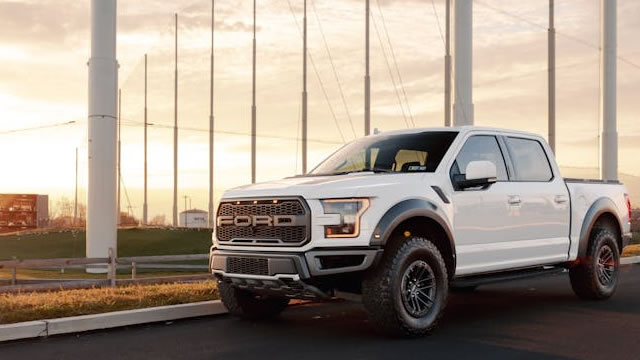
Core Insights - The automotive industry is undergoing significant transformation, with a shift from internal combustion engines to hybrids and electric vehicles, alongside the integration of AI in production and autonomous vehicle software [2] - Ford Motor Company ended 2025 positively, achieving strong sales performance and market share growth [3][5] Group 1: Sales Performance - Ford's total sales increased by 6% in 2025, surpassing 2.2 million vehicles in the U.S., with a market share of 13.2% [5] - In December, Ford outperformed the industry for the 10th consecutive month, gaining 0.6 percentage points in market share [4] - The fourth-quarter sales rose by 2.7%, contributing to Ford's best annual and quarterly sales performance since 2019 [5] Group 2: Product Strategy - Ford's F-Series trucks sold over 820,000 units in 2025, marking an 8.3% increase and outselling its nearest competitor by approximately 250,000 trucks [8] - The company is shifting its focus from full-electric vehicles to hybrids and extended-range vehicles until the new Universal EV Platform is operational [9][10] - Ford achieved record hybrid sales in 2025, with over 228,000 units sold, indicating profitability in hybrids compared to electric vehicles [10] Group 3: Market Context - Despite strong sales, Ford faces challenges such as changing trade policies, tariffs, and increasing competition from Chinese automakers [11]
Can Ford's Europe Strategy Finally Turn Losses Into Stability?
ZACKS· 2026-01-19 13:10
Core Insights - Ford's European business has faced significant challenges, including a 17% decline in sales in 2024 due to weak passenger vehicle demand, slow EV adoption, and increased competition from low-cost Chinese automakers [1][10] - The company is undergoing a restructuring process that includes job cuts and plant closures to reduce costs and focus on core areas, despite running at a loss in Europe [2][10] - Unlike General Motors, Ford is committed to remaining in the European market, believing it holds strategic and financial importance if properly reshaped [3] Restructuring Strategy - Ford's restructuring plan is based on three pillars: strengthening Ford Pro (the commercial vehicle division), refreshing the passenger vehicle lineup with multi-energy models, and optimizing the industrial footprint for cost efficiency [4][10] - The Ford Pro division has expanded beyond traditional vehicle sales to include a comprehensive ecosystem of software and services, significantly increasing vehicle uptime for customers [5] Product Development and Manufacturing - Ford plans to introduce affordable, multi-energy passenger cars and commercial vehicles by 2028 to enhance competitiveness in the market [6] - The company is reshaping its manufacturing footprint, with significant investments in electric drive units and advanced engine technology at various plants in the U.K. and Spain [7] Partnerships and Collaborations - Ford is leveraging partnerships to enhance its strategy, including a collaboration with Renault to develop low-cost EVs and co-produce commercial vans [8] - Previous alliances, such as those with Koç Holding and Volkswagen, have also contributed to the value of Ford's commercial vehicle offerings and EV production [9] Financial Performance - The restructuring efforts have led to a notable improvement in financial performance, with Ford's European loss narrowing to $52 million in Q3 2025 from approximately $440 million a year earlier [11][12] - Despite ongoing challenges, the strategy is becoming clearer and more disciplined, with potential for Europe to become a more stable contributor to Ford's overall business in the future [12] Market Position - Ford's shares have increased by 33% over the past year, outperforming the industry, and the company trades at a forward price-to-sales ratio of 0.32, indicating a favorable valuation [13][14]
特朗普“让中国进来”后,中国汽车产业将如何走向美国
Guan Cha Zhe Wang· 2026-01-19 10:19
Core Viewpoint - The recent decline in stock prices of major U.S. automakers is linked to Trump's statements regarding support for American auto workers and a shift in attitude towards Chinese automakers, raising concerns about the profitability and market conditions for U.S. companies [3][4][6]. Group 1: Stock Market Reaction - Major U.S. automakers saw significant stock price declines, with General Motors down approximately 3%, Ford down about 4%, and Stellantis down around 11% [1]. - The market's reaction indicates a focus on uncertainties regarding corporate profitability, trade barriers, and industry direction, despite Trump's seemingly welcoming remarks towards Chinese automakers [3][4]. Group 2: Trade and Regulatory Environment - Trump's welcoming remarks for Chinese automakers are made against the backdrop of high tariffs on Chinese imports, which remain a significant barrier to entry for Chinese vehicles in the U.S. market [4][6]. - U.S. Trade Representative stated that tariffs are in place to protect American workers from foreign vehicles, highlighting the ongoing regulatory challenges for Chinese automakers [6]. Group 3: Globalization Trends - Despite the challenges, there is a growing trend of easing restrictions on Chinese electric vehicles in other markets, with Canada recently removing punitive tariffs and the EU adjusting tax rates [7][9]. - Chinese automakers, such as BYD, have shown strong growth in international markets, with a reported 276% increase in deliveries to Europe [9]. Group 4: Potential Pathways for Chinese Automakers - Three potential pathways for Chinese automakers to enter the U.S. market include: 1. Embedding within the U.S. supply chain without direct competition as a brand [11][12]. 2. Local manufacturing in the U.S. to mitigate political resistance, although this comes with its own set of challenges [16][18]. 3. Establishing production bases in nearby regions like Mexico or Brazil to create an indirect entry into the U.S. market [19][21]. Group 5: Strategic Implications - The overarching strategy for Chinese automakers is not merely to sell vehicles in the U.S. but to navigate the complex political and regulatory landscape to establish a presence [23]. - The shift from exporting vehicles to becoming participants in a global automotive ecosystem reflects a broader trend in the industry, with the U.S. market being one of many avenues for growth [23].
谷歌DeepMind CEO:中国的AI模型仅落后美国几个月;苹果将采用谷歌Gemini大模型作为底层支撑丨Going Global
创业邦· 2026-01-18 10:23
Core Insights - The article highlights significant developments in the global expansion of companies, particularly in the e-commerce and technology sectors, showcasing various strategic initiatives and partnerships aimed at enhancing market presence and operational efficiency [2][3]. Group 1: E-commerce Developments - TikTok Shop launched the "Mei Tong Mo" cross-border plan, allowing direct shipping from U.S. warehouses to consumers in Mexico, set to officially launch in April 2024 [4][5]. - Temu has introduced a local seller program in the UAE, enhancing delivery efficiency and product variety, with coverage extending to over 30 countries [7][9]. - The UAE e-commerce market is projected to reach approximately $12.28 billion by 2025, indicating robust growth potential [10]. Group 2: Major Company Announcements - ZhiMi Technology's CEO Yu Hao aims to create the world's first trillion-dollar company ecosystem, emphasizing long-term growth and innovation [12][13]. - Ford is in discussions with BYD for battery procurement for hybrid vehicles, reflecting a strategic shift towards hybrid models amid declining demand for electric vehicles [18][19][22]. - Micron Technology announced an $1.8 billion acquisition of Powerchip's P5 wafer fab to enhance DRAM production capacity, aiming to meet increasing market demand [26][27]. Group 3: AI and Technology Partnerships - Apple and Google have entered a multi-year AI collaboration, with Apple adopting Google's Gemini model to support its next-generation AI functionalities [30][31]. - Tesla's CEO Elon Musk reported that the AI5 chip design is nearing completion, with plans for rapid development of subsequent AI chips to maintain technological leadership [33][34]. - Google's DeepMind CEO stated that Chinese AI models are only a few months behind their U.S. counterparts, highlighting the competitive landscape in AI development [35][36].



Why Ford Investors Might Have to Say Goodbye to Its Special Dividend
The Motley Fool· 2026-01-17 22:45
Core Viewpoint - Ford's traditional dividend remains a reliable source of income for investors, but the supplemental dividend may face risks in the near term due to external financial pressures [1][9]. Group 1: Dividend Overview - Ford Motor Company's dividend yield currently exceeds 4%, and the company has a history of providing supplemental dividends as bonus payments to investors [2]. - The supplemental dividend has typically been around one extra quarterly payment annually, enhancing the overall value of Ford's dividend offerings [6]. Group 2: Recent Developments - In 2023, Ford's sale of its investment in Rivian significantly boosted its cash flow, allowing the company to issue a special supplemental dividend of $0.65 per share, in addition to its regular quarterly dividend of $0.15 per share [5]. - Despite the historical trend of supplemental dividends, Ford's cash flow is slowing, which may lead to the discontinuation of these payments [8]. Group 3: Financial Challenges - Ford is currently facing a $1 billion net tariff headwind and anticipates an additional $1 billion impact from a supplier fire, which are affecting its financial performance [7]. - The company has announced a strategic pivot away from electric vehicles, which will incur a substantial $19.5 billion charge, including $5.5 billion in cash over the next two years [8].